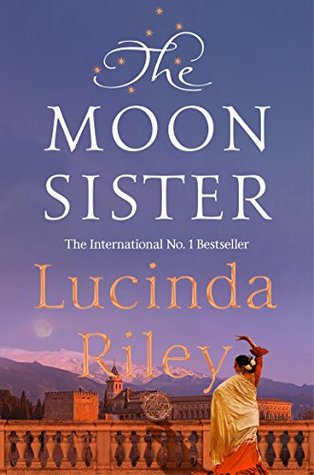
The Moon Sister by Lucinda Riley

This is the fifth book in Lucinda Riley’s Seven Sisters series based loosely on the mythology of the star cluster known as Pleiades or ‘the seven sisters’. Each novel tells the story of one of the adopted daughters of a mysterious millionaire known as Pa Salt.

The girls come from different cultures and backgrounds, but all grew up together on Pa Salt’s estate in Switzerland. They are each named after one of the stars in the cluster – Maia, Alycone (Ally), Asterope (Star), Celaeno (CeCe), Taygete (Tiggy) and Electra D’Aplièse. You may have noticed that there are only six sisters; for some reason, which we don’t yet know, a seventh was never adopted. This is one of many mysteries running throughout the series.

At the beginning of the first novel, The Seven Sisters, Pa Salt died, leaving each sister some clues to help them trace their biological parents. So far we have heard Maia’s story, Ally’s, Star’s and CeCe’s; now, in The Moon Sister, it’s the turn of Tiggy. All of the books in the series work as standalones and it’s not essential to read them in order, but this book does overlap with one or two of the others and advances some of the storylines begun earlier in the series.

The Moon Sister follows Tiggy as she begins a new job in the Scottish Highlands, where she has been employed by Charlie Kinnaird to establish a colony of wildcats on his estate. With her degree in zoology and her love of nature, Tiggy is perfect for the job and quickly settles in, getting to know the animals on the Kinnaird estate and forming a close friendship with Cal, the man whose cottage she shares. The peace is disturbed, however, when Charlie arrives with his troubled teenage daughter and his spiteful, vindictive wife.

Away from the problems in the Kinnaird household, Tiggy meets Chilly, an elderly gypsy who lives alone on the estate. It seems that fate must have brought them together, because Chilly is the one person who knows the truth of Tiggy’s origins and can point her in the direction of her birth family. From Chilly, Tiggy learns of her ancestor, Lucia Albaycin, a famous Spanish flamenco dancer. But Chilly doesn’t know everything, so to discover the rest of her family’s story, Tiggy must travel to Spain and visit the gypsy community in the caves of Sacromonte.

Like the others in the series, this book is divided between the modern day storyline and the historical one. We spend a decent amount of time with each character before switching to the other, which means we can become absorbed in both stories. Lucia’s story is fascinating – I can’t say that I liked her, as I found her very self-centred and driven by ambition at the expense of everything else – but she is certainly a strong character, whose power and passion as a person is matched by the power and passion of her dancing. It was interesting to watch as she (along with her equally selfish and irresponsible father) start from nothing to build a successful career in flamenco which takes them all over the world. Meanwhile, in Sacromonte near Granada, we follow the sad story of how the lives of the other gitanos (Spanish gypsies) are affected by first the Spanish Civil War and then the onset of the Second World War, leaving their community changed beyond recognition.

It was good to get to know Tiggy better too – and she is much easier to like than Lucia. The other d’Aplieses think of her as the sensitive, spiritual sister…the sort of person who wants to help everyone around her, whether human or animal, and who cares deeply about nature and the environment, trying hard to resist temptation and stick to her vegan diet! Of all her sisters, Tiggy is particularly close to Ally, whom we met in The Storm Sister, and it was lovely to see her again in this book. The one part of Tiggy’s story that didn’t really work for me was the romance. I felt that she and the man concerned hadn’t spent enough time together for their love for each other to develop, so I didn’t become as emotionally invested in their relationship as I would have liked.

The next book is going to tell Electra’s story and I have to admit I’m very apprehensive about that one. From the little we’ve seen and heard of Electra so far, her personality strikes me as very unappealing. However, we are given lots of intriguing clues in The Moon Sister regarding Pa Salt, his death and some strange occurrences at his home, Atlantis, so I’m hoping Electra will fill in some more of the gaps for us. I’m also curious about the rich businessman Zed, who keeps popping up throughout the series, trying to worm his way into the lives of first Maia, then Tiggy and now, it seems, Electra. For those reasons, I will be looking out for the next book, which I’m hoping will be published later this year.
The Winter of the Witch by Katherine Arden

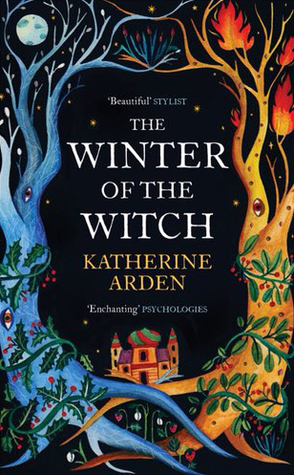
The Winter of the Witch is a wonderful, magical read and the perfect conclusion to Katherine Arden’s Winternight trilogy which combines Russian fairy tales, history and folklore with an atmospheric and wintry medieval setting. I loved the previous two books, The Bear and the Nightingale and The Girl in the Tower, so I went into this one with high hopes and high expectations – and I’m happy to say that I thought it was the best of the three. You may be wondering whether it’s necessary to read the books in order; my answer would be yes, as I think you will definitely get more out of the story if you start at the beginning.

As the novel opens, Moscow is on fire and blame has fallen on Vasilisa Petrovna. With a furious mob calling for her to be burned as a witch, Vasya manages to escape with the help of the magical beings only she and one or two others can see. However, her freedom comes at a cost and, as part of the bargain, an evil spirit is unleashed into the world once more. This could have serious implications for Vasya’s cousin, Grand Prince Dmitrii Ivanovich, who is already facing the threat of the Tatar commander Mamai and his Golden Horde. As the Tatars advance into the land of Rus’, Vasya must enlist the help of the chyerti – her demon friends and enemies – in a final attempt to save her family, her country and its people.

Like the first two books, The Winter of the Witch is steeped in Russian mythology and fairy tale. In this book we are reacquainted with characters who appeared earlier in the trilogy and we meet another selection of fascinating beings from Russian myths too. These include the upyr (monstrous vampire-like creatures) and the famous Baba Yaga. Of the other new characters, I was particularly fond of Ded Grib – but will leave you to discover more about him for yourself when you read the book! Vasya also follows a magical pathway through the enchanted realm of Midnight, a journey which provides some of the most thrilling moments in the book. My favourite of the novel’s many threads, though, involves Vasya’s romance with a certain frost demon called Morozko…

The reason I find the relationship between Vasya and Morozko so compelling is precisely because it’s completely unconventional. Morozko is not human and doesn’t always react or behave like a human; to him, Vasya’s actions sometimes seem illogical and difficult to understand – yet they love each other for who they are, and each accepts whatever the other is willing and able to give.

Another aspect of the book (of all three books, actually) that I like is the theme of conflict between old and new as the ancient beliefs and traditions are swept aside by the spread of Christianity. We have seen from the beginning of the trilogy how the power of the chyerti is fading as the people forget the old ways, turning away from their household spirits such as the domovoi and turning instead to men like Konstantin, the Christian priest with whom it is safe to say Vasya has never seen eye to eye. Vasya’s task in this novel is to persuade everyone – chyerti and human, Christian and pagan – to work together to defend Rus’. It will all come to a head at Kulikovo on the Don River, as the opposing armies prepare for a battle which will prove whether or not our heroine has been successful…

This really is a great end to the trilogy; the beautiful, powerful writing took me through a whole range of emotions and I had tears in my eyes at the loss of a favourite character early in the book. I also love the fact that, despite all the fantasy elements, so much of the story has its foundations in Russian history. I’m sorry to have to leave Vasya and her friends behind, but I will look forward to whatever Katherine Arden writes next.

Bardelys the Magnificent by Rafael Sabatini

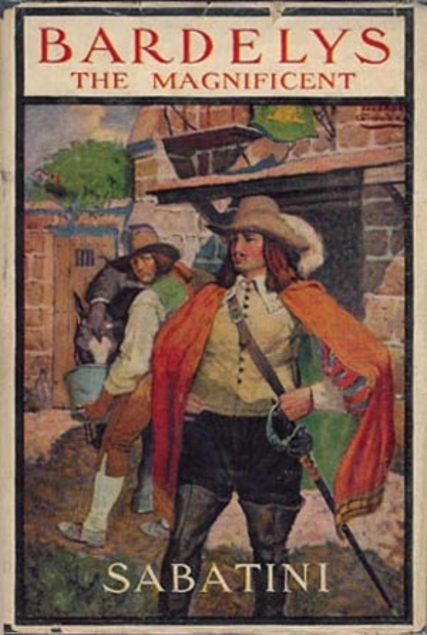
I love Rafael Sabatini’s books. His classic tale of the French Revolution, Scaramouche, and his two famous pirate novels, Captain Blood and The Sea-Hawk, have been some of my favourite reads of the last few years, while Bellarion was a great book too. I’m now beginning to explore his more obscure books and chose this one, Bardelys the Magnificent, more or less at random when I was putting my Classics Club list together. I hoped it would be a good choice – and it was!

The story is set in 17th century France, during the reign of Louis XIII, and is narrated by the wealthy Marquis de Bardelys, a ‘libertine, a gambler, a rake, a spendthrift’ and a favourite of the King. As the novel opens, Bardelys is hosting a party in Paris at which his rival, the Comte de Chatellerault, makes an unwelcome appearance. It is well known that Chatellerault has recently tried and failed to win the hand in marriage of the beautiful Roxalanne de Lavedan and as Bardelys and his friends tease the Comte about his failure, the discussion becomes more heated. Before the night is over, Bardelys finds himself wagering his entire fortune that he can succeed where Chatellerault could not – and he sets off the next day for Languedoc, the home of Roxalanne.

Of course, things don’t go according to plan and following a series of misunderstandings, Bardelys arrives at the Lavedan estate under a mistaken identity. When he meets Roxalanne and discovers that he is genuinely falling in love with her, he knows that he should tell her the truth about who he really is, but as time goes by it becomes harder and harder to do this. To complicate things further, Bardelys learns that the man whose identity he has stolen is a wanted traitor. Our hero’s life quickly becomes such a confusing mess that it’s difficult to see how anything can ever be resolved! Will he lose his fortune, his life, or the love of Roxalanne – or will he somehow manage to keep all three?

Bardelys the Magnificent is one of Sabatini’s earliest novels, published in 1906, and although I did find it weaker than the others I’ve mentioned above, it’s another entertaining adventure with all the drama, romance, political intrigue and sword fights that you would expect. As a character, I found Marcel de Bardelys less memorable than other Sabatini protagonists such as Andre-Louis Moreau, Peter Blood and Oliver Tressilian, but he is still interesting and engaging. I referred to him as a hero above, but he is not particularly heroic at all – he is selfish and irresponsible, he makes one mistake after another, and his original reason for wanting to marry Roxalanne is hardly very admirable. Despite all of this, I still had some sympathy for him and wanted him to succeed – and, thankfully, he does also develop as a character as the novel progresses. While concealing his true identity, he finds out what people really think of him and sees himself as he appears to others.

Although I wouldn’t recommend Bardelys as the best place to start with Sabatini, if you’re already a fan I’m sure you’ll enjoy this early example of his work as much as I did. I’m looking forward to exploring more of his lesser-known novels and hope my next choice will be another good one.

This is book 11/50 from my Classics Club list.

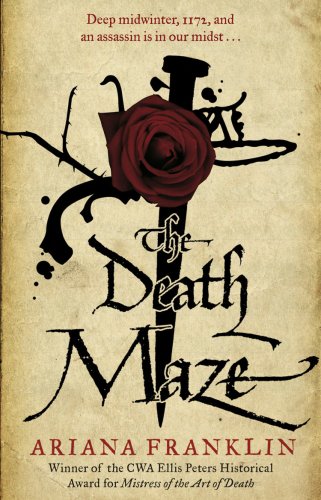
The Death Maze by Ariana Franklin

This is the second novel in Ariana Franklin’s Adelia Aguilar mystery series, set in the 12th century. My feelings about the first book – Mistress of the Art of Death – were quite mixed (I liked the medieval setting but found the dialogue and the main character too modern), but I wanted to try at least one more in the series and came across this one in the library a few weeks ago.

If you’re new to these books, I don’t think it’s necessary to have read the previous one before reading this one. The Death Maze, which has also been published under the title The Serpent’s Tale, begins with the poisoning of Rosamund Clifford, Henry II’s mistress. Henry’s estranged queen, Eleanor of Aquitaine, is immediately suspected, being the person with the most obvious motive for wanting The Fair Rosamund dead. If this is true, the repercussions could be huge and could lead the country into civil war. The king needs someone to investigate on his behalf – and so he summons Adelia Aguilar, his ‘mistress of the art of death’.

Adelia, before coming to England, had studied medicine at the famous medical school in Salerno which accepted female students as well as men. Since solving her first case for Henry II (a series of child murders which formed the basis of the previous novel), she has been living a quiet life in the countryside with her baby daughter, Allie, and it is with some reluctance that she agrees to undertake this new task. The king cannot be refused, of course, so Adelia soon finds herself setting off for Rosamund’s castle, escorted by Rowley Picot, her former lover, now the Bishop of St Albans. During their investigations, they are taken captive by Eleanor and her supporters, but when snow begins to fall the whole party become trapped for the winter at the nunnery in Godstow, where the mystery deepens as more murders take place.

In some ways, I enjoyed this book more than the first one. I thought the mystery was more complex – and certainly not as dark and disturbing as the previous one. I didn’t guess who the murderer was, although I had my suspicions, but I think we were given enough clues to work it out with no unfair surprises or information being withheld.

This is a period of history I always find interesting to read about and I felt that the portrayals of real historical figures in this book, such as Henry II and Eleanor of Aquitaine, were very different from the way they have been depicted in other novels I’ve read. Eleanor is certainly not the sympathetic, admirable character she is in Elizabeth Chadwick’s The Summer Queen trilogy, for example – she comes across as quite selfish and petulant. Most of the other characters, though, are fictional – as is most of the plot, including many of the details of Rosamund Clifford’s story. I did like the descriptions of the maze of hedges surrounding Rosamund’s tower; the scene where Adelia and her friends try to find their way through it reminded me of the famous Hampton Court Maze episode in Three Men in a Boat.

‘I’m sorry, I’m sorry,’ Adelia shouted. She faced Rowley. ‘Don’t you see, if a maze is continuous, if there aren’t any breaks, and if all the hedges are connected to each other and you follow one of them and stick rigidly to it wherever it goes, you’ll traverse it eventually, you must, it’s inevitable, only…’ Her voice diminished in misery, ‘I chose the left-hand hedge. It was the wrong one.’

As for Adelia herself, I can’t make up my mind about her. I do like her as a character because she has all the qualities I admire in a heroine – intelligence, courage and independence, as well as a passion for her career which made her turn down the chance of marriage to Rowley as she knew that would bring her medical work to an end. However, she is the sort of heroine I would expect to find in a much more modern setting; her behaviour and attitudes make her very unconvincing as a medieval woman. I could say the same about the language Ariana Franklin uses, which I think also often feels far too modern for the time period. I suppose whether or not you will enjoy these books depends on how important those things are to you, but I always struggle to overlook them.

I’m not sure if I will read any more of the Adelia Aguilar books, but I might try one of Ariana Franklin’s earlier novels published under her real name, Diana Norman.

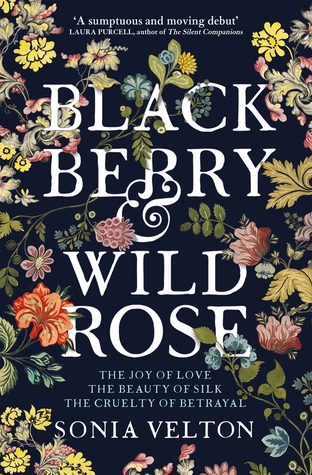
Blackberry and Wild Rose by Sonia Velton

It’s 1768 and Sara Kemp has just arrived in Spitalfields, the London parish which has become home to a thriving community of Huguenot silk weavers. Sara is full of hope and optimism, ready to start a new life, but before she’s had time to get her bearings she finds herself the victim of a cruel trick which leaves her with no choice other than to live and work in a notorious brothel.

In a much more respectable house nearby lives the master weaver Elias Thorel and his wife Esther. Their marriage is not a loving or happy one, but Esther has been trying to take an interest in her husband’s work and has discovered an aptitude for designing floral patterns. There’s nothing she wants more than to see one of her own designs woven in silk, but Elias is scornful and refuses to acknowledge her talent. Still determined to turn her dreams into reality, Esther approaches the journeyman weaver who has been using the loom in the Thorels’ attic to weave his master piece.

Two women leading very different lives – but their paths cross when Esther is distributing Bibles in the poorer areas of Spitalfields and sees Sara being abused by her madam outside the brothel. Soon Sara is working as a lady’s maid in Esther’s household, but how will she repay Esther for her act of kindness?

I was drawn to Blackberry and Wild Rose by the beautiful cover – and the mention of an 18th century setting and the comparisons to Jessie Burton and Tracy Chevalier made me want to read it even more. Of course, none of those things guaranteed that I would like the book, but I’m pleased to say that I did!

First of all, there are the fascinating details of weaving, of using looms, designing patterns, and everything else involved in creating beautiful figured silk. At the beginning of the novel, Esther knows very little of any of this – she only knows that she wants to see her designs brought to life – but she learns a lot from the weaver she befriends, and her enthusiasm (and, I think, the author’s) comes through very strongly:

By the time the candle had burned down to a waxy stump, the thinnest sliver of iridescent silk clung to the heddles. ‘I can’t believe it,’ I breathed. I was finally looking at the very beginning of a silk made to a pattern I had designed. My own creation. ‘How long will it take to finish it?’

I could feel Esther’s excitement and pride as her silk took shape, as well as her disappointment and anger at her husband’s lack of support. Through the stories of Esther’s weaver friend Bisby Lambert and some of the other Spitalfields weavers, we also learn about some of the issues and challenges the industry faced and how the workers had to fight for their rights against unscrupulous masters and the threat of cheap imports from abroad.

An even more engaging aspect of the book is the relationship between the two main characters, Esther and Sara, whose narratives alternate throughout the novel. At first, Esther feels sorry for Sara, as she would for any woman driven to prostitution, and she wants to do what she can to help. Once Sara is there, in the Thorel household, however, their relationship is an uneasy one and Esther begins to wonder whether she has done the right thing in bringing Sara into her home:

She was like a cat sidling in uninvited and looking about. You don’t want to turn it out straight away so you offer it a scrap of food. The next thing you know it’s curled up on your favourite chair, watching you with unblinking elliptic eyes.

As for Sara, she quickly becomes aware that Esther’s life is not as perfect as it seems and that she is hiding some secrets of her own. While a friendship does form between the two women, they are not entirely comfortable around each other and neither is quite sure whether the other can be trusted, which makes for a tense and exciting story! The plot kept me gripped throughout the book and although I thought I could predict how it would end, I was wrong and the ending was actually much more realistic than I’d expected. This is an impressive debut novel and I hope to read more from Sonia Velton in the future.

Thanks to Quercus for providing a copy of this book for review via NetGalley.

I am counting this book towards the What’s in a Name? challenge (a book with a fruit or vegetable in the title).

Zennor in Darkness by Helen Dunmore

One of the reading challenges I have been participating in during 2018 is the What’s in a Name? challenge which involves reading books with certain words in the title. Having reached November with only four of the six required books completed, it was looking unlikely that I would be able to finish the challenge, but I’m pleased to say that I have managed to squeeze the final two books into my December reading – starting with this one, Zennor in Darkness (a book with a title that begins with Z).

Published in 1993, Zennor in Darkness was Helen Dunmore’s first novel. I had high hopes for it, as I’ve enjoyed some of her others, particularly Exposure and Birdcage Walk. Unfortunately, although there were things that I liked about this one, I was slightly disappointed with it, even more so because most people who have read it seem to have loved it and I’m sorry that I couldn’t love it too.

The novel is set in 1917 in Zennor, a village on the coast of Cornwall where the author DH Lawrence lives for a while during the First World War. Hoping to find some peace and quiet away from the controversy caused by the recent publication of his novel, The Rainbow, Lawrence and his wife Frieda have decided to rent a cottage in Zennor where they can wait for the war to end and for a time when he may be able to resume his writing career. But even as Lawrence gets to know the local farming families and discovers the charms of rural life, he finds himself the centre of controversy yet again – this time because of Frieda, who happens to be German. The villagers view Frieda with suspicion, disapproving of her red stockings and her German songs, and convinced that she and Lawrence are sending signals to the U-boats lurking off the Cornish coast:

‘All the same though, there are things not right up there. They say they’ve put different coloured curtains up. In the same window.’
‘Why, whatever would they want to do that for?’
‘In the window looking over the sea.’
‘You mean -‘

One person who doesn’t care about the gossip and who is happy to befriend the Lawrences anyway is Clare Coyne, a young woman who lives with her widowed father. Clare is a talented artist and is helping to illustrate a new book her father is writing on botany; she is also in love with her cousin, John William Treveal, who is home on leave from the trenches before starting his training as an officer. The rest of the family are unaware of Clare’s feelings for John William, so she keeps her fears and worries for him to herself, hoping that as he has survived this long, he will continue to survive and will come back to her when the war is over.

The novel is partly about Clare’s relationship with DH Lawrence and partly about her love for John William, but I felt that the two elements of the story didn’t work together very well and could have formed the basis of two separate books. I found the central love story by far the most engaging and interesting aspect of the novel, while the inclusion of Lawrence added very little for me. I couldn’t help making comparisons with Mr Mac and Me by Esther Freud, a very similar story about the architect Charles Rennie Mackintosh, where I thought the blending of real historical characters and fictional ones was more successful.

I did love the portrayal of life in a small village during the war, touching on topics such as shell shock, desertion and the effects of war not only on those who are fighting in it but on the loved ones they leave behind. The writing is certainly beautiful – both poetic and insightful, with some lovely descriptions – but books written in third person present tense are often a problem for me and that was the case here as I found it distracting and emotionally distancing. I think the writing style is what prevented me from enjoying this book as much as I’d hoped to. Not a favourite by Helen Dunmore, then, but I will continue to read her books and will hope for better luck next time.

~

I would like to take this opportunity to wish you all a Merry Christmas! I’ll be back soon with my books of the year, my December Commonplace Book and maybe another review or two before New Year.

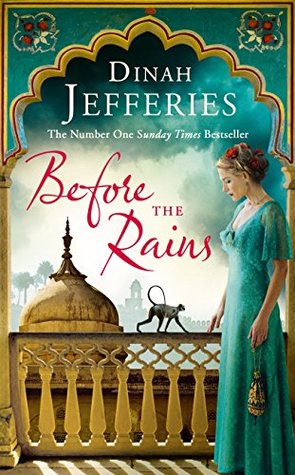
Before the Rains by Dinah Jefferies

Whenever I want a book to transport me to another country and another time, I need look no further than Dinah Jefferies. So far her novels have taken me to Ceylon, Malaya and French Indochina; this one, Before the Rains, is set in Rajputana, India, in the 1930s.

Our heroine, Eliza Fraser, has a passion for photography and hopes to build a career for herself as a photojournalist. When an old family friend and British politician, Clifford Salter, arranges for her to spend a year photographing the royal family of one of India’s princely states, she is both delighted and nervous. India is where she grew up and she still feels a connection to the land and the people, but it is also where, at the age of ten, she witnessed the death of her father in Delhi.

Arriving at the palace where she will live for the next twelve months, Eliza finds that not everyone is happy to have an outsider interfering in their affairs, especially when they discover that she is a widow. Other people, though, are much more welcoming – including Jayant Singh, the younger brother of Prince Anish. When Jay offers to escort Eliza around the countryside in search of subjects for her photographs, she is distressed by the poverty she sees and urges Jay to do something to help his people. In return, Jay helps her to understand the effect British rule has had on India. As they discuss these and other issues and get to know each other better, a friendship forms between them which quickly becomes something more…but Eliza knows that there can only be any future for them if Jay is prepared to defy both his family and the expectations of society.

Like all of Dinah Jefferies’ novels, this one features some lovely descriptive writing, bringing to life the sounds, colours, tastes and smells of India. But along with the beautiful descriptions, there are some brutal, horrifying ones, such as an account of a widow throwing herself onto her husband’s funeral pyre, followed by a discussion of the custom of sati, as well as the fates of unwanted baby girls and of women suspected of witchcraft. For all Eliza had spent her childhood in India, she had been insulated within the British community and it’s only now that she is going out on her excursions with Jay that she feels she is truly starting to understand the country, its history and its people.

Although I loved the setting, I didn’t enjoy this book as much as I enjoyed some of Jefferies’ others, which is mainly due to the fact that I found it predictable and too reliant on coincidences – there were at least two plot twists towards the end that I found completely unconvincing. I also struggled to believe in Eliza’s romance with Jay; I liked both characters, but I thought it seemed too convenient that on arriving at the palace Eliza would immediately catch the eye of a prince. Maybe I should have just been less cynical and more prepared to suspend disbelief.

This is probably my least favourite of Dinah Jefferies’ novels, but I’m still looking forward to reading her new one, The Missing Sister, which will be set in 1930s Burma.