Mothering Sunday by Graham Swift

I read this as part of my Walter Scott Prize Project (it was shortlisted in 2017) and yet again I am grateful to the Prize for pointing me in the direction of a book I would probably never have thought of picking up otherwise.

Mothering Sunday, in its original form, was a day when servants were given the day off work so that they could go home and visit their ‘mother church’ with their families. Jane Fairchild, the twenty-two-year-old heroine of Graham Swift’s novel, is an orphan, so when she is given a day’s holiday from her duties as a maid, she has no home to go to and no family to visit. Instead, she borrows a bicycle and rides across the English countryside to the big house nearby where her lover, Paul Sheringham, is waiting for her.

The book takes us through the course of that one single day in March 1924 – a day so warm and sunny it feels more like June, a day which begins with so much hope and happiness. But Jane shouldn’t really be here with Paul; he is engaged – to a much more ‘suitable’ girl than Jane – and the marriage is due to take place in just two weeks’ time. Their lovely, idyllic afternoon is cut short when Paul reluctantly gets dressed and goes to meet his future wife. Jane is left alone and what happens next is something that will stay with her for the rest of her life.

Mothering Sunday is a short novel, really more of a novella, but Graham Swift manages to pack a lot into those few pages. He has a lot to say – but always subtly and always ‘showing rather than telling’ – about relationships, about class differences and about a country still recovering from the effects of war. I particularly liked the way he handles the passing of time, describing the events of that March day in 1924 then moving smoothly and briefly forward to a later stage in Jane’s life to show how those events shape her future self.

My favourite aspect of the book, though, is Jane’s love of literature. Perhaps unusually for a servant in the 1920s, her reading has been encouraged by her employer, Mr Niven, who allows her to choose from his own shelves. The books she is most drawn to are the ones by Robert Louis Stevenson, Rudyard Kipling, H Rider Haggard, and her newest discovery, Joseph Conrad.

And later, much later in her life, she would say in interviews, in answer to a perennial (and tedious) question, ‘Oh boys’ books, adventure books, they were the thing. Who would want to read sloppy girls’ stuff?’

Her eyes might glint, her wrinkled face purse up a bit more. But then she might say, if she wanted to be less skittish, that reading those books then — ‘the war, you understand, the first one that is, was barely over’ — was like reading across a divide. So close, yet a great divide. Pirates and knights-in-armour, buried treasure and sailing ships. But they were the books she had read.

Although, as I’ve said, this is a short book, by the end of it I felt that I knew Jane Fairchild well. The limited number of characters – Jane, Paul and Mr Niven are the only ones with significant roles – gives the book a feeling of intimacy and the sense that we are there with Jane on that long-ago Mothering Sunday.

Graham Swift is not an author I had ever considered reading or thought that I would like, but based on this book, I could be interested in reading some of his others. Does anyone have any recommendations?
The Scarlet Lion by Elizabeth Chadwick

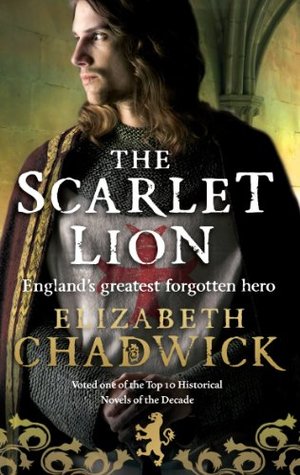
This is the second of Elizabeth Chadwick’s two novels covering the life of William Marshal, knight, soldier, statesman and adviser to four kings of England. I read the first book, The Greatest Knight, seven years ago but it was only when I discovered that Chadwick’s newest book, Templar Silks, was also about William Marshal that I remembered I still needed to read this one. Despite leaving such a long gap between the two novels, I was pleased to find that, as soon as I opened The Scarlet Lion, I was able to get straight into the story – in fact, if you wanted to read this book without having read the first it wouldn’t be a problem at all, although I would still recommend reading both.

The Scarlet Lion, which is as much the story of William’s wife, Isabelle de Clare, as it is of William himself, covers the period between 1197 and 1219. Early in the novel, King Richard I dies with no legitimate children of his own, leaving the succession to the throne of England in doubt. William supports the claim of Richard’s only surviving brother, John, ahead of Richard’s nephew, Arthur of Brittany, but as soon as John becomes king he begins to repay William’s loyalty with hostility and cruelty.

Tensions increase following negotiations over William’s lands in Normandy, for which he has to pay homage to the King of France. No longer as welcome at court as they once were, William and Isabelle retreat to Leinster in Ireland, only to find that John’s justiciar, Meilyr FitzHenry, has been sent to invade their Irish lands. John also asks for their two eldest sons as hostages and Isabelle is devastated when William agrees, putting their marriage under real strain for the first time.

I enjoyed this book as much as I remembered enjoying the first one and it was nice to finish William’s story at last! Having recently read The Autumn Throne, the third of Chadwick’s Eleanor of Aquitaine trilogy which covers roughly the same period and in which William appears as a secondary character, it was interesting to read about some of the same events again, this time with a focus on William’s family rather than Eleanor’s. The different perspective means that John, who was given a more balanced portrayal in The Autumn Throne, is very much the villain in this book and it’s easy to see why Isabelle is so worried about her sons being sent into his care. The fact that William is willing to let them go provides the first real test for their otherwise happy marriage.

William is a great character, but I already knew that from The Greatest Knight, so I particularly enjoyed getting to know Isabelle in this book. Being much younger than her husband, a lot of her time is taken up with giving birth to their ten children, but we also see her develop into a strong, independent woman who, during William’s absences, is able to make decisions and defend their Irish lands. Despite their disagreement over the hostage situation they have a wonderful partnership and a deep understanding of each other.

The Scarlet Lion takes us right up to final hours of William’s life, which as you can imagine, is a sad and poignant conclusion to the novel, but nobody could say that he hadn’t had an eventful and fulfilling life! I have just started Templar Silks and am looking forward to learning more about William’s pilgrimage to Jerusalem in 1183.

Gentian Hill by Elizabeth Goudge

For the last few years Lory of The Emerald City Book Review has been hosting a celebration of Elizabeth Goudge’s work on the author’s birthday and as a result I have read three wonderful novels, one every April since 2015 – The Child from the Sea, The White Witch and Towers in the Mist. This year Lory has taken a break from hosting this event, but I was pleased to find that it has a new home at Howling Frog Books and Jorie Loves a Story. Even before I knew that there would be an Elizabeth Goudge Day 2018, I had already decided to mark the day myself by reading another of her books. I still had plenty of unread Goudge novels to choose from, but Gentian Hill was the one I felt most drawn to this year.

Gentian Hill, first published in 1949, is set in Devon during the Napoleonic Wars. It opens on a peaceful August evening with a Royal Navy fleet arriving at Torbay during a glorious sunset. On board one of the frigates is fifteen-year-old Midshipman Anthony Louis Mary O’Connell, who has been in the Navy for eight weeks and has had all he can take of the seasickness, the brutal treatment, the punishments, and the taunts of the older, more experienced sailors. Escaping from the ship during the night, he deserts and disappears into the countryside where, taking the name of Zachary, he wanders from place to place looking for work until, eventually, fate takes him to Weekaborough Farm near Gentian Hill.

Weekaborough Farm is home to the Spriggs and their ten-year-old adopted daughter Stella. Stella is a gentle, sensitive girl whose time is divided between caring for the animals on the farm and attending lessons with Dr Crane, the village doctor, a man who values the importance of a thorough education for girls as well as boys:

Reading, writing, and elementary arithmetic were all the child needed to learn of the doctor, Mother Sprigg maintained. This, combined with the arts of housewifery that she herself could teach her, was all the education required by a farmer’s daughter. Doctor Crane disagreed; the education required by any individual, he maintained, was just exactly all the knowledge the individual could possibly assimilate.

When Zachary arrives in Stella’s life, an instant connection forms between the two of them which quickly blossoms into love, but soon Zachary must go to sea again…and there is no guarantee that they will be reunited.

I enjoyed Gentian Hill; as with all the other Goudge novels I’ve read, the writing is beautiful and there are some truly lovely descriptions of the Devon countryside. Here are the words she uses to bring Torbay to life:

The last light of the sun was streaming over the rampart of green hills to the west, brimming the leafy valleys with liquid gold, then emptying itself in a sort of abandonment of glory into the vast domed space of sky and sea beyond. There were ripples on the water, and a fragile pattern of cirrus clouds above, and these caught the light in vivid points of fire that were delicate as filigree upon the fine metal of the gold-washed sea and sky.

However, this is probably my least favourite of the four books I’ve read so far. With the hero and heroine being ten and fifteen (and they only age slightly over the course of the novel), I couldn’t really believe in the romance between them – it felt more like the love between a brother and a sister. I also found the characters a little bit too good and too pure, even for a Goudge novel; I feel sure there were characters in her other books who were more complex – unless I was just in the wrong mood this time.

I did find plenty of things to love, though. I particularly liked the way Goudge weaves local legends into the story, such as the legend of St Michael’s Chapel in Torquay, as well as all the customs and traditions that formed part of 18th century rural life: Christmas wassailing, the Ploughing Chant, harvesting, corn dollies, and the ancient instrument known as the bull-roarer. I also enjoyed following the story of the Abbe de Colbert, chaplain of Torre Abbey, who lived and suffered through the recent French Revolution. And although the plot is predictable, what I was hoping would happen is exactly what did happen, so I was happy with that!

Gentian Hill is a lovely story, but if you have never tried one of Elizabeth Goudge’s historical novels before I would recommend starting with either Towers in the Mist or The Witch Witch. She also wrote several contemporary novels including The Scent of Waterdon’t forget to enter my giveaway if you would like to win a copy of that one!

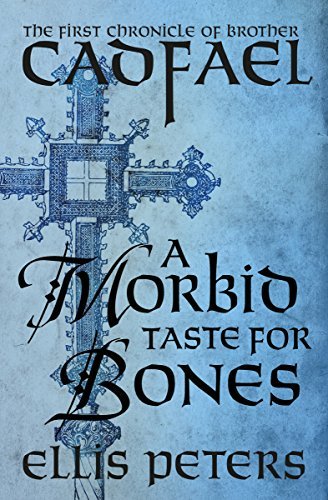
A Morbid Taste For Bones by Ellis Peters #1977club

This week, Karen of Kaggsy’s Bookish Ramblings and Simon of Stuck in a Book are hosting another of their clubs where bloggers read and write about books published in one particular year. The chosen year this time is 1977 and although at first I thought I might have problems finding anything I wanted to read from that year, it turned out I had two suitable books already. One of them was A Morbid Taste for Bones, the first book in Ellis Peters’ Cadfael mystery series. I’ve been meaning to read this series for years, so 1977 Club seemed like the perfect opportunity to begin!

A Morbid Taste for Bones is set in the spring of 1137 and we first meet Brother Cadfael in the gardens of Shrewsbury Abbey tending the herbs with the assistance of two younger monks, John and Columbanus. John is a down-to-earth, practical young man, although Cadfael doubts whether he has a true vocation for the religious life, while Columbanus is starting to make a name for himself with his visions and dramatic ‘falling fits’. Returning from a trip to St Winifred’s Well in Gwytherin, North Wales, Columbanus claims that the saint has appeared to him, saying that her bones are being neglected by the people of Gwytherin and that she would like to be moved to Shrewsbury Abbey where more pilgrims will be able to visit her. Cadfael can’t help thinking that this seems very convenient, as Prior Robert has been considering ways to attract pilgrims to the Abbey and obtaining the bones of a saint would be the perfect solution!

As a Welshman, Cadfael is chosen as one of a small party of monks to travel into Wales and bring the saint’s relics back to Shrewsbury. However, when they reach Gwytherin they are met with resistance from the local people who don’t want to lose Winifred, especially not to England. Tensions rise and when a murder takes place in the woods, Cadfael works with the victim’s daughter to try to find the killer before an innocent man is accused.

I enjoyed my first Cadfael novel and part of the reason for that was because I really liked the character of Cadfael himself, with his mixture of warmth and intelligence, tolerance and imagination. Having entered the monastery later in life, he has a sort of worldliness that helps him to understand the feelings and motivations of people in the ‘outside world’. This allows him to have some sympathy for Brother John, who is struggling to reconcile his faith with other temptations, and also for Sioned, the young woman from Gwytherin whose father’s murder forms the mystery aspect of the novel.

I loved the way Peters portrays life in a small Welsh community: the village hierarchy, the farming of the land, what people did for entertainment, and most of all, how they felt about monks from England coming to take away the remains of a Welsh saint against their will. I was interested to learn, after finishing the book, that this was based on historical fact and Winifred’s relics really were taken from Wales to Shrewsbury Abbey where they remained until the dissolution of the monasteries in the reign of Henry VIII.

I don’t want to give the impression that this is a heavy or dry historical novel, though, because it isn’t – I found it entertaining and very readable. I already knew I liked Ellis Peters’ writing because I read one of her Cadfael short stories in a Christmas anthology last year, but I think her style is better suited to a full-length novel than it is to the shorter form and I enjoyed this much more. It’s also a good example of how to write a murder mystery without including an excessive amount of violence or unnecessarily graphic descriptions. A good choice for 1977 Club and a promising start to a new series for me!

~

I should have another 1977 book to tell you about later in the week, but for now here are a few older reviews I have posted of books published in that year:

The Brethren by Robert Merle
The Mauritius Command by Patrick O’Brian
Golden Bats and Pink Pigeons by Gerald Durrell
Gildenford by Valerie Anand

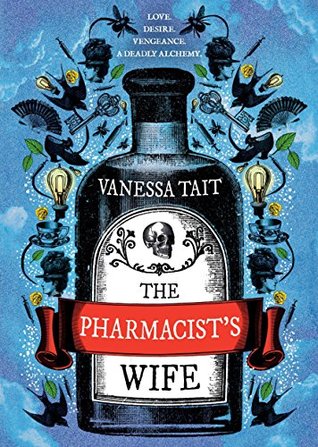
The Pharmacist’s Wife by Vanessa Tait

Vanessa Tait is a new author for me, although it seems she has written one previous novel, The Looking Glass House – a book inspired by Alice in Wonderland, which sounds particularly intriguing as Tait is the great-granddaughter of ‘the real Alice’, Alice Liddell. I was drawn to her latest novel, The Pharmacist’s Wife, by the eye-catching cover and then by the promise of “A dark and thrilling tale of Victorian addiction, vengeance and self-discovery, perfect for fans of Sarah Waters, Jessie Burton’s The Miniaturist and Sarah Perry’s The Essex Serpent.”

The Pharmacist’s Wife is set in Victorian Edinburgh, a setting which interested me immediately. There are so many novels set in Victorian London, it always makes a nice change to find one set somewhere else! Although I felt that the sense of place could have been strengthened by the use of more Scottish dialect, I did like the contrasting descriptions of the Old Town and the New Town.

North Bridge, the road linking Old to New, is the location Rebecca Palmer’s husband Alexander has chosen for his new pharmacy, the Grand Opening of which is celebrated with a brass band and a performing monkey. These are exciting times for Rebecca who, as a spinster of twenty-eight, had given up hope of ever marrying anyone, let alone such a clever and distinguished man as Alexander. Almost as soon as they move into their new home, however, Rebecca is forced to question whether her husband really is the man he appears to be. She suspects him of having an affair with Evangeline, a woman from the Old Town, and when she finds a ladies’ red shoe on his desk she’s sure her suspicions have been confirmed.

Alexander doesn’t like a wife who asks questions or has too many ideas of her own and, with this in mind, he has been developing a new medicine in his laboratory above the pharmacy – a medicine which he hopes can be used to control women and which he persuades Rebecca to try by telling her it will make her happy and content. Soon Rebecca is dependent on her medicine, taking it more and more often and relying on her husband to provide it for her. It is, of course, heroin – and it seems that Rebecca is not the only woman on whom Alexander has been testing his new invention…

This is certainly a dark novel but I didn’t find it a particularly thrilling one and it wasn’t until near the end that I started to feel gripped by the story. I suppose I was expecting more from the plot; there are lots of good ideas and plenty of interesting topics are touched on, but it’s only when (without wanting to spoil too much) things begin to go less smoothly for Alexander that it becomes really compelling, in my opinion. What this book does do, very well, is explore the inequalities between men and women in 19th century society. Although Alexander is not a real person and his discovery of heroin is fictitious, he uses the drug to keep his wife quiet and submissive and to take away whatever small amount of independence and freedom she may have had. Rebecca’s situation is oppressive and frightening and as her addiction to the drug deepens it becomes difficult to see how she is going to break out of the cycle in which she has found herself.

I liked Rebecca as a character and was pleased to see that she does develop as a person as the novel progresses, but I thought the villains, Alexander and his friend Mr Badcock, were too obviously ‘villainous’ and could have been given more depth. As well as the drugs, it seems that there’s no type of cruelty or depravity of which they’re not capable! Thankfully, there are two decent male characters to balance things out slightly – Lionel, the apprentice who helps Alexander in the pharmacy, and Gabriel, Rebecca’s first love.

The Pharmacist’s Wife is an interesting novel and, as I’ve said, a very dark one. I couldn’t love it, but I would be happy to read more books by Vanessa Tait. Has anyone read The Looking Glass House? What did you think of it?

Thanks to Atlantic Books for providing a review copy via NetGalley.

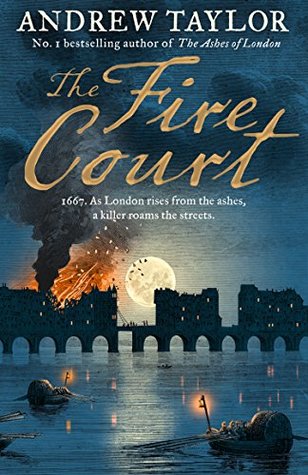
The Fire Court by Andrew Taylor

This is the second in Andrew Taylor’s new historical mystery series set during and after the Great Fire of London. The first book, The Ashes of London, set in 1666, deals with the Fire itself and the devastation it causes, as well as introducing us to our protagonists – James Marwood, son of a Fifth Monarchist, and Cat Lovett, daughter of a regicide involved in the execution of King Charles I. It’s not completely necessary to have read The Ashes of London before beginning The Fire Court as they both work as standalone mysteries, but I would still recommend it.

In The Fire Court, we watch as London begins to rebuild in the aftermath of the Great Fire. With so much of the city destroyed, so many homes and businesses burned to the ground, there’s a lot of rebuilding to be done! Naturally, this gives rise to disputes between landlords and tenants, and disagreements as to how land should be redeveloped and who is responsible for paying for it. A special court is established to deal with all of this: the Fire Court.

At the beginning of the novel, James Marwood’s elderly father dies after falling beneath the wheels of a wagon in a London street, but not before he has time to tell James about a horrific discovery he made in one of the chambers of the Fire Court – the body of a murdered woman, with blood on her yellow gown. At first, Marwood dismisses these claims as the ramblings of an old, ill man, but when he begins to investigate he comes across some clues which suggest that maybe his father was telling the truth after all.

Marwood wants to find out more, but it seems that his employers – Joseph Williamson, the Under-Secretary of State, and William Chiffinch, Keeper of the King’s Private Closet – would prefer him to leave things alone. He can’t walk away now, though; he’s already much too deeply involved. Others have become caught up in the mystery too, among them Cat Lovett who, following the events of the previous novel, is now living in the household of her cousin Simon Hakesby, the architect – and another young woman, Lady Jemima Limbury, whose marriage, it appears, is based on lies and deceit. All of these people have a part to play in the mystery that unfolds and none of them know who to trust.

I enjoyed The Ashes of London, but I thought The Fire Court was even better. The plot was a complex, interesting one and with the focus on lawyers and court cases, it reminded me at times of CJ Sansom’s Shardlake novels, which I love. Being the second book in the series, I felt that both main characters – Marwood and Cat – are starting to feel more fully developed now. I sympathised with Marwood’s conflicting feelings for his father and the dilemma he faces when he is forced to choose between his two masters, Williamson and Chiffinch. As for Cat, she continues to be in a dangerous position should her true identity be discovered, so she has taken the name Jane Hakesby and is pretending to be her cousin’s servant. In her situation, you would think it would be a good idea to keep a low profile, but with her courageous and fiery personality, she does nothing of the sort! I really like the way the relationship between Marwood and Cat is progressing; it has taken a while, but they are beginning to trust each other and work together.

There are some interesting secondary characters in this book too, ranging from Marwood’s servant, Sam, who lost a leg in the wars against the Dutch, to the sinister Lucius Gromwell, in whose room the murdered woman was found. I particularly enjoyed reading about Jemima Limbury: her background and lifestyle are very different from Cat’s but the situation in which she finds herself is no easier to endure.

I’m looking forward to reading more books about James Marwood and Cat Lovett – and am assuming that there are going to be more, as they are being marketed as ‘a series’ which would suggest that there won’t just be two! Meanwhile, I still need to read my copy of Bleeding Heart Square, the only historical mystery by Taylor that I still haven’t read!

The Sapphire Widow by Dinah Jefferies

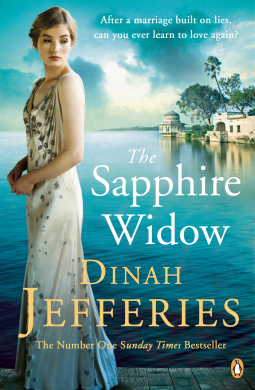
I love Dinah Jefferies’ books; they always have such interesting settings. So far they have taken me to 1950s French Indochina (The Silk Merchant’s Daughter), Malaya during the Emergency of 1955 (The Separation) and 1920s Ceylon (The Tea Planter’s Wife). Her new novel, The Sapphire Widow, takes us back to Ceylon again but the story this time is quite different.

It’s 1935 and Louisa Reeve is grieving for her stillborn daughter, one of several miscarriages and stillbirths she has suffered over the years. She should be able to rely on her husband Elliot for support, but Elliot has become withdrawn and distant, spending more and more of his time visiting a nearby cinnamon plantation in which he says he has bought shares. When he tells her about his latest business venture – converting an old Print House into a shop trading in jewels and spices – Louisa feels more optimistic. It will be something they can work on together – and if they could only have another child, surely their marriage will survive.

Sadly, Louisa will never know what the future might have held for the two of them, because Elliot is killed in a tragic accident. Before she has even begun to come to terms with losing him, she makes a series of shocking discoveries that leave her questioning whether she ever really knew her husband at all. Hoping to find answers at Cinnamon Hills, she only uncovers more lies and secrets, but when she meets Leo, the plantation owner, and a little boy called Conor, she begins to find the strength to move on.

I think The Sapphire Widow could be my favourite of the four Dinah Jefferies novels I’ve read. It was lovely to return to Sri Lanka (or Ceylon, as it was then) and a nice surprise to be reacquainted with characters from The Tea Planter’s Wife, which I hadn’t expected! Although this book doesn’t explore the history and politics of 1920s/30s Ceylon in the way that the earlier book did, it doesn’t really need to because this is a different type of story. Unlike Gwen in The Tea Planter’s Wife, Louisa doesn’t have the same level of interaction with people of different backgrounds and beliefs; her story revolves around Elliot’s lies, her constant battles with her mother-in-law Irene, and the relationships that are beginning to form with Leo and with Conor.

This doesn’t mean that the setting is any less wonderful, of course! Dinah Jefferies writes so beautifully about Ceylon, bringing each location to life as the action moves between the coastal city of Galle, the capital Colombo and the cinnamon plantation where Leo lives. The characters are great too. I loved Louisa and really admired her patience with the interfering Irene, for whom Elliot can do no wrong and Louisa can do no right. I was glad that Louisa had a good friend in her sister-in-law Margo, who helps her through this difficult time despite the problems she is experiencing in her own personal life.

I really enjoyed The Sapphire Widow and will look forward to whatever Dinah Jefferies writes next. Meanwhile, I need to go back and read Before the Rains, her novel set in India in the 1930s. I’m not sure how I still haven’t read that one!

Thanks to Penguin for providing a copy of this book for review via NetGalley.