Mini-reviews: Three books, three queens

I have read three older historical fiction novels recently which I’ve decided to write about all in one post to avoid boring those of you who don’t share my interest in ‘kings and queens’ novels – and also because I’ve fallen hopelessly behind with my reviews again and need to start catching up!

The first book I’m going to mention is With All My Heart by Margaret Campbell Barnes (1951), which tells the story of Catherine of Braganza, the Portuguese princess who comes to England as the wife of King Charles II. Although I’ve read a lot of other novels set during the reign of Charles II, this is the first one that specifically focuses on Catherine. Catherine is portrayed very sympathetically throughout this novel, beginning with her early days in England, trying to adjust to a climate and culture so different from Portugal’s, and later, when she discovers that she will have to share her husband with his many mistresses.

There is some overlap between this book and the last one I read by Barnes – Lady on the Coin – which is about Frances Stuart, one of the other women at the court of Charles II, but the two novels have a different feel, probably due to the very different personalities and positions of their heroines. One notable difference between the two books is that while major events such as the plague and the Fire of London are only touched on lightly in Lady on the Coin, they are given much more attention in this book and that made this one a more interesting read.
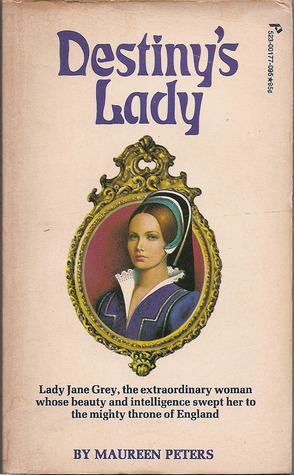
The second queen to feature in my recent reading was only queen for nine days: she is, of course, Lady Jane Grey and her story is told in Destiny’s Lady by Maureen Peters. The book takes us through Jane’s life from her childhood in the household of Catherine Parr and Thomas Seymour to her acceptance of the crown, her imprisonment and finally her beheading in 1554. Jane’s mother, Frances Brandon, is very much the villain of the novel, but remembering that it was published in 1972, I think that was the accepted view of Frances at the time – it only seems to be more recently that historians have started reassessing what we know of her again.

I have read a few other books by Peters and I complained that they were too short to do the subject justice. This is another short one, but as Jane Grey’s life was sadly also very short, I felt that the length of the book was adequate for everything that needed to be said. The pacing is better and there is not the same sense of struggling to squeeze a person’s entire lifetime into two hundred pages. Having said that, I would only really recommend Destiny’s Lady if you just want a brief overview of Jane’s life or are looking for a light and undemanding read set in this period. If you would prefer a more in-depth novel about Jane, you will need to look elsewhere.
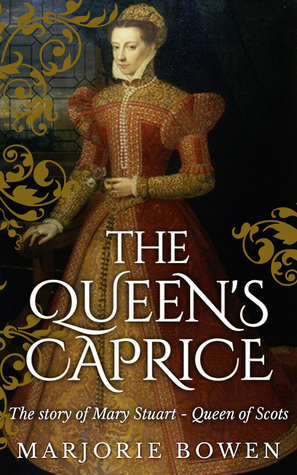
Finally, I read The Queen’s Caprice by Marjorie Bowen, a book about a queen of Scotland this time. The story of Mary, Queen of Scots, is a fascinating, eventful one and always a good subject for historical fiction. Bowen’s novel is a straightforward fictional biography of Mary, covering the period from her return to Scotland in 1561 following the death of her husband, the King of France, and her imprisonment at Lochleven. In between, there’s always something happening: a murder, a plot, a rebellion or a disastrous marriage or two!

This is an interesting look at Mary’s life, although as it was published in 1933 I think the style will be too dated for some readers and it’s probably not the best book to read as a first introduction as Bowen does seem to assume we have some background knowledge of the period. It isn’t a very flattering portrayal of Mary either – as the title suggests, a lot is made of her capriciousness and her tendency to think with her heart rather than her head, making poor decisions regardless of the consequences. I was never sure whether our sympathies were supposed to be with Mary or with her ambitious half-brother, James Stewart, the Earl of Moray. I’ve read a few other books by Marjorie Bowen and while I thought this one was worth reading, it isn’t one of my favourites.

Have you read any books about Catherine of Braganza, Lady Jane Grey or Mary, Queen of Scots? Which would you recommend?
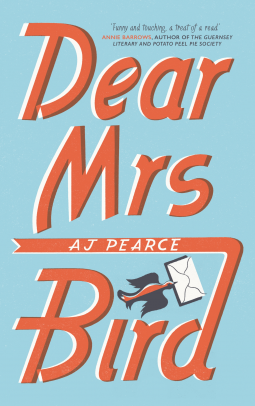
Dear Mrs Bird by AJ Pearce

It’s 1941 and Britain is at war. Emmeline Lake has always wanted to be a journalist and is thrilled when she sees an advertisement in the newspaper for a job at the London Evening Chronicle. This could be her opportunity to become a Lady War Correspondent. How exciting!

To her delight, Emmy is offered the job and arrives at the Chronicle offices ready to ‘sniff out Political Intrigue, launch Difficult Questions at Governmental Representatives, or best of all, leap onto the last plane to a far-off country in order to send back Vital Reports of resistance and war’. Unfortunately, it soon becomes clear that there has been a misunderstanding. Emmy isn’t going to be a War Correspondent – she won’t even be working for the newspaper at all. Her new job actually involves typing up letters for Mrs Henrietta Bird’s problem page in the weekly women’s magazine Woman’s Friend, which happens to be based in the same building as the Chronicle. Emmy does her best to pretend that Everything Is Absolutely Tip Top (as you can see, she likes to think in capital letters), but really she is devastated. This is not what she had expected at all!

Trying to make the best of things, Emmy begins sorting through the letters, picking out some for Mrs Bird to reply to. She quickly discovers, though, that Mrs Bird has a whole list of words and topics which she considers unsuitable for publication in the magazine. Any letters which mention love, marriages, pregnancies, affairs or romantic relationships of any kind – almost all of them, in other words – must be rejected and thrown away immediately. Emmy can’t bear to see so many readers’ problems being ignored; if only there was something she could do to help…

Dear Mrs Bird was an absolute joy to read from start to finish! I loved Emmy from the beginning and her friendly, enthusiastic narrative voice pulled me straight into her world. She’s such a kind-hearted, well-meaning person, yet she doesn’t always say or do the right thing, which makes her feel very human. The language is perfect for the time period too and I could easily have believed that I was reading a much older book – and as I usually complain about language feeling too ‘modern’, that’s high praise from me!

At first, much as I was enjoying following Emmy’s adventures at Woman’s Friend and meeting the other characters in the story – who include her best friend Bunty, her fellow typist Kathleen, and the formidable Mrs Bird herself – I thought this was going to be a very light-hearted, cheerful novel despite the wartime setting. However, in the second half of the book there’s a noticeable change in the tone, as the bombing raids on London become more frequent and more ferocious. There’s drama, there’s tension and there’s heartbreak…but there’s never too much of any of these things and the book never loses its charm and its warmth.

Dear Mrs Bird is a lovely book and I was pleased to discover that there is already the possibility of a television adaptation. It will be perfect for a Sunday evening, I think. Meanwhile, I highly recommend finding yourself a copy of this book and getting to know Emmy and her friends.

Thanks to Pan Macmillan for providing a review copy via NetGalley.

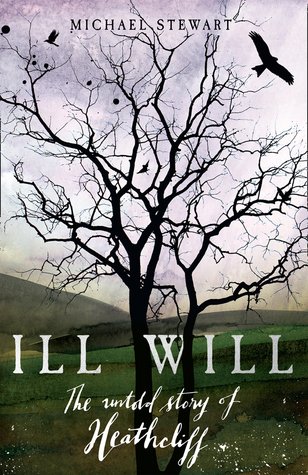
Ill Will by Michael Stewart

Have you read Wuthering Heights? If so, you’ll remember that in the middle of the book, Heathcliff disappears after hearing Cathy say that it would degrade her to marry him. When he returns after a three year absence he has undergone a transformation, but we never find out where he has been and what he has done during that period. In Ill Will, Michael Stewart has created a story for Heathcliff to fill in the gaps.

In Stewart’s version of events, Heathcliff leaves Wuthering Heights with two main goals in mind: first, to find a way to get revenge on Hindley and Edgar Linton, and second, to discover as much as he can about his own background. Knowing that old Mr Earnshaw, Hindley and Cathy’s father, brought him back to Wuthering Heights as a child after a trip to Liverpool, Heathcliff (taking the name William Lee) sets off for the west coast hoping that Liverpool will hold clues to the truth of his parentage. On the way, he rescues a ten-year-old girl, Emily, from a brutal whipping and as she is all alone in the world he allows her to join him on his mission.

As the daughter of a highwayman who has recently met his fate at the end of a hangman’s noose, Emily is used to living by her wits and she suggests that they make use of her unusual talents to earn some money for the journey. If her scheme goes wrong, however, they could find themselves in serious trouble. Will they make it safely to Liverpool – and if they do, what will they find there? Will the secrets of Heathcliff’s past be revealed and will he be able to return to Wuthering Heights as a rich and educated gentleman?

As Wuthering Heights is one of my favourite classics, I was immediately drawn to this book when I saw it on NetGalley, but at the same time I didn’t want to set my expectations too high as I have often been disappointed with sequels, prequels and retellings of classic novels in the past. This had the potential to be a good one – Heathcliff may not be the most pleasant of characters but he is certainly an interesting one and there are an endless number of stories which could be invented to fill in his missing years – but as I suspected, there were things that I disliked as well as things that I liked.

Starting with the positives, there’s some lovely descriptive writing which brings to life the countryside Heathcliff and Emily pass through on their way to Liverpool. These descriptions could only have been written by someone who had visited the area and felt a connection with it, so I was not surprised to read that Michael Stewart had spent some time walking across the moors as part of his research. The novel is set in the 1780s (although Wuthering Heights was published in the nineteenth century, most of the action takes place earlier than that), which is a time of change as the industrial revolution begins to transform the landscape and the lives of the people who inhabit it. The north of England is at the heart of this, and Heathcliff, who has been isolated at Wuthering Heights for years, takes note of the canals, bridges, factories and other signs of technological progress that they see on their journey.

A fascinating setting and time period, then; my main problem with the book was the language. I don’t mind some swearing in a book, if it feels like the natural way that a character would speak, but I didn’t really expect to pick up a novel based on Wuthering Heights and find the f-word and c-word on almost every page, especially coming from a ten-year-old girl (although to be fair, I suppose she is described as ‘foul-mouthed’ in the blurb). I found it irritating and a constant reminder that I was reading a contemporary take on Wuthering Heights, rather than being swept back into the world Emily Brontë had created, which is what I would personally have preferred. It won’t bother everyone, I’m sure, and I know that people did obviously swear in the eighteenth century, but it just didn’t feel right to me in this particular book.

The actual story is quite engaging, which is why I kept reading – and although the explanation of Heathcliff’s origins is predictable, it’s realistic given the time and place and the few clues we have to work with from Brontë’s novel, but despite my love of Wuthering Heights or maybe because of it, this book just wasn’t for me. Stewart’s portrayal of Heathcliff was too different from the way I have always imagined him, so I never felt convinced that I was reading about the same character. I’m sure Ill Will is going to be a big success with other readers, though, and as there’s already talk of a television adaptation I think we could all be hearing a lot more about it in the future.

Thanks to HQ for providing a copy of this book for review via NetGalley.

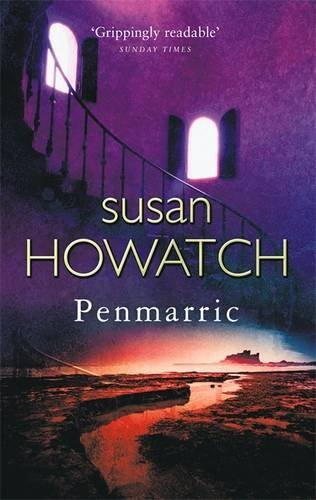
Penmarric by Susan Howatch (re-read)

A long time ago (before I started blogging, anyway, which feels like a lifetime ago!) I picked up Susan Howatch’s 1971 novel Penmarric at the library. I knew nothing about it but, as soon as I started to read, I was drawn into a wonderfully compelling story which begins in 19th century Cornwall and is linked in a unique way to a much older story. I went on to read two of her other novels, Cashelmara and The Wheel of Fortune, which I also loved, and I’ve been thinking for a while now that I would like to read all three again.

Penmarric is divided into five sections, each narrated by a different character, beginning in 1890 with Mark Castallack. Mark’s mother, Maud, has spent her whole life working towards one goal: regaining Penmarric, the family estate which her father left to her cousin Giles rather than herself simply because she was a woman. Maud is determined to see Mark take his rightful place as master of Penmarric and eventually she gets her wish – but this does not bring happiness to any of the Castallacks.

The other four narrators are Mark’s wife, Janna, two of his sons – Philip and Jan-Yves – and one of his illegitimate sons, Adrian. It’s a story which spans six decades, taking us from the Victorian era through the turn of the century to the First and Second World Wars, but in Mark’s little corner of Cornwall a war of a different sort is played out as his marriage with Janna breaks down and his sons turn against each other and then against him.

What makes Penmarric such a great novel and what has made me remember it so vividly over the years, is that the story of the Castallacks mirrors very closely the story of Henry II and Eleanor of Aquitaine and their sons. We know from history that Henry and Eleanor’s marriage was troubled, that she and their sons rebelled against Henry and that she was sent away from court, so Howatch’s fictional story follows the same outline. If you think of Penmarric as the throne of England, the rest begins to fall into place, and if you’re familiar with the period you’ll be able to identify Henry, Eleanor, Richard I, King John and even the King of France amongst the fictional characters in the book.

Each chapter opens with one or two relevant quotations from historical sources, giving an idea of what will happen in the pages that follow and helping the reader to draw parallels between the characters in the novel and their historical counterparts. The first time I read the book I didn’t have the knowledge I have now, so I didn’t pick up on everything, but this time I could appreciate just how well structured it all is and how cleverly Howatch works even minor episodes from history into the plot. Of course, it’s not essential to know anything at all about Henry and Eleanor before you begin as Penmarric can still be enjoyed as a wonderful family saga in its own right.

Of the five narrators, my favourites are the last two: Philip, the son who, being the closest to Janna, is hurt the most by Mark’s actions and who retreats into a single-minded obsession with reopening the Penmarric tin mine, Sennen Garth; and Jan-Yves, the youngest son and the one who stays loyal to their father – until it really matters. Each section is written in a strong, distinctive voice, each one adding to, complementing and contradicting the one before so that a character who seems particularly unpleasant when seen through the eyes of another becomes more sympathetic once they get a chance to tell their own side of the story.

Penmarric is a dark novel – as I’ve said, none of the characters experience much happiness in their lives and none of them are easy to like – but the plot is completely gripping, even when you’re reading the book for the second time. There are some lovely descriptions of Cornwall too; this is one of those books where the setting is as important as the characters and the plot. Although some of the family members move away and do other things, they are all drawn back again and again to Cornwall and Penmarric.

I really enjoyed my re-read of this book, especially now that I have enough familiarity with medieval history to be able to follow both layers of the story. I will be re-reading Cashelmara very soon and am looking forward to it as I can remember very little about that one.

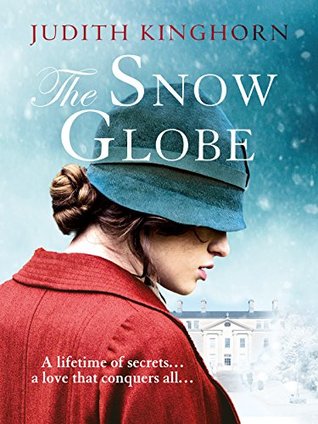
The Snow Globe by Judith Kinghorn

This would have been a good book to have read over the Christmas period, but when I picked it up at the beginning of March we were having a spell of particularly heavy snow, which was quite appropriate! This is the fourth book I’ve read by Judith Kinghorn, so I had an idea of what to expect from it: an early twentieth century setting, a big house, a family with servants, their way of life changing as a result of the First World War. The Snow Globe does have all of these things, although the war aspect is not as strong as in The Last Summer or The Echo of Twilight.

The novel opens in December 1926. At Eden Hall in Surrey, the Forbes family are preparing to celebrate Christmas and eighteen-year-old Daisy has brought out her snow globe, a treasured gift from her father, Howard. She and her father have always had a close relationship and this makes it particularly upsetting when she overhears the servants saying that he has been having an affair. To make matters worse, her mother has just invited Howard’s mistress to spend Christmas with them. This creates a dilemma for Daisy. Does her mother know what has been going on – and if not, should she be told?

The discovery that her father may not be the man she has always believed him to be shakes Daisy’s confidence and makes it difficult for her to trust the other men in her life. There are three of them and they have each declared their love for Daisy over that same Christmas period: Stephen Jessop, the housekeeper’s adopted son and Daisy’s childhood friend; Valentine Vincent, the son of her father’s mistress; and Ben Gifford, who works for the family business. To give herself some time to think, Daisy goes to stay in London with her glamorous older sister Iris but eventually she will need to make a decision…will it be the right one?

I enjoyed The Snow Globe, but I found it very light compared to Judith Kinghorn’s other books. Although the book is set in the 1920s, there’s not a lot of history in it. Apart from the opening chapter, which discusses the disappearance of Agatha Christie, there are very few mentions of any other historical events or people of the time. However, it does still capture the feel of the 1920s very well, touching on the lives of those both upstairs and downstairs, class differences within society, attitudes towards marriage, and the changing roles of women.

I liked Daisy – although some of her actions seem a bit silly, it’s worth remembering that she is young and innocent and has just had her world torn apart. Her precious snow globe, which shows a miniature world encased in glass, could be seen as symbolising this: when the globe is shaken the illusion is destroyed and then, when things fall back into place, they are in a slightly different position than they were before. I also liked spending time with the servants, listening to their gossip and seeing life at Eden Hall through their eyes. The character who interested me most, though, was probably Mabel, Daisy’s mother. I found her reaction to the traumas in her life dignified and mature; she didn’t fall apart as some people would, but searched for the strength within herself to carry on.

There was enough happening in The Snow Globe to hold my interest from beginning to end, but it didn’t have the level of depth that I prefer in a novel. I would recommend it to fans of Downton Abbey or other ‘big house’ stories, but I think The Echo of Twilight would be a better choice to start with.

Thanks to Canelo for providing a copy of this book for review via NetGalley.

The Savage Brood by Martha Rofheart

Having read two of Martha Rofheart’s other books, Lionheart and Burning Sappho (about Richard I and the poet Sappho, respectively), I decided to try her 1978 novel The Savage Brood next. It sounded different from the others, being a multi-generational family saga and concentrating on fictional characters rather than real historical ones. I liked it enough to finish it but, as I so often find with this kind of book, the earlier sections were the best and I struggled to stay interested as the action moved closer towards the modern day.

The novel follows the fortunes of the Savage family, who have a long history as actors of one sort or another. It is divided into three sections which are set in different periods and work almost as self-contained novellas. We begin in Tudor England where we meet one branch of the family, a group of travelling players who make their living moving from town to town in a horse-drawn wagon and putting on performances for the local people. Finding English law too restrictive, the troupe move to Italy where, under the patronage of Cosimo I de’ Medici, they learn the skills of Commedia dell’Arte.

After a short ‘interval’, the story then jumps forward to 1752 where some of the Italian Savages (or Savaggi, as they have become known in the intervening years), return to London’s Drury Lane to work with the great English actor and producer, David Garrick. Garrick identifies young Miranda Savage as a special talent, but loses her when she moves to America – just in time for the Revolution.

There’s another interval and then we skip forward again, this time to San Francisco in 1906. The Savages have now made a name for themselves as vaudeville entertainers, but this form of theatre is in its final days as the first silent films begin to make their appearance. This section of the novel takes us right through both world wars and follows the careers of comic actor Sammy Savage, showboat musician Solange Sauvage, and Hollywood star JP Savage.

As I said, the first two sections were the most enjoyable, at least in my opinion. The third dragged on for too long, and except for the wartime parts, when the action moves to France for a while, I found the storyline much less interesting. The characters were unlikeable and self-obsessed, lacking the charisma of some of their earlier ancestors and little more than stereotypes of early Hollywood stars. By contrast, I loved the eighteenth century section and was particularly fond of Miranda Savage’s cousin Beau, who rises from humble beginnings to become a stage and fashion icon. Taken as a whole, though, I found the saga of the Savages unconvincing, with too many chance encounters between people who turn out to be distant Savage cousins.

Although Rofheart does acknowledge that women couldn’t act on stage in England until the Restoration, she does depict some of her sixteenth century female characters as acting with a travelling troupe. I didn’t think women were allowed to perform at all during that period (apart from in Italy), so that bothered me while I was reading, although I have since discovered a book on Women Players in England, 1500–1660, which suggests that women may have had more opportunities to act in sixteenth century England than I had imagined, at least on an amateur basis. I really don’t know enough about the subject to comment any further on Rofheart’s historical accuracy.

Despite the problems I had with The Savage Brood, I think it will be a fascinating read for anyone interested in the theatre, incorporating almost every type of acting you can think of – Commedia dell’Arte, Shakespeare, vaudeville, film and more – set against a backdrop of major historical events. I’m not really in any hurry to read the rest of Martha Rofheart’s books, but if anyone has read The Alexandrian, Cry God for Glendower and Fortune Made His Sword I would like to know if you enjoyed them and if you think they’re better than this one?

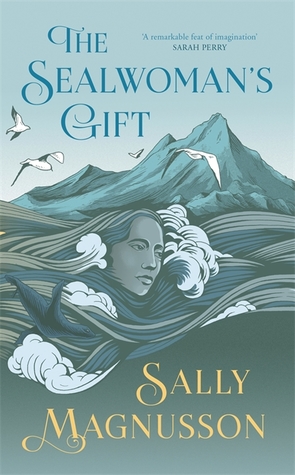
The Sealwoman’s Gift by Sally Magnusson

This is a beautifully written novel based on a little known historical event: the 1627 raid by Barbary pirates on Iceland’s Westman Islands. Around four hundred Icelanders were taken in captivity to Algiers to be sold at the slave markets, among them the priest Ólafur Egilsson, his pregnant wife Ásta Thórsteinsdottir, and two of their children. We know from historical records that Ólafur was released and sent to Denmark to petition the Danish king (Iceland’s ruler in those days) in the hope that he would provide the ransom to free his subjects. His story was preserved in a memoir describing his capture and the voyage there and back, but the story of Ásta, who was not allowed to accompany him on the journey home, has been lost to history.

In The Sealwoman’s Gift, Sally Magnusson has given a voice to Ásta, a woman who, like so many others in centuries gone by, has been ignored and forgotten by history. As we know little or nothing about what happened to Ásta and the other women and children after their arrival on the shores of Algeria, this gives the author the freedom to create an interesting, realistic and believable story to fill in the gaps. She writes with sensitivity and understanding as she describes Ásta’s pain at being separated from her husband and children, her changing feelings for the man who buys her – Ali Pitterling Cilleby – and the agonising decision she eventually has to make.

There’s a lot for Ásta to adjust to in her new life; Algeria and Iceland couldn’t be more different, with very different climates, customs, foods, languages and religions. The religious difference is one of the most difficult for Ásta to accept – as the wife of a Lutheran minister, the possibility of her children having to convert to Islam is not easy for her to come to terms with. We also follow Ólafur on his return to Heimaey in the Westman Islands and see both the short-term and long-term effects the raids have had on the community. With such a small population to begin with, the loss of several hundred of their people has a big impact; it seems that almost everyone has lost a husband or wife, a child or a parent or a friend.

Iceland has a strong tradition of storytelling and some of these myths, legends and sagas are woven into the novel as Ásta finds some solace in remembering the stories of her homeland and narrating them to her master and his wives. This is another aspect of the book that I liked; you can learn a lot about a country from its stories and its folklore.

Sally Magnusson (who is the daughter of the television presenter Magnus Magnusson) has previously written several non-fiction books, but this seems to be her first novel. I liked her writing, apart from the fact that she chose to write in the present tense. I’m really not a fan of present tense and in this case I found it distracting and distancing, which I’m sure is not what the author intended. It’s down to personal taste, I suppose – you either have a problem with it or you don’t. I also thought that, while Ásta, Ólafur and the other Icelandic people are strong, interesting characters, the characters they meet in Algiers feel less well developed. If I’d had a stronger feeling for Cilleby, for example, as a person, I think I would have found the later stages of the story more emotional.

These are just small criticisms and, as I’ve said, are probably just due to my tastes as a reader rather than the book itself, which is getting great reviews and really is a fascinating read.

Thanks to Two Roads for providing a copy of this book for review via NetGalley.