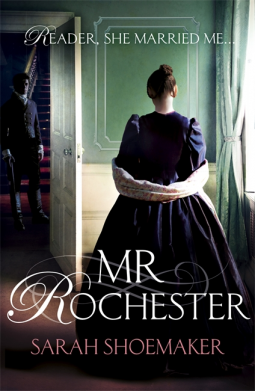
Mr Rochester by Sarah Shoemaker

As I’m not usually a fan of sequels, prequels or retellings of classic novels, I wondered if I was making a mistake in reading Mr Rochester, a book which, as you have probably guessed, is inspired by Charlotte Brontë’s Jane Eyre. However, I’ve always found Mr Rochester an interesting character and the premise of this novel was intriguing enough to tempt me. And I enjoyed it more than I thought I would; the first few sections of the book are excellent – but the last part doesn’t work as well, for reasons I’ll explain shortly.

In Jane Eyre, we meet Edward Fairfax Rochester at his home, Thornfield Hall, where Jane has come to take up a position as governess. We do learn a little bit about his family background and his life before Jane, but is it enough for us to fully understand what made him the man he is? I’ve never thought so and clearly Sarah Shoemaker didn’t either because in Mr Rochester she takes us back to Edward’s childhood to explore the people and events that may have shaped his character and formed the man who will eventually fall in love with Jane Eyre.

At the beginning of Shoemaker’s novel, Edward is a lonely little boy who is largely ignored and neglected by his father and older brother Rowland. At the age of eight he is sent away to be educated, along with two other boys, at the home of his tutor, and although at first he is heartbroken at having to leave his beloved Thornfield Hall the friendships he forms at school will have a big influence on his life. On the rare occasions when he is reunited with his family, he receives no love or affection at all, yet it is clear that his father has not forgotten him and has his future all mapped out. Edward ends up in Jamaica where he takes over the management of the Rochester plantation, Valley View – and is pushed into marriage with the beautiful Bertha Mason, the woman who will become Brontë’s famous ‘madwoman in the attic’.

I really enjoyed the first two thirds of the book, covering the period described in my previous paragraph. This is the part of Rochester’s life Charlotte Brontë didn’t tell us about – at least not in any detail – so Shoemaker is free to use her imagination. I loved reading about Edward’s early childhood, his schooldays and his apprenticeship in a mill; this could have been the basis of an interesting piece of Victorian historical fiction in itself, even without the Jane Eyre connection. The Jamaican chapters are compelling too. There are some similarities with Wide Sargasso Sea by Jean Rhys, but this time our sympathies are intended to be with Mr Rochester as well as with Bertha. Shoemaker’s Rochester does his best for Bertha under difficult circumstances and I found him a more likeable character than both Rhys’s Rochester and Brontë’s…until the point where he returns to Thornfield and meets Jane Eyre.

The rest of the novel – about a third of the book – is a fairly straightforward retelling of Jane Eyre, written from Rochester’s perspective instead of Jane’s. This is where things start to fall apart, in my opinion. Shoemaker puts Brontë’s words directly into the mouths of Rochester and Jane rather than her own – and although she has written in a suitably ‘Victorian’ style throughout the novel, her writing is obviously not the same as Brontë’s, which means the sudden change in the dialogue feels unnatural and uncomfortable. I think I would have preferred her to have simply followed the broad outline of the Jane Eyre plot instead of trying to stick to it rigidly.

The Mr Rochester for whom I’d gained so much sympathy earlier in the book, the quiet, lonely, obedient little boy whose life paralleled Jane’s in so many ways, the insecure man pushed into a career and a marriage not of his own choosing and who longed for nothing more than to go home to Thornfield Hall – that man is gone and I had trouble believing that Shoemaker’s Rochester would behave the way he does in the final section of the book; the whole Blanche Ingram storyline feels out of character, for example.

In other words, if this had just been an original novel inspired by Jane Eyre and set in the Victorian period I would probably have loved it; it was the retelling of the familiar Brontë plot that I didn’t find entirely successful. I didn’t feel that this book really added to or changed my feelings about Jane and Mr Rochester, but there were enough things that I liked about it to make it an enjoyable read anyway.

Thanks to Headline Review for providing a copy of this book for review via NetGalley.
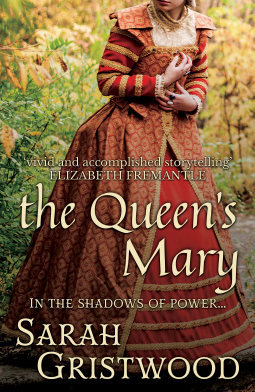
The Queen’s Mary by Sarah Gristwood

Sarah Gristwood is an author of both historical fiction and non-fiction. I have read one of her non-fiction books – Blood Sisters, a biography of several of the women involved in the Wars of the Roses – but this is the first of her novels that I’ve read. It’s set in the 16th century and the queen of the title is Mary, Queen of Scots. Mary is known to have had four ladies-in-waiting, young women her own age who were also all called Mary. They were the daughters of Scottish nobility – Mary Fleming, Mary Livingston, Mary Beaton and Mary Seton. Gristwood’s novel is written from the perspective of Mary Seton.

We first meet the four Marys as children of five or six years old. It’s 1548 and they are embarking on a voyage to France where the young queen will grow up and eventually marry the Dauphin, the heir to the French throne. This forms the novel’s brief prologue and we hear very little about what actually happened in France, except when Seton looks back on the period later in her life:

Seton could tell tales of Diane’s banquets where the white wine was made cool with snow, of music in the pavilions by the river; a tennis court where the king played dressed in white silk. Of a park where special deer wore silver collars and ornamental canals were filled with fish; and of how, when the royal children came to stay, muzzled mastiffs and even a bear were brought into the nursery.

We join the Marys again in 1561 as they return to Scotland following the death of the queen’s husband. They have now grown into young women, all with very different personalities: Fleming pretty and regal, Livingston down to earth and flirtatious, Beaton quietly passionate, and Seton herself sensible and thoughtful. However, it would have been nice if, rather than the author just telling us what the Marys were like (by comparing them to the four elements, earth, fire, water and air, for example) she had done more to convey their personalities through their speech and actions instead.

The rest of the novel takes us through the years of Mary’s reign, a troubled time of religious conflict, disastrous marriages and controversial love affairs. It can’t have been easy for a young woman returning after a long absence in France to rule over a country she barely remembered:

It was as if the queen were groping to understand what to her – Seton thought with a chill – seemed almost to be an alien country.

The queen is lucky to have such loyal companions as the Marys to help her through these difficult years, but even they are unable to prevent her from making mistakes. She rarely confides in them or asks their advice, remaining a very lonely and isolated figure. Seen only through the eyes of Mary Seton, she never fully comes to life on the page and we never really know what she is thinking or feeling, but maybe that was intentional, to show the distance between the queen and her ladies, even after so many years together.

The story of Mary, Queen of Scots is fascinating but has been written about many times before; the stories of Mary Seton, Beaton, Livingston and Fleming are much less well known and the hope of finding out more about them was what drew me to this novel. I can appreciate that there will not be a lot of information available on the lives of these four women, but I think Sarah Gristwood did a good job of working with what we do know to flesh out each character a little bit. I do wonder, though, whether the story might have been more compelling if it had been written in the first person rather than the third, or if each Mary had been given a chance to take a turn at narrating rather than just Seton.

I did have a lot of sympathy for Mary Seton; she is the one who remains in the queen’s service as the other three gradually marry and find freedom (or if not freedom exactly, at least a form of escape) away from court. Seton’s whole life has been devoted to the queen and she gradually becomes torn between loyalty to her mistress, frustration at her lack of influence and a longing to break the bond and live her own life at last.

Although there was too much distance in this novel for me to say that I really enjoyed it (distance between one character and another, as well as distance between the characters and the reader) it was still good to have an opportunity to meet the Four Marys and to add to my knowledge of this period of history.

Thanks to Endeavour Press for providing a copy of this book for review via NetGalley.
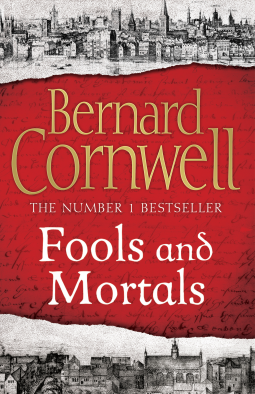
Fools and Mortals by Bernard Cornwell

Despite my love of historical fiction, Bernard Cornwell is not an author I’ve ever really felt like reading. The usual settings and subjects that he writes about don’t appeal to me and although I did once start to read his book on Stonehenge, I didn’t get very far with it before giving up. His latest novel, Fools and Mortals, however, sounded much more like my sort of book, so I thought it was time I gave him another chance.

The title is inspired by Shakespeare’s A Midsummer Night’s Dream (“Lord, what fools these mortals be!”) and it is Shakespeare who is at the heart of the novel – not William, though, but his younger brother, Richard, who has followed him to London in the hope of becoming an actor. I found this slightly confusing, because I remembered from reading Jude Morgan’s The Secret Life of William Shakespeare that it was their other brother, Edmund, who was the actor. I don’t know why Cornwell gave this role to Richard instead; the rest of the background to the novel seems to have been thoroughly researched, so I would be interested to know whether that was a deliberate decision rather than a mistake.

Anyway, Richard Shakespeare is our narrator. The novel opens in 1595 just as The Lord Chamberlain’s Men – the acting company to which both Richard and William belong – are beginning rehearsals for A Midsummer Night’s Dream. Until now, Richard, like several of the other young men in the company, has been given only women’s parts to play. He wants nothing more than to play a man for a change, but it seems that his brother is still determined not to take him seriously as an actor. There are other companies, of course, and other theatres, and Richard receives a tempting offer from Francis Langley of the newly constructed Swan in Southwark. However, this will depend on whether or not he is prepared to steal two of William’s new plays. Will Richard betray his brother and leave The Lord Chamberlain’s Men – or can he find another way to earn William’s respect and win the bigger, better roles he believes he deserves?

I enjoyed this book much more than I’d expected to! I imagine that battle and military scenes probably form a big part of most of Cornwell’s other books, but there was nothing like that in this one, which is set entirely in the world of the Elizabethan theatre. There is still plenty of action, but it takes the form of the attempts of other companies to steal Shakespeare’s plays and the efforts of the Pursuivants to find evidence of heresy and close the playhouses down. As the narrator, Richard is involved in all the drama, both on stage and off, and tells his story in a lively, humorous style. He has his flaws but is a likeable character – although I should warn you that William is not!

The other members of The Lord Chamberlain’s Men are also brought to life, from well known figures of the period such as the comic actor Will Kemp to those who are purely fictional. It was fascinating to see A Midsummer Night’s Dream take shape starting with the earliest stages – the allocation of parts to actors and the learning of lines – to rehearsals at the home of their patron, Lord Hunsdon, and then the final performance (I loved the hilarious description of the Pyramus and Thisbe play-within-a-play). However, I couldn’t help feeling that this all became very repetitive; I felt that the entire plot of the play had been described in detail a hundred times by the time I reached the end of the novel!

The book finishes with an author’s note from Cornwell; this is long and detailed, describing his interest in Shakespeare’s work and discussing the history behind London’s playhouses. Surprisingly, he doesn’t talk about Richard Shakespeare himself or why he was chosen to be the central character in the novel.

It would be nice to think that I would find the rest of Cornwell’s books as entertaining as this one, but I’m still not sure that any of the others would really be to my taste. I do have a copy of The Last Kingdom which I acquired when it was free for Kindle a while ago, so I will try it at some point and will be happy to be proved wrong!

Thanks to HarperCollins for providing a copy of this book for review via NetGalley.
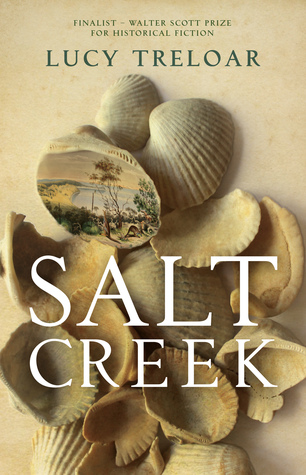
Salt Creek by Lucy Treloar

As well as taking part in German Literature Month this November, I also wanted to read something for Brona’s Australia Reading Month. I haven’t read many Australian books or authors and this is something I want to change, as discussed in a recent Historical Musings post. Lucy Treloar’s Salt Creek was one of the books I needed to read for my Walter Scott Prize project so seemed like the perfect choice.

Salt Creek is set in the 19th century and narrated by Hester Finch, who is fifteen years old as the novel opens in 1855. Having been leading a comfortable lifestyle in Adelaide, the family have fallen on hard times and Hester’s father has decided that they should move to the Coorong region of South Australia where they can try to build a new life for themselves farming the land. Arriving at Salt Creek in the Coorong, however, they find that things are not going to be easy. The landscape is beautiful but desolate, the land is difficult to tame and their Aboriginal neighbours view the newcomers with suspicion.

Hester’s mother, who has been depressed for some time, struggles to adapt and Hester, as the eldest daughter, finds herself taking on more responsibilities around the house. When the chance of freedom comes her way, will she take it or are the ties binding her to Salt Creek too strong? Meanwhile, the efforts of her father and brothers to work the land and make it suitable for farming bring them into conflict with the indigenous Ngarrindjeri people who have made the Coorong their home for generations.

Acting as a bridge between the two cultures is Tull, a boy from a local tribe who is welcomed into the Finch family and grows up with Hester and her brothers and sisters.

That winter I began to notice how differently he saw almost everything compared to us. Mama might say that the colours of winter reminded her of the highlands of Scotland, and I might say that the sky was sapphire or that the washing lines were like cobwebs on a cold morning. Hearing these things perplexed him, as did so much else – the encumbrances of our clothing, our impractical hair, our heavy boots, the fences that we built – which he made apparent by his stillness or his incredulity…

Tull’s relationship with the Finches is one of the most interesting aspects of the story. They come from such different worlds, yet find shared ground and common interests, giving hope that the wider groups they represent – the Aboriginal people and the white settlers – may be able to cooperate and work together. However, it is through Tull that Hester becomes aware of the harm the arrival of her family is doing to the Ngarrindjeri and to the environment.

The story itself has a bleakness to match the harshness of the landscape. Most of the characters experience little or no happiness, enduring poverty, the death and loss of loved ones, prejudice, betrayal and the breakdown of trust. It’s such a sad and tragic story – and yet I didn’t feel quite the emotional connection to Hester that I would have liked. I’m not sure why that should be, but I didn’t become fully invested in Hester’s personal story until I was well into the second half of the book. I don’t think it helped that the author chose to write part of the novel from the perspective of an older Hester living in England and looking back on her life. A more linear timeline might have worked better for me.

Still, Salt Creek is a beautifully written novel, with some lovely, vivid descriptions of the Coorong. Here is Hester having her first glimpse of her new home:

There was little enough to see – dry grasses and low shrubs in sweeps down to the lagoon, an arm of contorted trees hugging the slope from the low ridge and modest folds of land – a bed risen from like my own and its covers pushed back to hold the warmth of night. The colours were not intrinsic. A dry grass stem in shadow could be as drab as sightless eyes or gold in sunlight or silver in moonlight, but I did not know that then.

This was a good choice for the Reading Month; I loved the blend of fact and fiction (Lucy Treloar explains this in her author’s note) and the insights it gave me into life in South Australia, a place I knew very little about until now. I’m sure I’ll be picking up more Australian fiction soon!

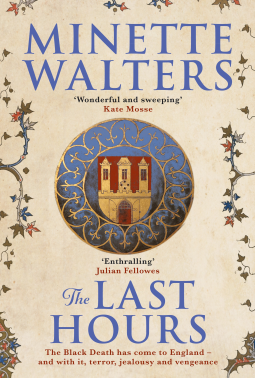
The Last Hours by Minette Walters

Yes, this is the same Minette Walters who is best known for her crime novels which include The Ice House and The Dark Room. I’ve never read any of those (at least I don’t think so – I did used to read a lot more crime than I do now so it’s possible I may have read one of her books and forgotten about it) but when I saw that her new book, The Last Hours, marked a change of direction from crime to historical fiction I was immediately interested!

The Last Hours is set in 1348 on the estate of Develish in Dorsetshire. Those of you who know your 14th century history will know that the Black Death, which had been sweeping its way across Europe, reached England in 1348 – and this forms the heart of Walters’ novel. Sir Richard of Develish falls victim to the plague early in the book, leaving his wife, Lady Anne, responsible for the demesne, the household and the serfs who work the land. Lady Anne gathers everyone inside the boundaries of the moated manor, believing that cutting off contact with the outside world will be the best way to avoid the pestilence.

With so many people forced to live together in a confined space, it is inevitable that problems will arise, old rivalries will resurface and tempers will be lost. The cause of most of the trouble at Develish is Sir Richard’s daughter, Lady Eleanor, a cruel and selfish fourteen-year-old who resents having to live with the serfs. In particular, her hatred is directed at Thaddeus Thurkell, a serf who has just been promoted to the position of Lady Anne’s steward, a move which Eleanor sees as evidence of her mother’s favouritism and unnatural affection for Thaddeus. When supplies at the manor begin to run low, it is Thaddeus who volunteers to venture out into the countryside to find food – but what is the real reason for his departure?

The Last Hours was an interesting read for me as I’ve always found the Black Death a fascinating topic (sorry if that sounds morbid). Walters explores so many different aspects of the disease: the beliefs and superstitions surrounding it; the physical effects it has on the body; the theories people had as to what was causing it; and the limited methods of preventing its spread. However, I knew as soon as I started reading that at some point our protagonists would make the connection with rats and fleas and recognise the importance of hygiene and cleanliness – and I was right. It would have been so much more convincing from a historical point of view if they had continued to think the plague was a punishment from God or that it was caused by breathing bad air.

I did like both Lady Anne and Thaddeus, even if they don’t always feel like believable 14th century people, and they (along with a young maid, Isabella) were certainly the characters I had most sympathy for. Lady Eleanor is the most unpleasant, unlikeable character I’ve come across for some time. She is horrible from her first appearance and remains horrible throughout the entire book – although we do eventually learn a little bit more about her and what possibly made her the way she is, so maybe we’ll see a different side of her in the sequel.

And yes, there is going to be a sequel. I had no idea this was the first in a series until I reached the words ‘to be continued’, so be aware that if you do choose to read this book it doesn’t have a proper conclusion and we are left with lots of loose ends. At the moment I’m not sure whether I will be looking for the second book; I found this one quite slow and unevenly paced – I enjoyed the chapters set in and around Develish, but struggled to stay interested in the adventures of Thaddeus and his companions as they wandered the countryside looking for supplies. I will probably be tempted, though, as I do have lots of questions that haven’t been answered!

Thanks to Atlantic Books for providing a copy of this book for review via NetGalley

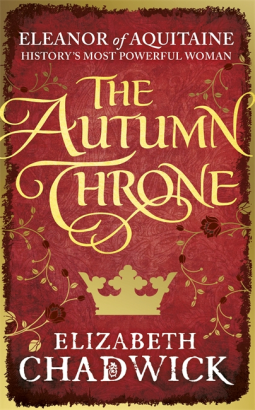
The Autumn Throne by Elizabeth Chadwick

This is the third part of Elizabeth Chadwick’s trilogy telling the story of Eleanor of Aquitaine in fictional form. I love Chadwick’s portrayal of Eleanor (or Alienor, as her name is spelled throughout the trilogy) and having enjoyed both The Summer Queen and The Winter Crown, I was hoping that The Autumn Throne would be just as good. As the title suggests, she is entering the ‘autumn’ of her life in this final novel but remains close to the throne in one way or another.

As well as being Duchess of Aquitaine in her own right, Alienor was also Queen of France through her first marriage to Louis VII and then Queen of England as the wife of Henry II. Following Henry’s death, she would also be mother to two more kings of England: Richard I (the Lionheart) and John. The Autumn Throne, though, begins while Henry is still very much alive and has had Alienor imprisoned at Sarum in Wiltshire as punishment for supporting their sons in a rebellion against him. It’s 1176 and Alienor will remain in captivity for another thirteen years.

I was surprised to find that during the long years of her imprisonment, Alienor actually spends quite a lot of time visiting various castles and palaces, being brought out of confinement whenever it suits Henry to have her present at court celebrations and rituals. She also manages to have some contact with her sons and daughters and with her good friend, Isabel de Warenne, who is married to Henry’s half-brother Hamelin. This means that Alienor is not as cut off from the world as you might imagine and that, as the years go by, she (and through her, the reader) is kept informed of her children’s marriages, Henry’s plans for his kingdom, and important events taking place in Europe and beyond.

Alienor’s feelings towards Henry are portrayed in a way that feels plausible and realistic. There are times when she hates him for what he has done to her and the way he is treating their sons, but also times when she feels sorrow for the husband she once loved and regret that things have turned out this way. Still, it’s hard not to be relieved for Alienor’s sake when Henry finally dies and she is set free at last. After this, Alienor’s relationships with her two surviving sons, Richard and John, come to the forefront of the novel. I have to say, as far as kings of England go, Richard I has never been one of my favourites, partly due to the fact that he spent very little time actually in England. Alienor, though, makes no secret of the fact that he is the son she loves most. She is shown here to have at least some influence over his decision-making and to be trusted with playing a role in the running of the country while Richard is away taking part in the Third Crusade.

The most interesting character in the novel, apart from Alienor herself, is probably John. I have read several fictional portrayals of John, some which cast him as a villain and others which give a more balanced view – this one falls into the second category. He begins the book as an ambitious, calculating boy who does as he pleases without thinking of the consequences; he is much the same as he grows into a man, but his relationships with Alienor and his illegitimate son Richard show he is more complex than that and has enough good qualities to make people care about him.

I have had a lot of sympathy for Alienor throughout this series, but more than ever in this final book as she suffers the loss of one adult son or daughter after another. Of the eight children Alienor has with Henry, only two are still alive by the time of her death. Alienor herself lives into her eighties and it’s sad that she doesn’t have much time to relax in her old age. She is in her seventies when John sends her on the long journey to Castile to select one of his nieces as a bride for the King of France’s heir – and just two or three years before her death, she is being besieged in her castle of Mirebeau by one of her own grandsons!

With this novel covering the last thirty years of Alienor’s life, ending with her death at Fontevraud in April 1204, it does feel very long and drawn out at times. I kept wondering whether there were things that could have been left out to make it a bit shorter, though it’s hard to say which scenes could be omitted without disturbing the course of Alienor’s story. I did enjoy this book just as much as the first two in the trilogy, but I’m glad it’s been a while since I read the last one – I think if I’d read the three books one after the other it would have been too much for me!

In Elizabeth Chadwick’s next book, Templar Silks, she is returning to the story of William Marshal, hero of The Greatest Knight. William made a few appearances in The Autumn Throne where his story overlapped with Alienor’s and I’m looking forward to meeting him again. Templar Silks will be published in 2018, but I also have some of Chadwick’s earlier novels still unread on my TBR.

Thanks to the publisher for providing a copy of this book for review via NetGalley.

The Crow Garden by Alison Littlewood

This is the first book I’ve read by Alison Littlewood, although I do remember hearing about The Hidden People a year or two ago and thinking it sounded interesting. I was attracted to The Crow Garden by its striking cover, but it sounded appealing too, with its Victorian setting and comparisons to Wilkie Collins and Susan Hill, so I thought I would give it a try.

Our narrator, Nathaniel Kerner, is a newly qualified ‘mad-doctor’ on his way to Yorkshire to take up his first position at Crakethorne Manor, an asylum for those ‘troubled in mind’. The tone of the novel is set immediately, with descriptions of dark skies, desolate heaths and remote villages on the journey north and Nathaniel’s first sight of his new place of work, a bleak grey stone building with iron bars on the windows. The asylum is run by Doctor Chettle, a man whose preferred methods of treatment – cold baths, electric shocks and phrenology – are very different from Nathaniel’s. Nathaniel will have the opportunity to try out some of his own ideas when he is assigned his first patient, the beautiful Victoria Adelina Harleston.

Mrs Harleston has been brought to Crakethorne by her husband following an incident on a London omnibus. Accusing her of hysteria, he demands that Nathaniel and Chettle stop at nothing to find a cure for his wife. Believing that the best way to get to the bottom of a patient’s problems is by talking and listening, Nathaniel gradually begins to uncover Mrs Harleston’s story. Far from making things clearer, however, the situation only becomes more confusing. Is Mrs Harleston really insane or is there more to her hysteria than meets the eye? Nathaniel knows he is becoming too deeply involved in the life of his patient but he has vowed to help her and now there’s no going back.

This is the sort of story and setting I usually enjoy, but I think there’s a limit to how many novels about Victorian asylums you can read and I am now close to reaching that limit! I was pleased when, in the middle of the book, the action moved away from Crakethorne for a while and into the streets of London. Here Nathaniel is swept up in the world of mesmerists, spiritualists and séances and although these are also common elements in Victorian historical fiction, I found that the book became much more interesting from this point onwards. Nathaniel’s narration also starts to become increasingly less reliable (although I won’t tell you why as I want to leave you to discover some of the novel’s surprises for yourself) and it is difficult to tell exactly what is real and what isn’t, which gives the rest of the novel a disturbingly hypnotic and unsettling feel.

I appreciated the effort Alison Littlewood makes to tell Nathaniel’s story in language appropriate to the 19th century. It’s something that is always important to me in historical fiction, but even more so in books of this type in which the atmosphere and the setting play such a big part. A few poorly chosen words and phrases can so easily pull you out of the time period, but thankfully Littlewood gets it just about right.

The Crow Garden was an interesting read but, as I’ve said, I think I’ve read too many books with similar settings and themes to really get anything new out of this one. The Asylum by John Harwood, Affinity by Sarah Waters, The Girl Who Couldn’t Read by John Harding and, of course, Wilkie Collins’ classic The Woman in White all came to mind while I was reading, and I would recommend all of those ahead of this book. It didn’t help that I disliked the character of Mrs Harleston so didn’t have the sympathy for her that I would usually have with a woman at her husband’s mercy and committed to an asylum against her will.

Despite not really loving this book, though, I did find it entertaining – and with its atmosphere, Gothic undertones and subtle touches of the supernatural, it’s an ideal autumn or winter read. If anyone else has read it, I would be interested to know what you thought.

Thanks to Quercus Books for providing a copy of this book for review via NetGalley.