Dora Greenwell McChesney’s Civil War

Rupert by the Grace of God I have not just one book but two to tell you about today. Dora Greenwell McChesney is an author from the late 19th/early 20th century whose work I discovered a few months ago when I read her Richard III novel from 1913, The Confession of Richard Plantagenet. I love reading about Richard III, but I also enjoy reading about the English Civil War, so when I spotted reissues of two of her Civil War novels on NetGalley recently I was curious to see what they were like.

Rupert, by the Grace of God, originally published in 1899, was the first one I read. I was attracted to this book by the title; it refers, of course, to Prince Rupert of the Rhine, nephew of Charles I and commander of the Royalist cavalry. When I read a biography of Rupert earlier in the year, I said that I was interested in reading more about him (and was given a few suggestions in the comments, which I will get around to reading eventually – I promise!) so that was definitely part of the appeal of this particular novel for me.

The story is narrated by Will Fortescue, a young man who has defied his father to join the Royalist army. Taking refuge in a church to hide from enemy soldiers one day, Will finds an unusual golden coin on the floor and picks it up, unaware that in doing so he is changing the whole course of his life. The coin is recognised by Cosmas, an elderly man whom some say is a wizard, and Will finds himself drawn into a secret plot to put Rupert on the throne in place of Charles. Rupert himself, however, is loyal to his king and wants no part in such a treacherous scheme!

There were parts of this novel that I enjoyed, but it wasn’t really what I’d been expecting. Being part historical adventure novel and part gothic melodrama, it was entertaining at times, but I have to admit, I can see why it was allowed to go out of print for so long. I was interested in Will Fortescue’s personal story and in his involvement in the battles and key moments of the Civil War, but there was too much focus on secret conspiracies and black magic rituals for my taste and after a few chapters I felt my attention starting to wander.
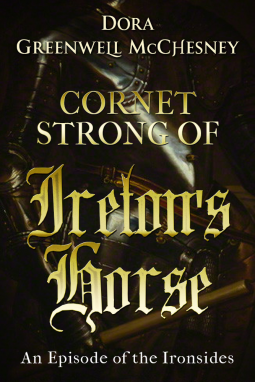
Cornet Strong of Iretons Horse The second McChesney novel I read was Cornet Strong of Ireton’s Horse, published several years later in 1903. This is a different sort of story, concentrating on the relationship between two soldiers within the Parliamentarian army: Nathan Standish, a young captain, and Reuben Strong, who is promoted to the rank of cornet after capturing Prince Rupert’s banner. Throughout the novel, Strong and Standish cross paths on several occasions with a young Irish Cavalier, Roy O’Neil, and his sister, Eileen.

Strong is a dedicated, inflexible person who believes very strongly in carrying out God’s work. When another character tells him “we are all somewhat more than mere engines of soldiership,” Strong answers “I am no more! I am a sword, a sword tempered to this work and to no other use.” Standish is a more likeable character and plays such a prominent part in the story, I wondered, at least for a while, why the author had chosen to put Strong’s name in the title.

Of these two books, I preferred Cornet Strong. Although it was still quite reliant on coincidences, chance encounters and last-minute escapes, it felt like a more ‘serious’ historical novel, telling a more straightforward story. Instead of the magic and mystery of Rupert, by the Grace of God, this one deals with battles, military campaigns and army life. Again, though, I never really felt fully absorbed – not until near the end, when something was revealed which made me think differently about everything I’d read up to that point.

Dora Greenwell McChesney’s writing style won’t appeal to everyone – the language used in her dialogue is archaic and her prose in general feels old-fashioned, even for books published in 1899 and 1903. These two novels haven’t won a place on my list of favourite Civil War books, but they were interesting in parts and were fairly quick reads, particularly the shorter Cornet Strong, so I did find them worth reading.
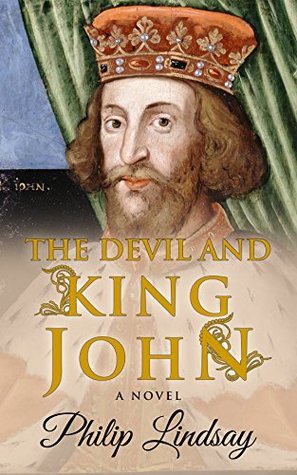
The Devil and King John by Philip Lindsay

The Devil and King John King John, who reigned from 1199 to 1216, has the unenviable reputation of being one of England’s ‘worst’ kings. Although historians are constantly revising their opinion and adding to what we know of John, people still tend to have a negative impression of him. His portrayal as the villain of Robin Hood must be at least partly responsible for that! This 1943 novel by the Australian author Philip Lindsay attempts to give a more balanced view of John, based around the idea that many of his actions were the result of an uncontrollable temper rather than simply cruelty.

The novel begins with John’s early years when he is known as Lackland because his father, Henry II, has divided his lands between his three eldest sons, leaving no substantial territories for John to inherit (despite John being his favourite son). On Henry’s death, John’s brother, Richard, takes the throne but spends much of his reign overseas fighting in the crusades and neglects the very important task of producing an heir. When Richard dies in 1199, John becomes king…but his own reign will be a very troubled one.

The Devil and King John is a straightforward fictional biography, taking us through the key moments of John’s life and career: his military defeats in northern France and subsequent attempts to win back lost lands; his dispute with Pope Innocent III and his excommunication; the death of his nephew, Arthur of Brittany, widely believed to have been murdered by John; and the rebellion by his barons which led to the signing of the Magna Carta at Runnymede in 1215. Lindsay’s portrayal of John throughout all of this is generally quite sympathetic, but not excessively so and I certainly can’t say that I came away from the book liking the character!

In the opening chapter of the novel we are told that the Angevins (the royal house to which John belongs) were descended from a witch and that “from the devil they had sprung and to the devil they would go”. After this, there are references to the devil on almost every page (at least, it seemed that way). I can understand that the author wanted to keep the theme going throughout the story, but constantly being told that “the devil is in John” or “John rides with the devil” is too much!

When I wrote about the other Lindsay novel I read earlier this year – Here Comes the King, the story of Catherine Howard and Thomas Culpeper – I complained that there was too much focus on the romance and I said I thought I’d enjoy one of his other books more. I did prefer this one and thought there was a good balance of romance, battles and politics. However, I was disappointed with the way in which the female characters were depicted in this book, particularly John’s second wife, Isabella of Angoulême, who had the potential to have been a great character. I also felt slightly uncomfortable reading about the relationship between John, in his thirties, and Isabella, aged thirteen, even though I know that an age difference of this size wasn’t unusual by the standards of medieval nobility.

John’s first wife, Hadwisa (also known as Isabella of Gloucester), is portrayed as a witch who encourages John to follow the ‘Old Religion’. Lindsay states in his author’s note that there is no historical evidence for this, but he wanted to find a way to connect John with witchcraft and to explain the king’s lifetime of conflict with the church over issues such as his reluctance to take communion.

Although there were some aspects of this book that I didn’t like very much, overall I thought The Devil and King John was an interesting read. If you’ve read any of Philip Lindsay’s novels – or any good books about King John – I’d love to hear about them!

The Little Chronicle of Magdalena Bach by Esther Meynell

Magdalena Bach Novels about the wives of famous men seem to have become very popular over the last few years. Books on Zelda Fitzgerald, Anne Morrow Lindbergh, Hadley Hemingway, Lizzie Burns (Engels) and Virginia Clemm Poe are just a few that I’ve read or heard about. You could be forgiven for thinking that with The Little Chronicle of Magdalena Bach, Esther Meynell is following the current trend – until I tell you that this book was published in 1925.

Anna Magdalena Bach was, of course, the wife of the composer, Johann Sebastian. In this novel, Meynell imagines that, following Bach’s death, Magdalena is visited by Caspar Burgholt, a former pupil of her husband’s, who suggests that she write down everything she remembers about him. The Little Chronicle is the result.

“Write,” he said, “write a little chronicle of that great man. You knew him as no one else knew him, write all that you remember — and I do not suppose your faithful heart has forgotten much — of his words, his looks, his life, his music. People neglect his memory now, but not always will he be forgotten, he is too great for oblivion, and some day posterity will thank you for what you shall write.”

Magdalena begins by telling us about her first encounter with Bach in the winter of 1720, when she hears him playing the organ in St Katharine’s Church in Hamburg. Unaware of the organist’s identity, Magdalena is mesmerised by the beauty of his music, but runs away in a panic when he turns to look at her. Her father tells her later that the man whose playing she loved so much is Johann Sebastian Bach, the Duke of Cöthen’s Capellmeister (director of music). In 1721, more than a year after the death of Bach’s first wife, Barbara, he asks for Magdalena’s hand in marriage. Magdalena is overjoyed – and goes on to devote the rest of her life to caring for her husband and raising their children.

And that is the problem with this book. Magdalena’s life (at least as it is portrayed by Meynell here) just isn’t very interesting. Of course, I’m aware that eighteenth century women weren’t usually expected to do anything more than be a wife and mother, and it’s possible that Magdalena was content with that, but I’m sorry to say that I found her story quite tedious to read. The real-life Magdalena apparently shared her husband’s passion for music – she was a talented singer and she also worked as a copyist, transcribing Bach’s music – but the fictional Magdalena constantly plays down her own achievements and gifts, happy in the knowledge that she could never compete with her husband’s genius. On reaching the end of the book, I didn’t feel that I’d really learned anything about Magdalena as a person; I had no idea how she really felt about anything, what she liked and disliked or what her hopes and dreams were. All I knew was that she loved and worshipped her husband, because she told us so over and over again.

I did learn quite a lot about Bach himself (while remembering that, as is stated at the end of the book, some parts of the story are imaginary). Magdalena’s chronicle takes us through all of the key moments of Bach’s career and also spends some time discussing his music. I think, though, that the musical aspect of the book could be too detailed for readers who are more interested in the human side of the story, while not scholarly enough for those who already have a good knowledge of Bach’s music. And again, it seems that Bach didn’t have the most exciting or dramatic of personal lives, which makes me think that maybe he and Magdalena just aren’t good subjects for a work of fiction.

It’s a shame, because there’s nothing wrong with Esther Meynell’s writing; it’s the story itself which lacks colour and vibrancy. I was pleased this was such a short novel because had it been much longer I’m not sure I could have persevered with it. I was disappointed but, if nothing else, reading this book has made me more interested in listening to Bach’s music, which can only be a good thing.

I received a copy of this book via NetGalley for review.

Succession by Livi Michael

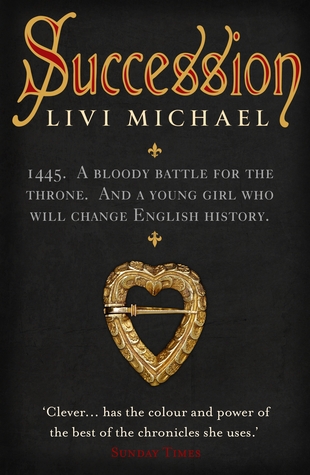
Succession With my interest in the Wars of the Roses, I remember hearing about this book, the first in a trilogy, when it was published a couple of years ago, but for one reason or another I never got round to reading it. Two years later, the third and final novel has just been published, and Penguin have kindly sent me the whole trilogy for review. I’ve now read the first book, Succession, and am sure I’ll be reading the other two very soon.

I know not everyone is familiar with the background to the Wars of the Roses, so I should start by explaining that they were a series of wars fought in the second half of the 15th century between two rival branches of the royal House of Plantagenet. With King Henry VI of England (a descendant of Edward III through the Lancastrian line) suffering from an unspecified mental illness, there were many who considered him unfit to rule, leaving the way open for another claimant to the throne – Richard, Duke of York, another of Edward III’s descendants. From 1455-1487 a number of battles were fought between supporters of Lancaster and supporters of York; Succession covers only the early part of this period.

There are interesting, colourful characters on both sides of this conflict, but if I had to choose, I would say that I’m a Yorkist. This novel, however, is written mainly from the Lancastrian perspective, concentrating on two young women who share the same name – Margaret. The first is Margaret of Anjou, wife of Henry VI, and the second is Margaret Beaufort, mother of the future Henry VII. We do meet plenty of other characters (so many that you may need to make use of the character list and family tree at the beginning of the book to keep track of them all) but the stories of these two women are always the main focus of the novel.

We first meet Margaret Beaufort as a little girl who has become a ward of the Duke of Suffolk following the death of her own father, the 1st Duke of Somerset. A childhood marriage to Suffolk’s son, John de la Pole, is annulled when Henry VI chooses to marry the twelve-year-old Margaret to his half-brother, Edmund Tudor. Within a year, Edmund is dead of the plague, leaving his young widow pregnant with his child and at the mercy of his brother, Jasper (who is portrayed here in a surprisingly negative light).

Margaret of Anjou also has a difficult life, trying to hold the country together during the king’s long spells of illness so that she can keep the throne secure for their baby son, Edward. Neither of the Margarets are very likeable characters, but it would be difficult not to sympathise with the situations in which they find themselves. Some of Margaret of Anjou’s attempts to communicate with her unresponsive husband are very moving, while Margaret Beaufort’s story is sometimes quite disturbing – for example, the trauma suffered by a small thirteen-year-old giving birth is described in detail.

This is a period of history with which I’ve become very familiar over the last few years and, as this novel follows the historical sequence of events very closely, I always knew, more or less, what was going to happen next. There’s nothing very new in terms of plot, but the approach Livi Michael takes to telling the story is quite different from anything I’ve read before. She writes in several styles throughout the novel – sometimes a chapter is written in the first person, sometimes in the third – and from the perspectives of many different characters (a red or a white rose at the start of each chapter gives a useful indication of whether the character’s allegiance is to York or to Lancaster), but the most striking thing about Succession is the use of extracts from contemporary chronicles such as the Crowland Chronicle or John Benet’s Chronicle.

Each chapter starts or finishes with at least one paragraph taken from a chronicle of the time and it’s important to read all of these because they are used to advance the story and to relate events which our characters may not have personally witnessed. The Battle of Blore Heath, for example, is told entirely in the form of chronicles with no original prose at all. I liked the feeling of authenticity that this provided; however, it could also be distracting at times and, together with the very short length of the chapters (many are only one or two pages long), it made me feel that I was constantly being pulled out of the story. There is one much longer chapter in the middle of the book entitled Margaret Beaufort Travels to Wales and this was my favourite part of the novel, as we were finally given an opportunity to spend a decent amount of time getting to know one character with no interruptions.

Although the style and structure of Succession weren’t always a complete success with me, I did still enjoy the creative approach to a story I love and I will certainly be picking up the second book, Rebellion, soon.

The Poisoners by Marjorie Bowen

The Poisoners I have read several novels by Marjorie Bowen this year and this is one of my favourites so far. First published in 1936, The Poisoners originally appeared under one of her other pseudonyms, George Preedy, and now that I’ve read it I can see why she chose to use a different name for this one. Although this book, like the others I’ve read, is set in the past, it is more of a mystery/thriller which should appeal to readers of vintage crime as well as to fans of historical fiction.

The story takes place in 17th century Paris during the reign of the Sun King, Louis XIV, and revolves around a famous murder scandal known as L’affaire des poisons (Affair of the poisons). Our hero is Charles Desgrez, newly arrived in Paris with his wife, Solange, to take up a position as Lieutenant of Police and keen to make a name for himself. At the beginning of the novel, the couple are attending a party for Solange’s birthday, when one of the guests – the Widow Bosse, a supplier of perfumes – drunkenly boasts of becoming rich by helping wives to become widows. “I’ve only got three more poisonings to do and I shall be a very wealthy woman,” she says.

To satisfy his curiosity, Desgrez asks Solange to visit the Widow in disguise, posing as a wife unhappy with her husband – and he is shocked by what he learns. Reporting his findings to the Chief of Police, M. de la Reynie, the two begin to investigate and gradually discover that the network of poisoners operating in Paris is much larger and more sophisticated than they could ever have imagined. To complicate things further, some of the people involved are closely connected to the Sun King himself – so Desgrez and de la Reynie must find a way to bring the criminals to justice while avoiding the publicity the King would prefer to avoid.

The Affair of the Poisons is a dark and fascinating episode in Parisian history. I’ve read about it before, in The Oracle Glass by Judith Merkle Riley, and it was good to revisit the same subject from a different angle. As far as I can tell, Bowen’s novel sticks to the basic historical facts of The Affair, with the addition of a few fictional characters and plot developments. The result is an atmospheric and suspenseful crime novel featuring fortune tellers and spies, counterfeiters and apothecaries, an empty house which hides sinister secrets, mysterious letters marked with the sign of a pink carnation, and a society thought to be involved in black magic.

The plot is excellent – fast-paced and exciting – but there’s not a lot to say about the characters in The Poisoners. Many of them are based on real historical figures, such as the king’s mistress, Madame de Montespan, and the notorious poisoner, La Voisin. Although they are all interesting to read about, none of them are developed in any great depth. I enjoyed reading about the work of the police officers in the novel (I hadn’t realised the French police were so well organised in the 17th century, which is something Bowen talks about in her author’s note) and I did like Charles and Solange Desgrez, but they are not the sort of characters who stay in your thoughts after finishing the book. This is a novel you would read for the plot rather than the characters, and maybe this is one of the differences between the books which were originally published under the Marjorie Bowen and George Preedy names.

If you’ve read anything by Marjorie Bowen (or any of Margaret Gabrielle Vere Campbell’s other pseudonyms) I’d love to hear what you thought!

The Revelations of Carey Ravine by Debra Daley

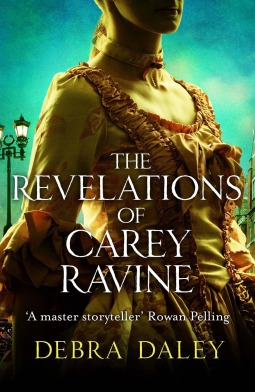
The Revelations of Carey Ravine There was always a good chance that I was going to love The Revelations of Carey Ravine. A book which has been compared with “Sarah Waters, Amitav Ghosh’s The Sea of Poppies, and Jamaica Inn” sounded perfect for me…and it was. Set in 1770s London, this is a dark tale of deception and betrayal in which nothing is as it seems. Our guide through all of this is Carey Ravine, an intelligent and spirited woman with an interesting past.

On the surface, Carey and her husband, Oliver Nash, appear to be the perfect couple: rich, good-looking, charming and leading a life of glamour and luxury. In reality, their lavish lifestyle is funded by Carey’s dwindling savings – and as their finances become stretched to the limits, cracks in their marriage begin to appear. When Carey finds a dossier in Nash’s desk describing the death by poisoning of a young man during a medical experiment in India, she confronts her husband and asks for an explanation. It’s obvious, though, that Nash doesn’t want to talk about it, so Carey is left to investigate on her own…

Towards the end of the novel, revelation follows upon revelation as the mystery surrounding the poisoning starts to unfold…but Carey also makes some important discoveries about herself and the sort of person she really wants to be. The novel is narrated by Carey herself, which means the reader can only know as much as Carey does – and it quickly becomes obvious that there are some big gaps in our heroine’s knowledge. The fate of her father, the horticulturalist Daniel Ravine, for example, is unknown to Carey. The last she heard of him was when he wrote to her from India ten years earlier to tell her of her mother’s death in Calcutta. Having had no further news, Carey has given up hope of ever seeing or hearing from him again. Eventually, though, the truth about Daniel Ravine begins to emerge, and as we learn more about Carey’s family and her past, some light is shed on her present circumstances.

Carey is a wonderful character – she’s strong and resourceful but she’s still convincing as a woman of her time and her actions never fall outside of the realms of plausibility. Through her eyes we see what it was like to be female in the 18th century, facing a range of challenges, some of which were unique to the time period and others which we can still identify with today. Carey’s relationship with Nash is particularly interesting; she’s in love with her husband and wants to please him, but not at the expense of losing her own identity. Although her freedom is restricted as a married woman, she still does what she can to support herself independently and finds work translating scientific texts.

The setting for this novel is one that I always enjoy – Georgian England – and Debra Daley does a wonderful job of bringing the time period to life with descriptions of flamboyant clothing of silk, velvet and lace, popular dances (the cotillion, for example), and entertainment (masquerade balls and card games such as faro). But it’s the lesser-known details of Georgian life and culture that I like reading about the most; I love the idea that pineapples were seen as such a status symbol in the 1770s that it was possible to hire one to use as a table decoration for your dinner party!

Too many good novels are let down by a poor ending which leaves the reader wondering what was the point of it all. Carey Ravine, though, feels like a complete novel with a beginning, a middle and a satisfying ending. I was also happy, on reaching the end of the book, with the level of character development throughout the story – Carey changes and grows as a person as the novel progresses and by the time we come to the final page she is a rather different woman than she was at the beginning.

This is the second novel by New Zealand author Debra Daley; her first, Turning the Stones, was published in 2014. I will certainly be going back to read that one, as well as looking forward to any future books from Daley.

Prince of Foxes by Samuel Shellabarger

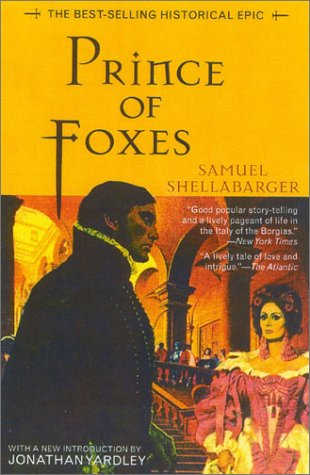
Prince of Foxes This was the book chosen for me in the Classics Club Spin a few months ago; I’m a day late posting this review (the deadline was yesterday) but I did actually finish the book in time. It has taken me a while to decide what to say about this wonderful novel and I probably still haven’t done it justice! I had at least three reasons for adding Prince of Foxes to my Classics Club list in the first place: it’s a classic historical fiction/adventure novel published in 1947 and set in Renaissance Italy, a period I love; it sounded very similar to the work of Rafael Sabatini, an author I love; and it came highly recommended by The Idle Woman, whose blog I love. It seemed inevitable, then, that I would love the book itself – and fortunately I did.

In 1500, when Prince of Foxes begins, Italy is divided into a collection of city-states which are constantly at war, leaving them vulnerable to foreign invasion. Our hero, Andrea Orsini, dreams of seeing the country united under one ruler and has entered the service of the ruthless and powerful Cesare Borgia, son of Pope Alexander VI. We first meet Andrea in Venice, preparing to undertake a mission for the Borgias. He has been given the task of travelling to Ferrara to try to negotiate a marriage between Alfonso d’Este, son of Duke Ercole, and Lucrezia Borgia, Cesare’s sister. When the d’Estes hear about this, however, they decide to have Andrea killed in Venice before he can reach Ferrara – but the murder attempt is foiled and the hired assassin, Mario Belli, ends up switching sides and joining Andrea on his journey.

If he is successful, the Borgias have promised to reward Andrea with the strategically placed hill town of Città del Monte, and the town’s ruling lady, the beautiful Camilla degli Baglione, as his wife. The problem is, Camilla’s husband, the elderly Lord Varano, is still alive and must be disposed of before Andrea will be able to claim his reward. As Andrea gets to know both Varano and Camilla, he finds that he’s not at all sure he’ll be able to betray them into the hands of Cesare when the time comes. Torn between his loyalty to the Borgias (and the personal ambition which goes with it) and his increasing love and respect for Camilla and her husband, Andrea is faced with making a decision which could affect not only his own future but the future of Italy.

As well as navigating his way through this delicate political situation, Andrea and Belli have a number of adventures involving battles, duels, clever disguises, last-minute escapes, sieges, miracles and all sorts of trickery and deception. I was right in thinking that this book would be similar to Sabatini; in particular, I kept being reminded of Bellarion (a previous Classics Spin read) which is also set in Renaissance Italy and includes many of the same elements. But while I remember feeling irritated by the perfection of the main character in Bellarion, I did like Andrea Orsini. He’s another hero who is good at everything, but with just enough flaws and ambiguities to make him interesting. Mario Belli was my favourite, though – and I can’t say too much about him without spoiling the story!

I also loved Camilla, an intelligent and courageous woman with a sense of humour, although other female characters such as Lucrezia and Angela Borgia felt less well developed. Moving away from the novel’s central characters, there’s also a fascinating supporting cast consisting of assorted dukes, lords and ambassadors, soldiers (including the Chevalier de Bayard) and saints (Lucia of Narni). The language used throughout the novel always feel appropriate to the time period and the dialogue is subtle and witty.

Not being an expert on the Renaissance (although I always enjoy reading about it and am gradually building up my knowledge) I found that I was learning a lot from Prince of Foxes as well as being entertained by it. It really is a great book and if anyone else has read it – or seen the 1949 film version with Tyrone Power and Orson Welles – I’d love to know what you thought.