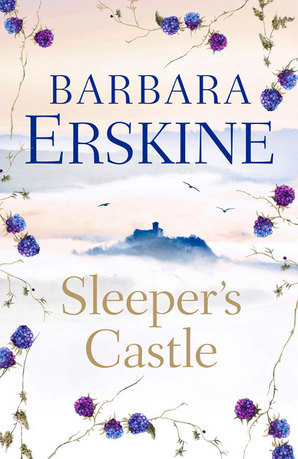
Sleeper’s Castle by Barbara Erskine

Sleeper's Castle After reading Lady of Hay I said I wouldn’t be looking for any more of Barbara Erskine’s novels, but I couldn’t resist this latest one with its unusual title, pretty cover and intriguing synopsis! And actually, Sleeper’s Castle was a pleasant surprise; I enjoyed it much more than any of the other books I’ve read by Erskine.

Despite its name, Sleeper’s Castle is not really a castle; it’s a house near Hay-on-Wye, close to the border between England and Wales. For several years it has been home to Sue and her cat, Pepper, but when Sue decides to go back to Australia she offers her friend, Miranda, the chance to live in Sleeper’s Castle rent-free for a year in return for looking after the house and the cat. Miranda – who prefers to be known as Andy – has been going through a difficult time following the death of her partner, Graham, and is delighted to have the opportunity to get away from London for a while. She looks forward to resuming her career as an illustrator in the peace of the Welsh countryside, safe in the knowledge that Rhona – the jealous, vicious wife Graham never divorced – will never be able to find her now.

As soon as she moves into Sleeper’s Castle, Andy knows she is going to love her new home. It’s an old house, with a history dating back hundreds of years, so at first Andy is not surprised when she begins to have vivid dreams involving a young woman called Catrin who lived at Sleeper’s Castle around the year 1400. Catrin is the daughter of another dreamer – Dafydd, a bard and seer – and as she travels around Wales with her father, entertaining at the castles of his patrons, she finds herself caught up in Owain Glyndŵr’s rebellion against the English.

Most of Barbara Erskine’s books are described as time slip novels and this one really lives up to that description, with the narrative slipping seamlessly from one time period to another so that the boundaries between past and present gradually start to blur. It’s not only Andy who is aware that something unusual is occurring; while she can see into the past, Catrin can also glimpse the future. Less convincingly, there’s also a sort of psychic connection between Andy and Rhona which draws the two women together against their will.

Catrin’s story is fascinating and I could understand why Andy was captivated by it. I have to admit, I know almost nothing about Owain Glyndŵr other than that he is considered a Welsh hero for his attempt to free Wales from the rule of Henry IV, so it was good to have the opportunity to add to my knowledge. As most of the characters in the historical sections of the novel are fictional, however, and Glyndŵr himself appears only occasionally, this book serves as a starting point to finding out more rather than exploring the period in any real depth.

The present day storyline was entertaining too – I loved Bryn the gardener, Meryn the healer and Pepper the cat – but it was spoiled slightly by the Rhona subplot. Rhona’s behaviour becomes so malicious and threatening that I really couldn’t believe Andy didn’t call the police and I couldn’t accept her reasons for not doing so. Very frustrating!

Much has been made of the fact that this book is being published to coincide with the 30th anniversary of Barbara Erskine’s first novel, Lady of Hay, and is set in the same part of the world. Sleeper’s Castle is not a sequel and it’s not necessary to have read Lady of Hay first; this is an enjoyable book in its own right and I’m glad I decided to give Barbara Erskine another chance to impress me.
Two from Maureen Peters

Maureen Peters (1935-2008) was a Welsh historical novelist and yet another forgotten author whose work is being reissued for a modern audience by Endeavour Press. It seems that Peters was very prolific, writing over one hundred books under several different pseudonyms; most of them were fictional biographies of historical royalty, but she also wrote romances, Gothic novels, family sagas and mysteries. Having now had the opportunity to read two of her books I thought I would combine my thoughts on both of them into one post.

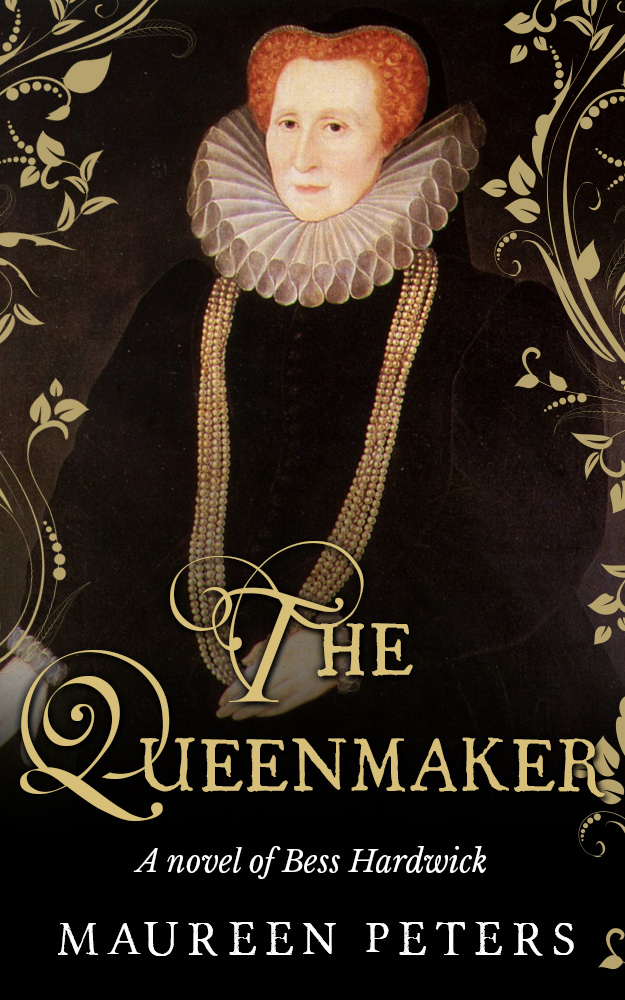
The Queenmaker The first book I’m going to talk about, The Queenmaker (1975), tells the story of Bess Hardwick, one of the richest and most notable women of the Elizabethan court, responsible for the building of great houses such as Chatsworth and Hardwick Hall. Born in Derbyshire, Bess is married at an early age to Robert Barlow, the heir of a neighbouring family, and finds herself a widow within a year. She will marry three more times over the course of her life and with each marriage her wealth increases and her position in society advances. She becomes a friend of Elizabeth I (the queen acts as godmother to her first son), and also has the opportunity to get to know Mary, Queen of Scots during her captivity in England.

With power and influence, though, comes the threat of danger. When Bess arranges a marriage for her daughter with Charles Stuart (son of the Countess of Lennox, Henry VIII’s niece), the family instantly come under suspicion because the child of this marriage, a little girl called Arbella, has Tudor blood and therefore a claim to the crown. As the years go by and Arbella grows into a woman, Bess becomes more and more convinced that her granddaughter will be named heir to the throne and that she – Bess Hardwick – will go down in history as a queenmaker.

Before reading this book I knew very little about Bess; I had come across her name several times in books set at Elizabeth’s court, but I couldn’t have told you any details of her personal life or her accomplishments. Because so much in this novel was new to me, I found it quite an enjoyable read. Obviously I knew that Bess wouldn’t achieve her ambition and Arbella wouldn’t become queen, but I was still interested to see how the story would unfold. However, I thought this book was too short to be completely satisfying. Trying to give an account of an entire life in under 200 pages means leaving big gaps in the story and jumping forward by several years at the start of every chapter. A longer novel would have allowed characters and events to be explored more thoroughly.

The Virgin Queen The Virgin Queen (1972) is another quick and fairly entertaining read which, as the title suggests, focuses on the life of Elizabeth I herself this time. Our narrator is Tomasin Drew, Elizabeth’s friend and companion, who first meets the future queen when Elizabeth is still a young girl living in the household of her stepmother, Katherine Parr. Tomasin remains with the queen for more than fifty years, offering support and friendship throughout the key moments of her life and reign.

Elizabeth is portrayed as a spirited, flirtatious and capricious woman, if not a very likeable one: a strong character, who jumps out of the pages of this novel, unlike Tomasin who stays in the background. Tomasin’s role is as an observer, reporting and commenting on events for the reader; her own personal story is left undeveloped, putting the spotlight firmly on Elizabeth. As with The Queenmaker, though, the approach Maureen Peters takes is disappointingly simplistic. This is another very short novel – too short to look at Elizabeth’s life in any real depth – and there’s nothing new here for those of us who have read about Elizabeth I many times before.

I think both The Virgin Queen and The Queenmaker might be good choices for younger readers or those who simply want a quick introduction to the Elizabethan period (while being aware that not everything in these books will be completely accurate – I spotted at least a few statements for which there is no historical proof, such as Anne Boleyn having six fingers on one hand). I haven’t ruled out reading more of Maureen Peters’ novels, but I’m not in any hurry to do so while there are so many other authors still to discover.

I received copies of both of the above novels via NetGalley for review.

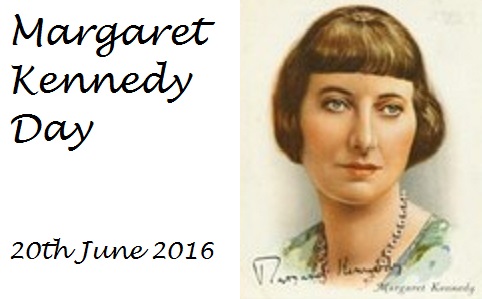
Margaret Kennedy Day: Troy Chimneys

Margaret Kennedy Day

My first taste of Margaret Kennedy’s writing came in 2014 when I read The Constant Nymph as part of a reading week hosted by Jane of Beyond Eden Rock. I enjoyed it – enough to want to read more of her work – but I had a feeling that there might have been another book that would have been a better choice. And I was right. For Jane’s second Margaret Kennedy celebration I decided to read Troy Chimneys – and it was the perfect book for me!

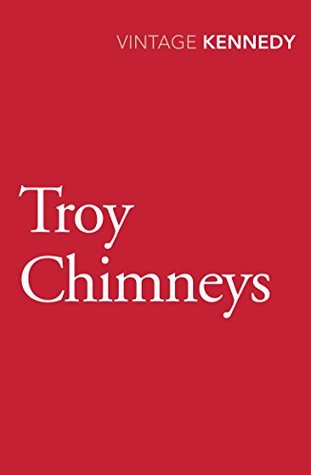
Troy Chimneys Troy Chimneys is set in Regency England and tells the story of one man with two very different sides to his personality. To society he is ‘Pronto’, an ambitious young politician who is always charming, obliging and eager to please. To his family and close friends he is simply Miles Lufton, quiet, serious and inclined to disapprove of Pronto and his actions. Lufton thinks of Miles and Pronto almost as two separate people and his inability to reconcile his public persona with his private one will lead to disappointment and tragedy.

The story of Miles Lufton and Pronto unfolds when one of his descendants – a gentleman living in the Victorian era – decides to amuse himself by delving into his family history. After corresponding with some Irish cousins, he receives a set of letters, journals and memoirs and begins to piece together the details of his ancestor’s life. There may have been hints in the correspondence at the beginning of the book as to the course Miles Lufton’s life would take; I’m not sure because once I started reading his own account in his own words, the framing story started to fade away and I was there, in the England of the early 19th century, experiencing events through the eyes of Miles and Pronto.

Although Lufton’s memoirs do touch on Pronto’s career in politics, the focus is mainly on Miles’ personal life: his family background; the rural community in which he grows up and the relationships between the different classes of people who live there; his time at university; the friendships he forms with the eccentric Ludovic, Lord Chalfont, and with an American farmer called William Hawker; his romantic entanglement with a young French girl and his later love for Caroline Audley. There are funny moments, but sad ones too and because Kennedy makes us care so much for Miles, we share in his emotions and feel for him when things don’t turn out as he had hoped.

Troy Chimneys Vintage I was so impressed by the writing and by Margaret Kennedy’s grasp of the period (or periods, as there are really two) in which the story takes place. The Victorian letters felt authentic and Miles Lufton’s own narrative style felt so much like the voice of a Regency gentleman that I could easily forget I was reading a book written in the 1950s and by a woman. Kennedy never overwhelms the reader with period details, yet there is never any doubt as to the eras in which the novel is set.

I am nearly at the end of this post and still haven’t even mentioned the Troy Chimneys of the title! Troy Chimneys – the name comes from the French Trois Chemins, meaning Three Lanes – is a house in the Wiltshire countryside which Miles buys but doesn’t actually live in himself. He plans to retire there when he is older, after he has achieved all there is to achieve in politics and can say goodbye to his alter ego forever. It’s going to be a house for Miles, not for Pronto: a representation of the life he really wants to lead and the kind of person he really wants to be.

In case I haven’t made it clear enough, I loved this book! It’s nothing like The Constant Nymph and that makes me even more curious about the rest of Margaret Kennedy’s novels.

The Confession of Richard Plantagenet by Dora Greenwell McChesney

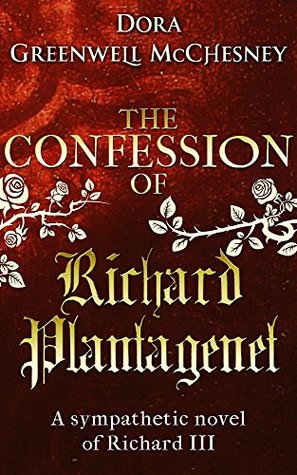
The Confession of Richard Plantagenet With the Wars of the Roses being one of my favourite periods of history, I like to read everything I can find on the subject. This novel by Dora Greenwell McChesney – an author completely new to me – sounded particularly intriguing because it was published in 1913, making it the oldest Wars of the Roses novel I have read, coming sixteen years before even Marjorie Bowen’s Dickon (1929).

The Confession of Richard Plantagenet begins with the Yorkist victory at the Battle of Tewkesbury in 1471 and ends with Richard III’s defeat at Bosworth Field in 1485. Between these two events we are given not so much a confession as a fairly straightforward account of Richard’s life, showing the circumstances which led to him taking the throne following the death of his brother, Edward IV, and then leading us through the key moments of his own brief reign.

As this is described on the front cover as ‘a sympathetic novel of Richard III’, I was interested to see how McChesney was going to tackle the many controversies surrounding Richard, such as the death of Henry VI and, of course, the disappearance of his nephews, the Princes in the Tower. Well, this novel does show Richard either directly or indirectly committing some of the crimes of which he has traditionally been accused, but always for good and noble reasons or because he has been left with no other choice.

I can appreciate that because she was writing what was surely one of the earliest pro-Ricardian novels, McChesney (like Marjorie Bowen with Dickon) was trying to counteract the more widely held view of Richard as an evil, hunchbacked murderer, but I think she went too far the other way, with the effect that Richard comes across as blameless and almost saintly. Still, it was interesting because the approach taken in this novel is slightly different from others I’ve read. This is why I’m happy to keep on reading about the same historical people and events again and again – because each different author offers a different set of opinions, ideas and interpretations.

If you have never read about this time period before, however, I probably wouldn’t recommend starting here. McChesney seems to assume the reader has at least some prior knowledge, so if you’re not already familiar with the background to the Wars of the Roses and the names and relationships involved, you might find the plot difficult to follow, especially in conjunction with the style in which the book is written.

Like a lot of older historical fiction novels, the language McChesney uses is archaic and flowery, particularly in the dialogue. As someone who reads all sorts of historical fiction, from the latest releases to books written hundreds of years ago, I always find it interesting to see how trends in the genre have changed. McChesney’s dialogue feels very outdated today, but personally I liked it once I got used to it and thought it added to the atmosphere of the novel.

Despite the flaws I have mentioned I enjoyed reading this version of Richard’s story and I’m sure it won’t be long before I find myself picking up yet another one!

I received a copy of this book for review via NetGalley.

The Sons of Godwine by Mercedes Rochelle

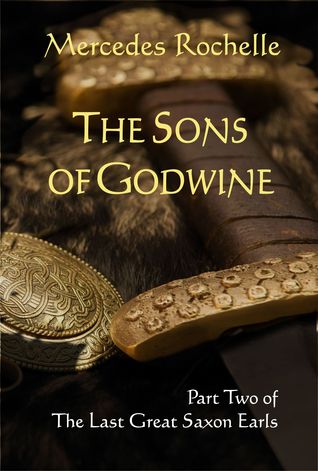
The Sons of Godwine This is the second of Mercedes Rochelle’s Last Great Saxon Earls novels which tell the story of the Godwinesons in the years leading up to the Norman Conquest. The first book, Godwine Kingmaker, follows Godwine, Earl of Wessex, as he rises to become one of the most powerful men in 11th century England. In this second novel we get to know the Earl’s family as his children take turns to narrate their own stories, each from his or her own unique viewpoint.

We begin with a prologue in which Queen Editha, daughter of Godwine and wife of Edward the Confessor, explains that the book she commissioned on the life of her husband – the famous Vita Ædwardi Regis – was originally intended to be a history of her own family and that she had asked her brothers to write down their memories to be included in the manuscript. The Sons of Godwine is presented as a collection of the brothers’ memoirs (fictional but based closely on historical fact).

Editha’s brother, Harold – the future King Harold II of England – is naturally the most famous member of the family and much of the novel revolves around him, but we also hear from Tostig, Gyrth, Leofwine and Wulfnoth (though not from the eldest brother, Swegn) and through their alternating narratives the story of the sons of Godwine gradually unfolds.

Having read several other novels set during this period over the last year or two I feel that I’m beginning to know and understand it (though not as well as other periods, such as the Tudors or the Wars of the Roses). The Sons of Godwine takes us through all of the famous events and incidents of the time, including Harold’s marriage to Edith Swanneck, Swegn’s abduction of the Abbess of Leominster, and the violence in Godwine’s town of Dover during the visit of Eustace of Boulogne. These are all things that have been written about before, but what makes this book different is that we hear about them or see them happen through the eyes and ears of the Godwinesons themselves. I really liked this approach as it made the story feel more intimate and personal; the only problem was that there didn’t seem to be much difference between the narrative voices of the brothers.

As I’ve mentioned, Harold is given a lot of attention, but the other brothers have interesting stories of their own too, especially Tostig, who is made Earl of Northumbria, and Wulfnoth, held hostage by first King Edward and then by William, Duke of Normandy. They also each offer a different perspective on Harold’s character, viewing him with a mixture of admiration, irritation and envy. There is a particularly intense rivalry between Harold and Tostig, which slowly grows throughout the novel. Their relationship is going to be explored further in the third book in this series – Fatal Rivalry.

Thanks to the author for providing a review copy of this book.

Mary Anne by Daphne du Maurier

Mary Anne I fell in love with Daphne du Maurier’s writing as a teenager when I read Rebecca for the first time, quickly followed by Jamaica Inn, and since then, I have been (very slowly) working through the rest of her novels, short stories and non-fiction. I have thoroughly enjoyed most of her books, with only a few exceptions – and sadly this one, Mary Anne, was one of the exceptions. I wouldn’t say that I didn’t enjoy it at all – there were still a lot of things that I liked – but I didn’t think it was as strong as most of the other du Maurier novels I’ve read.

Du Maurier often draws on her own family history as an inspiration for her work; The Glass-Blowers is the story of her ancestors who lived in France during the Revolution, while The Parasites also has autobiographical elements and the houses in both Rebecca and The King’s General are based on her own home, Menabilly. Mary Anne is a fictional account of the life of Mary Anne Clarke, du Maurier’s great-great-grandmother, best known for being a mistress of Prince Frederick, Duke of York.

I loved the first few chapters of the book which follow Mary Anne throughout her childhood and teenage years. Born into a poor London family in 1776, Mary Anne Thompson grows up on Chancery Lane with her mother, younger brother and stepfather, who works as a copy editor. When her stepfather becomes ill and is unable to go to work, the thirteen-year-old Mary Anne secretly collects his copy from the printer and corrects it herself – and from this moment I knew she was going to be a great character: strong, clever and resourceful from an early age.

Mary Anne is also an ambitious person but she makes a big mistake when, in 1791, she elopes with Joseph Clarke, a stonemason. The marriage is an unhappy one; Joseph is an alcoholic who drinks and gambles away most of his money, leaving Mary Anne desperate to escape and build a new life for herself and her children. The breakdown of her marriage proves to be a turning point and it’s not long before Mary Anne comes to the attention of Frederick, Duke of York.

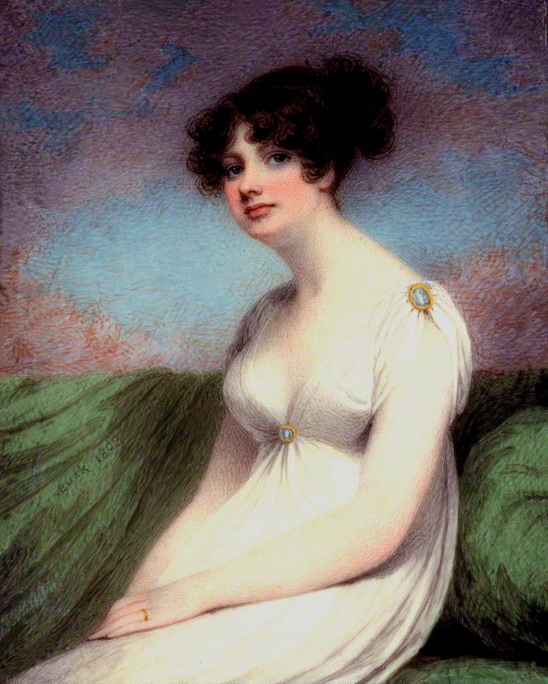
Portrait of Mary Anne Clarke by Adam Buck, 1803

Portrait of Mary Anne Clarke by Adam Buck, 1803

As the Duke’s mistress, Mary Anne enjoys the comfort and luxury that comes with her new status, but she quickly discovers that the money he provides her with is not sufficient to pay for the lifestyle she wants. Taking advantage of Frederick’s position as Commander-in-Chief of the Army, she decides to add to her income by secretly accepting payments in exchange for using her influence with the Duke to obtain army commissions. Mary Anne is sure nothing will go wrong, but to the reader it’s obvious that she is playing a dangerous game and that if her relationship with the Duke should ever come to an end, her life could begin to fall apart.

As I’ve said, I thought the first part of the book was wonderful and I enjoyed watching Mary Anne use her wits and her charm to rise from her humble beginnings to a position of power. She’s a real social-climber and reminded me of characters like Becky Sharp from Vanity Fair and Amber St Clare from Forever Amber. Remembering that du Maurier was writing about her own ancestor, I think her interest in and affection for Mary Anne come across strongly, while at the same time she is open about Mary Anne’s faults and flaws.

The second half of the novel is devoted to several court cases and scandals in which Mary Anne becomes involved, and this is where I started to get bored. The court proceedings are described in great detail, with page after page of witness statements, letters, testimonies and dialogue, which I just didn’t find very interesting to read. I can appreciate that du Maurier was trying to stay true to history here and incorporate her research into the story, but I don’t think she got the balance quite right between fact and fiction.

I’m glad I’ve had the chance to meet and get to know Mary Anne Clarke but this book left me slightly disappointed. I’m hoping for better luck with the remaining du Maurier books I still need to read (Frenchman’s Creek, Castle Dor and some of the non-fiction and short story collections).

A review for Shiny New Books: The Sun King Conspiracy

This is just a quick post to let you know that Issue 10 of Shiny New Books is out today!

SNB

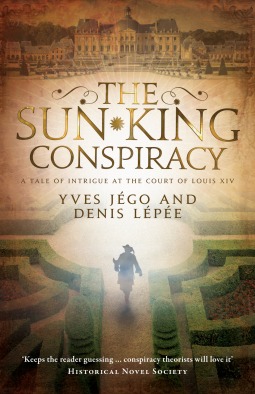
If you haven’t come across it yet, Shiny New Books is an online recommendations magazine for book lovers and is packed with reviews and other features. I was happy to provide a review of The Sun King Conspiracy by Yves Jégo and Denis Lépée for this edition.

This is what the book is about:

The Sun King Conspiracy “This fascinating and complex historical thriller is set in 1661 at the court of France’s Sun King, Louis XIV. As the novel opens, Cardinal Mazarin, Chief Minister to the young king, is dying. Having effectively ruled France alongside Anne of Austria throughout Louis’ early years, the balance of power is set to change with his death. When a fire breaks out in Mazarin’s palace, some incriminating coded documents are stolen from the dying Cardinal – documents which must be prevented from falling into the wrong hands. The theft sparks a power struggle among rival factions, with political figures as prominent as Nicolas Fouquet and Jean-Baptiste Colbert drawn into a race to find the mysterious papers.

Also drawn into this dangerous game – much against his will – is Gabriel de Pontbriand, an aspiring young actor who has come to Paris to pursue his dream of a career in the theatre. Mazarin’s stolen documents unexpectedly come into Gabriel’s possession and, to his horror, he recognises the signature at the bottom of one of the papers. Caught between the schemes of unscrupulous politicians on one side and a secretive religious brotherhood on the other, Gabriel finds himself at the heart of a conspiracy which has the potential to change the future of France and its monarchy forever…”

You can read the rest of my review here – and don’t forget to explore the rest of the new issue!