The Royal Succession by Maurice Druon

The Royal Succession The Royal Succession is an English translation of Maurice Druon’s 1957 French novel La Loi des mâles, the fourth volume of his Accursed Kings series which began with The Iron King. Described by George R.R. Martin as “the original Game of Thrones”, the seven books in this series tell the story of Philip IV the Fair of France and the kings who follow him, said to have been cursed “to the thirteenth generation” by the vengeful Grand Master of the Knights Templar.

Books two and three – The Strangled Queen and The Poisoned Crown – described the troubled reign of Philip’s son, Louis X. As The Royal Succession opens in the year 1316, Louis is dead, leaving no clear heir to the throne. There is some doubt over the parentage of Jeanne, his five-year-old daughter from his first marriage, so all eyes are on Queen Clémence, his pregnant second wife.

While France looks forward to the birth of Clémence’s child, a regent is needed; the obvious choices are Louis’ younger brother, Philippe of Poitiers, and his uncle, Charles of Valois. At this crucial moment, Philippe is away in Lyon awaiting the election of a new pope, but by resorting to some underhand methods he is able to turn the situation to his advantage and becomes regent on his return to Paris. However, his mother-in-law, Mahaut, Countess of Artois, is even more ambitious and vows to clear the path to the throne for Philippe.

Nobody is safe from Mahuat’s plotting, and when Clémence gives birth to Louis’ posthumous child, the sickly Jean I, the baby king finds himself at the centre of one of her schemes. Meanwhile, Philippe searches for a way to deal with the claim of his little niece, Jeanne, and finds a possible solution in the Salic Law, which excludes females from the line of succession.

I hope I haven’t made all of this sound too complicated! Some concentration is needed, but Druon does explain everything clearly and the plot is easy enough to follow, especially if you have also read the previous three books (something I would highly recommend). The period covered in this particular novel is fascinating and I found this a much more gripping and entertaining read than The Poisoned Crown.

The Accursed Kings series is based closely on historical fact, but there is one part of The Royal Succession which feels more like fiction – and that is the storyline surrounding the fate of little Jean I. However, having looked this up, it seems that Druon has developed this storyline out of a theory which has never been proved or disproved. It’s unlikely, but not impossible, and other books have been written on the subject. It also explained for me the role in the series of Guccio Baglioni and Marie de Cressay, something I’ve been wondering about since the first book as their story had previously seemed so disconnected from the central history.

There are three books left in the series and I’m looking forward to continuing with the next one, The She-Wolf.
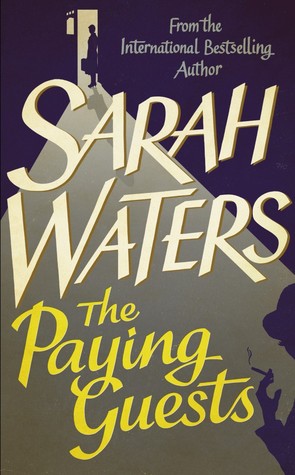
The Paying Guests by Sarah Waters

The Paying Guests This is Sarah Waters’ sixth novel, published in 2014. I have read and enjoyed all of her previous five, but after seeing some very mixed reviews of The Paying Guests around the time of publication, I decided I wasn’t in any hurry to read this one. I knew I would read it eventually, but I wanted to wait until I was in the right mood for it.

This book is set in London in 1922 which I was pleased about as, surprisingly, I have preferred Sarah Waters’ 20th century novels (The Little Stranger and The Night Watch) to the Victorian ones (Fingersmith, Affinity and Tipping the Velvet). I always find the 1920s an interesting decade to read about; it was so soon after the end of the war and, for most people, life would never be the same again.

In The Paying Guests we meet twenty-six-year-old Frances Wray, a young woman whose life has certainly been affected by the war – her two brothers were killed in action and her father died not long after, leaving Frances and her mother alone and struggling financially. Frances is now doing the work that the servants used to do and, to avoid having to sell the house, she and her mother have decided to take in lodgers or ‘paying guests’.

The paying guests are a young married couple, Leonard and Lilian Barber, and from the moment of their arrival the atmosphere in the house changes. The Barbers belong to what Frances calls the ‘clerk class’ and they have different views, different attitudes and different ways of living their lives. Sarah Waters captures perfectly what it feels like to suddenly have to share your home with strangers:

Water was run after that, and then another odd noise started, a sort of pulse or quick pant – the meter again, presumably, as the gas ran through it. Mrs Barber must be boiling a kettle. Now her husband had joined her. There was conversation, laughter… Frances caught herself thinking, as she might have done of guests, Well, they’re certainly making themselves at home. Then she took in the implication of the words, and her heart, very slightly, sank.

As Frances gets to know the new lodgers, she finds herself increasingly attracted to Lilian. Having ended an earlier romance with another girl, Christina, for the sake of her family, Frances is determined not to let another chance of happiness slip away. This time, though, she faces not only the disapproval of her mother, but also an even bigger obstacle in the form of Lilian’s husband, Leonard.

The relationship between Frances and Lilian develops slowly throughout the first half of the novel. Although it’s difficult to tell what Lilian is truly thinking or feeling, there’s no doubt about the intensity of Frances’s emotions. While I can’t say that I particularly liked Frances, I did feel worried for her: she had already been through so much in the past and I could sense that there would be more trouble coming her way in the future. And I was right. The tension builds and builds in the Wray household and there is the sense that something big and significant is going to happen. Eventually something does happen (something horrible, dramatic and shocking) and from that point the plot begins to go in a very different direction.

The second half of the book is still interesting and compelling in its own way, but it does feel like an entirely different story and I think I might have been happier if this had continued to be the quiet 1920s domestic novel it seemed to be at the beginning. I did enjoy The Paying Guests, though, and I’m intrigued by the list of books Sarah Waters mentions as her influences; I’m particularly interested now in reading A Pin to See the Peepshow by F. Tennyson Jesse.

The People’s Queen by Vanora Bennett

The Peoples Queen They say you should never judge a book by its cover and in the case of The People’s Queen, I have found that to be very true. The image on the cover of this particular book gives the impression that this is a typical ‘royal court’ novel, maybe similar to the sort of book you might expect from Philippa Gregory. If you take away the cover, the novel itself – written in third person present tense and with a focus on politics, money and trade rather than love and romance – feels much more like Hilary Mantel’s Wolf Hall.

Our heroine, if it’s possible to call her that, is Alice Perrers, most famous for being a mistress of England’s King Edward III (who reigned from 1327 to 1377). Alice was never a queen and, as far as I can tell, was never popular with the people either, so I’m not sure where the title of the novel comes from – other than that she was a woman from a humble background who rose to a position of power. I have read fictional portrayals of Alice before, but only as a secondary character, so I was curious to see how she would fare as the protagonist of her own story.

The People’s Queen is structured around the medieval concept of the Wheel of Fortune. As the novel opens, Alice is riding at the top of the wheel, at the height of her power and influence. During her rise, Alice has made a lot of enemies…but also some friends, including the poet Geoffrey Chaucer, who has gained a new position as comptroller of customs for the Port of London under Alice’s patronage. It is said that pride comes before a fall, however, and Alice’s fortunes are about to change.

Aware that the King is starting to grow old and infirm and won’t be around forever, Alice begins to make plans for the future. Knowing that she will lose his financial support when he dies, she enters into an unscrupulous business venture, confident that nobody will discover what she has been doing. Eventually, of course, Alice’s schemes start to fall apart as the Wheel of Fortune begins to turn again.

Alice’s story takes place during an interesting and eventful period of English history: the novel incorporates the Black Death and the Peasants’ Revolt and features characters such as John of Gaunt, the Black Prince, Katherine Swynford and Wat Tyler. Somehow, though, Vanora Bennett manages to make a potentially fascinating story feel boring and passionless. I mentioned a similarity to Hilary Mantel, but the similarity is in the style of writing only. Where Wolf Hall is a compelling and enjoyable novel, The People’s Queen just isn’t, at least not in my opinion. Not being particularly interested in economic history, I thought there was too much time spent discussing taxes, budgets, loans and interest rates. I was also disappointed in the lack of medieval atmosphere; I think the author was trying to draw parallels with modern life and modern politics, but I felt that this came at the expense of creating a sense of time and place.

I do think Bennett does a good job of making Alice a complex, well-rounded character. She is shown to be greedy, ambitious and manipulative, as well as intelligent and shrewd…but she also has a softer, more vulnerable side, and it can’t be denied that she does provide some happiness and comfort to Edward. The way in which she becomes involved with Wat Tyler and the Peasants’ Revolt appears to be completely fictional and does not feel convincing, but I liked the portrayal of her friendship with Geoffrey Chaucer (which forms a major part of the story). There is some historical basis for this as they did know each other and Alice is believed by some historians to be the inspiration for the Wife of Bath in Chaucer’s Canterbury Tales. Despite finding Alice an interesting character, though, I didn’t feel any sort of connection with her. I didn’t expect to actually like her, but it was disappointing to find that I didn’t care at all what happened to her.

I haven’t given up on Vanora Bennett yet because I did like Midnight in St Petersburg a lot more than this book and I also still have Queen of Silks on my shelf to be read. I’ll hope for a better experience with that one!

Fire by C. C. Humphreys

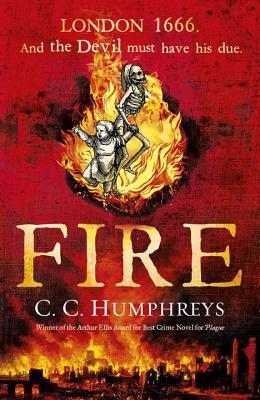
Fire 1666 is famous for being the year of the Great Fire of London. For the religious sect known as the Fifth Monarchists it was also the year in which they believed the monarchy would be overthrown, clearing the way for the kingdom of Jesus. These two events form the basis of C.C. Humphreys’ new novel, Fire, a sequel to Plague, which I read in 2014. Don’t worry if you haven’t had the opportunity to read Plague yet – you will still be able to understand and enjoy Fire, which works as an exciting historical thriller in its own right as well as being a sequel.

As the novel opens we are reacquainted with our old friends, Captain Coke, a reformed highwayman, and Pitman, a ‘thief-taker’. These two men fought on opposite sides in the recent Civil War, but have now formed an unlikely partnership to fight crime in the London area. With Charles II the target of a plot by the Fifth Monarchists, Coke and Pitman have been given the task of foiling the attempt on the king’s life. Assisted by Dickon, a young homeless boy rescued by Coke from a life on the streets, the pair begin to investigate, determined to save the king even if it means putting their own lives in danger.

It’s not only themselves they need to worry about, of course. Pitman is a married man with children, while Coke’s lover, the actress Sarah Chalker, is pregnant. Acting is not considered a suitable career for a respectable woman, but Sarah enjoys it and relies on it as a source of income. Unable to work because of her pregnancy, Sarah is left alone and penniless when Coke finds himself the victim of a cruel betrayal. And then, in the early hours of a September morning, a fire breaks out at Thomas Farriner’s bakery on Pudding Lane…

Fire is an enjoyable read and a fascinating journey through 17th century London life. I’ll have to be honest and say that it’s maybe not the deepest or most literary of historical novels but, like Plague, it’s entertaining and fun to read. Before I started reading I had been afraid that it might be too similar to another book I read earlier this year – The Ashes of London by Andrew Taylor – which is also set during the Great Fire of London and features a plot by the Fifth Monarchists, but the two books are actually completely different.

This is an action-packed novel, taking us to a variety of different settings. We visit the theatre for a production of Hamlet, we find out what conditions were like for those unlucky men pressed into the navy against their will, and we see inside a debtors’ prison, where women and children live in squalor praying that their fortunes will change soon. A map is provided at the front of the book to help us locate each of the London sites mentioned in the story and to show how the fire spreads and progresses day by day.

Something that surprised me about this novel is that the Great Fire itself doesn’t start until we are more than halfway through the book. Instead, Humphreys spends most of the novel setting the scene, moving the characters into place, so that by the time the fire breaks out we are already emotionally invested in the story and are desperate to find out whether our heroes and heroines can find their way out of the dangerous situations they are in.

If C.C. Humphreys brings some of these characters back for a third adventure, I would love to read it; otherwise I’ll investigate his earlier books – I’ve already read Vlad: The Last Confession, but some of his others look interesting too.

Thanks to Century for providing a copy of this book for review.

Jane Steele by Lyndsay Faye

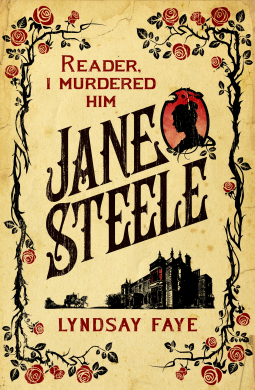
Having enjoyed Lyndsay Faye’s Timothy Wilde trilogy, I was both intrigued and dubious when I heard that her new novel, Jane Steele, was going to be a retelling of Jane Eyre. I always have doubts about books that are based on or inspired by classic novels and usually try to avoid them, but because I loved Faye’s other work so much I was happy to give this book a try.

Jane Steele Once I started to read, I quickly discovered that Jane Steele is not so much a retelling of Jane Eyre as a homage or tribute to Jane Eyre. Jane Steele herself is a fan of the Charlotte Brontë classic, which she reads over and over again, and she can’t help noticing that there are some unmistakable parallels between her own life and Jane Eyre’s.

Like the Brontë heroine, Jane Steele has an unhappy childhood. She and her widowed mother live in a cottage in the grounds of Highgate House, the home of her late father’s family. When her mother dies a sudden and unexpected death, Jane finds herself at the mercy of her cold-hearted Aunt Patience and vile Cousin Edwin, but unlike Jane Eyre she takes drastic measures to defend herself against them. I won’t go into too much detail, but the words “Reader, I murdered him” on the front cover should be a clue!

Sent away to Lowan Bridge School, Jane’s life again seems to be following the same pattern as Jane Eyre’s. Lowan Bridge is a harsh and forbidding place, presided over by the tyrannical Vesalius Munt, and the only positive thing Jane takes away from her time there is a close friendship with a younger girl known as Clarke. Forced to resort to murder again – not just once but several times, though always to protect herself and her friends – Jane eventually has the chance to return to Highgate House as governess to Sahjara, the young ward of the house’s new master, Mr Thornfield.

As Jane settles into her new position – and begins to search for evidence that will prove she is really the rightful heir of Highgate House – she gets to know the new inhabitants of her childhood home. Mr Thornfield has recently returned from the Punjab and all of his servants are Sikhs, including the butler Sardar Singh, whom Jane suspects of not being all he appears to be. Mr Thornfield himself, as you’ve probably guessed, takes the role of Jane Eyre’s Mr Rochester, but before Jane Steele can allow herself to love him, she wants to know how he will react to the revelation that his new governess is actually a serial killer…

You may be thinking that I’ve given away the entire story here, but I can promise you that there’s still a lot I haven’t told you. More than half of the novel is devoted to the time following Jane’s return to Highgate House, the development of her romance with Mr Thornfield (a more instantly likeable character than Mr Rochester, by the way), and an intricate mystery involving stolen jewels, of which I’ll say no more other than that it felt like something Wilkie Collins might have written.

I liked Jane Steele but I can’t say that I loved it as unreservedly as most other readers seem to have done. The first half of the book was great – Jane has a very distinctive, darkly funny narrative voice and it was fun to spot the echoes of Jane Eyre in the childhood and school chapters. I also enjoyed reading about Jane’s adventures in London (before starting her governess job) and the Dickensian characters she meets there, such as Mr Grizzlehurst, publisher of the “Daily Report of Mayhem and Mischief”.

The second half of the novel felt quite different from the first, with the focus on the stolen treasure and the history surrounding the Anglo-Sikh Wars. I have read a lot of historical mysteries set in the Victorian period, as well as a lot of Victorian sensation novels, and I just didn’t feel that I was reading anything new here (apart from the details of Sikh culture, which were interesting to read about). It didn’t help that this part of the story includes a lot of long accounts of past events and people we previously knew nothing about. I found it difficult to care about this new set of characters and just wanted to get back to reading about Jane and her life.

This is only a small criticism, though, of what was otherwise a very enjoyable novel and I do love the fact that Lyndsay Faye avoided writing a simple retelling and instead came up with something so brave and imaginative. I would personally have preferred another Timothy Wilde mystery, but having written three of those books I can understand why Faye might have wanted to write something else, and I think Jane Steele will have wider appeal. Reader, you’ll probably love it.

Thanks to Headline for providing a copy of Jane Steele for review.

Dictator by Robert Harris

Dictator This is the third and final volume of Robert Harris’s fictional biography of Marcus Tullius Cicero, the Roman philosopher, lawyer and statesman. I loved the previous two novels, Imperium and Lustrum, so you won’t be surprised to hear that I loved Dictator too. Until recently, I didn’t have much interest in Ancient Rome and would never have thought that I could find reading about the intricacies of Roman politics so exciting and fascinating. How wrong I was! In fact, the only negative thing I can say about this trilogy is that it has now come to an end.

Dictator covers the last fifteen years of Cicero’s life, though as the title suggests, the focus of the book is on the rise and fall of Julius Caesar. At the beginning of the novel, Cicero has been forced into exile by his enemy, Publius Clodius Pulcher, and with the triumvirate of Caesar, Pompey and Crassus now governing Rome it seems unlikely that he will be able to return. Loyalties and allegiances change quickly in the Roman Republic, however, and eventually it does become possible for Cicero to come home, to be reunited with his family and to return to politics and the senate.

As he tries to settle back into his old life in Rome, Cicero discovers that it is not the same city he left just a year before and when the tensions between Caesar and Pompey lead to civil war, he knows he is witnessing the destruction of the republic. With the assassination of Caesar after several years of dictatorship comes the sense that Rome is entering a new era, but Cicero will face further challenges with the rise to power of the dictator’s adopted son, Octavian (the future Emperor Augustus, founder of the Roman Empire).

As Dictator is the book which brings the trilogy to a close, there’s a sadness which wasn’t present in the first two books, with the deaths of several major characters and the collapse of the Roman Republic. It’s also sad to see Cicero’s relationship with his wife, Terentia, deteriorate beyond repair. It was never a very happy marriage, but now Cicero acknowledges that Terentia has had enough:

“Only at that moment did I realise how much she must have suffered, living in Caesar’s Rome and being married to me. I cannot say I felt love for her any more, but I did feel great pity and affection and sadness, and I resolved there and then to make no mention of money or property – it was all done with, as far as I was concerned.”

Like the first two novels, this book is narrated by Tiro, Cicero’s slave and secretary, a man who really did exist and who is credited with inventing an early form of shorthand. After Cicero’s death, Tiro published his master’s letters and collected works, and is thought to have also written a biography of Cicero which was lost during the fall of Rome. Tiro’s role in this trilogy is primarily to tell Cicero’s story, recording his words and actions and making observations on his master’s character and the characters of Rome’s other leading figures. Here he describes meeting Julius Caesar:

“How unreal it felt to watch the approach of this titan who had so dominated everyone’s thoughts for so many years – who had conquered countries and upended lives and sent thousands of soldiers marching hither and thither, and had smashed the ancient republic to fragments as if it were nothing more substantial than a chipped antique vase that had gone out of fashion – to watch him, and to find him, in the end…just an ordinary breathing mortal!”

Over the course of the three novels we see how Cicero comes to rely on Tiro not just as a servant but also as a friend – one of the only people in the world he knows he can truly trust. Tiro’s admiration and affection for Cicero also come across strongly but this doesn’t mean he is unable to see Cicero’s faults. Through Tiro’s eyes, Cicero is portrayed as a brilliant yet flawed man, his wisdom, talent and generosity offset by vanity and self-importance. He is sometimes too quick to speak before he thinks, particularly when he is unable to resist making a joke at someone else’s expense, and this often has serious consequences. I enjoyed getting to know Cicero, with all his faults, and was sorry to come to the end of his story.

Imperium, Lustrum and Dictator are three wonderful books – well-written, well-researched and with a feeling of authenticity. Highly recommended, but try to read them in order if possible. I’m now looking forward to returning to the Roman Empire with an earlier Robert Harris novel, Pompeii.

Elizabeth Goudge Day: The White Witch

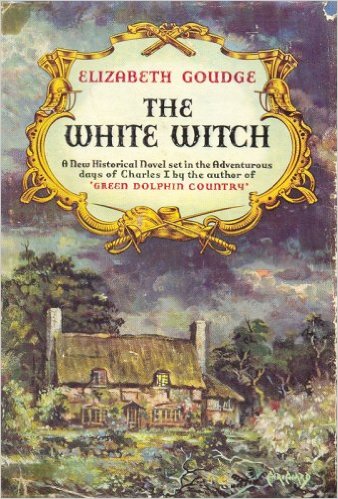
The White Witch A year ago I read The Child from the Sea as part of Lory of The Emerald City Book Review’s birthday celebrations for Elizabeth Goudge. This year, Lory is hosting another day devoted to the same author and this seemed like a good time to read my second book by Goudge. There were plenty to choose from – some historical and some contemporary, some for adults and some for children – but I decided on The White Witch. I loved The Child from the Sea, which was set in the seventeenth century and told the story of Lucy Walters, a mistress of Charles II, so as The White Witch is set in the same period the chances were good that I would love this book too – and I did.

The English Civil War forms the historical backdrop to the story, but the focus of the novel is on the inhabitants of a small Oxfordshire village and the ways in which their lives are touched by the greater changes taking place in the country as a whole. The ‘white witch’ of the title is Froniga, a healer and herbalist who has family ties with both the Puritan household of Robert Haslewood, the village squire, and with the band of Romany gypsies who camp nearby. Caught between both of these worlds while fully belonging to neither, Froniga is the character around whom all the others revolve.

Froniga is a fascinating character, but there were others whose stories interested me too, particularly Francis Leyland, the secretive stranger who offers to paint a portrait of Haslewood’s two young children, and the mysterious Yoben, who is in love with Froniga. There’s a ‘black witch’ too – and a parson who tries to save her soul – and a vengeful gypsy woman who causes trouble wherever she goes. Whether Parliamentarian or Royalist, Puritan or Catholic, nobleman or gypsy, in the hands of Elizabeth Goudge each of these characters becomes a well-rounded, believable human being – a person we can sympathise with even if we don’t necessarily agree with their views or their choices.

In this novel, the conflicts that take place in an individual’s heart or soul are as important as those which take place on the battlefield, though we do get to see some military action as several of our characters become involved in the major battles and events of the Civil War. But what I loved most about this book were the details of daily village life in the seventeenth century, the beautiful descriptions of the English countryside, and the undercurrents of magic, mystery and mythology which run throughout the story.

The White Witch, although never boring, has a slow pace and – as it was originally published in 1958 – it is written in a style which may not appeal to readers who prefer more modern historical novels and as with The Child from the Sea, there are strong religious and spiritual elements. I love Goudge’s writing style, though; it’s warm and gentle and comforting. I’m looking forward to working through the rest of her novels…and would like to thank Lory for introducing me to her work!