Murder at Gulls Nest by Jess Kidd

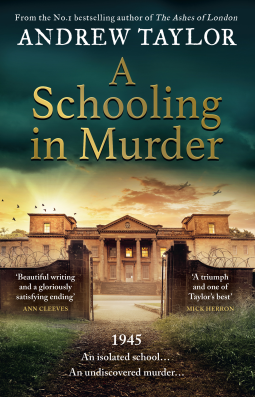
I’ve read three books by Jess Kidd and so far they’ve all been completely different. This new one, though, is described by the publisher as ‘the first in a sparkling new 1950s seaside mystery series’, so presumably she’s going to stick with one style and genre for her next few books. The series stars Nora Breen, a former nun who has left the convent that has been her home for the last thirty years. She’s an interesting and unusual character and I enjoyed meeting her in this first novel, Murder at Gulls Nest.

Gulls Nest is a guest house in the seaside town of Gore-on-Sea on the southeast coast of England. It’s also the last known address of Frieda, who was once a novice at Nora’s convent before leaving the order and promising to keep in touch. Frieda had been a good friend of Nora’s and when her letters stop arriving, Nora becomes so worried that she also decides to leave and travel to Gore-on-Sea to find out what has happened. Once at Gulls Nest, Nora learns that Frieda disappeared one night without explanation, yet no one else seems to be concerned about it, including the police. Convinced that something bad must have happened to her friend, Nora takes the room that was once Frieda’s and begins to investigate.

As Nora gets to know the other lodgers, she discovers that some of them are not what they seem and appear to be hiding secrets. Then a murder takes place, which may or may not be linked to Frieda’s disappearance. Nora is sure that if she can solve one crime it could provide clues to the other, but Inspector Rideout makes it clear that the police don’t want or need the assistance of a middle-aged ex-nun. Of course, Nora isn’t going to give up that easily!

Murder at Gulls Nest is as entertaining as I’ve come to expect from Jess Kidd’s books, with her usual array of colourful, quirky characters. Some of the most memorable are Professor Poppy, an elderly puppeteer who runs a Punch and Judy show; Dinah, the young daughter of the Gulls Nest landlady, who never speaks but sees everything that’s going on; and the exasperated Inspector Rideout, who wants Nora kept away from his investigation at all costs. I loved Nora’s relationship with Rideout and look forward to seeing how it continues to develop in the next book. As for Nora herself, although I couldn’t quite believe that she had until recently been a nun, I did like her as a character and enjoyed seeing her interacting with the other residents of Gore-on-Sea. I particularly loved the chapter where she’s invited to afternoon tea with the vicar and his ‘family’ – and I won’t spoil the fun by telling you what happens there!

At times this felt like a parody of a mystery novel rather than one to be taken too seriously, but at other times it became surprisingly dark, which kept things interesting all the way through. There’s also a good sense of time and place, bringing the 1950s British seaside setting to life. I hope we don’t have to wait too long for the second book.

Thanks to Faber & Faber for providing a copy of this book for review via NetGalley.

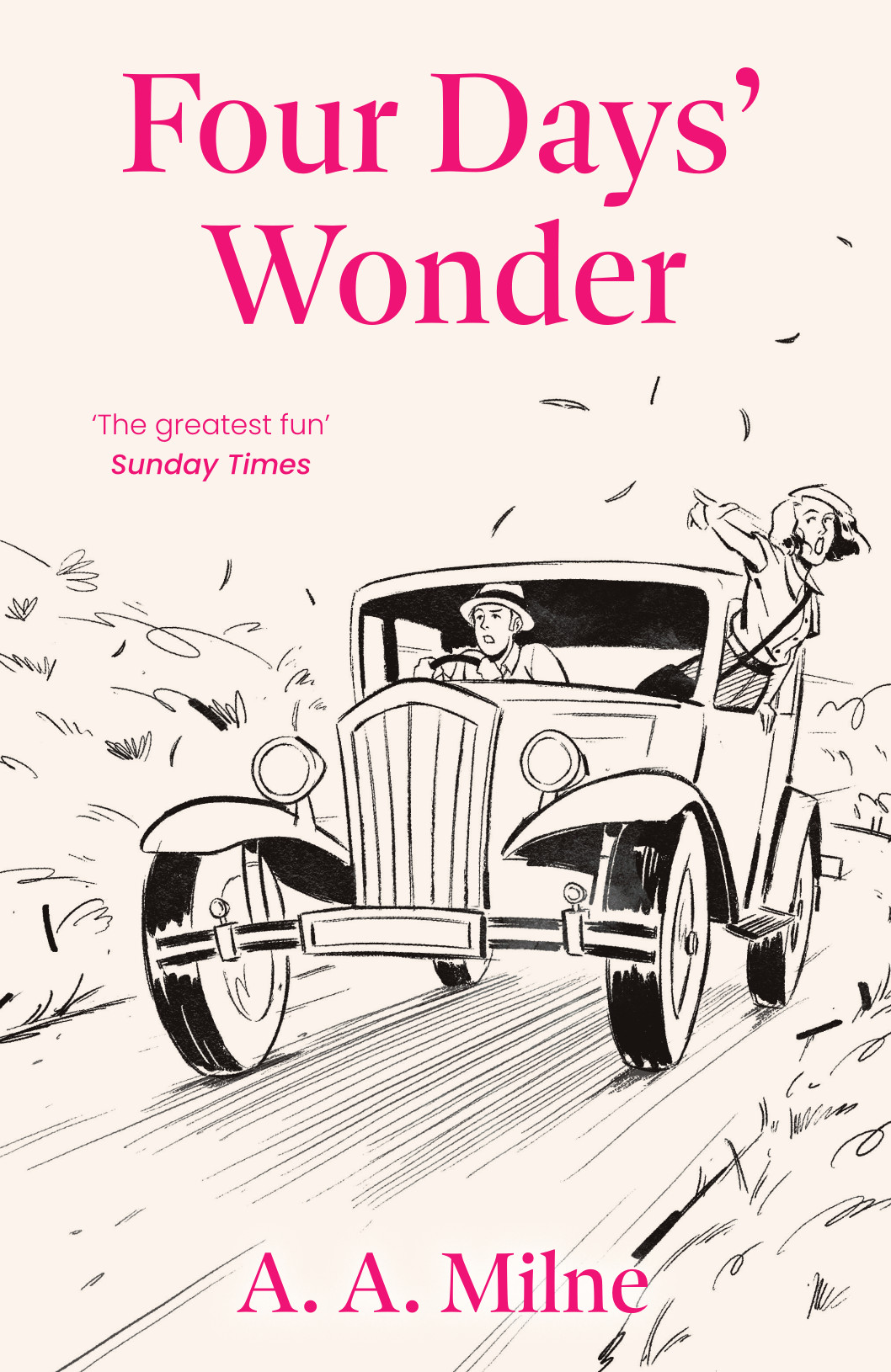
Four Days’ Wonder by A.A. Milne

A.A. Milne is, of course, best known for his Winnie the Pooh stories, but he also wrote a wide variety of works aimed at adults, ranging from novels and plays to essays and poetry. I read and loved his detective novel, The Red House Mystery, a few years ago and was disappointed that he hadn’t written more of them, so when I came across Four Days’ Wonder, described as a ‘spoof on the detective novel’, I thought it might be the next best thing.

Eighteen-year-old Jenny Windell has been raised by her Aunt Caroline at Auburn Lodge, having been orphaned as a child. Now Caroline has died as well and Jenny has moved in with another guardian, the family lawyer, so that Auburn Lodge can be rented out. However, she still has a key and absentmindedly lets herself into the house one day, forgetting that she no longer lives there. To her surprise, she is confronted by the body of her other aunt, Jane Latour, an actress whom she hasn’t seen for several years, lying dead on the drawing room floor.

It seems obvious that Aunt Jane has slipped on the polished floor and hit her head on a brass door stop, but when Jenny hears the new tenants returning to the house, she panics and escapes through a window. It immediately occurs to her that she has left her monogrammed handkerchief beside the body and that her footprints are now visible under the window. Worse still, she had wiped the blood off the door stop (with the handkerchief) and placed it on top of the piano, thereby concealing the evidence. Jenny, who has read a lot of murder mysteries and has an active imagination, is convinced that she has made herself the number one suspect. Her solution is to go on the run, disappearing into the countryside and sleeping on haystacks. What could go wrong?

Four Days’ Wonder is not a book you can take too seriously and Milne clearly didn’t intend it to be. It’s a comic novel, with a similar kind of humour to P.G. Wodehouse or Christie’s Tommy and Tuppence series, where the characters keep getting themselves into ridiculous, farcical situations. The book was published in 1933 and you can see that Milne is parodying various tropes of the Golden Age crime novels that were so popular at that time – dead bodies found in drawing rooms, mistaken identities, messages written in code, and so on. What you won’t find is any real detective work or, in fact, any real mystery. There are policeman (who, naturally, get everything wrong) but as we know from the beginning that Jenny didn’t kill Aunt Jane and that it was almost certainly an accident, there’s not much suspense in terms of wondering what the solution will be.

Jenny is a very likeable heroine, as is her friend Nancy Fairbrother, whom she enlists to help her with her escape. There’s also a love interest for Jenny in the form of Derek Fenton, a young man she meets while on the run, who just happens to be the brother of the crime writer Archibald Fenton, Nancy’s employer. This leads to yet more misunderstandings and comedy moments – such as when, unaware of who Archibald is, Jenny shoots him with her trusty Watson Combination Watch Dog and Water Pistol! Four Days’ Wonder is a lot of fun and I kept thinking that it would make an entertaining adaptation for TV or film – so I wasn’t entirely surprised to find that there is already one, from 1936, although it doesn’t seem to stick very closely to the book and I can’t find it available anywhere either to buy or stream.

My edition of this book is published by Farrago, an imprint of independent publisher Duckworth Books. It’s one of five Milne books for adults available to buy through Farrago’s website, the others being Mr Pim, Two People, Chloe Marr and The Rabbits. I must try more of them at some point!

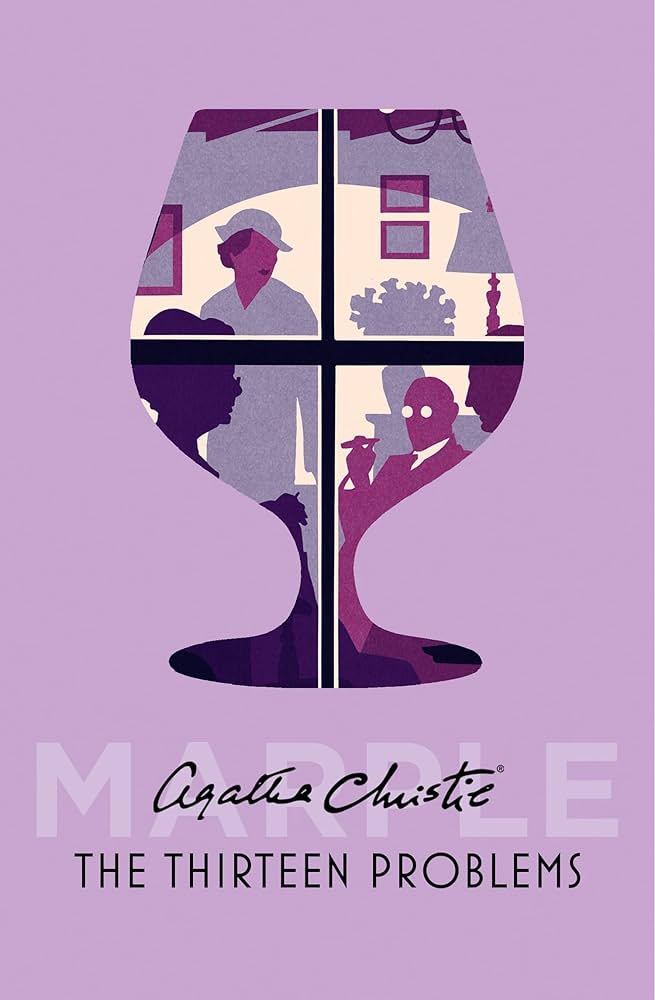
The Thirteen Problems by Agatha Christie

This month for the Read Christie challenge we’re reading books with authors as characters. The recommended book, The Thirteen Problems, is one I hadn’t read before so I thought this would be a good opportunity to pick it up. First published in 1932, it’s a collection of short stories featuring Miss Marple and her nephew, Raymond West, who is a writer. It has also been published in the US as The Tuesday Club Murders, so you may know it by that title.

There are thirteen stories in the book. In the first, a group of six friends gather at Miss Marple’s home in St Mary Mead and during the evening the conversation turns to mysteries. It seems that each of them has experienced or been involved in some kind of mystery and it’s suggested that over the next few weeks they should take turns telling their story and seeing if the rest of the group can solve it. Five of the friends have professions which they claim are ideally suited for detective work – an artist, a writer, a clergyman, a lawyer and a retired policeman – so they all agree to the plan and the Tuesday Night Club is born! The sixth member of the group, Miss Marple, is just there to make up the numbers; how could an old lady who has barely left her quiet little village possibly know anything about solving mysteries?

After all six have told their stories, several members of the group – with the addition of a doctor and a young actress – meet again at the home of Colonel and Mrs Bantry, where another set of stories are narrated. You won’t be surprised to hear that it’s Miss Marple who provides the correct solution for all thirteen of them, after everyone else has tried and failed!

I tend not to be a big fan of short stories, but I do usually enjoy Agatha Christie’s. This collection isn’t a favourite and I think I know why: it’s because the stories all involve mysteries that have already happened or have already been solved, so we don’t get to see Miss Marple or the other characters actively investigating them at the time. It’s a similar concept to Baroness Orczy’s Old Man in the Corner stories where her detective solves crimes while sitting in the corner of a London tearoom. Still, the stories are all interesting and I even managed to solve one or two of them myself!

Some of the stories have a supernatural feel – although the solutions have more logical explanations. My favourite was Colonel Bantry’s story, The Blue Geranium, in which a woman is visited by a fortune-teller who warns her to beware of a blue primrose, a blue hollyhock and finally, a blue geranium, which means death. When the flowers on her bedroom wallpaper begin to turn blue one by one, the woman begins to fear for her life. Another one I enjoyed was The Blood-Stained Pavement, narrated by the artist Joyce, who was visiting Cornwall to paint some picturesque village scenes. She’s sitting outside working on a painting when she notices drops of blood on the ground that weren’t there just a few minutes earlier. These bloodstains turn out to be important when a woman is reported missing two days later.

Although the stories in this book all stand alone, they are not completely separate as there’s also an overarching narrative, with the group of friends discussing the story that’s just been told and deciding whose turn it is to speak next. By the end of the book, Miss Marple has impressed everyone with her detective skills and has shown them that sometimes all that’s needed to solve a crime is a knowledge of human nature. Just as she does in the full-length novels, she draws on parallels with life in St Mary Mead and people she knows who remind her of the suspects or victims in the stories.

I did enjoy The Thirteen Problems, then, and found the stories just the right length. It’s always a pleasure to spend some time with Miss Marple!

The Little Sparrow Murders by Seishi Yokomizo

Translated by Bryan Karetnyk

I’ve read all five of Seishi Yokomizo’s Kosuke Kindaichi mysteries that have previously been published by Pushkin Press in new English translations. This is the sixth, with another due later this year, and I decided to read it for the Japanese Literature Challenge being hosted this month and next by Dolce Bellezza.

The Little Sparrow Murders was originally published in Japanese in 1959 and is set a few years earlier in the village of Onikobe in Okayama Prefecture. Private detective Kosuke Kindaichi is taking a break from crime-solving and has decided to travel to Okayama to visit his old friend, Inspector Isokawa, at the prefectural police headquarters. Isokawa gives him the address of a nearby inn to stay at, run by Rika Aoike, a widowed friend. Although Kindaichi had been hoping to relax and avoid any mysteries for a while, he finds himself drawn into one when he learns that Rika’s husband, Genjiro, was murdered twenty years earlier – and the killer was never found.

As Kindaichi hears more about the events before and after Genjiro’s death and gets to know some of the people involved, another murder takes place, coinciding with the disappearance of the village chieftain and a sighting of a mysterious old woman on a mountain path. It seems that Kindaichi’s relaxing break is over before it even started. He and Isokawa begin to investigate, convinced that the key to the present day mystery lies in determining what really happened to Rika’s husband all those years ago.

Having read a lot of older Japanese crime novels over the last few years, thanks mainly to Pushkin who are doing a wonderful job with their new translations, I’ve found that many of them – most notably the ones I’ve read by Yukito Ayatsuji and Soji Shimada – are more concerned with solving seemingly impossible crimes and complex puzzles than with characters and motives. Yokomizo, I think, usually finds a better balance between the two; although his books still have intricate plots, the focus is often not so much on working out how the murders were committed, but rather on why they were committed and who could have had a reason for doing so. The impossible crime books can sometimes be fun as well, but I personally prefer the more character-driven ones. In this particular novel, the murders take place out in the open, not in locked rooms, and there’s almost no discussion of alibis, timings or similar things that can sometimes bog down a plot.

One thing I loved about The Little Sparrow Murders is that Yokomizo builds the story around a children’s rhyme – a device that Agatha Christie also often used. The killer in this novel is inspired by a temari song (a song sung by children in Japan while bouncing colourful embroidered temari balls). It begins “In the trees in the garden behind our house, Three little sparrows came to stay” and goes on to describe three young women from different families, who were “all of them sent away” – in other words, murdered. The deaths in the book correspond to the rhyme, which adds some extra interest to the mystery. I hadn’t heard of temari songs or balls before so, as always, a Yokomizo novel has contributed to my knowledge of Japanese culture.

This is one of my favourite Yokomizo novels so far, along with The Honjin Murders and The Inugami Curse, but I did have one problem with it – trying to keep track of the huge number of characters! There are five families in the book and it’s not easy to remember which family each character belongs to and how they’re connected to people in the other families. If you’re reading the ebook version (or maybe even if you’re not), I recommend taking the time to draw some family trees using the character list at the front of the book before you start, then you can easily refer to them as you read. I would have been lost otherwise, I think.

I’m now looking forward to the next Yokomizo book, Murder at the Black Cat Café, coming in September. Pushkin Vertigo also have another Ayatsuji novel, The Clock House Murders, on the way, as well as others by authors I haven’t tried yet, so 2025 should be a good year if you’re a fan of Japanese mysteries!

Tea on Sunday by Lettice Cooper

Lettice Cooper is a new author for me. I’m aware that two of her books from the 1930s, National Provincial and The New House, have been published by Persephone, but I haven’t read either of them yet. Tea on Sunday, her only detective novel, sounded appealing, though; it was published in 1973, very late in her life, but has the feel of a Golden Age mystery and has recently been reissued as a British Library Crime Classic.

The plot is quite a simple one. On a snowy winter’s day, Alberta Mansbridge invites eight guests to a tea party at her home in London. The guests include her family doctor, her ‘man of business’, an old friend, the manager of her late father’s engineering company, her nephew Anthony and his wife, and two young men she has taken under her wing – an Italian and an ex-prisoner. As the group gather outside her door that Sunday afternoon, they become concerned when their knocking goes unanswered. Eventually the police are called and force open the door to find that Alberta has been strangled while sitting at her desk.

There’s no real mystery regarding how the murder took place. The doors and windows had been locked and there’s no sign of a burglary, so the police are satisfied that the killer must have been someone Alberta knew and let into the house – probably one of the eight guests who arrived early, committed the murder, then left again to return a few minutes later with the others. But which of the eight was it and why did they want Alberta dead?

Tea on Sunday is a slow paced novel where, once the murder is discovered, not much else actually happens. Most of the focus is on Detective Chief Inspector Corby interviewing the various suspects one by one and delving into Alberta’s personal history to see if the answer lies in her past in Yorkshire. Despite the lack of action, I still found the book surprisingly absorbing and that’s because of Cooper’s strong characterisation. Any of the eight could be the culprit as none of them have alibis and this means Corby has to learn as much as he can about each person and whether or not they have a motive.

Corby is a likeable detective and it’s a shame he only appears in this one book by Lettice Cooper as she could probably have built a whole series around him. Although a few of his comments about women are questionable, I could make allowances for the period in which the novel was written and in general he’s respectful towards the people he interviews and doesn’t judge until he’s heard all the facts. It would be easy, for example, for him to pin the blame on Barry Slater, the former prisoner Alberta met through her charitable work and who runs away as soon as the police are called to the scene, but he doesn’t do this and waits to form his own opinion.

Of the eight suspects, the characters who stand out the most, in my opinion, are Anthony Seldon and his wife, Lisa. As the dead woman’s nephew and the only direct family member invited to the tea party, Anthony naturally comes under suspicion, so a lot of time is spent on his background, painting a picture of a young man who disappointed his aunt by refusing to go into the family business and by marrying a woman she dislikes quite intensely. Another interesting character is Myra Heseltine, Alberta’s close friend who lodged with her until discovering that Alberta’s latest protégé, Marcello Bartolozzi, whom Myra distrusts, may be moving in as well.

It’s Alberta Mansbridge herself, however, whose character comes across most strongly. Despite being murdered so early in the book, she is brought to life through the words and memories of those who knew her: a woman proud of her family’s legacy, stubbornly resistant to change and progress, who interferes in other people’s business but at the same time is generous and giving. At first it’s difficult to see why so many people may have wanted her dead, but gradually motives emerge for almost all of the suspects.

The actual solution to the mystery is disappointingly simple and there are no clever twists along the way, like we would expect from Agatha Christie, for example. I felt let down by the ending, but it was still an enjoyable read up to that point and as the first book I’ve completed in 2025 it means my reading for the year is off to a good start.

What Time the Sexton’s Spade Doth Rust by Alan Bradley

After a five year gap, Flavia de Luce is back! It seemed that 2019’s The Golden Tresses of the Dead was going to be the last in the series, so I was pleased to see book eleven, What Time the Sexton’s Spade Doth Rust, appear towards the end of 2024. If you’re wondering about the title, it comes from the poem At the End by Andrew Dodds.

In this book, our young heroine Flavia de Luce and her fellow amateur detective, the gardener Dogger, are investigating yet another suspicious death in the village of Bishop’s Lacey. Major Greyleigh, a retired hangman, has been found dead after eating a breakfast of apparently poisonous mushrooms – and the police suspect Mrs Mullet, the de Luce family cook, who had picked and served the mushrooms to the victim. Flavia and Dogger are sure there’s been a mistake – Mrs Mullet can’t possibly be a murderer! Before they can prove her innocence, however, they must try to find the real killer.

I enjoyed the mystery in this book more than in the last one – it was less complicated and easier to follow. Mrs Mullet being implicated makes Flavia and Dogger’s investigation feel more personal and relevant than usual, while the profession of the victim – a hangman – provides motives for other people to want him dead. Also, with the cause of death believed to involve poison, there are plenty of opportunities for Flavia to put her knowledge of chemistry to good use!

I do miss Flavia’s interactions with her sisters, especially as after fighting and arguing with them for most of the series it had seemed a few books ago that her relationships with them were starting to turn a corner. Feely (Ophelia), who got married at the beginning of the previous book, is still away on her honeymoon and doesn’t appear at all, and although Daffy (Daphne) is still living at home, we barely see her either. In fact, it’s mentioned that she’s busy completing her application for Oxford University, so presumably she’ll be gone soon as well. I was struggling to work out the ages of the characters in this book; we were told in the last one that Flavia is twelve, but I can’t remember how much older her sisters are – and I can’t believe only a year has passed since the beginning of the series, where she was eleven!

One character we do see a lot of is Undine, Flavia’s annoying younger cousin (I’m not sure exactly how old she is either). Again, Flavia’s relationship with Undine is improving as she starts to acknowledge that in some ways her cousin actually reminds her of herself. Unfortunately, I don’t find Undine at all fun or endearing and she’s really no substitute for Daffy and Feely.

I was surprised to see that the storyline introduced earlier in the series involving the secret society known as the Nide was picked up again in this book. Having formed a big part of the plot of book six, The Dead in Their Vaulted Arches, and to a lesser extent book seven, it has never really been referred to again until now – and, to be honest, I think it should have just remained forgotten. An espionage/world power storyline doesn’t really fit with the otherwise charming, cosy mystery feel of the series. Still, it meant several big plot twists and the return of a character I hadn’t expected to see again!

Alan Bradley has said that he’s now busy working on the twelfth Flavia book, so it will be interesting to see where things go next.

Thanks to Orion for providing a copy of this book for review via NetGalley.

Third Girl by Agatha Christie

This is the final book I’ve read for this year’s Read Christie challenge. I had intended to read it in November, but didn’t have time. I’m glad I’ve still managed to fit it in before the end of the year because, although I don’t think it’s one of Christie’s absolute best, I did enjoy reading it.

Norma Restarick is the ‘third girl’ of the title. The term refers to the practice of two girls who are living together in rented housing advertising for a third girl to take the spare room and share the rent with them. Norma crosses paths with Hercule Poirot when she approaches him for help because she thinks she may have committed murder – but after meeting Poirot in person, she flees, saying she’s made a mistake and he is too old to be of assistance.

Concerned – and insulted – Poirot tries to find out the reason for Norma’s visit to him and learns that the girl is acquainted with his friend, the mystery writer Ariadne Oliver. This makes it possible for Poirot, with Mrs Oliver’s help, to track down Norma’s family at their home in the country and the two girls she lives with in London. But Poirot is still confused. Norma says she thinks she has tried to poison her stepmother because a bottle of weed killer has been found in her room, yet she has no memory of actually doing it. It’s also not the only time Norma has experienced gaps in her memory. Convinced he doesn’t have all the facts and that the murder Norma originally referred to was not the attempted one she’s now confessing to, Poirot begins to investigate.

A common theme in Christie’s later books seems to be that society is changing and the world is moving on and she doesn’t like or understand it. Published in 1966, this book is firmly set in the 1960s and the older characters take every opportunity to complain about the fashions (particularly men with long hair), the music, the culture and what they see as rampant drug use amongst young people. I found this interesting as it gives the book a very different feel from the earlier Poirot novels. I think Poirot, like Christie herself, probably felt much more at home in the 1930s!

Third Girl is also unusual because for most of the book we don’t know if a murder has actually been committed and if so, who the victim is. This makes it less of a conventional detective novel and more of a psychological study of Norma Restarick. As we learn more about Norma’s past, there’s a real sense of her vulnerability and how she could be being manipulated by other people. Even when the true nature of the crime that needed to be investigated became clearer, I still didn’t correctly guess who the culprit was – and to be honest, I thought it was quite an unconvincing solution, which relied on several of the characters being very unobservant.

What I did love about this book is that Ariadne Oliver plays such a big part in it from beginning to end. She is often said to represent Christie herself and gives her a chance to comment on the writing of detective novels! It’s always nice to see her pop up in a Poirot mystery and I wish she was in more of them. In Third Girl, Mrs Oliver adds some humour to the book, as well as inadvertently providing Poirot with some of the key clues. Poirot is also present from the beginning of the book, rather than appearing halfway through as he often does.

I’m pleased to have completed eight of the twelve monthly reads for the 2024 Read Christie challenge. I’m looking forward to joining in again in 2025!