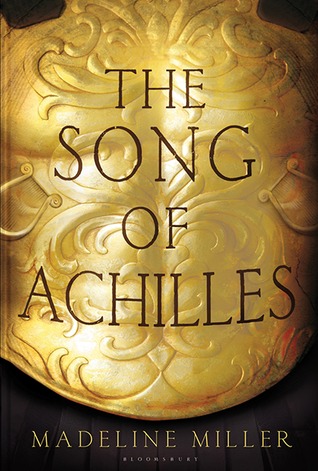
 The Song of Achilles is a retelling of the Iliad, told from the perspective of Patroclus, Achilles’ best friend and lover. Patroclus, the son of Menoetius, is only a child when he is exiled and sent to Phthia to live with King Peleus and his son, Achilles. Achilles is destined to become the greatest warrior of his generation and when he goes to Mount Pelion to receive training from the centaur, Chiron, Patroclus joins him there. As the years go by the bond between Achilles and Patroclus strengthens and their friendship develops into love, despite the attempts of Achilles’ mother, the sea goddess Thetis, to separate them.
The Trojan War begins when Helen, the wife of Menelaus of Sparta, is abducted by Paris of Troy. Both Achilles and Patroclus are part of the Greek army who set out to defeat the Trojans and return Helen to her husband. I’ll stop there because if you already know the story, you’ll know what happens to Patroclus and Achilles – and if you don’t, then I won’t spoil it for you.
I used to be fascinated by Greek mythology as a child but as the years have gone by I’ve read very little on the subject, so I began this book hoping that it would be good enough to reawaken my interest in it. I haven’t read The Iliad and could only remember a few basic facts about the Trojan War that I learned at school, so I was worried I might find it difficult to follow the plot. Well, this wasn’t a problem because Madeline Miller made it all very accessible and understandable. I was surprised to find that I actually knew more than I thought I did and recognised the names of a lot of the heroes and gods who appeared in the novel. But although the Trojan War and the events leading up to it are an important part of the story, the real focus is on the relationship between Achilles and Patroclus. Their love story was really beautifully written and filled with emotion and although the second half of the book didn’t sustain my interest as well as the first half did, I thought the final few chapters were particularly moving.
Achilles and Patroclus each have qualities that the other comes to value and admire. Achilles is handsome, talented and brave; Patroclus is quiet and loving. They both also have flaws: Patroclus often feels insecure while Achilles is sometimes too proud. It’s perhaps because they’re so different that they complement each other so well. I thought writing from the viewpoint of Patroclus was a good choice because it allowed us to see Achilles through the eyes of someone who loved him and also because, as a sensitive and observant narrator, he could give us interesting insights into the other characters as he met each of them for the first time, including Agamemnon, Briseis, Thetis, Ajax and my favourite, Odysseus.
I would recommend this novel to people like myself who only have a basic knowledge of Greek mythology (or none at all) as well as people who have already read The Iliad and are much more familiar with the story than I am. The Song of Achilles has something to offer both groups of readers. I’m still not sure that this is a subject I’m ever going to be passionately interested in, but after reading this book I do feel more enthusiastic about reading other novels based on Greek mythology.
The Song of Achilles was the winner of this year’s Orange Prize. I haven’t read any of the others on the shortlist because none of them really appealed to me, but having read this one I’m sure it was a deserving winner.