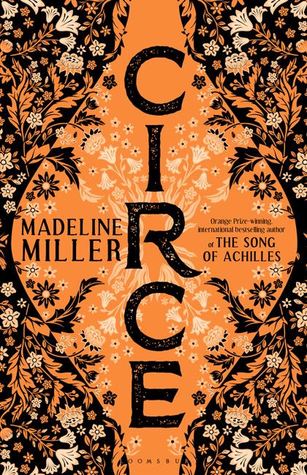
Circe by Madeline Miller

It’s been a long wait for Madeline Miller’s second novel (her first, The Song of Achilles, was published in 2011), and now that I’ve read it I’m pleased to say that I thought it was worth waiting for. I enjoyed The Song of Achilles, though maybe not as much as other people seemed to, but I found Circe an even more interesting read with characters and storylines which I personally found much more appealing.

I will start by admitting that before beginning this novel, I knew nothing about the witch Circe other than what I remembered from her appearance in the Odyssey, when Odysseus lands on the island where she lives alone with her lions and wolves, turning men into pigs. My knowledge of Greek mythology is sadly lacking, so I was curious to find out what else her story would involve and how it would be enough to fill a whole book.

The first thing we learn is that Circe is the daughter of the sun god Helios and the Oceanid nymph Perse. She grows up in the shadow of her seemingly more talented siblings, possessing neither the beauty of her sister Pasiphaë, who goes on to marry King Minos of Crete, nor the magical powers of her brothers Perses and Aeëtes (the future king of Colchis). To make matters worse, she even has the voice of a mortal rather than a goddess. It is only when she is driven by an uncontrollable jealousy to cast a spell on a rival that she discovers she does have a talent for witchcraft after all…but this same action results in her exile to the remote island of Aiaia.

Her new home is lonely but peaceful and Circe occupies herself with taming the wild animals that share her island and learning the properties of the flowers and herbs that grow there. Gradually she becomes aware of the true extent of her abilities as a witch and finds that she is not the failure she has always believed herself to be.

Let me say what sorcery is not: it is not divine power, which comes with a thought and a blink. It must be made and worked, planned and searched out, dug up, dried, chopped and ground, cooked, spoken over and sung. Even after all that, it can fail, as gods do not. If my herbs are not fresh enough, if my attention falters, if my will is weak, the draughts go stale and rancid in my hands.

Although Zeus has forbidden her to leave the island, Circe is not entirely isolated and she receives a number of visitors bringing news from the outside world. I was surprised by how many different myths Madeline Miller pulls into the story – myths even I was familiar with, such as Jason and the Golden Fleece, Daedalus and Icarus, the torture of Prometheus, and the Minotaur in the Labyrinth. I hadn’t expected to find all of these in a book about Circe (and I’m not sure how much involvement, if any, she has in other versions of these myths), but the way in which they were woven into the novel felt quite natural. The only problem is that with Circe trapped on her island, there’s a sense that most of the action is taking place elsewhere and our heroine is left to rely on information brought by Hermes and her other visitors.

It is not until halfway through the book that Odysseus comes to Aiaia and Circe’s story begins to overlap with the events of the Odyssey. This is another turning point in Circe’s life, as the time she spends with Odysseus leaves her with some important choices to make and carries the novel forward towards its conclusion.

I loved Circe; it’s a beautifully written novel and ideal for readers like myself who only have a basic knowledge of the Greek myths. I felt a stronger connection with Circe herself than I did with Patroclus in The Song of Achilles and for that reason this is my favourite of the two books, but I do think if you enjoy one of them you’ll probably enjoy the other.

Thanks to Bloomsbury Publishing for providing a copy of this book for review via NetGalley.
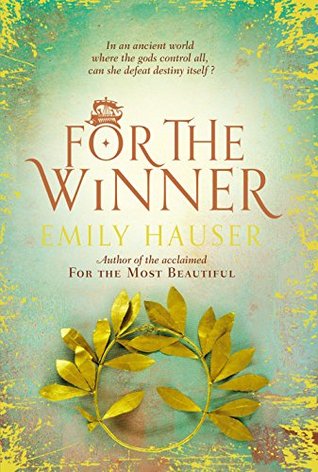
For the Winner by Emily Hauser

I mentioned recently that I wanted to read more fiction set in Ancient Greece and, having already read Emily Hauser’s first novel, For the Most Beautiful, I was sure that her second, For the Winner, would be a good choice! Hauser’s two books retell stories from Greek mythology from a female perspective – in For the Most Beautiful we see the events of the Trojan War unfold through the eyes of Krisayis and Briseis; For the Winner reimagines the story of Jason and the Argonauts with a focus on Atalanta, another lesser-known woman of the time. The books are part of a planned trilogy – the Golden Apple trilogy – but can be read in any order.

Abandoned on a mountain as a baby, Atalanta is rescued by a peasant and his wife who raise her as their own child. Growing up unaware of her true parentage, there are hints that Atalanta is destined for something special: by the time she is a teenager she has taught herself to hunt, to run with extraordinary speed and to use a bow and arrow with breathtaking skill. And then, one day, she learns the truth: the father who had left her to die on Mount Pelion was King Iasus of Pagasae.

To prove herself to her father, Atalanta decides to join the group of Greek heroes who are preparing for a voyage to the faraway land of Colchis in search of the legendary Golden Fleece. The quest will be led by the King’s nephew, Jason, whose reward for returning with the Fleece will be the kingdom of Pagasae itself – the kingdom Atalanta believes is rightfully hers. Can she win a place on board the Argo and find the Golden Fleece before Jason does?

I loved For the Winner. For the Most Beautiful was an enjoyable read too, but I thought this one was better – there were none of the little problems I remember experiencing with the other book. The biggest improvement was with the scenes depicting the Greek gods and goddesses looking down on the world from Mount Olympus, interfering and intervening in human affairs and arguing amongst themselves. With Zeus taking Atalanta’s side and Hera doing whatever she can to help Jason, I was particularly interested in the role of Iris, whose feelings and motives are less clear. The gods really added something special to the story this time and I looked forward to their appearances rather than finding them irritating as I did in the previous novel.

Although, as I’ve admitted before, my knowledge of Greek myth is quite limited, I was already familiar with the story of Jason and the Argonauts (and also have vague memories of watching the 1963 film version, years ago). However, the story told in this novel is very different, bringing in other characters and elements and mixing them together to create something new and original. Choosing to write from Atalanta’s perspective was a great decision because she is such a wonderful character. I loved following her adventures, but I don’t want to say too much more about her or give away too many details of her story! There were other characters I came to care about too, particularly Atalanta’s friend Myrtessa – and one of the men from the Argo who becomes the novel’s love interest. Jason, on the other hand, is portrayed as cruel, arrogant and completely unlikeable, but his rivalry with our heroine is what drives the plot forward.

I think what I appreciated most about For the Winner, though, was the way it explores the question of choice and free will – and how each of us has the power to defy fate and control our own destiny. Now I’m looking forward to the third book in the trilogy and am curious to see which Greek myth Emily Hauser tackles next.

Thanks to Doubleday for providing a copy of this book for review.

This is Book 5/20 for my 20 Books of Summer challenge. (I’m actually doing better with this challenge than it appears – I have another two books waiting to be reviewed and am in the middle of reading two more!)

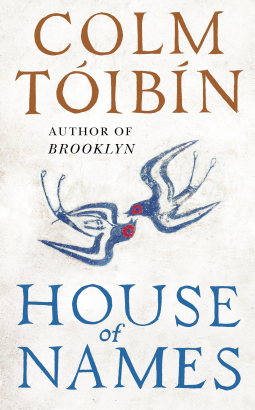
House of Names by Colm Tóibín

After talking recently about my desire to read more fiction set in Ancient Greece, I was pleased to have the opportunity to read Colm Tóibín’s new novel House of Names. It retells the tragic story of the House of Atreus, described in Aeschylus’ famous trilogy, the Oresteia. Not being very familiar with this story, I had no problem following the plot of the novel, but couldn’t help wondering how different my experience would have been if I was already more well-versed in the Greek classics.

House of Names begins in dramatic style with Agamemnon sacrificing his eldest daughter, Iphigenia. In return the gods will bring about a change in the wind which will allow his army to sail to Troy. Iphigenia’s mother, Clytemnestra, is forced to witness the terrible scene – made even worse by the fact that she had believed she was coming to watch her daughter’s wedding, not her murder. The first section of the novel is narrated by Clytemnestra and I thought it was wonderful, vividly describing the moment of the sacrifice and perfectly capturing the agony and heartbreak of a mother at the loss of her child and the bitter fury of a wife at the treachery of her husband. Angry and grieving, Clytemnestra returns to Mycenae to await her husband’s return from Troy and her chance to take revenge:

Her screams as they murdered her were replaced by silence and by scheming when Agamemnon, her father, returned and I fooled him into thinking that I would not retaliate. I waited and I watched for signs, and smiled and opened my arms to him, and I had a table here prepared with food. Food for the fool! I was wearing the special scent that excited him. Scent for the fool!

But what effect will Clytemnestra’s next actions have on her two remaining children, Orestes and Electra? We don’t have to wait long to find out as sections written from the perspective of each of those characters follow. Orestes’ is told in the third person and describes his kidnapping from the palace of Mycenae and his later escape with the help of two other boys, Leander and Mitros. Together, far from home and away from their families, Orestes and his friends must find a way to survive into adulthood. His sister Electra, meanwhile, pushed aside after Iphigenia’s death, watches Clytemnestra and her lover Aegisthus and begins to plot a revenge of her own…

This has been a difficult review for me to write as I still can’t quite decide what I thought of House of Names! I loved the powerful opening section of this novel but, two weeks after finishing the book, that’s the only part that has really stayed with me. The Orestes and Electra sections, although I found them interesting at the time, felt strangely detached and emotionless. The writing style helped to create an eerie, otherworldly feel at times, but it came at the expense of the passion and intensity I would have preferred from a story like this.

I do think that my lack of knowledge of the Oresteia and the fate of the House of Atreus could have been an advantage rather than a disadvantage as far as this book is concerned. I’ve read several other reviews that mention being confused by Tóibín’s decision to change so many details of the story, such as the use of the character of Leander to fill the role of Pylades, but not being familiar with the original I didn’t even notice things like this. Maybe I should have an attempt at reading the Oresteia itself one day. Does anyone know of a good translation to read?

As for Colm Tóibín, I’m looking forward to reading more of his work. Brooklyn is the only other one of his novels that I’ve read and the two couldn’t be more different. Which of his books do you think I should try next?

Thanks to Penguin for providing a copy of this book via NetGalley for review.

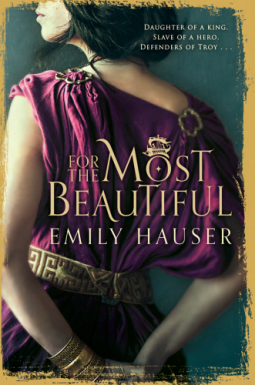
For the Most Beautiful by Emily Hauser

For the Most Beautiful “For the most beautiful”. These are the words inscribed on a golden apple presented by Paris, Prince of Troy, to the goddess Aphrodite whom he has chosen over her rivals, Hera and Athena. In return, the goddess rewards Paris with Helen of Sparta, the most beautiful woman in the world – but unfortunately, Helen is already married. Not surprisingly, her husband, Menelaus, is enraged by the theft of his wife and sends the mighty armies of Greece, led by his brother King Agamemnon, to the shores of Troy to bring her back.

The story of the Trojan War is one that has been told many times before and with which a lot of readers will already be familiar before picking up Emily Hauser’s debut novel, For the Most Beautiful. However, this book retells the story from a feminine perspective and focuses on two female characters – Krisayis and Briseis – who both have important roles to play yet have not been given much attention in other versions such as Homer’s Iliad.

Krisayis (whose name is usually spelled Chryseis) is the daughter of a Trojan priest and companion to Cassandra, a princess of Troy. As the novel begins, we learn that Krisayis is in love with Cassandra’s brother, Troilus, and that, much against her wishes, she is about to become a priestess devoted to the god Apulunas. Our other main character, Briseis, is a princess of Lyrnessus who has unexpectedly found love with her husband Mynes, despite growing up under the shadow of a prophecy which seemed to rule out the possibility of happiness. With the onset of war, the lives of both young women are thrown into turmoil; their paths cross while held captive in the Greek camp, but will they be able to change fate and save Troy?

I found For the Most Beautiful a very enjoyable read. I think it was probably aimed at a younger audience but there was enough depth to keep an adult reader happy too. Having only read two or three other novels about Troy (including Madeline Miller’s The Song of Achilles and Judith Starkston’s Hand of Fire) I found that while I knew the basic outline of the story, a lot of it was new to me and the approach the author took made it feel fresh and original. It was interesting to see how Emily Hauser interpreted the characters of not just Krisayis and Briseis but also Achilles, Patroclus, Paris, Hector, Cassandra and others.

The stories of our two heroines unfold in alternating chapters and I thought these sections of the book were well written and emotionally engaging (both Briseis and Krisayis suffer the death of a loved one and then face further ordeals and difficult decisions after their capture by the Greeks). However, these chapters are interspersed with short scenes in which we witness the gods on their mountain observing and manipulating the lives of the mortals below – and this is the one aspect of the book which really didn’t work for me. The writing style in these sections is quite different – the language feels much more modern and the tense changes from past to present – and the gods come across as bored, shallow and petulant. I think I can see what the author was trying to do here and I’m sure other readers will enjoy the light-hearted, comedy feel of these scenes, but it just made me impatient to get back to Briseis and Krisayis!

After finishing this book, I was pleased to discover that it’s the start of a new Golden Apple trilogy. Greek mythology is not a subject that particularly interests me, but I was still captivated by For the Most Beautiful and am looking forward to reading another two books by Emily Hauser.

I received a copy of this book from NetGalley for review.

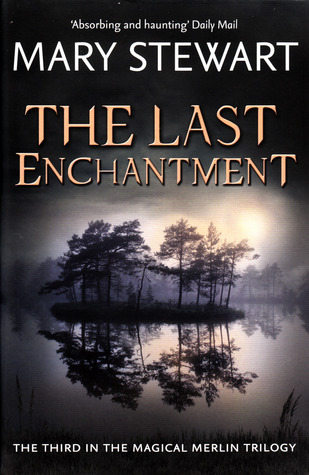
The Last Enchantment by Mary Stewart

The Last Enchantment The Last Enchantment is the final part of Mary Stewart’s Merlin trilogy, which began with The Crystal Cave and The Hollow Hills. I have been reading it this week for Lory’s Witch Week, a celebration of fiction based on fairy tales, folklore, myths and legends, but I’m sure I would have picked it up soon anyway as I loved the first two books and was looking forward to reading the conclusion of Merlin’s story.

The Last Enchantment picks up the story where The Hollow Hills ended, with Arthur beginning his reign as High King of Britain after pulling the sword Caliburn (Excalibur) from its stone. Almost immediately, Arthur must begin a series of battles against the Saxons before he can achieve peace and security throughout his kingdom. But Arthur is not the main focus of the novel; like the previous two books, this one is narrated by Merlin…and Merlin is facing a battle of his own. Arthur’s half-sister, the witch Morgause, has given birth to a son, and Merlin has foreseen that this child, Mordred, could pose a threat to the King.

In the first half of the novel, Merlin tells us of his journey north in search of Mordred, as well as several other events, such as the building of Camelot and Arthur’s marriage to Guinevere, which will be familiar even to readers who, like me, only have a basic knowledge of the Arthurian legends. In the second half of the book, there is a growing sense of sadness and poignancy as Merlin ages, his magical powers begin to fade and Arthur, while still valuing his friendship, no longer relies on him as he used to. Merlin takes on an apprentice, Nimuë, whom he hopes will eventually take his place as the King’s enchanter, but he soon discovers that his new assistant has some surprises in store for him.

Maybe because I found this such a sad story, I didn’t love it quite as much as The Crystal Cave and The Hollow Hills, but I do think all three are wonderful books. I was slightly disappointed with the portrayal of the female characters (I think I mentioned that in my review of the previous novel too). Arthur’s sisters, Morgan and Morgause, are both evil witches, while Guinevere is pushed into the background and never really comes to life at all. Then there’s Nimuë, whose storyline I really disliked and found quite painful to read at times. Merlin’s relationship with Arthur, though, is one of the highlights of the book and I found myself looking forward to all of their scenes together.

Before reading this trilogy my knowledge of Arthurian myth was limited to T.H. White’s The Sword in the Stone and one or two television adaptations which I can now barely remember watching; I think this was an advantage, because it meant I was kept in suspense, only vaguely aware of the outline of the story and the role each character would play. I was surprised that there was no Lancelot (his part in the story is taken by Arthur’s friend, Bedwyr, instead), I had no idea that Arthur was thought to have had more than one wife called Guinevere and I knew nothing of the involvement of Nimuë in the later stages of Merlin’s story. Mary Stewart discusses all of these things and more in her author’s note at the end of the book, explaining how she chose to interpret various sources and to decide what to include in her version of the legend.

I was sorry to reach the end of Merlin’s story, but I can definitely see myself wanting to re-read all three of these books in the future – and, of course, I would also like to read Mary Stewart’s other two Arthurian novels, The Wicked Day (the story of Mordred) and The Prince and the Pilgrim. I think it’s fascinating that there are so many different variations of these legends and now that I’ve read this version, I’m interested in reading interpretations by other authors. If you can recommend any good ones, please let me know!

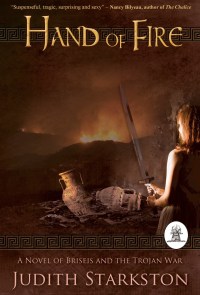
Hand of Fire by Judith Starkston

perf6.000x9.000.indd In this wonderful combination of historical fiction and Greek mythology, Judith Starkston reimagines events from the Iliad, telling the story of the Trojan War through the eyes of Briseis, a woman who plays an important role in Homer’s epic despite being only briefly mentioned. In Hand of Fire, Briseis is finally given the attention she deserves.

At the beginning of the novel, Briseis is a young priestess of the healing goddess Kamrusepa, but is sadly unable to prevent her own mother from dying. There is more sadness to follow for Briseis when she is married off to Mynes, a prince of Lyrnessos, and finds him to be a violent and abusive man. Sustained by the compassion of her elderly nurse, Eurome, and by visions of the handsome, half-immortal Greek warrior, Achilles, the turning point comes when the city of Lyrnessos falls to the Greek army and Briseis is taken captive. How can she reconcile her love for Achilles with her new position as slave?

Hand of Fire surprised me; I really didn’t expect to enjoy it quite as much as I did. I love reading historical fiction but tend not to choose books set in the ancient world. I often find that I have trouble identifying with the characters – I sometimes feel that even the non-mythological ones seem more like mythological beings than real people. That was not a problem here: this is a very human story with characters I could love and care about. Briseis herself is a great protagonist and I liked her from the beginning. She has great strength and resilience, all the more impressive when you consider everything she has to endure – the loss of her mother, marriage to a man who treats her badly, personal tragedy in the face of war, life as a captive slave, and her tumultuous relationship with Achilles.

Achilles is more difficult to understand. His personality is complex and conflicted; in battle he is a fierce, mighty warrior gripped by an unstoppable rage, but when he is alone with Briseis we see the gentler, more sensitive side of his nature. Of the secondary characters, there are two in particular that I found very well developed and memorable. One is Eurome, Briseis’ elderly maid, a caring, warm-hearted person and a devoted friend Briseis can trust and rely upon. The other is Patroklos, the beloved companion of Achilles, the only person apart from Briseis who is able to quell his rage.

This is a novel that has been thoroughly researched, which is evident from Judith Starkston’s author’s note in which she describes her reasons for writing this story, the things she discovered during the writing process and the decisions she needed to make. She does an excellent job of drawing on her knowledge of the period to create a convincing picture of what life may have been like for a woman who lived during the Bronze Age. The history of medicine is something I’ve always found very interesting, so I enjoyed the parts of the book that describe Briseis’ work as a healer (which consists mainly of using herbs and magical rituals as unlike her brother, Iatros, she is unable to study to be a physician).

Even for a reader like myself who only has a limited knowledge of Ancient Greece and hasn’t actually read the Iliad, I found this novel very accessible and easy to follow. I appreciated the fact that the author takes the time to flesh out the background to the story and doesn’t just assume that every reader will be familiar with the time period and the mythology. I was also pleased to find that there’s not too much emphasis on the battle scenes! This is Briseis’ story and the focus is on her personal life and on her relationships with Achilles, Mynes and the others. I really enjoyed spending time in her world and will be looking out for more novels from Judith Starkston in the future.

Hand of Fire tour graphic I read Hand of Fire as part of a Fireship Press Virtual Book Tour. You can find the tour schedule here.

The Odyssey – translated by T.E. Lawrence

The Odyssey - Homer Ten years have passed since the Trojan War ended but Odysseus has still not returned home, having been held captive by the nymph Calypso, who has fallen in love with him. At home in Ithaca, his wife, Penelope, has found herself besieged by a large group of suitors who are hoping to persuade her to marry one of them. The suitors have taken over Odysseus’s palace and are helping themselves to his food and drink; his son, Telemachus, is desperate for them to leave but doesn’t have the courage to throw them out.

The Odyssey tells the story of Odysseus and his journey home to Ithaca – a journey involving encounters with the one-eyed Cyclops, the witch Circe, the sea monster Scylla, and the tempting music of the Sirens. But it’s also the story of Telemachus and his quest to find out what has happened to his father; of Penelope, faithfully waiting for her husband to return; and of the Greek gods and goddesses who try to help or hinder Odysseus on his travels.

I’m so happy to have finally read The Odyssey as it was one of the least appealing books on my Classics Club list, not necessarily because I was intimidated by it (well, maybe a little bit) but because I’m just not very interested in mythology. I can’t really explain why I’m not a fan; I did enjoy reading Greek myths as a child, but since then my reading has taken me in other directions. I know that probably puts me in a minority as most people seem to love mythology and have a lot more knowledge of the subject than I do!

I’ve started to read The Odyssey before but didn’t finish it so this is the first time I’ve actually read it from beginning to end. I did already know most of the story, partly from school and partly because this is the sort of story that I think many people will have at least some familiarity with even if they’ve never read it in its entirety. There were some things I wasn’t aware of, though – for example, I was surprised by how little time is actually devoted to Odysseus’s journey. This section of the epic, in which Odysseus describes his adventures and the monsters and mythical beings he outwits, is by far the most well-known section, but it actually only takes up four of the twenty-four books that make up The Odyssey. The rest of the time is spent on the suitors, Telemachus and Penelope, and what Odysseus does after he eventually returns to Ithaca.

There are lots of different themes and ideas contained in The Odyssey – storytelling, disguise and deception, temptation, and the relationship between mortals and gods are a few that I noted and I’m sure there are others that I missed. There is also a lot of focus on hospitality. It seemed a weary traveller would be made welcome wherever they went, offered food, a bath and a bed for the night.

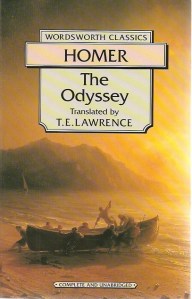
There are many different editions and translations of The Odyssey, some in verse and some in prose, but the book I read was the Wordsworth Classics edition pictured above from 1992 with a 1932 prose translation by T.E. Lawrence (better known as Lawrence of Arabia). There was no special reason why I decided to read this version, other than that I happened to have it on my shelf (I can’t remember where I got it from). I’m not sure if you can even still buy this particular translation in this edition anymore. However, this turned out to be a perfect translation for me. I know I’ve probably missed out on a lot of the beauty of The Odyssey by reading a prose version, but I don’t get on very well with narrative poems – apart from The Epic of Gilgamesh which I loved in verse form – so reading it in prose was probably a much better choice for me personally.

I have no idea how technically accurate Lawrence’s translation might be, but all I was really hoping for was something enjoyable and reasonably easy to read, and that’s what I got. I was surprised by how exciting and readable it actually was; I wonder if the fact that Lawrence himself had such an eventful life was an influence here in helping him to convey the drama of Odysseus’s adventures in such a compelling way.

I’m sorry about the lack of insight and analysis in this post. It doesn’t seem right to just ‘review’ an epic like The Odyssey as I would any other book, but that’s what I’ve had to do as I really don’t feel that there’s much I can add to everything that’s already been said about it over the centuries. It’s actually been a lot harder to write about The Odyssey than it was to read it!

Have you read The Odyssey? If I read it again, is there a translation you would recommend?