Review: Wild Swans by Jung Chang

Wild Swans is the story of three generations of women in Jung Chang’s family.  The first is her grandmother Yu-fang, who grew up in pre-communist China, a time when women had their feet bound as children and could be given to warlords as concubines.  The second is Chang’s mother, De-hong, who became a senior official in the Communist party following their victory over the Kuomintang.  The third is Jung Chang herself and the longest and most compelling section of the book is devoted to her own experiences during Mao’s Cultural Revolution of the 1960s and 70s.

Before beginning this book I didn’t know very much at all about Chairman Mao, but I’m obviously not alone in that.  As Jung Chang says in her introduction to the 2003 edition, ‘the world knows astonishingly little about him’.  This book helped me understand why the Chinese people initally welcomed communism and how millions of children grew up viewing Mao as their hero and never dreaming of questioning his regime.   It also explained why many people eventually became disillusioned and why the system started to break down.

Reading Wild Swans made me realize how important books like this one are.  Wild Swans presents almost the entire 20th century history of China in a highly personal way that makes it so much more memorable than just reading the same information in a text book would have been.

One of the most horrible things in the book occurs within the first chapter when Chang describes her grandmother’s footbinding.  It’s so awful to think of a little girl being forced to undergo this torture just because tiny feet (or ‘three-inch golden lilies’) were thought to be the ideal.  Soon after her grandmother’s feet were bound the tradition began to disappear.  However, this is just one small part of the book and the first in a long series of shocking episodes the author relates to us.  For example, during the civil war between the Kuomintang and the Communists, inflation rose so quickly that currency became worthless and people began to take desperate measures to get food, with beggars trying to sell their children in exchange for a bag of rice.

Jung Chang’s parents both worked for the Communists during and after the civil war, rising to high positions within the party.  Chang’s father was completely devoted to the Communist Party, putting it before his wife’s welfare.  Every time she found herself in trouble with the party for some trivial reason, her husband would side against her.  However, this attitude extended to the rest of his family and friends too – he refused to do anything which could be construed as showing favouritism.

Some parts of the book made me feel so angry and frustrated, such as reading about the senseless waste of food when peasants were taken away from the fields to work on increasing steel output instead, as part of Mao’s ‘Great Leap Forward’.  There are some shocking accounts of starving people being driven to eat their own babies.  The famine shook a lot of people’s faith in the Party and afterwards even Jung’s father was less inclined to put the party’s needs before his family’s as he had done in the past – in fact during the Cultural Revolution of the 1960s, he found himself denounced and arrested, and eventually emerges as one of the most admirable people in the book, at least in my opinion.

“I thought of my father’s life, his wasted dedication and crushed dreams…There was no place for him in Mao’s China because he had tried to be an honest man.”

The descriptions of the Cultural Revolution are horrific; it went on for years and resulted in countless deaths.  One of the most frightening things about this period was that nobody was safe – people who had been high-ranking Communist officials before the revolution suddenly found themselves branded ‘capitalist-roaders’ or ‘counter-revolutionaries’ (sometimes by their own children) and some of them were driven to suicide.

Some of the parts I found most fascinating were Jung’s accounts of how the Chinese viewed the ‘capitalist countries’ in the west.

“As a child, my idea of the West was that it was a miasma of poverty and misery, like that of the homeless ‘Little Match Girl’ in the Hans Christian Andersen story.  When I was in the boarding nursery and did not want to finish my food, the teacher would say: ‘Think of all the starving children in the capitalist world!’

The book is complete with a family tree, chronology, photographs and map of China – all of which were very useful as I found myself constantly referring to them and without them I would have had a lot more difficulty keeping track of what was going on.

As you can probably imagine, it was a very depressing book, as Jung and her family experienced very few moments of true happiness.  She only really sounds enthusiastic when she’s describing the natural beauty of some of the places she visited – and the pleasure she got from reading books and composing poetry, both of which were condemned during the Cultural Revolution.  However, it was also the most riveting non-fiction book I’ve ever read – I kept thinking “I’ll just read a few more pages” then an hour later I was still sitting there unable to put the book down.

I don’t think I need to explain why this book counts towards the Women Unbound challenge.  All three of the women featured in Wild Swans – Jung Chang herself, her mother and her grandmother – were forced to endure hardships and ordeals that are unimaginable to most of us, but remained strong and courageous throughout it all.  However, Wild Swans is not just the story of three women – it’s much broader in scope than that and is the story of an entire nation.  So much is packed into the 650 pages of this book that I’ve barely scratched the surface in this review and if you haven’t yet read the book I hope you’ll read it for yourself – no review can really do it justice.

Highly Recommended

Genre: Non-Fiction/Memoir/Publisher: Harper Perennial/Pages: 650/Year: 2004 (originally published 1991)/Source: My own copy bought new

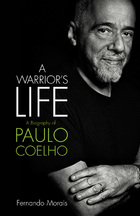
Review: A Warrior’s Life: A Biography of Paulo Coelho by Fernando Morais

Biographies are difficult to review – no matter how good the biographer’s writing might be, the success of the book really depends on how interesting the subject of the biography is. Fortunately for Fernando Morais and the reader, Paulo Coelho has evidently had a far more eventful life than the average person. The first half of the book, which dealt with Coelho’s early life, was fascinating although I found I started to lose interest nearer the end.

Paulo Coelho was born in Rio de Janeiro, Brazil, in 1947. As a teenager he was a rebel who performed badly at school and was constantly getting into trouble, insisting that all he wanted to do was read and write. His parents, not knowing what else to do with him, sent him to a psychiatric clinic where he was given electroshock therapy. Paulo later began experimenting with drugs and became involved in black magic. In 1974, he was arrested and imprisoned after being accused of subversive activities against the Brazilian government. His life reached a turning point in 1986, when he went on a pilgrimage to Santiago de Compostela, a journey that inspired one of his first major books, The Pilgrimage. Today, Coelho is one of the world’s most popular authors and has sold over 100 million copies worldwide.

Many biographers (particularly the authors of unauthorised biographies) allow their own opinions and speculations to get in the way of the facts – Fernando Morais does not do this. The book was written with the full cooperation of Paulo Coelho and Morais writes in a professional, factual style. He was given full access to Coelho’s diaries which date back to his teenage years, though he repeatedly points out that Coelho tended to fantasize in his diary entries and therefore we can’t place too much reliance on them. However, the inclusion of the diary entries, along with other fragments of Coelho’s writing, gives us a better insight into his mind.

Morais looks at every stage of Coelho’s life in so much depth it’s obvious that he spent a lot of time researching the book thoroughly. He provides a complete list of all the people he interviewed during his research including some of Paulo’s friends, family members and former girfriends. Some of Coelho’s fans may be disappointed and disillusioned as he is often portrayed in a bad light, but as the biography was published with Coelho’s blessing, he was obviously happy for us to read about the negative aspects of his character as well as the positive.

A Warrior’s Life was an interesting book to read, despite the fact that before beginning it I knew almost nothing about Paulo Coelho. I received a review copy from LibraryThing Early Reviewers and was glad to have an opportunity to read a biography I would probably never have read otherwise.

Genre: Non-Fiction (Biography)/Pages: 496/Publisher: Harper Collins/Year: 2009/Source: Received from LibraryThing Early Reviewers

Review: Testament of Youth by Vera Brittain

I chose to read this book as part of the Women Unbound Reading Challenge. I selected this book for Women Unbound because it is the memoirs of a woman who lived through World War I and it’s considered an important example of feminist literature.

I don’t read many non-fiction books or biographies/autobiographies so this was something different for me.

Vera Brittain was born in 1893 and grew up in Buxton, Derbyshire. Her father was the owner of a paper mill, therefore she had a comfortable, privileged childhood. Vera was well-educated and ambitious and longed to break away from what she frequently refers to as her ‘provincial’ life in Buxton. She already considered herself to be a feminist and wanted more out of life than just to leave school and get married like most of the other girls she knew. Her father finally agreed that she could go to Oxford University, but just as she was beginning her studies, war broke out in Europe. With her fiance Roland, brother Edward, and two close friends fighting on the front line, she was unable to concentrate on her studies and decided to enlist as a V.A.D. nurse.

It was fascinating to read a personal account of the effects the war had on one woman’s life and on society as a whole. Reading this book made me realise how little I actually knew about World War I. A lot of the places and events mentioned in the book were unfamiliar to me and left me wanting to find out more.

Rather than just relying on her memory, Brittain uses a number of different sources, including her private diaries and correspondence and verses from poems, some of which were written by Roland or Vera herself. As I read about all the pain and sorrow she was forced to endure, I became completely absorbed in Vera Brittain’s story. I found it very inspirational that despite having her entire world torn apart by the war, she was still able to go on to build a successful career for herself as a novelist, feminist and pacifist.

Although Testament of Youth was a long, demanding and often heartbreaking book, I’m glad I read it and I feel I learned a lot from it.

Highly Recommended

Genre: Non-Fiction (Autobiography)/Pages: 640/Publisher: Virago/Year: 1933/Source: borrowed a copy