The Great Impersonation by E. Phillips Oppenheim

I don’t usually pay much attention to the recommendations that pop up on sites like Goodreads and Amazon (“as you liked that book, you might like this one”) but there have been one or two occasions where a particular recommendation has caught my attention, I’ve tried the book and enjoyed it – and that was what happened with The Great Impersonation! This novel by E. Phillips Oppenheim was apparently hugely successful on its publication in 1920, has been adapted for film three times and was included on The Guardian’s list of 1000 Novels Everyone Must Read, yet until now I had never come across the book and didn’t know anything about the author. It seems Oppenheim wrote a very impressive number of books – over 100, mostly thrillers, between 1887 and 1943. I’m not sure whether I’ll look for more of them, but I’m glad I read this one.

The Great Impersonation opens in East Africa in 1913, just before the start of the First World War, and begins with an unexpected encounter between two men who once attended school and university together. One of them is thirty-six-year-old Everard Dominey, who fled England several years earlier following a scandal which arose when he was believed to have killed a man in a fight over his (Everard’s) wife, Rosamund. Since then, Everard has become a dissolute, disreputable drunk, wandering aimlessly from country to country with no direction or purpose in life. The other is Leopold von Ragastein, a German nobleman who has also been banished for duelling with and killing the husband of his lover, the Princess Eiderstrom.

Everard and Leopold have always looked remarkably alike and still do, although the resemblance is not as strong as it used to be because of the very different lifestyles they have been leading. After a night spent drinking and confiding in each other the secrets of their pasts, we see Leopold hatching a plot to dispose of Everard in the desert so that he can steal his identity and undertake a spying mission for the German government.

A few months later, Everard Dominey returns to England, much to the surprise of his friends and family. Rosamund, who has still not recovered from the tragic circumstances of his departure, is shocked by the change in her husband, insisting that he is not the Everard she remembers. Obviously, thinks the reader, that’s because he’s really Leopold von Ragastein! But is he? We didn’t actually witness Everard’s death, after all…

The Great Impersonation is very cleverly written so that, however much we may think we know the truth, we can never be quite certain. Everard/Leopold is always referred to as Everard, even in scenes where he is discussing his spying activities with his German contacts, who have no doubt that he is Leopold. The two men’s lovers, Rosamund and Princess Eiderstrom, cause even more confusion with Rosamund accusing Everard of not being Everard and the Princess claiming that he is Leopold, before changing her mind again! If they cannot identify the man they love, what chance does the reader have? Of course, I am not going to tell you what is revealed in the end, except that I guessed correctly (I had a 50% chance of that, I suppose).

Bearing in mind that the book was published in 1920, I should mention that there is some racist language in the opening chapters set in Africa, but there is much less of this once the action moves back to Europe. I can also tell you that although this is described as a spy novel, there’s not a huge amount of spying in it, so if you’re not very interested in that sort of thing, there’s still some romance, the mistaken/stolen identity storyline, and also some gothic elements (mainly involving a possible ghost or demon that haunts the Black Wood near the Dominey estate).

If anyone else has read this book, please let me know what you thought of it – and whether you can recommend any more of Oppenheim’s many novels.

Death in Kenya by M.M. Kaye

This is the fourth in M.M. Kaye’s Death In… mystery series, although the books can be read in any order as they each stand entirely on their own. Like the other novels in the series, this one, Death in Kenya (originally published in 1958 as Later Than You Think), is set in one of the many locations in which Kaye herself lived for a while with her husband, an officer in the British army. In the 1950s, Kenya was still a British colony but the Mau Mau Uprising had been causing unrest across the country throughout the decade and this forms the backdrop for Kaye’s story.

The mystery takes place in and around Flamingo, an estate in Kenya’s Rift Valley which belongs to Lady Emily DeBrett, an eccentric elderly woman who has lived there for many years. When some mysterious, inexplicable events begin to occur at Flamingo – and rumours of a ghost begin to circulate – Lady Em acknowledges that she needs help and sends for her niece in England, Victoria Caryll, to come and join her as companion and secretary. Victoria is tempted by the invitation: Kenya is where she grew up and she longs to return to the country she loves so much, but she knows that Em’s grandson, Eden DeBrett also lives at Flamingo with his wife, Alice – and Eden is the man Victoria was once engaged to, before he ended their relationship with no explanation and broke her heart.

Torn between going and staying, the pull of the Rift Valley eventually wins and Victoria finds herself boarding a plane for Kenya. But when she arrives, she discovers that she has much more than an old lover and a jealous wife to worry about. A murder has been committed and the estate is in turmoil. Will the murderer be found before he or she kills again? Do the people of Flamingo face danger from the Mau Mau leader known as General Africa? And what is the significance of the haunting piece of music called the Rift Valley Concerto?

The mystery aspect of the book is quite enjoyable. I didn’t guess who the murderer was so I was surprised when the truth was revealed, although looking back I feel as though I should have guessed – we were given enough clues to be able to work it out, I think. The descriptions of Kenya are wonderful too, of course; it helps that Kaye lived there herself so could draw on her own experiences and memories when writing the book. I’ve read about the Mau Mau Uprising before, in Leopard at the Door by Jennifer McVeigh, so I already had some basic background knowledge, but that is a recent historical novel whereas Death in Kenya was a contemporary one, so the authors are looking at the same events from different perspectives and from different points in time. Kaye’s sympathies here seem to be more with the white European settlers, which is interesting because that’s not always the case in her novels – as anyone who has read The Far Pavilions or Shadow of the Moon will know, she usually takes a much more balanced view when writing about colonialism. However, she does state in her author’s note that “the opinions voiced by my characters were taken from life and at first hand.”

Although Death in Kenya has the same elements as the previous three books – an interesting, atmospheric setting, a courageous young heroine, a murder mystery to solve and a touch of romance – I found this one slightly different. While the others followed a similar formula (with the heroine actually being on the scene at the time of the murder and falling under suspicion herself), in this book Victoria Caryll doesn’t enter the story until some of the key events have already been played out. This makes Victoria feel somewhat like an outsider and no more or less important to the story than any of the other characters. That lack of one strong, central character to really focus on and connect with probably explains why I felt less engaged with this novel than I did with some of the others, particularly Death in Kashmir and Death in Cyprus.

I still have the last two books in the series – Death in Zanzibar and Death in the Andamans to read – and as they are set in two places I know nothing at all about, I’m looking forward to reading them and learning more!

The Western Wind by Samantha Harvey

When The Western Wind was longlisted for the Walter Scott Prize for Historical Fiction in March, I decided to read my copy of the book before the shortlist was announced so that I could see whether I agreed with its inclusion or omission. Now that I’ve read it, although I can’t really say that I particularly enjoyed it, I wasn’t surprised to see this morning that it has been shortlisted as I found it a complex, multi-layered novel with an unusual structure and some interesting ideas to explore. The sort of book judges usually like, I think!

The Western Wind is, on the surface, a murder mystery set in a small English village in 1491. Oakham in Somerset is an isolated place, cut off from the rest of the world by a river without a bridge. The wealthy Thomas Newman, who understands the importance of trade, has plans to rebuild the bridge, but before work can begin he disappears, presumed to have been swept away by the river and drowned. But was it an accident or was it murder? Lord Townshend, who has been losing some of his lands to Newman, would seem to have the most obvious motive, but he is not the only suspect…

Under pressure from his dean to discover what really happened, village priest John Reve listens to the confessions of his parishioners and is surprised by how many of them are willing to confess to having some involvement in Newman’s death. It is up to Reve to use his judgement and his knowledge of his friends and neighbours to decide who is telling the truth. The story, however, is told in reverse, beginning on day four and then moving back in time to a point just before Newman’s disappearance – and by the time we reach the end of the novel, it has become clear that Reve himself knows much more than he seemed to at first.

Despite the mystery at the heart of this novel, I didn’t feel that it was the main focus of the book. The fate of Tom Newman acts as a starting point from which we – through the eyes of John Reve – explore the daily lives of the people of Oakham, their personalities and relationships, the way their community is structured, and the superstitions and traditions that rule their lives. Social and economic change is another theme; even Newman’s name is symbolic, as he is a relevant newcomer to the village, bringing with him new ideas and new ways of looking at the world.

Although we are told that the book is set in February 1491 (at the beginning of Lent) I would otherwise have found it hard to say exactly when the story is taking place. There are very few references to anything happening in the wider world that give us any clues to the precise time period, but maybe that is the point – news from outside would be slow to reach the isolated, insular Oakham after all. I’m not sure how much importance the author places on historical accuracy in any case; she has acknowledged that the confession box which plays such a big part in the story wouldn’t have arrived in English churches until the following century, but she decided to keep John Reve’s box in her novel anyway. I have to admit, I’ve never given any thought to when confession boxes first came into use – but I am fairly sure that fifteenth century men didn’t wear trousers with waistbands as Herry Carter does in the opening chapter of the book. This is the sort of thing that will either bother you or it won’t, I suppose.

I did like Samantha Harvey’s writing but, as well as the points I’ve made above, there was something about the story that left me feeling slightly dissatisfied. I think part of that was due to the fact that, with the exception of John Reve as our narrator, I struggled to connect with any of the characters. This was probably because the way the novel is structured makes it difficult to tell whether we can trust or rely on anything they say or do, especially as we only witness their words and actions from Reve’s perspective. I’m sure that if I’d taken the time to go back and read the whole book again from the beginning, it would have been a very different experience the second time. I didn’t enjoy the book enough to want to do that, but I think it would have helped me to fully understand and appreciate it.

Thanks to Jonathan Cape for providing a copy of this book for review via NetGalley.

The Mirror Crack’d from Side to Side by Agatha Christie

This month’s book for the Agatha Christie Reading Challenge is one of her later Miss Marple mysteries, The Mirror Crack’d From Side to Side, published in 1962. I tend to prefer the Poirots to the Marples, so I was curious to see what I would think of this one.

The novel opens with the elderly Jane Marple recovering from a recent illness and deciding to take a walk around ‘the Development’, a new housing estate near her home in St Mary Mead. She falls and is helped to her feet by Heather Badcock, one of the new residents, who rushes out of her house to assist. Later, Mrs Badcock is poisoned during a party at nearby Gossington Hall hosted by its new owner, the famous American actress Marina Gregg. It seems unlikely, however, that Mrs Badcock had been the intended victim…it was only through an unfortunate set of circumstances that she came to drink the poison instead of Marina.

Detective-Inspector Dermot Craddock begins to investigate, interviewing all those who were present at Gossington Hall at the time of Heather Badcock’s death and delving into Marina Gregg’s past, uncovering stories of adopted children, jealous rivals and a series of failed marriages. Miss Marple, however, is conducting some very different investigations of her own, based around what she knows of human nature. She is sure that the key to the mystery lies in discovering what caused the strange expression on Marina Gregg’s face just before Mrs Badcock dropped dead – an expression which other guests at the party described as reminding them of Tennyson’s poem The Lady of Shalott (“Out flew the web and floated wide – The mirror crack’d from side to side; ‘The curse is come upon me,’ cried The Lady of Shalott).

This hasn’t become a favourite Christie novel and I didn’t find it quite as clever as some of her others, but I did still enjoy reading it. It seems that she got the idea for the plot from the tragic true story of a real American actress, although I won’t tell you her name because if you look it up it will completely spoil the surprises contained in the solution to the mystery. I correctly guessed who the murderer was very early in the story, but I had no idea what the motive could have been and had to wait for Miss Marple to explain it all for me at the end of the book!

As well as being a murder mystery, this book is also an interesting study of some of the social changes taking place in 1960s Britain with a lot of time devoted to describing the houses on the ‘Development’ and the type of people who live there – with Miss Marple coming to the conclusion that, whatever the time and place, people are still people with the same hopes and ambitions, fears and uncertainties. It is through observations like this that she is able to move towards solving the mystery, drawing parallels between the suspects and other people she has known in the past. Miss Marple is also having personal problems of her own in this book, with her companion/housekeeper Mrs Knight, who treats her like a child and is generally overbearing and domineering. It’s clear that, however much Miss Marple’s age might be catching up with her physically, there is nothing wrong with her mind and she resents Mrs Knight’s condescending attitude. Again, I don’t want to spoil things, but there is a happy ending to this part of the story too!

I can’t say that I loved this one, but I am looking forward to working through the rest of the Marple novels that I haven’t read yet.

A Ladder to the Sky by John Boyne

‘You’re right, of course,’ he said finally. ‘I’m not very good at thinking up plots, that’s the problem. I feel like all the stories in the universe have already been told.’

‘But that’s just not true,’ I insisted. ‘There’s an infinite supply for anyone with an imagination’.

This month is Reading Ireland Month. I wasn’t sure whether I’d have time to join in, but then I remembered I had A Ladder to the Sky on the TBR pile and, of course, John Boyne is an Irish author. I have read and enjoyed several of his books and this – his most recent, published in 2018 – sounded as though it would be another good one.

John Boyne’s books are always imaginative and always a little bit different to anything else I’ve read and this one is no exception. It tells the story of Maurice Swift, an aspiring novelist whose ambition knows no bounds and who is prepared to do whatever it takes to climb the ‘ladder to the sky’. The first section of the book, however, is written from the perspective of Erich Ackermann, a successful author who is touring Europe to promote his latest novel. Erich, a gay man in his sixties, has almost given up on the idea of finding love, but when he meets Maurice at a hotel in West Berlin in 1988, he feels an instant attraction to the young man and offers him a job as his assistant. Soon he finds himself confiding in Maurice, telling him all the secrets of his past and his youth growing up in Nazi Germany. But can Maurice be trusted – and what might he do with the information he has been given?

While I was reading this opening section, I was beginning to feel confused. It wasn’t really what I’d expected from the blurb – it seemed as though Erich Ackermann was the protagonist of the novel rather than Maurice and instead of reading a story about an ambitious young author I was reading one about Nazis and the fate of a family of Jews during the war. Eventually, though, I understood the point of all this and saw where the plot was heading. As one of the characters in the novel remarks, sometimes you need to give a book at least one hundred pages before making up your mind (“Yes, perhaps you’ll be bored at the start, but what if it gets better and suddenly everything that went before falls into place”) and that was certainly the case here. The book became more and more enjoyable the more I read, and by the time I reached the end I could appreciate the clever structure and the way in which Maurice’s true nature was revealed.

I won’t go into too many details about the things Maurice does as he tries to climb the ladder of ambition, but I can tell you that he is not a pleasant person at all. He is ruthless, cruel, completely without morals and doesn’t seem to care how much he hurts and betrays people. As an author, he suffers from a problem which will be familiar to many aspiring writers – he knows he can write, but he doesn’t know what to write about. Unable to think of any stories of his own, he decides to steal other people’s. But these are not just simple cases of plagiarism; the methods Maurice uses to obtain these stories and pass them off as his own are much worse than anyone could imagine.

Although the novel is quite dark at times (the section narrated by Maurice’s wife, Edith, is particularly disturbing) there’s also some humour, especially when Boyne is having fun satirising the literary world and various author stereotypes – for example, we meet Henry Etta James who writes an award-winning novel called I Am Dissatisfied with My Boyfriend, My Body and My Career and Garrett Colby whose books all feature talking animals, including one about an ‘unrequited love affair between a man and a raccoon’. At one point Maurice also picks up a book by Maude Avery, the fictitious author from Boyne’s previous novel, The Heart’s Invisible Furies, which I thought was a nice touch. Real authors find their way into the novel too, such as Gore Vidal, whom Maurice visits at his villa on the Amalfi Coast.

I ended up loving this book; in fact, with the exception of The Thief of Time, I’ve enjoyed everything I’ve read by John Boyne so far. I still have four of his earlier adult novels to read: The Congress of Rough Riders, Next of Kin, Mutiny on the Bounty and The House of Special Purpose. If anyone has read one or more of those, I’d love to know which you’d recommend I read next.

Beauvallet by Georgette Heyer

“All Spain seems to seek me, señor,” answered the stranger merrily. “But who shall slay Nick Beauvallet? Will you try?”

Having read and loved many of Georgette Heyer’s Regency and Georgian romances, I’ve been interested in trying one of her historical novels set in earlier periods – and at the same time, I’ve been a bit wary because they don’t seem as popular or well-liked as the Regencies. I needn’t have worried, though, because I made a good choice with her 1929 novel Beauvallet, set in sixteenth century Spain and England; I can see why it wouldn’t appeal to all Heyer readers, but it was definitely my sort of book!

Sir Nicholas Beauvallet is a notorious English pirate whose name is spoken of in the same breath as Sir Francis Drake’s and at the beginning of the novel his ship, the Venture, is engaged in conflict with the Spanish galleon Santa Maria. The Spanish vessel is captured and the people aboard taken captive, among them the beautiful Doña Dominica de Rada y Sylva and her father, Don Manuel. After a futile attempt to fight off Beauvallet with his own dagger, Dominica knows the situation is hopeless – and so she is very surprised when Beauvallet offers to take them safely home to Spain, swearing to return at a later date to make her his wife. This seems like a ridiculous plan – no Englishman in his right mind would attempt to enter Spain while the two countries are at war – but our hero is not known as ‘Mad Nicholas’ for nothing…

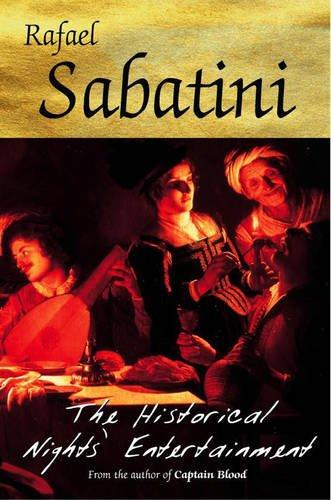
The plot is over the top and not to be taken too seriously, but the book is great fun to read – the perfect way to escape from the pressures of modern day life for a while and retreat into a good old-fashioned adventure story complete with swordfights, sea battles, abductions, imprisonments and daring escapes! Heyer’s attention to period detail is as evident in this novel as in her others, and being set in an earlier century means she has adjusted the language and the dialogue accordingly. While I thought Dominica was quite thinly drawn and not as memorable as many of Heyer’s other heroines, Nick Beauvallet is a wonderful character. He reminded me very much of some of Rafael Sabatini’s irrepressible swashbuckling heroes, particularly Peter Blood – and of course, Captain Blood, another pirate novel, was published just a few years before Beauvallet. As a Sabatini fan, it was probably inevitable that I would enjoy this book!

As a romance, the book is quite predictable; right from their first encounter, where Dominica shouts “I hate you! I despise you, and I hate you!”, it’s easy to guess that her hatred will not last long, especially as Nick is not the sort of man to accept defeat, in love or in anything else. But sometimes predictability is not a bad thing, and there were plenty of other twists and turns along the way to make this an exciting and entertaining read. I would like to read the earlier Simon the Coldheart, about one of Beauvallet’s ancestors, but first I will be heading back to the Regency period as the next Heyer novel I have lined up to read is Sprig Muslin.

A King Under Siege by Mercedes Rochelle

I have previously read Mercedes Rochelle’s Heir to a Prophecy, a historical novel inspired by Shakespeare’s Macbeth, and her Last Great Saxon Earls trilogy, which tells the story of Godwine, Earl of Wessex, and his children in the period leading up to the Battle of Hastings. With this new novel, A King Under Siege, she moves forward in time to 14th century England and the reign of the young Richard II.

The first part of the book deals with the Peasants’ Revolt of 1381, when a series of rebellions break out across the country, partly in response to the excessive collection of poll taxes. Richard is still only fourteen at this time (having come to the throne at the age of ten) but he shows a maturity and courage beyond his years in riding out to meet the rebels at Smithfield in an attempt to negotiate and bring an end to the violence. Unfortunately, Richard is unable to keep the promises he makes that day and he is left feeling that he has let his people down.

There is more trouble to come for Richard later in the novel as tensions grow between the king and his noblemen, with his uncles – particularly John of Gaunt, Duke of Lancaster, and Thomas of Woodstock, Duke of Gloucester – gaining in power and influence. Richard’s reliance on a small circle of friends and advisors, such as Michael de la Pole and Robert de Vere, also causes conflict and leads to a group of noblemen known as the Lords Appellant seizing control of the government. These events are covered in the final two sections of the book, finishing at a point which sets things up nicely for the next book in the series.

The novel is written from the perspectives of several different characters, allowing us to see both sides of the story. The account of the Peasants’ Revolt is very well balanced, with the viewpoint switching between the king and the rebels, showing us the anger and discontent that led to the rebellion as well as Richard’s response to it. Later, we are given some insights into the thoughts and actions of both the Lords Appellant and Richard’s allies. There are interesting parallels between the way Richard is being treated and the fate of his great-grandfather Edward II, and there is a sense of Richard’s frustration as he feels that power is being taken away from him.

I don’t think this is one of my favourites of Mercedes Rochelle’s novels, but that is entirely due to the fact that I don’t find this particular time period quite as interesting as the one covered in The Last Great Saxon Earls and no reflection on the quality of the book itself. She has clearly carried out a large amount of research for this novel and does a good job of making complicated history easy to follow and understand. A map, character list, author’s note and bibliography are included in the book, providing additional information and ideas for further reading. I think this would be a good introduction to the period for readers who are unfamiliar with the details of Richard II’s reign.

Thanks to the author for providing a copy of this book for review.