There Came Both Mist and Snow by Michael Innes

Having enjoyed two of Michael Innes’ Inspector Appleby novels last year – Hamlet, Revenge! and Lament for a Maker – I was drawn to this one next, because I liked the title and thought it would be appropriate as we’ve had some snowy weather here recently. Actually, although the novel is set during the Christmas period and there are a few mentions of snow, it doesn’t have a particularly wintry feel and could be read at any time of year.

It begins with our narrator, Arthur Ferryman, arriving at a family gathering at Belrive Priory, the home of his cousin, Basil Roper. The priory has been in the family for generations and nobody feels a closer affinity with its ancient stone walls, formal gardens and soot-blackened ruins than Arthur does. It comes as a shock, then, when he hears that Basil is planning to sell the estate to finance an expedition. As more members of the Roper family descend, along with various cousins and friends, it becomes clear that Arthur is not the only one unhappy with Basil’s decision. When one of the party is found shot while sitting at the desk in the study, there are plenty of suspects and plenty of motives. With perfect timing, Inspector Appleby arrives at the door just as the body is discovered, having received an invitation from Basil. Can Appleby find the culprit before someone else is hurt?

There Came Both Mist and Snow is my least favourite of the three Innes novels I’ve read so far. The mystery itself was well-constructed; Appleby seems to play a bigger role than in the other two books (certainly than in Lament for a Maker, where he only appeared near the end) and I enjoyed following the course of his investigations, with Arthur Ferryman as a sort of Watson character. There are several possible theories which are put forward by various members of the party and all of them seem plausible, which means the reader is constantly being led in the wrong direction. I would never have guessed the eventual solution; the clues aren’t concealed from the reader, exactly, but it’s definitely not something that is easy to deduce for yourself.

My problem with the book was due mainly to the length of time it took to get started. In the opening chapters we are given a lot of information on the Roper family background, the history of Belrive Priory and the changes that have come to the surrounding area as the neon lights of breweries and factories begin to shine into the priory’s ancient grounds. This information wasn’t completely insignificant, but I felt that it could have been woven more gradually into the story so that we could have reached the crime itself more quickly.

I think I would also have found the book more enjoyable if the characters had not been such an unpleasant and uninteresting group of people! I did like one of them – Arthur’s cousin Lucy Chigwidden, who happens to be a crime novelist, which gives Innes a chance to poke fun at his own profession – but none of the others were what I would consider strong or memorable characters.

I was a bit disappointed by this one, especially after enjoying the others so much, but I will continue to read the Appleby mysteries. I have The Daffodil Affair and Appleby’s End to choose from next.
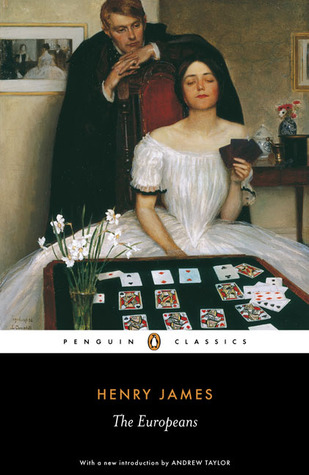
The Europeans by Henry James

I’m ashamed to say that this is the first book I’ve read by Henry James. Despite my love of 19th century literature, he is just not an author who has ever appealed to me and although I have started to read one or two of his novels in the past, I have never made it to the end of any of them. When I started to compile my new Classics Club list last year, Ottavia of Novels and Non Fiction recommended a few Henry James books that I might like and I decided on The Europeans based mainly, I have to admit, on the fact that it seemed quite short so I thought I would have a better chance of finishing it. I did finish it – and although I didn’t love it, I now feel more confident about reading more of his books in the future.

The ‘Europeans’ of the title are thirty-three-year-old Eugenia, Baroness Münster, and her younger brother, Felix Young, an artist. Eugenia’s morganatic marriage to Prince Adolf of Silberstadt-Schreckenstein looks to be in danger of falling apart. The prince’s family want to dissolve the marriage for political reasons and, although Eugenia has not yet given her consent, she has come to America with Felix to look for a rich American husband. The Youngs have cousins who live in Boston and on their arrival in New England, they spend some time getting to know them.

The American branch of the family consists of Mr Wentworth, his son Clifford, and his two daughters, Charlotte and Gertrude. Another cousin, Robert Acton, also lives nearby with his younger sister, Lizzie. Although she makes an effort at first, Eugenia decides that she has no desire to become part of the Wentworth’s social circle:

She had come to this quiet corner of the world under the weight of a cruel indignity, and she had been so gracefully, modestly thankful for the rest she found there. She had joined that simple circle over the way; she had mingled in its plain, provincial talk; she had shared its meagre and savorless pleasures. She had set herself a task, and she had rigidly performed it. She had conformed to the angular conditions of New England life, and she had had the tact and pluck to carry it off as if she liked them.

Felix, on the other hand, enjoys spending time with his cousins, especially Gertrude, with whom he has fallen in love. However, he is not the only one interested in Gertrude – Mr Brand, the minister, is expected to marry her, even though he is clearly better suited to Charlotte. Meanwhile, Clifford Wentworth, who has been sent home from Harvard for drinking, becomes attracted to both Eugenia and Lizzie Acton – while Robert Acton, recently returned from business in China, also turns his attentions to Eugenia. If you think this sounds confusing, you’re right. I was reminded of A Midsummer Night’s Dream as the relationships between these characters gradually became disentangled and each person found themselves with the right partner (apart from one, but I will leave you to discover who that one is).

The main theme of the book appears to be the differences between European and American people – or rather, the differences as Henry James perceived them in 1878, when the novel was written. The European characters, Felix and Eugenia, are portrayed as emotional, free-spirited people living bohemian lifestyles, while their American cousins are presented as serious, reserved and unsophisticated. They are stereotypes, of course, but probably quite different from the sort of stereotypes that would be used today.

This is a novel driven by the characters and the relationships between them, but I would have preferred more plot as I just didn’t find the characters strong enough to keep me interested from beginning to end. Eugenia intrigued me as it is never quite clear what her motives are or what decisions she is going to make, and the cheerful, optimistic Felix brightens every scene in which he appears, but the others were less memorable and I didn’t feel that I really got to know any of them. As I’ve said, though, this is only a short book and I’m sure that when I get round to reading some of James’ longer novels there will be more development of characters and ideas.

Which Henry James book do you think I should try next?

This is book 3/50 from my second Classics Club list.

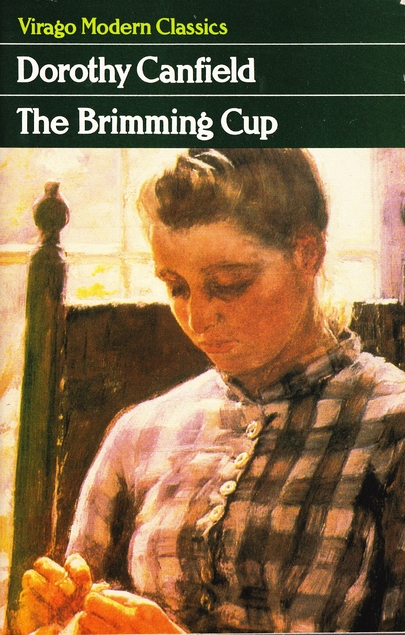
The Brimming Cup by Dorothy Canfield Fisher

I had never read anything by Dorothy Canfield Fisher, so when I saw that she was the next author in Jane’s Birthday Book of Underappreciated Lady Authors, I thought this would be the perfect opportunity. Ideally I would have started with her most popular book, The Home-Maker, but as I didn’t have a copy of that one, it made sense to read the one I did have instead.

The Brimming Cup opens with a prologue set in Italy in 1909 in which we briefly meet Neale and Marise, a young couple who are very much in love and making plans for the future. Marise has a very clear idea of what she wants and expects from their relationship:

“But what would poison us to death…what I’m afraid of, between two people who try to be what we want to be to each other…how can I say it?” She looked at him in an anguish of endeavor, “…not to be true to what is deepest and most living in us…that would be the betrayal I’m afraid of. That’s what I mean. No matter what it costs us personally, or what it brings, we must be true to that. We must!”

Eleven years later, Marise and Neale are married and living in Vermont. It’s 1920 and Marise has just sent their youngest child, Mark, off to school for the first time. Where once she had three children at home all day, now she has none and, with Neale so busy running the family business, Marise’s role as wife and mother is no longer the same as it used to be.

When Mr Welles, a retired office worker, moves in next door accompanied by his younger friend, Vincent Marsh, Marise begins to feel even more unsettled. Vincent makes her think differently about her life and about her relationships with her husband and children. Do the children appreciate everything she has done for them? Do they even truly love her or would they feel the same about any adult who raised them? Is her life being wasted in this quiet little town in Vermont? Forced to question all the things in which she has ever believed, Marise remembers the vow she made in Rome – that she and Neale should each be true to themselves no matter what.

I found it interesting to see how this novel, published in 1919, explores some of the attitudes, views and theories of the time surrounding issues such as childcare, parenthood, identity and marriage. As newcomers to the town, Mr Welles and Vincent Marsh introduce Marise to different ideas and opinions. Vincent’s suggestions that Marise should be making more of her talent as a pianist and break away from the role she has fallen into in the home seem very tempting – especially as she is starting to wonder whether Neale is really the man she thought he was – while Mr Welles’ interest in helping his cousin in Georgia to fight prejudice against black people also gives her something to think about.

I found a lot to appreciate and enjoy in this novel, but I can’t say that I loved the book as a whole and I’m not sure yet whether Dorothy Canfield Fisher is really an author for me. There were times when some of the writing felt a bit too sentimental for my taste and there were some plot developments towards the end, involving another family, the Powers, which felt unnecessarily melodramatic and out of balance with the rest of the story. I will probably try at least one more of her books, though, because it could just be that this one wasn’t the best of introductions for me. I’m tempted by Rough-Hewn, which was published after The Brimming Cup and seems to be a prequel, but maybe I should read The Home-Maker instead to see why so many people love it so much.

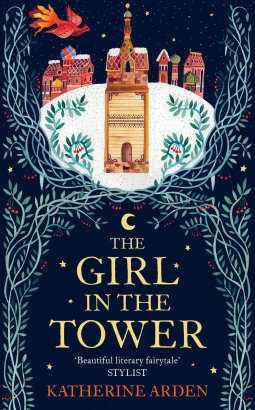
The Girl in the Tower by Katherine Arden

I enjoyed The Bear and the Nightingale when I read it almost exactly a year ago and I remember my excitement on discovering that it was actually the first in a planned trilogy. We haven’t had to wait too long for the second book, The Girl in the Tower, and I’m pleased to say that I loved it even more than the first.

Katherine Arden’s books are a wonderful mixture of history, folklore and fairytales with an atmospheric and wintry Russian setting. If you haven’t read The Bear and the Nightingale yet, I would highly recommend starting with that one – and I should warn you that there may be spoilers for the first book in the rest of this post.

At the beginning of The Girl in the Tower, our heroine Vasilisa Petrovna (Vasya) is fleeing her childhood village of Lesnaya Zemlya. Despite her efforts to rescue the villagers from a great evil, the way in which her father and stepmother died has caused Vasya to be branded a witch, regarded with suspicion and distrust. Accompanied by her magnificent stallion Solovey, Vasya sets off on a journey across northern Rus’ to Moscow, home of her sister Olga – a journey which will be filled with danger as Vasya encounters a group of bandits sweeping across the countryside burning villages and kidnapping children. First, though, she must pay a visit to Morozko, the frost-demon, in his fir-grove deep in the forest…

This novel has a much wider geographical scope than the previous one, in which the action takes place almost entirely in and around Lesnaya Zemlya. I liked this aspect of the book; medieval Moscow is an interesting setting and, with Olga’s family close to the Grand Prince, Dmitrii Ivanovich, we are given some insights into the political situation during this period of Russian history. At the time of the story, the Rus’, as it was known then, is still part of the domain of the Great Khan and the Golden Horde, but with their influence weakening as the Grand Prince grows in power, it seems that things could be about to change.

I was also pleased to see Vasya reunited with her siblings, not just Olga but also their brother Sasha, who is now a priest. Sadly, her relationships with both Olga and Sasha are very strained, partly because of what happened in Lesnaya Zemlya, for which Vasya is unable to give an adequate explanation, and also because of her behaviour on arriving in Moscow, which they consider unladylike and inappropriate. To the modern reader, Vasya is a wonderful character – brave, independent and rebellious – but her refusal to conform to the 14th century ideal of what a woman should be leads her into a great deal of trouble. In contrast, Olga has accepted her place in society and expects her young daughter, Marya, to follow the same course in life. Marya, though, appears to have other ideas!

I’ve said very little so far about the fantasy elements of the novel. We don’t see very much of the household spirits who played such an important part in The Bear and the Nightingale, but there are some appearances by intriguing new figures from Russian myth including the Firebird – and another, more sinister, character whose name I won’t give here so as not to spoil anything! I also enjoyed Vasya’s interactions with her magical horse, Solovey, who has begun to form a personality of his own. Last, but certainly not least, there’s Morozko, frost-demon and god of the dead.

There were hints in the previous book of a possible romance between Vasya and Morozko, and in this book their relationship is developed further. It’s definitely not a conventional love story and because of who Morozko is and the role he has to play in Russian folklore, he has a tendency to come and go throughout the novel. It’s frustrating but it worked for me and I found myself looking forward to the scenes they shared. I loved The Girl in the Tower – and the good news is that the third book in the trilogy, The Winter of the Witch, is expected this August!

Thanks to Ebury Publishing for providing a copy of this book for review via NetGalley.

This book counts towards this year’s What’s in a Name? Challenge: A title containing the word ‘the’ used twice.

The Crowded Street by Winifred Holtby

The Crowded Street is on my Classics Club list, so when I saw that Jessie of Dwell in Possibility was hosting a Persephone Readathon this week, my choice was obvious. This particular book has also been published as a Virago Modern Classic, but my edition is the Persephone one, with the endpapers pictured below. Having already enjoyed several of Holtby’s books – South Riding, The Land of Green Ginger and Poor Caroline – I’ve been looking forward to this one for a while and I’m pleased to say that I loved it even more than I hoped I would.

The novel was published in 1924, at a time when it was assumed that most young women wanted nothing more than to find a husband and then stay at home to raise their children. In The Crowded Street, Holtby looks at what it was like to be a woman who, for one reason or other, was unable to conform to these expectations. Through the stories of Muriel Hammond, her sister Connie and her friends Clare and Delia, she explores the very different routes through life taken by four very different women.

We first meet Muriel in December 1900 when she is eleven years old and attending her first ‘grown-up’ party. Her excitement soon turns to shame when she finds that none of the boys want to dance with her and her dance card remains almost blank. Muriel is confused: The unforgivable sin at a party is to have no partners. To sit quietly in the drawing-room at home was a virtue. The sense that she has somehow let her mother down is a feeling which will stay with her for the next two decades as she continues to go through life partnerless, waiting and hoping for something to happen. She does initially have ambitions – to study astronomy, to go to college – but she doesn’t pursue these as she receives no encouragement from her mother or from her school teacher, who says:

“Character, my dear, to be a fine womanly woman, that matters so much more than intellectual achievement. To serve first your parents, then, I hope, your husband and your children, to be pure, unselfish and devoted, that is my prayer for each one of my girls.”

As a single woman myself, there were times when Muriel’s story resonated with me, but thankfully not all the time! I may not be married, but nobody ever prevented me from going to university or getting a job. Muriel watches with envy as Delia, another unmarried girl from the same Yorkshire village, goes off to Cambridge University, then heads for London and throws herself into political activism.

“But then, she has her work. Women who have their work have an immense thing, even if they are unfortunate in the people whom they love. It is when you have nothing, neither work, nor love, nor even sorrow, that life becomes rather intolerable.”

Of course, some women today are happy to stay at home with their parents, there are some who find plenty of fulfilment in marrying and having children, while others want to move away to pursue their career. There is no right or wrong way to live, but the point is that we have a choice. What makes Muriel’s story so tragic is that she feels she has no choice. She believes that marriage is the only possible way to escape, but if that doesn’t happen, all she can do is continue to help her mother around the house, doing what she sees as her duty (even though her help isn’t particularly necessary). As a result, she becomes more and more depressed, feeling that life is passing her by but lacking the confidence to do anything about it and making excuses to justify why she can’t.

Her younger sister, Connie, tries to break away from the stifling confines of life in Marshington, but she is so desperate that she makes a bad decision which has disastrous consequences. It seems that the only one who is likely to be happy is Muriel’s old school friend, the cheerful and sophisticated Clare, who goes through life without a care in the world and catches the eye of Godfrey Neale, the one man Muriel dreams of as her own potential husband. Clare, though, has the opposite problem. Having had a very different upbringing from Muriel and Connie, will she be able to adapt to living in a small Yorkshire village?

At one point, Muriel thinks to herself:

“All books are the same – about beautiful girls who get married or married women who fall in love with their husbands. In books things always happen to people. Why doesn’t somebody write a book about someone to whom nothing ever happens – like me?”

Well, Winifred Holtby has written that book and I don’t think it’s quite true that nothing happens to Muriel. She does develop as a person as the novel progresses and, although it takes a long time, she slowly becomes aware that if she is to have any happiness she will have to take matters into her own hands. I loved the way her story ended: she has an important decision to make and in my opinion she does the right thing.

As well as following the characters I’ve mentioned above, we are also given some insights into the effects of the First World War on small communities like the fictional Marshington. I particularly enjoyed the vivid depiction of the bombardment of Scarborough in 1914, something Winifred Holtby could draw on personal experience to describe. The Crowded Street is a wonderful book in so many ways and a great choice for both the Classics Club and the Persephone Readathon!

This is Book 2/50 from my second Classics Club list

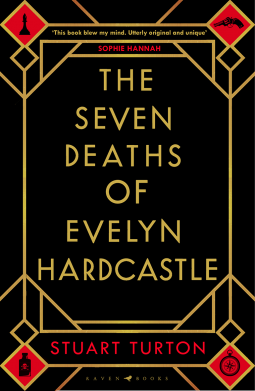
The Seven Deaths of Evelyn Hardcastle by Stuart Turton

I can’t even begin to imagine how much time and effort must have gone into the writing of this novel! I’ve never read anything like it before and I hardly know how to begin to describe it. It has all the elements of a classic murder mystery – but there’s a clue in the title: the same murder happens not just once but seven times.

The novel opens with a man waking up in a forest with no memory of who he is or how he came to be there. He has the name ‘Anna’ in his mind, although he has no idea who Anna might be. Hearing a woman scream, he rushes to help but is stopped by a stranger who pushes a compass into his pocket and whispers ‘East’. Following these instructions, he finds his way out of the woods and into the grounds of nearby Blackheath House, where the situation becomes even more bizarre. He discovers that he is a doctor called Sebastian Bell and that he is a guest at Blackheath where the Hardcastle family are throwing a party to mark the nineteenth anniversary of their son’s death.

All through the long and bewildering day which follows, Bell tries to make sense of what is happening, only to end up more confused than ever. Eventually, he is approached by a man wearing the costume of a Plague Doctor, who appears to have some of the answers. It seems that the Hardcastles’ daughter, Evelyn, is going to be murdered later that night and Bell’s task is to solve the murder. Should he fail, he will have the chance to live through the day again…but this time he will be someone else. Eight days and eight different ‘host bodies’; if at the end of that time he can provide a solution, he will be allowed to leave Blackheath. If not, he will go back to day one and the whole sequence will begin again…as it already has, many times before.

Everything I’ve said so far is explained to our narrator early in the novel. Once he begins waking up as the other hosts, however, things quickly become very complicated, with new clues and pieces of information coming to light on almost every page. I won’t say any more about the story itself, then, other than in general terms. I won’t even tell you who the other hosts are, as part of the fun is in wondering who the narrator is going to be next. Each host, though, has different strengths and weaknesses and is connected to the murder in a different way. It’s fascinating to see how each of them alone sees only a small part of the picture, and the truth only begins to emerge when all of their collective experiences and observations are taken into account.

This is an incredibly clever novel and so intricately plotted I have no idea how Stuart Turton managed to keep track of it all. Although it’s a long book, my recommendation is to read it in as few sittings as possible so you can try to hold on to all the threads of the story in your head. If your experience is anything like mine you’ll quickly become so engrossed that you won’t want to stop anyway. And experience is the right word for it. This doesn’t feel like a normal novel at all. It reminded me in some ways of one of those ‘choose your own adventure’ books I loved as a child where you could make choices that led to different routes through the story. That’s how I felt as the narrator lived through the same events again and again, trying to decide what he did wrong last time.

The novel is written in the first person present tense – a style I usually dislike but which is used very effectively here. It gives the reader a sense of being dropped directly into the middle of the action and sharing the narrator’s panic and disorientation. I don’t think it would have worked had it been written any other way. I thoroughly enjoyed this unusual and wonderfully imaginative novel!

Thanks to Raven Books for providing a copy of this book for review via NetGalley.

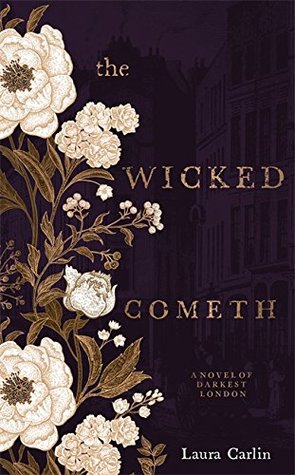
The Wicked Cometh by Laura Carlin

With such a beautiful cover and with the enticing subtitle “A novel of darkest London”, Laura Carlin’s The Wicked Cometh was impossible to resist. I was looking forward to reading it but, having seen a mixture of reviews over the last few weeks, some very positive and others less so, by the time I started it my expectations weren’t as high as they had been.

The novel is set in the early 1830s, during the reign of William IV, and opens with The Morning Herald reporting on the increasing number of men, women and children being declared missing in London. One young woman who has been following the news reports closely is Hester White; she is growing concerned about her cousin Edward who had arranged to meet her at Smithfield three weeks ago and has failed to arrive. Hester’s life has not been easy since the death of her parents a few years earlier; finding herself alone in the world she has been living with her father’s former gardener, Jacob, and his wife, Meg. Their home is a London slum, very different from the parsonage in rural Lincolnshire where Hester grew up, and she has been hoping that Edward can offer her an opportunity to start a new life away from the city.

When Hester is knocked down and injured by a carriage belonging to Calder Brock, suddenly another way of escape presents itself. Calder, who is a doctor, takes her to his family’s country estate, Waterford Hall, to recuperate, and explains to her that he would like her to stay and be educated by his sister Rebekah. With his interest in social reform, he hopes this experiment will show that even those from the poorest slums are capable of learning and improving themselves. Hester can already read and write, but is happy to pretend otherwise to avoid having to go back to Jacob and Meg. And so her lessons with Rebekah begin and a special friendship starts to form…

Everything I’ve described so far happens in the first half of the book and up to that point I found that I was really enjoying it. I liked Hester and although present tense first-person narration isn’t my favourite, her voice was strong and compelling. Her relationship with Rebekah felt natural and right, and I was pleased that it took time to develop. I was curious about the disappearances in London too and wanted to know more.

Then, in the middle of the book, there was a change of pace. As Hester and Rebekah began to investigate and uncover the truth, I felt that the author was trying too hard to incorporate every possible trope of the 19th century sensation novel, from family secrets to hidden documents to clandestine marriages. The story began to feel very melodramatic and contrived and lost its effectiveness. There were aspects of the plot that reminded me of Fingersmith by Sarah Waters, as well as one or two developments that made me think of The Woman in White, and I suspect that if I hadn’t read so many similar books I would probably have enjoyed this one a lot more. This was a particular problem at the very end of the novel where something which should have been a big surprise was too easy to predict.

I did like Laura Carlin’s writing and the atmosphere she creates; The Wicked Cometh is already receiving a lot of attention and as a debut novelist I’m sure she has a successful career ahead of her. For me, though, this is a novel of two very different halves. Some readers will prefer, as I did, the slow scene-setting of the first half and others the dramatic revelations of the second. If it sounds like your sort of book, give it a try – maybe you’ll love it more than I did!

Thanks to Hodder and Stoughton for providing a copy of this book for review via NetGalley.