The Stolen Marriage by Diane Chamberlain

Diane Chamberlain is not an author I have ever thought about reading, but when I unexpectedly received a review copy of her new book, The Stolen Marriage, from the publisher a while ago I was intrigued. The setting and the plot both sounded appealing and I decided that it would be worth at least giving it a try to see what it was like.

Our narrator is Tess DeMello and as the novel opens in 1944 it seems that she has her future all planned out. She is engaged to the man she loves – Vincent Russo, a newly qualified doctor – and she is about to take the final exams that will enable her to become a registered nurse. Things begin to go wrong when Vincent volunteers to help with a polio epidemic in Chicago and stays away for longer than expected. Feeling lonely and neglected, Tess agrees to join her best friend Gina for a weekend trip to Washington, where one thing leads to another and she finds herself pregnant by another man.

Convinced that Vincent will want nothing more to do with her, Tess goes in search of her baby’s father, Henry Kraft, the wealthy owner of a furniture company in Hickory, North Carolina. All she wants from Henry is enough money for somewhere to live and to provide for the child when it is born, so she gets a big surprise when he asks her to marry him. Thinking about the baby’s future, Tess agrees and soon she is part of the Kraft family, living in their luxurious home in Hickory.

Life in Hickory brings new challenges for Tess, however. She quickly discovers that, although Henry is not unkind, her marriage is a loveless one. Worse, she is unable to trust her new husband. Why is he hiding money from her and where does he disappear to in the middle of the night? And worst of all, Tess finds it impossible to fit in with Henry’s family and friends. His mother and sister seem to hate her – and make no secret of their hatred – but Tess isn’t sure why. Is it just that, with her Italian background and her desire to work for a living, they don’t consider her good enough for Henry – or could there be another reason for their resentment?

It took me a few chapters to really get into The Stolen Marriage, but after that the pages flew by. I was kept in suspense wondering what Henry’s secret could possibly be and although there were plenty of clues I still didn’t guess correctly! Tess didn’t understand what was happening either and I had nothing but sympathy for her as she tried to come to terms not just with the destruction of her old life but the awareness that her new one was built around lies and deceit. However, I struggled to understand some of the choices she made and I felt that her actions (and the actions of other characters) were sometimes contrived to move the story forward rather than feeling like the natural way she would have behaved. There were a few unconvincing plot twists and developments near the end of the novel too, but although this was slightly disappointing it didn’t spoil my enjoyment of the novel too much. There were so many other things to love.

I particularly enjoyed the insights into what it may have been like to live in a small town in North Carolina in the 1940s. Having moved from an Italian neighbourhood in Baltimore, Maryland, Tess experiences a culture shock when she arrives in Hickory. Her husband’s family and friends are prejudiced, narrow-minded snobs who make Tess feel very uncomfortable, finding fault with her looks, her clothes, her opinions and her family background. Racial tensions are also high in the town and this aspect is explored through the story of a black family who work as servants in the Kraft household. Of course, there are good and bad people everywhere and in all walks of life, which Tess discovers when the polio epidemic reaches Hickory and the community must pull together to build and staff a new hospital in record time.

The building of the hospital is based on a true historical event (you can find out more by searching online for ‘the Miracle of Hickory’); I had never heard about this before, so I found that section of the novel fascinating! As the story is set in 1944, it was also interesting to read about the impact of World War II on the people of Hickory, with rationing in place and families waiting anxiously for news of sons, husbands and brothers fighting overseas. I loved the glimpse this book gave me into another time and place and although I’m not sure whether this is typical of Diane Chamberlain’s novels, I will certainly be looking for more of her books in the future.

Thanks to Macmillan for providing a copy of this novel for review.
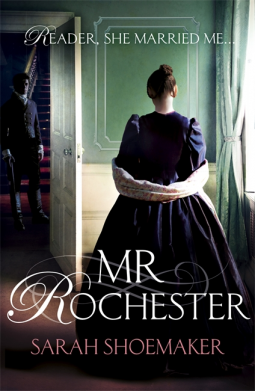
Mr Rochester by Sarah Shoemaker

As I’m not usually a fan of sequels, prequels or retellings of classic novels, I wondered if I was making a mistake in reading Mr Rochester, a book which, as you have probably guessed, is inspired by Charlotte Brontë’s Jane Eyre. However, I’ve always found Mr Rochester an interesting character and the premise of this novel was intriguing enough to tempt me. And I enjoyed it more than I thought I would; the first few sections of the book are excellent – but the last part doesn’t work as well, for reasons I’ll explain shortly.

In Jane Eyre, we meet Edward Fairfax Rochester at his home, Thornfield Hall, where Jane has come to take up a position as governess. We do learn a little bit about his family background and his life before Jane, but is it enough for us to fully understand what made him the man he is? I’ve never thought so and clearly Sarah Shoemaker didn’t either because in Mr Rochester she takes us back to Edward’s childhood to explore the people and events that may have shaped his character and formed the man who will eventually fall in love with Jane Eyre.

At the beginning of Shoemaker’s novel, Edward is a lonely little boy who is largely ignored and neglected by his father and older brother Rowland. At the age of eight he is sent away to be educated, along with two other boys, at the home of his tutor, and although at first he is heartbroken at having to leave his beloved Thornfield Hall the friendships he forms at school will have a big influence on his life. On the rare occasions when he is reunited with his family, he receives no love or affection at all, yet it is clear that his father has not forgotten him and has his future all mapped out. Edward ends up in Jamaica where he takes over the management of the Rochester plantation, Valley View – and is pushed into marriage with the beautiful Bertha Mason, the woman who will become Brontë’s famous ‘madwoman in the attic’.

I really enjoyed the first two thirds of the book, covering the period described in my previous paragraph. This is the part of Rochester’s life Charlotte Brontë didn’t tell us about – at least not in any detail – so Shoemaker is free to use her imagination. I loved reading about Edward’s early childhood, his schooldays and his apprenticeship in a mill; this could have been the basis of an interesting piece of Victorian historical fiction in itself, even without the Jane Eyre connection. The Jamaican chapters are compelling too. There are some similarities with Wide Sargasso Sea by Jean Rhys, but this time our sympathies are intended to be with Mr Rochester as well as with Bertha. Shoemaker’s Rochester does his best for Bertha under difficult circumstances and I found him a more likeable character than both Rhys’s Rochester and Brontë’s…until the point where he returns to Thornfield and meets Jane Eyre.

The rest of the novel – about a third of the book – is a fairly straightforward retelling of Jane Eyre, written from Rochester’s perspective instead of Jane’s. This is where things start to fall apart, in my opinion. Shoemaker puts Brontë’s words directly into the mouths of Rochester and Jane rather than her own – and although she has written in a suitably ‘Victorian’ style throughout the novel, her writing is obviously not the same as Brontë’s, which means the sudden change in the dialogue feels unnatural and uncomfortable. I think I would have preferred her to have simply followed the broad outline of the Jane Eyre plot instead of trying to stick to it rigidly.

The Mr Rochester for whom I’d gained so much sympathy earlier in the book, the quiet, lonely, obedient little boy whose life paralleled Jane’s in so many ways, the insecure man pushed into a career and a marriage not of his own choosing and who longed for nothing more than to go home to Thornfield Hall – that man is gone and I had trouble believing that Shoemaker’s Rochester would behave the way he does in the final section of the book; the whole Blanche Ingram storyline feels out of character, for example.

In other words, if this had just been an original novel inspired by Jane Eyre and set in the Victorian period I would probably have loved it; it was the retelling of the familiar Brontë plot that I didn’t find entirely successful. I didn’t feel that this book really added to or changed my feelings about Jane and Mr Rochester, but there were enough things that I liked about it to make it an enjoyable read anyway.

Thanks to Headline Review for providing a copy of this book for review via NetGalley.

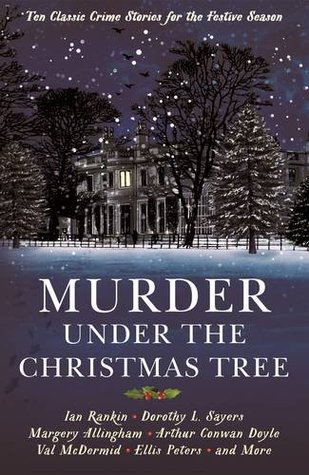
Murder Under the Christmas Tree, edited by Cecily Gayford

Murder Under the Christmas Tree contains ten stories by a variety of crime authors, all with a Christmas theme or set during the festive period. I don’t often choose to read short story collections (although I seem to have read more of them this year than ever before, so maybe that is beginning to change) but I picked this one up in the library a few weeks ago because I was intrigued by the mixture of authors – some modern, some classic, some that I was familiar with and some that I wasn’t.

I’m never sure of the best way to write about books like this, but as there are only ten stories I think I should be able to give all of them a brief mention. The book opens with The Necklace of Pearls, a Lord Peter Wimsey mystery by Dorothy L. Sayers, one of the five authors in the collection I had read before. The story involves a search for a valuable pearl necklace which goes missing as a party of guests gather to celebrate Christmas. I always like Sayers’ writing, but this particular story is not very strong and not a great start to the book, in my opinion. It is followed by The Name on the Window by Edmund Crispin, a locked room mystery set in winter and featuring his detective Gervase Fen. Crispin is another author I have previously read – I highly recommend The Moving Toyshop if you haven’t read it yet – and again, this story is not the best example of his work but it’s still enjoyable and I didn’t guess the solution.

Now we come to one of the authors who were new to me: Val McDermid. Yes, there are some huge gaps in my reading when it comes to more recent crime fiction! A Traditional Christmas is a short and simple murder mystery with a nice twist at the end. I really liked this one, although it felt odd coming straight after Sayers and Crispin – especially as the next story is an even older one: The Adventure of the Blue Carbuncle by Arthur Conan Doyle. This is a classic Sherlock Holmes mystery involving a Christmas goose and a precious jewel. I feel sure I must have read it before, but I couldn’t remember it at all!

The Invisible Man is next: a Father Brown mystery by GK Chesterton. I first encountered Father Brown in a British Library Crime Classics anthology I read earlier this year (Miraculous Mysteries), but I enjoyed this story much more than that one. It made me think about the things we never notice and the things that we do! This is followed by another modern story, Cinders by Ian Rankin. During rehearsals for a performance of Cinderella, the Fairy Godmother is found dead and Rankin’s detective Rebus is called in to investigate. I have never read anything by Ian Rankin before and although there was nothing wrong with this story, I don’t think he’s an author for me.

The next two stories are my favourites. The first, Death on the Air by Ngaio Marsh, is a fascinating story set during the early days of radio. On Christmas morning, ‘Septimus Tonks was found dead beside his wireless set’, presumably having been electrocuted – but was it an accident or was it murder? This is my first introduction to Marsh’s work, but I would love to read more. The next story, Persons or Things Unknown, is by Carter Dickson, a pseudonym of John Dickson Carr. A host entertains his house guests with an atmospheric tale of murder set in the 17th century. I loved it – and again, I will be looking for more by this author.

The penultimate story in the book is Margery Allingham’s The Case is Altered. It’s an Albert Campion mystery and while I had hoped it would be one of the highlights of the book, I found it quite forgettable. The last story, The Price of Light by Ellis Peters, was good but felt out of place in this collection, being a Brother Cadfael mystery set in 1135. I’ve never read anything by Peters before and I liked this enough to want to try one of her full-length Cadfael novels.

This is an uneven collection, then, and I don’t think the mixture of Golden Age, historical and contemporary mysteries really worked. I’m pleased I read it, though, if only because it has given me my first taste of Ngaio Marsh, John Dickson Carr and Ellis Peters. Another book in this series, Murder on Christmas Eve, also edited by Cecily Gayford, has just been published and seems to include many of the same authors.

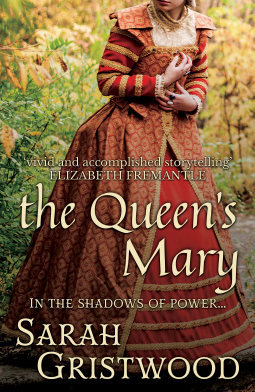
The Queen’s Mary by Sarah Gristwood

Sarah Gristwood is an author of both historical fiction and non-fiction. I have read one of her non-fiction books – Blood Sisters, a biography of several of the women involved in the Wars of the Roses – but this is the first of her novels that I’ve read. It’s set in the 16th century and the queen of the title is Mary, Queen of Scots. Mary is known to have had four ladies-in-waiting, young women her own age who were also all called Mary. They were the daughters of Scottish nobility – Mary Fleming, Mary Livingston, Mary Beaton and Mary Seton. Gristwood’s novel is written from the perspective of Mary Seton.

We first meet the four Marys as children of five or six years old. It’s 1548 and they are embarking on a voyage to France where the young queen will grow up and eventually marry the Dauphin, the heir to the French throne. This forms the novel’s brief prologue and we hear very little about what actually happened in France, except when Seton looks back on the period later in her life:

Seton could tell tales of Diane’s banquets where the white wine was made cool with snow, of music in the pavilions by the river; a tennis court where the king played dressed in white silk. Of a park where special deer wore silver collars and ornamental canals were filled with fish; and of how, when the royal children came to stay, muzzled mastiffs and even a bear were brought into the nursery.

We join the Marys again in 1561 as they return to Scotland following the death of the queen’s husband. They have now grown into young women, all with very different personalities: Fleming pretty and regal, Livingston down to earth and flirtatious, Beaton quietly passionate, and Seton herself sensible and thoughtful. However, it would have been nice if, rather than the author just telling us what the Marys were like (by comparing them to the four elements, earth, fire, water and air, for example) she had done more to convey their personalities through their speech and actions instead.

The rest of the novel takes us through the years of Mary’s reign, a troubled time of religious conflict, disastrous marriages and controversial love affairs. It can’t have been easy for a young woman returning after a long absence in France to rule over a country she barely remembered:

It was as if the queen were groping to understand what to her – Seton thought with a chill – seemed almost to be an alien country.

The queen is lucky to have such loyal companions as the Marys to help her through these difficult years, but even they are unable to prevent her from making mistakes. She rarely confides in them or asks their advice, remaining a very lonely and isolated figure. Seen only through the eyes of Mary Seton, she never fully comes to life on the page and we never really know what she is thinking or feeling, but maybe that was intentional, to show the distance between the queen and her ladies, even after so many years together.

The story of Mary, Queen of Scots is fascinating but has been written about many times before; the stories of Mary Seton, Beaton, Livingston and Fleming are much less well known and the hope of finding out more about them was what drew me to this novel. I can appreciate that there will not be a lot of information available on the lives of these four women, but I think Sarah Gristwood did a good job of working with what we do know to flesh out each character a little bit. I do wonder, though, whether the story might have been more compelling if it had been written in the first person rather than the third, or if each Mary had been given a chance to take a turn at narrating rather than just Seton.

I did have a lot of sympathy for Mary Seton; she is the one who remains in the queen’s service as the other three gradually marry and find freedom (or if not freedom exactly, at least a form of escape) away from court. Seton’s whole life has been devoted to the queen and she gradually becomes torn between loyalty to her mistress, frustration at her lack of influence and a longing to break the bond and live her own life at last.

Although there was too much distance in this novel for me to say that I really enjoyed it (distance between one character and another, as well as distance between the characters and the reader) it was still good to have an opportunity to meet the Four Marys and to add to my knowledge of this period of history.

Thanks to Endeavour Press for providing a copy of this book for review via NetGalley.

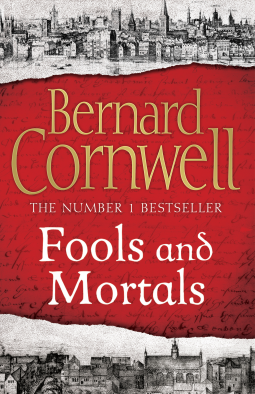
Fools and Mortals by Bernard Cornwell

Despite my love of historical fiction, Bernard Cornwell is not an author I’ve ever really felt like reading. The usual settings and subjects that he writes about don’t appeal to me and although I did once start to read his book on Stonehenge, I didn’t get very far with it before giving up. His latest novel, Fools and Mortals, however, sounded much more like my sort of book, so I thought it was time I gave him another chance.

The title is inspired by Shakespeare’s A Midsummer Night’s Dream (“Lord, what fools these mortals be!”) and it is Shakespeare who is at the heart of the novel – not William, though, but his younger brother, Richard, who has followed him to London in the hope of becoming an actor. I found this slightly confusing, because I remembered from reading Jude Morgan’s The Secret Life of William Shakespeare that it was their other brother, Edmund, who was the actor. I don’t know why Cornwell gave this role to Richard instead; the rest of the background to the novel seems to have been thoroughly researched, so I would be interested to know whether that was a deliberate decision rather than a mistake.

Anyway, Richard Shakespeare is our narrator. The novel opens in 1595 just as The Lord Chamberlain’s Men – the acting company to which both Richard and William belong – are beginning rehearsals for A Midsummer Night’s Dream. Until now, Richard, like several of the other young men in the company, has been given only women’s parts to play. He wants nothing more than to play a man for a change, but it seems that his brother is still determined not to take him seriously as an actor. There are other companies, of course, and other theatres, and Richard receives a tempting offer from Francis Langley of the newly constructed Swan in Southwark. However, this will depend on whether or not he is prepared to steal two of William’s new plays. Will Richard betray his brother and leave The Lord Chamberlain’s Men – or can he find another way to earn William’s respect and win the bigger, better roles he believes he deserves?

I enjoyed this book much more than I’d expected to! I imagine that battle and military scenes probably form a big part of most of Cornwell’s other books, but there was nothing like that in this one, which is set entirely in the world of the Elizabethan theatre. There is still plenty of action, but it takes the form of the attempts of other companies to steal Shakespeare’s plays and the efforts of the Pursuivants to find evidence of heresy and close the playhouses down. As the narrator, Richard is involved in all the drama, both on stage and off, and tells his story in a lively, humorous style. He has his flaws but is a likeable character – although I should warn you that William is not!

The other members of The Lord Chamberlain’s Men are also brought to life, from well known figures of the period such as the comic actor Will Kemp to those who are purely fictional. It was fascinating to see A Midsummer Night’s Dream take shape starting with the earliest stages – the allocation of parts to actors and the learning of lines – to rehearsals at the home of their patron, Lord Hunsdon, and then the final performance (I loved the hilarious description of the Pyramus and Thisbe play-within-a-play). However, I couldn’t help feeling that this all became very repetitive; I felt that the entire plot of the play had been described in detail a hundred times by the time I reached the end of the novel!

The book finishes with an author’s note from Cornwell; this is long and detailed, describing his interest in Shakespeare’s work and discussing the history behind London’s playhouses. Surprisingly, he doesn’t talk about Richard Shakespeare himself or why he was chosen to be the central character in the novel.

It would be nice to think that I would find the rest of Cornwell’s books as entertaining as this one, but I’m still not sure that any of the others would really be to my taste. I do have a copy of The Last Kingdom which I acquired when it was free for Kindle a while ago, so I will try it at some point and will be happy to be proved wrong!

Thanks to HarperCollins for providing a copy of this book for review via NetGalley.

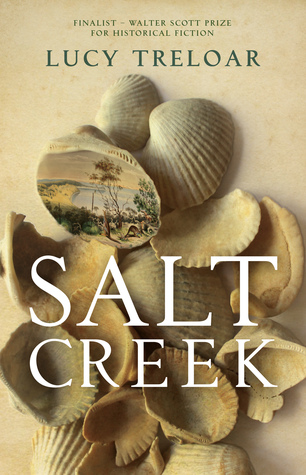
Salt Creek by Lucy Treloar

As well as taking part in German Literature Month this November, I also wanted to read something for Brona’s Australia Reading Month. I haven’t read many Australian books or authors and this is something I want to change, as discussed in a recent Historical Musings post. Lucy Treloar’s Salt Creek was one of the books I needed to read for my Walter Scott Prize project so seemed like the perfect choice.

Salt Creek is set in the 19th century and narrated by Hester Finch, who is fifteen years old as the novel opens in 1855. Having been leading a comfortable lifestyle in Adelaide, the family have fallen on hard times and Hester’s father has decided that they should move to the Coorong region of South Australia where they can try to build a new life for themselves farming the land. Arriving at Salt Creek in the Coorong, however, they find that things are not going to be easy. The landscape is beautiful but desolate, the land is difficult to tame and their Aboriginal neighbours view the newcomers with suspicion.

Hester’s mother, who has been depressed for some time, struggles to adapt and Hester, as the eldest daughter, finds herself taking on more responsibilities around the house. When the chance of freedom comes her way, will she take it or are the ties binding her to Salt Creek too strong? Meanwhile, the efforts of her father and brothers to work the land and make it suitable for farming bring them into conflict with the indigenous Ngarrindjeri people who have made the Coorong their home for generations.

Acting as a bridge between the two cultures is Tull, a boy from a local tribe who is welcomed into the Finch family and grows up with Hester and her brothers and sisters.

That winter I began to notice how differently he saw almost everything compared to us. Mama might say that the colours of winter reminded her of the highlands of Scotland, and I might say that the sky was sapphire or that the washing lines were like cobwebs on a cold morning. Hearing these things perplexed him, as did so much else – the encumbrances of our clothing, our impractical hair, our heavy boots, the fences that we built – which he made apparent by his stillness or his incredulity…

Tull’s relationship with the Finches is one of the most interesting aspects of the story. They come from such different worlds, yet find shared ground and common interests, giving hope that the wider groups they represent – the Aboriginal people and the white settlers – may be able to cooperate and work together. However, it is through Tull that Hester becomes aware of the harm the arrival of her family is doing to the Ngarrindjeri and to the environment.

The story itself has a bleakness to match the harshness of the landscape. Most of the characters experience little or no happiness, enduring poverty, the death and loss of loved ones, prejudice, betrayal and the breakdown of trust. It’s such a sad and tragic story – and yet I didn’t feel quite the emotional connection to Hester that I would have liked. I’m not sure why that should be, but I didn’t become fully invested in Hester’s personal story until I was well into the second half of the book. I don’t think it helped that the author chose to write part of the novel from the perspective of an older Hester living in England and looking back on her life. A more linear timeline might have worked better for me.

Still, Salt Creek is a beautifully written novel, with some lovely, vivid descriptions of the Coorong. Here is Hester having her first glimpse of her new home:

There was little enough to see – dry grasses and low shrubs in sweeps down to the lagoon, an arm of contorted trees hugging the slope from the low ridge and modest folds of land – a bed risen from like my own and its covers pushed back to hold the warmth of night. The colours were not intrinsic. A dry grass stem in shadow could be as drab as sightless eyes or gold in sunlight or silver in moonlight, but I did not know that then.

This was a good choice for the Reading Month; I loved the blend of fact and fiction (Lucy Treloar explains this in her author’s note) and the insights it gave me into life in South Australia, a place I knew very little about until now. I’m sure I’ll be picking up more Australian fiction soon!

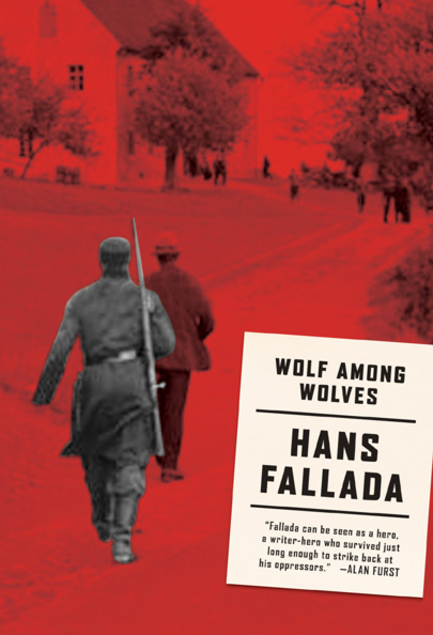
Wolf Among Wolves by Hans Fallada

This month Caroline of Beauty is a Sleeping Cat and Lizzy of Lizzy’s Literary Life are hosting their annual German Literature Month. I thought this would be a good opportunity to read a German novel which has been on my TBR for years: Wolf Among Wolves by Hans Fallada. So far my experiences with Fallada’s work have been mixed: I was disappointed with A Small Circus, but loved Little Man, What Now? and Alone in Berlin. I had been putting off reading this book because of the length (800 pages), but now that I’ve finally read it, I’m pleased to say that I enjoyed it much more than A Small Circus, although not as much as the other two.

Wolf Among Wolves is set in Germany in 1923. With the country’s economy still suffering in the aftermath of the recent world war, hyperinflation means that prices are spiralling out of control and the currency is rapidly becoming worthless. As the novel opens we are told that there are currently 414,000 German marks to the dollar; within months this figure has increased into the billions, causing misery and desperation for the German people.

“So many people are running away from their jobs,” went on Studmann. “To work, to do anything at all, has suddenly become idiotic. As long as people received a fixed tangible value at the end of the week or the month, even the most boring office job had some reason. But the fall of the mark has opened their eyes. Why do we live? they suddenly ask. Why are we doing anything? Anything at all? They don’t see why they should work merely to be paid in a few worthless scraps of paper.”

Wolfgang Pagel, our hero (if you can call him that), has never been good at managing money. He is a gambler and at the beginning of the novel we see him lose at roulette, meaning he has to postpone his wedding to his girlfriend, Petra Ledig. When Petra finds herself in trouble with the police after he takes her clothes to be pawned, leaving her on the streets with only an old coat to wear, she decides that this time she’s had enough. Wolf needs to change, and until he does she will refuse to see him or speak to him. And so they separate, Petra remaining in Berlin while Wolf heads out into the countryside to work on a friend’s farm.

I have only mentioned two of the novel’s characters so far, but there are many, many more and they all have fully developed storylines of their own. There’s Joachim von Prackwitz, still referred to by his military title of Rittmeister, who is leasing the country estate of Neulohe from his father-in-law and struggling to cope with his return to civilian life. There’s the Rittmeister’s teenage daughter Violet, whose lover is planning a putsch – a coup – against the Weimar government. There’s the estate bailiff, known as Black Meier, who loses his job and spends the rest of the novel thinking of ways to cause trouble for everyone at Neulohe. And there’s Etzel von Studmann, a hotel reception manager, who agrees to come and work for the Rittmeister following an embarrassing incident with a guest. These, and others, become Wolfgang Pagel’s new companions as he tries to build a new life for himself away from the temptations of the city, only to find that even the idyllic countryside is not free from corruption.

Fallada moves from character to character as he paints a portrait of life in the Weimar Republic and explores the impact of the First World War and the struggling economy on the fortunes of ordinary people. Over the course of the 800 pages we get to know them all very well; however, some are more interesting and more appealing than others, which makes this quite an uneven read. I was sorry that, after the opening chapters, we see very little of Petra – her relationship with Wolf and the question of whether they will be reunited was my favourite of the novel’s many storylines. Of the characters living at Neulohe, von Studmann was the only one I had any sympathy for; I found the others a selfish and unpleasant bunch. To be fair, though, I should have been prepared for that: Fallada warns us at the beginning of the book that his story “deals with sinful, weak, sensual, erring unstable men, the children of an age disjointed, mad and sick. All in all, it is a book for those who are, in every sense, adult.”

Wolf Among Wolves was first published in German in 1937 under the title Wolf unter Wölfen. I read an English translation from 1938 by Philip Owens, ‘with additional translations by Thorsten Carstensen and Nicholas Jacobs’. I found both the translation and the novel itself very readable. It’s probably not the best place to start with Fallada – Alone in Berlin (also published as Every Man Dies Alone) and Little Man, What Now? are my recommendations – but it’s definitely worth reading for the insights into 1920s Germany.