The Heart’s Invisible Furies by John Boyne

One day in 1945, Catherine Goggin, sixteen and unmarried, is banished from her small village in West Cork, Ireland, for committing the sin of becoming pregnant. Shamed by the priest in front of an entire congregation and cast out by her family, Catherine makes her way to Dublin in the hope of starting a new life for herself. When her baby boy, Cyril, is born several months later, she makes the decision to put him up for adoption – and from this point, Catherine steps into the background of our story. Our attention switches now to Cyril, growing up in the home of his adoptive parents, Charles and Maude Avery.

Charles is a rich but disreputable businessman with a weakness for gambling and womanising, while Maude is a temperamental, chain-smoking novelist who hates the thought of anyone actually buying one of her books. Unsurprisingly, they do not make good parents and never let Cyril forget that he is “not a real Avery”. The one bright spot in Cyril’s life is his friendship with Julian Woodbead, the son of Charles Avery’s lawyer. Julian is popular, sophisticated and daring; everything Cyril wants to be. As the boys grow older, however, and enter their teenage years, Cyril becomes aware that what he feels for Julian is not just friendship but love.

Narrated by Cyril himself, the story is divided into sections moving forward seven years at a time, taking us from the 1940s right through to 2015 and around the world from Dublin to Amsterdam to New York. Along the way we meet a range of characters who, while they may not be very realistic, are so vividly drawn they almost jump out of the page; I particularly loved the hilarious Mary-Margaret Muffet, Cyril’s first girlfriend, who has “very high standards” and who proudly announces to everyone she meets that she knows all about the world because she works on the “foreign exchange desk at the Bank of Ireland, College Green”. We also witness, through Cyril’s eyes, some of the most significant historical events to occur in his lifetime, including the bombing of Nelson’s Pillar in Dublin, the impact of AIDS in the 1980s, the 9/11 attacks and Ireland’s referendum on gay marriage.

The main focus of Cyril’s story, however, is on his sexuality and how he comes to terms with it. As a young man growing up in Catholic Ireland, he quickly discovers that it is not at all easy to be homosexual in a society where people don’t even want to acknowledge that such a thing exists; his attempt to confess to a priest has shocking consequences! And so, for a long time, Cyril tries to deny his feelings even to himself (hence Mary-Margaret and one or two other women). Eventually he can suppress his love for Julian no longer…but things don’t go exactly according to plan.

Actually, things never do seem to go according to plan for Cyril and it would be difficult not to feel some sympathy! Sometimes it’s his own fault, as he does make a lot of mistakes and bad decisions, but he is also a victim of prejudice, intolerance and lack of understanding. With the novel jumping forward in seven-year chunks, we see not only how Cyril’s personal circumstances have changed in the intervening time, but also how attitudes towards homosexuality have changed – subtly at first, but quite dramatically by 2015. I couldn’t help feeling, though, that sometimes the messages Boyne was trying to get across came at the expense of the story.

Having read and enjoyed several of John Boyne’s novels over the last few years, I was really looking forward to reading The Heart’s Invisible Furies and although A History of Loneliness is still my favourite, I did find a lot to like about this one – his longest and most ambitious book yet. I should probably warn you that the humour is often very dark and sometimes not in very good taste, which won’t be for everyone, and that as Cyril’s sexuality forms such an important part of the story, it’s also quite explicit at times. I wasn’t sure whether it was going to be my sort of book or not at first, but after an uncertain start I found myself being drawn into Cyril’s story and then there was no question of not finishing it!

Following Cyril Avery’s life from birth to old age was a memorable experience! He’s a wonderful character…so complex and so human. Although the plot is built around a series of highly unlikely coincidences, I didn’t mind too much as it meant everything fell into place at the end. Not all of the characters get a happy ending, but some of them do and I was left with the hope that the younger generations of Cyril’s family would find certain aspects of their lives easier to deal with than poor Cyril did!

Golden Hill by Francis Spufford

It’s 1746 and Richard Smith has just arrived in New York bearing a bill of credit for one thousand pounds. Presenting this to be cashed at the counting-house of the merchant Lovell on Golden Hill Street, the mysterious Smith causes quite a sensation. Who is he and where has he come from? Where is Lovell supposed to find such a huge amount of money? And what does Smith intend to do with it once he has it?

I would like to tell you more about the plot of Golden Hill, but I’m limited as to how much I can say without spoiling things for future readers. I think it’s enough to say that it’s a hugely entertaining story involving duels, card games, imprisonments and a chase across the rooftops of New York. One of the things which makes this book such an enjoyable and compelling read, however, is the air of mystery surrounding Richard Smith from beginning to (almost) end.

“There’s the lovely power of being a stranger,” Smith went on, as pleasant as before. “I may as well have been born again when I stepped ashore. You’ve a new man before you, new-made. I’ve no history here, and no character: and what I am is all in what I will be. But the bill, sir, is a true one. How may I set your mind at rest?”

His refusal to explain what he is doing in New York and why he needs so much money keeps the other characters – and the reader – guessing until the final pages. Is he really as rich as he seems to be or is he involved in some sort of hoax? Should Lovell trust him or will he be made to look a fool?

Smith’s secretive behaviour arouses both fascination and suspicion among the people he meets. Although he says very little about himself and his past, there is evidence that he has been well educated, travelled extensively in Europe, has a good knowledge of the theatre and an aptitude for dancing, acting and magic tricks – and yet he also makes a number of mistakes and blunders that suggest he may not be as sophisticated as he seems. To complicate things further, Smith soon falls in love with Lovell’s daughter, Tabitha, a character I found just as enigmatic as Smith himself. With her prickly exterior, sharp tongue and often spiteful behaviour, it’s difficult to know how Tabitha really feels about Smith, which is something else to ponder while you read.

Francis Spufford’s writing style is wonderful and perfectly suited to the story and the period; it’s clearly intended to read like an authentic 18th century novel and a lot of care has obviously gone into the choice of words and the way sentences are structured. Sometimes the narrator breaks into the story to speak directly to the reader, passing judgement on the actions of the characters, expressing annoyance (at having to explain the rules of the card game piquet, for example), and making amusing asides and observations. This is the sort of thing I tend to enjoy, although I know not everyone does! The narrative style is not just for show, though – there’s another reason why Spufford has chosen to tell the story in this way, although I didn’t understand until I reached the very end of the book.

Another highlight of the novel is its portrayal of New York at a time when, far from being the major city it is today, it’s a relatively small community still with a significant Dutch influence (seen in the design of the merchants’ houses and the names of the surrounding villages and neighbourhoods – Bouwerij for Bowery and Breuckelen for Brooklyn, for example). It’s a city in its early stages of development, just beginning to expand and prosper, and brought to life through Spufford’s vivid descriptions.

There’s so much to love about this unusual, imaginative novel. I had never heard of Francis Spufford before reading this book, but it seems that although he has written several non-fiction books, Golden Hill is his first novel. Naturally I am hoping that he’ll write more!

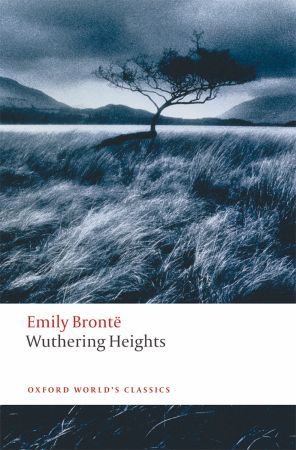
Wuthering Heights by Emily Brontë (re-read)

Since I started blogging in 2009 (which seems so long ago now) I have discovered lots of great books, have tried genres I had never thought about trying before, and have been introduced to some wonderful new authors. One thing that has been sadly neglected, though, is re-reads of my old favourites – something that used to form such an important part of my reading life. Making more time for re-reads has been a goal of mine for the last few years, but I have never actually done it; I’m determined that 2017 will be different! I have re-reads of Rebecca and The Count of Monte Cristo coming up soon for the Classics Club, both of which I’m looking forward to, but before I get to those two, I’ve been revisiting a book I first fell in love with as a thirteen-year-old: Emily Brontë’s 1847 classic, Wuthering Heights.

For those of you who have not yet had the unforgettable experience (in one way or another) of reading Wuthering Heights, here is a quick summary. The novel opens in 1801 with Mr Lockwood, the new tenant at Thrushcross Grange in Yorkshire, paying a visit to nearby Wuthering Heights to meet his landlord, Heathcliff. Lockwood is hoping for some peace and quiet in which to enjoy his stay at the Grange and at first he is happy with what he sees in Heathcliff. It’s not long, however, before he discovers that what he had mistaken for quiet reserve hides a cruel and violent nature. After passing an uncomfortable night at Wuthering Heights, in which he is treated with hostility by the inhabitants and tormented by strange dreams, Lockwood retreats to the safety of his own lodgings, where he begs his housekeeper, Nelly Dean, to tell him what she knows of Heathcliff and his household.

Most of the novel is narrated by Nelly Dean, as she relates the story of Heathcliff’s first arrival at Wuthering Heights, a child brought back from Liverpool by old Mr Earnshaw, and raised alongside Earnshaw’s own children, Catherine and Hindley. As the years go by, the childhood friendship between Heathcliff and Catherine begins to develop into something more, but when Edgar Linton from Thrushcross Grange enters Catherine’s life, Heathcliff finds himself pushed aside. He devotes the rest of his life to causing misery for the Lintons – as well as taking revenge on Hindley who, unlike his sister, had never accepted Heathcliff as one of the family.

It seems that a lot of people who dislike Wuthering Heights approached it for the first time expecting a romantic love story and in that case I can understand why they would be disappointed. The relationship between Heathcliff and Cathy is hardly a conventional romance and although there is love, it is an obsessive and unhealthy love. When I first came to this book as a young teenager, though, I had no idea what it was about and no expectations whatsoever, so none of that bothered me. At that age, I loved it for the darkness, the melodrama and the passion. The blurb on the back of my old Penguin copy (not the one pictured above) describes Wuthering Heights as “perhaps the most passionately original work in the English language” and I think I would agree with that. Who could forget the moment Catherine declares her love for Heathcliff:

“If all else perished, and he remained, I should still continue to be; and if all else remained, and he were annihilated, the universe would turn to a mighty stranger: I should not seem a part of it. My love for Linton is like the foliage in the woods: time will change it, I’m well aware, as winter changes the trees. My love for Heathcliff resembles the eternal rocks beneath: a source of little visible delight, but necessary. Nelly, I am Heathcliff! He’s always, always in my mind: not as a pleasure, any more than I am always a pleasure to myself, but as my own being.”

Another reason people have for not liking Wuthering Heights is the unpleasant, unsympathetic characters. Well, I can’t argue with that. They are certainly unpleasant – not just Heathcliff and Cathy, but most of the supporting characters too, from Nelly herself, who puts the child Heathcliff “on the landing of the stairs, hoping it might be gone on the morrow”, to the elderly servant, Joseph, “the wearisomest self-righteous Pharisee that ever ransacked a Bible to rake the promises to himself and fling the curses to his neighbours”. And although I’ve always had a soft spot for Hareton Earnshaw, Hindley’s son, I struggle to find any sympathy for any of the others. But again, not liking the characters has never been a problem for me where this particular book is concerned.

This is not the first time I’ve re-read Wuthering Heights but it is the first time for quite a few years. I was worried that I would feel differently about it, but I’m pleased to say that I still loved it. I did find different things to notice and appreciate this time – with more knowledge of Emily Brontë herself than I had during previous reads, I could think about the ways in which she may have drawn on her own life for inspiration in writing her novel (the descriptions of Hindley’s drunken behaviour, for example, were surely influenced by Emily’s experiences with her brother Branwell). I also found myself constantly noting down favourite passages and phrases, such as the wonderful description of Cathy’s relationship with the Lintons as “not the thorn bending to the honeysuckles, but the honeysuckles embracing the thorn”.

I thoroughly enjoyed my re-read and am looking forward to re-reading more old favourites during the rest of the year.

What do you think of Wuthering Heights? Do you love it or hate it?

At the Edge of the Orchard by Tracy Chevalier

It’s been some time since I last read a Tracy Chevalier novel, but having enjoyed some of her books in the past, I was pleased to have the opportunity to read her latest one, At the Edge of the Orchard.

The story begins in 1838 in the Black Swamp of Ohio, where James and Sadie Goodenough are attempting to make a living from the harsh, inhospitable earth on which they have settled. With the help of their five children, James is working hard to establish an orchard with enough apple trees to satisfy the requirements to legally claim their piece of land. Sadie, who does not share her husband’s ambition, longs to move on and start again somewhere else – somewhere more comfortable and welcoming. Finding solace in the strong cider and applejack produced from the fruits of the orchard, Sadie’s is a miserable existence from which there seems to be no escape.

Time passes and we jump forward to the 1850s where the youngest Goodenough son, Robert, has made his way alone to California. What happened to the rest of the family? Why does Robert never get a reply to the letters he sends home to his brothers and sisters? We’ll have to wait until later in the book for these questions to be answered, but in the meantime we read about Robert’s work with the plant collector William Lobb, gathering seeds and plants to sell to gardeners in England. Having grown up surrounded by trees, this is the sort of job that interests Robert – yet there is still something missing from his life, and when he is finally given a chance of happiness, he will have to decide whether to take it.

I enjoyed At the Edge of the Orchard and found it a surprisingly compelling read. I say ‘surprisingly’ because, despite the title and the picture on the cover, which should have been clues, I wasn’t fully prepared for so much information on trees: in the orchard sections, we learn about different types of apple tree – the qualities of ‘eaters’ versus ‘spitters’; the taste of James’ favourite Golden Pippins; and the methods used to graft one tree onto another – and in the California sections we are given a wealth of information on the giant sequoia trees of Calaveras Grove. I have to admit, although I do appreciate the beauty and importance of trees, I have very little interest in them. I’m impressed that Tracy Chevalier managed to hold my attention from the first page to the last; I was never bored and would never have expected a book about trees to be so engaging!

Of course, this is not just a book about trees – it’s also a book about human beings, following the stories of several very different characters. At first, the Goodenoughs don’t seem to be a very pleasant set of people. James is decent enough, but with a tendency to be violent when things annoy him and a frustrating single-mindedness when it comes to growing and nurturing his precious apple trees. His wife, Sadie, is a deeply unhappy woman but any sympathy I may have had for her was destroyed by her bitter, spiteful nature and needlessly cruel actions. It wasn’t until later in the novel that I found some characters I could like and care about. In fact, a series of letters written by two of these characters broke my heart…the sense of loneliness and desperation they each felt came across so strongly.

The novel is carefully structured, moving backwards and forwards in time to ensure that certain things are kept hidden until it becomes necessary for us to know them. A mixture of styles are used to tell the story too, from the letters I’ve mentioned above to conventional third party narration and several passages narrated by Sadie in a very distinctive voice of her own. Although the story of the Goodenoughs is fictional, we also meet several real historical figures: the legendary Johnny Appleseed is one you may have heard of, but the English tree collector William Lobb was also a real person. There are so many different elements to At the Edge of the Orchard and they all come together to form one fascinating, enjoyable and very moving novel.

I’ve now read four Tracy Chevalier novels and so far they have all been very different, covering such diverse subjects as the Dutch art world (Girl with a Pearl Earring), fossil collecting on the south coast of England (Remarkable Creatures), religious conflict in 16th century France (The Virgin Blue) and now the trees and orchards of 19th century America. I’m looking forward to reading the rest of her books now that I’ve been reminded of them!

Thanks to HarperCollins for providing a review copy of this book via NetGalley.

The Witchfinder’s Sister by Beth Underdown

The Witchfinder’s Sister is Beth Underdown’s first novel. I was drawn to it first by the title and the cover, but the subject – the English witch trials of the 1640s – appealed to me too.

The title character is Alice Hopkins, a fictional sister of Matthew Hopkins, the self-styled Witchfinder General who was believed to be responsible for the deaths of hundreds of women in England over a period of several years in the middle of the 17th century. At the beginning of the novel, following the death of her husband in London, Alice is returning to Manningtree, Essex, where her brother still lives. The two have not been on good terms ever since Alice married the son of a servant, Bridget, whom Matthew blames for the childhood accident which has left his face scarred. Now, though, she hopes they can put the past behind them and move on.

Moving into her brother’s lodgings at the Thorn Inn, Alice is relieved to find that he is willing to let her stay with him – but she quickly discovers that the years have changed Matthew and that he is not the same man she left behind. She hears disturbing rumours about him in the town, linking him with accusations of witchcraft against local women, and when she discovers that he is making lists and collecting evidence, Alice must decide whether or not to intervene.

The novel gets off to a slow start as characters are introduced and background information is provided, with lots of flashbacks to earlier events in Alice’s and Matthew’s lives, but after a few chapters the pace begins to pick up. Not knowing much about the real Matthew Hopkins, I found Underdown’s portrayal of him very intriguing. The lack of known facts relating to his early days gives her the freedom to create a convincing backstory for him, and I appreciated the way she delves into his personal history, revealing family secrets and trying to show how incidents from his childhood may have helped to shape the man he will become. Only seeing him through Alice’s eyes – the novel is written in the first person – makes it difficult to penetrate below the surface and really understand him, but that just makes him all the more chilling and unnerving.

I thought Alice was a less interesting character, maybe because her main role as narrator is to tell the story of Matthew and the women accused of witchcraft rather than taking an active part in events herself. I found her slightly bland – although I did have some sympathy as she was forced to stand by and watch as her brother carried out his terrible deeds, not knowing what she could say or do to help his victims. It would have been nice to have had the opportunity to get to know some of the so-called witches in more depth; most of them were little more than names on the page, and I think if I had been able to care about their fates on an emotional level that would have added an extra layer to the novel. Having said that, I was fascinated by the descriptions of Hopkins’ methods of identifying witches, particularly the one referred to as ‘watching’ – I had heard about that before, but hadn’t fully appreciated the discomfort and torment involved in it.

The book ends in a way that is slightly difficult to believe, but I liked it and thought it added a good twist! Based on this novel, I think Beth Underdown can look forward to a successful writing career; there were things that I liked about it and others that I didn’t like as much, but on the whole I enjoyed it and would certainly be interested in reading more by this author.

Thanks to the publisher for providing a copy of this book for review via NetGalley.

The Day of the Triffids by John Wyndham

A few years ago I read John Wyndham’s The Midwich Cuckoos and loved it, which was a nice surprise as I very rarely choose to read science fiction. It has taken me a while to get round to reading another book by Wyndham, but now that I’ve finally read The Day of the Triffids I’m pleased to report that I found this another enjoyable, if unsettling, read.

The story is set in a world very similar to our own, but for one small but very significant difference: the presence of a species of plant known as the triffid:

There must have been plenty of them about, growing up quietly and inoffensively, with nobody taking any particular notice of them – at least, it seemed so, for if the biological or botanical experts were excited over them, no news of their interest percolated to the general public. And so the one in our garden continued its growth peacefully, as did thousands like it in neglected spots all over the world.

It was some little time later that the first one picked up its roots and walked.

Apart from the ability to walk, another characteristic of the triffid is its long stinging arm with which it lashes out with unnerving accuracy at anyone who gets too close. At the beginning of the novel, our narrator, Bill Masen, is in a London hospital with a bandage over his eyes, having been stung in the face by one of these vicious plants. Because of this, Bill misses out on seeing a spectacular display of meteors which light up the sky with green flashes all over the world.

The next day, when he tentatively removes his bandages, Bill is relieved to find that no damage has been done to his eyes – but on venturing out of his hospital ward, which is strangely quiet that morning, he makes a shocking discovery. It seems that everyone who watched the meteor shower in the sky last night has suddenly and mysteriously gone blind, meaning that Bill is one of the few people left in the world who is able to see.

When I read The Midwich Cuckoos, one of the reasons I liked it so much was that the focus was on a small community trying to deal with the consequences of one strange occurrence and the ‘science fiction’ elements were quite subtle. With giant killer plants, flashing lights in the sky and sudden worldwide blindness, those elements are a lot stronger in The Day of the Triffids, but there’s still the same sense of the ordinary blending with the extraordinary.

It’s never entirely clear what caused the blindness – or the introduction of the triffid to the planet – but there are hints of biological and chemical warfare (it’s worth remembering that the book was published in 1951, in the early years of the Cold War). But maybe the causes are not really important; what is important is the reaction of the characters to the post-apocalyptic world in which they find themselves. And I found the way most people reacted quite depressing – fighting, rioting, looting shops and stealing food. The most memorable section of the novel, for me, was the part immediately following the onset of the blindness, where Bill leaves the hospital to find that the world – or London at least – has descended into chaos:

We had turned a corner to see the street seventy yards ahead of us filled with people. They were coming toward us at a stumbling run, with their arms outstretched before them. A mingled crying and screaming came from them. Even as we came into sight of them a woman at the front tripped and fell; others tumbled over her, and she disappeared beneath a kicking, struggling heap. Beyond the mob we had a glimpse of the cause of it all: three dark-leaved stems swaying beyond the panic-stricken heads.

Personally, I think the idea of seven-foot tall plants uprooting themselves and walking around the streets is terrifying enough without all the other things that happen in the novel! The triffids play a surprisingly small part in the novel, though; much more time is spent on the implications of the blindness, the opportunity for shaping a new society and the varying opinions of what that society should be like. The role of the triffids in the story, I think, is to show how precarious our position is in the world and how just one small change (such as the loss of our eyesight) can result in the conditions being right for another species to gain superiority.

Although I preferred The Midwich Cuckoos, The Day of the Triffids really is a fascinating novel. Now I need to decide which John Wyndham book to read next.

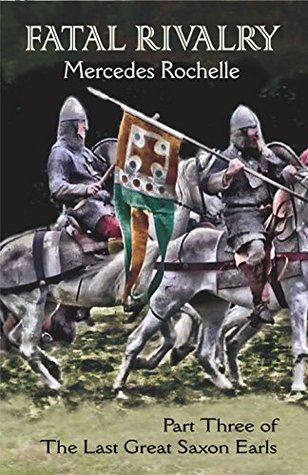
Fatal Rivalry by Mercedes Rochelle

fatal-rivalry-mercedes-rochelle This is the third and final novel in Mercedes Rochelle’s Last Great Saxon Earls trilogy, completing the story begun in Godwine Kingmaker and The Sons of Godwine. Set in 11th century England, just before the Norman Conquest, Godwine Kingmaker told the story of Godwine, the powerful Earl of Wessex, while in The Sons of Godwine the focus switched to the Earl’s children – sons Harold, Tostig, Gyrth, Leofwine and Wulfnoth, and daughter Editha. Fatal Rivalry picks up where that book left off, describing the events leading up to the Battle of Hastings in 1066.

As the novel opens in 1064, Edward the Confessor, Editha’s husband, is still on the throne of England, but the question of his successor is on everybody’s minds. Editha’s brother Harold, who has inherited his father’s earldom of Wessex, has recently returned from Normandy, where he was made to swear an oath to support the claim of Duke William – not an oath Harold intends to keep, because he believes there is a better candidate for the throne: himself. History tells us that Harold will become king in 1066, only to be defeated by William at Hastings later that same year. Fatal Rivalry explores one theory as to why things went so disastrously wrong.

In The Sons of Godwine, we saw how Harold and his younger brother Tostig had been rivals since they were children; in this book the rivalry intensifies. As Earl of Northumbria, Tostig has become very unpopular with his people, particularly after attempting to raise taxes on Harold’s orders. When Tostig’s Northumbrian thegns rebel against him, King Edward sends Harold to negotiate with them. Seeing that the situation is hopeless, Harold agrees to their demands and Tostig is sent into exile. Unable to forgive his brother for siding against him, Tostig searches for new alliances overseas, finally joining forces with the Norwegian king, Harald Hardrada, and setting in motion a chain of events which contribute to Harold’s downfall.

Like the previous novel, this one is presented as the memoirs of the Godwineson brothers, with each one given a chance to narrate his own parts of the story. Leofwine and Gyrth have smaller roles to play, while Wulfnoth, held hostage at Duke William’s court in Normandy, makes only a few appearances – until the end, when he takes on the very important job of concluding his brothers’ stories. Understandably, it’s Harold and Tostig who get most of the attention. I’ve never read about Tostig in this much detail before and I did have some sympathy for him. I’m sure Harold was doing what he thought was in the best interests of the country, but to Tostig it must have seemed like an unforgivable betrayal, particularly when he learned that Harold had married the sister of Morcar, his replacement as Earl of Northumbria.

Fatal Rivalry is an interesting read and probably my favourite of the three books in this trilogy. Because the novel covers a relatively short period of time, it allows the author to go into a lot of detail in exploring the relationship between Harold and Tostig, the motivation behind their actions and how their rivalry could have been the reason why Harold was fighting a battle in the north of the country when William invaded from the south. I am not really a lover of battle scenes, but although there are two major battles which take place in this book – Stamford Bridge and then Senlac Hill (Hastings) – this is only one aspect of the novel and plenty of time is also spent on the more personal lives of the characters, such as Tostig’s relationship with his wife, Judith, and Harold’s marriages to Edith Swanneck and Ealdgyth of Mercia.

I think the Norman Conquest is fascinating to read about and, like many periods of history, there is so much left open to interpretation and debate. I will continue to look for more fiction set in this period and will also be interested to see what Mercedes Rochelle writes about next.

Thanks to the author for providing a copy of this book for review.