The Seven Dials Mystery by Agatha Christie

The theme for the 2024 Read Christie challenge is Agatha Christie: Through the Decades and for the first quarter of the year we are reading books from the 1920s. In January I read The Secret of Chimneys (1925), so this month it made sense to read The Seven Dials Mystery, which was published four years later in 1929 and is loosely a sequel. I say ‘loosely’ because although this book features some of the same characters and is set at the same country house – Chimneys – it’s a completely separate mystery.

The Seven Dials Mystery begins with a house party being held at Chimneys while the house is being rented out to Sir Oswald and Lady Coote. The guests include a group of young people, one of whom, Gerry Wade, has a habit of sleeping very late in the mornings. As a joke, his friends hide eight alarm clocks in his room during the night, timed to go off one after another in the morning. However, things don’t go according to plan and the clocks fail to wake Wade…because he is already dead. The cause of death is thought to be an accidental overdose of a sedative, but how does that explain why there are now only seven alarm clocks in the bedroom instead of eight?

When Lord Caterham, the owner of Chimneys, returns home and hears the news, he is not at all pleased. “I don’t like anyone who comes and dies in my house on purpose to annoy me,” he says. His daughter, Lady Eileen, on the other hand, is more sympathetic, particularly when she discovers that she knows some of the people involved – and it’s not long before she has become involved herself. Lady Eileen – known as ‘Bundle’ to her friends and family – is on her way to London the next day when a man jumps into the road in front of her car. He has time to utter the words Seven Dials before dying of a gunshot wound. What or where is Seven Dials and is there some connection with the seven clocks found in Gerry Wade’s bedroom? Bundle is determined to find out!

This book has a very similar feel to The Secret of Chimneys and although it had seemed like a good idea to read them in consecutive months for the challenge, in hindsight I think I should have left a bigger gap and chosen something different for this month. Still, it was nice to meet Bundle again, who only played a small part in Chimneys but was much more prominent in this book. Superintendent Battle is also back again, but it’s really Bundle who is the ‘detective’ in this novel and she’s a very likeable one!

I didn’t manage to solve the mystery – if there were any clues pointing towards the culprit I must have missed them – but this is really more of a thriller than a conventional mystery novel anyway and I was content just to follow the twists and turns of the plot. There’s a secret society element that reminded me very much of GK Chesterton’s The Man Who Was Thursday, which I’m sure Christie must have read and been inspired by. It’s an entertaining novel but I think my next Read Christie book will be a mystery rather than another thriller.
The Fox Wife by Yangsze Choo

The famous scholar Ji Yun, who was obsessed with foxes, said: Humans and things are different species, and foxes lie between humans and things; darkness and light take different paths, and foxes lie in between darkness and light.

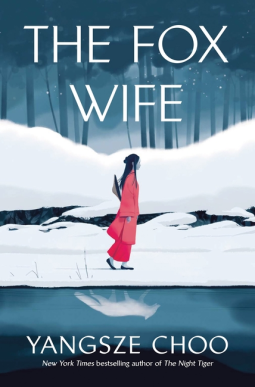
Like Yangsze Choo’s previous two novels, The Ghost Bride and The Night Tiger, The Fox Wife is a fascinating blend of history, fantasy and folklore. It takes as its premise the idea that fox spirits, who play a large role in Chinese and Japanese mythology, really exist and can take on the appearance of human beings.

Beginning in Manchuria in the winter of 1908, one thread of the novel follows Bao, an elderly private detective who has been called in to investigate the death of a young woman. The woman’s body was found frozen in the doorway of a restaurant and people are already starting to whisper that she was lured to her death by foxes. Ever since he visited a shrine to a fox god as a child, Bao has been blessed, or maybe cursed, with the ability to detect truth from lies. Now, he hopes he can use that gift to find out what happened to the woman found dead in the cold.

In chapters that alternate with Bao’s, we meet Snow, or Ah San, a white fox spirit who is searching for the man she blames for the death of her daughter two years earlier. Snow has taken the form of a human woman and joined the household of a Chinese medicine seller. In her position as maid, she is able to accompany the family on a trip to Japan where she hopes for an opportunity to take her revenge.

At first, the two threads of the novel are very separate; Bao’s story is written in the third person and focuses on his investigations, with some flashbacks to his childhood; Snow’s narrative is in first person, giving it a more intimate feel. Eventually, their paths begin to converge, producing some interesting plot twists and revelations. We also find that there’s not just one fox in this story, but who are the others and what is their relationship with Snow? It takes a long time for everything to unfold and for a while in the middle of the book I thought it was starting to drag, but the pace does pick up again towards the end.

My knowledge of Chinese folklore is sadly very limited, so I enjoyed learning more about the significance of fox spirits, their characteristics and powers, and some of the myths and folktales that have been told about them. With the novel being set partly in Japan as well as in China, we also see how similar myths and legends about foxes cross over into Japanese culture. It’s all very fascinating, and whenever my attention was starting to wane due to the slow, meandering plot, there would be another passage about foxes that would grab my interest again.

I had mixed feelings about The Fox Wife, then, but I’m pleased to have had the opportunity to learn something new! It’s definitely worth considering this one – and Yangsze Choo’s others – if you have any interest in Chinese myth.

Thanks to Quercus Books for providing a copy of this book for review via NetGalley.

Book 6/50 for the Historical Fiction Reading Challenge 2024

A Lady to Treasure by Marianne Ratcliffe – #ReadIndies

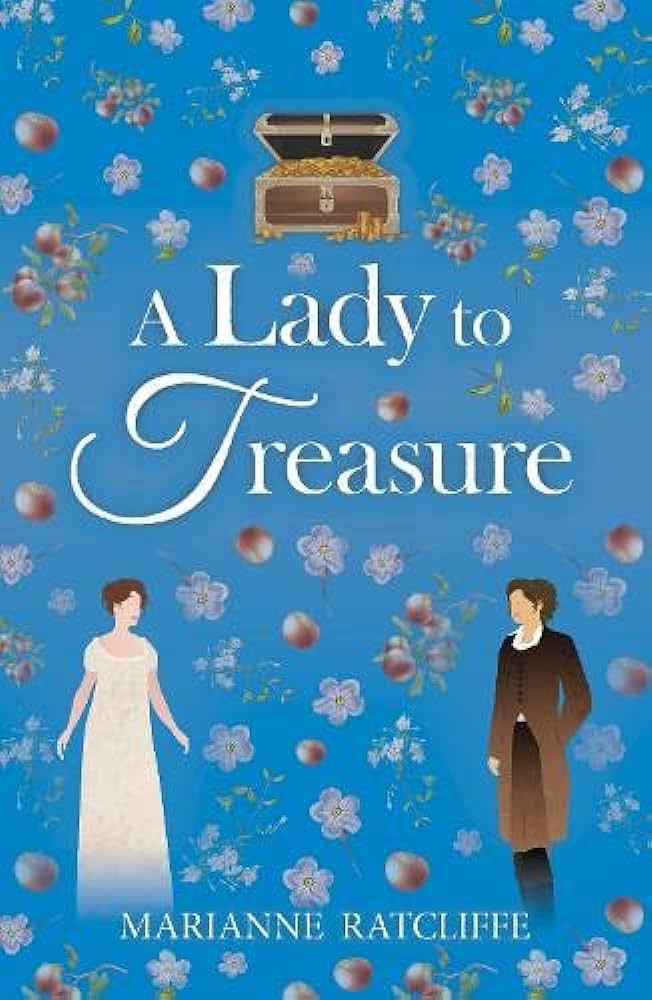
I enjoyed Marianne Ratcliffe’s previous book, The Secret of Matterdale Hall, a Victorian Gothic novel set at a Yorkshire boarding school, so I was happy to try her new Regency romance, A Lady to Treasure. I had some doubts as to whether I would like this one as much, as Gothic novels are usually more to my taste than romances, but it actually turned out to be my favourite of the two. Both books are published by Bellows Press.

Louisa Silverton is the daughter of a rich American businessman. With the onset of the 1812 War, the Silvertons are beginning to experience financial uncertainties and Louisa is sent to stay with family in England, in the hope that she can find a wealthy husband there. Arriving at Athelton Hall in Northamptonshire, she quickly settles in, forming a friendship with her cousin, Eleanor, and getting to know the neighbouring families.

From her father, Louisa has gained a knowledge of accounting – ‘her first toy was an abacus and her earliest reading matter business receipts, from which she learnt to add and subtract’ – and she is able to use her skills to assist Sarah Davenport, who lives at nearby Kenilborough Hall. The Kenilborough estate is falling into debt due to the mismanagement of Sarah’s father, Lord Kenilborough, and the gambling habits of her stepbrother, and it has been left to Sarah to try to salvage the situation. As Louisa spends more time with Sarah, advising her on how to increase the profitability of the estate and deal with unscrupulous business associates, the two slowly become aware that what they feel for each other is more than just friendship.

The romance element of the book is more subtle and understated than I expected. Louisa and Sarah don’t immediately recognise their feelings as romantic love and it takes them a long time to start to act on it, particularly as they have other matters to deal with, such as Sarah attempting to save Kenilborough and Louisa trying to keep her father happy by looking for a rich husband. I liked both of them, particularly the independent, outspoken Sarah (a character very like the historical Anne Lister, or ‘Gentleman Jack’). Despite Sarah being an unconventional character, I still believed in her, and in Louisa, as realistic 19th century women; nothing in the book felt anachronistic or unconvincing.

As well as the two main characters, there’s also a strong supporting cast – I found Louisa’s cousin, Eleanor, an interesting character as she has curvature of the spine and therefore doesn’t conform to Regency society’s idea of how a woman should look. I wanted Eleanor to find happiness as much as I wanted Louisa and Sarah to do the same!

I knew after reading Matterdale Hall that I liked Marianne Ratcliffe’s writing style. Writing that feels too modern can pull me out of historical fiction and break the spell, but that’s not the case here – the language is carefully chosen to suit the time period and add to the overall sense of authenticity. I hope for more books from this author in the future, having enjoyed these two so much.

Thanks to the author for providing a copy of this book for review.

Bellows Press is a small independent publisher that works with “unagented, unorthodox writers of fiction, particularly queer writers, writers of colour and writers from marginalised genders.”

The Bone Hunters by Joanne Burn

The cliffs and beaches of Lyme Regis on the south coast of England are famous for their fossils, particularly the remains of dinosaurs and other prehistoric reptiles, some of which were discovered in the 19th century by the fossil collector and scientist, Mary Anning. In her new novel The Bone Hunters, Joanne Burn takes inspiration from Anning’s life and work to create the fictional story of another female fossil hunter, Ada Winters.

Ada is twenty-four years old when her story begins in 1824. Since her father’s death, she and her mother have been struggling to pay the rent and are at risk of losing their little cottage by the sea. Much to her mother’s frustration, Ada is reluctant to look for a job, instead spending her days wandering on the beach and insisting that the collection of bones and fossils she is acquiring will one day make their fortune. Ada receives a setback when her request to join the Geological Society of London is rejected, but her disappointment turns to excitement when she discovers what she believes to be the remains of a previously unidentified species.

When Ada meets another geologist, Dr Edwin Moyle, by the cliffs one day, she must decide whether to trust him with what she has found. Edwin’s support means she will be more likely to be taken seriously when she presents her discovery to the Society, but what if he tries to claim the skeleton for himself? Having come so close to achieving her dream, Ada is determined not to let anyone take it away from her!

The Bone Hunters is a beautifully written novel. I loved the descriptions of the landscape – the beach, the harbour, the cliffs of Black Ven with their ‘dark, forbidding crag face looming high above’ – and the town itself. The relationship between the people of Lyme and their natural environment is something that comes up again and again throughout the book: the dangers of landslides that can happen without warning; the severe flooding that can destroy homes and take lives. It’s one of those novels where the geographical setting takes on as much importance as the characters and the plot.

As I read, it was difficult not to make comparisons with Remarkable Creatures, Tracy Chevalier’s novel about Mary Anning, but I think I enjoyed this one more. Inventing a character based on Anning rather than writing about Anning herself allowed Joanne Burn to bring more drama into the story and to introduce other fictional characters and storylines. I particularly liked Josiah and Annie Fountain, an elderly couple who run a bookshop together and have taken Ada under their wing, and Isaac, a young man who has come to Lyme to collect local myths and legends. Ada herself frustrated me because of her single-mindedness and selfishness – I felt sorry for her mother who was making herself ill washing fleeces in a factory all day while Ada refused to go to work – but at the same time I could admire her ambition and determination as a woman trying to make a name for herself in a male-dominated field. As for Edwin, part of the story is written from his point of view which adds an extra angle of interest, but I won’t tell you whether he turns out to be hero or villain!

Joanne Burn is a new author for me. I haven’t read either of her previous novels, but I do now want to read The Hemlock Cure, based on the real life story of the village of Eyam during the Great Plague.

Thanks to Little, Brown Book Group UK for providing a copy of this book for review via NetGalley.

Book 5/50 for the Historical Fiction Reading Challenge 2024

The Undetective by Bruce Graeme – #ReadIndies

It’s good to see so many forgotten Golden Age crime authors being brought back into print by various publishers. Bruce Graeme (Graham Montague Jeffries) is another I had never heard of until my eye was caught by the bright and colourful cover of this recent reissue of The Undetective. Graeme appears to have been very prolific, particularly during the 1930s and 40s, but this is a later novel from 1962. It’s a real gem and I highly recommend it to classic crime fans! Along with several of Graeme’s others, it’s published by Moonstone Press, which makes it a perfect choice for Karen and Lizzy’s #ReadIndies month.

Our narrator, Iain Carter, has abandoned a career in law to become a crime writer, but is finding it less profitable than he expected. Luckily, his brother-in-law, Edward, happens to be a police detective who is often indiscreet when discussing his work with his family, and Iain decides to use Edward’s inside knowledge as the basis for a new series of books. He creates a superintendent character based on Edward’s boss, whom he portrays as a bumbling idiot incapable of solving any crimes – more of an ‘undetective’ than a detective!

In order to avoid getting Edward into trouble, Iain publishes under a pseudonym – John Ky. Lowell – and goes to great lengths to ensure that nobody can ever trace Lowell back to him. The new series proves to be a huge success and everything is going well for Iain…until a man is found murdered and it emerges that the main suspect is John Ky. Lowell! Can Iain divert suspicion away from his alter ego without making himself a target?

I found this an entertaining read from beginning to end. As an author himself and a founding member of the Crime Writers’ Association, Graeme pokes fun at the publishing industry and his fellow CWA members, namedropping people like John Creasey, Christianna Brand and Julian Symons (who writes a bad review of one of Iain Carter’s books). He also offers some interesting insights into the world of publishing, the royalties an author could expect in 1962, and the reasons for writing under a pseudonym. The schemes Carter comes up with for trying to hide Lowell’s true identity are ingenious!

Although a murder does take place, this is not really a conventional murder mystery, and it’s not a police procedural either as we only hear about the police investigations and theories from Iain’s perspective, due to his friendship with Edward. Iain is not really interested in trying to solve the mystery – he just wants to make sure that neither he nor the non-existent Lowell can be connected with it. With the help of his wife, Susan, he begins planting false clues and red herrings to try to lead the police in the wrong direction and part of the fun is in wondering how long this can go on before he eventually makes a mistake and gets caught out!

I enjoyed this book so much I’m definitely planning to read more by Bruce Graeme, as well as maybe trying some of the other authors available from the same publisher.

Moonstone Press is a member of the Independent Publishers Guild and focuses on “detective, crime and humorous fiction published before 1965”.

Cuddy by Benjamin Myers

Cuddy is a nickname given to St Cuthbert, the Anglo-Saxon monk, bishop, hermit and saint who lived during the 7th century. He is associated with the island of Lindisfarne (Holy Island), where he spent many years of his life, and with Durham Cathedral, where he is buried, and these are both places I have visited several times, which is what drew me to this novel by Benjamin Myers. The publisher’s description of it as “a bold and experimental retelling of the story of the hermit St. Cuthbert” made me reconsider, as I’ve discovered over the years that experimental books usually aren’t for me, but I decided to give it a chance anyway.

The first section of the book is set in 995, more than three hundred years after the death of St Cuthbert, and is told from the perspective of Ediva, a young woman who accompanies a group of monks as they transport Cuddy’s remains to his new resting place in Durham. We then move forward several centuries in time and join the masons who are repairing the cathedral stonework in 1346. The third section is a ghost story set in 1827 when an Oxford professor, Forbes Fawcett-Black, is invited to attend the opening of Cuthbert’s tomb. Finally, the last part of the book introduces us to Michael Cuthbert, a young man living in a village near Durham in 2019 who is offered a job as a labourer during restoration work at the cathedral.

Each of the four parts could work as a standalone story, but there are also several links between the four, some of which are easy to spot and some that are more obscure. There’s always an ‘Ediva’-type character – one who fills the role of cook or healer, who sees visions and hears the voice of Cuddy – and there’s always a young man with owl-like eyes:

He has brilliant wide eyes that peer into your very
centre
Eyes that seem not to blink. Eyes that one day are
blue
and the next jade, then anthracite and once, red.

The quote above, describing the ‘Owl Boy’, is an example of the writing in the first section of the book, which takes the style of a narrative poem. I don’t think I could have read a whole book written like this, but could cope with it for a few chapters and I thought it was quite effective in creating a mystical, dreamlike atmosphere that suited the time period and the story being told. Myers also finds an appropriate voice and style for each of the other parts of the novel – for example, the 19th century ghost story, The Corpse in the Cathedral, is told through the diary entries of the Professor and is written in a very formal style which suits his character.

My favourite part of the book was actually the modern day story at the end. I loved Michael Cuthbert, who is struggling to care for his dying mother at home while trying to support them both by taking whatever work he can get, and I enjoyed watching him form a friendship with Evie, a kindhearted young woman who works in the cathedral restaurant. I found Michael and Evie’s story very moving and would have been happy to have read a whole book about them!

As for St Cuthbert himself, his own story is related to us through brief excerpts from a wide range of sources including books, essays and articles which are all acknowledged at the end of the book. It’s a lot to take in and digest and I think to really understand who Cuthbert was and why he is significant you would probably need to read some of those sources in full. However, this is a good introduction!

Thanks to Bloomsbury Publishing Plc for providing a copy of this book for review via NetGalley.

Book 4/50 for the Historical Fiction Reading Challenge 2024

Fear Stalks the Village by Ethel Lina White

The village was beautiful. It was enfolded in a hollow of the Downs, and wrapped up snugly — first, in a floral shawl of gardens, and then, in a great green shawl of fields. Lilies and lavender grew in abundance. Bees clustered over sweet-scented herbs with the hum of a myriad spinning-wheels.

With its Tudor cottages and cobbled streets, the village depicted in Ethel Lina White’s 1932 novel seems at first sight to be an idyllic place to live. There’s no poverty or unemployment, an endless round of tea parties and tennis games, and once settled there, people find that they never want to leave. Joan Brook is a relative newcomer to the village, having arrived to take up a position as companion to Lady d’Arcy, and she has already fallen under its spell.

When a novelist friend from London comes to visit, she entertains herself and Joan by imagining the secret scandals taking place behind closed doors. Perhaps the village doctor is poisoning his wife, she says, and the saintly Miss Asprey is bullying her companion; the Rector is leading a double life, and Miss Julia Corner, President of the local Temperance Society, is a secret drinker. The visit is a brief one and the friend soon returns to London, but when the inhabitants of the village begin to receive anonymous poison pen letters, it seems that the scenarios she had imagined were not so far from the truth after all.

Fear Stalks the Village is an unusual crime novel; although there are several deaths, it is not a murder mystery and the plot revolves entirely around finding out who is writing the spiteful letters threatening to expose the private lives of the villagers. Other reviews compare it to The Moving Finger by Agatha Christie, but as I haven’t read that one yet it reminded me most of Henrietta Clandon’s Good by Stealth. There’s lots of witty, satirical humour and a large cast of strongly drawn characters, all of whom appear at first to be happy, well-adjusted people…until the letters begin to arrive. The question the novel raises is whether the cracks have always been there beneath the surface or whether they have been created by the letters and the suspicion and anxiety they cause.

The mystery is quite a clever one, with some red herrings to throw us off the track, and I didn’t guess who was sending the letters. However, it took me a while to get into this book as the pace is quite slow and, despite the title, I didn’t feel that there was any real sense of fear or menace. Still, this is the second book I’ve read by Ethel Lina White, the first being The Wheel Spins (the book on which Alfred Hitchcock’s The Lady Vanishes is based) and I think it’s my favourite of the two – probably because with the other book I couldn’t help comparing it unfavourably to the film, which I love! I would be happy to try more of her books so let me know if there are any you would recommend.