The Black Crescent by Jane Johnson

Jane Johnson is a British author who has set several of her novels in Morocco, her husband’s country, with each book exploring a different period in Morocco’s history. The Black Crescent is set in the 1950s, during the time of the French protectorate, when support for Moroccan independence was building momentum.

Our narrator, Hamou Badi, grows up in the remote mountain village of Tiziane, a place where the people still cling to ancient traditions and superstitions. Due to the lines on his hands, Hamou himself is said to be a ‘zouhry’, a legendary figure blessed by a djinn and capable of locating treasure and detecting sources of water. However, it is not treasure that eleven-year-old Hamou finds one day in 1939, but the body of a woman, hidden amongst the palm trees by a dried up riverbed. The lack of interest shown by the French authorities in trying to solve this murder leads to Hamou’s decision to become a police officer and ensure that future victims of crime are given the justice they deserve.

Several years later, in 1955, we rejoin Hamou in Casablanca, where he is now working for the Sûreté, the police force of the French colonialists who are still ruling the country. Hamou takes his job seriously, trying to maintain law and order on the streets of Casablanca, but he quickly discovers that many of his fellow Moroccans see him as a traitor and someone not to be trusted. As the independence movement continues to gather force, Hamou finds himself caught between the two sides and must decide which is most important to him – loyalty to his country or to the employer who pays his wages.

The Black Crescent is a fascinating novel, particularly as I previously had such limited knowledge of French-ruled Morocco. I knew nothing about the work of the Istiqlal (independence) Party or the tensions and unrest following France’s exile of Sultan Mohammed V in 1953. Hamou is the perfect choice of narrator, with one foot in both worlds, showing us that there are good and bad people on both sides. Johnson has clearly researched this period thoroughly (she provides a list of her sources in her author’s note) and writes with an understanding and sympathy for the aims of the Moroccans in attempting to overthrow their French occupiers, but without condoning the violence used by some groups such as the ‘Black Crescent’ of the title.

Hamou is portrayed as an honourable, kind-hearted man trying to navigate his way through a difficult situation and I found him easy to like. He also has a love interest – a young woman he meets in Casablanca – but it only plays a small part in the book and I was just as captivated by the relationship he forms with Madani, the little black cat he rescues and adopts. The book did feel very slow-paced and took much longer to read than I’d expected based on the length, but it held my interest throughout and I learned a lot from it. I wish I’d known there was a glossary at the end of the book, but I was able to understand most of the Moroccan terms from the context anyway, so that wasn’t too much of a problem!

I think The Sultan’s Wife, set in 17th century Morocco, is still my favourite Jane Johnson book so far, but there are three of her earlier novels I haven’t read yet, so that could change!

Thanks to Head of Zeus for providing a copy of this book for review via NetGalley.
This is book 49/50 for the 2023 Historical Fiction Reading Challenge.
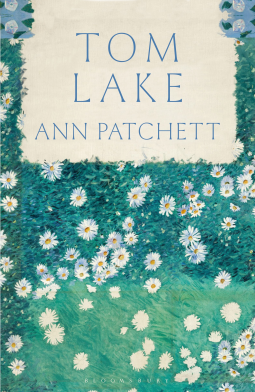
Tom Lake by Ann Patchett

The title of Ann Patchett’s latest novel, Tom Lake, doesn’t refer to a person, as I’d assumed before I started reading, but to a place – a town in Michigan with a theatre overlooking the lake. One summer in the 1980s, a theatrical group gather at Tom Lake to rehearse the Thornton Wilder play, Our Town. The role of Emily has gone to Lara, a young woman who previously played that same part in a high school production. Here at Tom Lake, Lara meets and falls in love with the charismatic Peter Duke, the actor who plays her father in Our Town and who goes on to become a famous Hollywood star.

Many years later, in 2020, Lara and her husband, Joe, are living on a Michigan farm with their three adult daughters, Emily, Maisie and Nell, who have all come home to be with their parents as the Covid pandemic sweeps across the world. While they help to harvest cherries from the family orchard, the girls ask Lara to tell them about her relationship with Duke. As they listen to her story unfold, they discover things about their mother’s past that makes them reassess everything they thought they knew about her and about themselves.

I loved Ann Patchett’s last novel, The Dutch House, so I was hoping for a similar experience with this book. Sadly, that didn’t happen, although I did still find a lot to like. It’s certainly a beautifully written novel, but I just found it a bit too quiet and gentle and I never felt fully engaged with the characters the way I did with the characters in The Dutch House. I know I’m in a tiny minority, though, and I expect to see Tom Lake on many people’s ‘books of the year’ lists in December.

Although the present day sections of the book are set during the pandemic, Covid is barely mentioned at all and it’s really just a plot device to explain why the family are all together on the farm with such little contact with the outside world. This provides the perfect environment for the three daughters to pass the time listening to their mother’s story without too many distractions – and a cherry orchard does sound like a lovely place to spend the pandemic. Something else which plays a much bigger part in the novel is Thornton Wilder’s Our Town; clearly the play and, in particular, the role of Emily are very important to Lara, but as I’ve neither read nor seen it I didn’t really understand the significance. It seems to be a play that is much better known and more widely studied in America than it is here in the UK and I wish I’d had at least some familiarity with it before I started this book. That’s possibly one of the things that prevented me from enjoying it as much as I’d hoped.

I do like Patchett’s writing, so even though this particular book wasn’t a huge success with me, I’m still looking forward to trying some of her earlier work.

Thanks to Bloomsbury Publishing Plc (UK & ANZ) for providing a copy of this book for review via NetGalley.

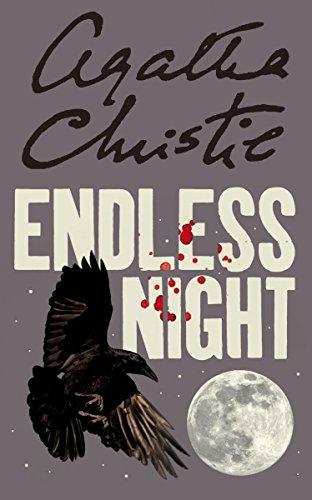
Endless Night by Agatha Christie

There are still a few weeks left in this year’s Read Christie 2023 challenge, but plans for Read Christie 2024 have already been announced! You can find out more and register for full details on the Agatha Christie website here. You don’t need to commit to reading a book every month – I just join in with any that appeal to me or that I haven’t read before.

Back to the 2023 challenge and the prompt for November is a motive: greed. Endless Night, the suggested title for this month, was first published in 1967 and is a standalone novel, not featuring Poirot, Miss Marple or any of Christie’s other famous detectives. It’s also one of only a small number of her novels to be written in the first person (apart from some of the Poirots, which are narrated by Captain Hastings). In fact, it’s really not a typical Christie novel in any way, but I still enjoyed it and apparently it was one of Agatha’s own favourites.

Many of Christie’s novels have titles inspired by nursery rhymes, poems or other works of literature. This one is taken from William Blake’s Auguries of Innocence:

“Every Night and every Morn
Some to Misery are born.
Every Morn and every Night
Some are born to Sweet Delight.
Some are born to Sweet Delight,
Some are born to Endless Night.”

Michael Rogers, our narrator, is an attractive, charming young man but one who has been jumping from one job to another with no real aim in life. When he stumbles upon an old house called The Towers – or ‘Gipsy’s Acre’ as it is known locally – and sees that it’s for sale, he dreams of buying it and settling down there, if only he could afford it. As luck would have it, he meets and falls in love with Ellie, a young American heiress, and soon the two are married and have bought the property, knocking down the old house to build a new one designed by their architect friend, Rudolf Santonix.

Unfortunately, it seems that Michael and Ellie are not destined to be happy in their new home. Gipsy’s Acre has a bad reputation and they are told by an old fortune teller, Esther Lee, that the land is cursed. As Mrs Lee continues to appear, issuing more warnings, Michael wonders whether there really is a curse or if the old woman is trying to drive them away. Then there’s Ellie’s friend and companion, Greta Andersen, who moves in with them when Ellie injures her ankle. Ellie is very close to Greta, but Michael complains that she’s too controlling and has too much influence over his wife.

Christie continues to build tension and suspense in this way until a murder eventually takes place, late in the book. With no detective to investigate the crime and with only Michael’s impression of the other characters to base our opinions on, it’s a difficult mystery to solve. I was convinced I knew who the murderer was, but I wasn’t even close and was completely taken by surprise when the truth was revealed. Although I’m not planning to do it at the moment, I think it would be fascinating to read it again and see how I managed to miss the clues entirely.

I don’t think this ranks as one of my absolute favourites by Christie because I did find it a bit slow in the middle, but that unexpected ending made up for it. I also think it’s one of the most atmospheric of her books, with a real sense of unease and foreboding. I’m not sure yet whether I’ll be able to fit next month’s Read Christie book into my December reading, but I’m definitely signing up again for 2024!

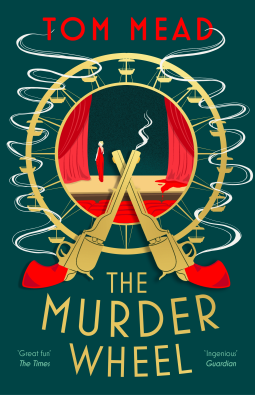
The Murder Wheel by Tom Mead

This is the second book in Tom Mead’s Joseph Spector mystery series, following last year’s wonderful Death and the Conjuror. If you haven’t read the first book yet and want to start with this one it won’t be a problem as the two deal with standalone mysteries.

The Murder Wheel begins in London in 1938 with lawyer Edmund Ibbs visiting a client, Carla Dean, in Holloway Prison. Carla is awaiting trial for the murder of her husband while they were riding on a Ferris Wheel together at the fair. As the only other person in the carriage when a shot was fired at close range – and with her fingerprints all over the alleged murder weapon – suspicion has naturally fallen on Carla. Ibbs’ job is to prove that she is innocent, but it’s going to be a difficult task!

When he’s not investigating crimes, Edmund Ibbs is pursuing a secondary career as an amateur magician and has just received a copy of a highly controversial new book, The Master of Manipulation, which promises to give away all the secrets of the art of magic. After his visit to Carla in prison, Ibbs heads for the Pomegranate Theatre to watch a performance by the great illusionist, Professor Paolini. When another suspicious death occurs during the magic show, Ibbs finds himself in the wrong place at the wrong time and discovers that he is now a suspect in another murder case! Are the crimes connected? Luckily, retired magician Joseph Spector is on hand to solve the mystery.

The Murder Wheel is another entertaining novel, but I didn’t enjoy it quite as much as the first book, mainly because I found it so complicated. There are eventually three separate seemingly impossible crimes to solve and I struggled to keep track of all the different threads of the story. There’s a lot of focus on the murder methods and the intricacies of how each one was committed, and although the solutions do all make sense, I could never have worked them out; I completely failed Mead’s ‘challenge to the reader’ near the end of the book, even though we’re told that the clues have all been provided in the text (and when the solutions are finally revealed, there are footnotes linking back to where each clue first appears).

I do love the partnership between Joseph Spector and Inspector Flint of Scotland Yard; they work together so well because one of them is using traditional methods of detecting such as questioning suspects and searching for evidence, while the other is more concerned with how his knowledge of illusions and sleight of hand can show how the crime was carried out. Magic plays a bigger part in this book than it did in the first one and I enjoyed that aspect of the story; it was interesting to get some insights into the backstage preparations for a magic show and how some of the tricks are performed, although I can see why some of the characters were unhappy with the author of The Master of Manipulation revealing all their secrets!

Tom Mead is a fan of Golden Age detective novels, particularly of the ‘locked room’ or ‘impossible crime’ types, and I think he does a good job overall of capturing the feel of a 1930s mystery – although with this book, I never felt that I really was reading a 1930s mystery, the way I did with the first one. I’m not sure exactly what was different, but that’s another reason why I preferred Death and the Conjuror. Still, I will probably read the third book in this series, assuming there’s going to be one!

Thanks to Head of Zeus for providing a copy of this book for review via NetGalley.

This is book 48/50 for the 2023 Historical Fiction Reading Challenge.
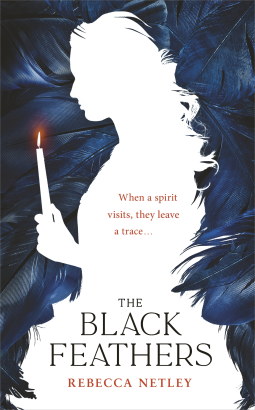
The Black Feathers by Rebecca Netley

The Black Feathers is an eerie Gothic novel, a perfect book to curl up with indoors on a cold, dark night.

It’s 1852 and Edward Stonehouse is returning to Guardbridge, his family estate on the Yorkshire Moors, bringing with him his second wife, Annie, and their baby boy, John. The couple have been married for a year, but this is Annie’s first visit to the house and she is full of apprehension, having been warned by a friend that Guardbridge has a reputation as ‘a place where bad things happen’.

As Annie begins to explore the narrow hallways and dimly-lit staircases of her new home, she finds traces everywhere of Edward’s first wife, Evie, and their young son, Jacob. She longs to know what happened to them, but Edward has made it clear that the subject is not to be discussed, so she turns instead to the other inhabitants of the house – Edward’s sister, Iris, and her old nurse, Mrs North. But here Annie only finds yet more mysteries. Can Iris really communicate with the dead, as she claims, and why does she refuse to venture outside the walls of Guardbridge? And what are the black feathers appearing around the house? Is it true that they mark the spot where a ghostly presence has visited?

The Black Feathers has some obvious similarities with Daphne du Maurier’s Rebecca, as well as a setting reminiscent of Wuthering Heights, but there are enough original elements to make it an enjoyable read in its own right and not too derivative of older classics. I found Annie a likeable character, but Iris intrigued me more, with her passion for spiritualism, interest in taxidermy and the agoraphobia that has kept her indoors for so many years. I wanted to know what had happened to make into the person she became, and although we do eventually find out, Netley keeps us wondering before beginning to reveal the truth. Edward is equally mysterious – seen through Annie’s eyes, he is distant and aloof, a man she has married through necessity and hasn’t yet learned to trust. When we see things from his sister’s perspective, there are hints that he could be quite a different man to the one Annie thinks she has married, but again, we have to wait to find out what sort of person Edward really is and what happened to his first wife and child.

The novel is atmospheric and creepy in places, particularly when Annie begins to see some ghostly apparitions, but I didn’t find it too frightening, which is good as I don’t want to be terrified when I’m reading at bedtime! I felt that the final few chapters let the book down slightly – the unravelling of the house’s secrets involves too much exposition and long stretches of dialogue – but the final twist is clever and unexpected. Rebecca Netley has written another ghost story, The Whistling, which I haven’t read but would like to, having enjoyed this one.

Thanks to Michael Joseph for providing a copy of this book for review via NetGalley.

This is book 47/50 for the 2023 Historical Fiction Reading Challenge.
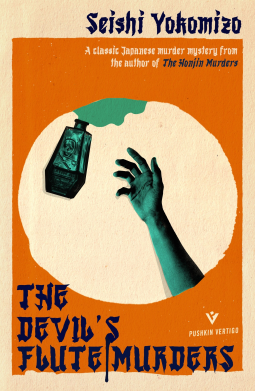
The Devil’s Flute Murders by Seishi Yokomizo (tr. Jim Rion)

The Devil’s Flute Murders, first published in Japanese in 1953, is the fifth of Seishi Yokomizo’s detective novels to be made available in new English translations by Pushkin Press. I’ve now read all five of them and enjoyed some more than others; I think this is one of the best, along with The Inugami Curse and The Honjin Murders.

In this book, set in 1947, Yokomizo’s dishevelled, nervous, stammering detective, Kosuke Kindaichi, is approached by a young woman who wants him to investigate the disappearance of her father, Hidesuke Tsubaki. Tsubaki, who had been a viscount until the recent abolition of the Japanese aristocracy, was found dead in the woods several weeks after leaving his family home, but although his daughter Mineko was the one to identify the body, she now has reason to believe he isn’t dead at all. There have been sightings of a man closely resembling Tsubaki in the grounds of the family estate and sounds of the haunting flute playing for which he was famous in his lifetime.

That evening, Kindaichi is invited to a séance at the Tsubaki home, which has been arranged by the viscount’s widow in the hope of discovering whether her husband is alive or dead. At the end of the event, a recording of Tsubaki’s final composition, The Devil Comes and Plays His Flute, begins to play by itself – and next morning, Kindaichi hears the news that another family member has been found dead in a locked room during the night. Who is responsible for the murder? Is the viscount’s ghost really haunting the family estate? And what is the meaning of the strange symbol found at the scene of the crime?

Yokomizo’s plots are always clever and fascinating and don’t rely quite as heavily on complex puzzle-solving as some of the books I’ve read by other Japanese classic crime authors. Understanding the relationships between the characters, their family secrets and their personalities and motives is just as important as working out how the crimes were committed. I guessed who the culprit was but didn’t know why they did it – I’m not sure if it would have been possible to know until the backstory of each character was revealed, but maybe I missed some clues.

Something else I like about this series is the insight the books offer into life in Japan during the post-WWII years. In The Devil’s Flute Murders the shadow cast by the war is particularly strong. There are mentions of food shortages, problems with electricity supplies and overcrowded, unreliable public transport. The new constitution drafted by the Allies during the occupation of Japan is the reason why Tsubaki and other members of the nobility have lost their titles, while bombed out houses and damage from fire has led to Tsubaki’s extended family all coming to live on the former viscount’s estate, bringing them together in one place for the events of the novel to play out.

This is the first book in the series to be translated by Jim Rion (the others have been translated by Louise Heal Kawai, Bryan Karetnyk and Yumiko Yamazaki). I think all of the translators have done a good job and I haven’t noticed any real differences in quality or readability between the different translations. My only problem with this one came when Kindaichi’s investigations take him from the Tsubaki home in Tokyo to Awaji Island near Kobe in the west and I found the way Rion chooses to write the western accent slightly odd and jarring. Of course, I appreciate how difficult it must be to capture nuances of accent and dialect in a translation!

I’m already looking forward to the next Kindaichi mystery, The Little Sparrow Murders, which is due to be published next May and sounds just as intriguing as the others.

Thanks to Pushkin Vertigo for providing a copy of this book for review via NetGalley.

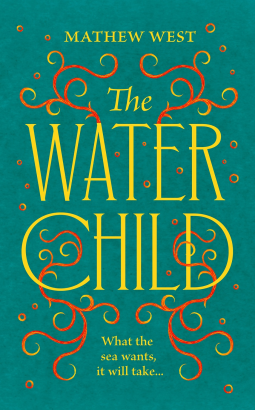
The Water Child by Mathew West

I enjoyed Mathew West’s first novel, The House of Footsteps, an eerie ghost story set in the 1920s, so I was looking forward to reading his new book, The Water Child. It’s quite different, in both setting and tone, but overall I liked this one as well.

The Water Child is set in Portugal in 1754. Cecilia Lamb is anxiously awaiting the return of her husband John, a Scottish sea captain, who has been away on his latest voyage for much longer than expected. It seems likely that the ship has been wrecked and John is dead, but Cecilia hasn’t given up hope. She spends her days wandering the docks, staring out to sea, certain that her husband is still out there somewhere.

As a young woman alone in an unfamiliar country, this is a difficult time for Cecilia and she struggles to come to terms with John’s absence, beginning to have visions, to hear voices and to suffer from a mysterious sickness. Until she knows for certain that her husband won’t come back, she is unable to mourn or to make arrangements to return to her own family in England – and even if he does come back, will he still be the same person he was when he went away?

Mathew West writes beautifully and creates an almost hypnotic atmosphere as Cecilia moves from one day to the next as if in a dream, watching and waiting, trapped in time until she receives some definite news and can start to move forward. Despite the long absence of her husband (and I’m not going to tell you whether he ever reappears or not), Cecilia does form other relationships – with her maid, Rosalie, and with some other women who understand what it’s like to be the wife of a sailor, while at the same time not fully understanding what is going on inside Cecilia’s mind. West’s previous book had much stronger supernatural elements, but in this one they’re a lot more subtle and it’s open to interpretation whether you think the things Cecilia sees and hears have paranormal explanations or more practical ones.

There are some lovely and vivid descriptions of 1750s Portugal, so I was intrigued by Mathew West’s comments at the end of the book that the Portugal he describes probably never existed and owes as much to fantasy as reality, although he also says that he carried out a lot of research into certain details. I don’t have much knowledge of Portugal in that period (the only other book I’ve read with the same setting is Linda Holeman’s novel, The Devil on Her Tongue), so I would have been interested to hear more about what was real and what was fictional.

There’s one more thing I want to mention; I don’t usually give trigger warnings for books, but there is a brief scene of animal cruelty towards the end of the book which doesn’t really feel necessary and I’m sure the author could have found another way to illustrate the cruelty of the person involved. Otherwise, The Water Child is a dark, unsettling and fascinating novel, slow to begin but picking up pace towards the end. I’ll be interested to see what setting Mathew West chooses next, having written two such different books so far.

Thanks to HarperNorth for providing a copy of this book for review via NetGalley.

This is book 46/50 for the 2023 Historical Fiction Reading Challenge.