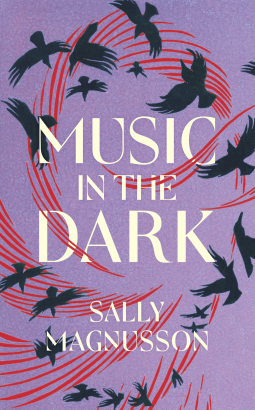
Music in the Dark by Sally Magnusson

This is the third novel by Scottish author Sally Magnusson and although I had a few problems with her first two – The Sealwoman’s Gift, the story of an Icelandic woman sold into slavery in Algeria, and The Ninth Child, about the construction of the Loch Katrine Waterworks – I still wanted to read this one because it sounded so interesting.

It begins in 1884 in a tenement in Rutherglen, a town near Glasgow, where the widowed Jamesina Bain is taking in a new lodger. The lodger is a man, newly arrived from America, where he has lived for many years. At first he has no idea who the Widow Bain is, but as he and Jamesina spend more time together, they discover that they have a shared past – they both lived through the forced eviction of Greenyards in Strathcarron.

The eviction was part of the Highland Clearances, the period when landowners in Scotland removed tenants from their estates so the land could be used for more profitable purposes – which, in the case of Greenyards, meant sheep farming. The clearances of Greenyards in 1854 and nearby Glencalvie a few years earlier, were particularly shocking, for reasons I won’t go into here as the novel will probably have more impact if you don’t already know what happened.

Sally Magnusson doesn’t delve too deeply into the politics surrounding the clearances or the reasons behind them – although Jamesina and her friends believe it was due to the Celtic people being considered inferior – and she acknowledges in her author’s note that it’s a very complex subject. Instead, she concentrates on exploring the long-term effects of the clearances, physically, emotionally and mentally, on the evicted people.

The novel is written from the perspectives of both Jamesina and her lodger, moving between the two as well as jumping backwards and forwards in time between 1884 and 1854. This structure is ultimately quite rewarding as things do eventually fall into place and we come to understand what happened during the Greenyards eviction and the sequence of events that sent Jamesina to Rutherglen and her lodger to America. However, it also means that the first half of the novel is slightly confusing and lacks focus, something that isn’t helped by the style in which Jamesina’s sections are written – often descending into a jumble of thoughts, word association and stream of consciousness. There was a reason for that style, which I understood later on, but it didn’t make this an easy book for me to get into.

I found this book very evocative of time and place, whether I was reading about Jamesina’s childhood in Greenyards or her life in the Rutherglen tenement, taking in laundry to earn a living and sleeping in the ‘kitchen bed’ to keep the bedroom available for lodgers. Magnusson also incorporates lots of other interesting issues, such as the healing power of music, the devastating impact of dementia and the joys of education. I found it very sad that the adult Jamesina, who had been such a bright child and was being taught Latin by the local minister, questions the point in being educated if you’re only going to be leading a life of drudgery.

I have deliberately not provided the name of Jamesina’s lodger, as we don’t immediately know who he is or how he fits into her life and I thought I would leave you to make that discovery for yourself. This is a fascinating novel in many ways and I did enjoy it once I got past the halfway point, which is why I don’t like abandoning books too early!

Thanks to John Murray Press for providing a copy of this book for review via NetGalley.

This is book 17/50 read for the 2023 Historical Fiction Reading Challenge.

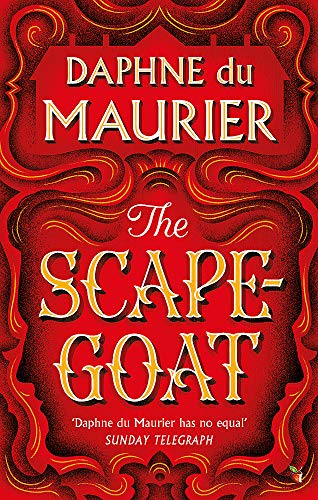
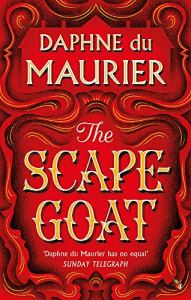
The Scapegoat by Daphne du Maurier (re-read) – #DDMReadingWeek

This week HeavenAli is hosting another of her Daphne du Maurier Reading Weeks, assisted by Liz who is collecting the links this year. As you may know, du Maurier is one of my favourite authors; I have now read all of her novels and short story collections at least once and some of her non-fiction (I attempted to rank them all in this post, just for fun). For this year’s Reading Week I’ve decided to re-read her 1957 novel The Scapegoat, which is one I particularly loved when I first read it back in 2011 (here’s my original review). I’ve wanted to read it again ever since, not just because I enjoyed it so much, but also because I formed a theory about what was actually happening in the book and I was curious to see whether I would feel the same way on a second read. I’ll discuss this later in this post, but don’t worry – I’ll include a spoiler warning for those of you who haven’t read the book yet.

The novel opens in Le Mans where our narrator, John, an English academic, is on holiday. When he meets a man who looks and sounds just like him at the station, he feels an instant connection with him and after spending the evening drinking and talking, he accompanies the other man back to his hotel room. He learns that his new friend is a French count, Jean de Gué, and that they have something else in common – they are both depressed and dissatisfied with life, John because he is lonely and has no family, Jean because he has a large family, all of whom are causing him problems. As the night wears on, John falls into a drunken stupor and when he wakes up the next day his companion has disappeared, taking all of John’s clothes and possessions with him and leaving his own in their place.

When Jean’s chauffeur arrives, ready to drive him home to his château in the French countryside, John begins to protest, explaining that there has been a mistake – but then, on an impulse, he decides to take this opportunity to leave his old life behind for a while and continue to impersonate Jean de Gué. On reaching Jean’s château, John finds that nobody suspects he is an impostor and he is able to take Jean’s place within the family. He also begins to understand why Jean had said his family life was so difficult – there are all sorts of tensions and conflicts between various members of the family and to make things worse, the de Gué glassworks is facing financial ruin. It’s up to John to put things right, if he can.

I enjoyed this read of The Scapegoat as much as my first. If you take everything at face value, of course, it requires a huge suspension of disbelief. Not only do John and Jean look completely identical, so much so that not even Jean’s mother, wife or daughter guess the truth, but they also sound exactly the same (and John’s French is so fluent that nobody suspects a thing). Is this likely? Of course not, but it provides du Maurier with her starting point for this fascinating novel and it’s perfectly possible to just accept the plot for what it is and enjoy the story. After all, it’s no more ridiculous than the book that apparently inspired this one – Anthony Hope’s The Prisoner of Zenda. And as always with a du Maurier novel, you can expect beautiful descriptions, a strong sense of place and interesting, if not necessarily very likeable, characters.

*My Scapegoat theory (includes spoilers)*

When I first read this book in 2011, I found myself beginning to wonder – what if John and Jean weren’t doubles after all? What if there was only one man, with multiple personalities (now known as dissociative identity disorder)? It makes so much more sense to me that Jean, feeling that he has made a mess of his life, has created a new identity to deal with the problems he has caused for himself. At the end of the book, when everything has been resolved, he has no further need of John and although it’s not clear exactly how much Jean has learned and how he will manage his relationships and business affairs in the future, he feels that he can now cope on his own. He tells John that he has emptied John’s bank account, sold his flat and furniture in London and resigned John’s position as university lecturer – in other words, destroyed John altogether, because John never really existed and is no longer necessary.

After finishing the book on that first occasion, I remember looking at other reviews and being surprised that almost nobody else had mentioned that any of this had occurred to them too. I accepted that I must have misunderstood the whole book; however, the Daphne du Maurier website quotes a letter written by Daphne herself regarding The Scapegoat which seems to support my interpretation. Her reference to ‘that man’s nature’ doesn’t really make sense to me if there were actually two separate men in the book.

“Every one of us has his, or her, dark side. Which is to overcome the other? This is the purpose of the book. And it ends, as you know, with the problem unsolved, except that the suggestion there, when I finished it, was that the two sides of that man’s nature had to fuse together to give birth to a third, well balanced.”

On reading the book for a second time, I have been paying closer attention and looking for subtle clues and hints. There are just three main obstacles in the way of my theory. First, there’s Jean’s dog, César, who is hostile towards John and the only member of the household who seems to sense that something is wrong. However, when Jean and John meet up again at the end of the book, Jean explains that John hasn’t been whistling to César in the correct way and this is why he hasn’t been obeying his commands. Also, during a scene in a hospital, we are told that Jean is blood group O and John is blood group A – but as it’s John himself who tells us this I don’t think it can be taken as conclusive evidence of anything. The only thing I can’t manage to explain away is that when Jean calls the château to inform John that he’s coming home, it’s a servant who answers the phone and tells John that someone wants to speak to him. If it wasn’t for this one moment, I would have been nearly convinced that I was right!

I did find plenty of things to support my theory, including the fact that, when speaking to Jean’s family for the first time, John finds that the ‘tu‘ form of French comes naturally to him, although he’s never used it before; the way John muses that Jean’s ‘inner substance was part of my nature, part of my secret self’; and in particular, the whole conversation he has with Jean’s mistress, Béla, in Chapter 12.

‘You said something a while ago about taking stock of oneself,’ I said. ‘Perhaps that’s just what I’ve been doing, over a period of time, and it came to a head that evening in Le Mans. The self I knew had failed. The only way to escape responsibility for failure was to become someone else. Let another personality take charge.’

‘The other Jean de Gué,’ she said, ‘the one who’s been hidden for so long beneath the surface gaiety and charm, I’ve often wondered if he existed. If he’s going to emerge, he’d better do so now. Time’s getting on.’

What do you think?

*End of spoilers*

Overall, after finishing my second read of the book, I think probably the way everyone else has interpreted it is the correct way, but du Maurier does like to be ambiguous and I enjoyed looking below the surface and dissecting the different layers! It really is a fascinating novel and still one of my favourites by du Maurier. Now I just need to find time to revisit some of her others!
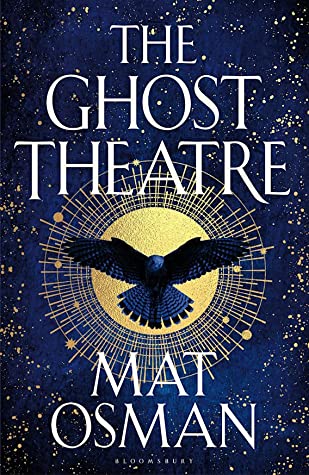
The Ghost Theatre by Mat Osman

The Ghost Theatre, Mat Osman’s second novel, is the story of two young people who meet on the rooftops of Elizabethan London. One of them is Shay, a teenage girl who dresses as a boy and belongs to a community of bird-worshippers. As the novel opens, Shay has released some caged birds from captivity in a shop and is being chased by the angry owner; with the instincts of a bird herself, she flees upwards to the roof and here she has her first encounter with Nonesuch. Taking his name from Henry VIII’s grand palace, Nonesuch claims to be the abducted son of a great lord, forced into performing at the Blackfriars Theatre, dressing as a woman to play leading female roles such as Cleopatra.

As Shay begins to fall in love with Nonesuch, she helps him to create the Ghost Theatre, a troupe of young actors who stage special plays in secret locations all over London. But it is another talent of Shay’s – her ability to tell fortunes – that brings her to the attention of Queen Elizabeth I and leads her into danger.

Mat Osman is the brother of the author and TV presenter Richard Osman and also the bassist in the British rock band Suede. I haven’t read his first novel, The Ruins, and had no idea what to expect from this one, but I can tell you it’s a very unusual book – not purely historical fiction but not quite fantasy either. It’s set in a city we can recognise as the London of the late Elizabethan period – there are outbreaks of plague, attempted rebellions, references to popular Elizabethan sports such as cock-fighting and bear-baiting – but there are also some imagined elements. As far as I know there was no community of Aviscultans living in Birdland and predicting the murmurations of starlings!

I have to be honest and say that this book wasn’t really for me. Perhaps because of the blend of alternate history with real history, it didn’t have the strong period feel I prefer – the dialogue was too modern, for example. I also found it quite difficult to focus on the plot; the imagery and descriptions were lovely but slightly distracting and sometimes I read several pages without really absorbing any of the words. If I had to compare this book to anything, it would be Megan Campisi’s The Sin Eater, another novel set in an alternate Elizabethan world and which I had some similar problems with. Incidentally, there is a sin eater in Osman’s novel too, although only mentioned in passing!

It would seem that Osman’s own love of music has influenced this story, with a lot of emphasis placed on the power of song, performing on stage and entertaining an audience. The novel as a whole is imaginative, creative, dreamlike and completely original. I wish I had been able to enjoy it more, but the right reader will love it.

Thanks to Bloomsbury Publishing for providing a copy of this book for review via NetGalley.

This is book 16/50 read for the 2023 Historical Fiction Reading Challenge.

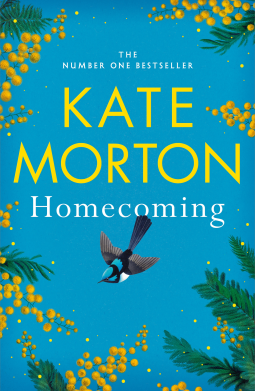
Homecoming by Kate Morton

‘People who grow up in old houses come to understand that buildings have characters. That they have memories and secrets to tell. One must merely learn to listen, and then to comprehend, as with any language.’

The Christmas Eve of 1959 is a hot summer’s day in South Australia. Isabel Turner takes her four children out into the grounds of their Adelaide Hills home for a picnic – and this is where they are found later that day by a man delivering groceries. At first he thinks they are asleep in the sun but, sensing an unnatural stillness, he comes closer and makes the shocking discovery that the Turners are all dead. The local police are convinced that Isabel, who is believed to have been depressed, must have poisoned herself and the children, but the case is never fully solved and becomes the subject of a true crime book, As If They Were Asleep, written by American journalist Daniel Miller.

Almost sixty years later, in 2018, Jess Turner-Bridges is living in London when she receives a call from a hospital in Sydney informing her that her beloved grandmother, Nora, has had a fall and is in a serious condition. Jess hasn’t been back to Australia for years, but her grandmother is the person who raised her when her own mother was unable to, so she leaves for Sydney immediately to be by Nora’s side. Alone in Nora’s house, Jess discovers Daniel Miller’s book in her grandmother’s bedroom and is drawn into the story of the Turner Family Tragedy. Having been unaware until now of her own connection with this tragic incident, Jess is shocked by what she reads, but now that Nora is dying it seems that her chance to find out the truth could be slipping away.

Homecoming, like the other books I’ve read by Australian author Kate Morton, is deeply layered, containing stories within stories, multiple viewpoints and alternating timelines. It’s a long novel and I felt there were things that could probably have been left out without affecting the story too much – Jess’s life in London at the beginning and the backgrounds of some of the minor characters, for example – but otherwise I was completely gripped and read it much more quickly than I would usually read such a long book.

I loved the descriptions of rural Australia and the portrayal of 1950s Tambilla, the small town where the story takes place. As the title suggests, the theme of ‘homecoming’ plays an important part in the story: what it’s like to come home after a long absence and the idea of ‘home’ being not just the opposite of ‘away’ but also of ‘loneliness’. And for forty-year-old Jess, despite living in London for most of her adult life, Australia is still the place where she feels most at home.

The mystery at the heart of the novel – the deaths of Isabel Turner and her children – is not resolved until the end of the book and although the clues were all there, I didn’t pick up on them so didn’t work out what happened. However, there’s another family secret which has big implications for Jess and I found that one very easy to guess, which took away some of the fun. Maybe I’ve just read too many books like this one, but I thought it was very obvious! I did very much enjoy reading Daniel Miller’s As If They Were Asleep (not a real book, of course) which is reproduced in full, a few chapters here and there. It sheds some light on both mysteries, as well as allowing us to see the Turners and their friends and neighbours from a different perspective.

I do wonder whether this book might have worked just as well as a straightforward crime novel set in the 1950s, without the additional family secrets and the Jess and Nora storylines, but I know that’s not what Kate Morton does and probably not what her readers would expect from her! Anyway, apart from guessing the twist too soon, I did love this book and still have one or two of her earlier ones to look forward to.

Thanks to Pan Macmillan for providing a copy of this book for review via NetGalley.

This is book 15/50 read for the 2023 Historical Fiction Reading Challenge.

Prize Women by Caroline Lea

Caroline Lea chooses such interesting subjects and settings for her novels. The first one I read, The Glass Woman, was a Gothic novel set in 17th century Iceland, and the second, The Metal Heart, explored the building of a chapel in the Orkney Islands by Italian prisoners of war. In her latest novel, Prize Women, she takes us to Canada in the early 20th century and introduces us to two women who are taking part in a very unusual contest: the Great Stork Derby.

When Canadian millionaire Charles Vance Millar dies in 1926, he leaves behind a very controversial will. He bequeaths shares in a brewery to a group of teetotal ministers, a house in Jamaica to three men who hate each other, jockey club stocks to anti-horse racing campaigners – and in the strangest bequest of all, he leaves a large sum of money to the Toronto woman who gives birth to the most children in a ten year period.

Lily di Marco is trapped in an unhappy marriage so when her town is hit by an earthquake, she sees a chance to escape and flees to Toronto with her young son. Arriving in the city tired and homeless, Lily meets Mae Thebault, the wife of a wealthy factory owner, who agrees to let Lily stay with them in return for helping to take care of the Thebaults’ five children. Despite their differences in background and social status, Lily and Mae quickly become close friends – but then comes the Wall Street Crash and the start of the Great Depression.

By this point Lily already has several babies who will count towards the Great Stork Derby and decides to enter the contest in the hope of winning the money and improving the lives of herself and her children. But the Thebaults’ financial situation has also changed and Mae finds herself in desperate need of money too. Soon the former best friends are competing against each other, but with the outcome due to be decided by a jury, which of the women – if either – will be declared the winner?

Lily’s story is very moving and often heartbreaking. It’s so sad to see the way she is treated by her violent, alcoholic husband, the racism and discrimination she faces due to her Italian background, the squalid, impoverished surroundings she lives in and the impact all of this has on the health and wellbeing of her children. I was in tears several times, so be prepared – this is not exactly a cheerful, uplifting read! Mae also has obstacles to overcome and suffers some personal traumas, but her story didn’t affect me the way Lily’s did and the way she behaved during the later stages of the contest annoyed me, even while I understood her reasons. Maybe because the two women end up in direct competition with each other, it makes it difficult to side with both of them at the same time.

The Great Stork Derby itself – something that really happened, by the way – is a cruel and irresponsible concept in many ways, but even more cruel were the modifications made to the will by the courts, stating that children who were stillborn or born outside of wedlock wouldn’t count. Also, there was no consideration given to the effect on women’s bodies of so many pregnancies in a short space of time, or how poor families would afford to feed so many children if they didn’t win the prize money. Naturally, the contest received a lot of media attention at the time and also caused a lot of debate around contraception and women’s rights.

I enjoyed this book, despite the sadness, and I enjoyed getting to know Lily and Mae. However, there was one aspect of their storyline that I found unconvincing and slightly contrived; it wasn’t enough to spoil the book for me, but it was the only thing I didn’t like in this otherwise excellent novel.

Thanks to Michael Joseph for providing a copy of this book for review via NetGalley.

This is book 14/50 read for the 2023 Historical Fiction Reading Challenge.

Murder is Easy by Agatha Christie

April’s theme for the Read Christie 2023 challenge is poison, but I have read all of the suggested titles on the official challenge page, some quite recently. As I missed taking part last month, I decided to read the book I had planned to read in March instead – Christie’s 1939 novel Murder is Easy. There’s a new BBC adaptation coming later this year and I always prefer to read before watching, if possible!

Murder is Easy is one of the Christie novels that stars neither of her most famous detectives, Poirot or Miss Marple – although it does feature another of her recurring characters, Superintendent Battle. However, even he doesn’t appear until very near the end and plays no part in actually solving the mystery. Instead, almost the entire novel is written from the perspective of Luke Fitzwilliam, a retired police officer and amateur detective.

At the beginning of the novel, Luke has just returned to England from India and is taking a train to London, where he finds himself sharing a carriage with an old lady who introduces herself as Miss Pinkerton. She confides in him that she is on her way to Scotland Yard to report a serial killer in her village. Miss Pinkerton believes that this person – whom she doesn’t name – has murdered at least three people already and has chosen as their next victim the village doctor, Dr Humbleby. Luke assumes she has an overactive imagination, but the next day he reads in the newspaper that a Miss Pinkerton has been hit by a car and killed crossing the road outside Scotland Yard – and when news of the death of Dr Humbleby in the village of Wychwood-under-Ashe follows, he becomes convinced that she was telling the truth after all.

Determined to find out more, Luke heads for Wychwood, where he stays with a friend’s cousin, Bridget Conway, who happens to be engaged to the local lord of the manor. Luke is posing as an author researching a new book on witchcraft and superstition, but Bridget guesses the real reason for his visit and together they begin to investigate the recent deaths.

I really enjoyed this book and for once I correctly identified the murderer, though more through instinct than because I had spotted any particular clue. There are plenty of suspects ranging from the solicitor Mr Abbot and the late Dr Humbleby’s younger partner, Dr Thomas, to the widower Major Horton and the antiques dealer Mr Ellsworthy, who dabbles in black magic. We are told that the village of Wychwood has connections with witchcraft and the occult, but we don’t really explore that in any depth and the setting doesn’t have quite the same eerie atmosphere as the village in Christie’s The Pale Horse.

While Miss Marple doesn’t appear in this book, I found Miss Pinkerton a very Marple-ish character – an old lady with a shrewd mind and sharp observational skills – and was sorry she was killed so early in the story. Luke himself does very little detecting – despite interviewing all of the suspects, he doesn’t arrive at the right solution until somebody else reaches it first – but I still enjoyed following the progress of his investigations. And knowing that Christie often likes to work a nursery rhyme into the text or title of her novels, I was intrigued to come across the lines “I do not like thee, Doctor Fell; The reason why I cannot tell” – the same lines that are quoted in John Dickson Carr’s The Black Spectacles, which I coincidentally read just last week!

Although I didn’t choose Murder is Easy specifically to fit this month’s Read Christie theme, I was pleased to find that poison does feature in the plot, albeit in a small way. The May prompt is ‘betrayal’, if you want to take part.

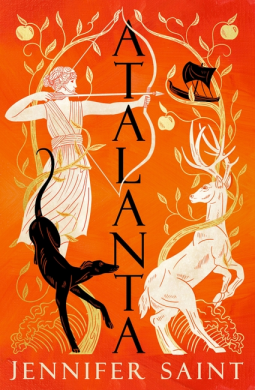
Atalanta by Jennifer Saint

Having enjoyed Jennifer Saint’s first two novels, Ariadne and Elektra, I was looking forward to reading her third one, Atalanta. Like the others, it explores the life of a woman from Greek mythology, in this case Atalanta, famous as a hunter, a runner and the only female Argonaut.

Daughter of the King of Arcadia, the baby Atalanta is left to die on a mountain because her father had hoped for a son. Rescued by bears and raised along with their cubs, Atalanta grows up under the watchful eye of Artemis, goddess of the hunt, who later takes her to live amongst the nymphs in the forest. As she reaches adulthood, it is clear that Atalanta possesses special skills in hunting, shooting and running. Elsewhere, Jason is preparing to set out aboard the Argo on his mission to obtain the Golden Fleece from the King of Colchis. With the blessing of Artemis, Atalanta joins the quest, but it won’t be easy to persuade Jason and his men to accept her as a fellow Argonaut.

I won’t go into all the details of the myth here, but Saint incorporates most of the elements that are often associated with Atalanta: the Calydonian boar hunt, her relationship with the Argonaut Meleager, the footrace and the golden apples. I say ‘often’ because, as with many Greek myths, there are different versions of Atalanta’s story. In some, she isn’t mentioned as part of the Argonaut legend at all; in others, she is the daughter of the King of Boeotia rather than Arcadia. I have read about Atalanta before, in Emily Hauser’s For the Winner, and I think overall I preferred that book which was more of a ‘reimagining’ with lots of extra little touches rather than this one which I would describe as a straightforward ‘retelling’. Still, it’s interesting to see how different authors choose to approach the same myth, what they include and leave out and how they interpret the actions and motivations of the characters.

I liked this book more than Elektra, but not as much as Ariadne. I felt that it was a bit slow to get started – the section set in the woods with the nymphs seemed to last forever – but once Atalanta joined the Argonauts on their quest it all became much more compelling. Although romance isn’t a big part of Atalanta’s story, I also enjoyed following her relationships with first Meleager and then Hippomenes and I appreciated the way Saint found a way to retell the myth from a feminist perspective without portraying all of the men in a negative light. And it’s always good to read a book about Greek mythology that doesn’t involve the Trojan War – not that it’s not interesting, but there have been so many Troy novels in the last few years I don’t think there’s really any need for any more.

This is not my favourite Jennifer Saint book, then, but it’s still an interesting read, particularly if you know nothing about Atalanta and her story. Now I’m looking forward to seeing which Greek heroine Saint will write about next.

Thanks to Headline for providing a copy of this book for review via NetGalley.