Rhododendron Pie by Margery Sharp – #DeanStreetDecember

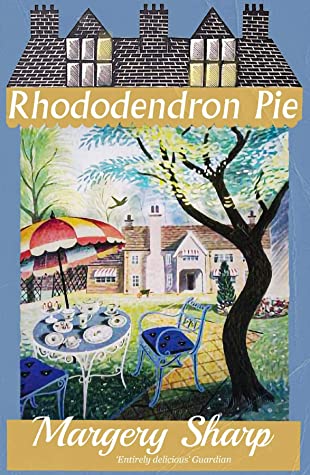
This month, Liz of Adventures in Reading, Running and Working from Home is hosting Dean Street Press December. Margery Sharp’s first novel, Rhododendron Pie, had been out of print for years and was notoriously difficult to find before being reprinted by Dean Street Press in 2021. As I’ve previously enjoyed some of her other books I decided to read it for this month’s event.

First published in 1930, Rhododendron Pie is the story of Ann Laventie, who grows up in the Sussex countryside with her parents and two older siblings. The Laventies are a wealthy and accomplished family who consider themselves intellectual, artistic and refined; their neighbours, however, see them as cold and snobbish. Ann herself doesn’t fit in with the rest of the family – unlike her brother Dick, a sculptor, and sister Elizabeth, a writer, she hasn’t yet discovered where her own talents lie and doesn’t believe herself to be special or superior in any way. The more time she spends with the Gayfords, the large, cheerful, down-to-earth family who live nearby, the more she becomes aware of how different her own home life is.

The title of the book refers to the tradition in the Laventie household of presenting the children with birthday pies filled not with fruit but with inedible flowers. Aesthetically beautifully and appreciated by the rest of the family, but not by Ann:

“Every year she has hoped against hope, and every year the lovely inedible petals have cheated her. For she has a fundamental, instinctive conviction that they are out of place. Flowers are beautiful in gardens…and in houses, of course…but in a pie you want fruit. Apples. Hot and fragrant and faintly pink, with lots of juice…and cloves. She wished there had been apples in her pie.”

Although Ann loves her family and admires their intellectual brilliance, it’s her secret longing for the ordinary, conventional things in life that drives the story forward. When Dick and Elizabeth move to London and Ann goes to visit them there, her knowledge and experience of the world widens and she becomes more aware of what she really wants and what will make her happy.

It took me a while to get into this book, but once I did it was very enjoyable. I loved Ann and found it interesting to watch the internal conflict play out between her true nature and the values and prejudices that have been instilled into her as a result of her upbringing. Although there’s some romance in the book – Ann has two very different love interests and it’s quite easy to predict which one she’ll choose! – it never really becomes the main focus and is just one aspect of the story, along with the exploration of intellectual snobbery, the class system and the difficulties of finding your place in the world.

As I’d hoped, this was a good choice for Dean Street December and I’ll see if I have time for another book before the end of the month.
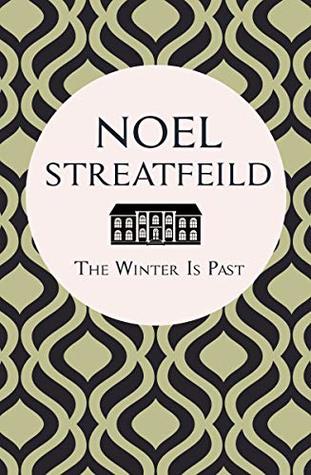
The Winter is Past by Noel Streatfeild

Noel Streatfeild is an author I loved as a child but I’ve never tried any of her adult books until now. There are plenty to choose from but I decided on her 1940 novel The Winter is Past (although here in the UK, winter is currently very much with us – we’ve had snow, ice and freezing temperatures all week, where I am!). It occurred to me after I started reading that I should probably have saved this book for next year’s 1940 Club – it’s worth keeping this one in mind if you’re wondering what to read for that event.

Anyway, The Winter is Past begins by introducing us to the Laurence family, who have lived at Levet, a beautiful English country house, since the 18th century. The current head of the family, Bill Laurence, has brought his new wife, Sara, home to Levet for the first time, but it immediately becomes clear that she’s not going to fit in. Nannie, who nursed several generations of Laurence children and is still an important part of the household, disapproves of Sara’s background as an actress – and when Bill’s upper-class mother Lydia comes to stay, Sara feels even more out of place. After suffering a miscarriage, she decides that her marriage is not working and that she needs to get away for a while, but with the outbreak of World War II she is forced to stay at Levet and make the best of things.

Another family whose lives have been thrown into turmoil by the war are the Vidlers. While Mr Vidler stays at home in London, his wife and their three young children – Rosie, Tommy and baby Herbert – are evacuated and taken in by the Laurences. Life at Levet comes as a culture shock for the working-class Vidlers, but they do their best to adapt, with varying success! When the cold weather arrives and the house is cut off from the village by snow, this disparate group of people will have to work together to get through the winter.

I loved this book; it’s very character-driven but with just enough plot to keep the story moving forward. I always find it fascinating to read books set during the war that were actually written before the war was over – it puts a very different perspective on things, when neither the characters nor the author have any idea how long it will last or how bad things are going to get. What little plot there is deals with the events of the winter of 1939-40 and although the book ends with another five years of war still to come, there’s already a sense that the lives of the characters have changed irrevocably and the way of life each of them has always known is disappearing forever.

My favourite characters were Mr and Mrs Vidler who, despite not leading a privileged life like the Laurences, possess things that money can’t buy – love, happiness and contentment – and rather than feeling inferior to Sara, Lydia and the others, look on them with sympathy and pity. The children, in the countryside for the first time, have more mixed emotions; they aren’t too pleased about the regular baths and formal mealtimes, but Tommy is captivated by the thought of making things grow in the garden and Rosie is amazed to discover that real ducks don’t wear sailor suits like Donald! It’s not surprising that Streatfeild writes about children so convincingly, considering she’s better known as a children’s author, but her adult characters are well developed too, even if some of them are difficult to like. She does come close to stereotyping with the maid Irene who has what we would probably call learning difficulties today, but that’s my only criticism and she does make up for it by giving Irene a heart of gold.

This was the perfect book to read in December, with snow on the ground outside, and I’m looking forward to reading more of Streatfeild’s adult novels next year. If you’ve read any of them let me know which ones you would recommend!

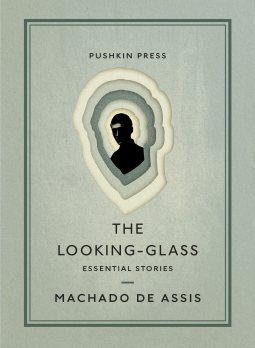
The Looking-Glass by Machado de Assis (tr. Daniel Hahn)

Thanks to the Pushkin Press Essential Stories series I’ve had the opportunity to explore the short stories of Herman Melville (a new author for me) and Fyodor Dostoevsky (an author I’d read before but only in full-length novel form). This latest collection has introduced me to another new author, the Brazilian writer Machado de Assis, who lived from 1839-1908. This book contains ten of his stories, translated from Portuguese into English by Daniel Hahn.

When trying a new author for the first time, you never really know what to expect, but since Joaquim Maria Machado de Assis (usually just referred to by his surnames) is described as one of Brazil’s greatest authors I thought he would surely be worth reading, even if the stories turned out not to be to my taste. Fortunately, I did find most of them quite enjoyable, providing lots of insights into the various sides of human nature. Although the stories were written more than a hundred years ago and on the other side of the world from me, they were still relatable because, of course, human beings aren’t really all that different, no matter where or when they lived.

The longest story in the book, which could probably be considered a novella, is The Alienist, in which Simão Bacamarte, a physician, opens an asylum in the town of Itaguaí. Bacamarte has a genuine interest in the new science of psychology and begins committing patients to the asylum so that he can study their symptoms. However, the numbers being admitted rapidly start to increase as it becomes clear that sane people are being sent there as well. Once most of the population of the town has been locked up and the others begin to rebel, Bacamarte is forced to reconsider his criteria for deciding who is sane and who is not, with surprising results!

Another story, The Stick, follows the story of Damião, a young man who escapes from a seminary and is afraid to return home because he’s convinced his father will send him back. Instead, he seeks the help of Rita, his godfather’s lover, who lets him stay in her house until the situation is resolved. Rita is a teacher of lacework and embroidery and has several young girls working for her. Damião discovers that one of them, a black slave called Lucrécia, is being badly treated and he must decide whether to intervene. I found this story interesting because Machado himself was the mixed-race grandson of freed slaves – and slavery was not abolished in Brazil until 1888.

Apart from The Canon, which describes a noun and an adjective searching for each other inside a man’s brain (too bizarre for me), I found most of the other stories intriguing in different ways. The Fortune-Teller, The Tale of the Cabriolet and Midnight Mass were some I particularly enjoyed. However, although I don’t usually include ‘trigger warnings’ in my reviews, I should mention that in The Secret Cause there are some graphic descriptions of animal cruelty which aren’t very pleasant to read!

At the end of the book, I was interested to read Daniel Hahn’s note on the translation where he explains why he deliberately tried to retain the 19th century feel of the original writing, even though this wasn’t necessarily the easiest option for a translator. I think this was the right decision – it worked for me and I found this collection a good introduction to the work of Machado de Assis.

Thanks to Pushkin Press for providing a copy of this book for review via NetGalley.

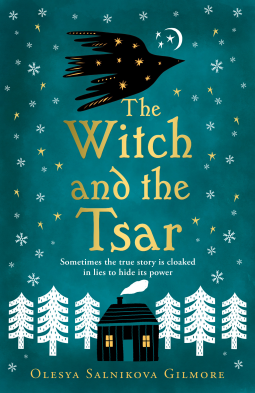
The Witch and the Tsar by Olesya Salnikova Gilmore

I was drawn to this book by the pretty cover, but also because it sounded similar to Katherine Arden’s Winternight trilogy, which I loved. Set in 16th century Russia, during the reign of Ivan the Terrible, The Witch and the Tsar is a blend of history, fantasy and folklore featuring as its heroine the legendary Baba Yaga. Unlike the traditional idea of Baba Yaga as a ferocious old witch who eats children, however, Moscow-born author Olesya Salnikova Gilmore’s portrayal is something very different.

We first meet Yaga, as she is known, living alone in a forest with her wolf Dyen, owl Noch, and Little Hen, a living hut who stands on chicken legs and has a mind of her own. Half-mortal and half-goddess, Yaga has been badly treated in the past so has chosen a life of solitude, interacting with other people only when they come and seek out her knowledge of healing and potions. She is reluctantly drawn back into society when an old friend, the Tsaritsa Anastasia – wife of Tsar Ivan IV – comes to her to ask for help. Convinced that Anastasia is being poisoned by someone at court, Yaga decides to accompany her friend on the journey back to Moscow to keep her safe.

Returning to the world from which she has hidden away for so long, Yaga is dismayed by the evil she senses all around her. Unsettled by an encounter with a former adversary, Koshey Bessmertny (usually known in Slavic myth as Koschei the Deathless), she is then introduced to Ivan Vasilyevich, the man who will later become Ivan the Terrible, and is struck by his power and volatility. When tragedy strikes the Russian court, Ivan becomes more unstable and launches a campaign of terror with his band of oprichniki burning, raiding and pillaging Russia’s towns and cities. It seems that Yaga is the only one who can stop him, but to do so she will have to learn things about herself and her family that she would prefer not to uncover.

I enjoyed some aspects of The Witch and the Tsar, but others not so much. I wasn’t sure what to think of Yaga herself. On the one hand, it’s good to see a much-maligned character given a more sympathetic interpretation; on the other, Gilmore’s Yaga has so little in common with the mythical Baba Yaga she’s really not the same character at all. Also, we are told that although she has the appearance of a young woman, she has actually lived for hundreds of years – yet she never sounds, thinks or behaves the way I would expect someone with centuries of wisdom and experience to sound, think and behave. She just feels like the young woman she appears to be.

It was interesting to see how Gilmore works characters from other Russian and Slavic myths into the story. As well as Koschei the Deathless, we meet Marya Morevna, Morozko the frost demon, the god Volos, the house spirit Kikimora and others. The fantasy/mythology element becomes very dominant in the second half of the book, more than I would have preferred, but Gilmore does a good job of tying it together with the historical storyline, showing how the actions of the gods and demons are linked to the actions of Ivan and his oprichniki. I was particularly intrigued by the character of Ivanushka, the Tsar’s son and heir; Yaga promises Anastasia she will protect him, but we know from history that his story will take a tragic turn.

I think The Witch and the Tsar is worth reading if you’re interested in Russian history and mythology, but naturally I couldn’t help comparing it to Katherine Arden’s trilogy (beginning with The Bear and the Nightingale) which I found much more enjoyable.

Thanks to HarperVoyager for providing a copy of this book for review via NetGalley.

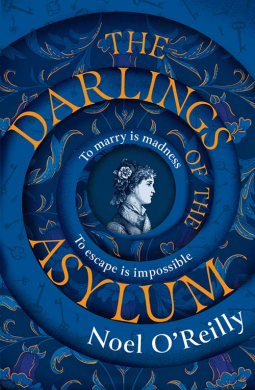
The Darlings of the Asylum by Noel O’Reilly

I have read several novels that tackle the subject of Victorian women locked away in asylums, sometimes due to depression, anxiety or ‘hysteria’, but often simply because they were an inconvenience to their husbands or families. The Asylum by John Harwood, The Crow Garden by Alison Littlewood and The Girl Who Couldn’t Read by John Harding are a few examples and I was keen to see how Noel O’Reilly would approach the same topic in his new novel, The Darlings of the Asylum.

The story begins in Brighton in 1886 with a marriage being arranged between our narrator Violet Pring and the wealthy Felix Skipp-Borlase. Violet is fond of Felix but she knows she doesn’t love him and doesn’t want to marry him – what she really wants is to be free to pursue a career as an artist and she’s not ready to give up on her dream. The more her mother tries to push her into the marriage, the more Violet tries to resist until things finally reach a climax and a tragedy occurs. The next day, with no memory of what happened, Violet wakes up to find herself incarcerated in Hillwood Grange Lunatic Asylum.

Getting to know the other inhabitants of Hillwood Grange, Violet finds that many of them do have genuine mental health issues – although nothing to warrant the kind of treatment they are receiving in the asylum – but she has no idea why she has been sent here herself. She knows she must have done something terrible, but nobody will tell her what it was and she can barely remember her last night of freedom at all. Allowed only limited contact with family and friends and banned from drawing and painting, Violet is miserable and frightened – particularly when she discovers that the sinister Dr Rastrick may have his own reasons for wanting her in the asylum. Violet must find a way to prove that she is sane and escape from Hillwood Grange, but how can she do that when everyone around her seems to be part of a conspiracy to keep her imprisoned forever?

The Darlings of the Asylum is a fascinating novel, although quite similar to the books I’ve mentioned and others with a Victorian asylum/mental hospital element. Still, whether or not you’ve read much on this topic before, the portrayal of Violet’s plight is disturbing and at times horrifying, as she desperately tries to make herself heard and free herself from the clever and manipulative Dr Rastrick. Violet also makes an effort to befriend some of the other women in Hillwood Grange who are even less fortunate than herself and have been dismissed as insane or used as subjects for experiments rather than receiving the sort of care we would expect them to be given today.

Noel O’Reilly has written the book from Violet’s perspective and although sometimes I find that male authors don’t write in a convincing female ‘voice’ and vice versa, I thought he did a good job here. I could believe in Violet as a Victorian woman, albeit a slightly unconventional one. I was also happy with the way her story ended. It wasn’t quite what I’d expected, but better than some of the alternatives would have been! Now I’ll have to read Noel O’Reilly’s first novel, Wrecker, about shipwrecks on the Cornish coast.

Thanks to HQ for providing a copy of this book for review via NetGalley.

Book #63 read for the Historical Fiction Reading Challenge 2022.

Nights of Plague by Orhan Pamuk (tr. Ekin Oklap)

This is the first book I’ve read by Turkish author Orhan Pamuk, who won the Nobel Prize in Literature in 2006. It sounded fascinating – a murder mystery set on a fictional Mediterranean island during an outbreak of plague at the turn of the 20th century. However, it wasn’t quite what I was expecting!

It would be easy to assume that this was a book written in response to the Covid pandemic (I certainly did), but it seems that Pamuk actually started work on Nights of Plague in 2016. Obviously now that we’ve all had experience of living through a pandemic, that element of the novel has taken on new relevance, but it’s made clear that the illness described in the book is a form of bubonic plague rather than a respiratory virus like Covid, so the causes, symptoms, methods of transmission and outcomes are very different. On the other hand, there are also lots of parallels – in 1901, just like in 2020, with no vaccine available the only way to really tackle the progress of the disease is through quarantine and isolation. People protest against the restrictions, members of government break their own rules, and while the crisis brings some communities together it creates division in others.

The fictional island at the heart of all of this is Mingheria, an outpost of the Ottoman Empire with a population made up of both Turkish Muslims and Greek Christians. The governor, Sami Pasha, is doing his best to implement quarantine measures on the island but they are having little effect and he is being held back by having to wait for official orders from the Sultan in Istanbul. As the novel opens, a ship is on its way to Mingheria from Istanbul carrying the Sultan’s niece Princess Pakize, her husband Doctor Nuri, and the Royal Chemist, Bonkowski Pasha. Bonkowski’s job is to investigate the outbreak of plague, but before he is able to draw any conclusions he is murdered.

With Bonkowski Pasha dead, it’s now up to Doctor Nuri to give advice on quarantine arrangements, while also looking into the circumstances of the chemist’s murder. The Sultan, who has become a fan of Sir Arthur Conan Doyle, sends instructions that he must use ‘the methods of Sherlock Holmes’. There’s the basis of an exciting story here – yet the mystery element is virtually abandoned until much later in the novel and even when we return to it, it turns out not to be all that exciting after all. Much more time is spent describing the plague and the attempts to get the outbreak under control. With Covid in mind, I found this quite interesting to read about, but the book is written in such a factual and impersonal style it might as well have been non-fiction. There’s a reason for the dry style – we are told at the beginning that the whole book is supposed to be a history of Mingheria compiled by a modern day historian based on letters sent by Princess Pakize to her sister – but it means the book isn’t much fun to read, there’s not a lot of dialogue and there are pages and pages of exposition.

I felt that what Orhan Pamuk was really trying to do was tell the story of the final years of the Ottoman Empire through the lens of Mingheria’s plague response and the political change that follows on the island as a result. He has a lot to say about national identity, the reclaiming of the Mingherian language (almost forgotten as those who once spoke it grow old and die), the challenges of breaking away from rule by a larger power and the tensions between different religious groups who share the same small island.

So, lots of interesting ideas and themes in this book, but I can’t say that I particularly enjoyed reading it. It was far too long and slow and needed some editing, in my opinion. Ekin Oklap’s translation seemed fine – I think my problems were due to the overall style and pace of the book. I did become quite immersed in it after a while, but I was pleased to reach the end and I think a non-fiction book about the fall of the Ottoman Empire might have been a better use of my time! I don’t know whether this novel is typical of Orhan Pamuk’s work but I’m not really tempted to read any more just yet.

Thanks to Faber and Faber Ltd for providing a copy of this book for review via NetGalley.

Book #62 read for the Historical Fiction Reading Challenge 2022.

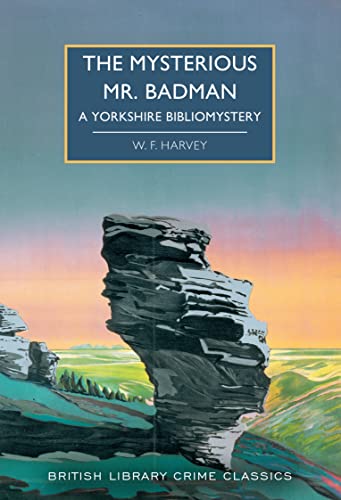
The Mysterious Mr Badman by W.F. Harvey

The British Library are doing a great job of bringing the work of obscure or long-forgotten authors back into print with their Crime Classics series and William Fryer Harvey is another. Better known for his horror stories such as The Beast with Five Fingers and August Heat, he also wrote a crime novel, The Mysterious Mr Badman, which was originally published in 1934. I was immediately drawn to this book not just by the title, but also the subtitle, A Yorkshire Bibliomystery!

As Martin Edwards points out in the introduction, this must be the only crime novel with a blanket manufacturer as the protagonist. His name is Athelstan Digby and as the novel opens he is visiting his nephew in the Yorkshire village of Keldstone. One day he offers to take charge of the village bookshop so the bookseller and his wife can go to a funeral. Digby is expecting a quiet, uneventful afternoon so he is amazed when three men separately enter the shop within the space of a few hours, all asking for a copy of the same book: Bunyan’s Life and Death of Mr Badman. Digby is unable to find this book on the shelves, but when a boy arrives at the shop later that day with a pile of old books to sell – including Mr Badman – he becomes even more suspicious. What is going on – and why is that particular book so important?

This is a short novel, so I won’t go into the plot in much more detail…except to say that it’s great fun. There are murders, incriminating letters, political conspiracies, a touch of romance and a lot of humour! With character names like Athelstan Digby, Euphemia Upstart, Olaf Wake and Kitchener Lilywhite, you can see that it’s not a book to be taken entirely seriously, but at the same time it’s a clever, interesting and well written novel and one of the most enjoyable I’ve read from the British Library Crime Classics series for a while. Just be aware that it’s more of a thriller than a conventional detective novel; the mystery is actually solved quite early in the book and the significance of Mr Badman and the identity of the villain are revealed much sooner than you would expect. The fun is in watching Digby team up with his nephew Jim Pickering and Jim’s love interest Diana Conyers to try to decide what they should do with the information they’ve obtained.

As always when I read mysteries written in this period, I was struck by not only how much more difficult some aspects of crime-solving were in those days (no internet, no DNA testing) but also how much easier other aspects were. It was far simpler to trace a particular car when there were so few of them on the roads and everyone would notice an unfamiliar one driving through their village. I really enjoyed watching Digby, Jim and Diana investigate the mystery using the methods available to them in the 1930s, even if they occasionally walk straight into traps that are quite obvious to anyone who reads a lot of Golden Age crime fiction! I also loved the Yorkshire setting, although not all of the novel is set there.

Although, as I’ve said, Harvey is better known as a horror writer, it seems that the character of Digby previously appeared in a book of short stories, The Misadventures of Athelstan Digby. I hope that one will become available as a BLCC book soon too.