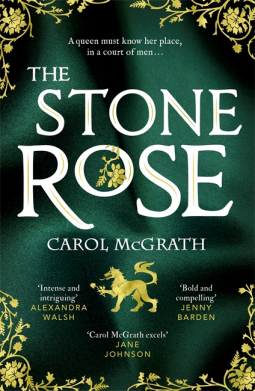
The Stone Rose by Carol McGrath

The Stone Rose is the final book in Carol McGrath’s She-Wolves Trilogy, but don’t worry if you haven’t read the first two – each one stands alone and tells the story (in fictional form) of a different medieval queen of England. In The Silken Rose we met Eleanor of Provence and in The Damask Rose Eleanor of Castile; now, in this latest novel, it’s the turn of Isabella of France. Isabella was the daughter of Philip IV of France and the wife of Edward II of England, but also a powerful and influential woman in her own right. The Stone Rose explores Isabella’s story both from her own perspective and through the eyes of Agnes, a female stonemason who designs Isabella’s tomb.

Isabella is only fifteen years old when the novel opens in 1311, and much as she tries to love her husband – at least at first – she is already becoming aware that Edward is perhaps not the best person to be ruling the country. He is too easily led by his favourites, particularly the handsome young Piers Gaveston, ignoring the advice of older, more experienced noblemen, and spends his time thatching roofs and digging ditches like a peasant rather than taking part in more courtly pursuits. Worse, he seems determined to send England into a series of battles with the Scots that nobody really has the heart for.

As the years go by, the pleasant and relatively harmless Piers is replaced by a new favourite, the scheming, ambitious Hugh Despenser the Younger, and Isabella begins to fear for her own position, especially when she starts to suspect that Edward loves Despenser more than he loves her. As tensions grow at court and across England, Isabella returns to France to visit her family – and here she meets Roger Mortimer, an English baron who has recently escaped from imprisonment in the Tower of London and shares her hatred of Hugh Despenser.

I won’t say much more about the plot, as if you’re familiar with the history you’ll already know what Isabella does next – and if you’re not, you’ll probably prefer to find out for yourself when you read the book. As far as I could tell, Carol McGrath sticks quite closely to the known facts, except where it’s necessary to use her imagination to help bring the characters to life and fill in gaps in the story or where there is some historical controversy, for example regarding the eventual fate of Edward II.

Despite Isabella’s “she-wolf” nickname (one which has also been applied to several other unpopular queens) I found her a sympathetic character here. It was sad to see her marriage gradually disintegrate as Edward spends more and more time with his favourites, falling completely under their power and refusing to listen to other points of view. I also found it interesting to read about Isabella’s interactions with the other women at court, particularly the three de Clare sisters, one of whom – Eleanor – is the wife of Hugh Despenser. Because of Isabella’s conflict with Eleanor’s husband, the two women can never be friends, but they are forced to spend long periods of time together over the years and their relationship, as you can imagine, is a very uncomfortable one.

The previous two books in this trilogy have each included a second protagonist, whose story unfolds alongside the queen’s and is given almost equal attention. In this third novel, that role falls to Agnes, the stonemason – a real historical figure who really did work on Isabella’s tomb. I was slightly disappointed that we don’t see very much of Agnes; there are only a few sections written from her point of view, with the focus very much on Isabella’s story. I understand, though, that Agnes only entered Isabella’s life in the 1350s and played no part in what came before, so maybe it would have been difficult to weave the two narratives together more closely. Still, The Stone Rose is a fascinating read and I enjoyed adding to my knowledge of Isabella, Edward II and Roger Mortimer. Now that the trilogy has come to an end I will have to try Carol McGrath’s earlier novels, while I’m waiting to see what she writes next!

Thanks to Headline for providing a copy of this book for review via NetGalley.

This post is part of the blog tour for The Stone Rose – you can see details of the other stops on the tour in the image below.

This is book 16/50 read for the Historical Fiction Reading Challenge 2022.
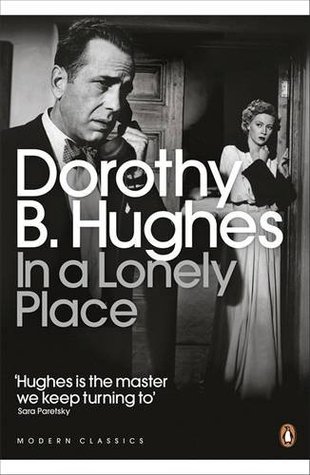
In a Lonely Place by Dorothy B. Hughes

This is the book that was chosen for me to read in the recent Classics Club Spin – a result I was very pleased with, having loved two other novels by Dorothy B. Hughes, The Expendable Man and Ride the Pink Horse (two of my books of the year in 2020 and 2021 respectively).

Originally published in 1947, In a Lonely Place is set in Los Angeles just after World War II. Dix Steele, who had served as a fighter pilot in the Air Force, is staying in an apartment belonging to an old acquaintance, Mel Terriss, who has gone to Rio for a while. Like many young men who have returned from the war, Dix has been left damaged by his experiences and is taking advantage of the peace and quiet to finish writing his new crime novel. At least, that’s what he tells people. It is quickly made obvious to the reader that the writing is a cover for something else and that Dix is actually spending his time doing something very different.

Deciding to contact a wartime friend, Brub Nicolai, who also lives in LA, Dix is surprised to learn that Brub is now working as a police detective. Brub is delighted to renew their friendship, introducing Dix to his wife, Sylvia, and telling him about the case he is investigating – a series of stranglings that have been taking place across the city. Dix is envious of Brub’s close relationship with Sylvia, which serves as a constant reminder of his own sense of loneliness and isolation. When he meets Laurel Gray, a beautiful young actress who lives in his apartment building, it seems that he has a chance to form a new relationship of his own…if Laurel can avoid becoming the strangler’s next victim.

I had high hopes for this novel and it certainly didn’t disappoint! I’ve actually found it quite a difficult book to write about because I’m not sure what would be considered a spoiler and what wouldn’t. Having said that, there’s not really a lot of mystery involved; we know from very early in the book who the murderer is – the suspense is in waiting to find out how, if and when they will get caught. However, there are still a few surprises and some revelations that don’t come until later in the story. All three of the books I’ve read by Hughes have been so much more than just straightforward crime novels; she takes us right inside the minds of her characters and although they may be damaged, unhappy and not the most pleasant of people, she makes them feel believable and real, if not exactly sympathetic!

This book is wonderfully atmospheric – dark and tense and with the reader, like Dix, wondering who can be trusted and who knows more than they’re admitting to. It’s another great read and I’ll look forward to reading more by Dorothy B. Hughes.

This is book 28/50 read from my second Classics Club list

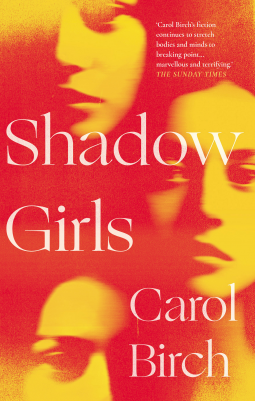
Shadow Girls by Carol Birch

Having enjoyed two of Carol Birch’s earlier novels – Orphans of the Carnival and the Booker Prize nominated Jamrach’s Menagerie – I decided to try her new book, Shadow Girls. I enjoyed this one too, but it’s a very strange novel and not quite what I’d expected!

From the blurb, I had thought this was going to be a ghost story, but for the first half of the book at least, it’s much more of a ‘school story’. Our narrator, Sally, is a fifteen-year-old girl growing up in 1960s Manchester and the time and place are vividly evoked with references to the music, films, fashion and culture of the decade woven into the narrative. Like most girls her age, then and now, Sally’s life revolves around schoolwork and spending time with her friends and her boyfriend, and this is the focus of the first section of the book. Through Sally’s eyes we get to know her best friend, Pamela, a rebellious troublemaker nobody else likes, and their ‘enemy’ Sylvia Rose, a girl from a posh background who is a talented classical singer. She also describes her feelings for Rob, her first serious boyfriend, whom she is starting to have doubts about.

The supernatural element of the story isn’t introduced until surprisingly late in the novel, when Sally has a mysterious encounter with Sylvia that will haunt her for the rest of her life. The pace picks up from this point and it does become the ghost story I had expected – in fact, it’s quite a creepy one, particularly as, like many good ghost stories, it’s never completely clear which of Sally’s experiences are real and which are in her mind.

Despite not much happening for half of the book, I found it all very absorbing and was pulled into Sally’s world from the first page. I’m not sure whether so much build up was really necessary, but I enjoyed it anyway and found the book so difficult to put down that I ended up reading most of it in one day. Now I’m interested in reading Carol Birch’s previous ghost story, Cold Boy’s Wood. Has anyone read that one – or any of her other books?

Thanks to Head of Zeus for providing a copy of this book for review via NetGalley.

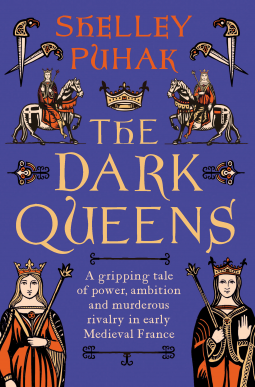
The Dark Queens by Shelley Puhak (non-fiction)

Their ghosts are everywhere; we just need to know where to look.

This is a fascinating dual biography of two little-known medieval queens, Brunhild and Fredegund, who belonged to the Merovingian dynasty and ruled over large swathes of the lands we now know as France and Germany. I don’t often find myself drawn to non-fiction, but this book was a great choice for me as it’s both educational and entertaining – and every bit as readable as fiction.

Most people today have probably never heard of Brunhild and Fredegund and it seems there’s a good reason for that: as Shelley Puhak explains, following the deaths of the two queens, their stories were rewritten – and some of their achievements erased altogether – by the rulers who came after them, including their own son and nephew Clothar II, and later by Charlemagne’s Carolingian dynasty. And yet the influence of these two Merovingian women lived on, in legends and fairy tales, in the naming of roads, and in the character of Brunhild the Valkyrie from Wagner’s opera Der Ring des Nibelungen. Most intriguingly, a battle strategy of Fredegund’s appears to have inspired, whether directly or indirectly, the ‘Birnam Wood comes to Dunsinane’ episode of Shakespeare’s Macbeth.

The two queens came from very different backgrounds. Brunhild was a princess from Visigothic Spain who was married off to King Sigibert of Austrasia in 567 as part of a political alliance. Austrasia was the north-eastern territory of the Kingdom of the Franks; Neustria to the west and Burgundy to the south were ruled by Sigibert’s brothers, Chilperic I and Guntram, respectively. Fredegund, a former slave, rose to power when she married Chilperic of Neustria following the death of his wife under suspicious circumstances. This was only the first of many murders with which Fredegund would be connected; she went on to be associated with a whole series of poisonings, tortures and political assassinations. Brunhild is portrayed as a much more sympathetic character, but the prejudices of the sources do need to be considered!

After the deaths of their husbands, both Brunhild and Fredegund reigned as regents on behalf of their young sons and grandsons. Their kingdoms of Austrasia and Neustria were engaged in war for many years, fuelled by a rivalry between the two queens, which originated in Fredegund allegedly being responsible for the murders of both Galswintha, Brunhild’s sister, and King Sigibert, Brunhild’s husband. However, they were willing to work together where necessary and both queens proved themselves to be strong, intelligent, politically astute women in a world dominated by men.

The Dark Queens is not a particularly academic book. It’s written in the style of narrative non-fiction, drawing on the available primary sources such as the writings of Gregory of Tours and Venantius Fortunatus but sometimes finding it necessary to speculate in order to fill in the gaps. Despite this, it’s clear that Shelley Puhak has carried out a huge amount of research in writing this book and she does include a list of all of her sources, both primary and secondary, at the end, along with a comprehensive section of notes and references. Although The Dark Queens may not satisfy readers who are looking for something more scholarly, I thoroughly enjoyed it and am so pleased I’ve had the chance to get to know Brunhild and Fredegund. I’m surprised they haven’t been written about more widely; they would be wonderful subjects for historical fiction and would make a nice change from the Tudors!

Thanks to Head of Zeus for providing a copy of this book for review via NetGalley.

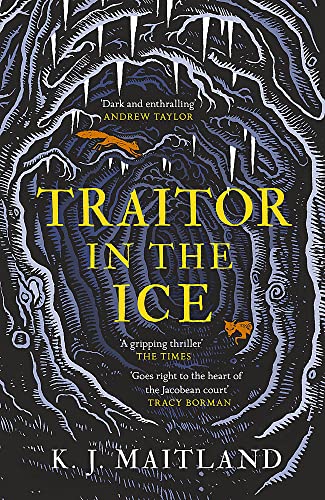
Traitor in the Ice by KJ Maitland

Traitor in the Ice is the second book in KJ Maitland’s new historical crime series set in the early 1600s during the reign of James I of England and VI of Scotland. The first, The Drowned City, introduces us to Daniel Pursglove as he searches for a mysterious Catholic conspirator known as Spero Pettingar in the aftermath of the failed Gunpowder Plot. That book is set in Bristol just after the devastating Bristol Channel Floods of 1607; Traitor in the Ice takes place the following winter – a particularly cold winter referred to as the Great Frost.

In these freezing, icy conditions a man has been found dead in the grounds of Battle Abbey in Sussex. The man was one of the King’s agents, sent to infiltrate the Montague household at Battle to try to root out those with Catholic sympathies. Lady Magdalen, Viscountess Montague is believed to be sheltering Catholic priests within the abbey walls, but the agent has been killed before having the chance to send his report to London. A replacement is needed, so Daniel Pursglove finds himself summoned by the King’s man, Charles FitzAlan, once more and sent to Battle to find evidence of treachery. He quickly discovers that almost everyone in the abbey has something to hide, but when more murders take place Daniel begins to wonder whether he is on the trail of the elusive Spero Pettingar at last.

One of the things I liked about the previous book in this series was the setting; I knew nothing about the Bristol floods and found the descriptions of the city in the aftermath quite eerie and otherworldly. The frozen landscapes of Sussex described in this second novel are equally atmospheric: the ‘withered brown bracken, each frond encased in its own ice-coffin’; the pink light of dawn ‘sending sparks of light shivering across the frost’. It’s the perfect setting for a murder mystery and Maitland weaves her usual mix of superstition and legend into the plot, adding to the sense of time and place. I was particularly intrigued by the practice of ‘night-creeping’, which Maitland explains in more detail in her very comprehensive author’s note at the end of the book.

I had hoped to learn more about Daniel Pursglove in this novel, but that doesn’t really happen and he is still very much a man of mystery by the final page. Although it’s not essential to have read the previous book first, I was pleased that I had as it meant I was familiar with at least some of Daniel’s background and wasn’t quite as confused as I might otherwise have been. I do like Daniel, though, and enjoyed following him through his investigations.

However, I had the same problem with this book that I had with the first one: there was just too much happening! The chapters set at Battle Abbey alternate with others set at court where through the eyes of two cousins, Richard and Oliver, we watch the rise to power of the King’s new favourite, Robert Carr. We also see Robert Cecil, Earl of Salisbury, working to maintain his own influence over King James, while in the streets and taverns of London violence is brewing between gangs of local youths and the Scottish courtiers who are newly arrived in the city. All of this is very interesting, but too much for one book on top of the murders and the Catholic conspiracies! With a tighter focus on just one or two threads of the plot, I think this would be a much stronger series. Anyway, I did enjoy this second novel overall and will be looking out for a third one.

Thanks to Headline for providing a copy of this book for review via NetGalley.

This is book 15/50 read for the Historical Fiction Reading Challenge 2022.
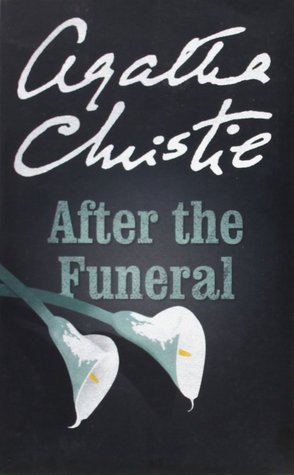
After the Funeral by Agatha Christie

This month’s theme for the Read Christie 2022 challenge is ‘a story Agatha wrote abroad’. After the Funeral, a Hercule Poirot mystery first published in 1953, doesn’t include any travel and is set entirely in England, but it was written while Christie was away on an archaeological dig with her husband Max.

After the Funeral begins, as the title suggests, just after the funeral of the wealthy Richard Abernethie with the family assembling to hear the reading of the will by his lawyer, Mr Entwhistle. As he has no surviving children of his own, it seems that Richard’s fortune is to be divided between his brother and sister, two of his sisters-in-law, and several of his nieces and nephews and their spouses. After hearing the terms of the will, Cora Lansquenet, Richard’s sister, remarks that her brother was murdered. This is not something that has occurred to anyone else, as they have all accepted that Richard died of natural causes, so Cora’s comments are not taken seriously. The next day, however, Cora herself is found dead, having been brutally murdered in her bed.

Mr Entwhistle, the lawyer, is convinced there must be a connection between the two deaths and begins to interview the family members, hoping that they will all be able to prove themselves innocent and avoid bringing shame on the family. As the mystery deepens, he decides that he needs to call in an expert – and so he contacts his friend, Hercule Poirot, who listens to the facts and agrees that an investigation is required…

This is maybe not one of the better known Poirot novels, but it’s one that I particularly enjoyed. After a confusing start – Christie throws a huge number of characters into the opening chapters and it takes a while to straighten out their relationships and remember who they all are – I became completely absorbed in this fascinating mystery, having a few guesses at the identity of the culprit and getting it wrong every time! It’s one of those mysteries where literally any of the characters (apart from Poirot, of course) could have been the murderer and the solution relies on a wonderful twist, which I don’t think many readers will have seen coming. Well done if you did, but I certainly didn’t.

Poirot himself doesn’t have a large part to play in the novel until the second half; before that, it’s actually Mr Entwhistle who is trying to investigate the deaths, by questioning suspects, speaking to doctors and establishing alibis. During that first half of the novel, I couldn’t help thinking that it wasn’t really essential for Poirot to appear in the story at all as Mr Entwhistle seemed to be doing such a good job! However, it’s Poirot’s ‘little grey cells’ that are necessary to spot that final crucial clue and solve the mystery.

Next month’s theme for the Read Christie challenge is ‘a story featuring adventure’. There are plenty of those to choose from!

Mrs England by Stacey Halls

Mrs England is one of the books longlisted for the 2022 Walter Scott Prize for Historical Fiction. Although I hadn’t even heard of a lot of the titles on this year’s longlist, this particular book is one that I had been planning to read anyway. I enjoyed both of Stacey Halls’ previous novels, The Foundling and The Familiars, and was just waiting for the right moment to start reading this one.

The novel opens in 1904 with Ruby May, a trained children’s nurse from the prestigious Norland College, discovering that the family she works for are preparing to emigrate. Ruby is invited to accompany them, but turns down the opportunity, saying that she can’t be too far away from her younger sister and brothers. Instead, she finds a new position looking after the four children of Charles and Lilian England, a wealthy couple who own a cotton mill in the West Riding of Yorkshire.

On arriving at the Englands’ home, Hardcastle House, Ruby quickly senses that something is not right. Although Mr England is charming and friendly, Mrs England seems distant and withdrawn, showing very little interest in her children’s lives and leaving the running of the household to her husband. The other servants also make Ruby feel unwelcome, but she finds the four England children delightful and immerses herself in her work. As the days and weeks go by, Ruby becomes increasingly aware of the dark undercurrents within the household and wishes there was something she could do to help. However, there are mysteries lurking in Ruby’s own past and she has problems of her own to deal with. Why does she refuse to open letters from her father? Why is she so afraid of having her photograph taken? And what is the real reason for her reluctance to leave the country?

I think this is my favourite of the three books I’ve read by Stacey Halls. Although it’s quite a slow-paced novel, with most of the drama and revelations coming near the end, I was drawn completely into Ruby’s story from the beginning. As the novel’s narrator, Ruby is a genuinely nice person and I liked her immediately. It takes a long time for her back story to unfold and in the meantime I’d formed a few theories about what must have happened with her father – however, I wasn’t quite right! In her author’s note, Stacey Halls states that she based Ruby May’s story on a real person and incident that occurred in the late 19th century, but don’t be tempted to look at this until you’ve finished the book. The story that unfolds within the walls of Hardcastle House is even more intriguing and, again, I thought I knew what was going on only to find that, although I did guess some of it correctly, I was still missing some parts of the overall picture.

The descriptions of the Yorkshire scenery are very well done, particularly the parts of the book set in the Hardcastle Crags, as are the descriptions of the Englands’ cotton mill, the blacksmith’s forge and all the other locations Ruby and the children visit throughout the story. I also found it interesting to read about the Norland Nurses – the kind of training they received and the standards they were expected to conform to.

I enjoyed this book very much, but to be honest, I’m surprised it’s on the Walter Scott Prize longlist as it doesn’t seem quite as ‘literary’ as the books the judges usually go for. I hope it progresses to the shortlist next month, but we’ll have to wait and see.

This is book 14/50 read for the Historical Fiction Reading Challenge 2022.