Catching up: Three mini-reviews

I always try to finish reviewing the current year’s reads before the new year begins (although I don’t always manage it), so today I’m catching up by posting some brief thoughts on three books read in November and December.
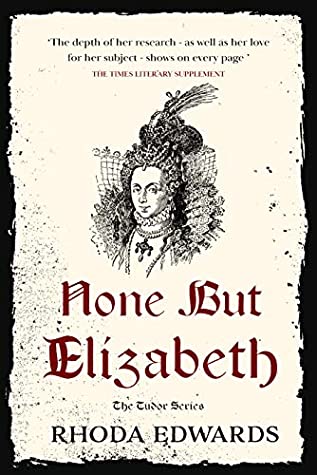
I added None But Elizabeth to my TBR a few years ago after reading Rhoda Edwards’ two novels about Richard III, Some Touch of Pity and Fortune’s Wheel, both of which I enjoyed. This one, first published in 1982, is a fictional retelling of the life of Elizabeth I. The book is written in a straightforward, linear style as we follow Elizabeth from childhood to old age.

There are some things Edwards does very well – the depiction of Elizabeth’s feelings for Robert Dudley, the man she loves but never marries; Elizabeth’s internal conflict over how to deal with the threat of Mary, Queen of Scots; the symbolism used to mark the passing of time; the way in which Elizabethan poetry is woven into the text – but as someone who has read about Elizabeth many times before, there was nothing new or different here. I would recommend reading Margaret Irwin’s Young Bess or Margaret George’s Elizabeth I rather than this one.
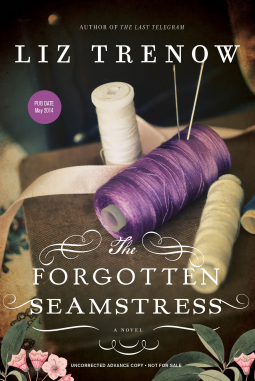
The Forgotten Seamstress by Liz Trenow is a multiple time period novel in which our present day narrator, an aspiring interior designer, finds a beautiful quilt in her mother’s attic with a message embroidered into the lining. She sets out to learn more about the quilt and discovers a connection with a young woman called Maria who spent most of her life in a mental hospital claiming to be a former lover of the Prince of Wales (the future King Edward VIII). As Maria’s story unfolds, in the form of taped interviews recorded by a student in the 1970s, we find out whether she was telling the truth and, if so, what secrets are hidden in the quilt’s design.

I wasn’t expecting too much from this book, but I enjoyed it much more than I thought I would – and for once, I found the modern day storyline as compelling as the historical one. On one level it’s almost a mystery novel, with the narrator hunting for clues to the quilt’s origins, tracking down people who may have known Maria and piecing fragments of information together to try to discover the truth. However, it also provides some insights into social issues such as living conditions in mental institutions, psychiatric treatment in the early 20th century and the later policy of ‘care in the community’. Some parts of the story were too predictable, but it was an interesting read overall and I will probably look for more of Liz Trenow’s books.
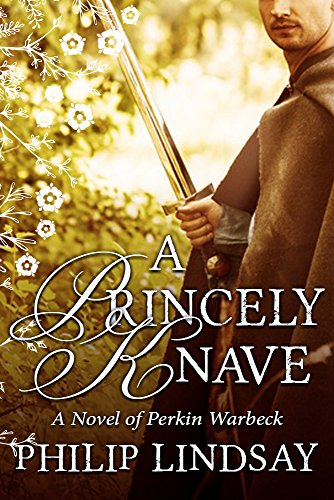
A Princely Knave was the oldest remaining book on my NetGalley shelf (from 2016, I’m ashamed to say). After receiving a copy, I read some negative reviews that put me off it, but in November I finally decided to give it a try. The book was originally published in 1956 as They Have Their Dreams and tells the story of Perkin Warbeck, a pretender to the English throne. Warbeck claimed to be Richard of York, one of the two ‘Princes in the Tower’ – the sons of Edward IV who disappeared from the Tower of London, believed to have been murdered. The novel begins with Warbeck landing in Cornwall in 1497, hoping to lead an army to overthrow Henry VII and take his place on the throne.

Philip Lindsay uses flowery and often antiquated language, a style which was common in older historical novels but feels very dated today. However, I’ve read one or two of his other books so was prepared for this. The biggest problem I had with this particular book was that, apart from Warbeck himself, the characters feel underdeveloped – the group of men who accompany Warbeck in his rebellion are almost indistinguishable and the only significant female character, Warbeck’s wife Katherine Gordon, also lacks depth. Lindsay does explore some fascinating ideas, though; for example, he suggests that even Warbeck himself doesn’t know who he really is – having been told by some that he has royal blood and by others that he is the son of Flemish merchants, he has become unsure of his real identity. I thought it was worth reading, but I probably wouldn’t recommend it unless you’re as interested in this period as I am.
Black Narcissus by Rumer Godden

I started reading this for Brona’s Rumer Godden Reading Week, but didn’t manage to finish it until the week was over. Still, I’m grateful to Brona for motivating me to pick up my first Rumer Godden novel, even if I’m late with this review!

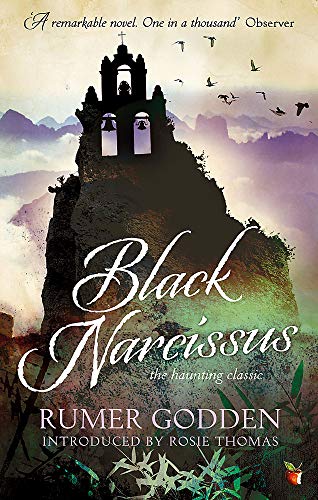
Black Narcissus, published in 1939, is one of Godden’s best known books, made into a successful Powell and Pressburger film in 1947 and adapted again for television by the BBC in 2020. It tells the story of a group of Anglican nuns who set out to establish a new convent in an abandoned palace in Mopu, high in the Himalayas. Once known as ‘the House of Women’, the palace had been home to the General’s harem; now the General’s son has donated it to the nuns for them to use as a hospital and school for the local community. A group of missionary brothers had already tried to do the same, but left after just a few months, giving us an early indication of the difficulties and challenges the nuns will face.

Leading the mission is Sister Clodagh, the newly appointed Sister Superior, and she is accompanied by four other sisters, each with a different role to play in the new convent. As the Sisters try to adapt to their new way of life, Mopu gradually casts its spell upon them and each finds herself being affected in a way she had never expected. Sister Philippa, responsible for the convent gardens, worries that she is becoming ‘too fond of the place’; Sister Honey grows too attached to the children who come to the school and to the hospital; Sister Ruth becomes obsessed with the General’s charismatic agent, Mr Dean; and Sister Clodagh receives constant painful reminders of her past in Ireland and the man she once thought she would marry.

There are other characters – the General’s heir, Dilip Rai, a handsome young man who comes to the convent in search of an education; Kanchi, a beautiful girl from the village whose uncle wants her to spend some time with the Sisters because she is ‘behaving so badly that no one wants her’; and Ayah, the elderly housekeeper at the palace – but the focus of the novel is on the nuns and how they try to adjust to the unfamiliar world in which they find themselves. The culture of Mopu is very different from anything they have previously experienced and despite advice given to them by Mr Dean, the nuns struggle to understand the local traditions and superstitions. As the story progresses it seems that they will never understand and that they are doomed to fail in their mission as others have failed before them.

This is a dark and atmospheric novel, but in a quiet and restrained way. There are some moments of drama but this is a story driven by the characters and their inner thoughts and desires as their repressed feelings rise to the surface and tensions grow, particularly between Sister Clodagh and Sister Ruth. I’m not sure whether it’s a book I would read again, but I’m very pleased to have read it once and will definitely be reading more by Rumer Godden.

This is book 26/50 from my second Classics Club list.

The Girl in the Photograph by Kate Riordan

Kate Riordan’s 2015 novel The Girl in the Photograph is one of many to be compared to the Daphne du Maurier classic Rebecca, but apart from being set in a country house and having a few Gothic undertones, I couldn’t see many similarities. It is, however, an interesting read in its own right, exploring some of the social issues faced by women who lived during less enlightened time periods.

This is a dual-timeline novel, but unlike most, which have one thread set in the present and the other in the past, both narratives in this book are historical. In 1932, we meet Alice Eveleigh, a young woman of twenty-two who lives with her parents and works in an office as a junior typist. With many of her friends becoming engaged, Alice is worried that she will be ‘left on the shelf’, so she is flattered when the new accountant at work, a handsome older man, begins an affair with her. Unfortunately, he is already married and when she inevitably finds herself pregnant, he refuses to leave his wife for her. On discovering what has happened, Alice’s mother quickly packs her off to stay with an old friend at remote Fiercombe Manor where she can give birth away from prying eyes and have the baby adopted.

After arriving at Fiercombe Manor, Alice becomes intrigued by hints of the house’s tragic past, picking up snippets of information about Elizabeth Stanton, whose husband Edward was the Manor’s previous owner. Alice attempts to learn more about Elizabeth from Mrs Jelphs, the housekeeper, but it seems that she is reluctant to talk. Not ready to give up, Alice finds Elizabeth’s diary and gradually her secrets begin to be revealed.

Elizabeth’s story, set in 1898, unfolds alongside Alice’s in alternating chapters, allowing us to see parallels between the lives of the two women. Like Alice, Elizabeth is expecting a baby; unlike Alice, she has a husband, but she still feels very alone. Edward is controlling and distrustful and they don’t have a close or loving relationship, but as Elizabeth’s narrative progresses we begin to wonder whether she is really the most reliable of narrators and whether something could have happened to cause Edward to turn against her.

The Girl in the Photograph is a beautifully written novel, with lovely, vivid descriptions of the old house surrounded by yew trees, the formal gardens and terraces, and the views of rolling meadows and setting suns. Riordan creates an eerie atmosphere, with some very subtle ghostly/supernatural elements. However, I found the book very slow and unnecessarily long – I felt that some of Alice’s chapters could probably have been left out without affecting the overall story too much. Still, the novel offers some fascinating insights into what it was like to be a pregnant woman in the 1930s or the 1890s. Attitudes of society towards unmarried mothers, the challenges of postnatal depression and ‘puerperal insanity’, and the general lack of understanding of women’s mental health issues are some of the subjects Riordan touches upon.

Although I felt that this book didn’t have much, apart from the quality of the writing, to set it apart from others of this type, I thought it was still a worthwhile read. I see Kate Riordan has written several other novels which all sound interesting too.

Ride the Pink Horse by Dorothy B Hughes

Ride the Pink Horse was the book chosen for me in the last Classics Club Spin and I have finished it just in time to write about it by the Spin deadline, which is this weekend. There were two reasons why I added this book to my Classics Club list in the first place. One was that I loved Dorothy B Hughes’ The Expendable Man and wanted to read more of her work; the other, I have to admit, was that I liked the title. Otherwise, I would probably never have picked this book up based on the description alone as it didn’t really sound like my usual sort of read. And that would have been a shame, as I thoroughly enjoyed it!

Ride the Pink Horse was published in 1946 and is set in Santa Fe during Fiesta, a festival commemorating the reconquest of New Mexico by the Spanish. The central character, known only as Sailor, was once ‘confidential secretary’ to Senator Willis Douglass (in reality, his job involved carrying out the corrupt senator’s dirty work for him) until the day the senator’s wife was murdered during what appeared to be an attempted robbery. Only Sailor and the Sen, as he calls him, know what really happened that day and Sailor is determined that if the Sen wants him to keep quiet then he will have to pay him for his silence. Sailor has followed the Sen to the Fiesta, planning to get as much money out of him as possible and then cross the border into Mexico to start a new life – but he hasn’t bargained for the appearance of McIntyre, a Chicago detective who is also on the senator’s trail in search of answers.

The first thing I should tell you about Ride the Pink Horse is that it’s not really a mystery, even though it’s currently being published as part of the Otto Penzler American Mystery Classics series. There’s a detective, but we don’t actually watch him doing any detecting because we see everything solely from Sailor’s perspective and Sailor already knows how the Sen’s wife was murdered. However, there’s still plenty of suspense as we are kept wondering whether Sailor will get what he wants from the Sen or whether he will drop his attempt at blackmail and tell McIntyre what he knows instead. The way in which the novel is written meant I honestly had no idea what would happen and which choices Sailor would make, so I found the ending both surprising and realistic.

The next thing I want to mention is the setting, which is wonderfully atmospheric. Santa Fe is not actually mentioned by name – Sailor, who is from Chicago, just refers to it as a ‘hick town’ – but it can be identified by the descriptions of the Fiesta and the festival traditions such as the burning of Zozobra, the wooden effigy of ‘Old Man Gloom’. Hughes creates an amazing sense of place and a feeling that, for Sailor, Fiesta is not a fun or exciting experience but a stifling, claustrophobic one – a trap from which there is no escape:

The whole town was a trap. He’d been trapped from the moment he stepped off the bus at the dirty station. Trapped by the unknown, by a foreign town and foreign tongues and the ways of alien men. Trapped by the evil these people had burned and the ash had entered into their flesh.

Sailor himself is not a very appealing or pleasant character, but as we learn more about his past – and his unhappy childhood, growing up in poverty with an alcoholic father – it becomes easier to have sympathy for him. One of his least attractive traits is his racism, so be warned that he uses offensive language to describe the Mexican and Native American people he meets during Fiesta. However, as he gradually befriends Pancho, a good-natured merry-go-round owner, and Pila, the young girl who rides the ‘pink horse’ of the title, there are signs that his attitude is beginning to change, as seen here in this conversation with McIntyre:

“…they don’t shove you around. They give you a smile. Even if you don’t talk their language they don’t shove you around. The way we shove them around when they come up to our town.”

“I know,” Mac said. “I’ve thought sort of along that line myself. We’re the strangers and they don’t treat us as strangers. They’re tolerant. Only they’re more than tolerant. Like you say, they’re friendly. They give you a smile not scorn.”

I loved this book and am so pleased it came up for me in the Classics Club Spin! I think The Expendable Man is still my favourite of the two, but I’m looking forward to reading more by Dorothy B Hughes; In a Lonely Place will probably be next.

This is book 25/50 read from my second Classics Club list

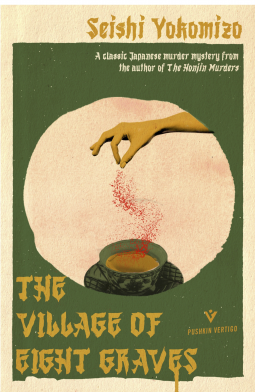
The Village of Eight Graves by Seishi Yokomizo – trans. Bryan Karetnyk

Over the last few years I have discovered several Japanese crime authors – including Soji Shimada and Yukito Ayatsuji – thanks to Pushkin Press making them available in English translations, but the one who has impressed me the most is Seishi Yokomizo. I really enjoyed The Honjin Murders, one of his many books to feature the detective Kosuke Kindaichi; I didn’t like The Village of Eight Graves, another from the same series, quite as much, but it’s still an entertaining read.

First published in 1950, the novel is set in the small Japanese village of Eight Graves where, centuries earlier, eight samurai were brutally murdered, bringing down a curse upon the village and giving it its sinister-sounding name. In the 1920s the curse struck again when a village leader went on a violent killing spree. Now, twenty-five years later, our narrator Tatsuya Terada, a young man who has been raised in Kobe by his mother and stepfather, is informed by a lawyer that his real father was the man responsible for those terrible murders. It seems that Tatsuya is now the heir to the family estate and must return to Eight Graves to claim his inheritance – but before he has even left Kobe he receives an anonymous letter warning him to stay away.

On his arrival in Eight Graves, Tatsuya finds that most of the other villagers are hostile and unwelcoming, believing that his presence will bring bad luck and tragedy to the village yet again. And so, when more murders begin to take place, suspicion immediately falls on Tatsuya – but as he is our narrator, we know that he is innocent. Or is he? Kosuke Kindaichi is called in to investigate, but at the same time Tatsuya is carrying out investigations of his own to find the real culprit and clear his own name.

Unlike in The Honjin Murders, where the untidy and unassuming Kindaichi plays a big role in the story, in this book we hardly see him at all. Almost as soon as he arrives in Eight Graves he disappears into the background again. We know that he is working on solving the mystery, but we don’t actually watch him doing it because we stick exclusively with Tatsuya’s narration and he and Kindaichi have very little interaction until nearer the end of the book. This makes this one less of a detective novel and more of a thriller or adventure novel, as Tatsuya explores the village alone looking for clues and stumbling into danger.

Yokomizo creates a wonderful atmosphere in this book with Tatsuya’s investigations leading him into networks of tunnels, caves with stalactites, and underground lakes and caverns. The legend of the eight murdered samurai is also incorporated into the story, along with a search for hidden treasure said to be buried somewhere within the village and a rivalry between two branches of Tatsuya’s family: the ‘House of the East’ and the ‘House of the West’. It’s an entertaining novel and there’s always something happening – but I did think the parts where Tatsuya is wandering around in the caves and tunnels became a little bit tedious. The absence of Kosuke Kindaichi for most of the book was also disappointing and I think I would have preferred a more conventional detective novel with the focus on solving the mystery rather than on treasure hunting.

Still, this book was fun to read and I loved the setting. Now I need to read the other Yokomizo novel currently available in English: The Inugami Curse.

Thanks to Pushkin Vertigo for providing a copy of this book for review via NetGalley.

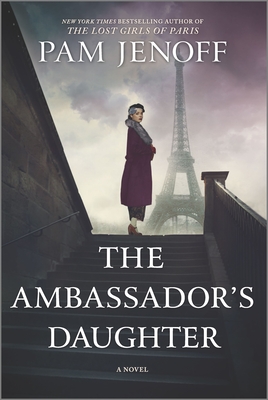
The Ambassador’s Daughter by Pam Jenoff

It’s 1919 and twenty-year-old Margot Rosenthal has accompanied her father, a German diplomat, to Paris for the Peace Conference that has been arranged following the end of the First World War. At first Margot is unhappy in the French capital – even though the war is over, she and her father are still thought of by the Allies as ‘the enemy’, while their Jewish background means they are viewed with suspicion by their fellow Germans – but the alternative is to return to Berlin, where her wounded fiancé Stefan awaits. Margot had agreed to marry Stefan before he went away to fight in the war, but now that he is back she’s no longer sure whether she wants to go ahead with the wedding.

Life in Paris becomes more interesting for Margot when she makes two new friends. One is Georg Richwalder, a former naval officer who has arrived with the German delegation; the other is Krysia Smok, a Polish pianist who introduces her to a group of political activists. When one of Krysia’s radical friends starts to put pressure on Margot to obtain information on Germany’s plans from Georg, suddenly Stefan and the wedding seem the least of her problems!

The Ambassador’s Daughter is a prequel to The Kommandant’s Girl and The Diplomat’s Wife, neither of which I have read, but that didn’t matter at all as this one works as a standalone novel. In fact, I suspect it’s probably better to start with this book anyway as it comes first chronologically. I do wish authors and publishers would move away from ‘wife’ and ‘daughter’ titles (which I discussed in one of my Historical Musings posts), but this series was written before that seemed to become such a popular trend, so I can be more forgiving!

Although I have read a lot of novels set during and just after World War I, I don’t think I’ve ever read anything specifically about the Paris Peace Conference, so I found that aspect of the book interesting. The German delegation was kept on the sidelines during the negotiations and excluded from decision-making, not being officially called to the conference until the details of the treaty had already been agreed upon. Because the Germans played such a minor role in all of this, it doesn’t form a big part of the novel, but I think Jenoff does a good job of showing how frustrating it was for diplomats such as Margot’s father to be kept out of making the important decisions that would affect their own country’s future.

The espionage element of the story is also well done, as we wait to see whether Margot will really betray Georg and Germany – and if so, whether she will be caught? However, a twist that comes near the end of the book is very obvious and because I had predicted it so quickly, it took away some of the suspense. The main focus of the novel, though, is not the conference or the spying, but Margot’s personal story and her relationships with Georg and Stefan, so if you’re not interested in romance, this probably isn’t the book for you. Overall, I found it quite enjoyable, but I’m not sure whether I would read anything else by Pam Jenoff – although I was intrigued by the character of Krysia and it seems she also appears in The Kommandant’s Girl, so maybe I could be tempted.

The Penelopiad by Margaret Atwood

I wanted to join in with this year’s Margaret Atwood Reading Month (hosted by Buried in Print) but knew I wouldn’t have time for one of her longer novels; The Penelopiad, at 199 pages, seemed the perfect choice as it would also count for the Novellas in November event (hosted by 746 Books and Bookish Beck). The Penelopiad was published in 2005 as part of the Canongate Myths series, of which I’ve previously read Baba Yaga Laid an Egg by Dubravka Ugrešić and Ragnarok by AS Byatt. It’s a retelling of the events of the Odyssey from the perspectives of Penelope and the twelve maids who were hanged by her son, Telemachus.

Penelope narrates her story from a modern day underworld where she wanders through the fields of asphodel occasionally encountering the spirits of other characters from Greek mythology. With little to do in the afterlife other than to think and remember, Penelope recalls her childhood in Sparta, her marriage to Odysseus and, particularly, the events that followed her husband’s departure to fight in the Trojan War. Left behind in Ithaca to raise baby Telemachus, Penelope awaits news of Odysseus but as the years go by it looks less and less likely that he is going to return.

Many of you will already know how the story progresses from there – the suitors, the shroud, the fate of the twelve maids, the bed carved from an olive tree – so I won’t go into the plot in any more detail. However, Atwood doesn’t just use Homer’s Odyssey as a source; she also draws upon other works including Robert Graves’ The Greek Myths to help fill in the gaps and provide a different view of Penelope’s character and story. Penelope is usually associated with faithfulness and patience and seen as perhaps a less interesting woman than Helen of Troy or Clytemnestra; in The Penelopiad, Penelope tells us how frustrated she is with the way she has been portrayed and how she really feels about rivals such as Helen.

Penelope’s own narrative is interrupted now and then by her twelve maids, who speak with one voice in a Greek chorus. As well as giving their own version of the events that build up to Odysseus ordering Telemachus to kill them, they also comment on Penelope’s account, leading us to question her motives and to wonder what exactly was and was not true. The sections narrated by the maids are written in a different style every time – a poem, a ballad, a lecture and even a court trial – but although I understood the need for a second perspective other than Penelope’s, these were my least favourite parts of the book. I found the modern language used by Penelope and the maids a bit jarring too and I think overall, I would have just preferred a more straightforward and conventional retelling of Penelope’s story.

I didn’t find this as satisfying as the other Margaret Atwood books I’ve read, but it was a quick, witty and entertaining read and it’s always good to see women from Greek myth given voices of their own.