Six Tudor Queens: Katharine Parr, the Sixth Wife by Alison Weir

This is the final book in Alison Weir’s Six Tudor Queens series retelling, in fictional form, the stories of the wives of Henry VIII. Katharine Parr, the subject of this sixth novel, has never interested me as much as some of the other wives, yet this book has turned out to be my favourite of the series, not just for what we learn about Katharine herself, but also for the depiction of the political and religious situation in England during the later stages of Henry’s reign.

I have read other novels about Katharine Parr, such as Elizabeth Fremantle’s Queen’s Gambit and Philippa Gregory’s The Taming of the Queen (interestingly, every author seems to choose a different spelling of her name!), but none of them go into as much depth and concentrate almost solely on her time as Henry’s wife and her relationship with Thomas Seymour. This book starts at the beginning, with Katharine’s childhood, and then takes us through her entire life, devoting plenty of time to her earlier two marriages, first to the young Edward Burgh and then to John Neville, Lord Latimer. I particularly enjoyed the section of the book where Katharine is married to Latimer; although it’s not a passionate romance, Katharine comes to love and trust her husband and they have a happy nine years together despite the religious turmoil going on around them (the uprising known as the Pilgrimage of Grace takes place during this period and provides one of the most exciting episodes in the novel).

Although Lord Latimer remains faithful to the Catholic Church, Katharine becomes a supporter of religious reform. When Latimer dies in 1543 and the King, having recently had his fifth wife beheaded, asks her to marry him, Katharine reluctantly accepts, knowing that turning down his proposal would be very unwise and hoping that her influence at court can further the cause of the reformers. Over time she becomes quite fond of Henry, engaging in lively debates with him on the subject of religion, but there is always an undercurrent of danger and Katharine knows that if she is to avoid the fate of her predecessors, she can’t allow her sympathies for the new Protestant religion to become too obvious. Somehow, Katharine manages to survive and outlive the King, free at last to marry Thomas Seymour, the man she really loves…but their time together is tragically short and marred by Seymour’s inappropriate behaviour with the young Princess Elizabeth.

I loved reading about Katharine’s life before she became Queen, as so much of this was new to me – and unlike the book on Anne of Cleves, where Weir admits that she invented a lot of Anne’s story, this one seems to be more grounded in historical fact. Once the novel moves on to her marriages to Henry VIII and Thomas Seymour, I was on more familiar ground and found these sections slightly less interesting to read – particularly as I have never liked Thomas Seymour and wished I could reach into the pages of the book and stop Katharine from marrying him!

Something that has intrigued me throughout this series is the way in which Alison Weir has chosen to portray Henry VIII. She shows him in a much more positive light than usual, to the point where she almost seems to be absolving him of any responsibility for his actions, putting the blame on the people around him instead – Thomas Cromwell, Bishop Gardiner, even some of his victims such as poor Katheryn Howard. On the one hand, it’s interesting to see a more nuanced depiction of Henry, but on the other I’m not convinced that his wives would all have viewed him as favourably as these books suggest!

Katharine Parr herself is portrayed as an intelligent, well-educated and compassionate woman; her previous marriages and experience of life have given her a maturity and common sense that some of Henry’s other wives lacked. She makes an effort to befriend her stepchildren and plays an important part in persuading Henry to restore his daughters Elizabeth and Mary to the line of succession. She gains the King’s trust and is named regent while he is away on a military campaign, as well as becoming the first queen to have books published in English under her own name. Katharine’s life is maybe not as dramatic as some of the other wives’, but because I liked her so much I was able to become fully invested in her story.

Now that this series has come to an end, Alison Weir is moving further back in time with her next novel to tell the story of Henry VIII’s mother, Elizabeth of York, in The Last White Rose.

Thanks to Headline for providing a copy of this book for review via NetGalley.
Book 41/50 read for the 2021 Historical Fiction Reading Challenge.
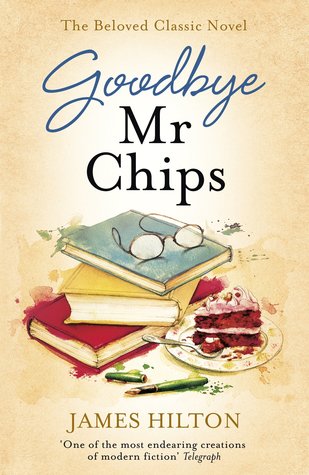
Goodbye, Mr Chips by James Hilton

Since reading James Hilton’s Lost Horizon, which I loved, I have wanted to try more of his work – and although it’s taken me a few years, I’ve finally read another of his books! If I’d known how short Goodbye, Mr Chips was I would have tried to read it before now; there are only about 120 pages in my edition, so it’s a very quick read.

Before starting the book, I thought I already knew the story because I’ve seen two of the adaptations – the 1939 one and the 1969 musical version (both of which I enjoyed). The earlier film is much more faithful to the book, but neither follow the original story exactly and there are incidents in both that don’t appear in Hilton’s text. The novella tells the story of Mr Chipping, a quiet, unassuming teacher, and follows his career at the fictional Brookfield School over a period of many decades. Chipping – or Mr Chips as the boys call him – teaches Greek and Latin and, as the years go by and the world begins to change around him, he gains a reputation for being old-fashioned and traditional, reluctant to embrace new teaching methods and belonging to an earlier time. We first meet him as an old man – the sort of old man people struggle to imagine ever being young:

…white-haired and only a little bald, still fairly active for his years, drinking tea, receiving callers, busying himself with corrections for the next edition of the Brookfeldian Directory, writing his occasional letters in thin, spidery, but very legible script. He had new masters to tea, as well as new boys. There were two of them that autumn term, and as they were leaving after their visit one of them commented: “Quite a character, the old boy, isn’t he? All that fuss about mixing the tea — a typical bachelor, if ever there was one.”

Of course, Mr Chips was young once and the boys would have been surprised to learn that he wasn’t always a bachelor. Back in 1896, at the age of forty-eight he had married Katherine Bridges – and although their time together was tragically short, Katherine’s kind heart and sense of humour had a profound effect on Chips, leaving him a better person and changing his outlook on life.

The story is told in a series of flashbacks, with the elderly Mr Chips looking back on his life and career, remembering not only the happy days of his marriage to Katherine, but also the more difficult times he has lived through, such as the First World War. It’s a nostalgic and sentimental book, but quite a sad and poignant one too. I found it too short to be completely satisfying and I think this is one of the few occasions where I would say I preferred the film – either of them – to the book, but I did still enjoy it and am looking forward to reading Random Harvest, the other James Hilton novel I have on my TBR.

This is book 23/50 read from my second Classics Club list.

Carmilla by Sheridan Le Fanu

My first book for this year’s RIP challenge is Irish author Joseph Sheridan Le Fanu’s classic vampire novella, Carmilla. First published in 1872, it is thought to have influenced Bram Stoker’s Dracula, which came more than twenty years later, and is one of the earliest examples of vampire fiction (although John Polidori’s The Vampyre and Byron’s Fragment of a Novel were written earlier still).

My previous experience with Le Fanu has been limited to his Victorian Gothic novel, Uncle Silas, and one of his short stories, Laura Silver Bell, both of which I read ten years ago. I’ve always intended to read more of his work, so when I saw Carmilla available through NetGalley (a new Deluxe Edition is being published by Pushkin Press this week) it seemed the perfect opportunity.

The story is narrated by nineteen-year-old Laura, who lives in a lonely castle in Styria, Austria, with only her father and governesses for company. Laura longs for a friend her own age and it seems she may get her wish when a young woman is injured in a carriage accident near the castle. Her name is Carmilla and her mother, who is desperate to continue on her journey, asks Laura’s father to take care of her daughter until she returns. Laura is delighted to have Carmilla staying with them, but also feels uneasy, because she has seen Carmilla before – in a dream that has haunted her since her childhood.

As this is a very short book, if I say much more I will be giving away the entire plot – and anyway, as I’ve already said that this is a vampire novel, you can probably guess what Carmilla really is and how the rest of the story will unfold. For the modern day reader there are no big surprises here, although I’m sure that at the time when it was published, as one of the first of its kind, it would have felt much more original and shocking. However, there are still plenty of things that make this book an entertaining and worthwhile read.

First of all, it’s interesting to read Carmilla while keeping in mind its place in history and its influence on later vampire fiction – there are some very obvious similarities with Dracula and Anne Rice has cited it as an inspiration for her Vampire Chronicles. It can also be read as an early example of a lesbian romance; although the constraints of 19th century fiction prevent Le Fanu from being too explicit, the relationship between Laura and Carmilla is clearly based upon physical attraction and we learn that Carmilla always chooses young women as her prey. Finally, with its sinister atmosphere, remote castle setting and other elements of classic Gothic literature, it’s the perfect choice if you’re taking part in the RIP event or just looking for something dark and spooky to read as we head towards Halloween!

Thanks to Pushkin Press for providing a copy of this book for review via NetGalley.

Book 1 read for R.I.P XVI

The Women of Troy by Pat Barker

After reading Pat Barker’s The Silence of the Girls a few years ago, I wasn’t really expecting a sequel, but here it is: The Women of Troy. I’m sure if you wanted to you could read this one as a standalone, but I would recommend reading both as this is a direct continuation of the first. Together, the two novels tell the story of the Trojan War and its aftermath.

The Silence of the Girls was based on the events of Homer’s Iliad; this second novel is set after the fall of Troy, when the victorious Greek invaders are stranded on the shore, waiting for the winds to change so that their ships can sail home. Trapped there with them are the Trojan women they have taken captive, some of whom were once queens and princesses but are now treated as slaves. Among them is Briseis, who had been taken by the great Greek warrior Achilles as a war prize and then married off to his friend Alcimus after Achilles’ death.

As in the previous novel, Briseis is our main narrator, but there are also some chapters written from other perspectives: Pyrrhus, the son of Achilles, desperate to prove himself as great as his father, and Calchas, a priest and prophet. One of my criticisms of The Silence of the Girls was that, despite the title, we only actually heard the voice of one girl, Briseis, while large sections of the book were written from the point of view of Achilles – and the title of The Women of Troy also seems slightly misleading, as we have two male perspectives and only one female. However, this time I felt that, at least through Briseis’ eyes, we do see more of the other women in the camp than we did in the first book. These include Hecuba, the former Queen of Troy and wife of the murdered King Priam; their daughter Cassandra, who has the gift – or curse – of prophecy; and Andromache, the widow of Hector who was killed by Achilles during the war. All of these women have interesting stories of their own, as well as now all sharing the same problem: how to cope with living amongst the men who destroyed their city.

Then – and now – people seem to take it for granted that I loved Achilles. Why wouldn’t I? I had the fastest, strongest, bravest, most beautiful man of his generation in my bed – how could I not love him?

He killed my brothers.

We women are peculiar creatures. We tend not to love those who murder our families.

As this entire novel is set during that period of waiting for the weather to change, it’s a slower paced and more character-driven story than the previous one. The plot, so much as there is one, revolves around the attempts of the Trojans to bury the body of their beloved King Priam, brutally killed by Pyrrhus and denied proper burial. Despite this, I still found the story quite gripping and enjoyed getting to know some of the women better. I’m wondering whether there will be a third book, as this one felt very like the middle book in a trilogy to me.

Thanks to Penguin UK for providing a copy of this book for review via NetGalley.

Book 40/50 read for the 2021 Historical Fiction Reading Challenge.

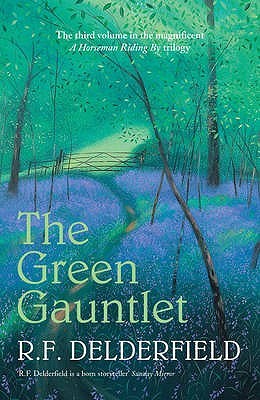
The Green Gauntlet by RF Delderfield

I loved the first two books in RF Delderfield’s A Horseman Riding By trilogy and am sorry it has taken me three years to get around to reading the third book, The Green Gauntlet. It was lovely to be back in the Shallowford Valley and become reacquainted with Paul and Claire Craddock and their family, friends and neighbours.

If you’re new to this trilogy, I would strongly recommend beginning with the first novel, Long Summer Day, which is set in the Edwardian period and tells the story of how the young Paul Craddock buys an estate in the Devon countryside and becomes Squire of Shallowford, gaining the trust and respect of the other valley families along the way. The second book, Post of Honour, continues the story through World War I and finally, in The Green Gauntlet, we follow some of the same characters throughout World War II and its aftermath. By the time you reach this third and final novel there are a huge number of characters and storylines to keep track of, which makes it difficult to give a summary of the plot, so instead I will just pick out a few things that I particularly enjoyed.

First of all, there’s the conflict between the old ways of life and the new as change comes to the valley in the form of new technology, improvements to transport networks and differences in generational attitudes. Paul is disappointed to find that many of the younger people, including several of his own children, don’t share his love for their little corner of England and are only interested in the money they can make out of it. Although the book was published in 1968, some of the issues it covers, such as the over-development of land and destruction of the environment are still very relevant. There’s a sense that Paul himself belongs to a world that is rapidly disappearing and that the valley he remembers now exists only in his mind:

His patriotism, as she saw it, was at once more localised and more broadly based, drawing its strength from the books he read and the thoughts he thought. It had to do with Valley crafts and Valley loyalties, with the food they grew and the dialects they used. It reached back into the history of history books that, for most people, herself included, had no more reality than the stories of the Old Testament but for him had a message that had regulated the whole of his life since she had known him. If it brought him comfort now who was she to question it?

Another of the novel’s themes is the war, of course, and Delderfield occasionally takes us into the heart of the fighting where several of our characters – including Paul and Claire’s twin sons, Andy and Stevie, and their son-in-law Rumble Patrick are serving in various branches of the armed forces. The valley itself doesn’t remain unscathed either, with bombs falling, sea mines being washed ashore and a German pilot descending in the woods. Although there’s plenty of action and always something happening in the Valley, the story moves along at a leisurely pace and the focus is on the daily lives of the characters and the relationships between them. I was particularly gripped by the story of Andy’s wife Margaret, who finds herself married to one twin while in love with the other and with no guarantee that either of them would come home alive.

I do think this book could have been made a lot shorter without losing any of the plot and the last few chapters seemed to go on forever as every loose end was tied up. Despite this, I was still sorry to reach the final page and to have to leave the Valley and its people behind. Luckily, RF Delderfield wrote plenty of other novels which I can look forward to reading and I already have one of them, Farewell, the Tranquil Mind, waiting on my shelf.

This is book 12/20 of my 20 Books of Summer 2021. Obviously I’ve failed to complete my list this year, but I’ve almost finished two more books that I won’t have time to review by the deadline, so I’m not too unhappy with my result!

Evil Under the Sun by Agatha Christie

August’s theme for the Read Christie 2021 challenge is ‘a story set by the seaside’, which seemed the perfect opportunity to pick up an unread Poirot novel, Evil Under the Sun. It’s set on an island off the coast of Devon, where Hercule Poirot is on holiday at the exclusive Jolly Roger Hotel.

Christie begins by introducing us to all of the people staying at the hotel, including Arlena Stuart, a beautiful former actress. Arlena is described by one of the other characters as ‘the personification of evil’ – and she certainly seems to be causing plenty of trouble. Fellow guest Patrick Redfern can’t take his eyes off her and Arlena appears to be encouraging his attentions, regardless of how hurtful this is to Patrick’s young wife, Christine. Arlena’s own husband, Captain Marshall, claims he hasn’t noticed her behaviour, but is he telling the truth? Meanwhile, Marshall’s teenage daughter from a previous marriage hates her stepmother and resents the way she has come into the family home, bringing scandal and unhappiness with her.

When Arlena’s dead body is found at Pixy Cove, a secluded part of the island, almost everyone becomes a suspect. It’s fortunate that Poirot is already on the scene and can begin investigating immediately! In fact, as he later tells his friend, Captain Hastings, he had begun even before the murder took place…

Hastings said, staring: “But the murder hadn’t happened, then.”

Hercule Poirot sighed. He said: “But already, mon cher, it was very clearly indicated.”

“Then why didn’t you stop it?”

And Hercule Poirot, with a sigh, said as he had said once before in Egypt, that if a person is determined to commit murder it is not easy to prevent them. He does not blame himself for what happened. It was, according to him, inevitable.

Having just read three Miss Marple novels in a row for Read Christie, it made a nice change to get back to Poirot for this month’s read. I usually prefer the Poirots to the Marples and Evil Under the Sun – first published in 1941 – is another good one. Setting the story on a private island, for the use of the hotel guests only, is not just an atmospheric setting but also a clever one as it immediately limits the suspects to those already on the island at the beginning of the book. With his understanding of the kind of person Arlena was, Poirot is quickly able to pick out one suspect as the most likely culprit, but due to timings and alibis it seems impossible that this person could have committed the crime. As the novel progresses, more clues emerge, along with the usual red herrings and misdirections Christie likes to throw in our way!

I didn’t manage to solve the mystery, but once the solution was revealed I could see how perfectly all of the clues fitted together – like a jigsaw puzzle, as Poirot describes it. It did seem that the way in which the crime was carried out depended on a lot of good luck and on people behaving in a certain manner, but I still think Christie was fair with the reader and I have no complaints. I’m now looking forward to September’s book, which will be Crooked House.

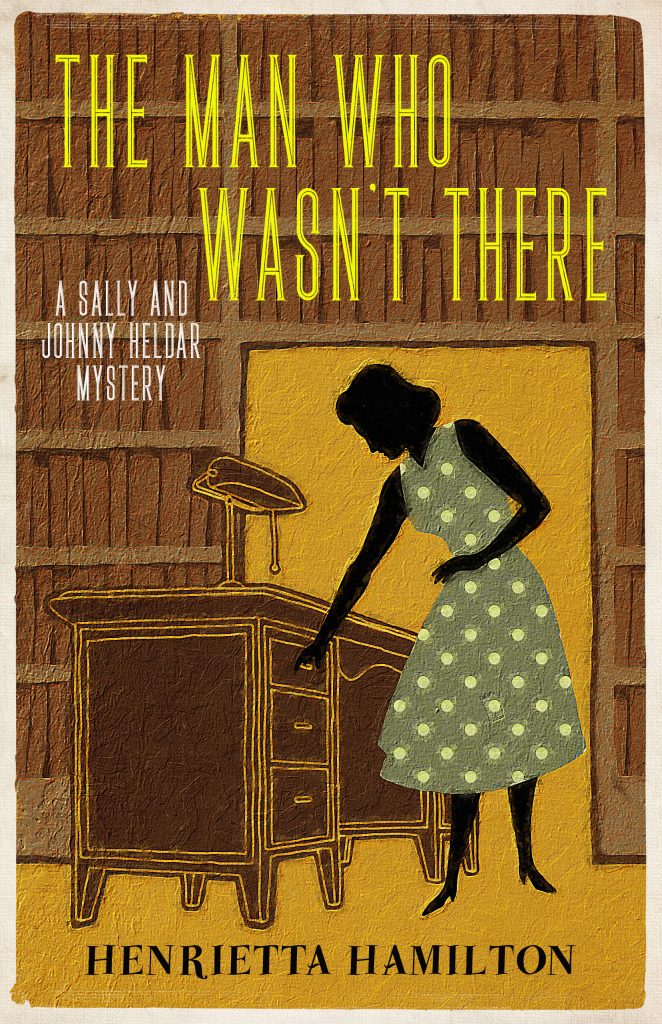
The Man Who Wasn’t There by Henrietta Hamilton

Henrietta Hamilton is an author I discovered recently through Agora Books’ Uncrowned Queens of Crime series. Hamilton (a pseudonym of Hester Denne Shepherd) had four novels published between 1956 and 1959, all featuring the crime-solving husband and wife team of Johnny and Sally Heldar. I have read two of them – Answer in the Negative, which I didn’t particularly enjoy, and The Two Hundred Ghost, which I did. When I was given the opportunity to read The Man Who Wasn’t There, I assumed it was another of the four books, but I quickly discovered that the circumstances behind the publication of this novel are more intriguing.

After Hamilton’s death in 1995, her nephews found some typed manuscripts of thirteen books that had never been published in her lifetime – including several more Sally and Johnny mysteries. This is one of them, made available at last by Agora Books. As one of the author’s nephews suggests in the introduction, it may have been changing tastes in literature that led to his aunt’s books no longer being published; by the late 1950s the Golden Age of detective fiction was largely over and The Man Who Wasn’t There does feel like a book written a decade or two earlier.

Johnny and Sally Heldar are a young married couple who run an antiquarian bookshop and are gaining a reputation for themselves as amateur detectives. Therefore, when Johnny’s cousin Tim discovers that his fiancée, Prue, is involved in a murder case, he turns to Johnny and Sally for help. Prue had been working as secretary to the murdered man, Mr Frodsham, who has been found shot dead in his study and Prue herself has become one of the suspects. Tim is hoping the Heldars can prove her innocent – and it certainly seems that there are plenty of other people with motives, including Frodsham’s mistress and her husband, another woman he was blackmailing, and some old enemies from his days in the French Resistance.

I like Sally and Johnny and it was nice to spend some more time in their company (although I do wish Johnny would let his wife take a more active part in the investigations), but I found the plot of this particular novel a bit too complicated and detailed for such a short book. I struggled to keep track of all the characters, what time they arrived at or left the victim’s house, what they were all doing during the war, even the number of different guns involved. Most of this information is delivered in the form of long conversations as Johnny and Sally ‘think out loud’ to each other or interview suspects, so you also need to remember who said what and to whom. Still, I think Hamilton was fair to the reader and gave us all the clues we needed to be able to solve the mystery.

I probably won’t read any more books in this series as I’ve tried three now and only really enjoyed one of them, but I can see from looking at other reviews that lots of people love her books so I hope the rest of the unpublished manuscripts find their way into print very soon.

Thanks to Agora Books for providing a copy of this book for review via NetGalley.