Killing Beauties by Pete Langman

Set in England during the Interregnum, the period between the execution of Charles I in 1649 and the restoration of Charles II in 1660, Pete Langman’s Killing Beauties tells the story of two female spies – or she-intelligencers, as they were known. Female spies played an important role in the intelligence networks of the time and the two women who feature in this novel, Susan Hyde and Diana Jennings, are based on real people.

The story begins in August 1655. With England under the rule of the Lord Protector Oliver Cromwell, the future Charles II – who is in exile awaiting the day when he can return to claim his throne – has entrusted Susan and Diana with a difficult and dangerous mission. Their task is to infiltrate the household of Cromwell’s Secretary of State John Thurloe in the hope of extracting secrets that will help them to undermine the Protectorate. However, Thurloe is also Cromwell’s spymaster, with a large and powerful network of his own. Will the women be able to obtain the information they need before their true identities are revealed?

Killing Beauties is a fascinating novel from the point of view of learning what was involved in the secret services of the 17th century: how they were organised and structured; the disguises, code names and terminology they used; how they gathered their intelligence; and the methods they used to keep their correspondence private – it was particularly interesting to read about the clever and intricate art of letterlocking! It’s such a shame that the contributions of the women who worked for these secret societies have been largely ignored and forgotten. The real Susan Hyde was completely overshadowed by her own brother Edward, the Earl of Clarendon, whose book, The History of the Rebellion, doesn’t even mention her.

Pete Langman has stated that the inspiration for his novel was Nadine Akkerman’s Invisible Agents: Women and Espionage in Seventeenth-Century Britain, which refers to both Susan and Diana, but as there is a limit to how much is actually known about them, particularly Diana, he has had to use some imagination to fill in the gaps. According to Akkerman’s book, Susan Hyde was postmistress for the secret royalist society of the Sealed Knot, and she carries out this role in Langman’s novel as well as trying to gain the trust of John Thurloe in order to obtain intelligence. Susan is portrayed as a sensible, practical person who takes her work very seriously, fully aware of the danger she is in – and I admired her, but I have to admit I found her a little bit bland. Diana, in contrast, is lively, daring and much more fun to read about, even if her loyalties are sometimes in question…

Diana had her fingers crossed as she spoke. It was something she did a lot, crossing her fingers as she spoke. Sometimes even Diana was unsure when she was lying, and at such times she had long ago decided that it was best to assume that she was.

For various reasons Diana virtually disappears from the story in the middle of the book and we don’t see as much of her as I would have liked. However, there’s a large cast of other characters to get to know, some of whom I’m assuming are fictional but others who definitely really existed: for example, Isaac Dorislaus, the Dutch scholar recruited to examine the correspondence passing through Cromwell’s ‘Black Chamber’, and Samuel Morland, one of Thurloe’s spies, who was also a mathematician and inventor.

I can’t really say that I loved this book; I found the plot unnecessarily complex and on occasions a bit difficult to follow, which admittedly could have been because I wasn’t paying enough attention, although I don’t think so. I also thought the book felt longer than it really needed to be, which meant the pace seemed to drag at times. Still, it was good to get some insights into the fascinating world of 17th century espionage and to have the vital contributions of female spies highlighted. At the end, it seemed as though things were being set up for a sequel, so despite having one or two problems with this book I would be happy to read another by Pete Langman.

Queen Lucia by E.F. Benson – #1920Club

I wasn’t sure whether I would manage to read and review anything in time for this week’s 1920 Club (hosted by Karen and Simon) but when I picked up E.F. Benson’s 1920 novel Queen Lucia I found it so entertaining and easy to read that I finished most of it in one day! Although I can’t quite say that I loved it, it was just the sort of thing I was in the mood for at the moment – something that would take my mind off the current situation for a while and whisk me away to another time and place.

That place is Riseholme, a quiet English village described by a newcomer as a “delicious, hole-in-the-corner, lazy backwater sort of place, where nothing ever happens, and nobody ever does anything,” but which, to the people who live there, is the centre of the universe. Life in Riseholme consists mainly of arranging dinner parties and musical evenings, while gossiping about the neighbours – and presiding over all of this is Emmeline Lucas, better known as Lucia (pronounced the Italian way, of course). Along with her husband Philip (‘Peppino’) and her loyal ‘gentleman-in-waiting’ Georgie Pillson, Lucia has put herself at the heart of Riseholme society and is the self-proclaimed queen – so imagine her frustration when her rival, Daisy Quantock, begins to pose a threat to her crown. When Mrs Quantock produces an Indian Guru and offers his services as yoga teacher to the villagers, the jealous Lucia manages to ‘steal’ him for herself, so when Daisy moves on to a new fad she vows not to make the same mistake again…

Lucia is such an unpleasant character! From her irritating habit of speaking baby talk with Georgie and her insistence on dropping Italian phrases into conversation, despite only knowing a few words of the language, to the way she pushes others aside to make herself the centre of attention, there is really not much to like about her at all. And yet that didn’t really matter; as this is a satire and Lucia, and the others, are clearly supposed to be comedy characters, the more unlikeable the better!

This is the first in Benson’s six-novel Mapp and Lucia series and also the first one I’ve read. They had never really appealed to me before, although I know a lot of people love them, so I was pleased to find that I enjoyed this book much more than I thought I would. I don’t feel an immediate compulsion to pick up the next one, but I’m sure I will at some point and am looking forward to meeting Miss Mapp.

~

Usually I’m able to post a list of other books I’ve reviewed on my blog from the relevant club year, but for 1920 I can find only one:

The Great Impersonation by E. Phillips Oppenheim

It’s a great book and one I would highly recommend.

A Thousand Ships by Natalie Haynes

“Just as I promised him: this was never the story of one woman, or two. It was the story of all of them. A war does not ignore half the people whose lives it touches. So why do we?”

This is the book I had expected Pat Barker’s The Silence of the Girls to be. A retelling of the events surrounding the Trojan War written from the perspective of not just one or two but many of the women who had a role to play in the war and its aftermath – and going beyond the Iliad, the Aeneid and the Oresteia to tell the stories the men didn’t tell.

From Penthesilea, the Amazon queen, to Cassandra the prophet; from Thetis, the sea nymph and mother of Achilles, to Gaia, the personification of Mother Earth; from Iphigenia, cruelly sacrificed on what should have been her wedding day, to Creusa, who wakes in the night to find the city of Troy in flames – just think of a woman from Greek mythology and she is probably here, in this book!

The stories of some of the women are told quite briefly, while others are given more time and attention; some appear only once but others recur again and again throughout the novel. Interspersed between these stories are a series of letters from Penelope to her absent husband, Odysseus, the tone growing increasingly hurt and frustrated as tales of his heroic escapades begin to reach her while the man himself appears to be in no hurry to return home to his wife. And holding all the other threads of the novel together are short sections of commentary by Calliope, the muse of epic poetry, who is providing guidance to a blind poet who wants to tell the story of Troy:

Men’s deaths are epic, women’s deaths are tragic: is that it? He has misunderstood the very nature of conflict. Epic is countless tragedies, woven together. Heroes don’t become heroes without carnage, and carnage has both causes and consequences. And those don’t begin and end on a battlefield.

This is an ambitious novel but, for me, it mostly works. I say mostly because there were times when I found the structure confusing – the stories are not presented in chronological order and jump around in time so that a chapter set after the fall of Troy is followed by a chapter set at the beginning of the war – but I’m happy to admit that I am in no way an expert on Greek mythology and readers with more knowledge probably wouldn’t have a problem. I’m not really sure of the reason for the non-linear structure, though – obviously the stories must have been carefully arranged in a certain order but to me they felt very random. Also, because there are so many different narrators, many of whom made their voices heard only for a few pages before disappearing from the novel completely, it was difficult to form any kind of emotional connection with them. Still, there are some I found more memorable than others: Cassandra, doomed to constantly ‘watch the shock on people’s faces, when precisely what she had predicted – and they had ignored – came true’; Hera, Athene and Aphrodite fighting over the golden apple inscribed with the words ‘For the most beautiful’; and the sad story of Laodamia, devoted to a bronze statue of her lost husband.

Although A Thousand Ships felt more like a collection of short stories than a novel, I enjoyed reading it and am now wondering whether I should try Natalie Haynes’ previous Greek retelling, The Children of Jocasta.

Thanks to Mantle for providing a copy of this book for review via NetGalley.
The Missing Sister by Dinah Jefferies

So far, the novels of Dinah Jefferies have taken me to India, Malaya, Ceylon and French Indochina. Now, with The Missing Sister, I have had the opportunity to visit Burma. Known as Myanmar today, the novel is set in 1936 when Burma is still a British colony – although unrest is growing and there are signs that independence might not be far away. It is to Burma that Belle Hatton has come in search of answers to a mystery that has haunted her family for more than twenty years.

Taking a job as a singer in a luxury hotel in the capital city of Rangoon, Belle uses her spare time to hunt for clues that may explain the disappearance of her parents’ baby daughter, Elvira, in January 1911. Belle herself has grown up in England, unaware that her elder sister ever existed, but now that both of her parents are dead, she has discovered a newspaper clipping describing the day Elvira, only three weeks old, vanished from the Hattons’ garden in Rangoon. Although it was all so long ago, Belle is determined to find out what really happened and whether Elvira could possibly still be alive.

As with all of Dinah Jefferies’ novels, the location is beautifully described and although I’ve never been to Burma/Myanmar it was easy to picture the lively, bustling streets of Rangoon (now Yangon), the opulent temples and pagodas, and the scenery Belle sees when, later in the book, she travels upriver to Mandalay. Another common feature of Jefferies’ books tends to be a portrayal of different cultures existing, often uneasily, side by side in the final years of the British Empire (or in the case of The Silk Merchant’s Daughter, the French Empire). This book contains a vivid description of a violent riot between the Burmese and the Burmese Indians, but otherwise I was a bit disappointed that Belle has little involvement with the local people and their struggles, sticking mainly to the British community and focusing on her search for Elvira.

The mystery element of the novel is slightly predictable and although I didn’t guess exactly what had happened to Belle’s sister, I wasn’t at all surprised by the ending of the book. Along the way, Belle is offered help from two very different men – Edward, a British government official, and Oliver, an American journalist – but when she starts to receive anonymous warnings, she is unsure which, if either of them, she can trust. This time, I did guess correctly – but I did have a few doubts as it wasn’t completely obvious.

There was one other aspect of the book that interested me: a storyline set several years earlier and following the story of Belle’s mother, Diana, and how she copes with the tragic disappearance of Elvira. When suspicion falls on Diana herself, she and her husband leave Burma and return to England where, sadly, their marriage starts to break down under the stress of their ordeal. Diana doesn’t receive the support she deserves and decisions are made that will affect not only her own future but also her youngest daughter Belle’s. Diana’s story is told in the form of short chapters interspersed with Belle’s, which means we don’t spend a lot of time with her, but the little glimpses we are given of her life and the way she is treated by her husband are very sad.

This isn’t one of my favourite Dinah Jefferies novels, but I’m looking forward to her next one The Tuscan Contessa, which is out later this year and will be the first she has written not to be set in Asia.

Lady of the Highway by Deborah Swift

This is the third book in Deborah Swift’s Highway trilogy set in 17th century England in the aftermath of the civil war. All three novels revolve around the character of Kate Fanshawe, who is loosely based on the legendary highwaywoman known as ‘The Wicked Lady’. The books do all stand alone to a certain extent, but reading them in order makes much more sense. The first volume, Shadow on the Highway, is written from the perspective of Abigail Chaplin, a maid in Kate’s household, while the second, Spirit of the Highway, is the story of Abigail’s brother, Ralph, who becomes Kate’s lover. Now, in Lady of the Highway, we finally get to hear Kate’s own point of view.

Following the events of the previous two novels, poor Kate has very little left in her life. Her husband, Thomas Fanshawe, and her cruel, overbearing stepfather, Simon, are still away from home, having been on the losing side in the recent wars – and although Kate is not too unhappy about that, she is struggling to continue with life at Markyate Manor on her own. Impoverished and desperate, she can expect little support from her neighbours, who have no sympathy for a woman from a family of defeated Royalists. Her beloved Ralph is gone, although she still feels his presence all around her, and to make matters worse, Abigail is ill and there is no money for medicine. When an attempt to seek help from her friends in the Digger community doesn’t go quite as planned, it seems that Kate has no choice but to take to the highways again…

The Highway novels are aimed at young adults but have plenty to offer an adult reader too. This book is as enjoyable and interesting as the previous two, although it’s also quite relentlessly sad and tragic; nothing at all seems to go right for Kate and she meets with rejection, anger and hostility everywhere she turns. Sometimes she deserves it – she is not the most loveable of characters and, for me, Abigail is the real heroine of the series – but often the cruelty she receives seems unnecessary and disproportionate. I think that’s maybe one of the areas where the book lacks the depth I would expect in an adult novel; there are good characters and there are bad characters but not much in between and no real explanation as to why the villains are so villainous.

Despite the titles of the books, the action we see on the highway – when Kate, out of desperation, goes out armed with her pistols in search of rich travellers – is only one small aspect of the story. Other topics that have been covered in the previous two novels and developed further in this one include the work of the Diggers, who believe that land should belong to everyone and not be bought, sold or enclosed, and what it is like to be a deaf person living in the 17th century. There’s a little bit of romance in this book too, not for Kate but for Abigail – and although I found it very predictable, I was pleased with the outcome! I liked the way the story was resolved for Kate too…both a sad and a happy ending at the same time.

I enjoyed all three books in this trilogy, including this one. I thought it was a good idea to use a different narrator for each book – first Abigail, then Ralph and finally Kate – as it meant they could each tell the part of the story most relevant to them and give three different perspectives on the same period of history. If you read these books hoping to learn more about the real Katherine Fanshawe (or Ferrers, as she is often known by her maiden name), however, bear in mind that the details of the legend are very hazy – it is not clear how and when she died, for example, and there is no evidence that Ralph actually existed, although his name is usually linked with Kate’s. The historical notes at the end of each novel give some guidance and for a different approach to the ‘Wicked Lady’ legend you may like to read The Silvered Heart by Katherine Clements too.

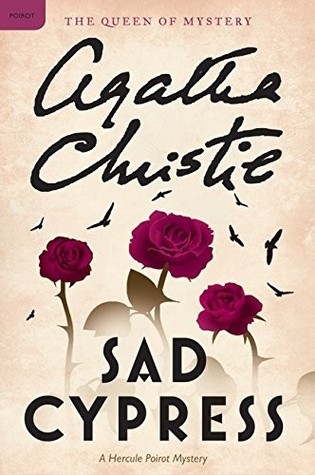
The Hollow by Agatha Christie

March’s theme for the Read Christie 2020 Challenge was ‘a Christie story adapted for the stage’ and with several unread options to choose from, I settled on The Hollow, a Poirot novel first published in 1946. Christie herself said this book was “the one I ruined by the introduction of Poirot” and in fact, her famous detective doesn’t appear in the stage version at all.

The novel begins with the eccentric Lucy Angkatell preparing to welcome several friends and family members to her home, The Hollow, for the weekend. These include John Christow, a successful London doctor, and his timid, downtrodden wife, Gerda, who seems unable to do anything right. With Henrietta Savernake, a talented sculptor with whom John has been having an affair, also attending the house party, it’s clear that tensions will be running high – and to complicate things further, the beautiful actress Veronica Cray, a former girlfriend of John’s, just happens to be staying in a cottage nearby.

Christie takes her time setting the scene and introducing us to the people who are gathering at The Hollow, rounding out each character and exploring the complex relationships between them. As well as those I’ve already mentioned above, there’s also Sir Henry, Lucy Angkatell’s husband, and three younger cousins: Edward, who has hopes of marrying Henrietta; David, a sullen and humourless young student; and Midge, the ‘poor relation’ who works for a living. The characterisation is excellent and by the time another guest – Hercule Poirot – arrives for Sunday lunch, we have been given a good understanding of all the undercurrents and resentments simmering beneath the surface.

As Poirot reaches the house, he witnesses what appears to be an artificially staged murder: John Christow lies bleeding to death at the edge of a swimming pool, while his wife, Gerda, stands over him with a gun in her hand and several of the other characters approach from different directions. At first assuming this is a game designed to test his skills as a detective, Poirot quickly discovers that it is all too real and that John is dying. But surely there is more to the scene that meets the eye? Has Gerda really murdered her husband or could there be another culprit?

I always enjoy reading Christie, but this particular book hasn’t become a favourite. Not all of them can, I suppose. There was nothing that I actually disliked about it and as I’ve said, the characters are excellent, very strongly drawn with plenty of depth and complexity – I just felt that, as a mystery, it doesn’t have quite the ingenuity and originality of some of her others. Apparently Christie describes this book in her autobiography as “in some ways rather more of a novel than a detective story” and I understand what she means. And while I don’t agree that Poirot ruins the book, I don’t think he adds a lot to it either. He doesn’t make his first appearance until a third of the way through and most of the investigating is actually done by Inspector Grange anyway, so I think the story could have worked just as well without Poirot.

But Poirot, of course, is the one who finally brings the investigation to its conclusion and leads us to the murderer. I wish I could say that I had solved the mystery too, but I didn’t – there were at least four characters I suspected and I couldn’t make up my mind between them. Maybe I will have more success in solving the next Christie mystery I read: the April topic for the challenge is ‘a story Christie disguised’, which sounds intriguing, doesn’t it?

The House by the Sea by Louise Douglas

I’m never quite sure how to describe Louise Douglas’ books. Set in either the present day or recent past, they are not exactly mysteries or crime novels, but more than just romances, and although they do have ghostly or gothic elements, they are grounded in the reality of family drama and personal tragedy. Probably romantic suspense is the best term for them, I think. Having enjoyed three of them – The Secrets Between Us, In Her Shadow and Your Beautiful Lies – I was hoping that I would also enjoy her new one, The House by the Sea.

Our narrator, Edie, has spent the last ten years blaming her former mother-in-law, Anna DeLuca, for the death of her little boy, Daniel, and the breakdown of her marriage that followed. When she hears that Anna has died she feels a sense of relief, but she is less pleased to learn that Anna has left her Sicilian villa to Edie and her ex-husband, Joe. Convinced that this is just an attempt to reunite her with Joe, Edie is angry with Anna for continuing to meddle in her life even from beyond the grave, so she heads for Sicily determined to find a buyer for the villa and return home again as quickly as possible.

On her arrival in Sicily, Edie has to endure an awkward meeting with Joe, who has also come to inspect his inheritance and look for a buyer. However, Edie soon finds herself falling in love with the crumbling old villa and is intrigued by the many secrets it seems to be hiding. Where is the valuable painting of the Madonna del Mare, missing from its place on the wall? Who are the two girls in Anna’s childhood photographs and why does one of them have her face scratched out? And what is the reason for all the bad luck Edie and Joe begin to experience? Is someone trying to drive them away from Sicily before they can uncover the truth?

Louise Douglas writes beautifully; she is one of those authors with a real talent for capturing the mood and atmosphere of a place, whether that place is the Yorkshire Moors (Your Beautiful Lies), the Cornish coast (In Her Shadow) or a rural village in Somerset (The Secrets Between Us). The House by the Sea is the first of her books that I’ve read which is set outside England and I loved the vivid descriptions of Sicily, beginning with Edie’s first sight of the island – probably the most travelling I’ll do this year!

The aircraft tipped to begin its descent and through the porthole I watched the southern side of the island of Sicily emerge from the glare of the sun. Beyond the breaching wing lay a hazy, mountainous land surrounded by turquoise water. Wispy clouds bunched around the summit of Etna, the shadow of a forest creeping up her flank. I saw the sprawl of cities, the pencil line of motorways, the meandering loops of a river and the brilliant blue rectangle of a reservoir. My journey was almost over and Joe was somewhere down there, waiting for me.

The mystery element of the novel is not very strong, to be honest. I found it easy to guess who was behind the strange occurrences at the villa – although I didn’t know exactly why and had to wait until the end of the book for everything to be explained. But what I did enjoy was watching Edie’s development as a character as, under the warm Sicilian sun, she begins to come to terms with what happened all those years ago and slowly finds the strength to move on. Her relationship with Joe and the way it changes over the course of the novel is well written and feels believable, but again, it was too easy to predict what was going to happen!

This is not one of my favourites by Louise Douglas, but it did remind me of how much I enjoyed reading her books a few years ago. I seem to have missed her last book, The Secret by the Lake, which was published in 2015, so I will have to catch up with that one soon.

Thanks to Boldwood Books for providing a copy of this book for review via NetGalley.