Blood Upon the Snow by Hilda Lawrence

Having read Death of a Doll last year, my first novel by American crime writer Hilda Lawrence, I have been looking forward to more of her books being reissued so I would have the opportunity to read another one. Death of a Doll was the third of only three novels Lawrence wrote featuring the detective Mark East, so I was delighted to find that the first in the series, Blood Upon the Snow – originally published in 1944 – has now been made available again too.

The novel opens with Mark East’s arrival in the small town of Crestwood on a dark, snowy evening, having been hired by the elderly historian Joseph Stoneman who is staying with friends, the Moreys, in a remote country house in the mountains. After making his way up to the house to meet his new employer, Mark is surprised to find that Stoneman believes he is a private secretary, not a private detective. However, the old man’s shaking hands and uneasy manner tell Mark that Stoneman knows exactly who he is and what he does. Intrigued, Mark agrees to stay on in the role of secretary for a while, hoping that eventually Stoneman will tell him what is going on and why he has secretly summoned a detective.

As Mark gets to know the other people living and working in the house, he becomes even more convinced that something is not right. What – or who – are the servants so afraid of? What is wrong with the pale and nervous Laura Morey? And was Stoneman’s fall on the cellar stairs a few days before Mark’s arrival really an accident? Then a woman dies under suspicious circumstances and suddenly Mark’s skills as a detective are required after all.

I found this book quite different from Death of a Doll, but equally enjoyable. While Death of a Doll is set almost entirely within the walls of Hope House, a women’s refuge in New York, Blood Upon the Snow has a very different setting – one that I loved from the opening descriptions of a remote ‘one-lane town’, ‘lying at the foot of Big Bear Mountain and surrounded by a dark forest’.

The cold, snowy winter weather provides atmosphere and the portrayal of a small community where everyone knows everyone else’s business increases the sense of suspense and danger as the people of Crestwood become aware that the killer must be someone they all know. I didn’t guess the solution and, to be honest, I wasn’t completely convinced by it; it certainly wasn’t something the reader could be expected to work out from the clues we are given. Mark East tends to keep his thoughts to himself too and doesn’t give us a lot of hints as to how he is progressing with solving the mystery – although now and then he does confide in Beulah Pond and Bessy Petty, two spinsters he meets in the town shortly after his arrival in Crestwood.

I remembered Beulah and Bessy appearing halfway through Death of a Doll and being a bit confused as to who they were and how they knew Mark, so it was good to see the beginnings of that relationship and to have my questions answered! The two women are fans of crime fiction and Beulah in particular likes to do some amateur detective work, which adds a bit of light-heartedness to the story even if it doesn’t do much to move the actual plot forward.

Now that I’ve read the first book in this series and the last, I will be looking out for the middle one, A Time To Die. What a shame Hilda Lawrence only wrote three of them.

Thanks to Agora Books for providing a copy of this book for review via NetGalley.
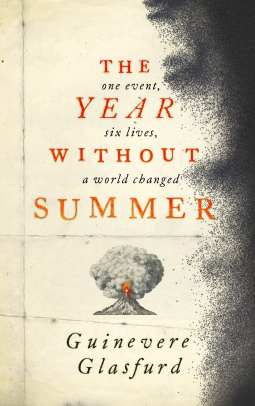
The Year Without Summer by Guinevere Glasfurd

Two years ago I read Guinevere Glasfurd’s first novel, The Words in My Hand, about a young Dutch woman and her relationship with the philosopher René Descartes. I loved that book so was hoping for a similar experience with her new one, The Year Without Summer. However, although I loved parts of this book too, I found it entirely different from The Words in My Hand and less enjoyable as a whole.

The title refers to the year 1816, which was the year following the eruption of Mount Tambora, an Indonesian volcano. It was known as ‘the year without a summer’ due to the effects of the volcanic activity on the weather. These effects were felt all over the world, far away from Asia: in Europe, low temperatures and heavy rain caused flooding, failed harvests and famine, while crops were also destroyed in North America by droughts and by frost and snow in June. In The Year Without Summer, Glasfurd explores, in fictional form, the stories of six different people whose lives were affected by the extreme weather.

The first character we meet is Henry Hogg, ship’s surgeon aboard the Benares, who sets sail in April 1815 for the island of Sumbawa to investigate reports of explosions and is shocked by what he finds: ash falling from the sky, the sea turning to stone and what had once been a green island now ‘a hellish scene’. Henry’s story is the only one in the book that takes us directly to the scene of the eruption – the others only mention the volcano briefly, if at all – yet, surprisingly, his is the one given the least time and attention.

The following spring, the English landscape painter, John Constable, is returning home to Suffolk from an unsuccessful visit to London in an attempt to gain recognition for his art and be admitted to the Royal Academy. Without that recognition and the money it would bring, John’s future looks bleak: how can he expect his beloved Maria to marry a struggling artist with no prospects?

The future of our third protagonist, Sarah Hobbs, looks even more uncertain. She and her friend Tessie are walking across the Fens from farm to farm looking for work, only to be told that there is no work to be had – and even if there was, the wages would only be half of what they were the year before. Meanwhile, Hope Peter, a soldier back from Waterloo, is having problems of his own. In his absence, his mother has died and his family home has been demolished; the life to which he’d thought he was returning no longer exists.

In the May of that year, Mary Godwin travels to Switzerland with her lover Percy Bysshe Shelley, their baby son Willmouse, and her half-sister Claire Clairmont. They are planning to spend the summer at Lake Geneva with Lord Byron and his doctor, John Polidori, but the gloomy weather keeps them indoors where they entertain themselves by writing horror stories. Finally, we meet Charles Whitlock, a preacher from Vermont, who gives us an American perspective on the summer of 1816. Charles is trying to gain the trust of his flock who are growing increasingly worried about the lack of rain and planning to abandon their farms to head west to Ohio.

These six very different storylines alternate throughout the book, never meeting or intersecting in any way, the only link between them being the unusual weather of 1816. They cover a range of issues including the social unrest which led to the Littleport Riots, the enclosure of land in the English countryside, the writing of Mary Shelley’s Frankenstein and the influence of the weather on John Constable’s paintings, and I found something to interest me in all of the stories – although most of them are very bleak and it would have been nice to have had a few more happy endings!

My problem with the book was that the way it was structured, with a chapter from one story, then a chapter from another, made it feel disjointed and made it difficult to stay engaged with each set of characters. As the six threads never came together at all, I think I would have preferred just a straightforward collection of six complete short stories – or maybe even just four, as the ones following the ship’s surgeon and the Vermont preacher felt very slight and undeveloped in comparison to the others.

As a whole, I don’t think this book was entirely successful, but still with more positives than negatives. It’s impossible not to draw parallels between the weather of 1816 and some of the extreme weather the world has been experiencing recently, which we can only expect to see more of in the future due to climate change, so this was a relevant read as well as an interesting one.

Thanks to Two Roads for providing a copy of this book for review via NetGalley.
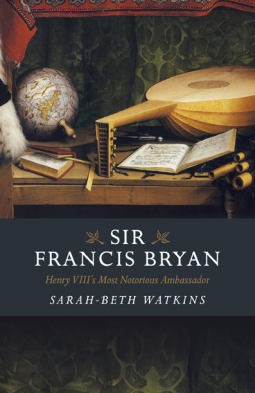
Sir Francis Bryan: Henry VIII’s Most Notorious Ambassador by Sarah-Beth Watkins

Sir Francis Bryan is one of the figures from the Tudor period I know very little about. I keep coming across him in fictional form, in novels like Hilary Mantel’s Wolf Hall and Alison Weir’s Jane Seymour, the Haunted Queen, but this new biography by Sarah-Beth Watkins is the first opportunity I’ve had to read a non-fiction account of his life.

Subtitled Henry VIII’s Most Notorious Ambassador, the book takes us through Bryan’s life beginning with his arrival at court at a young age, when he and his brother-in-law Nicholas Carew became close companions of the king, and ending with his final days in Ireland. In the years between, he held a number of positions at Henry’s court including Chief Gentleman of the Privy Chamber, Master of the Toils, Master of the Henchmen and Chief Cupbearer, as well as carrying out diplomatic missions to France and Rome. He was also, at various times, a soldier, sailor, cipherer, poet and translator. However, his greatest skill seems to have been his ability to keep the king happy and tell him what he wanted to hear, keeping his head while those around him, including his cousins Anne Boleyn and Catherine Howard, were not so fortunate. Some people saw this as lacking principles, others as common sense and self-preservation.

This is a short book and a very quick read, with the author sticking mainly to the facts and rarely providing any analysis or deeper insight into Francis Bryan’s actions or character. Nicknamed The Vicar of Hell and known for his love of wine, women and gambling and his reputation as ‘a rake and a libertine’, I had initially expected him to be a fascinating character to read about, but I felt that he never really came to life on the page at all. I suppose it depends on the type of non-fiction you like – other reviews of this book are glowingly positive – but I found it a bit dry and not quite what I’d been hoping for.

Despite the book being so short, it does appear to have been thoroughly researched and contains a large amount of factual information. The author draws on primary sources such as letters and often reproduces large chunks of them in the text. However, in many cases I didn’t feel that the letters added much to my understanding of Francis Bryan – sometimes he is only briefly referred to once or twice and the rest of the letter is not particularly relevant. Without these long excerpts, though, the book would have been even shorter and less substantial, and the letters do still have value if you’re interested in the Tudor period in general.

Overall, this book has given me a good overview of what Francis Bryan did and achieved, even though it isn’t the more personal sort of biography I prefer. I appreciate that there’s a limit to what we actually know about Bryan, though. We don’t even have any idea what he looked like; in 1526, he lost an eye during a jousting tournament and after that wore an eye patch which, as Watkins tells us, could have explained why he never allowed any portraits to be painted.

I have looked to see if any other books about Sir Francis Bryan have been written but this is the only one I can find. If you’re aware of any, please let me know!

Thanks to Chronos Books for providing a copy of this book for review via NetGalley.
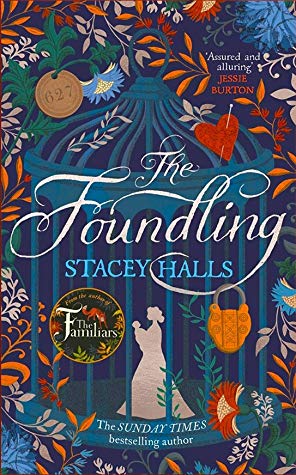
The Foundling by Stacey Halls

Stacey Halls’ new novel, The Foundling, begins on a cold November evening in 1747 with Bess Bright about to make a very difficult decision, one no new mother should ever have to face. She has brought her illegitimate baby daughter, Clara – less than a day old – to London’s Foundling Hospital and is planning to leave her there. Aware that, as an impoverished shrimp seller, she has little to offer her daughter but hunger and hardship, she is sure Clara will have a happier childhood at the Foundling, where at least she will be fed, clothed and educated. As she walks away from the hospital, leaving her baby behind, Bess consoles herself with the knowledge that it needn’t be forever; she has left a token – half of a heart made from whalebone – as proof of identity if she is ever in a position to bring Clara home again.

After six years of working hard and saving every penny she can, Bess returns to the hospital to collect her child, dreading being told that Clara has died of some childhood illness. Nothing can prepare her for the shock she receives when she enters the Foundling and is informed that her daughter has already been claimed – by someone who gave her name as Bess Bright and knew about the whalebone token. Bess is horrified. What has happened to Clara? Who has taken her little girl and what have they done with her?

I was very impressed with The Foundling, my first Stacey Halls novel. Although there wasn’t as much mystery as I would have liked and some of my biggest questions were answered a lot earlier than I’d expected, I was still kept in suspense wondering whether there would be a happy ending for Bess and her daughter or whether fate would have something else in store. I liked Bess and loved the descriptions of the London in which she lived and worked, from her lodgings in Black and White Court, where the alleys are ‘choked by coal smoke’, to the lively fish markets of Billingsgate where she and her father sell their shrimps.

However, this is not just Bess Bright’s story. It’s also the story of another woman, Alexandra Callard, a widow who is leading a very different sort of life in another part of London. Apart from attending church, Alexandra hasn’t left her elegant townhouse for years and neither has her little girl, Charlotte. Just the thought of going outside and walking along the street fills her with fear and she’s convinced that her child will be safer indoors too. Then one day, a friend persuades her to employ a nursemaid to help with Charlotte and the arrival of a new face in the household poses a threat to the secure little bubble Alexandra has built around herself.

I didn’t like Alexandra as much as Bess, but bringing a second narrator into the story – especially one who lived in such a different world – added variety and the chance to see things from another perspective. Unlike Bess, Alexandra doesn’t have to worry about money and has everything she needs within the four walls of her luxurious home, but due to her mental health problems her life is still not very happy. We eventually find out what has caused her agoraphobia and I did have a lot of sympathy, but I still found her a cold and rather selfish person.

As well as the two contrasting views of Georgian London, The Foundling explores several other interesting issues, particularly what it means to be a mother and what sort of environment is the most suitable in which to raise a happy, healthy child. The way the book ended was probably the best outcome, but I think there were at least two other possible endings and either could have been used to make a valid point. Having enjoyed this so much, I will have to read Stacey Halls’ previous book, The Familiars, about the Pendle Witch Trials.

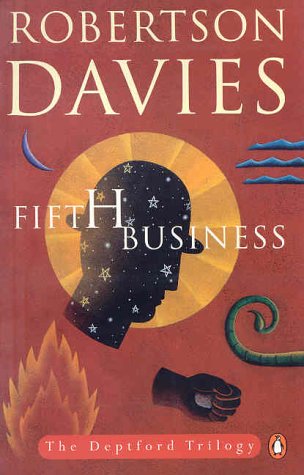
Fifth Business by Robertson Davies

Robertson Davies is a Canadian author best known for his four trilogies – the Salterton Trilogy, the Deptford Trilogy, the Cornish Trilogy and the unfinished Toronto Trilogy. As someone completely new to Davies’ work it was hard to know where to start, but as it didn’t seem necessary to read these trilogies in any particular order, I decided to begin with the one that sounded most appealing to me, the Deptford Trilogy, of which Fifth Business is the first book. I think it was a good choice! I actually started to read it last August for a reading week hosted by Lory, but got distracted during a house move and didn’t go back to it until just after New Year, when I was able to give it the attention it deserved.

Fifth Business is narrated by Dunstable (later renamed Dunstan) Ramsay in the form of a long letter written to the headmaster of the school from which he is retiring, having taught there for many years. In the letter, he looks back on his life, beginning in 1908 when, as a boy growing up in the small Canadian town of Deptford, an incident occurs that will shape his future: Percy Boyd Staunton, his friend and rival, throws a snowball containing a stone; Dunstan – the intended target – jumps aside; and instead the snowball hits a pregnant woman, who goes into premature labour with the shock. This incident means nothing to Percy, but it will haunt Dunstan for the rest of his life.

Many of the things that happen to Dunstan from this point on – the sort of man he becomes, the interests he develops, the career path he follows and the relationships he forms – could be traced back to the day of the snowball. His life-long obsession with the study of saints, for example, comes about because of his feelings of guilt and responsibility towards the pregnant woman, Mrs Dempster, and her son, Paul, the baby born prematurely. He convinces himself that she is a saint who has performed miracles, including saving his life when he is wounded at Passchendaele during the First World War. Illusions, deceptions and the unexplained are important themes running throughout the book, not just in the form of miracles but also magic tricks, conjuring and fortune telling.

I think this is the sort of book that probably needs to be read more than once to be able to fully appreciate all the different layers and ideas it contains. I’m not sure I enjoyed the book enough to want to read it again (although I did like it very much), but I’m certainly interested in reading the other two parts of the trilogy, The Manticore and World of Wonders.

Finally, if you are wondering about the title of the novel, it describes the role Dunstable/Dunstan Ramsay plays throughout his life and throughout the story:

“And you must have Fifth Business because he is the one who knows the secret of the hero’s birth, or comes to the assistance of the heroine when she thinks all is lost, or keeps the hermitess in her cell, or may even be the cause of somebody’s death if that is part of the plot. The prima donna and the tenor, the contralto and the basso, get all the best music and do all the spectacular things, but you cannot manage the plot without Fifth Business! It is not spectacular, but it is a good line of work, I can tell you, and those who play it sometimes have a career that outlasts the golden voices. Are you Fifth Business? You had better find out.”

Two from 2019: Priestess of Ishana and Call Upon the Water

I’ve been gradually catching up with my backlog of 2019 reviews throughout January and today I’m going to talk about the final two books I read in December – two books with very different settings and subjects.

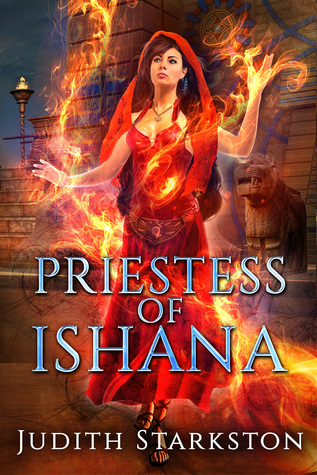
First, Priestess of Ishana by Judith Starkston. Historical fantasy set in the Bronze Age isn’t necessarily something I would usually be drawn to, but as I’ve previously enjoyed Starkston’s Hand of Fire, the story of Briseis from the Iliad, when I was offered a review copy of this one I was happy to give it a try.

The novel opens in the Hitolian city of Lawaza with a curse, a death and whispers of treason and dark magic. Suspicion falls on Hattu, the younger brother of the Great King, who has recently arrived in Lawaza, and he is quickly imprisoned and sentenced to death by the city’s Grand Votary. Tesha, the Grand Votary’s daughter, believes Hattu is innocent and sets out to clear his name, but this brings her into conflict with her father. But this is not the only challenge Tesha faces – as a priestess devoted to Ishana, the goddess of love and war, the people of her city are relying on her to overcome the evil of the Underworld.

The characters are fictional and so is the story, but the world in which the action takes place – the Hitolian Empire – is based on the real Hittite Empire. Tesha herself is inspired by the historical Puduhepa, a priestess of Ishtar (renamed here Ishana), although as I know nothing at all about the history of the Hittite Empire and hadn’t previously heard of Puduhepa, I have no idea how close the parallels are between fact and fiction. I think the setting would have provided an interesting enough story even without the sorcery, evil curses and magical creatures, but I’m not a huge fan of fantasy and other readers might feel differently. I did love the atmosphere, the strong female characters – both Tesha and her sister, Daniti – and the element of mystery. Tesha’s story continues in a sequel, Sorcery in Alpara, which is available now.

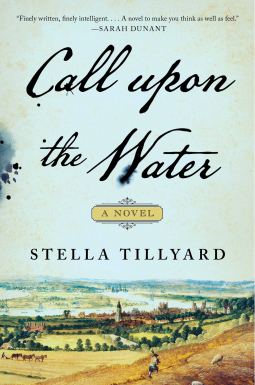
Moving on to Stella Tillyard’s Call Upon the Water, this is another historical novel but one set in a much more recent period – the seventeenth century. It follows the story of Jan Brunt, a Dutch surveyor and mapmaker who arrives in England in 1649, the year of King Charles I’s beheading. Jan is part of a team working on a new engineering project: the draining and development of the Great Level, a large expanse of marsh to the north of Ely in the English Fens. It is here that Jan meets Eliza, an illiterate young Fenland woman with whom he falls in love.

Switching between two time periods and locations – England in 1649 and Nieuw Amsterdam, the Dutch settlement which would later become New York City, in 1664 – and told in two voices, Jan’s and Eliza’s – this is a beautifully written novel and a moving, poignant story. However, I found the pace very, very slow and I struggled to stay interested in the long, detailed descriptions of Jan’s work in draining the marshes and directing the flow of the water. I don’t think I was the ideal reader for this book as I do prefer novels with stronger plots, but I did like Stella Tillyard’s writing and wouldn’t rule out reading another of her books.

Call Upon the Water has also been published as The Great Level but I have used the title of the edition I received to review from Atria Books via NetGalley.

~

Have you read these books? Do either of these subjects interest you?

The Bastille Spy by CS Quinn

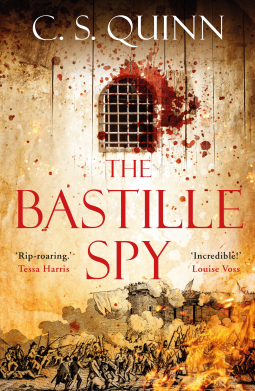
Set during the French Revolution and featuring an almost super-human female spy and a handsome, charismatic pirate, this book feels like a cross between The Scarlet Pimpernel, James Bond and Pirates of the Caribbean. As the first in a new series – Revolutionary Spy – I’m not sure whether I really liked it enough to want to continue with the next one, but it was certainly entertaining.

Our heroine Attica Morgan is the illegitimate daughter of a British nobleman and an African slave. Raised and educated in England, Attica wants to make the most of the opportunities she has been given and do everything she can to help relieve the suffering of others, whether they are those who are born or sold into slavery, or those who have become political prisoners. With her impressive range of skills and abilities, as well as her intelligence and fearlessness, Attica has been admitted to the secret society known as the Sealed Knot and as the novel opens in 1789, she is preparing to head to France on a new mission.

Armed with her deadly Mangbetu knife and her quick wits, Attica arrives in a Paris where revolution is brewing. A diamond necklace intended for Marie Antoinette has gone missing, something which could have serious repercussions for the monarchy if the jewels are not found. Attica’s task is to locate the necklace, but more important to her is the safety of her cousin Grace, who was sent to Paris on a mission of her own and has disappeared as thoroughly as the diamonds. Meanwhile, a prisoner has been murdered inside the notorious Bastille, but who was he and who was responsible for his death?

As if all of that wasn’t enough, Attica crosses paths with some of the leading figures of the Revolution, including Maximilien Robespierre who is on the trail of an elusive British spy known only by the codename ‘Mouron’, or ‘Pimpernel’. If she is to evade Robespierre’s clutches and survive long enough to complete her mission, Attica needs someone she can trust, but there’s only the pirate Captain Jemmy Avery – and it’s impossible to tell which side he is on and for whom he is really working.

The story moves along at a whirlwind pace, never slowing down for a second as Attica and her friends rush from one adventure to another, trying to stay one step ahead of their enemies. There’s plenty of historical detail in between, but something about the writing style, the language and the characters made the book feel more ‘modern’ than I would have preferred. Attica herself isn’t very believable as an 18th century woman – but then, she wouldn’t be very believable in any other time period anyway! It seems there is nothing she can’t do, from picking locks and wielding weapons to speaking a multitude of foreign languages and decoding secret messages. This makes her fun to spend time with, but I would have liked to have seen a few more flaws and vulnerabilities to round out her character.

Only part of the story is told from Attica’s point of view. There are also some chapters which focus on Robespierre, as well as some in which we follow the adventures of Attica’s cousin Grace. Next to the larger-than-life Attica, Grace is a quieter, less memorable character, but I enjoyed the occasional change of perspective.

I might be tempted to read the next book in this series, but at the moment I don’t think so. However, I’m determined that 2020 will be the year I read Hilary Mantel’s French Revolution novel, A Place of Greater Safety, which I’ve only been putting off reading because of the length.

Thanks to Corvus for providing a copy of this book for review via NetGalley.