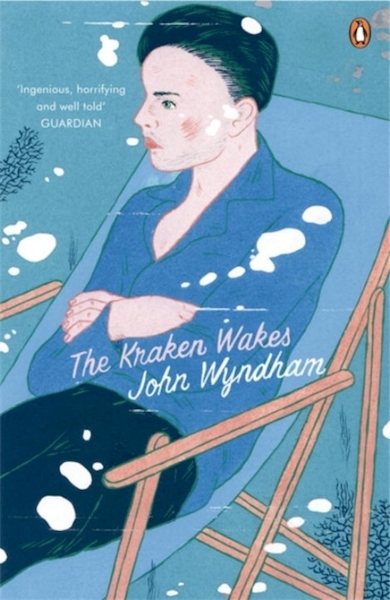
The Kraken Wakes by John Wyndham

This was the book selected for me in the recent Classics Club Spin. For once, I’ve managed to finish my book before the deadline (4th October).

The Kraken Wakes was published in 1953 and, like most of John Wyndham’s other books, is a classic science fiction novel. It’s narrated by Mike Watson, who works as a reporter for the EBC (a fictional rival to the BBC). At the start of the novel, Mike and his new wife Phyllis, also a reporter, are on their honeymoon on a cruise ship in the Atlantic when they spot something odd in the sky: five bright red lights descending towards the sea and disappearing beneath the water. As more and more sightings like this are reported, it becomes clear that these fireballs are not just falling at random – they are heading for the deepest waters in the world, which suggests that some kind of plan is under way.

When ships mysteriously begin sinking while trying to cross these deep sea areas, panic spreads across the world. Many people blame the Soviet Union, who in turn blame Western capitalist governments – the Cold War is ongoing, after all – but Mike and Phyllis support the theories of Professor Alastair Bocker, who is warning the public that an alien presence, one which can exist only at very high pressures, has settled beneath the sea and is targeting shipping and human life. The Watsons see evidence of this for themselves when they accompany Bocker to the Caribbean island of Escondida and witness strange mechanical ‘sea tanks’ emerging from the sea. Still, Bocker and his theories get very little support, being ridiculed by the media and ignored by governments…until the situation escalates to a point where it can no longer be ignored by anyone.

I enjoyed this book, although not as much as The Midwich Cuckoos or Chocky, which are my favourites by Wyndham. This is a more traditional alien invasion novel in many ways, although there are some unusual elements – for example, we don’t actually see the aliens and they don’t try to interact with humans or make their motivations clear. I don’t want to go into too much detail and spoil the whole plot, but there’s also an ecological thread to the story, mirroring modern climate change warnings, which makes it feel very relevant, probably more so today than in 1953.

I liked Mike and Phyllis and the way their marriage was portrayed as a true partnership based on mutual love and respect. Phyllis is a strong character and it’s good that, rather than being pushed into a minor role, she plays an important part throughout the novel and Mike may not have survived without her intelligence and resourcefulness. The most interesting thing for me, though, was seeing how governments, scientists and the public react to a threat affecting the whole world. I think we got a taste of this during the Covid pandemic – governments being slow to take action, advice and warnings being ignored, public denial and confusion. But this is where I think the decision to have the whole book narrated by Mike was a bit limiting. I would have liked to have seen the situation from other perspectives, to have heard conversations between various government ministers, to have seen what was happening in communities around the world, to have watched Professor Bocker and his fellow scientists trying to come up with answers.

Overall, this was a fascinating read. I’ve now read all of Wyndham’s major novels, but still have his short stories and his early work published as John Beynon to try.

This is book 7/50 from my third Classics Club list.
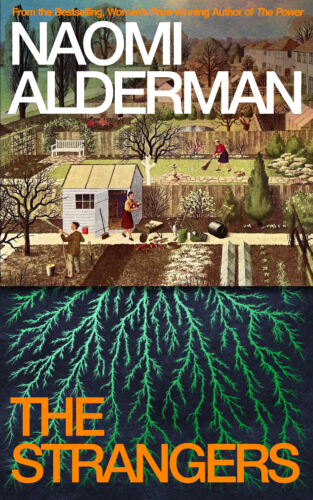
The Strangers by Naomi Alderman

A few months after her mother’s death, the author Naomi Alderman tries to keep her grieving father occupied by setting up a camera to take photos of the foxes that visit his garden at night. Examining the photos the next morning, they discover that they’ve captured not only an image of the fox, but also another animal they’re unable to identify. Soon it emerges that other people all over the UK have also seen this new creature – a furry mammal, similar in appearance to a badger but with a flat face and a long nose almost like an elephant’s trunk. People begin referring to it as a mini mammoth, which is then shortened to ‘mimmoth’ and the name sticks.

As sightings of mimmoths spread across the world, scientists, the media and the public try to make sense of this strange new species. Where did the mimmoths come from? Are they as harmless as they seem or could they be a threat to humans? Alderman herself feels an affinity with the mimmoths, finding comfort in their presence, but when she starts to obsess over them, she begins to wonder whether she’s suffering from a condition known as ‘mimmoth psychosis”.

The Strangers is a strange book! It’s part science fiction but also part memoir, in which Alderman uses herself as the narrator and protagonist of the story. Although I’m new to Alderman’s work and I previously knew nothing about her as a person, it seems that she has drawn on incidents and experiences from her own life in the writing of this novel. She talks about the trauma of suffering a series of failed pregnancies, her complex relationship with her mother and learning to feel comfortable with her physical appearance, which I understand are things she has spoken or written about in the past.

I loved reading about the mimmoths. Alderman writes about them in a very convincing, matter-of-fact way that reminded me of John Wyndham’s books where one unusual, unexpected element is introduced into an otherwise normal setting. She goes into a lot of detail describing what the mimmoths look like, how they behave and, most importantly, how humans react to them. There’s a variety of opinions, ranging from those who believe the mimmoths are a nuisance and should be culled to those who welcome them and are happy to live alongside them. I started to wonder whether the book was intended as a political allegory in which the arrival of the mimmoths represents immigration and I think parts of the story could definitely be interpreted in that way.

The ending of the book disappointed me, though. I felt that we didn’t get a satisfying explanation for the mimmoths’ sudden appearance and what their intentions were; some fascinating threads start to emerge throughout the novel as researchers begin to notice some unusual population patterns seemingly connected with the mimmoths, but none of these ideas really seem to go anywhere and fizzle out towards the end when the focus moves almost entirely onto the narrator’s personal experiences of grieving and healing. For me, the memoir elements and the speculative fiction elements didn’t tie together very well and could almost have been two separate books.

I was left feeling let down by the final 20% or so of the book, but everything that came before that was fascinating so I think this was a worthwhile read overall. This was my first Naomi Alderman book and I would be happy to try another one.

Thanks to Penguin UK for providing a copy of this book for review via NetGalley.

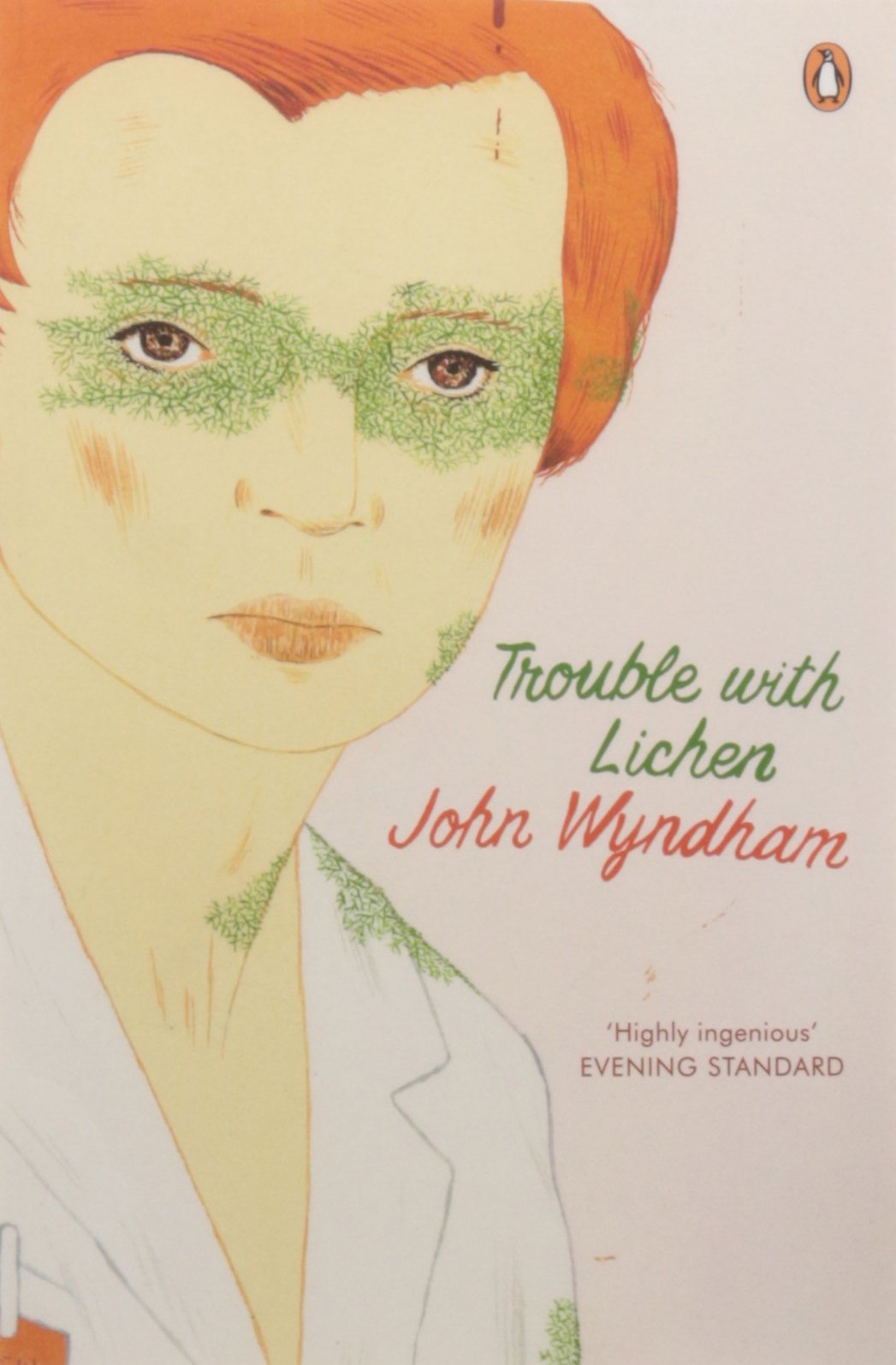
Trouble with Lichen by John Wyndham

What would you do if someone offered you the chance to live longer? Not just a few years longer, but two or three times the average lifespan? What would be the benefits and the drawbacks? And what if you were the person who had discovered a way to make all of this a reality? These questions form the premise of John Wyndham’s 1960 novel, Trouble with Lichen, the book recently chosen for me to read in the latest Classics Club Spin.

The novel is written from the perspectives of scientists Francis Saxover and Diana Brackley, as well as Francis’ two children, Zephanie and Paul. Diana is a newly qualified biochemist working for Francis at his research facility, Darr House, when they both notice the strange effects of a piece of lichen which has been accidentally dropped into the cat’s saucer of milk. Each without the other’s knowledge, Diana and Francis begin to carry out their own research and both independently come to the same conclusion: the lichen seems to have properties that preserve a youthful appearance and slow down the rate at which people age. Rather than share her findings with Francis, Diana leaves the company and the two don’t see each other again for several years.

Because the supply of this particular species of lichen is very limited – it seems that it only grows in one small part of the world – Francis and Diana both sense that it could be dangerous to make the results of their research public before they’ve found a way to create the substance synthetically in the lab. Francis begins to treat himself with the lichen extract, implanting it beneath his skin, and does the same for his two teenage children, although he doesn’t tell them exactly what it is. Diana, on the other hand, starts her own beauty company, Nefertiti Ltd, and injects the substance into some of her wealthy female clients, again without being honest with them. Of course, it’s only a matter of time before the world learns the truth…

Although I wouldn’t describe myself as a big fan of science fiction, I’ve read and enjoyed several of John Wyndham’s novels. Trouble with Lichen has a slightly different feel – there’s less plot, less action and more discussion of ideas, ethics and moral dilemmas – but I enjoyed this one as well. It was interesting to consider the various implications of increasing our longevity; Francis and Diana seem to assume that everyone will be fighting to get their hands on the substance (referred to as an ‘antigerone’), but the thought of living to be two or three hundred years old doesn’t sound at all appealing to me! What do you think? Would you like to?

The novel has a strong feminist message, which isn’t really what I expected from a book written by a male author in the 1960s, and I appreciate what he was trying to do, although it didn’t always work! Diana believes she can create a future where women don’t need to rush into marriage because their childbearing years will last a lot longer, giving them time to pursue a meaningful career. This is the motive behind Nefertiti – she wants to gain the support of some of the world’s most powerful and influential women – but the way she goes about it, giving the drug to her clients without their knowledge, is completely unethical however she tries to justify it. There’s also a strong implication that the biggest benefit for women is that they’ll be able to continue looking young and attractive for much longer, which will keep their husbands happy.

This isn’t one of my favourite books by Wyndham and if you’re new to his work, I would recommend starting with a different one – maybe The Day of the Triffids or The Midwich Cuckoos – but although it’s not the most exciting story, it’s definitely a fascinating one. The final section is particularly interesting, where we see a whole range of different views from journalists, political parties, religious groups, trade unions and the general public. Not all of our questions are answered by the end of the book – in fact, I found the ending quite abrupt – but we are certainly left with a lot to think about!

This is book 1/50 from my third Classics Club list.
Ice by Anna Kavan

This is a strange book and I’m not sure I’ll be able to describe it adequately! It’s probably not something I would normally have chosen to read, but this new edition from Pushkin Press caught my eye and as I’ve enjoyed other books from their Classics range, I decided to try it.

Ice was first published in 1967, the last of Anna Kavan’s books to be published before her death a year later. It follows an unnamed narrator who has developed an obsession with a pale young woman with silver-white hair. The girl is also unnamed and described as delicate, glass-like and under the control of her sinister husband, who later becomes known as ‘the Warden’. Our narrator pursues her from place to place, hoping to rescue her from the Warden, occasionally catching up with her and then losing her again. There’s not much more to the plot than that – Christopher Priest in his foreword to this edition calls the novel ‘virtually plotless’ – but the book still has multiple layers that make it an interesting and worthwhile read.

First, there’s the setting. The narrator’s pursuit of the white-haired girl takes place against a backdrop of apocalyptic scenes as the planet rapidly becomes engulfed by ice. I’ve seen this referred to as an allegory of Anna Kavan’s own addiction to heroin, although I don’t know enough about her to comment on that. It could also be seen as a warning of climate change, more relevant than ever today, of course. Either way, there are some beautiful descriptive passages as Kavan writes about the coldness, the glittering snow and the giant walls of ice closing in on the girl, the narrator and the world.

Another notable thing about the novel is the way the reader (and the narrator himself) can never be quite sure of the boundaries between reality and a dreamlike or hallucinatory state. Sometimes the girl will appear seemingly from nowhere, just out of reach or about to be enclosed by the ice – only to disappear again just as suddenly, leaving us wondering whether she was ever really there at all. These shifts in reality occur repeatedly throughout the book, which is very unsettling! The Warden also never feels entirely real, but is always there as a threatening, oppressive presence; the narrator sees himself as trying to free the girl from the other man’s control, but his own infatuation with her gradually begins to feel just as disturbing.

In the foreword, Priest describes the book as ‘slipstream’, which Wikipedia defines as ‘speculative fiction that blends together science fiction, fantasy, and literary fiction, or otherwise does not remain within conventional boundaries of genre and narrative’. It’s certainly not a conventional novel and I have to be honest and say that I didn’t enjoy it as much as I’d hoped to – after the first few appearances and disappearances of the girl, I began to find it repetitive – but it’s also a unique and powerful one. The cold, icy imagery will stay with me for a long time.

Thanks to Pushkin Press Classics for providing a copy of this book for review via NetGalley.

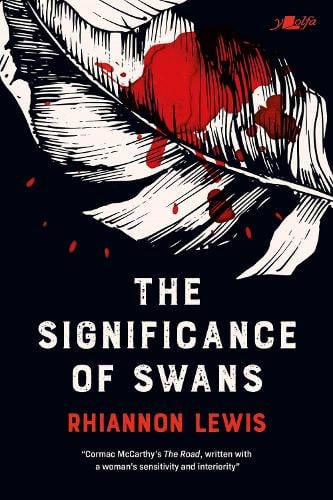
The Significance of Swans by Rhiannon Lewis

In this fascinating new dystopian novella, Rhiannon Lewis expands on a short story from her 2021 collection I am the Mask Maker. When I read that short story, I actually mentioned in my review that it was one I found particularly intriguing and wished was longer, so I was pleased to learn that my wish had come true!

The book begins with Aeronwy visiting her brother at his farm on the Welsh coast. Just before she says goodbye and returns home, they spot the unusual sight of seven swans flying in formation through the winter sky. The next day thousands of disappearances are reported – not just in Aeronwy’s small corner of Wales, but all over the country and beyond.

As the days and weeks go by, the overnight ‘removals’, as they become known in the media, continue. Every morning, people awake to find an empty space in their bed, the impression left by their partner’s body still visible; every morning, adults fail to arrive at work and children fail to attend school. Aeronwy and her husband do their best to continue with their lives, hoping that whoever or whatever is behind the removals will leave them alone, but the rapidly declining population means that public services and infrastructure are affected and soon there’s no more television, no more radio, no way of finding out what’s going on in the outside world. Eventually, the inevitable happens and Aeronwy’s husband is removed. She sets out alone to make the hundred-mile journey to her brother’s farm, in the hope that he might still be alive, but what will she find when she gets there?

I don’t read many post-apocalyptic novels, but I find that most of them tend to tackle the same questions. What caused the apocalyptic event? Is there a reason why some people were able to survive and not others? If we meet another human being, can they be trusted or will they see us a threat to their own survival? Will it be possible to build a better world from the ruins of the old one? In The Significance of Swans, Rhiannon Lewis does explore these things and provides some answers, while leaving other issues open to interpretation. What makes this book different from others I’ve read is the idea of the seven swans, glimpsed by Aeronwy and her brother the day before the removals begin. The swans appear to have some significance, but what is it?

With the whole book being written from Aeronwy’s perspective, this means we only get a limited view of what is going on, particularly once communication with the rest of the world is lost and she finds herself alone with nobody to talk to. Yet it’s fascinating to see things through Aeronwy’s eyes and to watch this ordinary middle-aged woman from Wales try to make sense of her situation. I thoroughly enjoyed this unusual novella and thought it was the perfect length – long enough to develop the themes hinted at in the shorter version from I am the Mask Maker and short enough to keep things moving at a steady pace without ever becoming boring. I received a copy for review courtesy of Y Lolfa, an independent Welsh publisher. You can find out more about this and the other books they publish here.

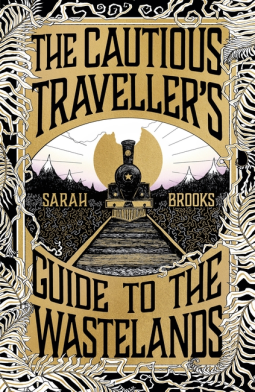
The Cautious Traveller’s Guide to the Wastelands by Sarah Brooks

It’s 1899 and passengers are boarding the Trans-Siberian Express, a twenty-carriage luxury train which will take them from Beijing to Moscow in time to attend the Great Exhibition. The four thousand mile journey will travel through the Wastelands, an abandoned wilderness where the landscape and wildlife seem to be undergoing strange changes and mutations. Since the changes were first recorded several decades earlier, Walls have been built to separate the Wastelands from the rest of Russia and China and passengers are not allowed to leave the train in the area between the Walls. On the previous journey, something went wrong: the glass in the windows cracked, exposing the train to the dangers of the Wastelands. The Trans-Siberian Company blamed the glassmaker and have assured passengers that the train is now safe, but doubts still remain.

The story of the 1899 Trans-Siberian crossing is told from the perspectives of several of the passengers. First, there’s Marya Petrovna, who has boarded the train under a false name and disguised as a mourning widow. At first we don’t know who Marya is or why she is hiding her identity, but we do know that she believes an injustice has been done and has come on this journey in search of answers. Then there’s Dr Henry Grey, an English naturalist whose latest theories have been disproved and who hopes to restore his reputation by studying the Wastelands. Finally, Zhang Weiwei is a sixteen-year-old girl known as ‘the child of the train’ because she was born in the Third Class sleeping car and has spent her whole life travelling backwards and forwards on the train. There are many other people onboard the train, but these are the central three around whom the novel revolves.

The Cautious Traveller’s Guide to the Wastelands is an unusual, imaginative novel and there were many things I enjoyed about it. I’ve read several other books set on trains, but usually, even in Murder on the Orient Express, the train simply provides a way of bringing a group of people together in close confines or of getting them from one destination to another. In this book, the train itself is an important part of the story and could even almost be viewed as another character. Sarah Brooks’ worldbuilding is very impressive; the novel has been compared to Susanna Clarke’s Piranesi and Erin Morgenstern’s The Night Circus and it did make me think of the latter in particular. So much attention to detail goes into describing the various carriages and compartments, the history of the train and its earlier crossings, and the fictional travel guide which gives the novel its name. The Wastelands themselves are less clearly described and although it’s suggested that life there has become tainted in some way, we don’t really know how or why, and much of the mystery still remains at the end of the book, which I’m sure was deliberate – but quite frustrating!

However, I felt that the setting and atmosphere came at the expense of the plot. The pace was very slow, with more than half of the novel devoted to setting the scene and introducing the characters, and it seemed to end just as things were starting to happen. I also would have preferred an explanation for what was happening in the Wastelands and was left wondering what we were intended to take away from the book. Was there a message in there about climate change and the environment – or migration, with walls being built to keep people out (or in)? I think we’re definitely supposed to question whether it’s best to travel cautiously or curiously, embracing change or turning away from it.

The Cautious Traveller’s Guide… is a fascinating alternate history novel, then, with lots to think about and debate. I didn’t find it completely satisfying, but I’m sure the right reader will love it.

Thanks to Orion Publishing Group for providing a copy of this book for review via NetGalley.

This is book 6/20 of my 20 Books of Summer 2024.

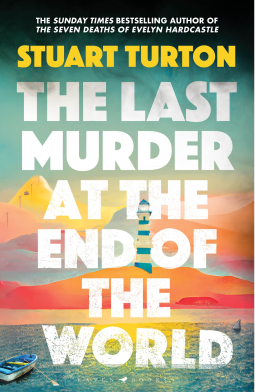
The Last Murder at the End of the World by Stuart Turton

Stuart Turton is, in my opinion, one of the most original and imaginative authors writing today; although I know his style doesn’t work for everyone, I loved his first book, The Seven Deaths of Evelyn Hardcastle, which was unlike anything else I’ve ever read. His second novel, The Devil and the Dark Water, a mystery set aboard a 17th century Dutch trading ship, disappointed me, but I recently read his short story, The Master of the House and loved that one too, so I was curious to see what this, his newest novel, would be like.

The Last Murder at the End of the World combines a murder mystery with a post-apocalyptic setting. The world as we know it has been destroyed by a black toxic fog that has swept across the planet, killing everyone it touches. The only place the fog hasn’t reached is a small Greek island, home to the Blackheath scientific research facility. The island is inhabited by one hundred and twenty-two villagers and three scientists from Blackheath, who have become known as the Elders. While the scientists continue their research into the fog and the security system that is holding it back from the island, the villagers farm the land and obey the rules set out for them by the scientists, while being discouraged from thinking too deeply for themselves.

Disaster strikes when one of the scientists is murdered and the barrier keeping the fog at bay is broken down. If the islanders can solve the murder within ninety-two hours, the barrier will be restored – if not, the fog will envelop the entire island. One of the villagers, Emory, is more resourceful than the others; rather than just accepting the situation and her place in society, she has always been curious and eager to learn. The task of investigating the crime, then, falls mainly to Emory – but to make her job even more difficult, the security system has also wiped the memories of the villagers, so someone could be a murderer without even knowing it.

The Last Murder at the End of the World is a difficult book to write about without spoiling too much. From the beginning, we are faced with lots of intriguing questions. Why do none of the villagers live past the age of sixty? Who or what is ‘Abi’, the omniscient voice who is present in everyone’s mind? Are the three Elders working with the villagers or against them? Everything is explained eventually but I won’t discuss the plot in any more depth here. I think if you’ve read other dystopian/post-apocalyptic novels you’ll already have an idea of the sort of things being explored, such as why some people survived and not others and whether society can be rebuilt to make the new world a better place than the last one.

The murder mystery element is interesting mainly because of the limitations that are placed upon it – the short period of time in which Emory has in which to solve the mystery and the fact that nobody can remember anything they may have done or witnessed on the night of the crime. There are also some surprising plot twists and revelations that meant I was constantly questioning and re-evaluating everything I thought I had figured out. However, this is definitely a book where the characters take second place to the plot; the three scientists are particularly difficult to like and, apart from Emory, the villagers are bland and not easily distinguished from each other. For this reason, The Last Murder at the End of the World is a novel I enjoyed from an intellectual perspective but not from an emotional one.

Thanks to Raven Books for providing a copy of this book for review via NetGalley.