The Thirteen Problems by Agatha Christie

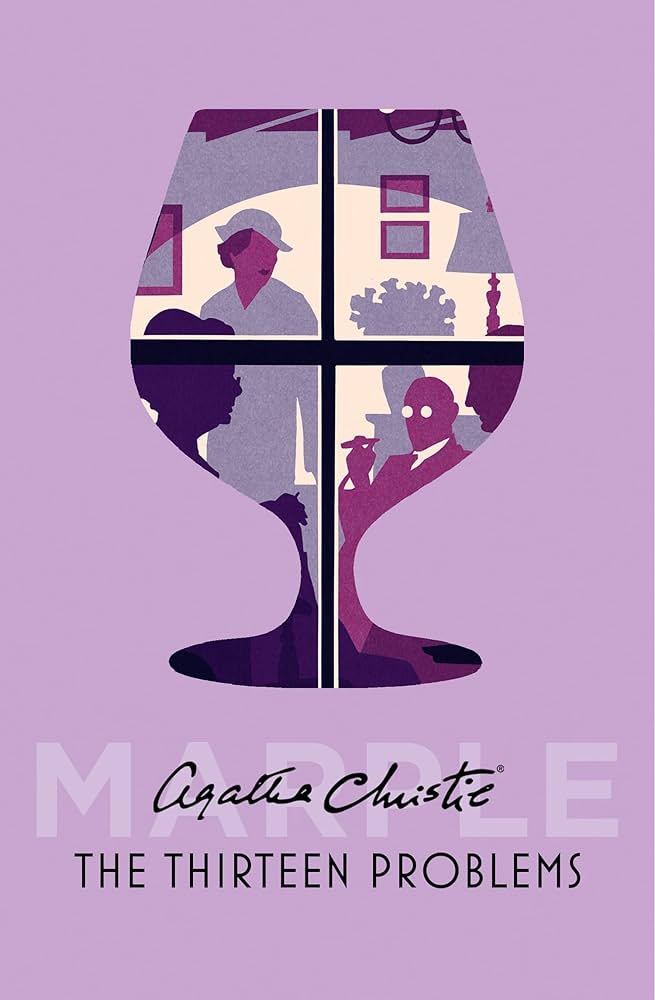
This month for the Read Christie challenge we’re reading books with authors as characters. The recommended book, The Thirteen Problems, is one I hadn’t read before so I thought this would be a good opportunity to pick it up. First published in 1932, it’s a collection of short stories featuring Miss Marple and her nephew, Raymond West, who is a writer. It has also been published in the US as The Tuesday Club Murders, so you may know it by that title.

There are thirteen stories in the book. In the first, a group of six friends gather at Miss Marple’s home in St Mary Mead and during the evening the conversation turns to mysteries. It seems that each of them has experienced or been involved in some kind of mystery and it’s suggested that over the next few weeks they should take turns telling their story and seeing if the rest of the group can solve it. Five of the friends have professions which they claim are ideally suited for detective work – an artist, a writer, a clergyman, a lawyer and a retired policeman – so they all agree to the plan and the Tuesday Night Club is born! The sixth member of the group, Miss Marple, is just there to make up the numbers; how could an old lady who has barely left her quiet little village possibly know anything about solving mysteries?

After all six have told their stories, several members of the group – with the addition of a doctor and a young actress – meet again at the home of Colonel and Mrs Bantry, where another set of stories are narrated. You won’t be surprised to hear that it’s Miss Marple who provides the correct solution for all thirteen of them, after everyone else has tried and failed!

I tend not to be a big fan of short stories, but I do usually enjoy Agatha Christie’s. This collection isn’t a favourite and I think I know why: it’s because the stories all involve mysteries that have already happened or have already been solved, so we don’t get to see Miss Marple or the other characters actively investigating them at the time. It’s a similar concept to Baroness Orczy’s Old Man in the Corner stories where her detective solves crimes while sitting in the corner of a London tearoom. Still, the stories are all interesting and I even managed to solve one or two of them myself!

Some of the stories have a supernatural feel – although the solutions have more logical explanations. My favourite was Colonel Bantry’s story, The Blue Geranium, in which a woman is visited by a fortune-teller who warns her to beware of a blue primrose, a blue hollyhock and finally, a blue geranium, which means death. When the flowers on her bedroom wallpaper begin to turn blue one by one, the woman begins to fear for her life. Another one I enjoyed was The Blood-Stained Pavement, narrated by the artist Joyce, who was visiting Cornwall to paint some picturesque village scenes. She’s sitting outside working on a painting when she notices drops of blood on the ground that weren’t there just a few minutes earlier. These bloodstains turn out to be important when a woman is reported missing two days later.

Although the stories in this book all stand alone, they are not completely separate as there’s also an overarching narrative, with the group of friends discussing the story that’s just been told and deciding whose turn it is to speak next. By the end of the book, Miss Marple has impressed everyone with her detective skills and has shown them that sometimes all that’s needed to solve a crime is a knowledge of human nature. Just as she does in the full-length novels, she draws on parallels with life in St Mary Mead and people she knows who remind her of the suspects or victims in the stories.

I did enjoy The Thirteen Problems, then, and found the stories just the right length. It’s always a pleasure to spend some time with Miss Marple!

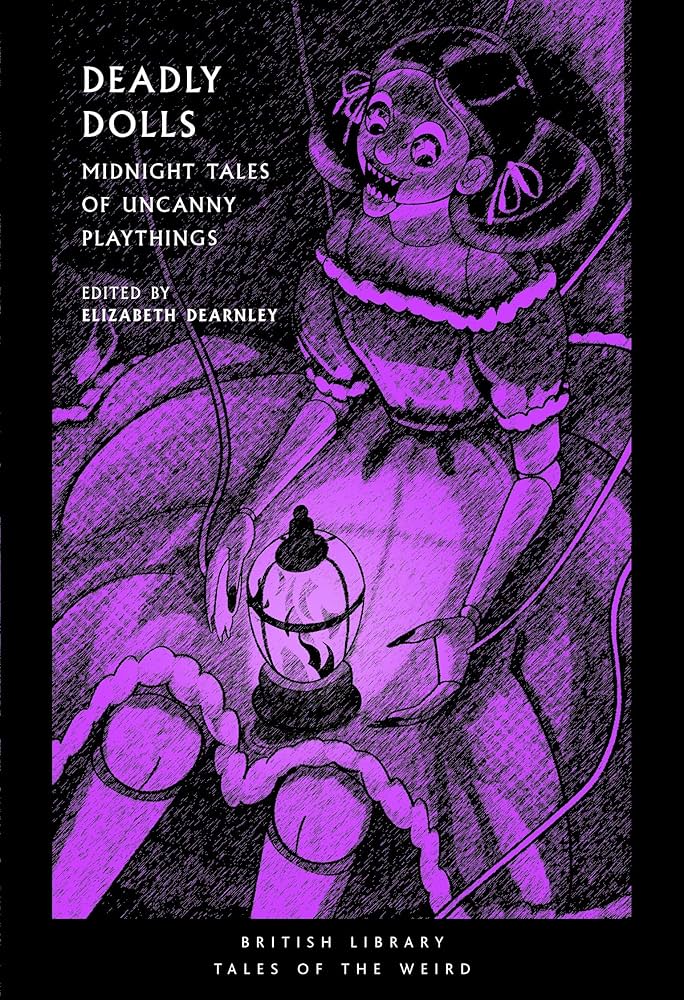
Deadly Dolls: Midnight Tales of Uncanny Playthings edited by Elizabeth Dearnley

Earlier this year I read Doomed Romances, a short story collection from the British Library’s Tales of the Weird series. I found it very mixed in quality – some great stories and some much weaker ones – but I was still interested in trying another one and I’m pleased to say that Deadly Dolls is much more consistent. As November is German Literature Month, I had initially planned to read the first story in the collection for now, which happens to be a German translation – ETA Hoffmann’s The Sandman – and leave the rest for later, but I then got tempted by the second story and read the whole book last weekend. The stories are all quite short, which made it a quick book to read!

This selection of fourteen stories is edited by Elizabeth Dearnley and as the title suggests, there’s a shared theme of dolls and toys. The Sandman, published in 1817 – and the story on which the ballet Coppélia was based – is the oldest story in the book, with the others spread throughout the 19th, 20th and 21st centuries. It’s a dark story – the Sandman of the title is a mythical character who steals the eyes of human children and takes them back to his nest on the moon to feed to his own children, an image which terrifies our young protagonist Nathanael so much that it haunts him for the rest of his life. I enjoyed it (my only other experience of Hoffmann is the entirely different The Life and Opinions of the Tomcat Murr) but I felt that others in the collection were even better.

A particular favourite was The Dollmaker by Adèle Geras, an author completely new to me. A dollmaker, known to the village children as Auntie Avril, opens a dolls’ hospital, repairing and restoring broken dolls. When three of the children notice that their dolls have been returned to them with alterations that seem unnecessary, they begin to question Auntie Avril’s motives. It seems Geras has been very prolific, writing many books for both children and adults, and I’m surprised I’ve never come across her before. I also enjoyed The Dancing Partner by Jerome K. Jerome (this time an author I know and love), in which a maker of mechanical toys decides to find a solution to the lack of male dance partners reported by his daughter and her friends. Although this is an entertaining story, it does have a moral: that we shouldn’t interfere with nature and try to play God.

At least two of the other stories have a similar message, despite having completely different plots. Brian Aldiss’ fascinating 1969 science fiction story, Supertoys Last All Summer Long, is set in a dystopian future where the rate of childbirth is controlled by the Ministry of Population. Meanwhile, in Ysabelle Cheung’s The Patchwork Dolls, a group of women literally sell their faces to pay the bills. Published in 2022, this is the most recent story in the book and I did find it interesting, if not quite as strong as most of the others. It’s one of only two contributions from the 21st century in this collection – the other is Camilla Grudova’s The Mouse Queen, an odd little tale that I don’t think I really understood and that I don’t feel belonged in this book anyway as it has almost nothing to do with dolls.

Joan Aiken is an author I’ve only relatively recently begun to explore, and as I’ve so far only read her novels it was good to have the opportunity to read one of her short stories. Crespian and Clairan is excellent and another highlight of the collection. The young narrator who, by his own admission, is ‘a very unpleasant boy’, goes to stay with an aunt and uncle for Christmas and becomes jealous when his cousin receives a pair of battery-operated dancing dolls. He comes up with a plan to steal the dolls for himself, but things don’t go quite as he expected! If I’d never read Aiken before, this story would definitely have tempted me to read more! The same can be said for Agatha Christie, whose The Dressmaker’s Doll is another one I loved. This story of a doll that appears to come to life when nobody is watching is maybe not what you would expect from Christie, as it’s not a mystery and there are no detectives in it, but it’s very enjoyable – as well as being very unsettling!

Unlike Doomed Romances, where the stories appeared in chronological order, adding to the unbalanced feel of the book, this one has the stories arranged by subject, which I thought worked much better. For example, two stories which deal with people in love with dolls are paired together – Vernon Lee’s The Doll and Daphne du Maurier’s The Doll. The latter is one I’ve read before (in du Maurier’s The Doll: Short Stories) but I was happy to read it again and be reminded of how good her work was, even so early in her career. There’s also a group of stories featuring dolls’ houses and of these I particularly enjoyed Robert Aickman’s The Inner Room, in which a girl is given a Gothic dolls’ house by her parents and develops an unhealthy fascination with it. In both this story and MR James’ The Haunted Dolls’ House, the houses and their inhabitants seem to take on a life of their own, but in different ways.

I think there are only two stories I haven’t talked about yet, so I’ll give them a quick mention here. They are The Loves of Lady Purple by Angela Carter and The Devil Doll by Frederick E. Smith. I’m not really a big Carter fan, but I’m sure those of you who are will enjoy this story about a puppeteer and his puppet, Lady Purple. I loved The Devil Doll, though. It’s a great story about a ventriloquist whose assistant suffers a terrible fate and is one of the creepier entries in the collection.

This is a wonderful anthology, with only one or two weaker stories, and if you’re interested in trying a book from the Tales of the Weird series I can definitely recommend starting with this one.

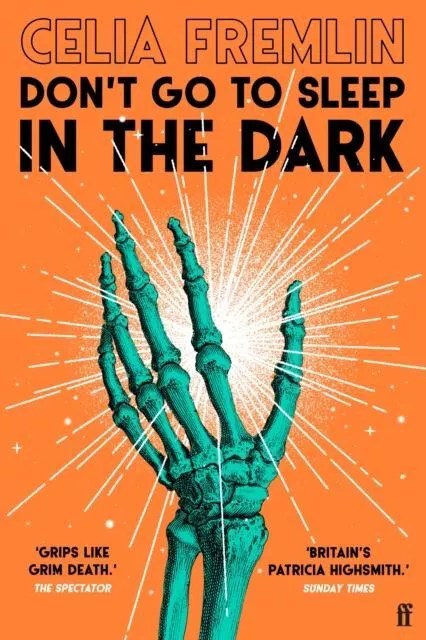
Don’t Go to Sleep in the Dark by Celia Fremlin – #1970Club

Today is the first day of 1970 Club, hosted by Kaggsy’s Bookish Ramblings and Stuck in a Book, and I’ve decided to begin with a book by an author who is rapidly becoming a favourite. I’ve read two of Celia Fremlin’s novels, Uncle Paul and The Long Shadow, and loved both, so I was curious to see what I would think of her short stories. Don’t Go to Sleep in the Dark is a collection first published by Gollancz in 1970 (although some websites say 1972, most say 1970 as do the copyright page and preface of the edition I read) and contains thirteen stories. While some are stronger than others, I can honestly say that they are all excellent.

The stories in this collection all have domestic settings, dealing with topics such as marriage, adultery, motherhood, and ageing, and all of them rely on the power of imagination to create a sense of unease. Although some of the stories hint at the supernatural, they are still grounded in reality. Fremlin has a real talent for taking ordinary, everyday situations and using them to build tension and fear.

The book gets off to a great start with The Quiet Game, the story of Hilda Meredith, a woman living in a flat in a high tower block who is struggling to keep her two young children quiet. Faced with constant complaints from the neighbours who claim they can hear every sound the children make – every shout, every laugh, every footstep – Hilda’s mental health begins to suffer as she desperately searches for games that can be played in silence:

From the point of view of the neighbours, it was she who was the cause and origin of all the stresses. She wasn’t the one who was being driven mad, Oh no. That’s what they would all have told you.

But madness has a rhythm of its own up there so near to the clouds; a rhythm that at first you would not recognise, so near is it, in the beginning, to the rhythms of ordinary, cheerful life.

I won’t tell you what happens to Hilda, but this story sets the tone for the rest of the book. Although the thirteen stories are all different and memorable in their own ways, they could all be described as psychological suspense, taking us deep inside the characters’ minds. At the same time, they have perfectly crafted plots, often with a surprise twist in the final paragraph that changes the way we think about everything that came before.

One of my favourite stories was The Baby-Sitter, in which a mother is persuaded to leave her young daughter with a babysitter for the first time so that she and her husband can spend the evening at the theatre. However, she’s not convinced that the tall, stern-looking Mrs Hahn is the right person to be left in charge of little Sally, who has been having nightmares about a ‘Hen with Great Big Eyes’. Her misgivings about Mrs Hahn grow stronger throughout the evening, but is she worrying about nothing? Yet another parent/child story – and another highlight – is Angel-Face, where a woman becomes exasperated by her stepson’s insistence that he is being visited by an angel every night. Things take a more sinister turn when it emerges that he thinks angels have beaks…

Celia Fremlin was in her fifties when this collection was published and three of her stories share the theme of growing older. In For Ever Fair, a story with a humorous twist, a middle-aged wife becomes jealous of her husband’s infatuation with a younger woman, while The Last Day of Spring and Old Daniel’s Treasure are both poignant tales with elderly protagonists and touch on the subject of dementia. Yet Fremlin writes equally convincingly about young characters: in The Hated House, sixteen-year-old Lorna has been left at home alone for the first time and is looking forward to a night without her father’s shouting and her mother’s obsessive cleaning and tidying. Then the telephone begins to ring continuously and an unexpected visitor arrives at the front door:

It was a light, a very light footstep on the garden path that next caught at her hearing; lightly up the steps, and then a fumbling at the front door. Not a knock; not a ring; just a fumbling, as of someone trying to unlock the door; someone too weak, or too blind, to turn the key.

“Be sure you bolt all the doors…” In her head Lorna seemed to hear these boring, familiar instructions not for the fiftieth time, but for the first… “Be sure you latch the kitchen window…Don’t answer the door to anyone you don’t know…”

There are still another six stories that I haven’t mentioned, but I think I’ll leave you to discover those for yourself if you read the book (which I hope you will as it’s such a great collection). As well as 1970 Club, I’m counting this towards the RIP XIX challenge as many of the stories are very unsettling and perfect for the time of year!

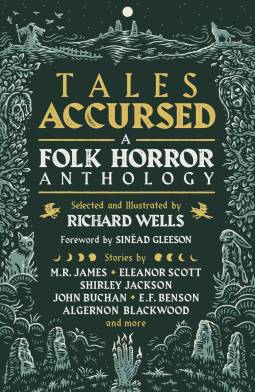
Tales Accursed: A Folk Horror Anthology selected and illustrated by Richard Wells

Folk horror is not a subgenre I’ve ever really taken the time to explore, so I wasn’t sure what to expect from this new anthology selected and illustrated by the artist Richard Wells. What I found was a collection of sixteen stories, most of them from the 19th and early 20th centuries, all blending folklore with elements of the supernatural and lonely rural settings. Each story is accompanied by a beautiful lino print illustration by Wells which I’m sure will look even more impressive in the physical edition of the book than in the ebook version I read.

The stories are arranged chronologically, beginning with Sheridan Le Fanu’s The White Cat of Drumgunniol from 1870 and ending with Shirley Jackson’s The Man in the Woods, published posthumously in 2014. I had read both of these authors before (although not these particular stories) and there were two other authors I’d also read previously – John Buchan and E.F. Benson – but the others were all new to me. In fact, there were several I’d never even heard of until now, so it was good to be made aware of them and to be able to try their work for the first time.

As with most anthologies, the stories vary in quality. However, I found that there wasn’t much variety in terms of plot or setting. Many of them, particularly the older ones, are based on Celtic folklore and have similar structures, with our narrator travelling in an unfamiliar part of the countryside and meeting someone who tells them a story about strange sightings or occurrences, which the narrator then experiences for themselves. Although this did make the collection as a whole feel slightly formulaic and repetitive, there were still some stories that were different and stood out. One of these is Woe Water by H.R. Wakefield, which unfolds in the form of diary entries written by a man with a troubled past who moves into a remote lakeside cabin and begins to struggle with his conscience. I also enjoyed Elinor Mordaunt’s The Country-Side, told from the perspective of a parson’s wife whose relationship with her unfaithful husband takes a sinister turn when she meets an old woman in the village who is said to be a witch.

Ancient Lights by Algernon Blackwood is another highlight – it has a wonderfully eerie atmosphere as the narrator describes his journey through enchanted ancient woodland. The Shirley Jackson story, The Man in the Woods, in which a man accompanied by a stray cat stumbles upon an old house inhabited by three strange people, is also very good. It’s packed with references to mythology and witchcraft and there are lots of layers to unravel, but the open ending left me frustrated and wanting to know more!

Despite the ‘folk horror’ label in the title, I found the stories in this collection creepy or unsettling rather than frightening. I deliberately haven’t said much about any of the individual stories because some of them are very short and it would be easy to spoil them, but overall I did enjoy the book and am interested in reading more by some of these authors.

Thanks to Unbound for providing a copy of this book for review via NetGalley.
I’m counting this as my second book towards this year’s RIP challenge.

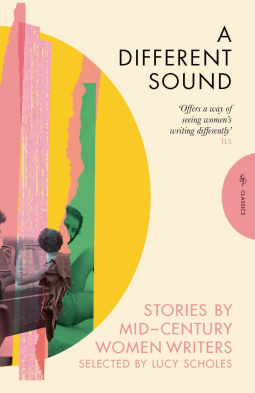
A Different Sound: Stories by Mid-Century Women Writers edited by Lucy Scholes

This is a fascinating collection of short stories, all written by women and originally published in the 1940s and 50s. When I saw the list of authors included in the book, there were several I’d already read, others I’d heard of but never read, and a few that were completely new to me. There are eleven stories in total and as always when writing about collections like this, I’ll have more to say about some of them than others!

There’s only one story in this collection that I’ve read before – and that’s The Birds by Daphne du Maurier. As she’s one of my favourite authors, I decided to read it again and found it just as wonderful and atmospheric as I did the first time. Rather than discuss it again here, I’ll direct you to my previous review and will just add that even if you’ve seen the Hitchcock film, I would still recommend reading the story which is quite different in several ways.

Elizabeth Jane Howard is an author I’m familiar with through her Cazalet Chronicles (I’ve read the first two books in the series and am planning to read the others) and she is represented here with Three Miles Up, an eerie story in which two men are taking a trip through the countryside on a canal boat when they encounter a young woman called Sharon. Once Sharon joins them on the boat, things begin to go wrong and they find themselves sailing up a canal that doesn’t appear on any maps. I loved this one, although I wasn’t aware that Howard wrote ghost stories so it wasn’t what I’d expected at all.

The other two authors I’ve read previously are Stella Gibbons and Elizabeth Taylor. The Gibbons story, Listen to the Magnolias, is set during the war and involves an elderly widow nervously awaiting the arrival of five American soldiers who will be billeted in her home, while Taylor’s The Thames Spread Out follows a woman who is trapped upstairs in her house during a flood while swans swim at the bottom of her staircase. I liked both of these, particularly the second.

Apart from The Birds, my favourite story in the book turned out to be The Skylight by Penelope Mortimer, in which a woman and her young son rent a house in a remote area of France but arrive to find the doors all locked and no sign of the owners. The only point of access is an open skylight in the roof and the mother makes a decision she quickly comes to regret. Mortimer creates a real sense of fear and tension in this story and I couldn’t wait to reach the end to find out if everything was going to be okay!

Considering the publication dates, the Second World War naturally plays a part in many of these stories – I’ve already mentioned the Stella Gibbons, but another is Diana Gardner’s wonderful story, The Land Girl, about a young woman placed on a farm as a Land Girl who takes an instant dislike to the woman whose home she is staying in and decides, out of spite and jealousy, to cause trouble for her.

The stories above are the ones that really stood out for me in this collection, but I enjoyed all of them to some extent, apart from maybe Elizabeth Bowen’s Summer Night which I found well written but confusing due to the structure and changing perpectives. I was also slightly disappointed by Sylvia Townsend Warner’s Scorched Earth Policy about an elderly couple preparing for a wartime invasion, simply because it was too short for any real plot or character development. It was nice to discover some authors I’d never come across before, though: Frances Bellerby, who in The Cut Finger tells the story of a little girl learning some important lessons about the world; Inez Holden whose Shocking Weather, Isn’t It? follows a woman who visits her cousin in various different places over the years; and Attia Hosain who explores the feelings of a newly married woman struggling to fit in with her husband’s friends in The First Party.

I can definitely recommend this collection; I found something to interest me in every story, even the ones I didn’t enjoy as much. I also now have a list of authors I need to explore further!

Thanks to Pushkin Press Classics for providing a copy of this book for review via NetGalley.
Doomed Romances: Strange Tales of Uncanny Love edited by Joanne Ella Parsons – #ReadIndies

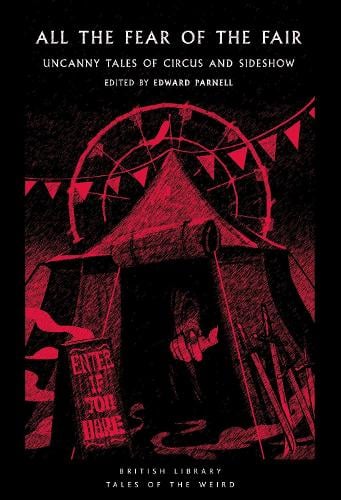
This new short story collection, Doomed Romances: Strange Tales of Uncanny Love, is part of the British Library’s Tales of the Weird series. These books have been around for a few years now but I’ve let them pass me by as I’ve had enough to read with their Crime Classics series! I’m glad I’ve finally found time to try one as although this collection is a bit uneven I did find it entertaining.

The book contains twelve stories by different authors and includes an introduction by the editor, Joanne Ella Parsons. The stories were originally published between 1833 and 2022 and appear here in chronological order. All have a ‘doomed romance’ theme, with some being much darker than others. There are two that I’ve actually read before – one of them is Sheridan Le Fanu’s lesbian vampire novella, Carmilla, and the other is Angela Carter’s The Lady of the House of Love, also a vampire story, first published in The Bloody Chamber. I didn’t read Carmilla again as I just read it fairly recently, but I did re-read the Carter and was impressed again by the beautiful imagery and the atmospheric Gothic setting she creates.

The oldest story in the book is Mary Shelley’s The Invisible Girl, in which the narrator, out walking along the coast of Wales, finds a painting of a beautiful woman hanging on the wall inside a ruined tower. It was good to have the opportunity to try more of Shelley’s work, having only read Frankenstein so far, but I didn’t find this a particularly strong story. Two that I did enjoy were The Little Woman in Black by Mary Elizabeth Braddon and One Remained Behind by Marjorie Bowen. These are also authors I’ve read before; Braddon is a favourite Victorian author of mine and has a very readable writing style. Her story seemed as if it was heading in one direction, but then surprised me with an ending I wasn’t expecting at all! Bowen was a very prolific author of historical novels and supernatural tales – the story in this collection is a ghost story from 1936 and one of the highlights of the book for me.

Joanne Ella Parsons has clearly tried to include stories with a wide range of geographical settings, exploring different cultures, rather than just sticking with more traditional Gothic stories. Wilkie Collins, another Victorian author I usually enjoy, is represented here with Mr Captain and the Nymph, in which a ship’s captain lost on an unidentified Pacific island falls in love with the daughter of a local priest. It’s an interesting story, although not a good example of his best work. Alice Perrin’s The Tiger-Charm is set on safari in India, while Nalo Hopkinson’s The Glass Bottle Trick transposes the famous Bluebeard folktale to a Caribbean setting. The latter are two new authors for me and I found both stories entertaining, but I’m not sure if I would search out more of their work based on these.

Another highlight was Could You Wear My Eyes? by Kalamu ya Salaam, where a man whose wife has died agrees to have her eyes inserted into his face after her death, allowing him to see life from her perspective. It’s a strange story but a fascinating one! The collection is completed with another 19th century story, Ella D’Arcy’s White Magic, and two contemporary ones, I’ll Be Your Mirror by Tracy Fahey and Dancehall Devil by V. Castro.

Doomed Romances is a real mixed bag, then – there are some very strong stories and some much weaker ones, and including Carmilla seemed an odd decision to me, as it’s so much longer than any of the other stories and made the book feel unbalanced. I enjoyed the collection overall, though, and will probably consider reading more of them.

British Library Publishing publish a range of fiction and non-fiction including the Tales of the Weird, Crime Classics and Women Writers series. They are an independent publisher, so I’m counting this book towards #ReadIndies month, hosted by Kaggsy’s Bookish Ramblings and Lizzy’s Literary Life.

We Know You’re Busy Writing… by Edmund Crispin

I hadn’t read much of Edmund Crispin’s work – two novels and one or two short stories – so I jumped at the chance to read this new anthology from HarperCollins. It collects together in one volume all of Crispin’s forty-six published short stories, many of them featuring his series detective Gervase Fen. The entire contents of two previously published Crispin collections are included here – Beware of the Trains (1953) and Fen Country (1979) – as well as several standalones. It has taken me nearly two months to work my way through the whole book, a few stories at a time, as I think reading them all at once would have been too much!

Gervase Fen is a Professor of English Language and Literature at Oxford University and a friend of Detective Inspector Humbleby of Scotland Yard, whom he often assists in the solving of crimes. Most of the short stories that feature Fen are very short – just a few pages long – and begin with Humbleby or another friend describing an unsolved case, after which Fen is soon able to tell him the solution, sometimes without even leaving the room, sometimes by making a quick telephone call or consulting a reference book. I was reminded of Baroness Orczy’s Old Man in the Corner stories, where her detective solves mysteries from the comfort of a London tea shop. The stories are too short for any real character development and the focus is on the puzzling scenario and how Fen solves it. I think there were only one or two that I guessed correctly; the majority rely on noticing tiny clues and sometimes require some specialist knowledge, for example knowing how cameras work or how a foreign word is pronounced.

Overall, I enjoyed the non-Fen stories more. The title story, We Know You’re Busy Writing, But We Thought You Wouldn’t Mind If We Just Dropped in for a Minute, is the highlight. Written in the first person, it’s narrated by an author who is working on a new novel and desperately trying to meet his publisher’s deadline. Unfortunately, he is constantly being interrupted by the telephone and people at the door. When his latest visitors sit themselves down and show no sign of leaving, he is forced to take drastic action! This is a great story, written with a lot of humour and a dark conclusion. Child’s Play, another standout, is dark from the beginning. Judith has just started a new position as governess to four children, one of whom is an orphan and is bullied by the other three. The story becomes very disturbing when a murder takes place and it seems that one of the children may be responsible.

This collection closes with a Gervase Fen novella from 1948, The Hours of Darkness, which was unpublished until it appeared in a Bodies from the Library anthology in 2019. The novella is set at Christmas, which makes it perfect for this time of year! Although the story itself isn’t very festive, Fen walks around singing carols as he works, much to the irritation of Inspector Wyndham, whom Fen is helping to investigate a murder which takes place during a game of hide and seek at a Christmas Eve house party. I didn’t find this a particularly outstanding or original mystery, but it was very enjoyable and the longer length allowed more depth of plot and characters.

I think the best place to start with Crispin, based on what I’ve read so far, is his 1946 Fen novel The Moving Toyshop, but these short stories are very entertaining, although I recommend taking your time over them as the Fen ones do become quite repetitive. You should also be aware that justice isn’t always done and Fen is sometimes satisfied just to find the solution and allow the culprits to get away with their crimes. Still, this is a great collection and has reminded me that I really need to read more of Crispin’s novels.

Thanks to HarperCollins for providing a copy of this book for review via NetGalley.