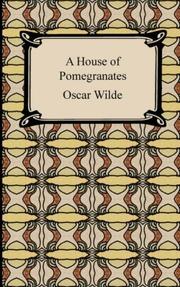
A House of Pomegranates by Oscar Wilde

Last week I posted my thoughts on Laura Silver Bell by Sheridan Le Fanu for Irish Short Story Week. I then wanted to read another short work by an Irish author and remembered that A House of Pomegranates by Oscar Wilde was one of the free ebooks that came with my Sony Reader. Perfect!

A House of Pomegranates contains four short fairy tales by Wilde. I originally intended just to read one of them but ended up reading the whole book! Each story has a moral lesson for the reader but first and foremost they are enjoyable fairy tales – although quite dark in tone, as many fairy tales are.

Wilde apparently said that the stories in A House of Pomegranates are “meant partly for children, and partly for those who have kept the childlike faculties of wonder and joy, and who find in simplicity a subtle strangeness.” Having read the book I would agree with this assessment of it. Although I’m sure there are a lot of children who would enjoy the stories (I know I would probably have loved them if I’d read them when I was younger), I think they might be too long and too heavy on description for some, and in many ways will be appreciated more by adults.

In The Young King, we are warned against the love of beauty and luxury. On the eve of his coronation, the young king, who loves all the beautiful things in life, has three dreams in which he learns exactly where his magnificent new robe, sceptre and crown have come from – and suddenly, they don’t appear so beautiful after all.

The Birthday of the Infanta is a poignant story about the King of Spain’s daughter, who is celebrating her twelfth birthday. Among the entertainments that have been arranged for her is a performance by a dwarf, who later becomes convinced that the Infanta is in love with him. It quickly becomes obvious that the Infanta has a very sad and lonely life, but my sympathy was for the dwarf, who can be seen to represent anyone who is the victim of cruelty and prejudice. Even the flowers in the palace garden ridicule him.

The Flowers were quite indignant at his daring to intrude into their beautiful home, and when they saw him capering up and down the walks, and waving his arms above his head in such a ridiculous manner, they could not restrain their feelings any longer.

‘He is really far too ugly to be allowed to play in any place where we are,’ cried the Tulips.

‘He should drink poppy-juice, and go to sleep for a thousand years,’ said the great scarlet Lilies, and they grew quite hot and angry.

The Fisherman and his Soul is the longest of the four stories and to be honest, I didn’t think it needed to be quite so long. It felt very repetitive, which was a shame because it was otherwise an excellent story about a fisherman who falls in love with a mermaid and sacrifices his soul for her. It can almost be seen as a re-working of The Little Mermaid by Hans Christian Andersen, but instead of the mermaid longing to become human as in Andersen’s story, this is the reverse.

My favourite story in the book was The Star-Child, about a child who is found by a woodcutter after a shooting star falls from the sky. The child grows up to be selfish and conceited, but finally gets a chance to redeem himself.

A House of Pomegranates is certainly worth reading if you’re looking for something a bit different or if you like Oscar Wilde’s writing (although the wit and humour which shines through in his other works isn’t really present here). I would be interested in comparing this book with Wilde’s other, more popular, book of short stories, The Happy Prince & Other Tales, but I’ll have to wait until I’m in the mood for some more fairy tales!

Have you read either of Oscar Wilde’s two books of fairy tales?

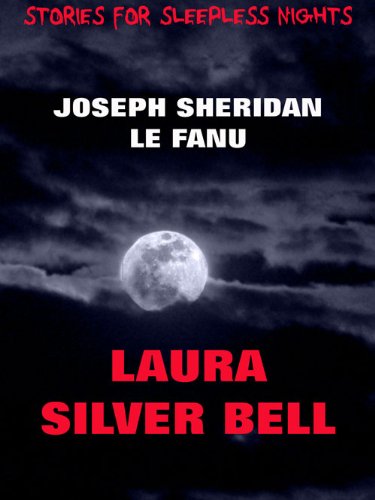
Laura Silver Bell by Joseph Sheridan Le Fanu (Irish Short Story Week)

This week (14-20 March) Mel U of The Reading Life is hosting an Irish Short Story Week. If you’d like to participate all you need to do is read at least one short story by an Irish author. There are plenty of these available to read for free online, including stories by classic authors such as Oscar Wilde, James Joyce and Bram Stoker.

I thought this would be a good opportunity to try a short story by Joseph Sheridan Le Fanu. Le Fanu is probably most famous for his vampire novella, Carmilla, and gothic novel Uncle Silas, but has also written a lot of shorter fiction. As I’m not familiar with his short stories at all, I chose one at random from The Literature Network.

Laura Silver Bell is a simple but effective story. It is set in the north of England, in an isolated rural area. Laura Lew, known as Laura Silver Bell, has been raised as a farmer’s daughter after the death of her mother.

So Farmer Lew called the little girl Laura; and her sobriquet of “Silver Bell” was derived from a tiny silver bell, once gilt, which was found among her poor mother’s little treasures after her death, and which the child wore on a ribbon round her neck.

When Laura falls in love with a tall man dressed in black whom she meets while walking home one night, she receives a warning from Mother Carke, a former sage femme (midwife) who is believed to be a witch. Mother Carke suspects that the man is a fairy and she advises Laura to stay away from him. But will Laura take her advice or will she be tempted to go with the fairy – and what will happen to her if she does?

“Say yer prayers, lass; I can’t help ye,” says the old woman darkly. “If ye gaa wi’ the people, ye’ll never come back. Ye munna talk wi’ them, nor eat wi’ them, nor drink wi’ them, nor tak a pin’s-worth by way o’ gift fra them – mark weel what I say – or ye’re lost!”

Although this is not a horror story exactly, it does have quite an eerie atmosphere, due to the lonely setting and the grounding in traditional folklore – there are frequent references to fairies, witchcraft and black magic (fairies, in this sense, are not the pretty winged creatures that are often depicted in modern culture, but something more sinister). It seems that Le Fanu had a particular interest in the legends of humans being stolen away by fairies – after reading this story I read another one by the same author called The Child that Went with the Fairies which, as the title suggests, is on the same theme as Laura Silver Bell.

Have you read this story or anything else by Le Fanu? Which of his stories or novels would you recommend I read next?

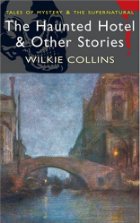
Review: The Haunted Hotel & Other Stories by Wilkie Collins

Time for one more review before the RIP challenge ends!

Having read so many of Wilkie Collins’ books and loving them all, I’m starting to worry now whenever I pick up one that I haven’t read yet, in case that’s going to be the one that disappoints me. Luckily it wasn’t this one! This collection published by Wordsworth Editions includes the novella The Haunted Hotel and eight other short stories, all with a ghostly, spooky or supernatural theme.

Part ghost story and part gothic mystery, The Haunted Hotel begins in London but soon moves to Venice, an atmospheric setting complete with dark canals and ancient palaces. At the heart of the story is the mysterious Countess Narona, who marries Lord Montbarry after he breaks off his engagement to Agnes Lockwood. When Montbarry dies in Venice soon after insuring his life for ten thousand pounds, rumours abound that the Countess may have had something to do with his death.

While I enjoyed The Haunted Hotel, I wouldn’t class it among Collins’ best work and the shortness of the story means the characters aren’t as well developed. I did love the second half of the story in which the palace where Montbarry died is converted into a hotel. There’s a very creepy sequence of events where each member of the Montbarry family who stays in the hotel feels a ghostly influence that manifests itself in a different way to each person.

You can buy The Haunted Hotel on its own, but I recommend looking for this edition because the additional short stories are well worth reading too. In every story, Collins gradually builds the suspense and draws the reader into the story. One of my favourites was Miss Jeromette and the Clergyman, a short ghost story in which the ghostly happenings are accompanied by mysterious clouds of white fog. I loved the way even though the story was quite predictable, it was still a pageturner. The same can be said about Nine O’Clock, in which a man condemned to death during the French Revolution tells his friend about a family curse. We know almost from the beginning what will happen, but the story still manages to be suspenseful.

Another favourite was A Terribly Strange Bed, an Edgar Allan Poe-like tale which creates a feeling of claustrophobia and terror as the narrator finds himself trapped in a room with a very unusual bed. Another story on a similar theme is The Dead Hand, in which a man attempts to find a room at an inn for the night, but finds that everywhere is full. When he’s eventually offered a bed in a double room, he makes a surprising discovery about the stranger who’s occupying the other bed.

I also enjoyed the final story in the book, The Devil’s Spectacles, which is about a man who is given a pair of spectacles that allow him to see the true thoughts and feelings of anyone he looks at.

I don’t generally like reading short story collections straight through from beginning to end, but I didn’t have a problem with this book. There are only eight stories (plus The Haunted Hotel) and most of them are less than twenty pages long. This was a perfect book to read in the week before Halloween.

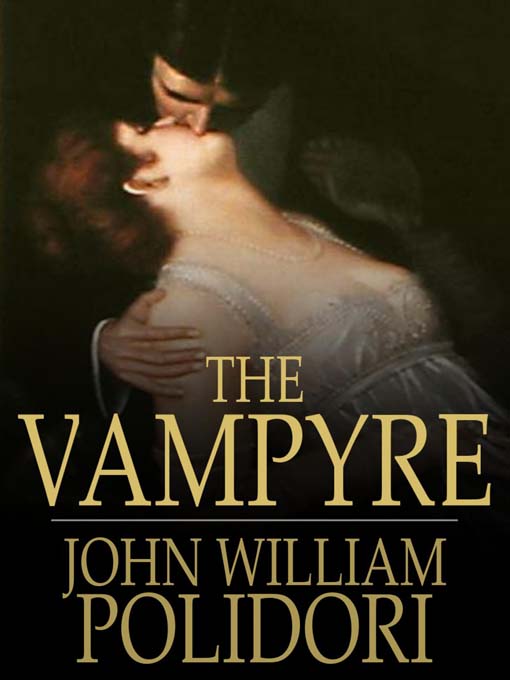
Short Story: The Vampyre by John Polidori

As I’m hoping to read Dracula soon, I thought it might be a good idea to also read one of Bram Stoker’s influences – John Polidori’s The Vampyre. This short story is considered to be one of the first vampire stories in literature and the first to portray a vampire in the way we would recognise today. I have actually been interested in reading this story since I read The Count of Monte Cristo by Alexandre Dumas and was intrigued by the references to the vampire Lord Ruthven. (If you’ve read The Count of Monte Cristo you might remember the scene where the Countess G- is remarking on the Count’s pale skin and nicknames him ‘Lord Ruthven’.)

The origins of The Vampyre are fascinating. John William Polidori was Byron’s personal physician and in 1816, went with him to Switzerland. At the Villa Diodati, on Lake Geneva, Byron and Polidori were joined by the poet Percy Bysshe Shelley, his future wife Mary Wollstonecraft Godwin and her stepsister Claire Clairmont, and decided to amuse themselves by writing horror stories. Mary began work on what would become Frankenstein, and Byron wrote the beginning of a vampire story (which survives today as Fragment of a Novel) based on the various vampire myths and legends. Although Byron abandoned his vampire story, Polidori took inspiration from it and The Vampyre was the result. Unfortunately for Polidori, The Vampyre was wrongly attributed to Byron, despite Byron’s attempts to set the record straight.

As a story, it really isn’t very satisfying. Our narrator is a young Englishman called Aubrey, who travels to Rome with his acquaintance, the nobleman Lord Ruthven. The more time he spends with Ruthven, the more Aubrey begins to distrust him and to realise that Ruthven is not what he seems… The plot is so thin that there’s not much more I can tell you without spoiling it – although really, there’s nothing to spoil as the story is very predictable (for the modern reader anyway – I’m sure it would have been more compelling at the time when it was first published).

The Vampyre is interesting historically because of its portrayal of Lord Ruthven as a mysterious, pale-faced aristocratic figure who preys on innocent young ladies, which is the way many future vampires would be described (the vampires of folklore had generally been described as hideous-looking monsters). If you’re interested in how vampire stories began and how they evolved over the years, this is worth reading. If you’re just looking for a good short story to read, you might be disappointed with this one.

Read The Vampyre online here

Byron’s Fragment of a Novel is also available online and is so short it only takes a few minutes to read. It’s a shame he decided not to continue with this, as I think it had the potential to be much better than The Vampyre. I’ve read a few of Byron’s poems but this is my first experience of his prose and even based on such a short sample of his work I find his writing superior to Polidori’s.

Read Fragment of a Novel online here


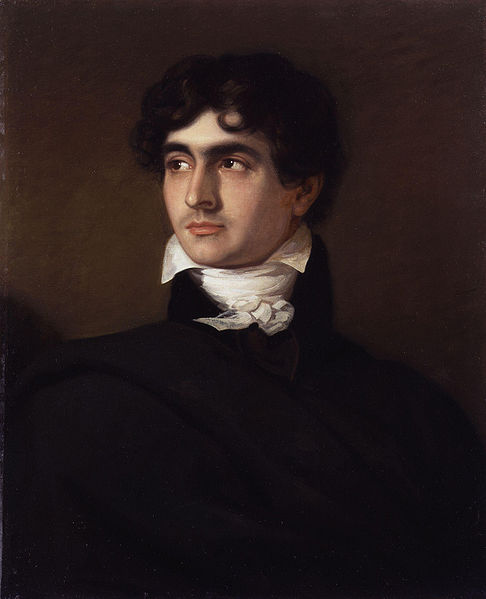
John William Polidori (1795-1821)

Good Evening, Mrs Craven: The Wartime Stories of Mollie Panter-Downes

Mollie Panter-Downes was the London correspondent for the New Yorker and this collection from Persephone Books brings together a number of her contributions to the magazine which were written during World War II. The book opens with her Letter from London dated 3 September 1939 and ends with another dated 11 June 1944. Between the two letters are twenty-one short stories, each of which offers an insight into the hopes and fears of British people trying to deal with the changes the war has brought to their lives.

These stories are not particularly dramatic or sensational in any way. They are realistic stories that focus not so much on the war itself, but on the effects of the war on the women (and a few of the men) who were left behind at home. We read about women attending sewing parties, worrying about loved ones who are away fighting, preparing for their husbands to go to war, coping with being pregnant during the war and experiencing almost any other wartime situation you can think of.

After finishing the book, there are a few stories that stand out in my memory more than the others. In Clover, for example, is a story about a rich woman called Mrs Fletcher who takes in a family of evacuees from a poor part of London. This was an interesting study into how the war pushed together people of different social backgrounds who wouldn’t usually have mixed with each other. This Flower, Safety follows Miss Mildred Ewing as she moves from one hotel to another in an attempt to escape from danger, beginning to despair of ever finding somewhere safe to live. Then there’s the story of Miss Burton, who is so hungry she can think about nothing else. The title story is also one of the best; it’s about a woman who has been having an affair with a married man. On the evening before he leaves to go to Libya, she wonders how she’ll be able to find out whether he’s dead or alive:

“Don’t think I’m being stupid and morbid,” she said, “but supposing anything happens. I’ve been worrying about that. You might be wounded or ill and I wouldn’t know.” She tried to laugh. “The War Office doesn’t have a service for sending telegrams to mistresses, does it?”

The stories are published in chronological order, as they appeared in New Yorker between 1939 and 1944, showing how life in Britain changed as the war progressed. Despite the subject matter, these stories are not all bleak and depressing – there’s also a lot of humour in Panter-Downes’ writing, in the form of gentle wit and irony.

As with most of the short story collections that I’ve read, there were some that didn’t interest me very much, but others that I loved and wished were longer. However, I think reading them all at once was a mistake as it was a bit too much for me. I think I would have enjoyed this collection even more if I had dipped in and out and taken the time to appreciate each story individually.

Recommended.

Short Story Reviews: Arthur Conan Doyle and Henry Lawson

One of my personal challenges for 2010 was to read more short stories. So far I haven’t been making much progress, but I made up for it this week by reading two very different short stories: The Brazilian Cat by Arthur Conan Doyle and The Drover’s Wife by Henry Lawson.

The Brazilian Cat by Sir Arthur Conan Doyle

I don’t use any real method in choosing which short stories to read.  At the rate I’m reading them (only six so far in 2010!) there are enough available online to keep me busy for years, so I’ve just been selecting one or two pretty much randomly.  As I’ve never read any of Conan Doyle’s works other than some of the Sherlock Holmes books, I decided to try one of his stories from Tales of Terror and Mystery (published 1922).

The Brazilian Cat, one of the “tales of terror”, is a quick, easy read. Marshall King, heir to Lord Southerton, has been invited to stay at the home of his cousin Everard, who has recently returned to England from Brazil. Everard has brought a menagerie of animals and birds back to England with him, including a peccary, an armadillo, an oriole…and a Brazilian cat.

“I am about to show you the jewel of my collection,” said he. “There is only one other specimen in Europe, now that the Rotterdam cub is dead. It is a Brazilian cat.”
“But how does that differ from any other cat?”
“You will soon see that,” said he, laughing. “Will you kindly draw that shutter and look through?”

What exactly is a Brazilian cat? Why does Everard’s wife seem so desperate for Marshall to leave Greylands Court? And why is Everard receiving so many mysterious telegrams? You’ll have to read the story to find out.

As a short horror story I wouldn’t say it was terrifying, but it was suspenseful with the tension building at a steady pace throughout the story.  There’s nothing very deep or profound about The Brazilian Cat, nothing complex or thought-provoking, but it’s entertaining and worth reading if you have a few minutes to spare.

Read it online here

The Drover’s Wife by Henry Lawson

Henry Lawson has been described as one of Australia’s greatest writers but until now I had never read any of his work.

The Drover’s Wife (1892) is the story of an unnamed woman who lives in the Australian bush with her husband and four young children. Her husband is a drover and spends very little time at home; at the time of our story he has been away for six months. When the children spot a snake slithering into the house, their mother makes a bed for them on the kitchen table and sits up all night watching over them. During the long hours of darkness she reflects on her life “for there is little else to think about”.

Although the story is very short and contains very little action, it manages to leave a lasting impression of the hardships, obstacles and overwhelming loneliness faced by a woman living an isolated life in rural 19th century Australia. The drover’s wife’s lifestyle has made it necessary for her to become independent, brave and resourceful. As she sits in the kitchen waiting for the snake to emerge, she remembers all the times in the past when her husband has been absent – on one occasion she had to fight a bush fire on her own; on another she fought a flood. She has also had to defend herself and her home from “suspicious-looking strangers” and “crows and eagles that had designs on her chickens”.

And yet the drover’s wife has grown accustomed to being on her own and is making the best of her lot in life:

“All days are much the same for her; but on Sunday afternoon she dresses herself, tidies the children, smartens up baby, and goes for a lonely walk along the bush-track, pushing an old perambulator in front of her. She does this every Sunday. She takes as much care to make herself and the children look smart as she would if she were going to do the block in the city. There is nothing to see, however, and not a soul to meet… But this bushwoman is used to the loneliness of it. As a girl-wife she hated it, but now she would feel strange away from it.”

I recommend reading this story as it’s an important piece of Australian literature. Having read some of the essays and analysis online however, it seems there’s more than one way to interpret the story. Some people consider it to be anti-feminist because it implies that all of the drover’s wife’s pain and suffering is caused by the absence of her husband. This is interesting because on my first reading I had seen it as a straightforward portrayal of a woman’s courage and bravery; yes, it would have made things easier if her husband had been around to help her, but she was doing the best she could to take care of herself and her children – husband or no husband. I can see I’ll have to give it some more thought. Have you read the story? What was your interpretation of it?

You can read The Drover’s Wife online here

I’ll try to make more progress with this personal challenge and post my thoughts on some more short stories soon!

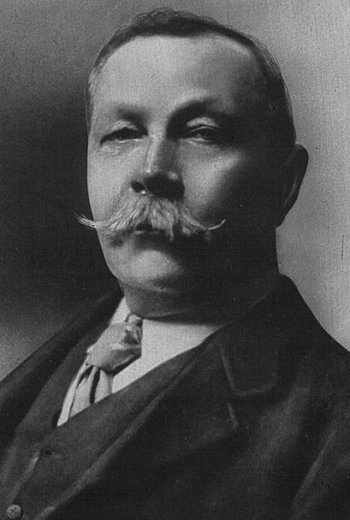
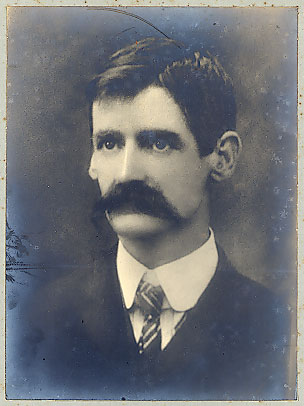
Pictures of Sir Arthur Conan Doyle and Henry Lawson both in the public domain

Short Story Mini-Review: An Imaginative Woman by Thomas Hardy

An Imaginative Woman by Thomas Hardy (1894)

This is the first of Thomas Hardy’s short stories that I’ve read but I would now like to read more. As you might expect from Hardy, An Imaginative Woman is well-written and descriptive but with a slightly dark and melancholy feel.

Ella Marchmill, the ‘imaginative woman’ of the title is an aspiring poet, writing under the male pseudonym of John Ivy because ‘nobody might believe in her inspiration’ if they knew she was a woman. Her husband, a gunmaker, is her exact opposite in temperament and interests. When the couple and their three children go on holiday to Solentsea in Upper Wessex, Ella becomes obsessed with the previous occupier of their lodgings – a fellow poet by the name of Robert Trewe. During their stay in Solentsea she convinces herself she has fallen in love with a man she has never even met and desperately tries to arrange a meeting with Trewe. As I don’t want to spoil the story for you I won’t reveal any more of the plot and will leave it to you to find out whether or not Ella succeeds in meeting Robert Trewe.

No, he was not a stranger! She knew his thoughts and feelings as well as she knew her own; they were, in fact, the self-same thoughts and feelings as hers, which her husband distinctly lacked; perhaps luckily for himself, considering that he had to provide for family expenses.

“He’s nearer my real self, he’s more intimate with the real me than Will is, after all, even though I’ve never seen him,” she said.

The theme of this story was actually very similar to the Mary Elizabeth Braddon novel The Doctor’s Wife which I reviewed a few weeks ago, in which a woman becomes bored with her marriage and develops an obsession with another life that exists only in her fantasies. The outcome of the two stories, however, is very different. There’s a clever plot twist at the end of An Imaginative Woman but I found the final few paragraphs a bit too harsh and cruel.

If you’d like to read this story yourself, you can find it online here.

The illustration by Arthur J. Goodman shown at the top of this post originally appeared in The Pall Mall Magazine in April 1894 and depicts Robert Trewe and Ella Marchmill – Picture courtesy of Philip V. Allingham

Have you read any of Thomas Hardy’s short stories? Which one do you think I should read next?