Good Evening, Mrs Craven: The Wartime Stories of Mollie Panter-Downes

Mollie Panter-Downes was the London correspondent for the New Yorker and this collection from Persephone Books brings together a number of her contributions to the magazine which were written during World War II. The book opens with her Letter from London dated 3 September 1939 and ends with another dated 11 June 1944. Between the two letters are twenty-one short stories, each of which offers an insight into the hopes and fears of British people trying to deal with the changes the war has brought to their lives.

These stories are not particularly dramatic or sensational in any way. They are realistic stories that focus not so much on the war itself, but on the effects of the war on the women (and a few of the men) who were left behind at home. We read about women attending sewing parties, worrying about loved ones who are away fighting, preparing for their husbands to go to war, coping with being pregnant during the war and experiencing almost any other wartime situation you can think of.

After finishing the book, there are a few stories that stand out in my memory more than the others. In Clover, for example, is a story about a rich woman called Mrs Fletcher who takes in a family of evacuees from a poor part of London. This was an interesting study into how the war pushed together people of different social backgrounds who wouldn’t usually have mixed with each other. This Flower, Safety follows Miss Mildred Ewing as she moves from one hotel to another in an attempt to escape from danger, beginning to despair of ever finding somewhere safe to live. Then there’s the story of Miss Burton, who is so hungry she can think about nothing else. The title story is also one of the best; it’s about a woman who has been having an affair with a married man. On the evening before he leaves to go to Libya, she wonders how she’ll be able to find out whether he’s dead or alive:

“Don’t think I’m being stupid and morbid,” she said, “but supposing anything happens. I’ve been worrying about that. You might be wounded or ill and I wouldn’t know.” She tried to laugh. “The War Office doesn’t have a service for sending telegrams to mistresses, does it?”

The stories are published in chronological order, as they appeared in New Yorker between 1939 and 1944, showing how life in Britain changed as the war progressed. Despite the subject matter, these stories are not all bleak and depressing – there’s also a lot of humour in Panter-Downes’ writing, in the form of gentle wit and irony.

As with most of the short story collections that I’ve read, there were some that didn’t interest me very much, but others that I loved and wished were longer. However, I think reading them all at once was a mistake as it was a bit too much for me. I think I would have enjoyed this collection even more if I had dipped in and out and taken the time to appreciate each story individually.

Recommended.
Short Story Reviews: Arthur Conan Doyle and Henry Lawson

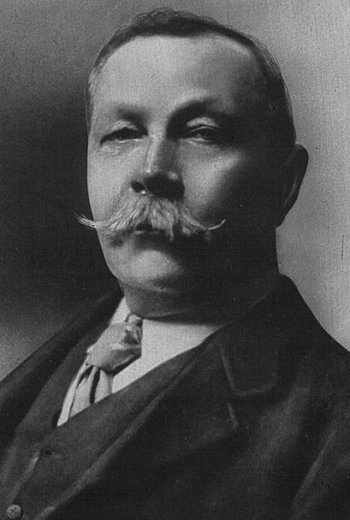
One of my personal challenges for 2010 was to read more short stories. So far I haven’t been making much progress, but I made up for it this week by reading two very different short stories: The Brazilian Cat by Arthur Conan Doyle and The Drover’s Wife by Henry Lawson.

The Brazilian Cat by Sir Arthur Conan Doyle

I don’t use any real method in choosing which short stories to read.  At the rate I’m reading them (only six so far in 2010!) there are enough available online to keep me busy for years, so I’ve just been selecting one or two pretty much randomly.  As I’ve never read any of Conan Doyle’s works other than some of the Sherlock Holmes books, I decided to try one of his stories from Tales of Terror and Mystery (published 1922).

The Brazilian Cat, one of the “tales of terror”, is a quick, easy read. Marshall King, heir to Lord Southerton, has been invited to stay at the home of his cousin Everard, who has recently returned to England from Brazil. Everard has brought a menagerie of animals and birds back to England with him, including a peccary, an armadillo, an oriole…and a Brazilian cat.

“I am about to show you the jewel of my collection,” said he. “There is only one other specimen in Europe, now that the Rotterdam cub is dead. It is a Brazilian cat.”
“But how does that differ from any other cat?”
“You will soon see that,” said he, laughing. “Will you kindly draw that shutter and look through?”

What exactly is a Brazilian cat? Why does Everard’s wife seem so desperate for Marshall to leave Greylands Court? And why is Everard receiving so many mysterious telegrams? You’ll have to read the story to find out.

As a short horror story I wouldn’t say it was terrifying, but it was suspenseful with the tension building at a steady pace throughout the story.  There’s nothing very deep or profound about The Brazilian Cat, nothing complex or thought-provoking, but it’s entertaining and worth reading if you have a few minutes to spare.

Read it online here

The Drover’s Wife by Henry Lawson

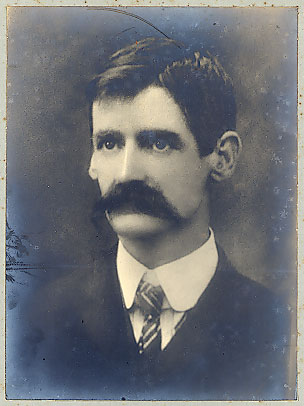
Henry Lawson has been described as one of Australia’s greatest writers but until now I had never read any of his work.

The Drover’s Wife (1892) is the story of an unnamed woman who lives in the Australian bush with her husband and four young children. Her husband is a drover and spends very little time at home; at the time of our story he has been away for six months. When the children spot a snake slithering into the house, their mother makes a bed for them on the kitchen table and sits up all night watching over them. During the long hours of darkness she reflects on her life “for there is little else to think about”.

Although the story is very short and contains very little action, it manages to leave a lasting impression of the hardships, obstacles and overwhelming loneliness faced by a woman living an isolated life in rural 19th century Australia. The drover’s wife’s lifestyle has made it necessary for her to become independent, brave and resourceful. As she sits in the kitchen waiting for the snake to emerge, she remembers all the times in the past when her husband has been absent – on one occasion she had to fight a bush fire on her own; on another she fought a flood. She has also had to defend herself and her home from “suspicious-looking strangers” and “crows and eagles that had designs on her chickens”.

And yet the drover’s wife has grown accustomed to being on her own and is making the best of her lot in life:

“All days are much the same for her; but on Sunday afternoon she dresses herself, tidies the children, smartens up baby, and goes for a lonely walk along the bush-track, pushing an old perambulator in front of her. She does this every Sunday. She takes as much care to make herself and the children look smart as she would if she were going to do the block in the city. There is nothing to see, however, and not a soul to meet… But this bushwoman is used to the loneliness of it. As a girl-wife she hated it, but now she would feel strange away from it.”

I recommend reading this story as it’s an important piece of Australian literature. Having read some of the essays and analysis online however, it seems there’s more than one way to interpret the story. Some people consider it to be anti-feminist because it implies that all of the drover’s wife’s pain and suffering is caused by the absence of her husband. This is interesting because on my first reading I had seen it as a straightforward portrayal of a woman’s courage and bravery; yes, it would have made things easier if her husband had been around to help her, but she was doing the best she could to take care of herself and her children – husband or no husband. I can see I’ll have to give it some more thought. Have you read the story? What was your interpretation of it?

You can read The Drover’s Wife online here

I’ll try to make more progress with this personal challenge and post my thoughts on some more short stories soon!

Pictures of Sir Arthur Conan Doyle and Henry Lawson both in the public domain

Short Story Mini-Review: An Imaginative Woman by Thomas Hardy

An Imaginative Woman by Thomas Hardy (1894)

This is the first of Thomas Hardy’s short stories that I’ve read but I would now like to read more. As you might expect from Hardy, An Imaginative Woman is well-written and descriptive but with a slightly dark and melancholy feel.

Ella Marchmill, the ‘imaginative woman’ of the title is an aspiring poet, writing under the male pseudonym of John Ivy because ‘nobody might believe in her inspiration’ if they knew she was a woman. Her husband, a gunmaker, is her exact opposite in temperament and interests. When the couple and their three children go on holiday to Solentsea in Upper Wessex, Ella becomes obsessed with the previous occupier of their lodgings – a fellow poet by the name of Robert Trewe. During their stay in Solentsea she convinces herself she has fallen in love with a man she has never even met and desperately tries to arrange a meeting with Trewe. As I don’t want to spoil the story for you I won’t reveal any more of the plot and will leave it to you to find out whether or not Ella succeeds in meeting Robert Trewe.

No, he was not a stranger! She knew his thoughts and feelings as well as she knew her own; they were, in fact, the self-same thoughts and feelings as hers, which her husband distinctly lacked; perhaps luckily for himself, considering that he had to provide for family expenses.

“He’s nearer my real self, he’s more intimate with the real me than Will is, after all, even though I’ve never seen him,” she said.

The theme of this story was actually very similar to the Mary Elizabeth Braddon novel The Doctor’s Wife which I reviewed a few weeks ago, in which a woman becomes bored with her marriage and develops an obsession with another life that exists only in her fantasies. The outcome of the two stories, however, is very different. There’s a clever plot twist at the end of An Imaginative Woman but I found the final few paragraphs a bit too harsh and cruel.

If you’d like to read this story yourself, you can find it online here.

The illustration by Arthur J. Goodman shown at the top of this post originally appeared in The Pall Mall Magazine in April 1894 and depicts Robert Trewe and Ella Marchmill – Picture courtesy of Philip V. Allingham

Have you read any of Thomas Hardy’s short stories? Which one do you think I should read next?

A Short Story for Wednesday: The Signal-Man by Charles Dickens

The Signal-Man by Charles Dickens (1866)

After recently reading Drood by Dan Simmons which described Charles Dickens’ involvement in the Staplehurst Rail Disaster, I decided to read Dickens’ short story, The Signal-Man. Although it doesn’t directly reference the Staplehurst incident, The Signal-Man was written the following year so was almost certainly influenced by his experience.

Whilst taking a walk one evening, the unnamed narrator discovers an isolated railway station and makes the acquaintance of the lonely signalman. The signalman tells him of a ghostly figure that he has previously witnessed on two occasions standing below the danger light in the entrance to the tunnel. On both occasions, the ghost’s appearance has been followed by tragedy. Now the spectre has appeared again and the signalman is convinced that another disaster is imminent…

This is the first of Charles Dickens’ short stories that I’ve ever read and having read some of his full-length novels, I was surprised by how quick and easy The Signal-Man was to read. Although the outcome of the story was very predictable, Dickens creates a wonderfully eerie and foreboding atmosphere. Highly recommended if you’re in the mood for a classic ghost story.

“His post was in as solitary and dismal a place as ever I saw…So little sunlight ever found its way to this spot, that it had an earthy, deadly smell; and so much cold wind rushed through it, that it struck chill to me, as if I had left the natural world.”

Read The Signal-Man online

* Clayton Tunnel picture – in the public domain

A Short Story for Saturday: The Artist of the Beautiful by Nathaniel Hawthorne

The Artist of the Beautiful by Nathaniel Hawthorne (1844)

Owen Warland is a young watchmaker who devotes his life to the creation of a beautiful mechanical butterfly which he presents to his friend Annie as a wedding gift. Annie and her family are not artists and they are unable to appreciate the beauty of Owen’s butterfly or to understand why he wasted so much time making it when he could have been doing something more useful. Each character in the story represents a different side of human nature and it’s interesting to see how Owen’s butterfly reacts differently to each of them.

This is a beautifully written story with the message that not everything in life needs to have a purpose – some things are worth doing just for the sake of doing them. Despite being ridiculed by the other townspeople, Owen doesn’t let other people’s opinions stop him in his pursuit of spiritual happiness.

“Yes, Annie; it may well be said to possess life, for it has absorbed my own being into itself; and in the secret of that butterfly, and in its beauty – which is not merely outward, but deep as its whole system – is represented the intellect, the imagination, the sensibility, the soul of an Artist of the Beautiful!”

Read The Artist of the Beautiful online here

* Butterfly picture by Galawebdesign used under a Creative Commons Attribution 3.0 Unported license.

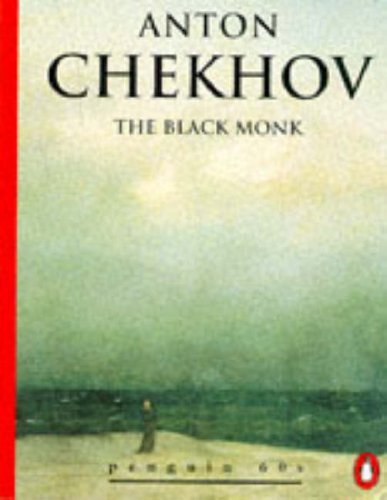
A Short Story for Saturday: The Black Monk by Anton Chekhov

The Black Monk by Anton Chekhov (1894)

Where do we draw the line between genius and madness? Anton Chekhov explores this question in The Black Monk – the story of a young man called Andrei Kovrin who suffers from an undisclosed mental illness which causes him to believe he is being visited by a monk dressed in black. Even when he becomes aware that the monk is only a hallucination, he is not concerned because his visions make him feel happy and full of energy and creativity. Eventually though, his family begin to worry about his sanity…

This is a fascinating, unusual story which I found easy to read but difficult to fully understand. Chekhov’s poetic writing creates an eerie, disturbing atmosphere appropriate to Kovrin’s descent into mental illness.

“Once or twice a week, in the park or in the house, he met the black monk and had long conversations with him, but this did not alarm him, but, on the contrary, delighted him, as he was now firmly persuaded that such apparitions only visited the elect few who rise up above their fellows and devote themselves to the service of the idea.”

Read The Black Monk online here

Review: The Rendezvous and Other Stories by Daphne du Maurier

The Rendezvous and Other Stories is a collection of short stories written by Daphne du Maurier. Some of them are among the earliest examples of her writing and most of them, as you would expect if you’ve ever read any of du Maurier’s work before, are slightly disturbing and unsettling. She takes some quite ordinary situations and ordinary, flawed people, and adds undertones of suspense and drama.

Many of the stories are just 10-20 pages long – perfect if you don’t have a lot of time, although in most cases I would have preferred them to be longer and more developed. My favourite story from the collection was No Motive, in which a private detective investigates an apparently motiveless suicide. I felt it could easily have been expanded into a full length detective novel, though it worked well as a short story too. The other one that really stood out for me was Split Second, in which a woman goes out for a walk one afternoon and returns home to find strangers living in her house. This story had a touch of the supernatural about it, as did Escort, which describes a ship leaving port during World War II and being rescued from a submarine attack by a mysterious sailing ship.

I liked the three stories I’ve just mentioned, as well as The Closing Door and La Sainte-Vierge, but there were too many of the others that I just didn’t enjoy very much. However, it was still interesting to read them and see how good Daphne du Maurier’s writing was even in the early stages of her career.

Genre: Fiction – Short Stories/Pages: 288/Publisher: Virago/Year: 2005/Source: Library book