After the Funeral by Agatha Christie

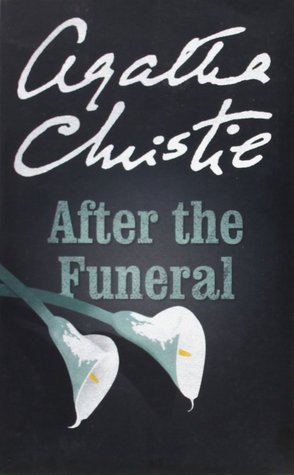
This month’s theme for the Read Christie 2022 challenge is ‘a story Agatha wrote abroad’. After the Funeral, a Hercule Poirot mystery first published in 1953, doesn’t include any travel and is set entirely in England, but it was written while Christie was away on an archaeological dig with her husband Max.

After the Funeral begins, as the title suggests, just after the funeral of the wealthy Richard Abernethie with the family assembling to hear the reading of the will by his lawyer, Mr Entwhistle. As he has no surviving children of his own, it seems that Richard’s fortune is to be divided between his brother and sister, two of his sisters-in-law, and several of his nieces and nephews and their spouses. After hearing the terms of the will, Cora Lansquenet, Richard’s sister, remarks that her brother was murdered. This is not something that has occurred to anyone else, as they have all accepted that Richard died of natural causes, so Cora’s comments are not taken seriously. The next day, however, Cora herself is found dead, having been brutally murdered in her bed.

Mr Entwhistle, the lawyer, is convinced there must be a connection between the two deaths and begins to interview the family members, hoping that they will all be able to prove themselves innocent and avoid bringing shame on the family. As the mystery deepens, he decides that he needs to call in an expert – and so he contacts his friend, Hercule Poirot, who listens to the facts and agrees that an investigation is required…

This is maybe not one of the better known Poirot novels, but it’s one that I particularly enjoyed. After a confusing start – Christie throws a huge number of characters into the opening chapters and it takes a while to straighten out their relationships and remember who they all are – I became completely absorbed in this fascinating mystery, having a few guesses at the identity of the culprit and getting it wrong every time! It’s one of those mysteries where literally any of the characters (apart from Poirot, of course) could have been the murderer and the solution relies on a wonderful twist, which I don’t think many readers will have seen coming. Well done if you did, but I certainly didn’t.

Poirot himself doesn’t have a large part to play in the novel until the second half; before that, it’s actually Mr Entwhistle who is trying to investigate the deaths, by questioning suspects, speaking to doctors and establishing alibis. During that first half of the novel, I couldn’t help thinking that it wasn’t really essential for Poirot to appear in the story at all as Mr Entwhistle seemed to be doing such a good job! However, it’s Poirot’s ‘little grey cells’ that are necessary to spot that final crucial clue and solve the mystery.

Next month’s theme for the Read Christie challenge is ‘a story featuring adventure’. There are plenty of those to choose from!

Mrs England by Stacey Halls

Mrs England is one of the books longlisted for the 2022 Walter Scott Prize for Historical Fiction. Although I hadn’t even heard of a lot of the titles on this year’s longlist, this particular book is one that I had been planning to read anyway. I enjoyed both of Stacey Halls’ previous novels, The Foundling and The Familiars, and was just waiting for the right moment to start reading this one.

The novel opens in 1904 with Ruby May, a trained children’s nurse from the prestigious Norland College, discovering that the family she works for are preparing to emigrate. Ruby is invited to accompany them, but turns down the opportunity, saying that she can’t be too far away from her younger sister and brothers. Instead, she finds a new position looking after the four children of Charles and Lilian England, a wealthy couple who own a cotton mill in the West Riding of Yorkshire.

On arriving at the Englands’ home, Hardcastle House, Ruby quickly senses that something is not right. Although Mr England is charming and friendly, Mrs England seems distant and withdrawn, showing very little interest in her children’s lives and leaving the running of the household to her husband. The other servants also make Ruby feel unwelcome, but she finds the four England children delightful and immerses herself in her work. As the days and weeks go by, Ruby becomes increasingly aware of the dark undercurrents within the household and wishes there was something she could do to help. However, there are mysteries lurking in Ruby’s own past and she has problems of her own to deal with. Why does she refuse to open letters from her father? Why is she so afraid of having her photograph taken? And what is the real reason for her reluctance to leave the country?

I think this is my favourite of the three books I’ve read by Stacey Halls. Although it’s quite a slow-paced novel, with most of the drama and revelations coming near the end, I was drawn completely into Ruby’s story from the beginning. As the novel’s narrator, Ruby is a genuinely nice person and I liked her immediately. It takes a long time for her back story to unfold and in the meantime I’d formed a few theories about what must have happened with her father – however, I wasn’t quite right! In her author’s note, Stacey Halls states that she based Ruby May’s story on a real person and incident that occurred in the late 19th century, but don’t be tempted to look at this until you’ve finished the book. The story that unfolds within the walls of Hardcastle House is even more intriguing and, again, I thought I knew what was going on only to find that, although I did guess some of it correctly, I was still missing some parts of the overall picture.

The descriptions of the Yorkshire scenery are very well done, particularly the parts of the book set in the Hardcastle Crags, as are the descriptions of the Englands’ cotton mill, the blacksmith’s forge and all the other locations Ruby and the children visit throughout the story. I also found it interesting to read about the Norland Nurses – the kind of training they received and the standards they were expected to conform to.

I enjoyed this book very much, but to be honest, I’m surprised it’s on the Walter Scott Prize longlist as it doesn’t seem quite as ‘literary’ as the books the judges usually go for. I hope it progresses to the shortlist next month, but we’ll have to wait and see.

This is book 14/50 read for the Historical Fiction Reading Challenge 2022.

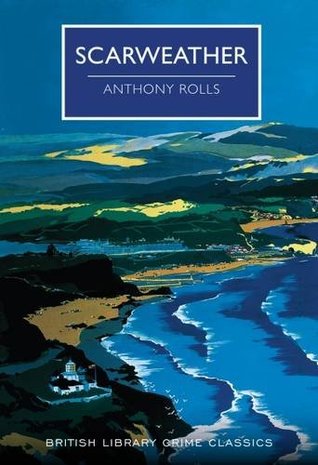
Scarweather by Anthony Rolls

I didn’t think I had anything suitable to read for Paula’s Reading Wales Month, then I discovered that Anthony Rolls (a pseudonym of Colwyn Edward Vulliamy) was a Welsh author born in Glasbury, Radnorshire in 1886. He wrote several crime novels under the Anthony Rolls name, two of which are available as British Library Crime Classics – and luckily I had one of them, Scarweather, on my TBR.

Originally published in 1934, Scarweather is narrated by John Farringdale, who is a young man of twenty-one when the story begins in 1913. Farringdale has always been close to his cousin Eric, so when Eric meets the famous archaeologist Professor Tolgen Reisby, he can’t wait to introduce Farringdale to him. Although Farringdale is proud to see his cousin on good terms with such a renowned and impressive man as the Professor, he feels uneasy about Eric’s obvious interest in Reisby’s young wife, Hilda. When an opportunity arises to visit the Reisbys himself at their home, Scarweather, in the north of England, he accepts the invitation and heads north, taking his friend, Frederick Ellingham, with him.

All appears to be well at Scarweather and Farringdale wonders whether he has been worrying unnecessarily, but Ellingham, being older and more perceptive than his friend, hints that the Professor may not be all he seems. And so when Eric disappears, believed to have been involved in a sailing accident, Ellingham decides to investigate. However, war soon breaks out in Europe, meaning that the investigation will take a lot longer than expected. We rejoin the characters fifteen years later, when it seems that the secrets of Scarweather are about to be revealed at last!

Scarweather is an unusual mystery novel, because there’s really no mystery at all. The solution is obvious to the reader from early on – in fact, Farringdale himself remarks once or twice that he supposes we’ve already guessed the truth. There are no clever twists, no real surprises and very little ‘detecting’. Ellingham and Farringdale are clearly a Holmes and Watson pairing, with Ellingham in the role of Holmes, but because we only see him through the eyes of Farringdale – who seems to be completely oblivious to everything that is going on – we don’t get a chance to watch any of his detective work or hear much about his theories until the very end of the book. And the ending, when it comes, seems very morally questionable.

Yet, despite all of this, I still think this book is worth reading, particularly if you’re more interested in archaeology than I am. Rolls’ writing really comes alive whenever he moves onto the subject of archaeologists and their work; this was obviously a passion of his and something he was very knowledgeable about. There’s also a strong sense of place: Scarweather is located in a remote coastal area and the harshness of the landscape and the sea makes the setting an atmospheric one. Even though knowing the solution to the mystery takes away all the suspense, there’s still a feeling of darkness and foreboding.

Although I didn’t love this book, I would be happy to read more by Anthony Rolls. The other book of his published as a British Library Crime Classic, Family Matters, sounds better than this one.

Classics Club Spin #29: The Result

The result of the latest Classics Club Spin was revealed yesterday.

The idea of the Spin was to list twenty books from my Classics Club list, number them 1 to 20, and the number announced by the Classics Club represents the book I have to read before 30th April. The number that has been selected is…

11

And this means the book I need to read is…

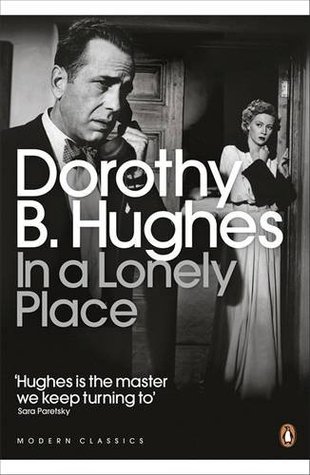
In a Lonely Place by Dorothy B. Hughes

I wasn’t expecting this one to come up, for some reason, but I’m quite pleased that it did! Hughes’ Ride the Pink Horse was one of my books of the year in 2021 and The Expendable Man in 2020, so I’m hoping I’ll enjoy this one just as much.

Did you take part in the spin? Are you happy with your result?

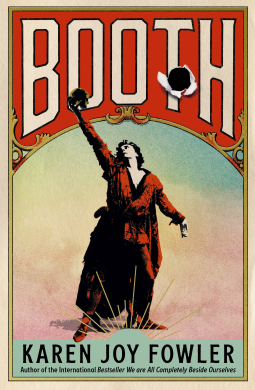
Booth by Karen Joy Fowler

This fascinating new novel by Karen Joy Fowler tells the story, in fictional form, of the Booths, the 19th century theatrical family who produced two of America’s most acclaimed actors, as well as one infamous killer – John Wilkes Booth, the man who assassinated Abraham Lincoln.

Although John Wilkes is, unfortunately, the best known Booth and probably the reason many readers will be drawn to this novel – to find out more about his background and what drove him to commit such a terrible crime – this is not just his story. In fact, he plays no bigger a part in it than several of the other Booths. For much of the first half of the book, the focus is on his father, the Shakespearean actor Junius Brutus Booth, who will have an important influence on the lives of each of his children – despite the fact that they rarely see him, as he spends so much time away on tour while the family stay at home on their farm near Baltimore.

Junius Brutus is a talented and successful stage actor, but as the years go by his alcoholism and eccentric behaviour make him increasingly unreliable, damaging his reputation and his financial situation. Still, he remains the centre of his children’s lives, and when three of his sons – Junius Jr (or June), Edwin and John Wilkes – follow in his footsteps and become actors themselves, they face a lifelong battle to avoid comparisons with him and with each other. It is Edwin who emerges from his father’s shadow to become one of the leading actors of his time and it is from Edwin’s perspective that we see part of the story unfold.

There are also two Booth daughters who survive to adulthood, Rosalie and Asia – and these are the other characters whose perspectives we see throughout the novel. Rosalie is the eldest and her viewpoint is particularly important early in the novel as she has experiences and memories that her younger siblings do not. As Rosalie grows into a sensitive woman who remains unmarried and close to her mother, she becomes known to the family as ‘poor Rosalie’, a sad and slightly tragic figure. Her younger sister Asia, a stronger personality who will become an author later in life, also offers some interesting insights into the dynamics of the Booth family; she has good relationships with both Edwin and John and feels caught in the middle as tensions begin to grow between the two brothers.

The murder of Abraham Lincoln doesn’t take place until near the end of the novel and there’s not much time left after that to explore the impact this terrible event has on the rest of the Booth family. Neither are we given any real answers as to what went wrong with John Wilkes Booth and what led him to carry out the assassination. It’s hard to say why, coming from a family who were loyal to the Union and largely anti-slavery, it is only John who ends up supporting the Confederacy and opposing abolition. All we can do is make our own assessment based on the information we are given, through the eyes of his siblings, about his childhood, his relationships, his education and his political views.

The novel has clearly been thoroughly researched (although in her author’s note, Karen Joy Fowler explains that as there’s very little information available on Rosalie Booth, it was necessary to use her imagination to fill in the gaps where Rosalie’s character is concerned). However, the book is incredibly detailed and this does slow the plot down a lot, particularly in the middle. We are also given some biographical information on Abraham Lincoln himself and on the events that lead to the Civil War and his presidency. These sections are interspersed with the Rosalie, Edwin and Asia chapters and are presented as non-fiction, which I didn’t really like as I felt it disrupted the flow of the story.

Despite the negative points I’ve just mentioned, I loved this novel. Even the use of present tense and heavy foreshadowing didn’t put me off. I enjoyed learning about a group of historical figures I’d previously known almost nothing about – I particularly liked the parts about the colourful theatrical careers of Edwin and Junius Brutus – and every time I picked the book up I looked forward to finding out what would happen to the family next. I haven’t read anything else by Karen Joy Fowler, not even We Are All Completely Beside Ourselves, but having enjoyed this book so much I’ll consider reading some of her others now.

Thanks to Serpent’s Tail for providing a copy of this book for review via NetGalley.

This is book 13/50 read for the Historical Fiction Reading Challenge 2022.

Classics Club Spin #29: My list

It’s time for another Classics Club Spin – the first of 2022! I’ve only read one book from my Classics Club list so far this year, so this spin has come at a good time for me.

If you’re not sure what a CC Spin is, here’s a reminder:

The rules for Spin #29:

* List any twenty books you have left to read from your Classics Club list.
* Number them from 1 to 20.
* On Sunday 20th March the Classics Club will announce a number.
* This is the book you need to read by 30th April 2022.

And here is my list:

1. Strangers on a Train by Patricia Highsmith
2. The Chrysalids by John Wyndham
3. The Trumpet-Major by Thomas Hardy
4. The Life and Opinions of the Tomcat Murr by ETA Hoffman
5. Farewell the Tranquil Mind by RF Delderfield
6. Shadows on the Rock by Willa Cather
7. Moonfleet by John Meade Falkner
8. Sword at Sunset by Rosemary Sutcliff
9. Jane and Prudence by Barbara Pym
10. Fire from Heaven by Mary Renault
11. In a Lonely Place by Dorothy B Hughes
12. Wild Strawberries by Angela Thirkell
13. My Theodosia by Anya Seton
14. Brat Farrar by Josephine Tey
15. Pied Piper by Nevil Shute
16. A Laodicean by Thomas Hardy
17. Random Harvest by James Hilton
18. The New Magdalen by Wilkie Collins
19. A Pin to See the Peepshow by F Tennyson Jesse
20. Nicholas Nickleby by Charles Dickens

I have made a few changes to my Classics Club list since the last spin, removing some books I no longer felt like reading and replacing them with others that sounded more appealing to me or that have been on my TBR for a long time. They might not all be books that are traditionally considered ‘classics’, but at least there’s nothing here that I’m dreading reading! I would be happy to get any of these in the spin.

Are you taking part in the spin? Which number do you think I should be hoping for on Sunday?

Who’s Calling? by Helen McCloy

This is the fourth novel in American mystery writer Helen McCloy’s Dr Basil Willing series. I have read and enjoyed all of the previous three – Dance of Death, The Man in the Moonlight and The Deadly Truth – but it’s not necessary to read them in order as each mystery stands alone.

Who’s Calling? was first published in 1942 and begins with a young doctor, Archie Cranford, becoming engaged to Frieda Frey, a glamorous nightclub singer. Although he knows his mother won’t be happy to hear the news, Archie arranges to bring Frieda home to Willow Spring, near Washington, to meet his family and friends. Just before Frieda sets off from New York, she receives an anonymous phone call warning her not to go to Willow Spring. Deciding to ignore this threat, she goes ahead with the visit only to find herself the victim of more sinister calls, as well as other strange phenomena. Could this be the work of a poltergeist or is there a more rational reason for what is going on?

At a dinner party held by the Cranfords’ friends, Senator Mark Lindsay and his wife Julia, a murder takes place which may or may not be connected with Frieda’s ghostly experiences. It’s time to call in psychiatric consultant Dr Basil Willing in the hope that he can solve the crime and identify the murderer.

This is another entertaining Basil Willing mystery – although Willing himself doesn’t make an appearance until halfway through the book. The first half is devoted to setting the scene and introducing the characters, the most memorable being the Cranfords’ cousin, Chalkeley Winchester, an annoying, self-absorbed man described by the others as a ‘spoiled child grown up’ and a ‘male old maid’. I also found the relationship between the Lindsays interesting, as we soon discover that Senator Lindsay is bored and disillusioned with his work and that it’s actually his wife Julia who is the driving force behind his political career.

McCloy begins each of her books with a list of ‘Persons of Interest’, briefly describing the characters who will appear in the novel, and then a second list of ‘Objects of Interest’ – in other words, some of the clues or significant happenings you need to look out for. In this book the objects of interest are particularly intriguing and include ‘a loud KNOCK on the front door – and nothing more’, ‘a BEAD CURTAIN which rustles for a while after a murderer passes’ and ‘a KNITTING BAG that moves without being touched.’ Being given this information in advance doesn’t help at all with solving the mystery, though, and doesn’t really have much purpose other than to add a bit of fun to the book!

I quickly narrowed the suspects down to two, and then correctly guessed which one was the culprit, but I couldn’t work out exactly why they had done it. The solution relies on Basil Willing’s psychiatric knowledge and I don’t think it’s something that would occur to most readers, so I was left feeling that McCloy hadn’t been very fair to us this time. Still, I did enjoy this book and will look forward to reading more from the series.

Thanks to Agora Books for providing a copy of this book for review via NetGalley.