My Commonplace Book: October 2021 – and rounding up R.I.P. XVI

A selection of words and pictures to represent October’s reading:
commonplace book
noun
a book into which notable extracts from other works are copied for personal use.

~

Ah, happiness courts the light so we deem the world is gay. But misery hides aloof so we deem that misery there is none.

I Would Prefer Not To by Herman Melville (2021)

~

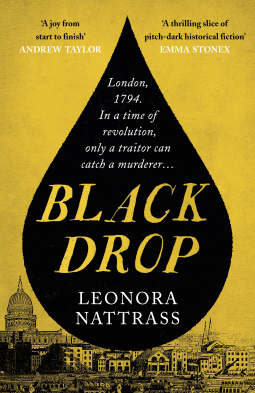
‘Oh, with the link of kindness between master and man quite gone, I begin to see that Hardy is right after all. The vote is all that can give us a voice among these men of wealth and power. They treat the poor like mere machines, left to rust when no longer of use. What kind of life is that? Independence, Laurence, and a dignified freedom. That is what all men seek.’

Black Drop by Leonora Nattrass (2021)

~

Flag of the Isle of Man

It was a warm dusk and people were strolling along the vast promenade enjoying it. The holiday season had started and the town was full of visitors. It all looked very pleasant. Horse-trams clopping along the asphalt, happy crowds milling about, singing popular hits, the sea in front, blue, placid, with the tide out, and behind, the gentle hills of Man, sweeping smoothly down to the waterfront.

Death of a Tin God by George Bellairs (1961)

~

‘You refused to align yourself with Sir John and the Royalist cause, and you treat the rural poor for free. Milady hopes that means you’re on the side of Parliament and the people.’

Jayne gave a surprised laugh. ‘Then I’ll disappoint her as badly as I disappointed her brother. I support men and women who seek an end to division, not those who look to make it worse.’

The Swift and the Harrier by Minette Walters (2021)

~

Have less to do with the demands of the world. This world is but a thoroughfare and full of woe, and when we depart from this place, we take nothing with us but our deeds, good or ill, that will be remembered after us. No man knows how soon God will call him and therefore it is good for every creature to be ready.

The Royal Game by Anne O’Brien (2021)

~

It’s a curious moment, when a problem that has troubled you so much suddenly starts to make sense.

A Fatal Crossing by Tom Hindle (2022)

~
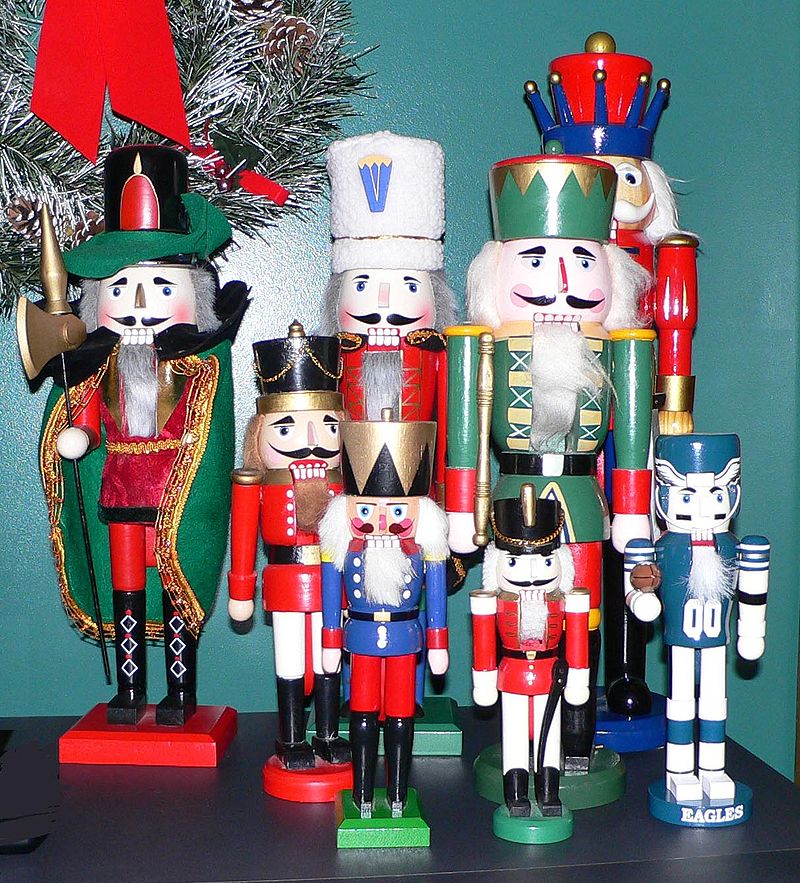
Traditional nutcrackers

When she danced, she flew on gossamer wings that lifted her away from the dragging weight of her family’s expectations. Enticed her with a glimpse of an alternate path to the one she was obligated to tread. When she danced, she had a voice. And nothing was more fearsome than a silent future.

Midnight in Everwood by MA Kuzniar (2021)

~

“It often seems to me that’s all detective work is, wiping out your false starts and beginning again.”

“Yes, it is very true, that. And it is just what some people will not do. They conceive a certain theory, and everything has to fit into that theory. If one little fact will not fit it, they throw it aside. But it is always the facts that will not fit in that are significant.”

Death on the Nile by Agatha Christie (1937)

~

Dreams, Lily decided, played a part in almost everything. They could turn the past into the future. They could send you forth on a path you had once thought of but never dared to take – until now, in the tangled mathematics of your brain, dreams can sometimes lay before you equations which are perfect and correct.

Lily by Rose Tremain (2021)

~

Happiness often seems a thing of the past, understood only when it is gone.

Castle Barebane by Joan Aiken (1976)

~

Favourite books read in October:

Castle Barebane and A Fatal Crossing

Authors read for the first time in October:

Leonora Nattrass, Joan Aiken, Herman Melville, MA Kuzniar, Tom Hindle

Places visited in my October reading:

England, France, Isle of Man, USA, Scotland, Egypt, the Atlantic Ocean

~

Have you read any of these books? What are you planning to read in November?

~

The end of October also means the end of this year’s R.I.P. XVI event, which involved reading dark and atmospheric books between 1st September and 31st October. Here’s what I managed to read:

1. Carmilla by Sheridan Le Fanu
2. The Mummy Case by Elizabeth Peters
3. Crooked House by Agatha Christie
4. The Grey King by Susan Cooper
5. Death of a Tin God by George Bellairs
6. Castle Barebane by Joan Aiken
7. Black Drop by Leonora Nattrass
8. Death on the Nile by Agatha Christie

I’m happy with my R.I.P. reading this year, although I didn’t have time for all of the books on my original list. Some will now have to be winter reads instead of autumn ones!

Did you take part in R.I.P. XVI? How did you do?

Midnight in Everwood by MA Kuzniar

If you’re looking for a different kind of Christmas read this year, Midnight in Everwood could be it. This retelling of The Nutcracker will whisk you away to a fantasy land of snow and sugar and will be best read in front of a fire with a hot drink on a cold day. Sadly, I didn’t like it as much as I’d hoped to but I know other readers will enjoy it much more than I did (and judging by the early reviews, they already are).

The novel opens in Nottingham in 1906, where twenty-year-old ballet dancer Marietta Stelle is hoping to audition for a prestigious ballet company. Her parents, however, have other plans for Marietta; they want her to give up dancing and settle down into a conventional and respectable married life. The husband they have in mind is their new neighbour, the inventor Dr Drosselmeier, who has been delighting everyone with his wonderful clockwork toys – everyone except Marietta, who senses something cold and cruel behind Drosselmeier’s charming exterior. Trying to escape from Drosselmeier’s unwelcome attentions on Christmas Eve, Marietta hides inside a grandfather clock, but when the clock strikes midnight she finds herself trapped within the enchanted, snow-covered land of Everwood.

This book is being marketed as children’s author MA Kuzniar’s debut adult novel – ‘The Nutcracker for adults’ – but I think this is misleading as it feels much more like a book for teenagers. There’s nothing wrong with that, of course, but it’s not what I expected and the book lacked the depth I would have preferred. I also found the writing style much too flowery; there are long descriptions of clothes and food and every sentence is packed with adjectives and similes, most of them related to cakes and sweets – voices are ‘smooth and rich as buttercream’, eyes are the colour of ‘butterscotch’ and expressions ‘soften like melted chocolate’. The sugary theme continues throughout the entire book and while I found it quite captivating at first, my senses began to feel overwhelmed with sights, tastes and smells! I can see, though, that this is exactly what other people loved about the book, so it really does depend on the individual reader.

On a more positive note, it was interesting to read a book set in Edwardian Nottingham, rather than the usual London. I wished we had seen more of that setting, but the majority of the story takes place in the magical land of Everwood (which is reached in a way that reminded me of The Lion, the Witch and the Wardrobe). Although Everwood seems enchantingly wonderful at first and a safe haven in which Marietta can hide from the sinister Drosselmeier, it quickly becomes clear that it is more of a prison, making this a dark Christmas read rather than a happy, festive one. The friends Marietta makes in Everwood – Dellara the fairy and Pirlipata, princess of Crackatuck – are imprisoned there too, and there is a feminist thread running through the story, exploring the various constraints on women’s lives, both in the fantasy world and in the real one.

I have to confess, I’ve never actually read the original ETA Hoffmann Nutcracker story or the Alexandre Dumas one on which the famous ballet is based. Maybe if I had, I would have appreciated this novel more, although I would still have struggled with the sweet and sugary writing style which just wasn’t for me at all.

Thanks to HQ for providing a copy of this book for review via NetGalley.

Death on the Nile by Agatha Christie

This month’s theme for Read Christie 2021 is ‘a story set on a mode of transport’. There are plenty of those to choose from and I’ve already read a few of them – Murder on the Orient Express, Death in the Clouds and The Mystery of the Blue Train – but I decided to read a book I’ve never read before, one of Christie’s most famous novels, the 1937 Poirot mystery Death on the Nile.

When Linnet Ridgeway, a beautiful heiress, is found shot dead in her cabin during a cruise along the Nile, there are two suspects with obvious motives. One is her husband, Simon Doyle, who will inherit her money on her death; the other is Simon’s former fiancée Jacqueline de Bellefort, who was left heartbroken by Simon and Linnet’s marriage and has followed them on to the steamer Karnak, threatening revenge. However, both Simon and Jacqueline have alibis, so Hercule Poirot, also touring the Nile on the same cruise, is forced to turn his attention to the other passengers – many of whom, it seems, are hiding secrets of their own and could also have reasons to want Linnet dead.

As it happens, another of Christie’s detectives, Colonel Race (whom I recently met in Sparkling Cyanide), soon arrives onboard the Karnak, on the trail of a man suspected of terrorism. Although it seems unlikely that this will be the same person who killed Linnet, Race joins Poirot in the search for the murderer. It was interesting to see them working together – this is Poirot’s book, of course, and he is the one who solves the mystery, but Race makes some useful contributions and his presence in the story means that Poirot can share some of his theories and thought processes with him (and therefore with the reader).

Knowing that this is one of Christie’s most popular books, I expected to love it but, although I did enjoy it, I don’t think it’s a favourite. That’s partly because I thought the characters, with only one or two exceptions, were a particularly unpleasant, privileged and entitled group, so I didn’t have much sympathy for either the victim or any of the people who found themselves under suspicion! Also, I guessed who had committed the crime almost immediately – before it happened, in fact – which took away some of the fun. I don’t think it was necessarily a particularly easy mystery to solve; I feel as though I’ve read another book recently (maybe not a Christie one) based on a similar idea and once I had that idea in my head, it seemed quite obvious who had done it. What I couldn’t work out was exactly how it was done, so I was still kept in suspense waiting for Poirot to explain it.

Next month’s Read Christie theme is ‘a story set after WWII’. This will mean any Christie novel published after 1945; I’ve already read a lot of them, but any suggestions are welcome!

Book 8 for R.I.P. XVI

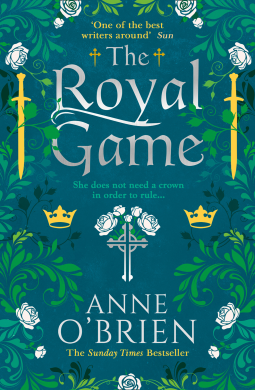
The Royal Game by Anne O’Brien

With a title like The Royal Game, you might expect this novel to be about a king or a queen; in fact, it’s the story of the Pastons, who rose from humble origins to become members of the aristocracy and one of Norfolk’s most influential families during the 15th century. Their collection of personal letters, known as the Paston Letters, is the largest archive of private correspondence surviving from the period and tells us a lot about life in England at that time.

The Pastons’ story is retold by Anne O’Brien in fictional form, using the letters as a guide. She has chosen to focus on three characters in particular: Margaret Mautby Paston, wife of John Paston, who becomes head of the family after the death of his father; John’s sister Elizabeth (known as Eliza); and Anne Haute, a cousin of Edward IV’s queen, Elizabeth Woodville. There are chapters written from the perspectives of each of these women, mainly Margaret and Eliza at first, with Anne only introduced halfway through and becoming more prominent towards the end of the book.

During the period covered in the novel, the Wars of the Roses are playing out in the background as the House of Lancaster and the House of York fight for control of England’s throne. The Pastons are an ambitious family who see the changing political situation in terms of what it will mean for them and how they can turn things to their own advantage in order to increase their wealth and power. This means that much of the story is concerned with the gaining and losing of properties and land, disputes over wills and controversies surrounding inheritances. In particular, estates left to John Paston by his patron Sir John Fastolf (the inspiration for Shakespeare’s Falstaff), become the subject of a long legal battle.

I liked this book much more than Anne O’Brien’s previous one, The Queen’s Rival, partly because this one is written in a more straightforward format – although with the alternating narrators I mentioned above. I felt that the narrative voices of Margaret and Eliza were very similar and sometimes I had to remind myself which one I was reading about, but this was less of a problem as I got further into the book. Margaret is portrayed as a strong, intelligent and resourceful woman working alongside her husband to hold on to the family property, while Eliza is being badly treated by her mother and desperately hoping for marriage as a way of escape. Eventually, both women find themselves with the same focus in life: to protect their children’s titles and inheritances from jealous rivals who are trying to claim them for themselves. Our third narrator, Anne Haute, who is depicted as another young woman with ambition and hopes of an advantageous marriage, seems unconnected to the other two at first, but quickly becomes drawn into the Pastons’ world.

The Wars of the Roses is one of my favourite historical periods to read about and it made a nice change to move away from the usual novels set at the royal court or on the battlefields and see what was going on elsewhere in the country at that time. I enjoyed this book but it’s very long and detailed and I was surprised when I reached a cliffhanger ending and discovered that there’s going to be a sequel. I will look out for it, but while I wait maybe this would be a good time to read my copy of Blood & Roses, Helen Castor’s non-fiction book about the Paston family.

Thanks to HQ for providing a copy of this book for review via NetGalley.

Book 47/50 read for the 2021 Historical Fiction Reading Challenge.

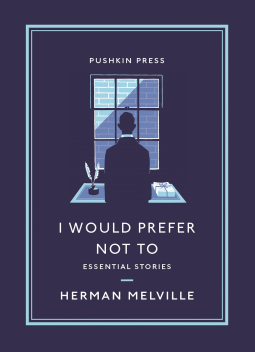
I Would Prefer Not To by Herman Melville

I’ve never read anything by Herman Melville – I know I should have read Moby Dick by now, but it has never sounded appealing to me – so when I spotted this new collection of Melville short stories from Pushkin Press it seemed a good opportunity to experience some of his work without having to commit to a 600+ page novel.

I Would Prefer Not To contains four stories, although the final one takes up more than half the book and is probably better described as a novella. My favourite was the first story, Bartleby the Scrivener, which was first published in Putnam’s Magazine in 1853. The narrator is an elderly Wall Street lawyer who employs two clerks, or ‘scriveners’ – Turkey and Nippers – whose job is to make copies of legal documents, and one office boy, Ginger Nut. An increase in work leads the lawyer to look for a third scrivener and, as he has been having difficulties with the temperamental natures of the other two, he decides to hire Bartleby, a quiet man whom he hopes will be a good influence on the others.

At first Bartleby works hard at his copying, but when the lawyer asks him to proofread a copied document, he replies with, “I would prefer not to”. Over the following days, he refuses to do more and more of the tasks that are requested of him – never giving an angry or rude response; always just those same five words: “I would prefer not to”. As the lawyer decides how to deal with this unexpected problem, the reader wonders what is wrong with Bartleby and what has caused his unusual behaviour. I enjoyed the story, but it left me very confused and I didn’t really understand what Melville was trying to say. However, after turning to Google for help, it seems that the meaning of the story was deliberately ambiguous and it can be interpreted in many ways, which made me feel a lot better about not understanding it!

Next is The Lightning-Rod Man, a short and intriguing tale of a salesman who arrives at the narrator’s house in Albania during a thunderstorm and tries to sell him a lightning-rod. The narrator is sceptical and says he will trust God to keep him safe, but the salesman won’t take no for an answer. Again, the meaning is not immediately obvious, but it’s an entertaining story and reminded me of Edgar Allan Poe. The third story, John Marr, is the weakest in the book, in my opinion. The title character is a retired sailor trying to adjust to a life on land, in a remote community on the American prairies. Feeling isolated and out of place, he remembers his seafaring days through songs and poems. The piece included in this collection is taken from John Marr and Other Sailors, a volume of poetry published in 1888, so maybe it would have worked better if read in the context of the original book.

Finally, we have the novella Benito Cereno, in which an American sea captain sailing off the coast of Chile encounters a Spanish slave ship in distress. Boarding the ship to see if he can help, he meets the Spanish captain, Benito Cereno, who tells him how the ship came to be in trouble. As he observes the behaviour of Benito Cereno and his slaves, he begins to wonder whether there is more to this than meets the eye. This was another interesting story, but I felt that it was much too long and too easy to guess the twist; we see things only through the eyes of the narrator, who is frustratingly oblivious to what is really happening on the Spanish ship. It was also another difficult one to interpret: was it a racist, pro-slavery story or an anti-racist, anti-slavery story? It could be either and it can’t be assumed that the views of the narrator reflect the views of the author.

So, now that I’ve had my introduction to Herman Melville, will I be reading Moby Dick? At the moment I think I would prefer not to, but maybe I’ll be ready to tackle it one day in the future!

Thanks to Pushkin Press for providing a copy of this book for review via NetGalley.

Classics Club Spin #28: The result

The result of the latest Classics Club Spin has been revealed today.

The idea of the Spin was to list twenty books from my Classics Club list, number them 1 to 20, and the number announced by the Classics Club represents the book I have to read before 12th December. The number that has been selected is…

12

And this means the book I need to read is…

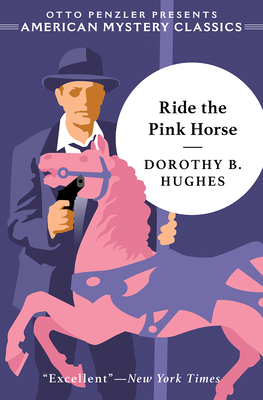
Ride the Pink Horse by Dorothy B Hughes

It’s carnival time in Santa Fe, and three out-of-town visitors are drawn together in the heat, the smells and the colour of the festival…

Sailor, a hood from Chicago, is there to confront his boss, Sen, a crooked politician, to try to get money for what he knows about the murder of Sen’s wife, killed supposedly during a robbery gone wrong.

Following them both is Mac, a man from the same side of the tracks as Sailor, but who has made very different choices. He’s a cop now, and wants Sailor to testify against Sen and put him away.

The three strangers collide, retreat and advance through the streets of New Mexico, moving ever closer to a charged and unexpected outcome…

~

I’m happy with this result! It’s not a book I would normally have chosen to read based on the description, but The Expendable Man was one of my favourite books read last year and I’ve been looking forward to reading more by Dorothy B Hughes. It’s also one of the shorter books on my list so I should easily be able to finish it by the deadline.

Did you take part in the spin? Are you pleased with your result?

Black Drop by Leonora Nattrass

The final decade of the 18th century is a time of revolution and political upheaval; in 1794, the year in which Black Drop is set, Britain is both at war with France – a country still in the grip of the Reign of Terror – and trying to negotiate a treaty with the recently independent America. Our narrator, Laurence Jago, is a London clerk working in the Foreign Office and facing the difficult task of trying to advance in his career while also hiding a secret that, if discovered, would lead to accusations of treason.

When details of Britain’s military plans are leaked to the press, suspicion falls at first on Jago – but then the blame shifts to another clerk, Will Bates, who is found to have hanged himself in his room. Was Will really the traitor or is he being used as a convenient scapegoat? Jago is sure he was innocent and that his death was actually murder rather than suicide so, with the help of his friend, the journalist William Philpott, he sets out to discover the truth.

I enjoyed this book, although it was more political thriller than murder mystery and I occasionally felt that the plot was becoming more complicated than it really needed to be; I struggled to keep track of all the characters, their roles within the government and which of them may or may not be a spy. Overall, though, it was a fascinating period to read about, with so much going on in the world at that time – not only the French Revolutionary Wars and American treaty mentioned above, but also the fight for political reform led by the British shoemaker Thomas Hardy (not to be confused with the author of the same name!) and the growing debate over slavery and abolition.

Laurence Jago is a great character and the sort of flawed hero I love. The ‘Black Drop’ of the title refers to the laudanum Jago depends upon to get through the day and to ease the fear of his secrets being discovered. As his addiction worsens, it begins to affect the way he judges people and situations and leads the reader to question whether or not everything he is telling us is completely reliable. Despite this, I liked him very much and connected with his narrative style immediately. Jago is one of several fictional characters in the novel whom we see interacting with real historical figures such as Thomas Hardy, Lord Grenville, the Foreign Secretary, and John Jay, the American envoy. I knew nothing about any of these people before reading this book; it’s always good to learn something new!

Black Drop is Leonora Nattrass’ first novel. The way this one ended made me think there could be a sequel, but if not I will be happy to read whatever she writes next.

Thanks to Viper for providing a copy of this book for review via NetGalley.

Book 46/50 read for the 2021 Historical Fiction Reading Challenge.

Book 7 for R.I.P. XVI