The Echo Chamber by John Boyne

This is not my usual sort of read at all, but because I’ve enjoyed so many of John Boyne’s other books (my favourites are A History of Loneliness and This House is Haunted), I’m happy to read anything he writes.

The Echo Chamber is the story of the Cleverleys, an obnoxious and unpleasant celebrity family trying to fit into a world ruled by social media, where more and more of our lives are played out online rather than in ‘real life’. George Cleverley is a famous BBC television presenter who thinks of himself as a national treasure; when he gets himself into trouble for unintentionally misgendering someone, things go from bad to worse as he tries to make amends and ends up offending everyone else along the way. His wife Beverley (yes, Beverley Cleverley) is a bestselling romance novelist whose books are actually the work of ghostwriters. Beverley has been having an affair with a much younger man, her dance partner on Strictly Come Dancing, who has gone home to Ukraine leaving her in charge of his beloved pet tortoise.

The Cleverleys have three children: Nelson (the only one of the family I felt any sympathy for), a teacher who is being bullied at work and has a collection of uniforms he wears to give himself confidence; Elizabeth, a Twitter-addicted ‘influencer’, obsessed with getting likes and increasing her followers; and the youngest, seventeen-year-old Achilles, who has come up with a scheme for blackmailing older men and cheating them out of their money.

This book is hilarious. I don’t always find books funny that are supposed to be, but this one made me laugh. It satirises everything and everyone: the press, the conflict between ‘woke’ and ‘anti-woke’, prejudice and intolerance in all of their forms, supporters and opponents of cancel culture, those who like to document every single moment of their lives on Instagram, the hypocrisy of people who hide behind fake names to post hurtful tweets while using the hashtag #BeKind. All of these things are explored through the lives of the Cleverleys who, for various reasons, get themselves into all sorts of ridiculous and farcical situations. I did sometimes wonder whether John Boyne was writing from personal experience and it does seem that it was written as a response to abuse he received himself on Twitter following the publication of one of his previous books – something I wasn’t aware of, probably because I don’t spend enough time on Twitter!

Beneath the humour, there are some important messages here and this book can be seen as a warning against society’s current obsessions with technology, social media and our online presence. Would we all be happier if we cancelled our accounts, switched off our computers and put away our phones? That’s not likely to happen, but it’s something to think about.

Thanks to Doubleday for providing a copy of this book for review via NetGalley.

This is book 7/20 of my 20 Books of Summer 2021
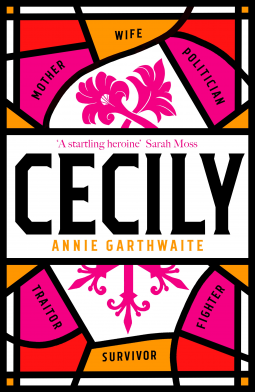
Cecily by Annie Garthwaite

This impressive first novel by Annie Garthwaite tells the story of one of the women at the heart of the Wars of the Roses. As a member of the powerful Neville family, wife of Richard, Duke of York and mother to two kings, Edward IV and Richard III, Cecily Neville was a strong and intelligent woman who managed to wield some political influence at a time when it was rare for women to do so. This makes her the ideal subject for a book set during this period – and in fact, there have already been several, such as Red Rose, White Rose by Joanna Hickson and The Queen’s Rival by Anne O’Brien.

Beginning in 1431 and ending in 1461, Cecily is set during the reign of Henry VI, whose weakness as king and inability to rule effectively leads to political instability and eventually to war. Cecily’s husband, Richard of York, is one of several noblemen trying to gain control of the king and his kingdom, while Henry’s young queen, Margaret of Anjou, does everything she can to hold on to power and keep the throne safe for her son. I won’t describe the plot of the novel in any more detail here; you may already be familiar with the history and if you’re not, it’s far too complex for me to explain in a few paragraphs! If you read the book, you’ll certainly learn all you need to know.

Cecily, as she is portrayed here, is not a very lovable or endearing person. She is driven by ambition and pushes her husband Richard towards first of all trying to displace Edmund Beaufort, Duke of Somerset, as the king’s closest adviser, and then to aim at the throne himself. As a medieval noblewoman, Cecily is obviously limited in what she can actually do – battles, for example, are played out in the background of her story and she only learns the outcome afterwards from other people – but she takes any opportunity she can find to shape the future of her family and her country, whether this means securing advantageous marriages for her children (she had twelve, seven of whom lived past infancy) or writing to Margaret of Anjou to try to get her husband restored to the king’s favour. Richard, in comparison, is portrayed as weaker and less decisive and Cecily, who almost plays the role of Lady Macbeth, becomes frustrated by his lack of ruthlessness.

The book is written in the third person present tense, which is not a favourite style of mine. I sometimes find it distracting and distancing, but in the hands of some authors it works very well and I think Annie Garthwaite does a good job of using it to give the story a feeling of immediacy, while also giving us access to Cecily’s intimate thoughts and feelings. I was often reminded of Hilary Mantel’s Wolf Hall – not just because of the writing style, but also because both books feature a complex, flawed protagonist and focus on political intrigue close to the throne. This is not the light and fluffy kind of historical fiction and it does require some concentration, particularly if this period of history is new to you. The only problem, for me, was a slight lack of emotion; Cecily’s story was fascinating, but I never felt very moved by it.

This novel only covers the early stages of the Wars of the Roses, ending with the Battle of Towton in 1461. As Cecily Neville lived until 1495, I hope there is going to be a sequel telling the rest of her story!

Thanks to Viking for providing a copy of this book for review via NetGalley.

Book 34/50 read for the 2021 Historical Fiction Reading Challenge.

My Commonplace Book: July 2021

A selection of words and pictures to represent July’s reading:

commonplace book
noun
a book into which notable extracts from other works are copied for personal use.

~

In the romances, victory was always resoundingly conclusive and the hero had no more to do than seat himself in the place of honour beside his bride at a miraculously-conjured banquet. In real life matters were less tidily disposed.

Red Adam’s Lady by Grace Ingram (1973)

~

‘Dull novels? But, George, why? Anyone can do that.’

‘Laura, they cannot. It needs a power, an absorption, which few possess. If you write enough dull novels, excessively dull ones, Laura, you obtain an immense reputation…’

High Rising by Angela Thirkell (1933)

~

Zanzibar east coast beach

“That’s where you are wrong,” said Tyson, leaning his elbows on the warm stone. “I’ve seen a lot of the world. A hell of a lot of it! But there’s something special about this island. Something that I haven’t met anywhere else. Do you know what is the most familiar sound in Zanzibar? – laughter! Walk through the streets of the little city almost any time of day or night, and you’ll hear it.

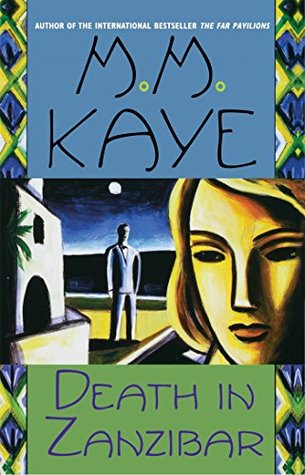
Death in Zanzibar by M.M. Kaye (1959)

~

Time is an unkind teacher, delivering lessons that we learn far too late for them to be useful. Years after I could have benefited from them, the insights come to me.

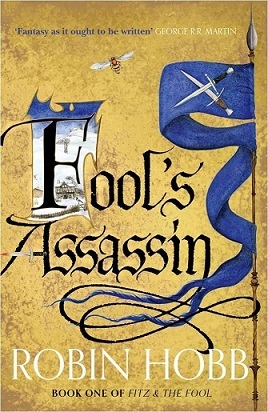
Fool’s Assassin by Robin Hobb (2014)

~

Finally, feeling depressed and misunderstood, he set up a Twitter account, and the rest, for him, was history. At last, he had discovered a place where people would listen to the magical thoughts that ran through his mind. Almost 1,800 people, in fact. Two or three of whom occasionally liked something he posted.

The Echo Chamber by John Boyne (2021)

~

I often wonder why the whole world is so prone to generalise. Generalisations are seldom if ever true and are usually utterly inaccurate.

The Murder at the Vicarage by Agatha Christie (1930)

~

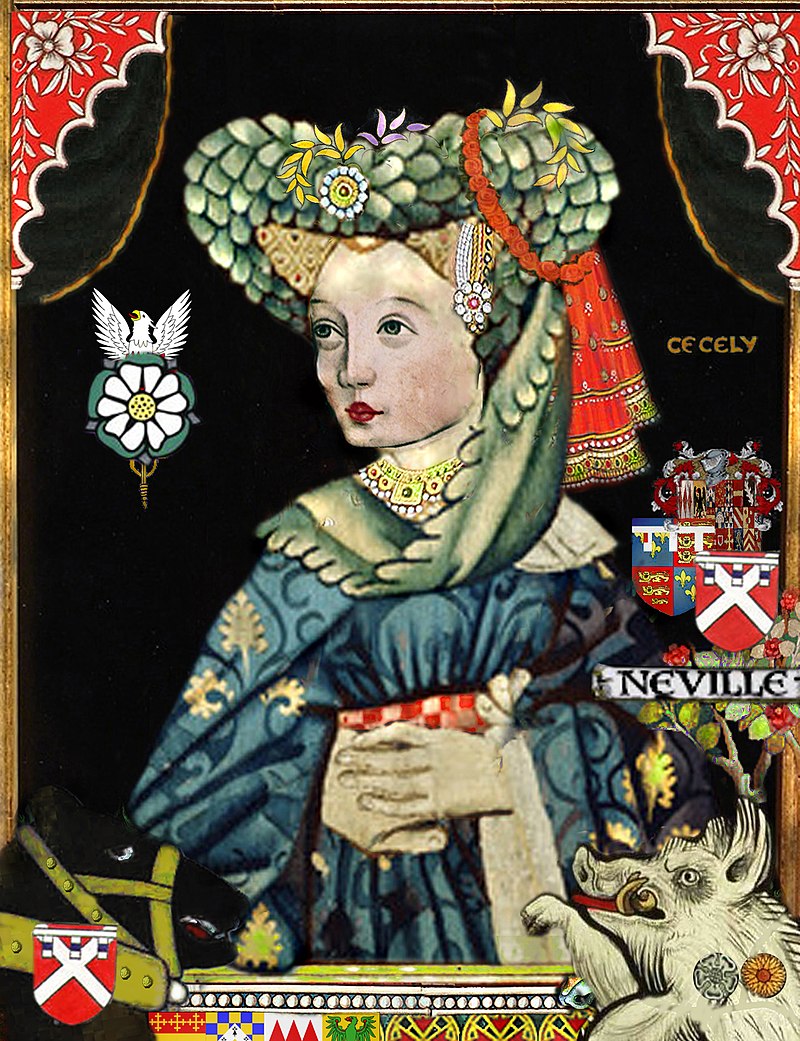
Cecily Neville, Duchess of York

Well.
Peace, no less than war, calls for strength of arm. You still have to win it.

Cecily by Annie Garthwaite (2021)

~

Is it love to worship a saint in heaven, whom you dare not touch, who hovers above you like a cloud, which floats away from you even as you gaze? To love is to feel one being in the world at one with us, our equal in sin as well as in virtue.

I Will Repay by Baroness Orczy (1906)

~

Favourite books read in July:

The Echo Chamber, Death in Zanzibar, Fool’s Assassin

Places visited in my July reading:

England, Zanzibar (Tanzania), the fictional Six Duchies, France

Authors read for the first time in July:

Grace Ingram, Angela Thirkell, Annie Garthwaite

Have you read any of these books? How was your July reading?

I Will Repay by Baroness Emmuska Orczy

I haven’t been very successful recently at finishing the books chosen for me by the Classics Club Spins, so I decided to make an early start on my current Spin book, I Will Repay by Baroness Orczy – and have finished it three weeks before the 22nd August deadline! It helped that it was a relatively short book, as well as a light and entertaining one that I found easy to read.

First published in 1906, this was the first sequel to The Scarlet Pimpernel to be published, but if you’re reading the series in chronological order, as I am, it’s the fourth. I have previously read Sir Percy Leads the Band and The League of the Scarlet Pimpernel and found them both disappointing in comparison to the original book, but I’m pleased to say that this one was more enjoyable. Not everyone will agree, as we do see very little of the Scarlet Pimpernel and nothing at all of his wife Marguerite, but I thought it was quite an exciting and gripping story in its own right.

The novel opens in 1783 with Paul Déroulède and the young Vicomte de Marny fighting a duel in a Paris tavern. When the Vicomte is accidentally killed, his father, devastated at losing his son and heir, forces his other child, fourteen-year-old Juliette, to swear an oath promising to avenge her brother’s death: “May my brother’s soul remain in torment until the final Judgment Day if I should break my oath, but may it rest in eternal peace the day on which his death is fitly avenged.”

Ten years later, the Revolution is underway and Paris has become a dangerous place for a young noblewoman like Juliette:

And the afternoons were very lively. There was always plenty to see: first and foremost, the long procession of tumbrils, winding its way from the prisons to the Place de la Révolution. The forty-four thousand sections of the Committee of Public Safety sent their quota, each in their turn, to the guillotine. At one time these tumbrils contained royal ladies and gentlemen, ci-devant dukes and princesses, aristocrats from every county in France, but now this stock was becoming exhausted…

Walking through the streets one day, Juliette’s expensive lace-trimmed clothes draw the attention of a mob and she escapes from them by hammering on the door of the nearest house, which happens to be the home of Paul Déroulède. Paul, who has made himself popular with the citizens of Paris despite his own royalist sympathies, protects her from the mob and takes her into his household. As Juliette gets to know her brother’s enemy, she finds herself falling in love – so when a chance comes to send Paul Déroulède to the guillotine, she faces a very difficult decision.

You’re probably wondering where the Scarlet Pimpernel himself comes into the story; as I’ve said, we don’t see very much of him, but he does have an important role to play towards the end. However, the absence of the Pimpernel for most of the novel probably explains why this book was not more popular on its publication as people who were expecting a Scarlet Pimpernel book would have been disappointed. Personally, this didn’t really bother me as I was so caught up in the story of Juliette and Déroulède, and all the detail of this period of the French Revolution. The novel is set shortly after the assassination of Jean-Paul Marat, during the ‘Reign of Terror’, and Orczy does a wonderful job of recreating the atmosphere on the streets of Paris where anyone with a drop of noble blood risks being denounced and sent to their death. Orczy makes no secret of the fact that she is clearly on the side of the aristocrats, while the ordinary citizens of Paris are portrayed as brutal and bloodthirsty, but I suppose you would expect bias from someone who was a baroness!

Having enjoyed this one, I’m planning to continue with the next book in the series, The Elusive Pimpernel, which I’ve been told is one of the best.

This is book 21/50 from my second Classics Club list.

Book 33/50 read for the 2021 Historical Fiction Reading Challenge.

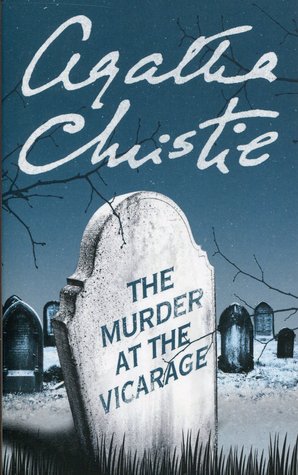
The Murder at the Vicarage by Agatha Christie

This month’s theme for Read Christie 2021 is ‘a story starring a vicar’ and the chosen title is an obvious one – The Murder at the Vicarage, which was first published in 1930 and is the first book in the Miss Marple series. I have read most of the later Marple novels, but never this one and I thought it would be interesting to go back to the beginning and read the book that introduced Miss Marple to the world of crime fiction.

The novel is set, like many of the other Marple novels, in the village of St Mary Mead, a place where everyone knows everyone else and nobody’s behaviour goes unnoticed! When Colonel Protheroe is found dead in the study at the vicarage, shot while waiting for the vicar to return home, Miss Marple and the other villagers immediately begin to gossip and to speculate on who the murderer could be. At first suspicion falls upon Anne Protheroe, the Colonel’s unhappy wife, and Lawrence Redding, the man with whom she has been having an affair. However, Colonel Protheroe was not a popular man and there is no shortage of other suspects – Miss Marple herself insists that she can think of at least seven.

The story is narrated by the vicar, Leonard Clement, who is drawn into the mystery not only due to the murder victim being found in his study, but also because the people of St Mary Mead see him as a trusted friend in whom they can confide and share pieces of information they prefer not to give to the police. The vicar’s narrative is both intelligent and amusing, as he reflects on his household, his domestic arrangements and his relationship with his younger wife, Griselda, as well as carrying out his own investigations into the murder case.

Someone else who is investigating the murder for herself is Miss Marple – and of course she finds her way to the solution before the police do, using her knowledge of human nature and her powers of observation. Miss Marple as she appears in this first novel is slightly different from the woman we meet in the later books in the series and is not particularly well liked by her neighbours, who see her as someone who goes around poking her nose into everyone else’s business. Unlike in some of the other books, where she seems to have been added to the story almost as an afterthought and the plot would have worked just as well without her, in this one she is there from beginning to end – often just in the background, but everything she says and does and every suggestion she makes turns out to be vital to the solving of the mystery!

Although I did enjoy this book, particularly as I found it such a difficult one to solve – I think I suspected almost everyone and allowed myself to get distracted by all the red herrings Christie throws into the plot – it took me a while to get into it. There were so many characters to keep track of and apart from the vicar and his wife and Miss Marple I didn’t really engage with any of them. I found the second half of the book much more compelling, though, as the plot became more and more complex and clever. I have read three Miss Marple mysteries in a row now for the Read Christie challenge, so I’m in the mood for something different next month. The August theme is ‘a story set by the seaside’ and I’m thinking about the Poirot novel Evil Under the Sun.

Fool’s Assassin by Robin Hobb

Almost exactly seven years after I picked up Assassin’s Apprentice, the first in Robin Hobb’s sixteen-novel Realm of the Elderlings sequence, here I am embarking on the final trilogy, Fitz and the Fool, which begins with Fool’s Assassin. Before I start to discuss this book, I should warn you that if you’re new to Robin Hobb, there may be things in my review that will spoil the earlier novels for you; before reading Fool’s Assassin, I think it’s essential to have at least read The Farseer Trilogy and The Tawny Man Trilogy as they deal with the same characters and storylines. The other books – The Liveship Traders and The Rain Wild Chronicles – add to the world-building and I would still recommend reading them in their correct places within the sequence, but it’s probably not completely necessary.

Anyway, back to Fool’s Assassin! After persevering through the four novels that make up The Rain Wild Chronicles, none of which I particularly enjoyed, it was such a relief to be back in the company of FitzChivalry Farseer; like being reacquainted with an old friend after a long absence.

The book begins with Fitz, now happily married to his beloved Molly, living on his country estate of Withywoods. Known to his servants and neighbours as the humble Tom Badgerlock, Fitz is keeping his distance from the dangers of Buckkeep Castle but his gift for the powerful magic known as the Skill still links him to his old mentor Chade and others within the castle walls. To his disappointment, there is no word at all from his dearest friend, the Fool, who departed at the end of Fool’s Fate – or is there? When a mysterious stranger attempting to bring him a message during the Winterfest celebrations is pursued from Withywoods before she can speak to him, Fitz is left wondering what the message contained. However, it is only after the arrival of another very unusual young woman called Bee that Fitz finds himself reluctantly drawn back into the intrigue that surrounds the Farseer throne and the affairs of the wider world of the Six Duchies.

Fool’s Assassin has a slower pace than some of the other books about Fitz; there is not a lot of action until almost the end, and instead we spend most of the novel with Fitz and his household at Withywoods. It’s a reflective, introspective story in which Fitz is looking back on the events of his past and trying to move forward, while enjoying his peaceful new life as a husband and father. This peaceful life doesn’t last forever, of course, so eventually there are more personal traumas for Fitz to deal with – and despite the largely domestic setting and the slowness of the plot to develop, I was never bored for a moment. As I said, most of the action in the novel occurs in the final few chapters, along with a revelation about one of the characters; I’m not sure whether this was supposed to come as a surprise to the reader, but I had guessed the truth much earlier in the novel and found it frustrating that Fitz had apparently been completely oblivious to it!

Although the previous books have been written only from Fitz’s perspective, this one introduces a second viewpoint character who, in the second half of the book, comes to dominate the story at times. I wasn’t sure how I felt about this at first and I think my personal preference would have been to continue with Fitz as the sole narrator, but I did like and sympathise with this second character and I can see the value of having someone who can offer insights that Fitz cannot and show us what is happening when Fitz is not physically there. It would have been nice to have seen more of the characters at Buckkeep, such as Kettricken and Dutiful, and certainly more of the Fool – Hobb really keeps us waiting and wondering when he will make his appearance – but I did like the way the long departed Nighteyes is able to play a role in the story, as I hadn’t expected to hear from him again.

The book ends on a huge cliffhanger and although I really need to concentrate on other books at the moment, I think it’s very likely that I will be drawn to the second novel, Fool’s Quest, very soon. One of the advantages of waiting until a whole trilogy is available instead of reading the books as they are published!

This is book 6/20 of my 20 Books of Summer 2021
Death in Zanzibar by M M Kaye

I love M.M. Kaye’s Death In… novels, but I’ve been taking my time with the series as there are only six books and I didn’t want to finish them all too quickly. The books all stand alone as entirely separate mystery novels, but are all set in one of several fascinating locations around the world in which Kaye lived with her husband, who was in the British Army. So far, my favourite is still the first, Death in Kashmir, but this one – the fifth in the series – ties with Death in Cyprus for second place.

Death in Zanzibar was originally published in 1959 as The House of Shade. The novel begins with Dany Ashton on her way to Zanzibar to stay with her mother Lorraine and stepfather, Tyson Frost, at Tyson’s home Kivulimi, known as the ‘House of Shade’. Before leaving London, she visits Tyson’s solicitor, Mr Honeywood, to collect a document her stepfather has asked her to bring out to Zanzibar for him. The next day, she reads in the newspaper that Mr Honeywood was murdered just after she left his office and the police have found a handkerchief at the murder scene with her initials on it. Determined that nothing will stop her from visiting Zanzibar, Dany decides to say nothing and continue with her journey – until she discovers that someone has broken into her hotel room and stolen her passport.

Staying in the same hotel is Lashmer Holden, an American publisher whose father is a close friend of Tyson’s. Lash is also on his way to Kivulimi on business and when he hears Dany’s story, he comes up with a plan to get her to Zanzibar and to throw the police off her trail. The only problem is, Lash is drunk (his fiancée has just broken off their engagement) and when he sobers up, halfway across Africa, he is horrified to learn what he and Dany have done.

I won’t go into the plot in any more detail, but there are more murders, a mysterious old mansion, family secrets, disguises and forged letters – all the elements of an entertaining and atmospheric read. I have seen a lot of comparisons of Kaye’s crime novels with Agatha Christie’s and I do agree, to a certain extent – this one did remind me at times of books like Murder in Mesopotamia or They Came to Baghdad – but I think, with their blend of suspense, romance, beautiful young heroines and evocative settings, a better comparison would be with Mary Stewart’s novels. Kaye’s books are darker than Stewart’s, though; they always seem to involve several scenes with the heroine hearing noises in the night and coming across intruders in the dark which are genuinely quite creepy and sinister!

I think this is probably the first book I’ve ever read set in Zanzibar, so I enjoyed the parts describing the island: the colours, smells and sounds, the politics and the people – and lots of interesting little facts, such as a mention of spikes on old wooden doors which had been put there to repel elephant attacks. However, about half of the book actually takes place during the journey, on planes, in airports, and in hotels; Zanzibar is less important to the story than the settings of some of the other books. The mystery itself is an excellent one with lots of suspects, several of whom I suspected at various points in the novel – but not the right one! I liked the romantic aspect of the story too and although I would have preferred Dany to have been slightly less naive and innocent, I had to remind myself that she had just left school the year before and had led a sheltered life.

I still need to read Death in the Andamans, but I’m particularly looking forward to reading Kaye’s historical novel Trade Wind, which is also set in Zanzibar during the time of one of Tyson Frost’s ancestors.

This is book 5/20 of my 20 Books of Summer 2021.