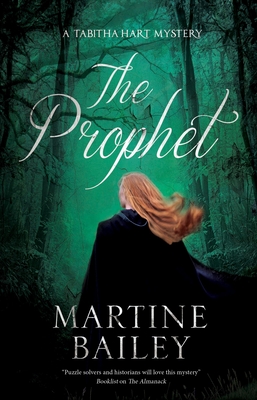
The Prophet by Martine Bailey

When I finished reading Martine Bailey’s The Almanack last year I didn’t know there was going to be a sequel and didn’t expect one, so it was a nice surprise to come across The Prophet and to reacquaint myself with characters I hadn’t thought I would meet again. This book does work as a standalone, though, so if you haven’t read The Almanack yet, don’t worry!

The story begins in 1753, on Old May Day – eleven days were ‘lost’ the year before when Britain changed over from the Julian calendar to the Gregorian calendar – and Tabitha De Vallory and her husband Nat have decided to ride into the forest to see the giant Mondrem Oak which has been decorated for the occasion. Tabitha also has a special reason of her own for wanting to visit the oak; she is pregnant and wants to ask the tree spirit for a safe childbirth. However, she and Nat are unprepared for what they actually find beneath the tree – the dead body of a young woman, brutally murdered.

The woman’s death has coincided with the arrival of a group of people who are on their way to America to start a new life in Pennsylvania and have set up camp in the forest before continuing their journey to the coast. Led by a charismatic young preacher known as Baptist Gunn, the group deny all knowledge of the murder, but are they telling the truth? Could the dead woman be linked to Gunn’s prophecy predicting the coming of a second messiah on Midsummer’s Day?

I enjoyed being back in Netherlea, the Cheshire village in and around which these books are set. It’s a small community steeped in tradition and folklore, where people’s lives are still ruled by ancient superstitions and rituals, making them suspicious of things that are new and unfamiliar – the perfect setting in which a religious cult like Baptist Gunn’s can take root and develop. The conflict between new and old is also explored through the themes of pregnancy and childbirth as Tabitha looks forward to the arrival of her baby with both excitement and anxiety.

The mystery element of the novel is also interesting; both Tabitha and Nat have a personal connection to the dead woman which makes it even more important for them to find out what happened to her. In addition to the prophet Gunn, there are several other suspects and some of the revelations towards the end of the book surprised me! As well as trying to solve the mystery, Tabitha is trying to put her past behind her and adjust to a new way of life as the lady of Bold Hall, with all the changes in status her marriage has brought her.

Of the two books, I think I preferred The Almanack, mainly because I loved the little riddles at the start of every chapter which aren’t included in this one, but The Prophet was still an enjoyable, if unsettling, read.

Thanks to Severn House for providing a copy of this book for review via NetGalley

Book 14/50 read for the 2021 Historical Fiction Reading Challenge.

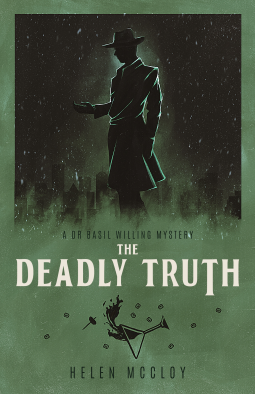
The Deadly Truth by Helen McCloy

First published in 1941, this is the third book in Helen McCloy’s Dr Basil Willing mystery series. Although I’ve been reading the books in order so far, it’s really not necessary and you could start anywhere. I think the first one, Dance of Death, is still my favourite but this one comes close.

The Deadly Truth begins with biochemist Roger Slater being visited in his laboratory by the glamorous Claudia Bethune and telling her about a new drug he is developing: a ‘truth serum’ based on scopolamine. After Claudia departs, Roger discovers that one of the tubes containing the drug has disappeared; aware of Claudia’s love of practical jokes and of the drug’s dangerous properties, he sets off in pursuit but, by the time he catches up with her, it’s too late. Guests are arriving at Claudia’s house for a dinner party – and are about to be served a very special cocktail.

Later that night, Dr Basil Willing, who is renting a beach hut on Claudia’s land, thinks he can see flames through the window of the Bethunes’ house and decides to investigate. It turns out there is no fire, but what he does find inside the house is just as shocking – Claudia, slumped at the table, strangled by her own emerald necklace. As the details of the dinner party begin to emerge, Basil learns that, having had their drinks spiked with the truth serum, each guest had revealed truths about themselves that they would have preferred to keep secret. Now that the effects of the drug have worn off, can Basil separate the truth from the lies and identify the murderer?

Helen McCloy’s novels all have such unusual and intriguing plots! They may seem far-fetched and unlikely at first, but really the murder in each one is just a starting point for McCloy to introduce some fascinating psychological and scientific themes and ideas; in this book, as well as the discussions of truth and lies, there’s also an interesting exploration of sound and deafness. As a New York psychiatrist, Basil Willing solves the crimes through his understanding of the human mind, looking at personalities and motives rather than spending too much time on technicalities such as alibis, and this is the kind of mystery novel I prefer. Basil does have some specialist knowledge which plays an important part in the solution of this particular mystery, but even without this knowledge the clues are there for an observant reader to pick up on. Unfortunately, I was not observant enough and allowed the red herrings McCloy drops into the story to lead me away from the correct suspect!

I think Helen McCloy is one of the best of the ‘forgotten’ crime authors I’ve discovered recently. She also seems to have been quite prolific; there are ten other Basil Willing novels and lots of standalones, so I’m looking forward to reading more of her work.

Thanks to Agora Books for providing a copy of this book for review via NetGalley.

The Walter Scott Prize 2021 Shortlist

Following the announcement of the 2021 longlist for the Walter Scott Prize for Historical Fiction in February, the shortlist has been revealed today. As you may know, I am slowly working my way through all of the shortlisted titles for this prize since it began in 2010 (you can see my progress here), so I will be trying to read all of the books below eventually. There are five books on this year’s list and here they are:
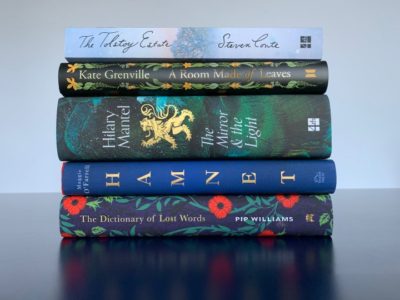
Image courtesy of The Walter Scott Prize

~

The Tolstoy Estate by Steven Conte

“In the first year of the doomed German invasion of Russia in WWII, a German military doctor, Paul Bauer, is assigned to establish a field hospital at Yasnaya Polyana – the former grand estate of Count Leo Tolstoy, the author of the classic War and Peace. There he encounters a hostile aristocratic Russian woman, Katerina Trubetzkaya, a writer who has been left in charge of the estate. But even as a tentative friendship develops between them, Bauer’s hostile and arrogant commanding officer, Julius Metz, becomes erratic and unhinged as the war turns against the Germans. Over the course of six weeks, in the terrible winter of 1941, everything starts to unravel…

From the critically acclaimed and award-winning author, Steven Conte, The Tolstoy Estate is ambitious, accomplished and astonishingly good: an engrossing, intense and compelling exploration of the horror and brutality of conflict, and the moral, emotional, physical and intellectual limits that people reach in war time. It is also a poignant, bittersweet love story – and, most movingly, a novel that explores the notion that literature can still be a potent force for good in our world.”

~

A Room Made of Leaves by Kate Grenville

“It is 1788. Twenty-one-year-old Elizabeth is hungry for life but, as the ward of a Devon clergyman, knows she has few prospects. When proud, scarred soldier John Macarthur promises her the earth one midsummer’s night, she believes him.

But Elizabeth soon realises she has made a terrible mistake. Her new husband is reckless, tormented, driven by some dark rage at the world. He tells her he is to take up a position as Lieutenant in a New South Wales penal colony and she has no choice but to go. Sailing for six months to the far side of the globe with a child growing inside her, she arrives to find Sydney Town a brutal, dusty, hungry place of makeshift shelters, failing crops, scheming and rumours.

All her life she has learned to be obliging, to fold herself up small. Now, in the vast landscapes of an unknown continent, Elizabeth has to discover a strength she never imagined, and passions she could never express.

Inspired by the real life of a remarkable woman, this is an extraordinarily rich, beautifully wrought novel of resilience, courage and the mystery of human desire.”

~

The Mirror and the Light by Hilary Mantel

“England, May 1536. Anne Boleyn is dead, decapitated in the space of a heartbeat by a hired French executioner. As her remains are bundled into oblivion, Thomas Cromwell breakfasts with the victors. The blacksmith’s son from Putney emerges from the spring’s bloodbath to continue his climb to power and wealth, while his formidable master, Henry VIII, settles to short-lived happiness with his third queen, Jane Seymour.

Cromwell is a man with only his wits to rely on; he has no great family to back him, no private army. Despite rebellion at home, traitors plotting abroad and the threat of invasion testing Henry’s regime to breaking point, Cromwell’s robust imagination sees a new country in the mirror of the future. But can a nation, or a person, shed the past like a skin? Do the dead continually unbury themselves? What will you do, the Spanish ambassador asks Cromwell, when the king turns on you, as sooner or later he turns on everyone close to him?

With The Mirror and the Light, Hilary Mantel brings to a triumphant close the trilogy she began with Wolf Hall and Bring Up the Bodies. She traces the final years of Thomas Cromwell, the boy from nowhere who climbs to the heights of power, offering a defining portrait of predator and prey, of a ferocious contest between present and past, between royal will and a common man’s vision: of a modern nation making itself through conflict, passion and courage.”

~

Hamnet by Maggie O’Farrell

“On a summer’s day in 1596, a young girl in Stratford-upon-Avon takes to her bed with a fever. Her twin brother, Hamnet, searches everywhere for help. Why is nobody at home?

Their mother, Agnes, is over a mile away, in the garden where she grows medicinal herbs. Their father is working in London. Neither parent knows that one of the children will not survive the week.

Hamnet is a novel inspired by the son of a famous playwright. It is a story of the bond between twins, and of a marriage pushed to the brink by grief. It is also the story of a kestrel and its mistress; flea that boards a ship in Alexandria; and a glovemaker’s son who flouts convention in pursuit of the woman he loves. Above all, it is a tender and unforgettable reimagining of a boy whose life has been all but forgotten, but whose name was given to one of the most celebrated plays ever written.”

~

The Dictionary of Lost Words by Pip Williams

“Esme is born into a world of words. Motherless and irrepressibly curious, she spends her childhood in the ‘Scriptorium’, a garden shed in Oxford where her father and a team of dedicated lexicographers are collecting words for the very first Oxford English Dictionary. Esme’s place is beneath the sorting table, unseen and unheard. One day a slip of paper containing the word ‘bondmaid’ flutters to the floor. Esme rescues the slip and stashes it in an old wooden case that belongs to her friend, Lizzie, a young servant in the big house. Esme begins to collect other words from the Scriptorium that are misplaced, discarded or have been neglected by the dictionary men. They help her make sense of the world.

Over time, Esme realises that some words are considered more important than others, and that words and meanings relating to women’s experiences often go unrecorded. While she dedicates her life to the Oxford English Dictionary, secretly, she begins to collect words for another dictionary: The Dictionary of Lost Words.

Set when the women’s suffrage movement was at its height and the Great War loomed, The Dictionary of Lost Words reveals a lost narrative, hidden between the lines of a history written by men. It’s a delightful, lyrical and deeply thought-provoking celebration of words, and the power of language to shape the world and our experience of it.”

~

The only one of these I’ve read so far is Hamnet and although I wasn’t a fan, I’m aware that most people have loved it so I won’t be at all surprised if it wins. I’m sure The Mirror and the Light will be another strong contender; I haven’t finished it yet, but will eventually! Of the remaining three books, The Dictionary of Lost Words doesn’t appeal to me much but I’m looking forward to reading the other two (although The Tolstoy Estate hasn’t been published here in the UK yet).

What do you think of this shortlist? Which book do you think will win?
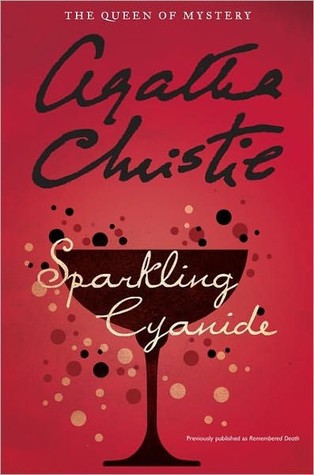
Sparkling Cyanide by Agatha Christie

The March theme for the Read Christie 2021 challenge is ‘a story featuring a society figure’. I had narrowed my choices down to the Poirot novel Lord Edgware Dies and the Colonel Race mystery Sparkling Cyanide. As I had just read a Poirot in February and have another one lined up for April, I decided to go with this one, Sparkling Cyanide. First published in 1945, the novel is an extended version of one of Christie’s short stories, Yellow Iris, which I haven’t read – but apparently the culprit is someone different in that story, so both are worth reading.

The novel begins one year after the death of Rosemary Barton, a beautiful heiress who had been celebrating her birthday at the Luxembourg restaurant with friends and family. The cause of death was believed to be cyanide in Rosemary’s champagne and it was assumed that she had committed suicide due to depression following an illness. Her husband George accepted the verdict at the time but has now received some anonymous letters stating that Rosemary was actually murdered. Sure that the murderer must have been one of the other people at the table, George decides to recreate the dinner party by inviting the same guests to the same restaurant in the hope that he will be able to identify the culprit. However, things don’t go according to plan and the evening ends with a second death…

The characterisation in this book is very strong and Christie begins by giving us one chapter from the perspective of each of the six dinner party guests, so that the nature of their relationship with Rosemary and their thoughts and feelings about her are clear from the start. It is quickly established that each of them had a possible motive for wanting Rosemary dead, but it doesn’t seem at first that any of them actually had the opportunity to carry out the murder. With the second death, things become even more complicated as this murder appears to be an almost impossible crime. I very rarely manage to solve an Agatha Christie mystery, but this is one that I found particularly difficult, despite paying close attention to the descriptions of the seating plans in the restaurant and even sketching a few diagrams! The eventual explanation, when it comes, seems quite unlikely and relies on a certain sequence of events that could easily have happened in a different way with a different result. However, I didn’t feel cheated as I don’t think any clues were withheld from us – I just didn’t put them together correctly!

The detective in this novel is Colonel Race rather than one of Christie’s more famous detectives such as Poirot or Marple – not that he really seems to do a lot of detecting. In fact, one of the suspects makes a bigger contribution to the solving of the mystery than he does. Still, Race is a straightforward, unobtrusive character who just quietly gets on with his investigations, makes mistakes now and then and isn’t afraid to admit that he has got things wrong. This is the first book I’ve read in which he appears; I think there are only three others, but as I’m hoping to read or re-read all of Christie’s novels eventually I’ll be meeting him again at some point.

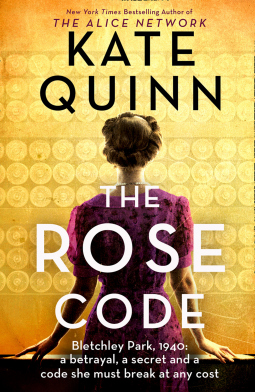
The Rose Code by Kate Quinn

I loved this! I’ve never read Kate Quinn before, although she has been recommended to me several times, so I’m pleased that my first experience of her work has been such a good one. The Rose Code wasn’t a perfect book, but the few flaws that I noted were quickly outweighed by the gripping plot, strong characters and interesting historical setting.

The story takes place in and around Bletchley Park, the English country house which became the home of Britain’s World War II codebreakers, and follows three of the young women who work there. Two of them, Osla Kendall and Mab Churt, meet on the train in 1940 as they travel to Bletchley Park, unsure as to what their new jobs will involve but determined to do their best to help the war effort. Osla, a beautiful, wealthy young socialite, is desperate to prove that she is more than just a ‘silly debutante’; the outspoken and fiercely independent Mab is a working class girl from the East End of London who, having escaped from a life of poverty, wants to make a better future for herself. At Bletchley Park, both will find the opportunities they need to change their lives – and so does a third young woman, Beth Finch. Beth has grown up under the thumb of her domineering mother and looks set to remain a spinster all her life, but when Osla and Mab notice her special gift for crosswords and puzzles, they encourage her to overcome her shyness and join them at Bletchley.

Although most of the novel is set during the war years, we occasionally jump forward in time to 1947. On the eve of the royal wedding between Princess Elizabeth and Prince Philip, two of the three Bletchley Park women have received a summons for help from the third, who has been confined to an asylum. However, the friendship between the three of them broke down before the war ended and the two women who are free aren’t sure if they really want to help the one who is imprisoned. What happened to destroy their friendship? Was there really a traitor within Bletchley Park? And will the mysterious Rose Code ever be solved?

The Rose Code is a long novel, but was quicker to read than I’d expected because I became so engrossed in the stories of Osla, Mab and Beth. Their work at Bletchley Park is fascinating to read about, particularly Beth’s as a cryptanalyst, working with the legendary Dilly Knox. Although it all sounds very complicated – and I’m pleased the Allies didn’t have to rely on me to break the Enigma codes – Kate Quinn does a good job of explaining how the various machines were used and what the different decryption methods involved. She also explores the psychological impact of carrying out such highly confidential work; all of the codebreakers sign up to the Official Secrets Act and are banned from discussing their work with friends and family or even with people from different departments within Bletchley Park itself. This raises the interesting question of whether it’s ever acceptable to break your oath of secrecy – and if not, what sort of strain will that put on your relationships with other people?

Several real historical figures appear in The Rose Code. I have already mentioned Dilly Knox, but we also briefly meet Alan Turing, Winston Churchill…and Prince Philip, who is romantically involved with Osla before his marriage to Princess Elizabeth (the future Queen). This isn’t as far-fetched as it might seem, as Kate Quinn apparently based the character of Osla Kendall on the real life Osla Benning, who really was a Canadian debutante who worked at Bletchley Park and was Prince Philip’s girlfriend – but I don’t personally feel comfortable reading fictional portrayals of people who are still alive and this whole storyline felt unnecessary to me. I couldn’t imagine the real Philip saying some of the things he says in the book either; in fact, although I did appreciate the author’s attempts to use the slang of the time, the language in general didn’t always feel quite right to me – and there are a few annoying references to England when it should be Britain.

Still, even the Philip storyline didn’t stop me from enjoying this book because the rest of it was so interesting and compelling. There was even one scene that made me cry and I think that’s always a sign that the author has done something right! I’m sure I will be reading more books by Kate Quinn.

Thanks to HarperCollins UK for providing a copy of this book for review via NetGalley

Book 13/50 read for the 2021 Historical Fiction Reading Challenge.
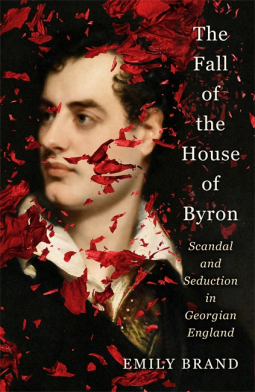
The Fall of the House of Byron by Emily Brand

The poet Lord Byron was famously described by Lady Caroline Lamb as ‘mad, bad and dangerous to know’. This recent biography by Emily Brand shows that he is not the only member of his family to whom this description could apply! Subtitled Scandal and Seduction in Georgian England, the book takes the Byron ancestral home, Newstead Abbey in Nottinghamshire, as its starting point and shows how this once grand house falls into ruin over the years, mirroring the downfall of the Byron family.

George Gordon Byron, 6th Baron Byron, the Romantic poet, is obviously the best known Byron; a lot has already been written about his life and work, so he is not really the focus of this book. He does appear from time to time, but the majority of the book is devoted to the stories of his parents and grandparents, great-aunts, great-uncles and their children. As was common in that era, the same names tended to be passed down from father to son and mother to daughter, so there are lots of Johns, Williams and Georges, Isabellas, Elizabeths and Sophias. The family tree at the beginning of the book is useful, but it’s still easy to get confused! However, some of the family members are given more attention than others and these include:

* William Byron, 5th Baron Byron – Known as ‘the Wicked Lord’, William Byron is rumoured to have tried to abduct an actress at the same time as negotiating his marriage to an heiress. He is also tried for murder after killing a friend in a duel. In later life (after his son elopes with his own cousin), William finds himself in financial difficulties, selling off parts of the family estates and unable to keep Newstead Abbey in good repair.

* Vice Admiral John Byron – Nicknamed ‘Foul-Weather Jack’, John Byron is a Royal Navy officer and explorer. The book describes his adventures at sea, including a shipwreck off the coast of Chile, his role in claiming the Falkland Islands for Britain, and the battles he fought in during the American Revolution. Towards the end of a career which had once seemed so impressive, John returns home under the shadow of failure and suffering from ill health.

* Isabella Howard, Countess of Carlisle – William and John’s sister marries the Earl of Carlisle and lives with him at his estate of Castle Howard in Yorkshire until she is widowed in 1758. Her second marriage, to a much younger man, makes her the subject of gossip, and after separating from him several years later, she travels Europe in the company of a German soldier, writing poetry, throwing parties and falling into debt.

* Captain John Byron – Later known as ‘Mad Jack Byron’, he is Foul-Weather Jack’s son and George Gordon’s father. In 1785, he marries a Scottish heiress, Catherine Gordon, for her money and proceeds to waste her fortune on ‘gambling, pretty women, thoughtless spending on clothes, alcohol and horses’.

Although all of these people were individually fascinating to read about (I was most interested in Isabella, an independent and unconventional woman who is often unfairly judged by the standards of the time), I found the structure of the book quite disjointed and difficult to follow at times. In the first half of the book, each of the main characters has a chapter devoted mainly to them, but by the second half their stories overlap so much that I was struggling to keep them all straight in my mind. Having said that, I’m not sure how else the book could have been structured as the actions of one family member obviously have an impact on the lives of all of the others and it would have probably been impossible to continue writing about each of them separately.

As well as exploring the downfall of the Byron family, the book also offers lots of interesting insights into Georgian life; I particularly enjoyed the descriptions of the fashionable society of Bath and the friendship between Sophia Byron (Mad Jack’s mother) and the authors Fanny Burney and Hester Thrale. Emily Brand has obviously carried out a huge amount of research for this book; I can’t comment on the accuracy as I’ve never read any other non-fiction about the Byrons, but she does quote from a large number of primary sources and everything is clearly referenced at the end of the book. Although at times I found it all slightly overwhelming and felt that I was being given so much information I couldn’t digest it all properly, I still very much enjoyed reading this book and getting to know the members of this scandalous family!

Historical Musings #65: Historical Drama

Welcome to my monthly post on all things historical fiction! This month, inspired by Lory’s Reading the Theatre, I thought it would be interesting to look at historical plays. Usually, when people talk about historical fiction, they are referring to novels, but it’s not just novelists who write about history – there are also many playwrights who have used real historical figures, events or settings as the basis for their plays.

The obvious place to start is with Shakespeare, the first name most of us probably think of when we think of history plays. I haven’t read any of his histories since I started blogging, so I’m afraid I don’t have any posts to share with you here – but I did re-read Macbeth a few years ago (a tragedy not a history, but very loosely based, of course, on the historical king Macbeth) and put together a selection of quotes.

Other than Shakespeare, I have read or seen very few plays which could be described as historical, although there are some I’m familiar with from the film versions, such as The Lion in Winter and A Man for All Seasons. There are also plenty of examples of stage musicals like Les Miserables, but they started life as historical novels rather than plays, so are not really what I’m looking for here. I’ve found some useful lists on Wikipedia and Goodreads, but I’m sure those of you who are more avid theatre-goers or play readers than I am will have some recommendations.

Have you read or been to see any historical plays? Have you missed going to the theatre during the pandemic?