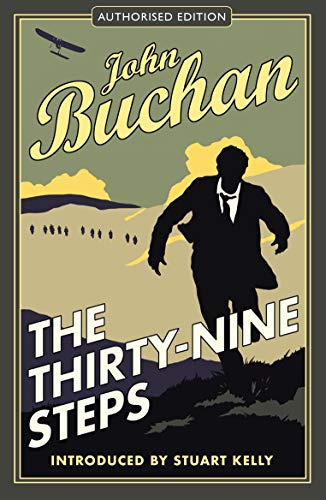
The Thirty-Nine Steps by John Buchan

Never having read anything by John Buchan before, the logical place to start seemed to be with his most famous novel, The Thirty-Nine Steps. I wasn’t at all sure that it would be my sort of book, which is why I’ve put off reading it for so long, but I knew there must be a reason why it is so well-loved and has been adapted for film and television so many times.

Published in 1915, The Thirty-Nine Steps is set during the May and June of the previous year, just before the outbreak of war in Europe. The novel is narrated in the first person by Richard Hannay, who has recently arrived in London having spent most of his life living in Africa. As the story begins, Hannay has been in England for three months and is feeling bored, homesick and disillusioned:

The crowd surged past me on the pavements, busy and chattering, and I envied the people for having something to do. These shop-girls and clerks and dandies and policemen had some interest in life that kept them going. I gave half-a-crown to a beggar because I saw him yawn; he was a fellow-sufferer. At Oxford Circus I looked up into the spring sky and I made a vow. I would give the Old Country another day to fit me into something; if nothing happened, I would take the next boat for the Cape.

That evening, as luck would have it, something does happen. He is approached by a stranger who introduces himself as Franklin P. Scudder, an American secret agent, and who claims to have uncovered a plot to destabilise Europe by assassinating Constantine Karolides, an important Greek politician. Scudder believes his life is in danger and asks Hannay to shelter him for the night, but when the agent is murdered inside his home, Hannay fears that the killers will come for him next. Desperate to get away, he flees to Scotland with the intention of hiding there for a while until he can think of a way to continue Scudder’s work and prevent the assassination of Karolides. It seems he is about to have all the excitement he could have wished for – and more.

All of this happens in the first two chapters. The remainder of the novel follows Hannay’s adventures while on the run, most of which involve being chased around the Scottish countryside and having encounters with various eccentric characters, who could be friends but are equally likely to be enemies. Each chapter feels almost like a separate short story, which is maybe explained by the fact that the novel was originally published as a serial in Blackwood’s Magazine so needed to be written in an easily digestible format. I found it very entertaining at first, but somewhere in the middle I thought it became a bit tedious and repetitive. There were far too many coincidences and too many last-minute escapes; fun in small doses, but a whole book like that was too much for me. It also lacks depth, both in terms of characters and plot, but if you accept it for what it is – an early example of the adventure/spy novel, it’s quite enjoyable.

I can’t say that I loved The Thirty-Nine Steps, but I would be happy to try more of John Buchan’s books. Can anyone recommend one that I might like?

The Canary Keeper by Clare Carson

Clare Carson has previously written a trilogy of thrillers (the Sam Coyle trilogy) set in contemporary Orkney. I haven’t read those, but the title and cover of her new novel, The Canary Keeper, caught my attention and when I investigated I found that this one is a historical crime novel, still set in Orkney but during the Victorian period. I love a good Victorian mystery, so of course I had to give it a try.

The story begins in London in 1855, with the body of Tobias Skaill being found dumped in the Thames. Witnesses report seeing the body thrown from a canoe – surely the work of an Esquimaux! The suspect has disappeared without trace, but it seems he may have had an accomplice: Birdie Quinn, a young Irishwoman who was seen walking in the area at the time. We, the reader, know that Birdie is innocent; she had only met Tobias for the first time the day before when he had tried to give her a message. Her presence by the river that night was a coincidence and she has certainly never had any dealings with Esquimaux. But how can she prove her innocence?

Birdie knows that when the law catches up with her, she will hang, so she turns for help to Solomon, a policeman with whom she was recently in a relationship before they went their separate ways. Solomon advises her to get away from London for a while – and with evidence linking the dead man with the Orkney Islands off the north-east coast of Scotland, that is where Birdie decides to head. Can she uncover the truth surrounding Tobias Skaill’s death and identify his killer in time to clear her own name?

The Canary Keeper explores so many interesting ideas and topics. First, there is Orkney itself and the many traditions, myths and beliefs that are unique to those islands and their people. Then there is the famous Arctic expedition led by Captain John Franklin in search of the North-West Passage, ending in tragedy when both ships, HMS Erebus and HMS Terror, are lost. The Franklin Expedition takes place just a few years before the events of The Canary Keeper and as Birdie begins to investigate she find several surprising links between the doomed expedition and the murder of Tobias Skaill. The fur trade also plays a part in the story and, in the London sections of the book, we learn about some of the trade guilds and livery companies of the period.

Clare Carson also creates some interesting characters, at least on the surface. I found Birdie quite a likeable heroine and I enjoyed her scenes with Solomon, hoping that they might decide to give each other a second chance. There’s also Morag, whose unconventional lifestyle leads to her being labelled a witch, and the widowed Margaret Skaill who is determined to keep her husband’s shipping business going despite her inability to read and write. And yet, none of these characters ever came fully to life for me; there was a disappointing flatness throughout the novel, which I blame on the fact that it is written in third person present tense, probably my least favourite way for a novel to be written. I often find that it puts a distance between the reader and the characters and makes it difficult to engage on an emotional level, although maybe that’s just me.

There’s also a paranormal aspect to the novel, with Birdie experiencing visions and flashbacks, but I didn’t feel that these scenes added anything to the story. This could have been a fascinating book – and at times it was – but it wasn’t really for me.

This is book 10/20 of my 20 Books of Summer.

Thanks to Head of Zeus for providing a copy of this book for review via NetGalley.

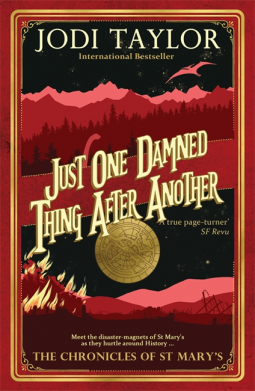
Just One Damned Thing After Another by Jodi Taylor

I’ve been curious about The Chronicles of St Mary’s for a while; I enjoy anything to do with time travel, so I thought there was a good chance that I would like these books, but you can never be sure. That’s why, when the publisher made several of the books in the series available through NetGalley a few months ago, I thought it would be the perfect opportunity to try the first one and see what it was like.

Just One Damned Thing After Another (the title is taken from a quote by Arnold Toynbee) introduces us to Madeleine Maxwell who, as the novel opens, is encouraged by her old schoolteacher and mentor, Mrs de Winter, to apply for the position of historian at St Mary’s Institute of Historical Research. Max, as she is known, is instantly intrigued; she has had a passion for history since discovering a book about Henry V and the Battle of Agincourt as a child. She applies for the job and is invited for an interview, but as she is shown around her future place of work, she quickly becomes aware that this is no ordinary academic institute…and that the historians of St Mary’s are no ordinary historians.

The Institute has developed a form of time travel which allows the historians to travel back in time inside fully equipped ‘pods’ in order to investigate some of history’s many mysteries – large and small – at first-hand. From “being able to say with authority, ‘Yes, the Princes in the Tower were alive at the end of Richard III’s reign, I know because I saw them with my own eyes’” to understanding the secret of Greek Fire and how to handle a Roman chariot, the possibilities are endless. But so are the dangers: pods that malfunction with terrifying results, hostile groups of rival time travellers, as well as all the other hazards you would expect to find on a journey into a less enlightened time. Max and her friends are constantly getting into trouble – particularly Max, who seems to attract disaster like a magnet – but they see it as a risk worth taking in return for being able to see and experience so many wonderful things.

We don’t learn a huge amount about any of the historical periods to which Max travels (only the Cretaceous period has a significant amount of time devoted to it), but that’s not really the point of the book. The enjoyment is in following the adventures Max and the other St Mary’s historians have as they travel through time – and in sympathising with Max’s various accidents and mishaps, some of which are her own fault, but certainly not all! The story is narrated in Max’s own strong and humorous voice, which adds to the sense of fun.

Apart from Max herself, though, I didn’t feel that I got to know any of the other characters very well, but maybe they will be developed further in future books. Although I don’t feel the compulsion to continue with this series immediately (I did enjoy meeting Max, but I think I would find it a bit overwhelming to spend too long in her company), I do still plan to read the second book and am looking forward to finding out where the historians will travel to next. And of course, now I’m wondering where I would choose to go if I had one of the St Mary’s pods at my disposal…

This is book 9/20 of my 20 Books of Summer.

Thanks to Headline for providing a copy of this book for review via NetGalley.

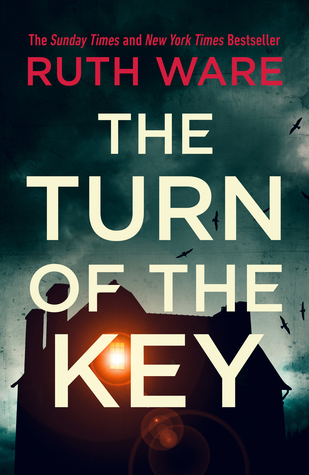
The Turn of the Key by Ruth Ware

Ruth Ware doesn’t write the sort of books I usually choose to read these days, but something drew me to her latest one, The Turn of the Key, and I thoroughly enjoyed reading it courtesy of The Pigeonhole (a website/app which makes new novels available in daily instalments). I’m sure I will be looking for more of Ruth Ware’s books; they would be perfect to put on my list for this year’s RIP Challenge, which I’m hoping will be announced soon.

The novel opens with our narrator, Rowan Caine, in prison awaiting trial for murder. We don’t know exactly what happened, except that a child died while in her care and that suspicion fell on Rowan as the killer. With no one else to turn to for help, Rowan begins to write a letter to her lawyer, Mr Wrexham, in an attempt to explain the sequence of events that led to her imprisonment.

It all starts with a job offer which seems too good to be true: the position of live-in nanny for a rich family based in the Scottish Highlands, caring for four children in return for an unbelievably huge salary. However, it’s not just the money that attracts Rowan…although she doesn’t tell us, or Mr Wrexham, her other reason for applying for the job until much later in the book. In fact, it quickly becomes obvious that Rowan is telling lies about a lot of things; if you enjoy books with unreliable narrators this is definitely the book for you!

Rowan is not the only one with secrets, though, and when she arrives at her new place of work, Heatherbrae House, she becomes aware of some of the mysteries lurking behind its luxurious exterior. Why have the Elincourt children had so many nannies in such a short period of time, some of them lasting no more than a day? What are the eerie sounds Rowan hears during the night? Is Heatherbrae House haunted?

The Turn of the Key, as the title would suggest, draws inspiration from the classic Henry James novel, The Turn of the Screw (which I have to confess I still haven’t read, although I know what it’s about) but Ruth Ware updates the story into a very modern setting. Life at Heatherbrae House is controlled almost entirely by smart technology with cameras in nearly every room and apps to operate lights, heating, showers and music. The sense that Rowan is under constant surveillance with no idea who could be watching her every move creates a sinister and claustrophobic atmosphere which combines with the more traditional gothic elements such as the unexplained noises and other ghostly happenings to make this quite a spooky read.

There were just one or two things that bothered me. First, I thought there were several plot points that felt unconvincing and too convenient; for example, I found it a bit unbelievable that the Elincourts would leave for a week-long conference the day after Rowan’s arrival, leaving the children, including a baby, with someone they had only just met. Also, I felt that in the age of the internet and Google some of the novel’s mysteries could have been solved by the characters much more quickly and needn’t really have been mysteries at all. And then, some of the revelations that came in the final chapters of the book had seemed quite obvious to me and I had already guessed the truth well in advance. Not the ending, though – I hadn’t seen that coming!

I’m looking forward to my next Ruth Ware novel, whichever that turns out to be. I like the sound of The Death of Mrs Westaway and The Woman in Cabin 10, so I think it will probably be one of those.

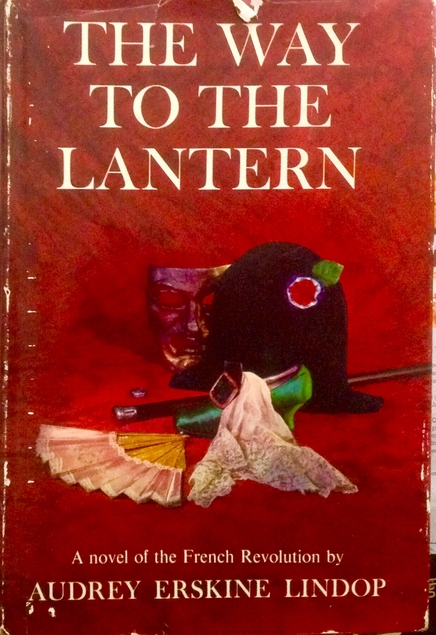
The Way to the Lantern by Audrey Erskine Lindop

It’s 1793 and Philippe Roberts is in one of the most notorious prisons in Paris awaiting the decision that could send him to the guillotine. The only reason it hasn’t happened already is that nobody seems able to establish his identity. According to the Committee of General Security, he is Philippe-Jean-Baptiste-Raoul, Vicomte de Lambrière, a French aristocrat and therefore a counter-revolutionary. The Committee of Public Safety, however, insist that he is an English gentleman, Anthony Buckland of Sandgate, and that he has been spying on behalf of the British government. Nobody will believe him when he tries to explain that his name is actually Roberts and both de Lambrière and Buckland are fake identities that he has used at various times for reasons entirely unconnected with the French Revolution.

How has Roberts ended up in this ridiculous situation? In his own words:

Some of my more disagreeable friends suggest that in my case there’s no need to look any further for the cause of my present predicament than my own character. I’m inclined to think that’s unjust. After all, there have been thieves, liars, and murderers who have ended up on thrones before now. The fact that I have been all three with less success needn’t necessarily account for my situation.

As Roberts sits in his dungeon and waits, he remembers the events that have led him to this point and shares his memories with the reader. His story begins in England where, as an aspiring young actor, he is taken under the wing of the man he calls Manager Smith (or ‘M.S.’), from whom he learns ‘scraps of history, Latin, astrology, fencing, how to be a gentleman, mathematics, doctoring, geography – everything, in fact, from tips on farming to how to beat the law’. M.S. believes Roberts is destined for a great career on the stage and invests a huge amount of time and effort in his training, but success is slow to come and most of their ‘acting’ is limited to picking pockets and finding creative ways to escape from inns without paying.

Eventually, though, the two acquire their own small theatre, the Little Apollo. Their luck seems about to change – especially when the wealthy and eccentric Lizzie Weldon approaches Roberts after one of his performances and offers to pay him to carry out a simple task. It sounds like an easy way to make money, but Roberts soon regrets saying yes. His involvement with Lizzie and her ludicrous schemes gets him into so much trouble that he and M.S. are forced to flee the country, arriving in France at the worst possible time…the beginning of the Revolution.

The Way to the Lantern was published in 1961 and is the first book I’ve read by Audrey Erskine Lindop. Why it has been allowed to go out of print and fade into obscurity is a mystery to me. I thought it was a wonderful book and I thoroughly enjoyed it from beginning to end! I can’t really say that I loved our narrator – after all, as he admits himself, he is a thief, a liar and a murderer, and his attitude towards women leaves a lot to be desired too – but I did love the way he tells his story, in the style of the picaresque novels of the 18th century, never losing his sense of humour no matter how bad things get. And they do get very bad! It seems that everything that can go wrong does go wrong for Roberts and he spends the entire novel stumbling from one disastrous situation straight into another. Sometimes he only has himself to blame, but often he is simply the victim of bad luck or bad timing.

Roberts’ relationship with M.S. was one of my favourite aspects of the book. From the beginning, M.S. fills the role not just of manager, but of mentor, friend and father figure and this never really changes, even as Roberts grows into a man and their disagreements and differences of opinion become more profound. One way in which they differ is in their political views – M.S. is a royalist while Roberts, whose mother was a French laundress, takes the side of the working classes (the sans-culottes) and the revolutionaries – and another is over Roberts’ romance with the beautiful Marie-Clarice, a woman he meets shortly after they arrive in Paris.

M.S. sees Marie-Clarice as a distraction which could ruin Roberts’ acting career, as well as a danger as Marie-Clarice is a countess (actually a ci-devant, or former, countess, since the nobility have had their titles removed during the Revolution). Roberts knows that she could be denounced at any moment and that he could also fall under suspicion because of his association with her, but he is sure that her true sympathies are with the revolutionaries and so he refuses to abandon her to her fate. At first I was inclined to agree with M.S. about Marie-Clarice, but I warmed to her later in the book; it would have been difficult not to, I think. The real star of the novel for me, though, was Suzon Dupont – or as Roberts nicknames her, the Puce (the flea). We first meet the Puce as a dirty, impoverished urchin of thirteen who proves to be a better pickpocket than Roberts himself, but over the course of the novel we see her blossom into a pretty and intelligent young woman with a fierce loyalty towards M.S. and Roberts.

Loyalty is something to be valued during the Revolution, at a time when there are spies around every corner and you can never be sure who may be about to denounce you as a supporter of the ancien régime. Although all of the major events are covered in the novel, such as the storming of the Bastille, the abolition of the monarchy and the execution of Louis XVI, the focus of the story is on the lives of the ordinary people and I was given a real sense of what it was like to live in Paris during that period. The balance between the historical detail and Roberts’ fictional adventures is perfect; it’s the sort of book where you learn a lot as you go along, while being entertained by a great story at the same time.

I’m sorry for the length of this post, but I did really enjoy The Way to the Lantern and found that I had a lot to say about it! It’s disappointing that none of Audrey Erskine Lindop’s books are in print, but I will definitely try to read some of her others – although they do all sound very different from this one.

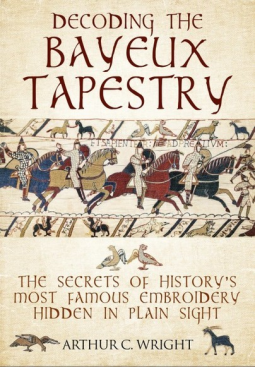
Decoding the Bayeux Tapestry by Arthur C. Wright

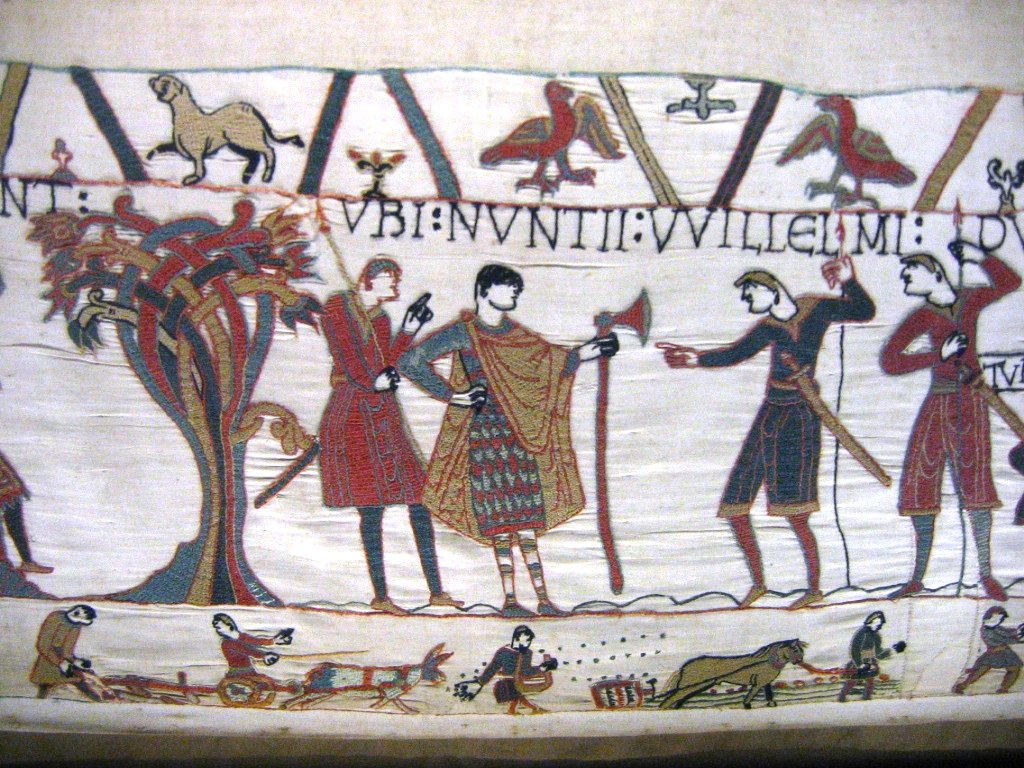
You have probably seen The Bayeux Tapestry – if not in real life then in books, on websites or on television – and you may know that it depicts the story of the Norman Conquest of England, but have you ever looked at the pictures that appear in the margins and wondered what they mean? This new book by historian Arthur C. Wright, Decoding the Bayeux Tapestry: The Secrets of History’s Most Famous Embroidery Hidden in Plain Sight, attempts to interpret these often-overlooked images and relate them to the action taking place in the main body of the Tapestry.

At a quick glance, the pictures in the margins look very random and don’t appear to be connected with the larger pictures in the middle, but now that I’ve read this book I know that is not the case. Wright takes us step by step along the whole length of the Tapestry, matching the marginal story to the one in the main panel and this adds to our overall understanding of what the Tapestry is telling us.

So, what exactly are these marginal illustrations? Well, many of them depict birds and animals such as dogs, lions, ‘pards’ (the name given to large leopard-like cats), crows, foxes, mythological beasts such as dragons – anything that might have appeared in a medieval bestiary. These creatures add extra meaning to the central panels; for example, a dog is shown howling below the picture of Edward the Confessor being taken to his burial. Others display fear, joy, pride, anger or other appropriate emotions at relevant points in the Tapestry. The margins also include illustrations of some of Aesop’s Fables; the story of ‘the Fox and the Crow’ is one of them. In order to understand the significance of the fables and the other messages we are being given in the margins, it helps if we know who embroidered these images, who commissioned the Tapestry in the first place and who the intended audience was, and Wright spends a lot of time discussing these things as well as interpreting the images themselves.

All of this was fascinating, but I did wonder who this book was really aimed at. Even though I do have an interest in the subject and a moderate amount of knowledge of the Norman Conquest (admittedly, gained mainly through historical novels such as Gildenford, Godwine, Kingmaker and 1066: What Fates Impose), I didn’t really feel the need to go into so much detail on the size of the fleet that invaded England or the geographical features of the landscape. There are lengthy appendices exploring both of these topics and I think this sort of information would only really be of interest to an academic reader who wanted to make a very thorough study of the subject. Although the earlier chapters are much more accessible, I’m not sure whether I could recommend the book overall to the general reader, especially not to those who are unfamiliar with this period of history.

I’m still pleased to have had the opportunity to learn a little bit more about the Bayeux Tapestry, though, and to have been made aware that those medieval embroiderers were perhaps telling us more than meets the eye. If anyone else has read this book, or has ever studied the Tapestry, I would love to hear your thoughts.

A scene from the Bayeux Tapestry

Thanks to Pen & Sword for providing a copy of this book for review via NetGalley.

This is book 8/20 of my 20 Books of Summer.

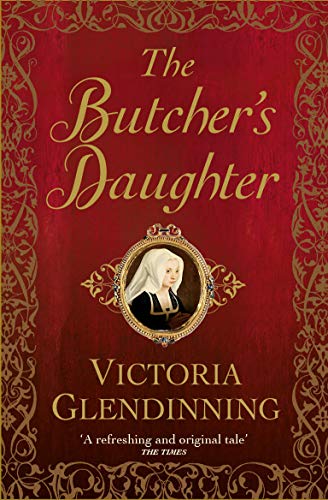
The Butcher’s Daughter by Victoria Glendinning

Today I am taking part in a blog tour for The Butcher’s Daughter, a novel set in Tudor England during and after the Dissolution of the Monasteries. It’s a time period and subject that interests me, so I had high hopes for this book, my first by Victoria Glendinning.

It’s 1535 and Agnes Peppin is the ‘butcher’s daughter’ of the title – a young woman from Bruton in Somerset who, after giving birth to an illegitimate child, has been sent to live with the nuns at Shaftesbury Abbey as a novice. Agnes can read and write, having been taught by the canons at her local church, and these skills make her useful to the abbess, Elizabeth Zouche. Before she has time to take her vows and become a nun herself, however, Shaftesbury Abbey, like other great religious houses across the country, becomes a target of Henry VIII and Thomas Cromwell’s campaign to dissolve the abbeys and monasteries, seizing their assets for the crown and then demolishing the buildings.

The Butcher’s Daughter is narrated by Agnes herself in the form of a memoir as she first describes her life at the abbey and then tells us what happens afterwards as she and her fellow nuns and novices find themselves facing uncertain futures. It’s a slow-paced novel and definitely one which is driven more by character than by plot, but I still found it quite gripping because Agnes pulled me so thoroughly into her world. The chapters set within the abbey are informative and detailed; as a novice, Agnes has a lot to learn, from how to dress herself correctly to studying the Lives of the Saints, as well as getting to know the other women with whom she will be living within the confines of the cloister.

The second half of the book was even more interesting. While the inhabitants of Shaftesbury Abbey have been watching the downfall of other smaller, less profitable houses, telling themselves that ‘in our case, of course, surrender is unthinkable and indeed unthought of’, it eventually becomes evident that they will not be spared and must prepare to suffer the same fate. We see the final days of the abbey through our heroine’s eyes, before following her through a series of adventures as she rejoins the secular world and attempts to find a place for herself in society again. Although Agnes has spent a relatively short time at Shaftesbury, there are others who have known no other sort of life and who find it much more difficult to cope with the changes enforced on them.

Although Agnes is a fictional character and her personal story is invented, Shaftesbury Abbey was real and characters such as Elizabeth Zouche really existed too. Towards the end of the novel, Agnes crosses paths with Sir Thomas Wyatt (son of the poet of the same name), bringing more real historical events and political intrigue into the story, but the focus is always on Agnes herself and the things she experiences during this traumatic and eventful period of religious history. And yet, despite the upheaval Agnes goes through and the challenges she faces, there is still a sense of optimism…a comforting knowledge that, whatever happens, life must go on, “Beans will sprout. Children will be born. There will be butterflies”.

Thanks to Duckworth Books for providing a copy of this novel for review.