It’s the first Saturday of the month which means it’s time for another Six Degrees of Separation, hosted by Kate of Books are my Favourite and Best. The idea is that Kate chooses a book to use as a starting point and then we have to link it to six other books of our choice to form a chain. A book doesn’t have to be connected to all of the others on the list – only to the one next to it in the chain.
This month the chain begins with How to be Both by Ali Smith, which is a book I’ve never read or considered reading. It does sound interesting – a novel written from two perspectives, one a contemporary teenager and the other a Renaissance artist, where the two narratives are printed in a different order depending on which version you buy. I suspect it wouldn’t be my sort of book, though I could be wrong.

How to be Both won the Women’s Prize for Fiction in 2015. I don’t make a point of deliberately reading the winners of this prize, but I appear to have read quite a few of them over the years anyway. However, I haven’t yet read last year’s winner, Home Fire by Kamila Shamsie – although I have read another of her books, A God in Every Stone.
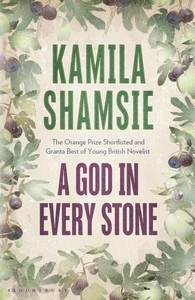
A God in Every Stone is set mainly in Peshawar during and after the First World War and two of the main characters – Vivian and Najeeb – are archaeologists. Another book I’ve read about archaeologists is Crocodile on the Sandbank by Elizabeth Peters, the first in a series of mysteries featuring Amelia Peabody, a Victorian Egyptologist.
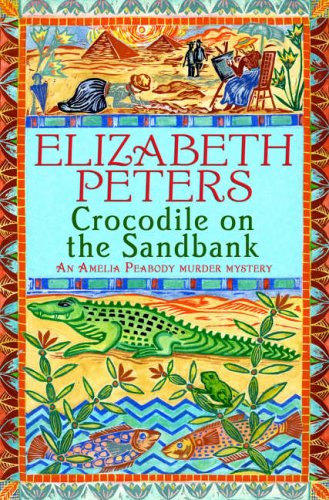
I have still only read the first two books in the Amelia Peabody series, although I really enjoyed them and have no idea why it is taking me so long to get round to reading the third. Another historical mystery series that I started a few years ago but have still only read the first two books is Laurie R. King’s Mary Russell and Sherlock Holmes series, which begins with The Beekeeper’s Apprentice.

The word apprentice in the title leads me quite naturally to Assassin’s Apprentice by Robin Hobb – a very different sort of apprenticeship from beekeeping, but I suppose they could be equally dangerous! Assassin’s Apprentice is the first book in the wonderful Farseer Trilogy, which I highly recommend.

I don’t read a lot of fantasy, but I do always enjoy Robin Hobb’s books. Another fantasy author I’ve enjoyed reading recently is Katherine Arden. Her Winternight trilogy begins with The Bear and the Nightingale and is inspired by Russian myths and fairy tales. I loved the setting and the characters and thought each book in the trilogy was better than the one before.

Another book I loved that was inspired by a fairy tale was Bitter Greens by Kate Forsyth, which combines a retelling of Rapunzel with the story of Charlotte-Rose de Caumont de La Force, the 17th century woman who wrote the original tale on which it was based.

So those are my links for this month: Prize-winners, archaeology, unfinished series, apprentices, fantasy and fairy tales. Have you read any of the books in my chain?
Next month we will be starting with The Dry by Jane Harper.




 She Reads Novels