The House on Half Moon Street by Alex Reeve

The House on Half Moon Street is both an interesting historical crime novel set in Victorian London and a sensitive exploration of what it means to be transgender in a less enlightened time. This is apparently the first in a planned series and I will certainly be looking out for the next one.

Our hero, Leo Stanhope, is a coroner’s assistant in 1880s London. As the novel opens, the body of a man washed up by the Thames has been brought to the hospital where Leo works. Identified as Jack Flowers and believed to have fallen into the river accidentally, the man’s death seems to be an unfortunate tragedy, but not something which affects Leo personally. However, the next body to arrive is that of a woman – a woman who happens to be the love of Leo’s life, Maria Milanes, and who appears to have been murdered.

Before her death, Maria was a prostitute at a brothel on Half Moon Street, but that didn’t matter to Leo. He loved her and knew that she loved him. Maria was one of the few people he had trusted with his secret, one of the few people who knew that Leo Stanhope was born Charlotte Pritchard. Now Maria is gone and Leo vows to find out who has killed her. Joining forces with pie maker Rosie, Jack Flowers’ widow, he begins to uncover some links between both deaths – but at the same time he must ensure that his own secret is not uncovered, because the truth could have serious consequences.

On one level, as I’ve said, this is a compelling and well-constructed murder mystery. Although I found the pace a bit slow at times, I did enjoy watching Leo move around Victorian London, looking for clues in the Half Moon Street brothel, playing chess with his friend Jacob and word games with his landlord’s daughter in the pharmacy where he lodges, or paying a visit to the midwife and abortionist Madame Moreau, whom he hopes may be able to shed some light on the situation. All of these people and locations are vividly described and all play their part in Leo’s investigations.

Leo himself is easy to like and to warm to; he narrates his story in the first person, letting us into his mind and his heart. I know things are not perfect for transgender people today and that they still face a lot of prejudice, obstacles and challenges, but I can hardly imagine how difficult life must have been for people like Leo who lived more than a hundred years ago. I admired him for his courage in being true to himself and not just continuing to be someone he was not; I was sorry for the sacrifices he’d had to make in adopting his true male identity and the lack of support he received from those he should have been able to rely on; and I was afraid for him too, because he is in such a vulnerable position.

I should warn you that due to the nature of the story, the type of mystery it is and Leo’s vulnerability, the novel does become very dark in places. Although I didn’t find it unnecessarily graphic or violent, there are still a few scenes which are quite disturbing. The Victorian era was certainly not the safest time in which to live if you were seen as different in any way. I’m sure Leo will have more ordeals to go through as the series progresses, but I hope there will be some happiness in store for him too.

Thanks to Raven Books for providing a copy of this book for review via NetGalley.

Top Ten Tuesday: Ten recent additions to my TBR

Top Ten Tuesday is a weekly meme hosted by That Artsy Reader Girl. It’s perfect for those of us who have both a love of books and a love of lists! This week’s topic is…

The Ten Most Recent Additions to My To-Read List

~

In no particular order, here are ten books I’ve acquired recently:

1. Bats in the Belfry by E.C.R. Lorac – All of the Lorac novels published as British Library Crime Classics sound intriguing, so I’m looking forward to trying this one.

2. The Binding by Bridget Collins – I’m reading this now. I’m a few chapters into it and although it sounded fascinating, I’m not sure that it’s really my sort of thing.

3. The Afterlife of King James IV by Keith J Coleman – This non-fiction book appealed to me when I saw it on NetGalley. I hope it’s good!

4. The Horseman by Tim Pears – This is the first in a trilogy, so if I enjoy it I’ll be looking for the other two.

5. A King Under Siege by Mercedes Rochelle – I’ve received a review copy of this new novel about Richard II.

6. These Old Shades by Georgette Heyer – I’m gradually building up my Georgette Heyer collection and this is one I’ve been particularly looking forward to reading.

7. Eleanor the Queen by Norah Lofts – I’ve been interested in trying something by Norah Lofts for a long time and recently came across a copy of this book about Eleanor of Aquitaine.

8. Miss Boston and Miss Hargreaves by Rachel Malik – I really need to make some progress with my Reading the Walter Scott Prize project and this book was on last year’s shortlist for the prize.

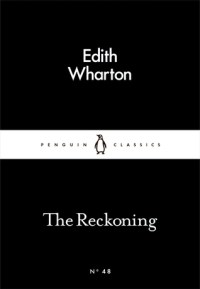
9. The Reckoning by Edith Wharton – Part of the Penguin Little Black Classics series, this book contains two short stories by Edith Wharton.

10. Casting Off by Elizabeth Jane Howard – This is the fourth book in the Cazalet Chronicles and I still have the third to read before I can start this one.

~

Have you read any of these? What have you added to your TBR recently?

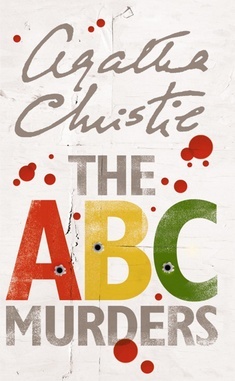
The ABC Murders by Agatha Christie

When I read about the Read Christie 2019 Challenge hosted at www.agathachristie.com – the idea being to tick off twelve books from twelve different categories over the course of the year – I was immediately tempted to join in. I didn’t want to think of it as a challenge as such, or make a definite commitment, but I thought I could use the monthly prompts to get through some of the many Christies I still haven’t read. This month’s category is “a recent TV adaptation” and the suggested book is The ABC Murders. I had started to watch the new BBC adaptation of The ABC Murders which was shown at Christmas, but struggled to get into it, so I thought I would try the book instead. And what a great book it is!

The murder of Alice Ascher in her small tobacconist shop in the town of Andover seems as though it should be an easy one to solve. There is an obvious culprit – the woman’s drunken husband – and he would certainly have been the prime suspect, if not for a mysterious coincidence which happened just days before the murder. Hercule Poirot had received a typewritten letter signed simply A.B.C. and warning of a crime to be committed in Andover on that particular date – and beside the body of the dead woman was a copy of the ABC Railway Guide.

But this will not be the only murder to take place:

‘I admit,’ I said, ‘that a second murder in a book often cheers things up. If the murder happens in the first chapter, and you have to follow up everybody’s alibi until the last page but one – well, it does get a bit tedious.’

When a similar letter arrives soon afterwards giving advance warning of a second murder which will happen in Bexhill, it doesn’t come as a surprise to Poirot when the second victim has a name beginning with B and when another ABC Guide is found next to the body. Convinced now that the killer is following an alphabetical pattern, Poirot must uncover his or her identity before they get all the way to Z.

This is one of several Poirot novels narrated by Captain Hastings (although there are a few chapters written from the perspective of other characters). I always seem to enjoy the ones with Hastings, partly because he, like the reader, is often in the dark and needs Poirot to explain things to him, but also because I think Poirot having a friend to discuss things with gives these books a different dynamic to the ones where he is working entirely on his own amongst strangers. Sometimes Hastings can make an observation or suggestion which proves to be useful later on, as he does once or twice in this book. Inspector Crome is investigating too, and a ‘legion’ of the victims’ families and friends is also formed to see whether they can shed any light on the situation.

What makes this book so intriguing is that each of the murders which takes place seems unrelated to the others, apart from the ABC theme and the letters sent to Poirot. They each have a separate set of suspects, all with their own motives, but what Poirot needs to do is find something which links them all to one man or woman – the mysterious A.B.C. I found this a particularly clever Christie novel and didn’t come close to solving it. I allowed myself to be sent in completely the wrong direction by the red herrings and took everything at face value; in fact, for a long time I thought I was reading a different sort of mystery entirely.

I loved this one and I think I did the right thing in reading it before trying to watch the adaptation again. I’m planning to read another Christie novel in February, although I don’t know what it will be yet – I’m waiting to see what the chosen category will be for the next stage of the challenge.

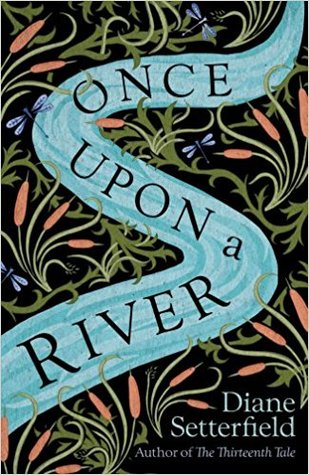
Once Upon a River by Diane Setterfield

The Swan Inn at Radcot on the bank of the Thames is a place famous for its storytelling. Every night the people of the village gather there to drink, to listen to tales of local folklore, myth, magic and history and to entertain their friends with stories of their own. But the old stories are growing stale and the listeners are ready for something new…

On the night of the winter solstice in 1887, a man appears in the doorway of the Swan – injured, wet from the river, and carrying the seemingly lifeless body of a young girl. Rita Sunday, who has some medical knowledge and acts as nurse and midwife for Radcot, is called to the inn and, unable to find a pulse, concludes that the girl is dead. Hours later, after attending to the man’s injuries, Rita looks at the child again and is amazed to find that she has started to breathe. It seems that the little girl will survive after all, but she can’t or won’t speak and tell anyone who she is or where she came from.

For the drinkers at the Swan, the girl’s apparent death and miraculous return to life is a wonderful story in itself, but it also provides a starting point around which many other stories begin to unfold and entwine. What is the girl’s name? Who are her parents? How did she end up in the river? Questions are raised and answers are searched for, theories are suggested and people come forward to claim the child as their own – but what is the truth? Will we ever know? As Rita grows closer to Henry Daunt, the man who pulled the girl from the water, they try to find a solution to the mystery and uncover yet more stories as they do so.

I am tempted to discuss some of those stories here and to talk about the characters who feature in them, but I’m not going to because I would risk spoiling some of the surprises Once Upon a River contains. Instead I’m going to stay on safer ground and discuss the role the river plays in the novel, both physically and metaphorically. The river is a constant presence right from the first chapter and the people in the story live and work on or around it – gravel-diggers, cressmen, bargemen and boat-menders. Their favourite folk tales revolve around the river too, including the legend of Quietly the ferryman who guides people in trouble either to safety or to ‘the other side’. The river and its surroundings give the novel a strong sense of place, although the sense of time is less clear – we are told that it has been five hundred years since the Battle of Radcot Bridge in 1387 but, apart from some references to photography, I felt that the story could have been set at a much earlier time in history.

The story itself flows like a river, carrying the characters – and the reader – gently along with the current. And like the tributaries of a river, there are other stories which began months or years before the girl’s arrival at the Swan and we go back to explore those stories too. This can make the novel feel slow at times and some patience is needed while the backgrounds of the various characters are explored, but I never felt bored. I was prepared to wait and see where the river took me and who the little girl would turn out to be. I was happy with the ending, although I do have one small criticism which is that I thought the way Rita’s story ended was very predictable and I would have preferred her to do have done something different.

I enjoyed Once Upon a River much more than Diane Setterfield’s previous novel, Bellman and Black; possibly more than The Thirteenth Tale too, as I didn’t love that one as much as most people seemed to. If you’ve never read any of her books before, though, I would recommend trying any or all of them to see what you think.

Thanks to Doubleday for providing a copy of this book for review via NetGalley.
Top Ten Tuesday: Books I meant to read in 2018 but didn’t get to

Top Ten Tuesday is a weekly meme hosted by That Artsy Reader Girl. It’s perfect for those of us who have both a love of books and a love of lists! This week’s topic is:

Books I Meant to Read In 2018 but Didn’t Get To

~

These four books were on my Autumn 2018 TBR but I didn’t have time to read them:

1. The Green Gauntlet by RF Delderfield
2. Transcription by Kate Atkinson
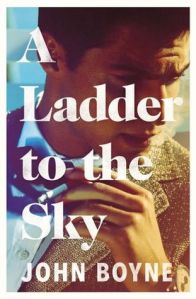
3. A Ladder to the Sky by John Boyne
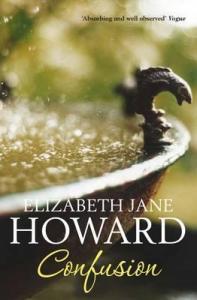
4. Confusion by Elizabeth Jane Howard

And here are two unread books from my Spring 2018 TBR list:

5. Munich by Robert Harris
6. Under Heaven by Guy Gavriel Kay

A book that I didn’t get to from my 2018 20 Books of Summer list:

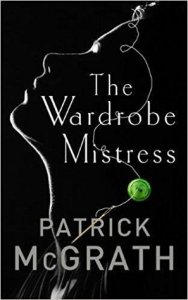
7. The Wardrobe Mistress by Patrick McGrath

And a few that I’d planned to read for last year’s R.I.P. challenge:

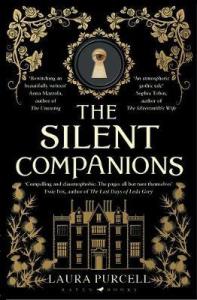
8. The Silent Companions by Laura Purcell
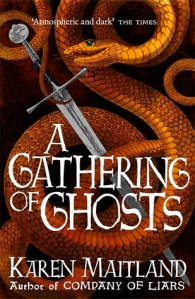
9. A Gathering of Ghosts by Karen Maitland
10. The Sussex Downs Murder by John Bude

~

You can expect to see me reading some, if not all, of these books in 2019 instead.

Have you read any of them? Are there any that I really need to read as soon as possible?

An Infamous Army by Georgette Heyer

Georgette Heyer’s 1937 novel, An Infamous Army, is one I was particularly interested in reading because it sounded a bit different from most of her others, being as much a story of the Battle of Waterloo as a Regency romance. It can be read as a standalone novel but it also features characters (or descendants of characters) who appeared in her previous novels These Old Shades, Devil’s Cub and Regency Buck.

Several years have passed since Regency Buck ended and the Earl of Worth is in Brussels with his wife, Judith, and their young son. As the threat of Napoleon draws closer, Brussels has become the centre of fashionable society – a place to entertain oneself with dances, picnics and concerts while the outcome of the Vienna Congress and the arrival of the Duke of Wellington are awaited. Judith is hoping to bring about a match between Worth’s brother Charles Audley and her friend Lucy, but she hasn’t counted on Charles falling passionately in love with Lady Barbara Childe, a beautiful but notorious young widow with a reputation for wildness. Although Barbara – or Bab, as she is known – claims to love Charles too, she shows no sign of changing her ways and Judith is sure her brother-in-law is going to be hurt.

The relationship between Charles and Bab develops throughout the first half of the novel, so that by the time the Battle of Waterloo arrives, we are already emotionally invested in the lives of some of the characters who are going to be affected by the battle in one way or another. Heyer is one of those authors you can always count on to have done her research, but everything in this book feels particularly authentic (she famously claimed that every word she attributes to her fictional Duke of Wellington was either spoken or written by him in real life).

Each stage of the battle is described in an incredible amount of detail, not just the tactics and the military manoeuvres, but also the human cost as lives are lost, men are injured and those on the sidelines wait for news of their loved ones. As I’ve mentioned before, I am not usually a fan of lengthy battle scenes, however well written they are, so although I certainly appreciated the accuracy of Heyer’s account of Waterloo and the quality of her writing, I can’t really say that this has become a favourite Heyer novel. This is just a matter of personal taste though, and I’m sure other people will love this book precisely because it does include long battle scenes (by long, I mean they take up most of the second half of the novel).

As for the Charles and Bab storyline, I enjoyed following the course of their relationship, especially as I thought it was difficult to tell at first how Bab really felt about Charles. She comes across at the beginning as self-centred, reckless and fun-loving, the sort of person who causes a scandal wherever she goes (not that it takes much to cause a scandal in 1815 – painting your toenails gold, for example). It took me a while to warm to her, but when I did I found that she was also kind hearted, compassionate and courageous. Even so, she is not one of my favourite Heyer heroines – although, again, I can see why other readers might love her.

Reading An Infamous Army has inspired me to finally try one of Heyer’s six historical novels (i.e. not the ones that are Regency or Georgian romances). I am currently a few chapters into Beauvallet and enjoying it so far; you can expect to hear more about it soon!

The Moon Sister by Lucinda Riley

This is the fifth book in Lucinda Riley’s Seven Sisters series based loosely on the mythology of the star cluster known as Pleiades or ‘the seven sisters’. Each novel tells the story of one of the adopted daughters of a mysterious millionaire known as Pa Salt.

The girls come from different cultures and backgrounds, but all grew up together on Pa Salt’s estate in Switzerland. They are each named after one of the stars in the cluster – Maia, Alycone (Ally), Asterope (Star), Celaeno (CeCe), Taygete (Tiggy) and Electra D’Aplièse. You may have noticed that there are only six sisters; for some reason, which we don’t yet know, a seventh was never adopted. This is one of many mysteries running throughout the series.

At the beginning of the first novel, The Seven Sisters, Pa Salt died, leaving each sister some clues to help them trace their biological parents. So far we have heard Maia’s story, Ally’s, Star’s and CeCe’s; now, in The Moon Sister, it’s the turn of Tiggy. All of the books in the series work as standalones and it’s not essential to read them in order, but this book does overlap with one or two of the others and advances some of the storylines begun earlier in the series.

The Moon Sister follows Tiggy as she begins a new job in the Scottish Highlands, where she has been employed by Charlie Kinnaird to establish a colony of wildcats on his estate. With her degree in zoology and her love of nature, Tiggy is perfect for the job and quickly settles in, getting to know the animals on the Kinnaird estate and forming a close friendship with Cal, the man whose cottage she shares. The peace is disturbed, however, when Charlie arrives with his troubled teenage daughter and his spiteful, vindictive wife.

Away from the problems in the Kinnaird household, Tiggy meets Chilly, an elderly gypsy who lives alone on the estate. It seems that fate must have brought them together, because Chilly is the one person who knows the truth of Tiggy’s origins and can point her in the direction of her birth family. From Chilly, Tiggy learns of her ancestor, Lucia Albaycin, a famous Spanish flamenco dancer. But Chilly doesn’t know everything, so to discover the rest of her family’s story, Tiggy must travel to Spain and visit the gypsy community in the caves of Sacromonte.

Like the others in the series, this book is divided between the modern day storyline and the historical one. We spend a decent amount of time with each character before switching to the other, which means we can become absorbed in both stories. Lucia’s story is fascinating – I can’t say that I liked her, as I found her very self-centred and driven by ambition at the expense of everything else – but she is certainly a strong character, whose power and passion as a person is matched by the power and passion of her dancing. It was interesting to watch as she (along with her equally selfish and irresponsible father) start from nothing to build a successful career in flamenco which takes them all over the world. Meanwhile, in Sacromonte near Granada, we follow the sad story of how the lives of the other gitanos (Spanish gypsies) are affected by first the Spanish Civil War and then the onset of the Second World War, leaving their community changed beyond recognition.

It was good to get to know Tiggy better too – and she is much easier to like than Lucia. The other d’Aplieses think of her as the sensitive, spiritual sister…the sort of person who wants to help everyone around her, whether human or animal, and who cares deeply about nature and the environment, trying hard to resist temptation and stick to her vegan diet! Of all her sisters, Tiggy is particularly close to Ally, whom we met in The Storm Sister, and it was lovely to see her again in this book. The one part of Tiggy’s story that didn’t really work for me was the romance. I felt that she and the man concerned hadn’t spent enough time together for their love for each other to develop, so I didn’t become as emotionally invested in their relationship as I would have liked.

The next book is going to tell Electra’s story and I have to admit I’m very apprehensive about that one. From the little we’ve seen and heard of Electra so far, her personality strikes me as very unappealing. However, we are given lots of intriguing clues in The Moon Sister regarding Pa Salt, his death and some strange occurrences at his home, Atlantis, so I’m hoping Electra will fill in some more of the gaps for us. I’m also curious about the rich businessman Zed, who keeps popping up throughout the series, trying to worm his way into the lives of first Maia, then Tiggy and now, it seems, Electra. For those reasons, I will be looking out for the next book, which I’m hoping will be published later this year.