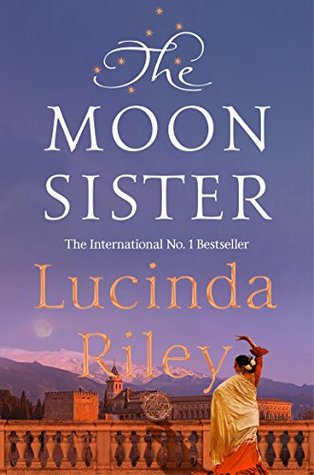
The Moon Sister by Lucinda Riley

This is the fifth book in Lucinda Riley’s Seven Sisters series based loosely on the mythology of the star cluster known as Pleiades or ‘the seven sisters’. Each novel tells the story of one of the adopted daughters of a mysterious millionaire known as Pa Salt.

The girls come from different cultures and backgrounds, but all grew up together on Pa Salt’s estate in Switzerland. They are each named after one of the stars in the cluster – Maia, Alycone (Ally), Asterope (Star), Celaeno (CeCe), Taygete (Tiggy) and Electra D’Aplièse. You may have noticed that there are only six sisters; for some reason, which we don’t yet know, a seventh was never adopted. This is one of many mysteries running throughout the series.

At the beginning of the first novel, The Seven Sisters, Pa Salt died, leaving each sister some clues to help them trace their biological parents. So far we have heard Maia’s story, Ally’s, Star’s and CeCe’s; now, in The Moon Sister, it’s the turn of Tiggy. All of the books in the series work as standalones and it’s not essential to read them in order, but this book does overlap with one or two of the others and advances some of the storylines begun earlier in the series.

The Moon Sister follows Tiggy as she begins a new job in the Scottish Highlands, where she has been employed by Charlie Kinnaird to establish a colony of wildcats on his estate. With her degree in zoology and her love of nature, Tiggy is perfect for the job and quickly settles in, getting to know the animals on the Kinnaird estate and forming a close friendship with Cal, the man whose cottage she shares. The peace is disturbed, however, when Charlie arrives with his troubled teenage daughter and his spiteful, vindictive wife.

Away from the problems in the Kinnaird household, Tiggy meets Chilly, an elderly gypsy who lives alone on the estate. It seems that fate must have brought them together, because Chilly is the one person who knows the truth of Tiggy’s origins and can point her in the direction of her birth family. From Chilly, Tiggy learns of her ancestor, Lucia Albaycin, a famous Spanish flamenco dancer. But Chilly doesn’t know everything, so to discover the rest of her family’s story, Tiggy must travel to Spain and visit the gypsy community in the caves of Sacromonte.

Like the others in the series, this book is divided between the modern day storyline and the historical one. We spend a decent amount of time with each character before switching to the other, which means we can become absorbed in both stories. Lucia’s story is fascinating – I can’t say that I liked her, as I found her very self-centred and driven by ambition at the expense of everything else – but she is certainly a strong character, whose power and passion as a person is matched by the power and passion of her dancing. It was interesting to watch as she (along with her equally selfish and irresponsible father) start from nothing to build a successful career in flamenco which takes them all over the world. Meanwhile, in Sacromonte near Granada, we follow the sad story of how the lives of the other gitanos (Spanish gypsies) are affected by first the Spanish Civil War and then the onset of the Second World War, leaving their community changed beyond recognition.

It was good to get to know Tiggy better too – and she is much easier to like than Lucia. The other d’Aplieses think of her as the sensitive, spiritual sister…the sort of person who wants to help everyone around her, whether human or animal, and who cares deeply about nature and the environment, trying hard to resist temptation and stick to her vegan diet! Of all her sisters, Tiggy is particularly close to Ally, whom we met in The Storm Sister, and it was lovely to see her again in this book. The one part of Tiggy’s story that didn’t really work for me was the romance. I felt that she and the man concerned hadn’t spent enough time together for their love for each other to develop, so I didn’t become as emotionally invested in their relationship as I would have liked.

The next book is going to tell Electra’s story and I have to admit I’m very apprehensive about that one. From the little we’ve seen and heard of Electra so far, her personality strikes me as very unappealing. However, we are given lots of intriguing clues in The Moon Sister regarding Pa Salt, his death and some strange occurrences at his home, Atlantis, so I’m hoping Electra will fill in some more of the gaps for us. I’m also curious about the rich businessman Zed, who keeps popping up throughout the series, trying to worm his way into the lives of first Maia, then Tiggy and now, it seems, Electra. For those reasons, I will be looking out for the next book, which I’m hoping will be published later this year.
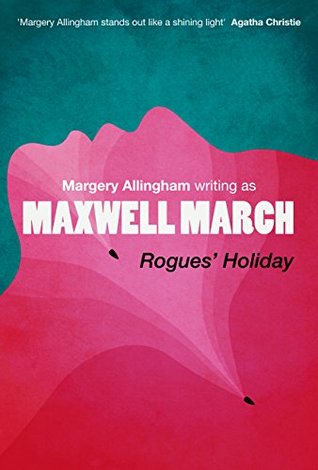
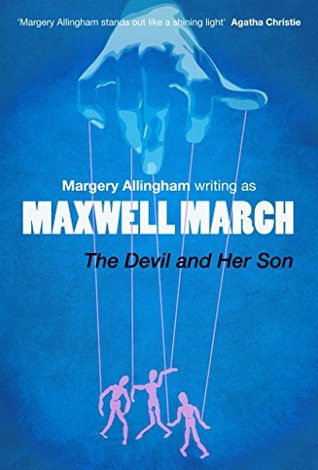
Margery Allingham writing as Maxwell March: Rogues’ Holiday and The Devil and Her Son

A while ago I read an early novel by Margery Allingham published under the pseudonym Maxwell March. It was called The Man of Dangerous Secrets and, although it was undoubtedly silly and over the top, I enjoyed it so much I knew I would be reading her other two Maxwell March books as soon as the time was right. Well, the time was right this month and I have now read both Rogues’ Holiday (1935) and The Devil and Her Son (1936).

Rogues’ Holiday begins with the death of a young man found dead in a locked room at his London club. Suicide is assumed, but Inspector David Blest of Scotland Yard is not convinced. Having learned that the dead man had been seen arguing with Sir Leo Thyn, an older and highly respected member of the club, shortly before his death, David wonders whether there is a connection. He shares his suspicions with his superior officer, who tells him to keep his opinions to himself and sends him off on his scheduled two-week holiday as planned.

But David has no intention of taking a holiday. Instead, he heads for the Arcadian Hotel in the seaside resort of Westbourne – the same hotel where Sir Leo Thyn is now staying with a friend, a man whom David immediately recognises as a notorious criminal known as The Major. Another guest has also just arrived at the hotel: this is Judy Wellington, a young heiress who claims to be a permanent invalid, but David suspects that she is not in such poor health as she pretends. When another murder takes place, he discovers that he has walked into a whole nest of rogues – but how is Judy mixed up in it all and could she be in danger?

As I’d already read The Man of Dangerous Secrets, I had a good idea of what to expect from this book. I knew it would be more thriller than detective novel, I knew there would be wicked villains, far-fetched plot twists, last-minute escapes and coincidences galore, and I knew there would be a beautiful girl with whom our hero would fall in love at first sight. And yes, Rogues’ Holiday has all of those things. You probably wouldn’t describe it as a fantastic piece of literature and I’m sure it doesn’t represent Margery Allingham at her very best, but accept it for what it is and it’s a lot of fun to read.

I thought The Devil and Her Son (originally published as The Shadow in the House) would be similar and in some ways it is. The ridiculous plot, the coincidences, the villains and the unbelievable plot twists are all here again – but this is a much darker novel than the other two and, I thought, a better written one.

The novel opens with Mary Coleridge feeling very sorry for herself. She has lost her job as a governess, her love interest has left town with no explanation after their first date, and she has no family or friends to turn to. So, when Marie-Elizabeth Mason, another lodger in the boarding house where Mary lives, makes an outlandish suggestion, Mary feels she has nothing to lose. Miss Mason has recently arrived in England from Australia and an elderly aunt whom she has never seen is expecting her to go and visit. Preferring to stay in London to pursue an acting career, Miss Mason’s idea is that she and Mary switch identities and Mary goes to stay with the aunt instead.

This is clearly a ludicrous plan, but somehow it works (and Mary’s lack of Australian accent is not even remarked on). However, she gets more than she’d bargained for when Aunt Eva persuades her to marry her dying son to prevent the house from being lost to the family. Feeling sorry for the old woman, Mary agrees, despite her guilt at marrying under a false name and deceiving everyone. But soon she discovers that she herself is the victim of an even bigger deception and that Eva and her family are not what they appear to be. Can Mary escape from the terrifying situation in which she has placed herself?

Once you’ve accepted the premise of the story, this is a very enjoyable novel. Eva de Liane is a truly chilling and sinister woman and I was genuinely afraid for poor Mary – although I also wanted to scream at Mary for walking blindly into danger over and over again! This is a novel where nobody at all can be trusted, where even a stranger in the street or on a train could be somehow wrapped up in the de Lianes’ nefarious schemes. There’s also a romance which wasn’t quite as obvious as the one in Rogues’ Holiday and rather than being love at first sight, is much more satisfying because it takes longer to develop.

Maxwell March has been a great discovery for me and I’m sorry Margery Allingham only wrote three books under that name!

Top Ten Tuesday: New-to-me authors I read in 2018

This week’s Top Ten Tuesday (hosted by That Artsy Reader Girl) gives us a chance to look back at our 2018 reading and pick out ten authors we read for the first time last year. I have chosen to focus on authors I enjoyed and whose work I’m planning to read more of in the future.

~

1. Dorothy Whipple

I had been curious about Dorothy Whipple for a long time, knowing that she is one of the most popular authors published by Persephone. After reading Someone at a Distance, I understand why and will definitely be reading more of her books.

2. Graham Swift

I hadn’t thought Graham Swift would be my sort of author, but I enjoyed his short novel Mothering Sunday enough to want to read more.

3. Monica Dickens

The Winds of Heaven by Monica Dickens won a place on my favourite books of 2018 list. I want to investigate her other books now, probably starting with Mariana.

4. E.M. Delafield

The Diary of a Provincial Lady proved to be a funny, witty, entertaining read – and a good place to start with E.M. Delafield. I’m hoping to meet the Provincial Lady again in 2019.

5. Tim Leach

Smile of the Wolf, a beautifully written novel set in 10th century Iceland, was my first Tim Leach book. I’m looking forward to reading his previous two, The Last King of Lydia and The King and the Slave.

6. Elizabeth Taylor

Elizabeth Taylor was an author I’d been meaning to try for years and I finally got round to reading A Game of Hide and Seek in 2018. I’m sure I’ll be reading more of her books soon.

7. Pat Barker

I didn’t love The Silence of the Girls as much as I’d hoped to, but I was pleased to have the opportunity to try a Pat Barker book at last.

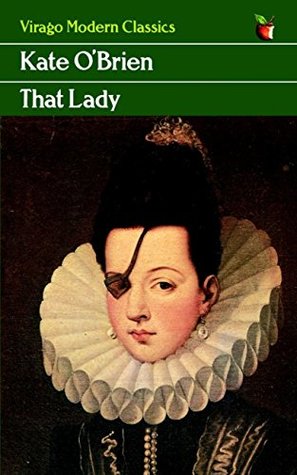
8. Kate O’Brien

That Lady, a historical novel set in 16th century Spain, was chosen for me by one of last year’s Classics Club Spins. Kate O’Brien’s other books sound very different, but I’m interested in trying another one.

9. Elizabeth Jenkins

Harriet was a dark and disturbing novel but I loved it. Now I want to read The Tortoise and the Hare, which seems to be the only other Elizabeth Jenkins book still in print.

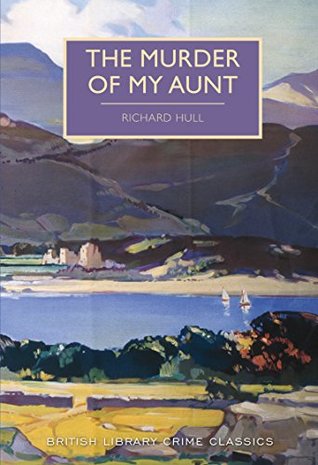
10. Richard Hull

The Murder of My Aunt was another of my books of the year from 2018. I have recently received a review copy of one of his other crime novels, And Death Came Too, so I’m hoping that will be another good one.

~

Have you read anything by any of these authors? Which new-to-you authors did you discover in 2018?

Historical Musings #46: Books to look out for in 2019

I like to use my first Historical Musings post of each new year to look ahead at some of the exciting new historical fiction coming in the next twelve months. The books listed below are just a few that have come to my attention and that I’m planning to read. The publication dates I’ve given are for the UK only and may be subject to change.

If there are any other new historical fiction novels you’re looking forward to in 2019 I’d love to hear what they are!

~

January

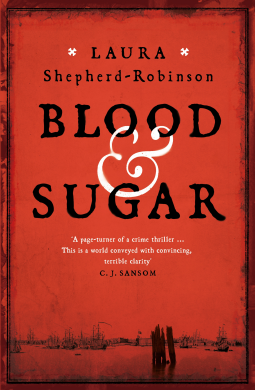
Blood and Sugar by Laura Shepherd-Robinson (24 January 2019)
This debut historical crime novel set in the 18th century will be published later this month. I have a NetGalley copy which I should be starting soon.

February

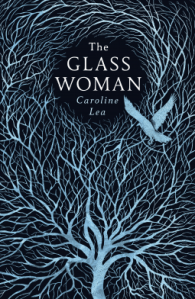
The Glass Woman by Caroline Lea (7 February 2019)
I’m looking forward to this one as it’s set in Iceland, which is always an interesting and atmospheric setting.

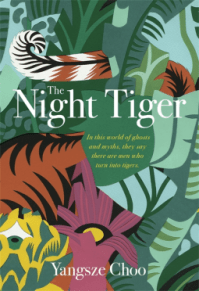
The Night Tiger by Yangsze Choo (12 February 2019)
This book sounds like a fascinating mixture of history, mystery and folklore set in 1930s Malaya.

The Silver Collar by Antonia Hodgson (21 February 2019)
Unsure about this one as all I can find is the title and nothing else, so I suspect the February date might be incorrect. A new Thomas Hawkins mystery will definitely be worth waiting for, though!

March

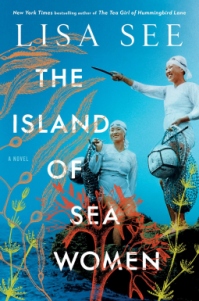
The Island of Sea Women by Lisa See (4 March 2019)
I loved some of Lisa See’s earlier novels. This one is the story of two girls who grow up on a Korean island in the 1930s.

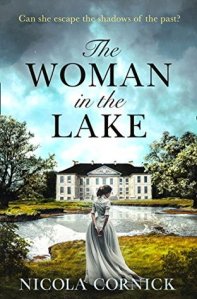
The Woman in the Lake by Nicola Cornick (7 March 2019)
A dual time frame novel set in 1765 and 1996. I enjoyed The Phantom Tree and House of Shadows so am looking forward to this one.

The Missing Sister by Dinah Jefferies (21 March 2019)
Dinah Jefferies’ books all have such interesting settings and this one will take us to 1930s Burma.

April

Sunwise by Helen Steadman (1 April 2019)
The sequel to Widdershins, a novel about witchcraft and witch-finders.

The Confessions of Frannie Langton by Sara Collins (4 April 2019)
This sounds like an intriguing debut novel about a maid on trial for murder in 19th century London.

The King’s Evil by Andrew Taylor (4 April 2019)
Following the wonderful Ashes of London and The Fire Court, this will be the third in the James Marwood and Cat Lovett mystery series.

Things in Jars by Jess Kidd (4 April 2019)
A Victorian detective novel by another new-to-me author.

Wakenhyrst by Michelle Paver (4 April 2019)
I always love the sound of Michelle Paver’s books but have never tried one. This gothic novel set in Edwardian England will be my first.

May

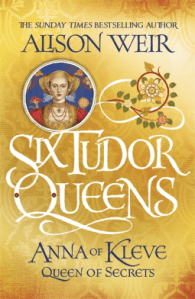
Anna of Kleve, Queen of Secrets by Alison Weir (2 May 2019)
The fourth book in the Six Tudor Queens series is the one I’ve been looking forward to the most as I have read so little about Anne of Cleves compared to Henry VIII’s other wives.

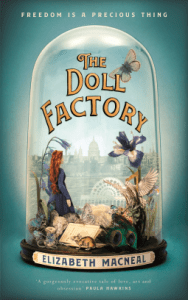
The Doll Factory by Elizabeth Macneal (2 May 2019)
Another debut novel set in 19th century London, in the world of the pre-Raphaelite artists.

June

The Devil’s Slave by Tracy Borman (13 June 2019)
This sequel to The King’s Witch will continue the story of Frances Gorges and her family

August

A Tapestry of Treason by Anne O’Brien (22 August 2019)
Anne O’Brien’s new novel will tell the story of a medieval woman I know almost nothing about: Constance of York, Lady Despenser.

September

The Irish Princess by Elizabeth Chadwick (12 September 2019)
Loosely connected to her William Marshal series, this book is about William’s wife’s parents, Richard de Clare and Aoife of Leinster.

~

Will you be reading any of these books? Which other new historical fiction novels do you think will be worth waiting for in 2019?

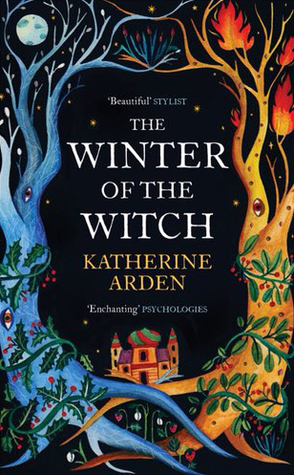
The Winter of the Witch by Katherine Arden

The Winter of the Witch is a wonderful, magical read and the perfect conclusion to Katherine Arden’s Winternight trilogy which combines Russian fairy tales, history and folklore with an atmospheric and wintry medieval setting. I loved the previous two books, The Bear and the Nightingale and The Girl in the Tower, so I went into this one with high hopes and high expectations – and I’m happy to say that I thought it was the best of the three. You may be wondering whether it’s necessary to read the books in order; my answer would be yes, as I think you will definitely get more out of the story if you start at the beginning.

As the novel opens, Moscow is on fire and blame has fallen on Vasilisa Petrovna. With a furious mob calling for her to be burned as a witch, Vasya manages to escape with the help of the magical beings only she and one or two others can see. However, her freedom comes at a cost and, as part of the bargain, an evil spirit is unleashed into the world once more. This could have serious implications for Vasya’s cousin, Grand Prince Dmitrii Ivanovich, who is already facing the threat of the Tatar commander Mamai and his Golden Horde. As the Tatars advance into the land of Rus’, Vasya must enlist the help of the chyerti – her demon friends and enemies – in a final attempt to save her family, her country and its people.

Like the first two books, The Winter of the Witch is steeped in Russian mythology and fairy tale. In this book we are reacquainted with characters who appeared earlier in the trilogy and we meet another selection of fascinating beings from Russian myths too. These include the upyr (monstrous vampire-like creatures) and the famous Baba Yaga. Of the other new characters, I was particularly fond of Ded Grib – but will leave you to discover more about him for yourself when you read the book! Vasya also follows a magical pathway through the enchanted realm of Midnight, a journey which provides some of the most thrilling moments in the book. My favourite of the novel’s many threads, though, involves Vasya’s romance with a certain frost demon called Morozko…

The reason I find the relationship between Vasya and Morozko so compelling is precisely because it’s completely unconventional. Morozko is not human and doesn’t always react or behave like a human; to him, Vasya’s actions sometimes seem illogical and difficult to understand – yet they love each other for who they are, and each accepts whatever the other is willing and able to give.

Another aspect of the book (of all three books, actually) that I like is the theme of conflict between old and new as the ancient beliefs and traditions are swept aside by the spread of Christianity. We have seen from the beginning of the trilogy how the power of the chyerti is fading as the people forget the old ways, turning away from their household spirits such as the domovoi and turning instead to men like Konstantin, the Christian priest with whom it is safe to say Vasya has never seen eye to eye. Vasya’s task in this novel is to persuade everyone – chyerti and human, Christian and pagan – to work together to defend Rus’. It will all come to a head at Kulikovo on the Don River, as the opposing armies prepare for a battle which will prove whether or not our heroine has been successful…

This really is a great end to the trilogy; the beautiful, powerful writing took me through a whole range of emotions and I had tears in my eyes at the loss of a favourite character early in the book. I also love the fact that, despite all the fantasy elements, so much of the story has its foundations in Russian history. I’m sorry to have to leave Vasya and her friends behind, but I will look forward to whatever Katherine Arden writes next.

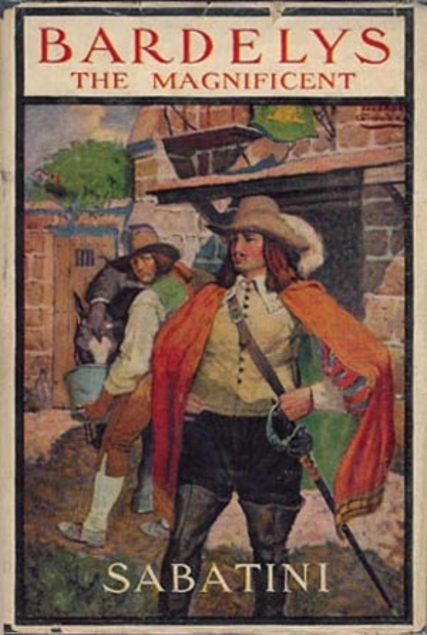
Bardelys the Magnificent by Rafael Sabatini

I love Rafael Sabatini’s books. His classic tale of the French Revolution, Scaramouche, and his two famous pirate novels, Captain Blood and The Sea-Hawk, have been some of my favourite reads of the last few years, while Bellarion was a great book too. I’m now beginning to explore his more obscure books and chose this one, Bardelys the Magnificent, more or less at random when I was putting my Classics Club list together. I hoped it would be a good choice – and it was!

The story is set in 17th century France, during the reign of Louis XIII, and is narrated by the wealthy Marquis de Bardelys, a ‘libertine, a gambler, a rake, a spendthrift’ and a favourite of the King. As the novel opens, Bardelys is hosting a party in Paris at which his rival, the Comte de Chatellerault, makes an unwelcome appearance. It is well known that Chatellerault has recently tried and failed to win the hand in marriage of the beautiful Roxalanne de Lavedan and as Bardelys and his friends tease the Comte about his failure, the discussion becomes more heated. Before the night is over, Bardelys finds himself wagering his entire fortune that he can succeed where Chatellerault could not – and he sets off the next day for Languedoc, the home of Roxalanne.

Of course, things don’t go according to plan and following a series of misunderstandings, Bardelys arrives at the Lavedan estate under a mistaken identity. When he meets Roxalanne and discovers that he is genuinely falling in love with her, he knows that he should tell her the truth about who he really is, but as time goes by it becomes harder and harder to do this. To complicate things further, Bardelys learns that the man whose identity he has stolen is a wanted traitor. Our hero’s life quickly becomes such a confusing mess that it’s difficult to see how anything can ever be resolved! Will he lose his fortune, his life, or the love of Roxalanne – or will he somehow manage to keep all three?

Bardelys the Magnificent is one of Sabatini’s earliest novels, published in 1906, and although I did find it weaker than the others I’ve mentioned above, it’s another entertaining adventure with all the drama, romance, political intrigue and sword fights that you would expect. As a character, I found Marcel de Bardelys less memorable than other Sabatini protagonists such as Andre-Louis Moreau, Peter Blood and Oliver Tressilian, but he is still interesting and engaging. I referred to him as a hero above, but he is not particularly heroic at all – he is selfish and irresponsible, he makes one mistake after another, and his original reason for wanting to marry Roxalanne is hardly very admirable. Despite all of this, I still had some sympathy for him and wanted him to succeed – and, thankfully, he does also develop as a character as the novel progresses. While concealing his true identity, he finds out what people really think of him and sees himself as he appears to others.

Although I wouldn’t recommend Bardelys as the best place to start with Sabatini, if you’re already a fan I’m sure you’ll enjoy this early example of his work as much as I did. I’m looking forward to exploring more of his lesser-known novels and hope my next choice will be another good one.

This is book 11/50 from my Classics Club list.

When Women Ruled the World by Kara Cooney

Despite my love of history I know very little about Ancient Egypt, so when I was given the opportunity via National Geographic and TLC Book Tours to read When Women Ruled the World, I was immediately interested. Written by Kara Cooney, professor of Egyptology at UCLA, the book explores the lives of six female rulers – Merneith, Neferusobek, Hatshepsut, Nefertiti, Tawosret and Cleopatra – asking how each was able to come to power, what challenges they faced during their reign and what the modern world can learn from studying them.

Apart from Cleopatra, I had never read about any of the other five rulers before, so I was looking forward to adding to my knowledge, but I don’t feel that I’ve learned as much about these six women as I would have expected to from this book. I can appreciate that the author was doing her best to work with the limited amount of factual information we have available to us, but there’s still a lot of speculation, interpretation and uncertainty. The book has clearly been thoroughly researched and there are detailed notes at the back, as well as an impressive list of resources and further reading; I just don’t feel that I’ve come away from the book with any real idea of what these female pharaohs may have been like as people, what their style of ruling was like or what their main accomplishments were.

To be fair, the author does point out that one of the reasons why we know so little about these women’s achievements is because the male pharaohs who followed tried to remove all traces of their predecessor from the historical records. Thutmose III, who ruled after his aunt Hatshepsut, “smashed her statues to bits, chiseled away the reliefs of the Punt expedition, and reassigned kingly images to her husband or father.”

This is a book with a very strong feminist message, which is fascinating when related directly to the Egyptians, for example when Cooney discusses how Nefertiti may have had to assume a male name and identity in order to rule, or how Hatshepsut had herself depicted wearing masculine clothes and with the appearance of a man. However, the author spends too much time drawing parallels with modern politics, discussing the stereotypes directed at female leaders and the language used to describe women like Hillary Clinton, Margaret Thatcher or Angela Merkel. It seems that the purpose of the book is to show that women have qualities which make them better equipped to rule the world than men and that the stories of the six female pharaohs of Egypt are being used to illustrate that point, rather than because they are interesting historical figures in their own right whose stories deserve to be remembered.

On a more positive note, I thought this book was written at the right level to make it accessible to the general reader. It wasn’t necessary to have any prior knowledge of Ancient Egypt and I found it easy enough to follow and to understand. There’s a map at the beginning and a useful chronology showing each ruler’s place in history, as well as an interesting selection of photographs and illustrations. Although this book wasn’t quite what I’d expected, I’m pleased to have at least been made aware of women like Merneith, Neferusobek and Tawosret, whose names weren’t even familiar to me before. I would like to read more about them one day.