Top Ten Tuesday: Friends and family

The topic for this week’s Top Ten Tuesday, hosted by That Artsy Reader Girl is:

Platonic Relationships In Books (friendships, parent/child, siblings, family, etc.)

Romantic relationships in books usually get most of the attention, but often the relationships I find the strongest or the most moving are the ones between family and friends. Here are ten of my favourites. I could have included many more!

~
1. Meg, Jo, Beth and Amy March (Little Women by Louisa May Alcott)

I wanted to start my list with some fictional sisters and naturally the March girls were the first to come to mind! Meg, Jo, Beth and Amy don’t always get along, but as sisters there’s an unbreakable bond between them. I think part of the appeal is that the four all have such different personalities, so most readers will be able to identify with at least one of them.

~

2. D’Artagnan, Athos, Porthos and Aramis (The Three Musketeers and sequels by Alexandre Dumas)

All for one and one for all! I had to include this classic tale of friendship on my list. Like the sisters in Little Women, d’Artagnan and his three friends each have very different character traits, which means that most readers will be able to pick a favourite. In the later books in the series, the four of them are leading separate lives of their own, only interacting occasionally, but it’s the relationship between them that makes the first book such a joy to read.

~

3. Francis and Richard Crawford (The Lymond Chronicles by Dorothy Dunnett)

This wonderful series contains lots of relationships, platonic and otherwise, which are developed over the course of the six novels, but one I find particularly interesting is the one between our hero, Francis Crawford of Lymond, and his brother, Richard. To say that they don’t always see eye to eye would be an understatement and following the ups and downs of their relationship from The Game of Kings to Checkmate was one of my favourite aspects of the series.

~

4. Claire Fraser and Jenny Murray (the Outlander series by Diana Gabaldon)

As with the Lymond Chronicles above, there are many relationships in the Outlander series that I could have featured here, but I have chosen the one between Claire Fraser and her sister-in-law Jenny Murray, one of the most long-standing in the series, being formed in the first book of eight. Their relationship changes a lot throughout the series as Claire travels the world having adventures while Jenny stays at home on the family estate in Scotland; sometimes they are barely speaking, while at others they’re the best of friends.

~
5. Fitz and Nighteyes (The Farseer and Tawny Man trilogies by Robin Hobb)

I’m currently in the middle of the Tawny Man trilogy, so this relationship came quickly to mind. Nighteyes is a wolf, but in Hobb’s fantasy world the bond he shares with Fitz is far stronger than the bond you would usually expect between a human and an animal. There are several occasions where Fitz owes his life to Nighteyes and vice versa.

~

6. Bishop Jean Marie Latour and Father Joseph Vaillant (Death Comes for the Archbishop by Willa Cather)

The two central characters in Willa Cather’s 1927 novel are French missionaries who are sent into the newly formed diocese of New Mexico in the nineteenth century. They are very different men and I found the depiction of the friendship between the warm, friendly Vaillant and the quiet, reserved Latour very moving.

~
7. Atticus, Jem and Scout Finch (To Kill a Mockingbird by Harper Lee)

This 1960 classic is a favourite of many people, including myself, and one of the reasons for that is surely the relationship at the heart of the novel between lawyer Atticus Finch and his children, Jem and Jean Louise (Scout). It’s a relationship based on mutual respect and understanding; Scout and Jem learn a lot of important lessons from their father, but they have a lot to offer him in return.

~
8. Jack Aubrey and Stephen Maturin (the Aubrey/Maturin series by Patrick O’Brian)

I’m not usually a fan of nautical fiction, but I am now six books into Patrick O’Brian’s seafaring series and looking forward to reading the seventh. I still don’t know my mainsail from my topsail, but the friendship between Royal Navy Captain Jack Aubrey and ship’s surgeon and spy Stephen Maturin is enough for me to keep reading.

~

9. Arthur Bryant and John May (Bryant and May series by Christopher Fowler)

These two eighty-year-old detectives have the perfect partnership, each bringing a very different approach to crime-solving. May is practical, logical and ready to embrace modern technology, while the eccentric Bryant prefers to rely on clairvoyants, witches and his own arcane knowledge. Their differences could explain how they’ve had so much success over the years and have remained such good friends.

~

10. Flavia, Ophelia and Daphne de Luce (the Flavia de Luce series by Alan Bradley)

I started my list with sisters, so will finish with sisters. The relationship between twelve-year-old Flavia and her two older sisters is one that has frustrated me since the beginning of the series. Why do they dislike each other so much? Why are Feely and Daffy so cruel to Flavia? Nine books into the series, there are finally some signs that their relationship is starting to improve, but it has taken a long time!

~

Have you read any of these? What are your favourite platonic relationships in fiction?

The Sentence is Death by Anthony Horowitz

I loved The Word is Murder, Anthony Horowitz’s first book to feature the detective Daniel Hawthorne, so when I heard that there was going to be a second book I couldn’t wait to read it. I didn’t have to wait too long, as this one has been published only a year after the first, and I’m pleased to report that I enjoyed it just as much, if not more.

When high profile divorce lawyer Richard Pryce is found bludgeoned to death with an expensive bottle of wine, the culprit seems quite obvious. Just days earlier, Pryce had been threatened by a client’s ex-wife who poured a glass of wine over his head in a restaurant. Surely that can’t be a coincidence? But Pryce has plenty of other enemies, whose identities come to light as investigations continue. Could one of them have wanted him dead? And what is the significance of the numbers painted on the wall near Pryce’s body? As this is clearly a more complex case than it seemed at first, ex-police detective Hawthorne is asked to assist with solving the crime.

Having worked with Hawthorne on his previous mystery in The Word is Murder, author Anthony Horowitz reluctantly agrees to team up with him again and document the progress of the investigations in a second book, The Sentence is Death. Hawthorne is supposed to be the hero of the book, but this time Anthony decides to do some detecting of his own in the hope of reaching the solution first. Can he solve the mystery before Hawthorne does?

If this sounds confusing, I should explain that, as in the previous novel, Horowitz is a character in his own book. The Anthony in the story is clearly based on the author himself – he frequently discusses his career as a novelist and screenwriter and refers to his wife and his publisher by name – yet he interacts with fictional characters, takes part in fictional storylines and struggles to solve the mystery the real Horowitz has created. I think it’s a clever concept and great fun, though not everyone will agree – it’s probably something you’ll either love or you won’t.

It’s not really necessary to have read the first book before starting this one as the mysteries are entirely separate. Like the first, this is a strong, well-constructed mystery with plenty of clues but plenty of red herrings as well. I didn’t manage to solve it (I confess that I allowed myself to be distracted and misled by every one of those red herrings) but I was happy to be kept in suspense and wait for Hawthorne – or Anthony, of course, if he got there first – to explain it all for me.

However, I would still recommend reading both books in order if you can, so that you can watch the progression of Anthony’s relationship with Hawthorne. Hawthorne is no more pleasant or likeable now than he was when we first met him in The Word is Murder, and he is still every bit as much of an enigma, but we do pick up a few new bits of information about him here, with some glimpses of his home and his life away from his detection work. I think he’s a great character, for all of his flaws, and I love his partnership with the fictional Anthony.

When I read the first novel I found the details of Anthony’s publishing and television career a slight distraction from the main plot, but in this book they seemed to form a more intrinsic part of the story and I liked that aspect much more. Horowitz seems to be having fun at the expense of his fictional self, as Anthony stumbles from one disaster to another; I particularly enjoyed the opening scenes on the set of Foyle’s War and a later scene involving the theft of a book – and I’m curious to know whether the literary fiction author Akira Anno was based on a real person (although if she was, I doubt her true identity will ever be revealed).

I loved this book – and the good news for Horowitz and Hawthorne fans is that there’s going to be a third.

Thanks to Century for providing a copy of this book for review via NetGalley.

Nonfiction November Week 4: Reads Like Fiction

For Week 4 of Nonfiction November, we are asked to consider the following questions:

(Nov. 19 to 23) – Reads Like Fiction (hosted by Rennie at What’s Nonfiction?): Nonfiction books often get praised for how they stack up to fiction. Does it matter to you whether nonfiction reads like a novel? If it does, what gives it that fiction-like feeling? Does it depend on the topic, the writing, the use of certain literary elements and techniques? What are your favorite nonfiction recommendations that read like fiction? And if your nonfiction picks could never be mistaken for novels, what do you love about the differences?

I don’t really expect nonfiction to feel like fiction, so I tend to approach it in a different frame of mind and hoping to gain different things from it. The type of nonfiction I read most often is history and I think there does need to be a distinction between historical nonfiction and historical fiction.

When I read historical fiction I want the author to create a realistic and convincing historical setting which has been thoroughly researched and to stick to the facts as far as possible regarding things such as dates, outcomes of battles, major events, the clothes people would have worn and the food they would have eaten. However, I also want to be entertained by a good story which will take me through a range of emotions and I want the author to bring the characters to life, showing me how they thought, how they felt and what they said. When writing fiction, the author can obviously use their imagination to do these things, but with nonfiction it’s more difficult and sometimes impossible.

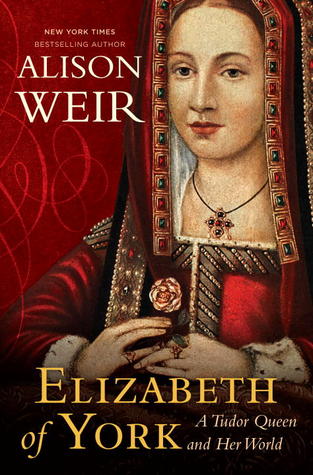
In Alison Weir’s biography of Elizabeth of York, for example, because there is a limit to what we can know about Elizabeth from a distance of five hundred years, there are lots of occasions where she speculates on what Elizabeth might have done or thought and uses the words ‘probably’ and ‘maybe’. This is obviously much more of a problem with nonfiction than with fiction, and although I did enjoy that book overall, I would have preferred to stick to the known facts.

Going back to the questions posed at the beginning of this post, I think there are definitely certain literary elements and techniques that can be used to give a book a more fiction-like feeling. The Plantagenets by Dan Jones is a good example: I mentioned in my review that “instead of just telling us that Henry I’s son died in a shipwreck, he describes the sails of the ship billowing in the wind, the shouts of the crew and the freezing water pouring into the ship.” This sort of detail can add life and colour and make a nonfiction book feel more like a novel.

I think it does depend on the type of nonfiction, though. Autobiographies and memoirs can often feel much more fictional than an impersonal biography of a historical figure; the author is writing about his or her own life, so they can draw on firsthand experience, they can talk about their thoughts, words and actions, and they probably don’t need to resort to imagination or speculation to fill in gaps.

One book that I think gets the fiction/nonfiction balance right and that has an element of autobiography is Wild Swans by Jung Chang. I described it in my review as “the most riveting non-fiction book I’ve ever read – I kept thinking ‘I’ll just read a few more pages’ then an hour later I was still sitting there unable to put the book down.” Because Jung Chang is writing about her own family history – her grandmother, her mother and herself – Wild Swans has a personal feel which gives it the sort of power and emotion I love in fiction. Knowing that it is a true story makes it an even more moving and compelling read.

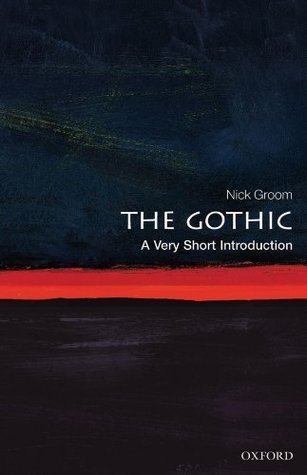
At the other end of the scale are books that could never be mistaken for fiction and aren’t intended to be, such as reference books and books of facts and figures. Books like The Gothic: A Very Short Introduction and The Renaissance: The Best One-Hour History feel nothing like novels and I wouldn’t expect or want them to!

~

What are your opinions on this? Does it matter to you whether nonfiction reads like a novel?

Classics Club Spin #19: My List

The Classics Club

I love taking part in the spins hosted by The Classics Club – this is the nineteenth and although I’ve missed one or two I think I’ve managed to participate in most of them. If you’re not sure what the spins involve, here’s a reminder:

The rules for Spin #19:

* List any twenty books you have left to read from your Classics Club list.
* Number them from 1 to 20.
* On Tuesday 27th November the Classics Club will announce a number.
* This is the book you need to read by 31st January 2019.

And here is my list:

1. Dombey and Son by Charles Dickens
2. The Brothers Karamazov by Fyodor Dostoevsky
3. La Reine Margot by Alexandre Dumas
4. Daniel Deronda by George Eliot
5. The Duke’s Children by Anthony Trollope
6. The Fountain Overflows by Rebecca West
7. In a Dark Wood Wandering by Hella S Haasse
8. Of Human Bondage by W Somerset Maugham
9. The Pirate by Sir Walter Scott
10. Nicholas Nickleby by Charles Dickens
11. Germinal by Emile Zola
12. The Grapes of Wrath by John Steinbeck
13. Claudius the God by Robert Graves
14. The Fifth Queen by Ford Madox Ford
15. How Green Was My Valley by Richard Llewellyn
16. The Scottish Chiefs by Jane Porter
17. The Long Ships by Frans G Bengtsson
18. The Cloister and the Hearth by Charles Reade
19. The Betrothed by Alessandro Manzoni
20. Fire from Heaven by Mary Renault

~

We’ve been given more time than usual to read our book for this spin, so I’ve tried to include lots of long books here. I think most of them have over 400 pages, although one or two are slightly shorter. I don’t mind which one I get, as I’ll be reading them all eventually anyway.

Have you read any of these books? Which number do you think I should be hoping for on Tuesday?

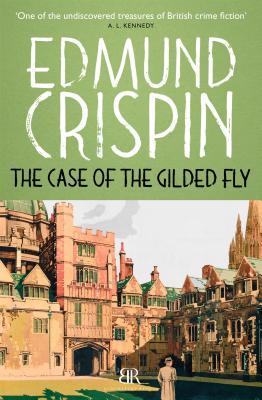
The Case of the Gilded Fly by Edmund Crispin

Like many people, I first encountered Edmund Crispin’s Oxford don detective Gervase Fen in The Moving Toyshop, the third in the series and the one which is usually said to be his best. I loved it and wanted to read more, so going back to the beginning of the series and reading The Case of the Gilded Fly seemed a good idea. As it was published in 1944 I had hoped to read it for last month’s 1944 Club but didn’t have time and ended up reading it after the event was over.

The novel opens with an introduction to each of the main characters as they travel to Oxford on the train. Among them are Gervase Fen, Professor of English Language and Literature at Oxford University, and his old friend the Chief Constable, Sir Richard Freeman. Ironically, Fen’s passion is for detection, while Sir Richard’s is for literature, which leads to some interesting conversations between the two of them. Although this is the first book in the series, it is implied that Fen already has some experience of solving mysteries. He certainly has no difficulty in solving the ‘Case of the Gilded Fly’, even though everyone else finds it baffling.

Also arriving on the same train as Fen and Sir Richard are Robert Warner, a playwright who has chosen an Oxford theatre for the premiere of his new play, and several members of the cast. One of these is the aspiring young actress Yseut Haskell, a spiteful, self-obsessed person who seems to cause trouble everywhere she goes. As we get to know the characters better during their first night in Oxford, we discover that almost everyone has a reason to dislike her, so when Yseut is found dead in a room in the college the next day, there’s no shortage of people with motives. The problem is, none of them seemed to have had an opportunity to enter the room unobserved and carry out the murder. How did the killer manage it? And what is the significance of the Egyptian-style gilded ring found on Yseut’s finger?

This is a complex locked-room-style mystery with a lot of discussion of alibis, floor plans and the timings of events. I didn’t come close to solving it, although Fen works it out very early on but has no proof and keeps us waiting until the end to find out who did it and how it was done. He also faces a moral dilemma: as Yseut was such an unpleasant person and nobody is particularly sorry to see her dead, does he really want the killer to be punished – especially as the police have already decided it was suicide? In my opinion Yseut had done nothing to deserve being murdered, but I suppose this provides a reason why Fen doesn’t immediately tell the police what he knows and bring the novel to an end before it even begins!

I enjoyed this book, but I found it slightly disappointing in comparison to The Moving Toyshop. As a more conventional sort of mystery, it doesn’t have quite the same feeling of originality and novelty, and although there are still plenty of witty comments and literary allusions flying back and forth between Fen and his friends, they are not as much fun as the limericks and ‘Detestable Characters in Fiction’ game in The Moving Toyshop. It’s possible that I would have liked The Case of the Gilded Fly more if I’d read it first and had nothing to compare it with.

Have you read any of the Gervase Fen mysteries? Which ones are your favourites?

Historical Musings #44: Exploring India

Welcome to my monthly post on all things historical fiction. Having just finished reading Before the Rains by Dinah Jefferies, in which a British photographer in the 1930s is sent to India to take pictures of the royal family of a fictional princely state, I thought it would be interesting this month to look at other historical novels set in India.

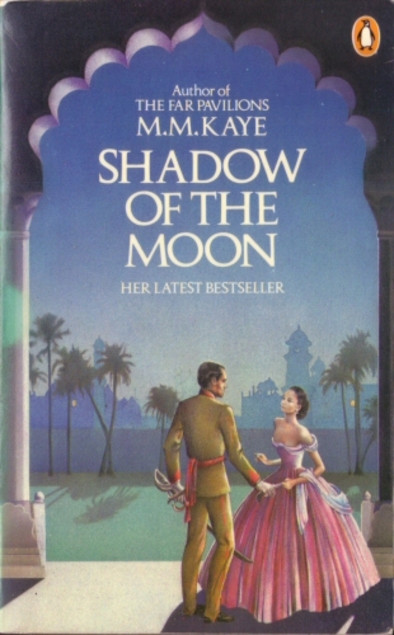
One of my all-time favourite historical fiction novels is The Far Pavilions by M. M. Kaye, set in 19th century British-ruled India. Last year I read one of Kaye’s other novels, Shadow of the Moon, which is also set in India, but in a slightly earlier period, covering the Sepoy Mutiny of 1857. I read this as part of a readalong hosted by Cirtnecce who is from India and speaks very highly of M. M. Kaye’s writing and understanding of the country.

A similar book, and another one that I loved, is Zemindar by Valerie Fitzgerald, which again is set during the Mutiny. I also enjoyed In a Far Country by Linda Holeman, about the daughter of two British missionaries living in 19th century Lahore.

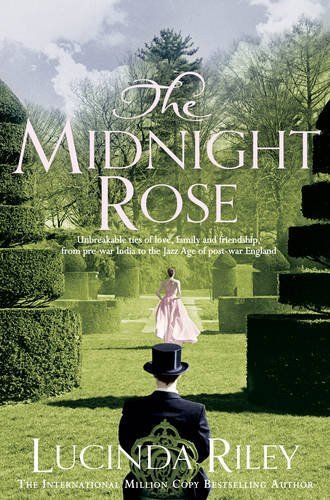
I can think of two dual-time period novels I’ve read which are set at least partly in India. One is The Midnight Rose by Lucinda Riley (in which the historical thread involves a girl who befriends an Indian princess in 1911) and the other is The Sandalwood Tree by Elle Newmark, in which the action moves between 1947 and the 1850s, both important periods in India’s history.

I also loved The Strangler Vine by M. J. Carter, a fascinating historical mystery set in 1837 during the rule of the British East India Company. Then there’s Damon Galgut’s Arctic Summer, a fictional biography of E. M. Forster, focusing on the time when Forster was working on the novel A Passage to India. A completely different sort of book is Rebel Queen by Michelle Moran, about Rani Lakshmibai who rules the state of Jhansi along with her husband, Raja Gangadhar Rao.

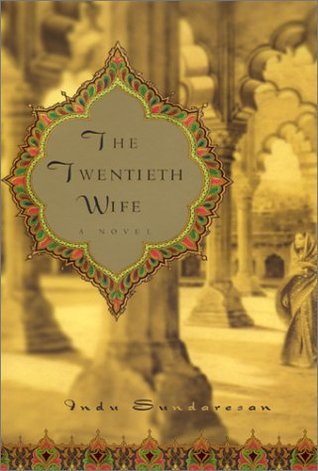
It seems that most of the historical novels I’ve read set in India have been from a non-Indian (usually British) perspective, but I have also read a few by Indian authors. One of these is The Twentieth Wife by Indu Sundaresan, the story of Mehrunissa, the future Empress Nur Jahan. This book is set much earlier than any of the others I’ve mentioned so far – in 17th century Mughal India. There’s also Amitav Ghosh’s Ibis trilogy, which begins with Sea of Poppies, although the trilogy is set in China as much as in India and tells the story of the First Opium War.

A God in Every Stone is a novel by Pakistani author Kamila Shamsie, set in 1930s Peshawar where the Khudai Khidmatgar movement are attempting to bring an end to British rule in India. Finally, The Enchantress of Florence by Salman Rushdie is a magical realism novel which takes us to a 16th century India populated with giants and witches, where emperors have imaginary wives and artists hide inside paintings.

***

Now it’s your turn. Have you read any of these books? Which other historical fiction novels set in India can you recommend?

The Grave’s a Fine and Private Place by Alan Bradley

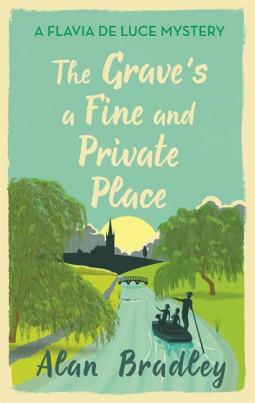
After reading Alan Bradley’s Thrice the Brinded Cat Hath Mew’d last month, I decided to move quickly on to the next in the Flavia de Luce mystery series, The Grave’s a Fine and Private Place. This is the ninth Flavia novel and brings me completely up to date with the series (for now; another book is due early next year).

In this book, our twelve-year-old detective is coming to terms with the terrible news she received at the end of the previous novel. Along with her two elder sisters, Feely and Daffy (Ophelia and Daphne), and her father’s old friend and servant, Dogger, Flavia is taking a boating trip to try to relax and recover from the shock. Trailing her hands in the water as they sail down the river, Flavia suddenly feels her fingers get caught between teeth – it seems that she has discovered yet another dead body. Being Flavia, she is more excited than repulsed, and when the corpse of a young man is pulled to the shore she can’t wait to find out how and why he died.

The dead man is Orlando Whitbread, an aspiring actor with a local theatre company. As Flavia delves more deeply into Orlando’s background, she discovers links with a murder that took place several years earlier. In her usual way, she sets about searching for clues and speaking to suspects – but this time she has some help. It seems that Dogger has been carrying out some investigations of his own and is proving to be Flavia’s equal as a detective, while Daffy, who is never to be found without her nose in a book, offers her assistance in solving some literary clues. This is something new for Flavia, for whom crime-solving has always been a very solitary activity.

We see more of Dogger in this book than ever before and he and Flavia are working together almost as equals, but I was particularly happy with the improvement in her relationship with Daffy. She is getting on better with her other sister too, and for the first time seems to be appreciating that there’s more to Feely than meets the eye. Maybe it has taken some family tragedies to make them overcome their differences – or maybe they are all just growing up. There have certainly been some changes in Flavia and she has come a long way from the tantrum-throwing eleven-year-old she was at the beginning of the series. On the other hand, I think she’s less fun as a character and maybe that’s why I can’t help feeling that the last few books in the series have lacked the charm of the earlier ones. That charm was important because it was what kept me reading and loving the Flavia books, even when the mysteries weren’t particularly strong.

The mystery in this one is slightly more complex than some of the others and I enjoyed meeting the characters who are drawn into it, such as Hob Nightingale, the undertaker’s son, and Mrs Palmer, a published poet who befriends Daffy. I found the final solution a bit unconvincing, however – the reasons for both the original murder and Orlando’s death seemed quite weak. Back to Flavia’s personal story, though, and this book has a much happier ending than the previous one! There were hints that the series might be about to go in an intriguing new direction, but I will have to wait for book 10, The Golden Tresses of the Dead, to find out.