Top Ten Tuesday: Books with occupations in the title

This week’s topic for Top Ten Tuesday (hosted by That Artsy Reader Girl) is “Books With Occupations in the Title (Submitted by Hopewell’s Public Library of Life)”.

There were lots of books I could have listed here, but I’ve chosen ten with different occupations in the title and have restricted myself to only using books that I’ve reviewed on my blog.
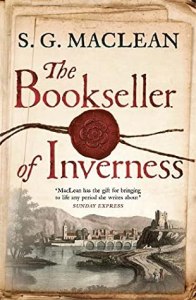
1. The Bookseller of Inverness by SG MacLean – Historical mystery set in Scotland in the aftermath of the failed 1745 Jacobite Rising.

2. The Tutor by Andrea Chapin – A fictional account of a year in the life of William Shakespeare.

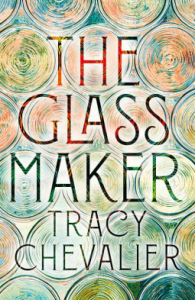
3. The Glassmaker by Tracey Chevalier – This novel follows the story of a family of Murano glassmakers through several centuries.

4. The Butcher’s Hook by Janet Ellis – An unusual, unsettling novel set in Georgian London and with a protagonist more anti-heroine than heroine.

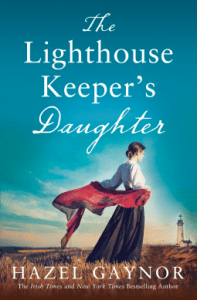
5. The Lighthouse Keeper’s Daughter by Hazel Gaynor – Historical fiction about the life of Grace Darling.

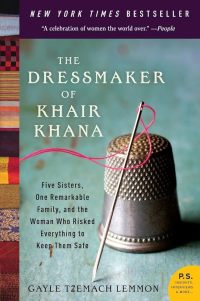
6. The Dressmaker of Khair Khana by Gayle Tzemach Lemmon – Non-fiction about a woman who starts her own dressmaking business in Taliban-ruled Afghanistan.

7. The Professor by Charlotte Brontë – Classic Victorian novel narrated by an Englishman who (like Brontë herself) becomes a teacher at a school in Brussels.

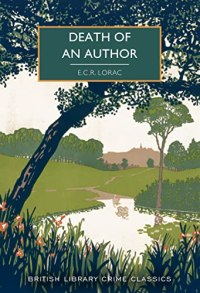
8. Death of an Author by E.C.R. Lorac – In this Golden Age crime novel from 1935, an author disappears without trace, leaving the police questioning whether he ever even existed.

9. The Pharmacist’s Wife by Vanessa Tait – A dark historical novel set in Victorian Edinburgh.

10. The Glovemaker by Stacia Brown – A glovemaker’s assistant is accused of killing her illegitimate child in 17th century England.

~

Have you read any of these? Which other books with occupations in the title have you read?

My Commonplace Book: August 2025

A selection of quotes and pictures to represent August’s reading:

commonplace book
noun
a book into which notable extracts from other works are copied for personal use.

~

“We all wear masks,” he said, in a voice that was soft but impossible to ignore. “Every single one of us. And for different reasons. Some, to conceal. Others, to deceive. But masks are funny things. The very presence of a mask tells us there is something behind it.”

The House at Devil’s Neck by Tom Mead (2025)

~

“No, my friend, I am not drunk. I have just been to the dentist, and need not return for another six months! Is it not the most beautiful thought?”

One, Two, Buckle My Shoe by Agatha Christie (1940)

~

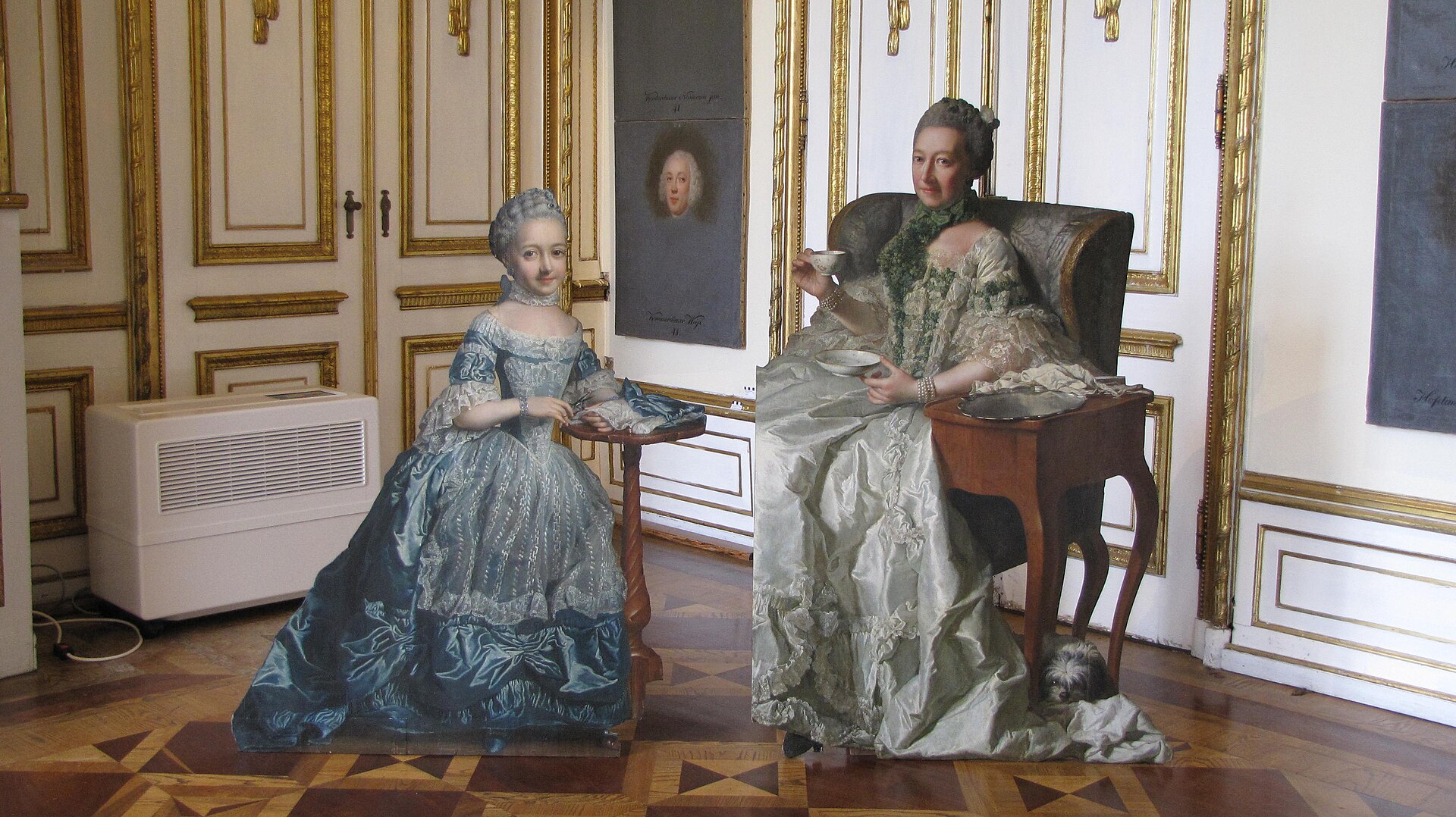
Dummy boards by Georg David Matthieu

Did evil have wants and needs? Surely not, surely that would make it too human. No longer a tug from the depths of the abyss, but something sentient that could surface in anyone.

The Silent Companions by Laura Purcell (2017)

~

Karma is a natural consequence. Badness accrues. It affects the way you live your life, how you perceive the world. When you do evil things, you see the world as petty and selfish and cruel.

Katabasis by RF Kuang (2025)

~

“My goodness, are you all one family?”

“Yes, all one family,” Henny spoke up. “I’m Henrietta, Henny for short; I’m ten. Ella’s twelve, Sarah is eight, Charlotte is six and Gertie is four.”

“A step-and-stairs family!” The librarian laughed and the tiny freckles on her pert nose seemed to laugh with her.

“That’s a good name for us,” said Ella. “Some people call us an all-of-a-kind family.”

All-of-a-Kind-Family by Sydney Taylor (1951)

~

Lamorna, Cornwall

I also toyed with the idea of installing electricity, but Vow Cave was ‘four poles’ away from the nearest house, and the cost was prohibitive. Since then I have sometimes wondered whether this absence of electricity was not a blessing in disguise: does not a dwelling without it breathe more freely? Some of the tension of modern life is due, I think, to the fact that people surround themselves day and night with the pulsations of electricity in one form or other.

The Living Stones: Cornwall by Ithell Colquhoun (1957)

~

Favourite books read in August:

The Silent Companions and All-of-a-Kind Family

Authors read for the first time in August:

RF Kuang, Sydney Taylor

Places visited in my August reading:

England, US, Hell

~

Reading notes: I didn’t finish as many books as usual in August, for various reasons, but on a more positive note I completed the 20 Books of Summer challenge for only the second time in my nine years of participating. I’ll be posting a summary of the challenge next week, but for now I can say that being flexible is the key to success!

In September (and October), I’m looking forward to joining in with RIP (Readers Imbibing Peril). It’s the 20th year of RIP and it has been hosted by @perilreaders on Instagram for the last few years, but I’ve noticed plenty of book bloggers still taking part as well. I won’t be posting a list in advance, but I have plenty of dark, spooky reads lined up for the next two months!

~

How was your August? Do you have any plans for September?

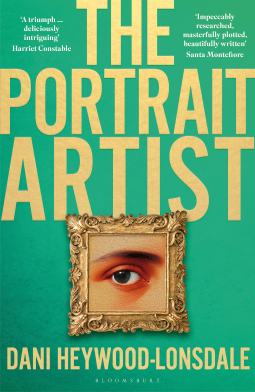
The Portrait Artist by Dani Heywood-Lonsdale

Dani Heywood-Lonsdale’s debut novel, The Portrait Artist, is an art mystery set in Victorian England with hints of the supernatural and some similarities to Oscar Wilde’s The Picture of Dorian Gray.

When a portrait of a Kunekune pig is left on the steps of the National Gallery in London one morning in 1890, it sends the art world into turmoil. Both the signature and the technique point to the artist being the mysterious Timothy Ponden-Hall, thought to have been dead for the last fifty years. Ponden-Hall, an explorer and painter, caused a sensation earlier in his career, when rumours spread that he had discovered the elixir of life during a sea voyage and was using it to bestow immortality on those who sat for his portraits. Does this new portrait mean the artist is still alive – and why has he started to paint again after so many decades of silence?

Art historian and Ponden-Hall expert Solomon Oak is brought in to investigate, but as he tries to interpret the new painting and its meaning, he makes some discoveries that cause him to question everything he thought he knew about the reclusive artist. Meanwhile Solomon’s daughter Alice has been befriended by Lou, the coachwoman, who gives her a job helping to deliver parcels. But why do their deliveries always take place under cover of darkness – and could Alice’s new job and new friend lead her to solve the mystery of Ponden-Hall before her father gets there first?

I enjoyed The Portrait Artist. My only problem with the book came towards the end, when the truth about Ponden-Hall was revealed. It wasn’t exactly a surprise – I had already at least partly guessed it – but it required a huge suspension of disbelief which was just too difficult for me to accept. Still, the story up to that point had been fascinating to follow. Solomon and Alice Oak are both characters I liked and I thought the complex relationship between them was handled well, with Alice feeling that she can never quite live up to the memory of her late sister Emma, who had been the closest to their father. Solomon, for his part, has to come to terms with Alice growing into a woman and not wanting to follow the path through life he has mapped out for her. Another interesting character is Grace, an artists’ model from a humble background who longs to be part of the world of academia and sees a possible route to that by involving herself in the Ponden-Hall mystery.

Heywood-Lonsdale explores a lot of different issues throughout the novel, including the idea of the dead being immortalised through art, both literally and figuratively; how adding to our knowledge of the artist and the sitter can change the way we view and appreciate a painting; and the difficulties of being of mixed race heritage in Victorian society. The supernatural element involving the question of whether youth can be preserved in a painting is mainly there to explain the level of mystique that has formed around Timothy Ponden-Hall and we can choose how much we want to believe.

Apart from my problems with the ending, I think this is an impressive first novel and I hope Dani Heywood-Lonsdale will write more.

Thanks to Bloomsbury Publishing for providing a copy of this book for review via NetGalley.

The Silent Companions by Laura Purcell

I decided to read this for the 20 Books of Summer challenge in preparation for the sequel, House of Splinters, coming out in October. I’m not sure how closely connected the two books will be, but it made sense to read The Silent Companions first and as I’ve enjoyed other books by Laura Purcell I was sure I would like this one anyway.

The novel begins in 1865 with Elsie Bainbridge arriving at The Bridge, her late husband’s family estate near the village of Fayford. Elsie only married Rupert a month earlier but already he is dead, leaving her a widow and pregnant with his child. She has come to The Bridge for the funeral and to spend the duration of her pregnancy, accompanied by Sarah, a cousin of Rupert’s.

From the moment she sets eyes on the house, Elsie has an uneasy feeling about it, which only increases when she learns that The Bridge has a bad reputation in the village and there’s been difficulty finding servants because no one wants to work there. Then, in a locked room upstairs she and Sarah discover a painted wooden figure that bears a striking resemblance to Elsie herself. What is this ‘silent companion’ and why does it seem to have a mind of its own? The answers can be found in a two-hundred-year-old diary written by Anne Bainbridge, who lived in the house with her husband and daughter, Hetta, during the reign of King Charles I.

The narrative switches back and forth between Anne’s story in 1635 and Elsie’s in 1865 and there are also some chapters set in St Joseph’s Hospital at an unspecified point in the future. The hospital is an asylum and we learn that Elsie has been sent there following a fire at The Bridge which has left her badly burned and unable to speak. It seems that Elsie has been accused of murder and her doctor suggests that if she writes down everything she can remember, beginning with her arrival at The Bridge, it might be enough to save her from execution.

Although I felt that the framing story in the hospital wasn’t really necessary (maybe because the ‘woman sent to an asylum by family members’ trope is one I come across such a lot in novels with Victorian settings), I did really enjoy the book as a whole. I loved the atmosphere Purcell creates, which grows increasingly tense and sinister as more and more strange occurrences take place at The Bridge and the silent companions multiply in number. Silent companions really existed; also known as dummy boards, they originated in the 17th century – the National Trust has some information about them here and some pictures which show how lifelike they were.

The story that unfolds through Anne’s diary is fascinating. After having several sons, she uses herbs to try to conceive a daughter and when that daughter, Hetta, is born with a damaged tongue and without the ability to speak, Anne believes it was her fault for using witchcraft. The child is shunned by her father and hidden away from society, where she becomes associated with the sense of evil that seems to be spreading throughout the house and the Bainbridge family. It’s Anne who first acquires the silent companions and brings them home, creating the link between her own life and Elsie’s two centuries later.

This is not a book where everything is neatly tied up at the end. There are questions left unanswered and several possible theories to consider. I usually prefer an explanation, but in this case I was happy to be left wondering. I’m looking forward to House of Splinters now!

Book 20/20 for 20 Books of Summer 2025.

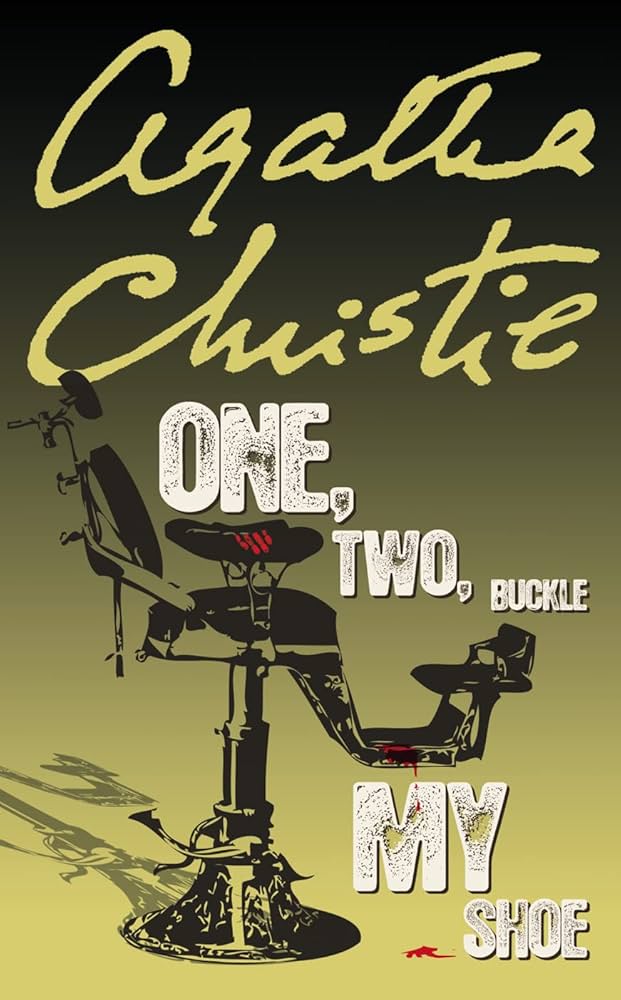
One, Two, Buckle My Shoe by Agatha Christie

This month’s theme for the Read Christie challenge is ‘medical professionals’ and One, Two, Buckle My Shoe is the perfect choice as it begins with the murder – or could it be suicide? – of a dentist. His name is Mr Morley of Queen Charlotte Street, London, and our old friend Hercule Poirot just happens to be attending an appointment on the day of Morley’s death. It seems that Poirot has a fear of visiting the dentist, but despite being nervous and preoccupied he still has his powers of observation and notices a young man in the waiting room who ‘looks like a murderer’. Learning of Mr Morley’s death later that day, however, it seems that the young man is not the only suspect. All of the patients who attended appointments in the hours before the body was discovered are under suspicion, along with the dentist’s family and servants.

Poirot works with Chief Inspector Japp of Scotland Yard in the early stages of the investigation, but when Japp uncovers information to suggest that Morley’s death was a suicide, Poirot is not satisfied. Too many things don’t make sense. Why, for example, did Morley’s secretary receive a fake telegram summoning her to an aunt in Somerset, ensuring that she would be absent from work on the day of the death? Poirot decides to continue investigating on his own, but it’s only when he begins to question whether he’s fallen into a trap that he is able to solve the mystery.

One, Two, Buckle My Shoe was published in 1940 and was the final Poirot novel to feature Inspector Japp. I do like the books where Poirot has someone else to work with and discuss some of his theories with, whether that’s Japp or (preferably) Captain Hastings. It’s also one of several Christie novels with titles based on nursery rhymes (Hickory Dickory Dock, Five Little Pigs and A Pocket Full of Rye are some of the others). Christie uses lines from the One, Two, Buckle My Shoe rhyme as the chapter titles and each line has some relevance to the events of the story – for example, in the first chapter we see a buckle fall off a woman’s shoe as she steps out of a car, although we won’t understand the significance of that until much later.

Published during the war, there are strong themes of political and financial instability and people with different views of how the world should move forward. One of the suspects, Alistair Blunt, is a prominent banker; another, Howard Raikes, is a political activist from America; and a third, Mr Barnes, worked for the Secret Service. However, this is only one part of the story and the book never becomes excessively concerned with politics. There are other suspects and other clues and motives as well and although I couldn’t solve the mystery myself, I enjoyed seeing Poirot explain it all in the denouement!

The Read Christie theme for September is ‘religious figures’ and the recommended title is At Bertram’s Hotel, which I’ve read relatively recently. I’ll wait to see what other options they suggest before deciding if I’ll take part.

Book 19/20 for 20 Books of Summer 2025.

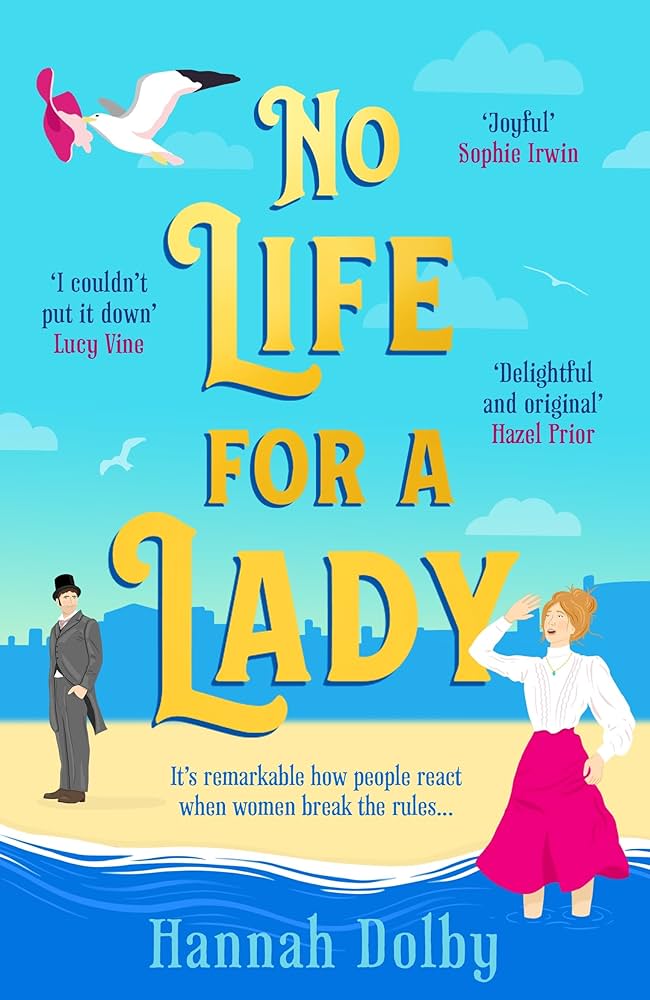
No Life for a Lady by Hannah Dolby

I added to this to my TBR last year after some reviews of the sequel, How to Solve Murders Like a Lady, caught my eye. I always prefer to start at the beginning if possible, so decided to read this one first – and I’m pleased to say I loved it and will be moving on to the second book soon!

The novel is set in Hastings in 1896 and introduces us to Violet Hamilton who, at twenty-eight and still unmarried, looks like becoming an ‘old maid’. She’s not interested in any suitor her father pushes into her path and has more important things on her mind – like finding out what happened to her mother, who disappeared from Hastings Pier ten years earlier. Violet decides to hire a private detective, Frank Knight, but his methods and attitude leave a lot to be desired. As Benjamin Blackthorn, the town’s only other detective, insists that he has given up sleuthing and is happy selling furniture instead, Violet feels she has no choice other than to take matters into her own hands and try to investigate herself.

Violet’s story is told with a lot of warmth and humour. She’s a very likeable heroine: intelligent and resourceful, but also endearingly naïve and innocent, which can lead to some amusing situations and misunderstandings. There’s also some sadness, as the disappearance of her mother all those years ago has clearly had a huge impact on her life and she feels that no one else, not even her father, cares about trying to discover the truth. The mystery element of the novel reaches a climax with some dramatic scenes towards the end, but for the most part I would describe this as a gentle, charming book.

I loved watching Violet’s relationship with Mr Blackthorn develop, as she persists in trying to persuade him to take on her case and he continues trying to refuse. Eventually she convinces him to let her begin working for him as a typist, certain that once she’s established herself in his furniture shop he won’t be able to resist getting involved in the investigation. I found it easy to predict what was going to happen there, but I didn’t mind as I liked Benjamin as much as I liked Violet! It’s interesting, though, that at first Violet is sure she needs a man to do the detecting for her, but as the book progresses it begins to occur to her that maybe she has what it takes to become a Lady Detective in her own right.

If you’re looking for an entertaining read with a mixture of mystery, romance and comedy, I can’t recommend this book highly enough. I thought it had a similar feel to AJ Pearce’s Dear Mrs Bird, so if you enjoyed that book maybe you would enjoy this one too. I’m looking forward to reading the sequel!

Book 18/20 for 20 Books of Summer 2025.

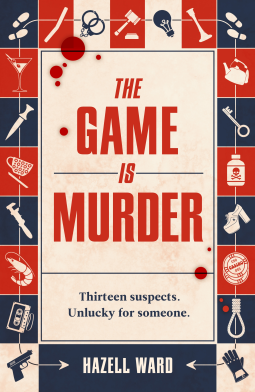
The Game is Murder by Hazell Ward

Described by the publisher as a murder mystery in which the reader ‘plays the role of the Great Detective’, The Game is Murder sounded fun. I expected an interactive Choose Your Own Adventure style book like Max Nightingale’s Murder in Tinseltown (although hopefully better executed than that book, which didn’t quite work). It turned out to be nothing like that, but something very different.

The novel is written in the second person with an unnamed narrator – presumably the author – directly addressing you, the reader, and positioning you as a character in the story. It begins with you arriving for a murder mystery party at the London home of David Verreman and his brother Daniel:

The lights are on at 8 Broad Way. The steps have been swept and the brass door-knocker has been polished. For this is an occasion. Walk up the steps and tap lightly open the door. They are expecting you.

Before you take your seat at the dinner table, David addresses you and the other guests, explaining the purpose of the party. You’re gathered here tonight to attempt to solve an historic crime involving the Verreman family – one evening in 1974, a servant was found murdered in the basement of 8 Broad Way. Everything points to the killer being Lord Verreman, David and Daniel’s father, who was believed to have mistaken the woman for his wife. Lord Verreman fled before he could be arrested and the crime has remained unsolved ever since. Your fellow guests include suspects, witnesses and medical experts; your task as the Great Detective is to listen to their evidence and try to solve the mystery.

This may sound straightforward enough so far, but you quickly discover that the author is playing games with you and nothing is really as it seems. Without wanting to spoil too much, the direction of the story changes several times and so does your role in it. This is not the sort of book you can really become immersed in as it’s impossible to forget that you are, in fact, reading a book and are being manipulated by the author/narrator into believing or not believing certain things. It’s something people will either enjoy or they won’t and I’m sure it’s a book that’s going to massively divide opinion!

There are lots of nice little touches, such as quotes from classic mystery novels at the start of each chapter, a ‘contract’ between author and reader laying out the rules of the investigation and some games and quizzes (which I suppose form the interactive element of the book). However, there were other things I just found irritating, such as naming characters after real crime authors: Wilkie Collins, Gaston Leroux etc. And there’s no real opportunity for the reader to actually direct the course of the investigation or solve the crime for themselves, which is the impression I’d been given by the blurb (and why I was hoping for more of a choose-your-own-adventure structure).

The mystery itself is interesting, with several suspects and lots of clues, alibis and red herrings. Because it’s a crime that has already taken place, though, we only see it unfold through the statements and testimonies of the people involved, which means things become quite repetitive in the middle as we hear the same incidents described by several different characters. Overall, I found the book entertaining in places, but too ambitious and not really what I’d expected or wanted. I think other readers will love it!

Thanks to Michael Joseph for providing a copy of this book for review via NetGalley.