The House of Seymour by Joanna Hickson

I’ve enjoyed some of Joanna Hickson’s previous historical fiction novels, so I was looking forward to reading her latest one, The House of Seymour, which is the first in a new trilogy. Sadly, I found it disappointing and I probably won’t be continuing with the next two books, but there were still enough things to like that I don’t feel I’ve wasted my time.

This book is not about Henry VIII’s wife Jane Seymour as you might expect, but her ancestors – specifically her great-great-grandmother, Isabel Williams, and her husband, John Seymour. We first meet Isabel, the daughter of a wealthy merchant, in 1424 when she becomes betrothed to John, the ambitious Lord of Wolf Hall in Savernake Forest, Wiltshire. From very early in their marriage, it becomes clear that their relationship is not going to be a happy one. John is a cruel and ruthless man preoccupied with political advancement and winning the support of the Duke of Gloucester, protector of the young king, Henry VI.

Isabel finds some solace in her relationship with John’s young cousin Edmund, a much kinder man than her husband, and also a new friendship with Jess, a shepherdess who has been forced to leave her home near the village of Avebury. Jess and a farm hand, Addy (Adhelm), had taken shelter from a storm in the Long Barrow – an ancient burial chamber – only for Addy to disappear without trace. Accused of witchcraft, Jess takes refuge at Easton Priory where she meets Isabel and is given a position in her household.

The narrative is divided mainly between Isabel and Jess, although we also occasionally see things from the perspective of John and other characters. The voices and attitudes of both women felt too modern for my taste – I prefer to feel fully immersed in the period when I read historical fiction – so I couldn’t quite manage to believe in them as convincing 15th century people. As my blogging friend Jessica of The Bookworm Chronicles explains in her review, even using the name Jess is an anachronism.

I did love the setting – or rather settings, as there are two main ones. The first is Wolf Hall, or Wulfhall to use the spelling of the time, which becomes home to Isabel’s family after John inherits the wardenship of Savernake Forest. The other is Avebury, an atmospheric place with its Neolithic stone circles, ancient barrows and monuments. Although the characters do sometimes cross paths with members of the royal court, most of the book takes place in these two settings and the surrounding areas so the focus is mostly on Isabel’s household and Jess and her family. The problem here is that none of the characters really came to life for me and most of them lacked depth. The book as a whole felt a lot lighter and less substantial than Hickson’s other recent ones.

Although I didn’t enjoy this book as much as I would have liked, it was still good to learn a little bit about the Seymour family and their history. I’m probably not going to read the second book when it comes out, but I’ll be interested to hear whether it’s stronger than this one.

Thanks to HarperCollins for providing a copy of this book for review via NetGalley.
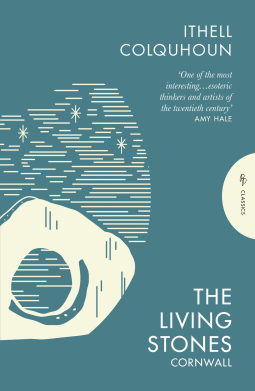
The Living Stones: Cornwall by Ithell Colquhoun

Earlier this year I enjoyed reading Ithell Colquhoun’s The Crying of the Wind, an account of the author’s travels around Ireland, so I decided to read her other travel book, The Living Stones, published two years later in 1957. This one is inspired by her visits to Cornwall in the late 1940s, where she came in search of escape from post-war London. As an artist, she wanted a suitable property to use as an occasional refuge where she could paint in peace and in 1949 she purchased Vow Cave, a small wooden studio with very basic living facilities.

Vow Cave (Colquhoun tells us that Vow is derived from vugha, the Cornish word for cave) is in the village of Lamorna on the Penwith peninsula a few miles from Penzance. Although she writes about the landscape, the surrounding countryside and some local places of interest, this book isn’t really a travelogue in the same sense as The Crying of the Wind, where the author described trips and excursions to different areas of Ireland. Instead, she explores the culture and history of Cornwall in general, with chapters devoted to separate topics, giving it almost the feel of a collection of short essays.

Lots of Cornish customs and rituals are discussed, ranging from the Gorsedh of Cornwall, or gathering of the bards, and the ‘Obby ‘Oss (hobby horse) festival in Padstow to the Furry Day celebrations which mark the arrival of spring (the name likely has nothing to do with fur and comes from the Cornish word for ‘fair’ or ‘feast’). There’s a chapter on traditional Cornish foods such as potato cakes, Cornish cream and the Cornish pasty, and another on folk medicine and witchcraft – Colquhoun has a particular interest in the occult. Some sections are fascinating, although there were others where I found my attention wandering.

Both books I’ve read by this author feel random and meandering, lacking in focus. I found that the best way to read them was in small doses, a few short chapters at a time alternating with other books, rather than straight through from beginning to end. As a pair, they’re definitely worth reading if you have any interest in Ireland or Cornwall, and I did learn a lot from them. Colquhoun has also written a novel, Goose of Hermogenes, which sounds intriguing!

Thanks to Pushkin Press Classics for providing a copy of this book for review via NetGalley.
Six Degrees of Separation: From Ghost Cities to Major Pettigrew’s Last Stand

It’s the first Saturday of the month which means it’s time for another Six Degrees of Separation, hosted by Kate of Books are my Favourite and Best. The idea is that Kate chooses a book to use as a starting point and then we have to link it to six other books of our choice to form a chain. A book doesn’t have to be connected to all of the others on the list – only to the one next to it in the chain.

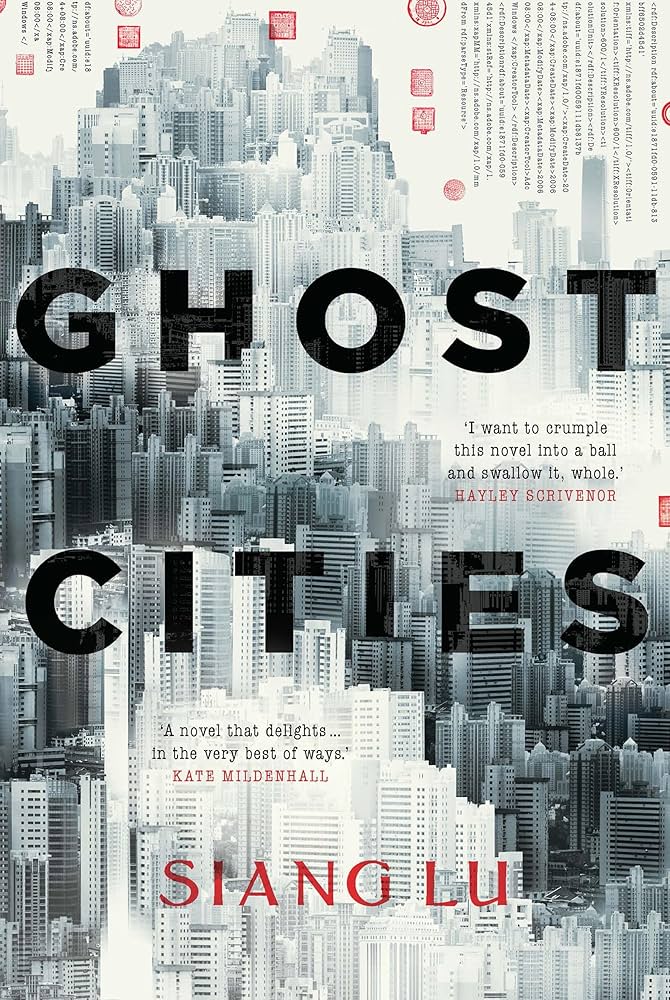
This month we’re starting with Ghost Cities by Siang Lu. It’s not a book that I’ve read, but here’s what it’s about:

Ghost Cities – inspired by the vacant, uninhabited megacities of China – follows multiple narratives, including one in which a young man named Xiang is fired from his job as a translator at Sydney’s Chinese Consulate after it is discovered he doesn’t speak a word of Chinese and has been relying entirely on Google Translate for his work.

How is his relocation to one such ghost city connected to a parallel odyssey in which an ancient Emperor creates a thousand doubles of Himself? Or where a horny mountain gains sentience? Where a chess-playing automaton hides a deadly secret? Or a tale in which every book in the known Empire is destroyed – then re-created, page by page and book by book, all in the name of love and art?

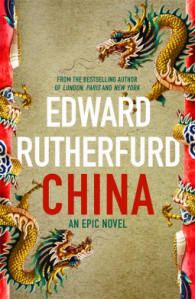
I had trouble thinking of a first link this month, so I’ve just gone for something very obvious – another novel about China! Edward Rutherfurd’s China (1) tells the story of 19th century China, covering key events such as the Opium Wars and the Boxer Rebellion through the lives of several fictional families.

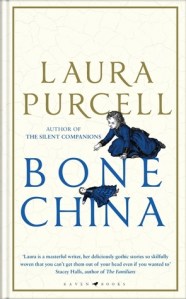
The word ‘China’ also appears in the title of Bone China by Laura Purcell (2), but this time it refers not to the country but the type of porcelain. This is a Gothic novel set in the 19th century on the coast of Cornwall where our narrator has taken a new position as nurse to Louise Pinecroft, a woman who spends her days sitting silently in a room surrounded by china cups and plates. This book was published in the US as The House of Whispers, just in case there’s any confusion!

One of the characters in Bone China is a doctor who is carrying out research into consumption (tuberculosis). The Victorian Chaise-longue (3), an unsettling novella by Marghanita Laski, features a young woman recovering from tuberculosis in 1950s London. Falling asleep on a chaise-longue in the drawing room, she wakes up to find herself in the year 1864.

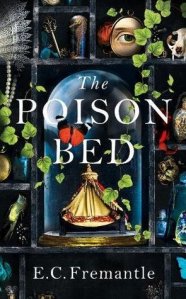
Staying with a furniture theme, my next book is The Poison Bed by Elizabeth Fremantle (4). This is a fictional account of the real-life Thomas Overbury murder case, a poisoning which took place in the early 17th century and implicated Robert Carr, a favourite of King James VI and I, and his wife, Frances Howard.

Cyanide is a type of poison, so my next link leads me to Sparkling Cyanide by Agatha Christie (5), in which a beautiful heiress is poisoned while celebrating her birthday in a restaurant. No Poirot or Miss Marple in this one, but it does feature one of Christie’s other recurring characters, Colonel Race.

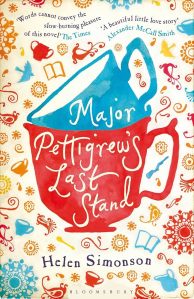
I looked for another book I’d read with a glass on the cover but struggled to find one, so I’m linking to one with teacups on the cover instead. Major Pettigrew’s Last Stand by Helen Simonson (6) is a lovely book about the relationship between a retired British Army officer and a widowed Pakistani woman.

~

And that’s my chain for September! My links included: Books about China, the word ‘China’, tuberculosis, furniture, poison and pictures of drinks.

In October we’ll be starting with I Want Everything by Dominic Amerena.

20 Books of Summer: Final Recap Questionnaire

With this year’s 20 Books of Summer challenge now over, one of our hosts – Emma of Words and Peace – has compiled a final questionnaire to help us look back at what we read during the summer months.

I’m pleased to say that I completed all 20 books for only the second time since I started participating in 2017. I think the reason for my success this year is that I only listed 14 books in advance and left the other six slots empty so I had the freedom to choose books as I went along (my only rule was that they needed to be books I’d acquired prior to January 2025).

Here’s what I managed to read:

1. Come, Tell Me How You Live by Agatha Christie
2. One, Two, Buckle My Shoe by Agatha Christie
3. Jennie by Paul Gallico
4. A Schooling in Murder by Andrew Taylor
5. The Stepdaughter by Caroline Blackwood
6. The Rush by Beth Lewis
7. These Wicked Devices by Matthew Plampin
8. Sinners by Elizabeth Fremantle
9. Strange Houses by Uketsu
10. The Spiral Staircase by Ethel Lina White
11. The Art of a Lie by Laura Shepherd-Robinson
12. Love and Other Poisons by Lesley McDowell
13. How to Lose a Lord in Ten Days by Sophie Irwin
14. The House at Devil’s Neck by Tom Mead
15. A Caribbean Mystery by Agatha Christie
16. The Lily and the Lion by Maurice Druon
17. The End of the Affair by Graham Greene
18. Fire from Heaven by Mary Renault
19. No Life for a Lady by Hannah Dolby
20. The Silent Companions by Laura Purcell

~

And here are my answers to Emma’s questionnaire.

1. Did you manage to finish all 10/15/20 books? If not, what kept you from completing the challenge?

Yes, I did (see above)!

2. Of all the books you read this summer, which one(s) was/were your favorite and why? Did you DNF any? Why?

My favourites were The Rush by Beth Lewis, Sinners by Elizabeth Fremantle, No Life for a Lady by Hannah Dolby and The Silent Companions by Laura Purcell. I didn’t DNF anything, but I usually don’t anyway.

3. Which book surprised you the most, either by being better or worse than you expected?

I wasn’t expecting Come, Tell Me How You Live to be so funny. Christie’s own personality really shines through in that book.

4. Did you notice any patterns in the genres you chose or enjoyed this summer?

Not surprisingly, most of the books I read were either historical fiction or mystery/crime. I did also manage to include a children’s book, a non-fiction book and some classics.

5. Which one had the best cover?

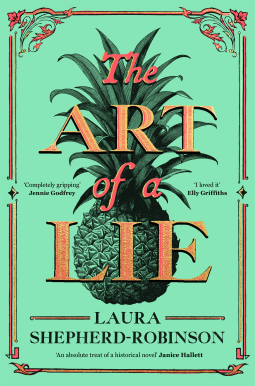
I like the cover of The Art of a Lie by Laura Shepherd-Robinson.

6. Which one was the longest? And the shortest?

The shortest was The Stepdaughter by Caroline Blackwood at 128 pages. The Lily and the Lion by Maurice Druon, at 432 pages, was the longest.

7. Did you read them mostly in print? ebook? audio?

Most of them were ebooks as they were review copies from NetGalley. The rest were print copies – I don’t tend to listen to audio.

8. Imagine you’re hosting a “20 Books of Summer” book club wrap party.
Which book would you nominate as the guest of honor, and what kind of toast or speech would you give celebrating it?

I would nominate The Rush by Beth Lewis, one of my favourite books of the summer, because it has such an interesting setting – Canada during the Gold Rush. I would invite all three main characters (Kate, Ellen and Martha) to speak to the audience about their experiences of life in such a harsh but fascinating environment.

9. Looking back at all the characters you met over the summer, which one would you want as a summer buddy for a weekend getaway, and what activity would you do together?

There weren’t actually many characters from my summer reading that I would like to spend time with! I did love Violet Hamilton from No Life for a Lady so I would join her in Hastings and we could be Lady Detectives together for the weekend.

~

Did you take part in 20 Books of Summer? How did you do?

Thanks to Emma and Annabel for hosting this year’s challenge! I’m looking forward to 2026.

Top Ten Tuesday: Books with occupations in the title

This week’s topic for Top Ten Tuesday (hosted by That Artsy Reader Girl) is “Books With Occupations in the Title (Submitted by Hopewell’s Public Library of Life)”.

There were lots of books I could have listed here, but I’ve chosen ten with different occupations in the title and have restricted myself to only using books that I’ve reviewed on my blog.

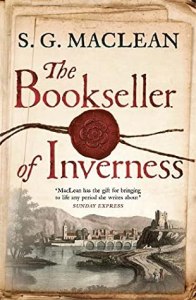
1. The Bookseller of Inverness by SG MacLean – Historical mystery set in Scotland in the aftermath of the failed 1745 Jacobite Rising.

2. The Tutor by Andrea Chapin – A fictional account of a year in the life of William Shakespeare.

3. The Glassmaker by Tracey Chevalier – This novel follows the story of a family of Murano glassmakers through several centuries.

4. The Butcher’s Hook by Janet Ellis – An unusual, unsettling novel set in Georgian London and with a protagonist more anti-heroine than heroine.

5. The Lighthouse Keeper’s Daughter by Hazel Gaynor – Historical fiction about the life of Grace Darling.

6. The Dressmaker of Khair Khana by Gayle Tzemach Lemmon – Non-fiction about a woman who starts her own dressmaking business in Taliban-ruled Afghanistan.

7. The Professor by Charlotte Brontë – Classic Victorian novel narrated by an Englishman who (like Brontë herself) becomes a teacher at a school in Brussels.

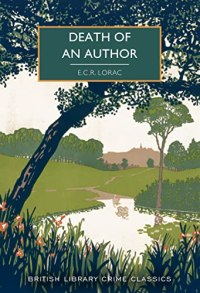
8. Death of an Author by E.C.R. Lorac – In this Golden Age crime novel from 1935, an author disappears without trace, leaving the police questioning whether he ever even existed.

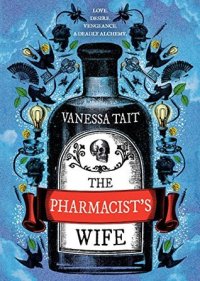
9. The Pharmacist’s Wife by Vanessa Tait – A dark historical novel set in Victorian Edinburgh.

10. The Glovemaker by Stacia Brown – A glovemaker’s assistant is accused of killing her illegitimate child in 17th century England.

~

Have you read any of these? Which other books with occupations in the title have you read?

My Commonplace Book: August 2025

A selection of quotes and pictures to represent August’s reading:

commonplace book
noun
a book into which notable extracts from other works are copied for personal use.

~

“We all wear masks,” he said, in a voice that was soft but impossible to ignore. “Every single one of us. And for different reasons. Some, to conceal. Others, to deceive. But masks are funny things. The very presence of a mask tells us there is something behind it.”

The House at Devil’s Neck by Tom Mead (2025)

~

“No, my friend, I am not drunk. I have just been to the dentist, and need not return for another six months! Is it not the most beautiful thought?”

One, Two, Buckle My Shoe by Agatha Christie (1940)

~

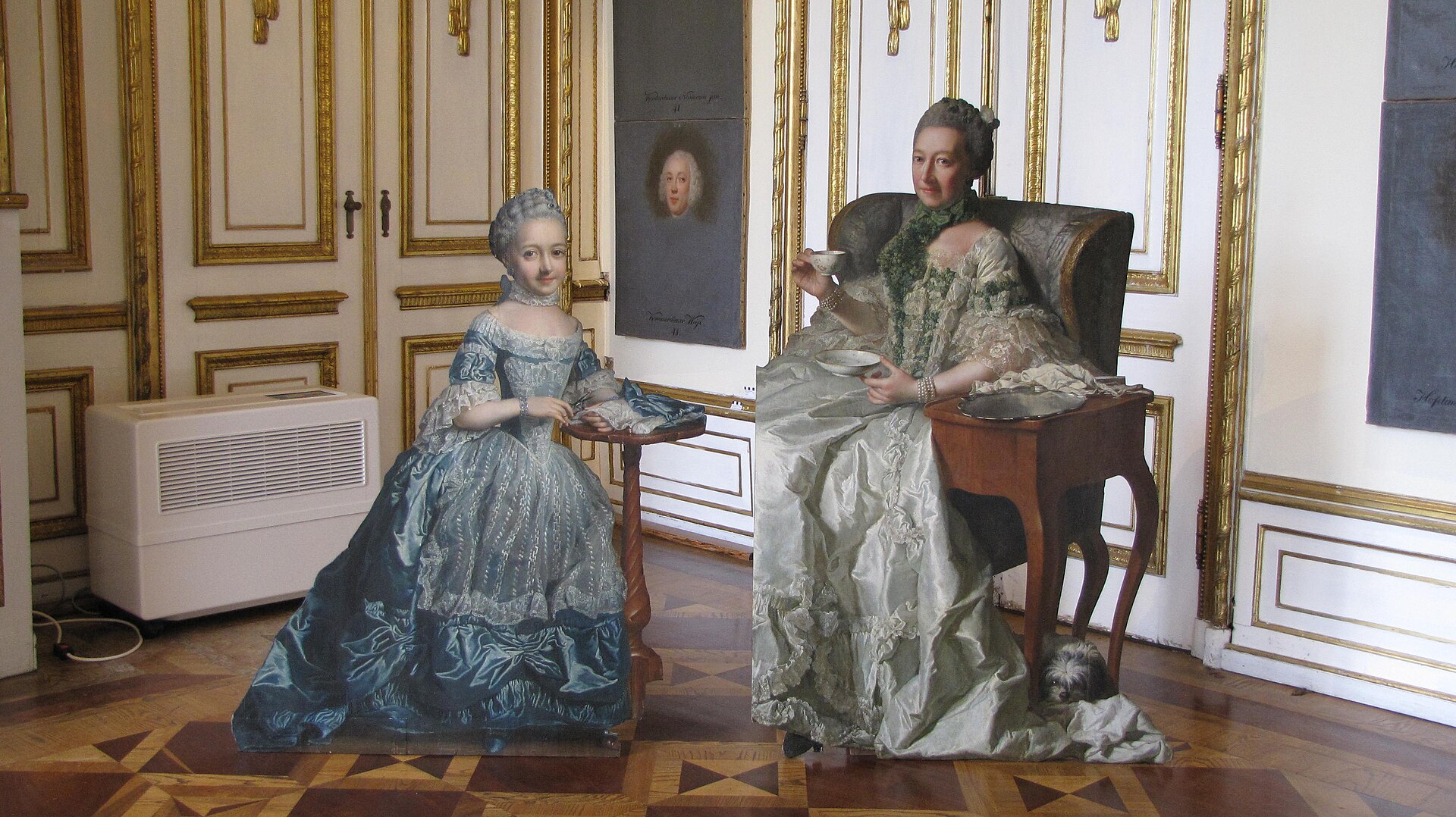
Dummy boards by Georg David Matthieu

Did evil have wants and needs? Surely not, surely that would make it too human. No longer a tug from the depths of the abyss, but something sentient that could surface in anyone.

The Silent Companions by Laura Purcell (2017)

~

Karma is a natural consequence. Badness accrues. It affects the way you live your life, how you perceive the world. When you do evil things, you see the world as petty and selfish and cruel.

Katabasis by RF Kuang (2025)

~

“My goodness, are you all one family?”

“Yes, all one family,” Henny spoke up. “I’m Henrietta, Henny for short; I’m ten. Ella’s twelve, Sarah is eight, Charlotte is six and Gertie is four.”

“A step-and-stairs family!” The librarian laughed and the tiny freckles on her pert nose seemed to laugh with her.

“That’s a good name for us,” said Ella. “Some people call us an all-of-a-kind family.”

All-of-a-Kind-Family by Sydney Taylor (1951)

~

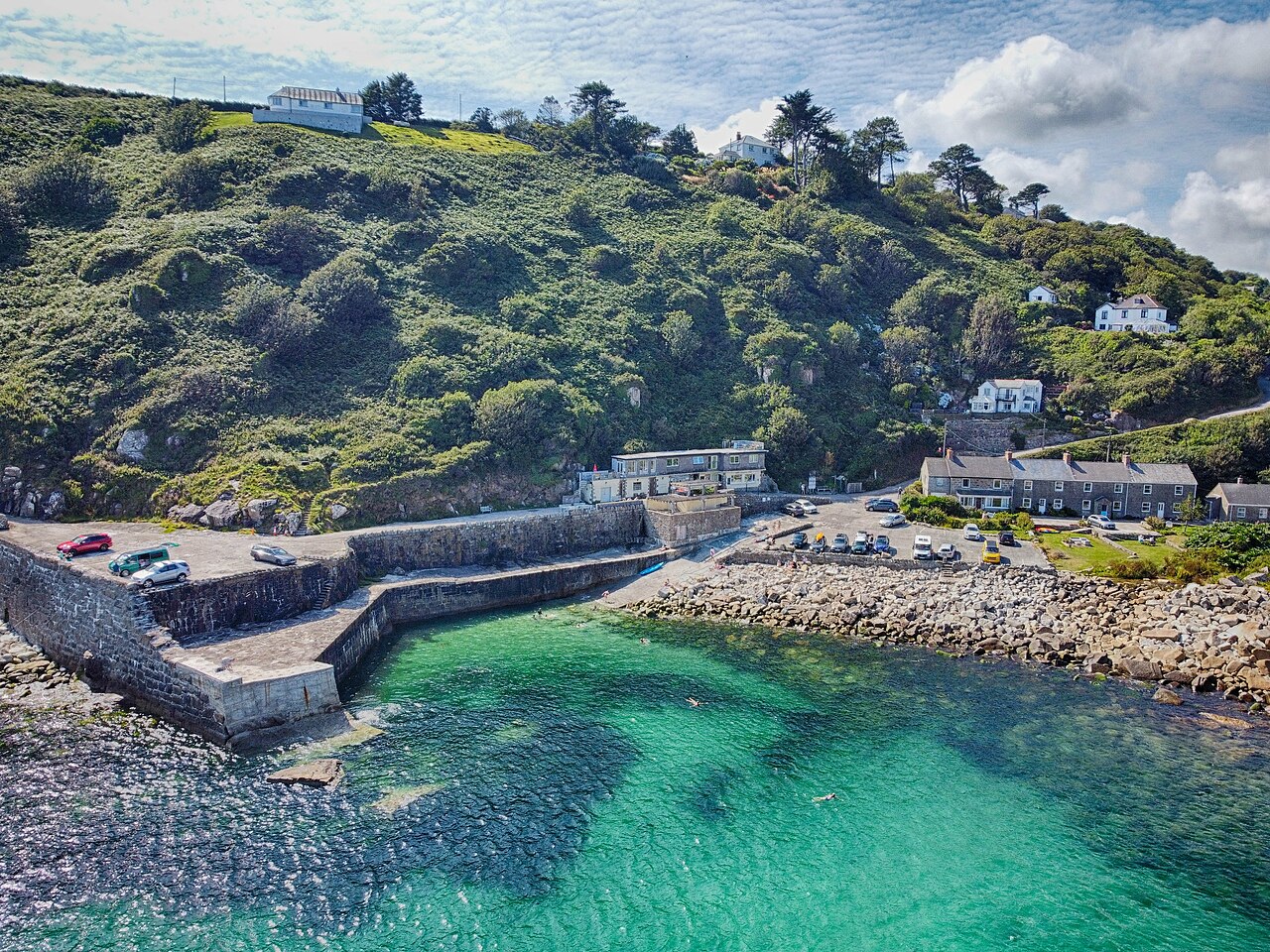
Lamorna, Cornwall

I also toyed with the idea of installing electricity, but Vow Cave was ‘four poles’ away from the nearest house, and the cost was prohibitive. Since then I have sometimes wondered whether this absence of electricity was not a blessing in disguise: does not a dwelling without it breathe more freely? Some of the tension of modern life is due, I think, to the fact that people surround themselves day and night with the pulsations of electricity in one form or other.

The Living Stones: Cornwall by Ithell Colquhoun (1957)

~

Favourite books read in August:

The Silent Companions and All-of-a-Kind Family

Authors read for the first time in August:

RF Kuang, Sydney Taylor

Places visited in my August reading:

England, US, Hell

~

Reading notes: I didn’t finish as many books as usual in August, for various reasons, but on a more positive note I completed the 20 Books of Summer challenge for only the second time in my nine years of participating. I’ll be posting a summary of the challenge next week, but for now I can say that being flexible is the key to success!

In September (and October), I’m looking forward to joining in with RIP (Readers Imbibing Peril). It’s the 20th year of RIP and it has been hosted by @perilreaders on Instagram for the last few years, but I’ve noticed plenty of book bloggers still taking part as well. I won’t be posting a list in advance, but I have plenty of dark, spooky reads lined up for the next two months!

~

How was your August? Do you have any plans for September?

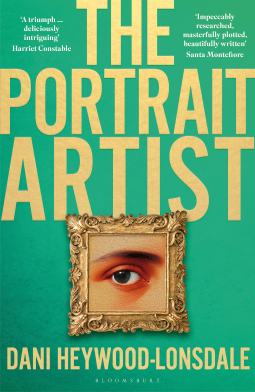
The Portrait Artist by Dani Heywood-Lonsdale

Dani Heywood-Lonsdale’s debut novel, The Portrait Artist, is an art mystery set in Victorian England with hints of the supernatural and some similarities to Oscar Wilde’s The Picture of Dorian Gray.

When a portrait of a Kunekune pig is left on the steps of the National Gallery in London one morning in 1890, it sends the art world into turmoil. Both the signature and the technique point to the artist being the mysterious Timothy Ponden-Hall, thought to have been dead for the last fifty years. Ponden-Hall, an explorer and painter, caused a sensation earlier in his career, when rumours spread that he had discovered the elixir of life during a sea voyage and was using it to bestow immortality on those who sat for his portraits. Does this new portrait mean the artist is still alive – and why has he started to paint again after so many decades of silence?

Art historian and Ponden-Hall expert Solomon Oak is brought in to investigate, but as he tries to interpret the new painting and its meaning, he makes some discoveries that cause him to question everything he thought he knew about the reclusive artist. Meanwhile Solomon’s daughter Alice has been befriended by Lou, the coachwoman, who gives her a job helping to deliver parcels. But why do their deliveries always take place under cover of darkness – and could Alice’s new job and new friend lead her to solve the mystery of Ponden-Hall before her father gets there first?

I enjoyed The Portrait Artist. My only problem with the book came towards the end, when the truth about Ponden-Hall was revealed. It wasn’t exactly a surprise – I had already at least partly guessed it – but it required a huge suspension of disbelief which was just too difficult for me to accept. Still, the story up to that point had been fascinating to follow. Solomon and Alice Oak are both characters I liked and I thought the complex relationship between them was handled well, with Alice feeling that she can never quite live up to the memory of her late sister Emma, who had been the closest to their father. Solomon, for his part, has to come to terms with Alice growing into a woman and not wanting to follow the path through life he has mapped out for her. Another interesting character is Grace, an artists’ model from a humble background who longs to be part of the world of academia and sees a possible route to that by involving herself in the Ponden-Hall mystery.

Heywood-Lonsdale explores a lot of different issues throughout the novel, including the idea of the dead being immortalised through art, both literally and figuratively; how adding to our knowledge of the artist and the sitter can change the way we view and appreciate a painting; and the difficulties of being of mixed race heritage in Victorian society. The supernatural element involving the question of whether youth can be preserved in a painting is mainly there to explain the level of mystique that has formed around Timothy Ponden-Hall and we can choose how much we want to believe.

Apart from my problems with the ending, I think this is an impressive first novel and I hope Dani Heywood-Lonsdale will write more.

Thanks to Bloomsbury Publishing for providing a copy of this book for review via NetGalley.