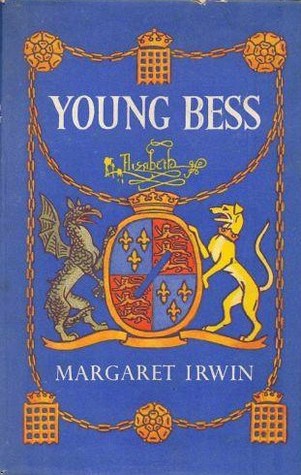
Young Bess by Margaret Irwin – #1944Club

Since reading Margaret Irwin’s 1925 fantasy novel, These Mortals, a few years ago, I have wanted to read one of the historical novels for which she was better known – and when I discovered that Young Bess was published in 1944, I thought it would be a good choice for the 1944 Club Simon and Karen are hosting this week.

The ‘Bess’ of the title refers to the young Elizabeth I and this book (the first in a trilogy) covers her life between the years 1545 and 1553. Having read about Elizabeth several times before, I hadn’t expected Young Bess to offer anything new – and it didn’t, really; however, it was a pleasure to read a good old-fashioned historical fiction novel with elegant prose and strong characterisation, no present tense, no experimental writing and no multiple time periods! It’s a book which completely immerses the reader in the Tudor period and the lives of Elizabeth and the historical figures who surround her, so that you reach the end feeling that you’ve read something fresh and worthwhile after all. I loved it and will definitely be going on to read the other two books in the trilogy.

The novel opens in the final years of Henry VIII’s reign; the King, now obese and in poor health, is as dangerous and unpredictable as ever, and his twelve-year-old daughter, Elizabeth – or Bess as I will call her for the remainder of this post – is already learning to navigate her way through the layers of political intrigue, betrayal and treachery that are part of everyday life for a Tudor. With the fate of her mother, Anne Boleyn, always at the back of her mind, Bess knows that nobody is safe at court and that fortunes can be made or lost in an instant.

One of the few people Bess does love and trust is her stepmother, Catherine Parr, and she goes to live with her following Henry’s death in 1547. But then Catherine marries Tom Seymour, and tensions in the household start to rise when what seem at first to be innocent games between Bess and Tom begin to develop into something more. As the brother of Henry’s third wife, Jane Seymour, and therefore the uncle of the newly crowned Edward VI, Tom’s behaviour puts him in a precarious position at court. He lacks the power of his elder brother, Ned Seymour, who has been named Protector until the young king comes of age, but at the same time he is too powerful for his actions to be ignored. If he and Bess continue to pursue their relationship there could be tragic consequences.

All of this will be very familiar to anyone who has read Elizabeth’s story before; as I’ve said, Margaret Irwin doesn’t really offer anything different or controversial (at least nothing that hasn’t been suggested by other authors as well). Where this novel really shines is in the characterisation – although Bess is the main focus of the story, all of the other characters feel fully developed too and because the book is relatively long for the short period of history that it covers, there’s enough time for the author to go into the necessary amount of depth. I particularly enjoyed the insights we are given into the thoughts of Henry VIII in the days before his death, the transformation of Edward VI from lonely, vulnerable boy to ruthless, calculating Tudor, and the appearance at court of the Seymours’ other brother, Henry, who is far more shrewd and observant than his unsophisticated exterior suggests.

Finally, reading this with the 1944 Club in mind, I was interested to see what Tom Seymour had to say to his brother Ned about the German mercenaries he had brought in to fight in Scotland:

“Their Emperor is not the Emperor of Germany, he’s the German Emperor – of the World…And it’s this Master Race of mechanic monsters that you’re bringing into this island to fight your battles for you, against fellows who speak the same language as yourselves – and to do the dirty work you can’t get Englishmen to do.”
I suppose the war was never far from anyone’s thoughts in the 1940s, even when writing about the 16th century!

I am now looking forward to reading the other two books, Elizabeth, Captive Princess and Elizabeth and the Prince of Spain. Has anyone seen the 1953 film version of Young Bess, starring Jean Simmons?
The Classics Club Gothic Book Tag

I don’t often take part in book tags, but I couldn’t resist this Gothic-themed one hosted by The Classics Club.

If you want to join in too, here are the rules:

* Answer the 13 questions with classic books in mind.
* How you define ‘classic’ is up to you.
* How you define ‘scary’ is up to you (it could be content, size of book, genre etc).
* If you’re feeling social, visit other blogs and leave a comment or share your thoughts on twitter, fb, instagram or goodreads using #CCgothicbooktag
* Join in if you dare.

1. Which classic book has scared you the most?

The Complete Tales and Poems of Edgar Allan Poe. Not all of his tales and poems are scary ones, but there are definitely some very eerie, atmospheric ones in that collection.

2. Scariest moment in a book?

The scene from Ray Bradbury’s Something Wicked This Way Comes where the blind Dust Witch hovers over the rooftops of Green Town in a hot air balloon.

3. Classic villain that you love to hate?

I thought Madame de la Rougierre, the governess from Uncle Silas by Sheridan Le Fanu was a truly horrible villain!

4. Creepiest setting in a book?

Hill House in The Haunting of Hill House by Shirley Jackson. Haunted houses are always the settings I find the creepiest!

5. Best scary cover ever?

6. Book you’re too scared to read?

Are Stephen King’s books considered classics now? I think they probably are. If so, I’m scared to re-read my copy of The Shining, although I loved it when I was about fifteen!

7. Spookiest creature in a book?

I’ll have to say the triffids in The Day of the Triffids by John Wyndham. The thought of seven-foot tall plants walking the streets and lashing out with their long, stinging arms sounds terrifying to me!

8. Classic book that haunts you to this day?

I first read Rebecca by Daphne du Maurier as a teenager and when I re-read it last year I still found the atmosphere, the sense of place, the characters and the beautiful writing as haunting as ever.

9. Favourite cliffhanger or unexpected twist?

The moment in Agatha Christie’s And Then There Were None when the solution to the mystery is finally revealed. Still my favourite of all the Christie novels I’ve read.

10. Classic book you really, really disliked?

The Catcher in the Rye by J.D. Salinger. Maybe I was just too old for it by the time I read it – I think I was probably past the age when I might have been able to appreciate it.

11. Character death that disturbed/upset you the most?

One death scene that I found particularly disturbing occurs in Thomas Hardy’s Jude the Obscure. I don’t want to spoil anything for future readers, but anyone who has already read Jude will know exactly what I’m talking about!

12. List your top 5 Gothic/scary/horror classic reads.

I’ve already mentioned some of my top reads in my answers to the previous questions above, so I’m going to choose a different five to list here:

The Monk by Matthew Lewis
The Woman in White by Wilkie Collins
Frankenstein by Mary Shelley
Wuthering Heights by Emily Brontë
The Italian by Ann Radcliffe

13. Share your scariest/creepiest quote, poem or meme.

Linking back to my answer to Question 1, here is the beginning of Edgar Allan Poe’s Ulalume:

“The skies they were ashen and sober;
The leaves they were crisped and sere –
The leaves they were withering and sere;
It was night in the lonesome October
Of my most immemorial year:
It was hard by the dim lake of Auber,
In the misty mid region of Weir –
It was down by the dank tarn of Auber,
In the ghoul-haunted woodland of Weir.”

~

What are your favourite spooky or Gothic classics?

Earth and High Heaven by Gwethalyn Graham – #1944Club

This week, Karen of Kaggsy’s Bookish Ramblings and Simon of Stuck in a Book are hosting another of their clubs for which bloggers read and write about books published in one particular year. This time the year is 1944 – an interesting one, as not only are there lots of intriguing books to choose from, but it’s also the first wartime year to be featured. I had a few options on my TBR and decided to start with this one, Gwethalyn Graham’s Earth and High Heaven, which has been reissued by Persephone.

The novel is set in Canada during World War II and, through the story of Erica Drake and Marc Reiser, explores some of the prejudices, inequalities and divisions which existed at that time. Erica is a twenty-eight-year-old journalist working for the Montreal Post, while Marc is a lawyer in his early thirties. The two are immediately drawn to each other when they meet at a cocktail party – it’s literally love at first sight and Erica is sure her parents will like him too. But when she attempts to introduce him to her father, Charles, she is horrified and embarrassed when Charles refuses to even look at Marc, let alone speak to him.

Erica struggles to understand her father’s reaction, but Marc is not at all surprised. The Reisers are a Jewish family whereas the Drakes are English-Canadians and these two groups – along with another major group in Montreal society, the French-Canadians – simply don’t mix with each other. However, Erica’s brother has recently married a French-Canadian and despite Charles Drake’s initial disapproval, he has accepted Tony and Madeleine’s relationship. Erica is sure that, in time, he will come to accept Marc too. To her disappointment and frustration, though, her parents don’t want to get to know Marc and aren’t interested in what he is like as a person – all that matters is that he is a Jew. Charles explains that he doesn’t want “a son-in-law who’ll be an embarrassment to our friends, a son-in-law who can’t be put up at my club and who can’t go with us to places where we’ve gone all our lives”.

Despite having grown up in Montreal, Erica has never given much thought to the level of division in society as it’s not something which has ever affected her directly. Marc, on the other hand, is under no illusions; he has been encountering attitudes like Charles Drake’s all his life and he knows exactly what he and Erica can expect if they get married. He tries to make Erica see what their lives would be like, but she is determined to stand by him no matter what.

Marc is very likeable from the beginning, which makes Charles’ attitude towards him all the more upsetting, while Erica is also easy to like and admire. Although we do see things occasionally from Marc’s point of view, it is through Erica’s eyes that most of the story unfolds and Erica who has the most to learn. Her relationship with her father is as much a part of the story as her relationship with Marc; she has always considered him a friend as well as a father and so it comes as a shock to her to find that he is so determined to oppose her wishes. At the same time, she becomes uncomfortably aware that she herself has prejudices of her own.

Earth and High Heaven is a fascinating novel; as so much of the story consists of various characters discussing their views on racism, prejudice and intolerance, it could easily have felt like nothing more than a polemic, but that never happens, which I think is largely due to the two main characters being so appealing and sympathetic. I cared about both of them from their first meeting in the opening chapter and I felt that the issues explored throughout the story arose naturally from the situations in which they found themselves.

This was a great read for the 1944 Club – and one which is still important and relevant today. I loved following Marc and Erica through all their ordeals, hoping and wondering whether they would find a way to be together in the end.

~

I should have another 1944 book to tell you about later in the week, but for now here are a few reviews I have previously posted of books published in that year:

Friday’s Child by Georgette Heyer
Cluny Brown by Margery Sharp
Dragonwyck by Anya Seton
Towards Zero by Agatha Christie
Good Evening, Mrs Craven: The Wartime Stories of Mollie Panter-Downes

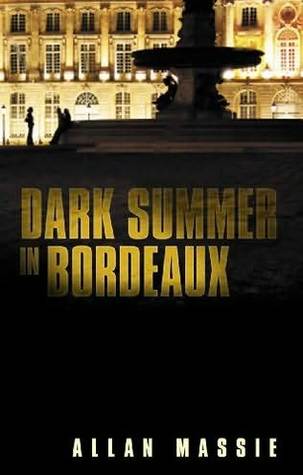
Dark Summer in Bordeaux by Allan Massie

This is the second in Allan Massie’s four-book crime series set in occupied France during the Second World War. My review is as spoiler-free as I could make it, so it should be safe to read on even if you’re new to the series, but I would definitely recommend beginning with the first book, Death in Bordeaux, as there are lots of recurring characters and some storylines which continue from book to book.

In Dark Summer in Bordeaux, we re-join Superintendent Jean Lannes of the Bordeaux Police as he is called out to deal with another crime – this time involving the murder of an elderly man, whose body has been found in a city park. As Lannes learns more about the man and how he died, some political implications begin to emerge, as well as some surprising links to the murders committed in the previous novel. Lannes comes under pressure from his superiors who want the investigations brought to a close as quickly as possible, but he is not ready to drop the case just yet – not until he finds out what is really going on here.

Investigating a murder is never going to be easy or pleasant at the best of times, but it is particularly challenging for Lannes because of the political situation in France, where the demands and concerns of the Vichy secret services, the German occupiers and the French Resistance all have to be taken into consideration. As a decent, principled person Lannes often finds himself torn between his conscience telling him to do what he knows is right and see justice done, and his common sense telling him to do as he is told and keep his family safe.

As if the stress of his job was not enough, Lannes is also worried about all three of his children, for different reasons. His eldest son, Dominique, is making plans to go and work for the Vichy regime, while Alain, whose views are rather different, wants to join Charles de Gaulle and the Free French. Meanwhile, his daughter, Clothilde, announces that she is in love with the young German officer who is stationed in their apartment block. Lannes is not very happy about any of this, but only because he is looking ahead to a time when (he hopes) the war will be over and a wrong decision taken now could have disastrous consequences. His wife, Marguerite, has her own opinions and this is causing tension in her marriage to Lannes.

As well as Lannes and his family, we also catch up with other characters from the previous book, including one of my favourite characters – Leon, the nephew of Lannes’ friend Miriam. Leon is in a particularly interesting – and dangerous – position in Vichy France, being both Jewish and gay, and this makes him a target of blackmailers and others who want to take advantage of him for their own ends. It seems that, in Bordeaux, the war is bringing out the best in some people and the worst in others. It’s a fascinating setting, even more so because I have read so little about life in France during the Occupation.

I haven’t said much about the mystery aspect of this novel, but that’s because I found it almost secondary to the setting and the characters. The murder of the man in the park is important and ties all the other threads of the story together, but I was much less interested in finding out who killed him than I was in reading about Leon’s ordeals or Alain’s support for the Resistance. I found this a more enjoyable book than the first one, probably because I already knew the characters and was invested in what happened to them. I’m looking forward to continuing with the third book, Cold Winter in Bordeaux.

I am counting this book towards the R.I.P. XIII challenge (category: mystery).

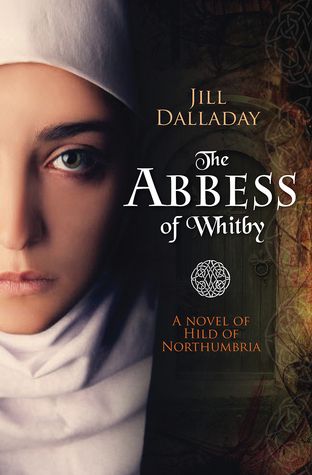
The Abbess of Whitby by Jill Dalladay

Four years ago I read Hild by Nicola Griffith, a beautifully written novel which told the story of Hild (or St Hilda, as she is also known). It was – and still is, I hope – intended to be the first in a trilogy, but as the other books haven’t appeared yet, I was intrigued when I came across The Abbess of Whitby, another novel about Hild. It’s always good to read different interpretations of the same historical figures and events.

Set in 7th century Britain, The Abbess of Whitby begins with the young Hild at the Northumbrian court of King Edwin, her great-uncle. Hild has just been chosen to be a handmaiden of Eostre, the pagan goddess of fertility, but when she, along with Edwin and his other courtiers, is baptised into the Christian faith, this marks the beginning of a transition from the old religion and way of life to the new.

Most of the factual information we have regarding Hild comes from the Venerable Bede’s writings in 731, the Ecclesiastical History of the English People. He tells us nothing about Hild’s life between the ages of thirteen and thirty-three, so Jill Dalladay has imagined a story for her based on what we do know about the kingdom of Northumbria at that time and how a woman of her status and background may have lived. She creates a marriage for Hild with the fictional Cerdic of Din Edin (Edinburgh) – a marriage arranged for political reasons, as was common in that period.

There is no love between Hild and her husband (at least not at first) and she is unhappy about leaving her home and her friends behind, but she doesn’t have time to feel sorry for herself because this is an eventful time and there is always something happening: a war, a raid, or an outbreak of plague. As the years go by, Hild also grows more curious about the Christian religion, especially when she meets and gets to know the monk Aidan. Eventually, as we know from Bede, she becomes the abbess of Whitby Abbey, where the Synod of Whitby is held in 664 at which the method for calculating the date of Easter is established.

This was an interesting read and a good portrayal of 7th century life with all of its hardships and dangers. However, I didn’t find it a particularly gripping novel and although it’s not badly written, it lacks both the beautiful lyrical prose of Nicola Griffith’s Hild and the epic high fantasy feel of Edoardo Albert’s Northumbrian Thrones books. Still, there are not a lot of novels about women from such early periods of history and it was good to learn more about Hild and her world (even if not all of it is based on fact) to add to my existing knowledge.

Have you read any other books about St Hilda of Whitby – or can you recommend anything else set in the 7th century?

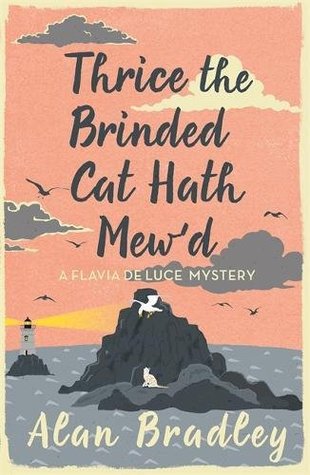
Thrice the Brinded Cat Hath Mew’d by Alan Bradley

In this, the eighth book in the Flavia de Luce mystery series, Flavia is back in England following her adventures at Miss Bodycote’s Female Academy in Canada, which are described in the previous novel As Chimney Sweepers Come to Dust. If you haven’t yet met Flavia I would recommend starting at the beginning with The Sweetness at the Bottom of the Pie; it’s not essential, as this one does stand alone as a murder mystery, but I think you’ll get more out of it if you already know Flavia and understand her family background.

At the beginning of Thrice the Brinded Cat Hath Mew’d (Alan Bradley’s books always have great titles), twelve-year-old Flavia returns to Buckshaw, the de Luce ancestral home, hoping for a warm welcome. Instead, the household feels strangely subdued and quiet. The reason for this becomes clear when Flavia learns that her father is seriously ill in hospital. Desperate to go and see him immediately, she is disappointed to be told that Father needs to rest and her visit will have to wait until the next day. The thought of staying in the house with her two unpleasant sisters Feely and Daffy and her annoying little cousin Undine is unbearable, so Flavia hops on to Gladys, her trusty bicycle, and goes out for a ride.

Calling at the home of her friend, the vicar’s wife, Flavia agrees to take a message to Roger Sambridge, an elderly woodcarver. Finding Roger’s door unlocked, she enters the house – only to discover the body of the woodcarver hanging upside down behind the bedroom door. Apart from a cat, there’s no sign that anyone else has been inside the room. It seems that Flavia has stumbled upon another mystery to solve…

This book is definitely an improvement on the previous one; I hadn’t really liked Flavia being taken out of her usual environment, so I was pleased to have her back at Buckshaw, riding Gladys and conducting experiments in her beloved chemistry laboratory. I was disappointed, though, that we didn’t see her interacting more with the other members of the de Luce household. Before she left for school in Canada at the end of the sixth book, there seemed to be hints that her relationships with Feely and Daffy (Ophelia and Daphne, in case you’re wondering) could be about to turn a corner, but in this book they barely speak to each other. I was also surprised that the Nide, the secret society which played a part in the plots of the last two novels, was only referred to once or twice – not that I’m complaining as I wasn’t very keen on that particular plot development anyway.

Although Flavia has only aged by a year or two since the beginning of the series, she does feel more mature now and is more daring in the methods of investigation she chooses to use. However, she is still only twelve and I found it unconvincing that she would really have been able to do some of the things she does in the novel (such as posing as a biographer in a meeting with a publisher). On the other hand, Flavia has always been unusual for her age, which is part of the charm of these books. I did enjoy watching her solve the crime and although I guessed one or two of the twists, I didn’t guess everything.

This is, I think, the second Flavia novel to be set at Christmas, but unlike the other one (I Am Half-Sick of Shadows), it doesn’t have a very festive atmosphere – which is understandable, with Father so ill in hospital. The last page of the book wasn’t really what I was expecting and I am now looking forward to reading the next one, The Grave’s a Fine and Private Place, to see what Alan Bradley has in store next for Flavia and her family.

I am counting this book towards the R.I.P. XIII challenge (category: mystery)

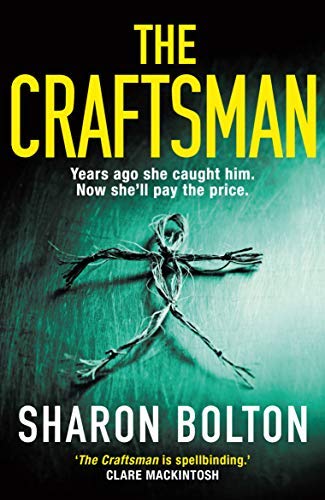
The Craftsman by Sharon Bolton

I love Sharon Bolton’s books; I don’t read contemporary crime very often these days, but she is an author I always look forward to reading. Her latest novel, The Craftsman, marks a move to a different publisher and is apparently the first in a trilogy.

The Craftsman opens in 1999 with Florence Lovelady, an Assistant Commissioner of Police, attending the funeral of Larry Glassbrook in the Lancashire town of Sabden. Larry has spent the last thirty years in prison – and it was Florence who helped to put him there. His crime? The murder of three teenagers, all buried alive in the graveyards of Sabden. After the funeral, Florence visits Larry’s house where she had been a lodger at the time of the crimes, and here she finds something which makes her begin to question what really happened all those years ago.

About half of the novel is set in 1969, taking us through the events leading up to the murders and the police investigation which follows. As a young female police constable, Florence is the target of prejudice and bullying – and her suggestions that witchcraft could be involved in the murders make her even less popular. But high above Sabden looms Pendle Hill, a place associated with witchcraft since the Pendle Witch Trials of the 17th century. Florence is sure they are dealing with no ordinary crime and no ordinary criminal…but how can she make her colleagues take her theories seriously?

Sharon Bolton’s novels are always dark and eerie, but this one even more so than usual. After all, what can be more terrifying than being buried alive? The setting – an area steeped in superstition and with a history of magic and witchcraft – adds to the atmosphere; it’s more than just a backdrop because a coven of witches and even Pendle Hill itself eventually begin to play an important role in the story.

I loved the way the novel was split between the 1960s and 1990s, showing the contrast in attitudes between the two. In 1969, Florence is a young woman fresh from university doing what many consider to be ‘a man’s job’. The men she works with belittle her achievements constantly, try to give her the less dangerous tasks to carry out, and resent her for thinking of things they hadn’t thought of themselves. And it’s not just the men – Florence observes that some of the worst sexism she encounters actually comes from other women. Florence is also a southerner, so even when she’s not at work, she still feels like an outsider amongst the people of Sabden, most of whom were born and bred in the North West of England. Following Florence’s ordeals as she tries to win the trust of her neighbours and the respect of her fellow police officers interested me almost as much as the mystery itself.

And there is a mystery to be solved here, although it doesn’t seem that way at first. We are told in the very first chapter that it was Larry Glassbrook who was found guilty of the murders, but even knowing that, there are still plenty of twists and turns to the plot and plenty of tension, building and building as we move towards the end of the book. The ending, when it comes is…unexpected, to say the least, and probably something readers will either love or hate. I would have preferred something more conventional – and it does make me wonder what direction things are going to take in the second book in the trilogy. Apart from that, though, I really enjoyed The Craftsman and will look forward to meeting Florence Lovelady again.

This is my sixth book read for the R.I.P. XIII challenge (category: mystery/horror).