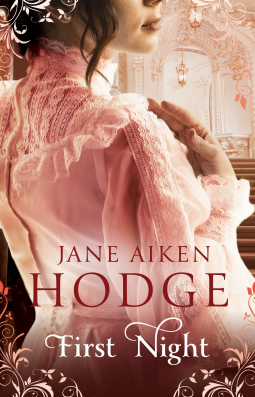
First Night by Jane Aiken Hodge

I enjoyed the three Jane Aiken Hodge books I’ve read previously – Marry in Haste, Strangers in Company and Watch the Wall, My Darling – so I thought I would try another one. First Night was originally published in 1989, but has been recently reissued by Agora Books.

The story begins in 1802 in the fictional Central European principality of Lissenberg. Lady Cristabel Sallis, the teenage daughter of a British duke and politician, and Prince Maximilian, heir to the principality, are performing in a children’s performance of Orpheus and Eurydice to mark the opening of the new Lissenberg Royal Opera House. Cristabel persuades Max to switch parts with her so that she can sing the male lead, revealing her identity at the end to rapturous applause from the audience. Not everyone is so impressed, though – her father is outraged and sends Cristabel home in disgrace.

Twenty-one-year-old American heiress Martha Ann Peabody hears about Cristabel’s escapades and is intrigued. She has been longing for adventure and the chance to make an independent life for herself, so she seeks out Cristabel in England and offers to help her launch a career in opera despite her father’s opposition. With Martha’s money and Cristabel’s talent they are the perfect team and, chaperoned by Cristabel’s Aunt Helen, they make their way to Paris, then Venice, before eventually ending up back in Lissenberg again.

Opera continues to play a big part in the plot of First Night as Cristabel pursues her passion for singing and the three women meet an assortment of composers, musicians and performers, but as the novel progresses the political situation in Lissenberg becomes more and more important. I wish the author had included an author’s note at the end of the book because I would have liked to have known more about her portrayal of Lissenberg and whether she had a real place in mind. It certainly sounds like an oppressive and dangerous place to live: an absolute monarchy under the control of the tyrant Prince Gustav who stops at nothing, including murder, to get what he wants. On the outside, there’s Napoleon Bonaparte, rapidly increasing in power – and Prince Gustav must decide whether to yield to him or try to defy him.

The setting was fascinating, but I can’t really say the same for the characters. I did love Martha Peabody, who is both courageous and kind-hearted and tries to help the people of Lissenberg in any small way she can, but Cristabel was a complete enigma to me. I felt that I never understood how she was really thinking or feeling and this made her come across as a strangely shallow character considering that at the beginning of the book it seemed as though she was going to be the heroine. Based on the first chapter I had also expected a romance between Cristabel and Prince Maximilian, especially when they meet again on Cristabel’s return to Lissenberg, but because Cristabel’s emotions are kept at such a distance from the reader, I wasn’t sure how she truly felt about him or what the nature of their relationship really was.

Unlike the other three books I’ve read by Jane Aiken Hodge, which could be neatly labelled as historical romance, romantic suspense and gothic novel respectively, this one is much more difficult to classify. I certainly wouldn’t describe it as a romance, although the cover might suggest otherwise. I found it difficult to get into and confusing at times, but I enjoyed the last few chapters which were packed with surprises, political intrigue and the revelation of secrets.

This book appears to be the first in a trilogy, followed by Leading Lady and Last Act; I don’t have any plans to look for the other two books at the moment, but I would still like to read Red Sky at Night, one of her earlier novels which I already have on my shelf.

Six Degrees of Separation: From The Outsiders to Cat Among the Pigeons

It’s the first Saturday of the month which means it’s time for another Six Degrees of Separation, hosted by Kate of Books are my Favourite and Best. The idea is that Kate chooses a book to use as a starting point and then we have to link it to six other books of our choice to form a chain. A book doesn’t have to be connected to all of the others on the list – only to the one next to it in the chain.

The first book this month is The Outsiders by S. E. Hinton, As usual this is a book that I haven’t read and know almost nothing about. I have discovered that Hinton wrote the novel as a teenager and was only eighteen when it was published in 1967.

Another author who wrote her first novel as a teenager was Marjorie Bowen – sixteen at the time of writing The Viper of Milan, although the book didn’t find a publisher for a few more years because it was considered too violent for such a young woman to have written. Graham Greene described it as one of the books which influenced his own writing career, so I did try to use that fact as my next link, but found it too difficult as I have never actually read anything by Greene.

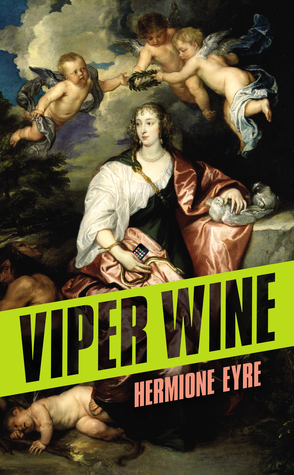
Instead, I am going to link to another book with ‘Viper’ in the title: Viper Wine by Hermione Eyre, a novel set at the court of Charles I. I haven’t read it yet, but hope to read it soon for my Walter Scott Prize Project (it was shortlisted for the prize in 2015). Reading the reviews, I’m not sure whether it will really be my sort of book, but I’m looking forward to trying it.

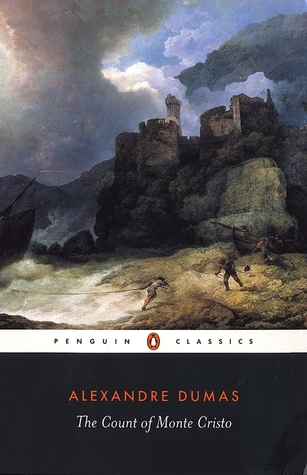
Seeing the name Hermione always reminds me of Harry Potter. That would be too obvious, though, so I tried to think of another book which features a character with that name and came up with Hermione Danglars, the wife of one of the villains in The Count of Monte Cristo by Alexandre Dumas. Unfortunately, on checking my copy of the book I discovered that Madame Danglars is actually Hermine, not Hermione – but I think that’s close enough and, anyway, The Count is one of my favourite books of all time, so I really want to include it in the chain!

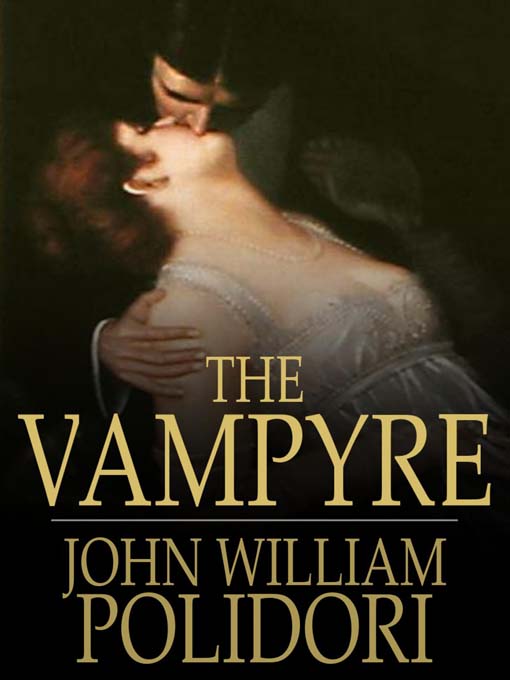
My next link is another tenuous one, but because it’s October and Halloween is on its way I think it’s quite appropriate. In The Count of Monte Cristo, the main character, Edmond Dantès, is referred to several times as ‘Lord Ruthven’, because of the paleness of his skin. Lord Ruthven is the vampire in John Polidori’s 1819 story, The Vampyre, one of the earliest and most influential vampire stories in English literature.

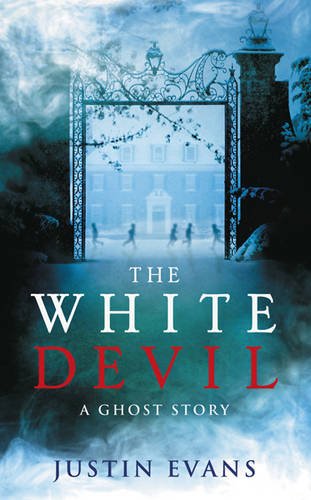
Polidori was a friend of Lord Byron’s and The Vampyre was actually inspired by Byron’s own attempt at writing a vampire novel (which remained unfinished and has become known as Fragment of a Novel). I have read a few books in which Byron features as a character (Passion by Jude Morgan and Glorious Apollo by E Barrington come to mind) but the one I’m going to use in my chain is The White Devil by Justin Evans.

The White Devil is a ghost story set at the British public school, Harrow, where a new boy bearing a strange resemblance to Byron has just arrived. Another novel I enjoyed which is set in a school, but with no ghosts this time, is Cat Among the Pigeons by Agatha Christie. It’s a Poirot mystery, but Poirot only appears towards the end – it was the school setting which made this book so much fun to read.

And that’s my chain for October! Have you read any of these books?

Next month we will be starting with Vanity Fair by William Makepeace Thackeray – finally, a book that I’ve actually read!

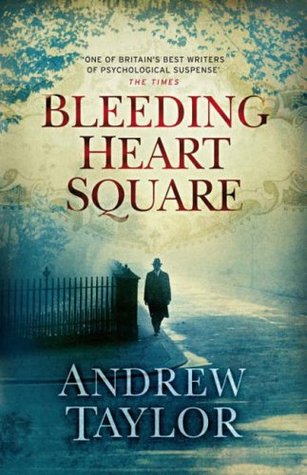
Bleeding Heart Square by Andrew Taylor

Andrew Taylor is one of my favourite authors of historical mysteries and after reading his latest one, The Fire Court, earlier this year, I remembered that I still had Bleeding Heart Square to read.

The novel opens in London in 1934 with Lydia Langstone, stepdaughter of the wealthy Lord Cassington, walking out on her violent and brutal husband. Armed with her copy of Virginia Woolf’s A Room of One’s Own, Lydia heads straight for Bleeding Heart Square, home to her father, Captain Ingleby-Lewis. The Captain isn’t entirely respectable and neither is the address, but Lydia doesn’t care – she just needs somewhere to stay until she can build a new, independent life for herself.

Another new resident of Bleeding Heart Square is Rory Wentwood, a young man who has recently returned from India to find that his girlfriend, Fenella, is no longer interested in marrying him. Rory still cares about Fenella, though, and when he hears about the disappearance of her aunt, Philippa Penhow, several years earlier, he decides to uncover the truth. The house at Bleeding Heart Square had belonged to Miss Penhow until she signed it over to the current owner, Joseph Serridge, before supposedly going to live in America. Rory has his doubts and has taken a room in the house so that he can investigate further.

When a number of foul-smelling parcels addressed to Mr Serridge begin to arrive at Bleeding Heart Square, the residents are both disgusted and intrigued. The packages contain rotten hearts neatly wrapped in brown paper and are obviously intended as a message to Mr Serridge – but who is sending them and why? What really happened to Philippa Penhow? And why is a policeman watching the house? Lydia teams up with Rory to try to find the answers, while doing her best to avoid her abusive husband.

Bleeding Heart Square is a mystery novel, but it is also a fascinating portrayal of life in 1930s London, with a particular focus on the rise of the fascism movement in Britain. One of the most memorable scenes in the book involves a meeting of the British Union of Fascists which descends into chaos when a few brave voices dare to question the party’s policies and are forcibly removed by Oswald Mosley’s black-shirted supporters. I found this aspect of the book interesting because of course with World War II on the horizon, fascism would soon become forever associated with Hitler and Mussolini and not something decent people would want to be part of – but here we see respectable people taking Mosley’s views seriously and considering giving him their support. It’s frightening to think of how different things could have been, and also still frighteningly relevant today.

Despite the 1930s setting, however, I thought the plot and the characters seemed much more suited to the Victorian period – there was a definite Dickens influence and in fact Bleeding Heart Yard appears in Little Dorrit. If you removed the fascism storyline, the rest of the novel could easily have been set in the 19th century; I was taken by surprise every time somebody got into a car as I felt it should have been a horse and carriage!

I liked both Lydia and Rory and found their personal stories so interesting that the central mystery felt almost secondary – although I was intrigued from the start by the brief diary entries and the comments by an unknown narrator that open every chapter. What will we learn from the diary and who is the narrator talking to? The ending of the book, in which the truth is revealed, was unexpected, but maybe there were clues from the beginning if I had been paying more attention!

Bleeding Heart Square isn’t my favourite of Andrew Taylor’s books – that would be The American Boy – but I did enjoy it and now that I’ve read all of his historical mysteries I’m wondering which of his other books I might like. Any recommendations are welcome!

This book counts towards the R.I.P. XIII challenge (category: mystery).
I am also counting it towards the What’s In a Name? challenge – a book with a shape in the title.

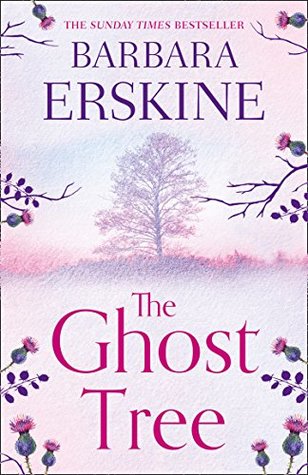
The Ghost Tree by Barbara Erskine

I’m finding that I usually like the sound of Barbara Erskine’s books much more than I like the books themselves! I thought Sleeper’s Castle was an enjoyable read, but I’ve had very mixed feelings about the others that I’ve tried, even Lady of Hay, which I’d heard so much about. Still, when I saw her latest novel, The Ghost Tree, in the library, I couldn’t resist picking it up.

Like most of Erskine’s other books, this one is set in two time periods and includes elements of the supernatural which link them together. In the present day we meet Ruth Dunbar whose father has just died, leaving her his house in Edinburgh. On arriving at the house, she is surprised to find that it is already occupied by a stranger who tells her his name is Timothy and that he has been caring for her father during his final months. According to Timothy, it is actually he and not Ruth who will inherit the house – and although Ruth’s lawyer assures her this is not the case, it seems that Timothy is not prepared to give up his claim.

As she begins to sort through her parents’ possessions, Ruth finds a collection of old diaries and letters written in the 18th century by Thomas Erskine, an illustrious ancestor of her mother’s. Thomas led an eventful, dramatic life and Ruth quickly becomes captivated by his story, but when she starts to think she can see Thomas standing beside her as she reads, the boundary between past and present seems to have been broken.

The Ghost Tree, as the title would suggest and as I have hinted above, is a ghost story, so I am counting it towards the R.I.P. XIII challenge. Thomas himself, as Ruth’s many times-great-grandfather, is no threat to Ruth, but he is not the only ghost who finds his way into the 21st century – there is another, who is a much more menacing and evil presence. Ruth (as seems to be a standard requirement of a Barbara Erskine heroine) just happens to have several friends and acquaintances who are experts in the paranormal and she enlists their help in dealing with her ghostly visitors. As far as ghost stories go, I didn’t find it either particularly scary or very atmospheric, but if you enjoy reading about séances, exorcisms and other aspects of the supernatural, you will probably find a lot to interest you here.

The narrative switches between past and present throughout the novel and as usual it was the historical one that I found most compelling. Thomas Erskine is a real life ancestor of Barbara Erskine’s and she has based his story on what we already know about him and on her own research into his life. Born in Edinburgh in 1750, he served in the Navy in the Caribbean and later joined the army, before returning to Britain to concentrate on a career in politics and the law. You can easily find a wealth of information about him online if you’re interested in knowing more, but if you’re thinking about reading The Ghost Tree you might prefer to read the novel first before looking up all the facts. Personally, I think there would have been enough material for a whole book just about Thomas and his adventures, without needing to involve ghosts or anything else!

I had other problems with the modern day sections of the book. For a start, the villains (one of whom is Timothy, the man contesting Ruth’s inheritance) are stereotypical and lack the sort of nuance and depth I prefer – and I quickly lost patience with the way Ruth and her friends repeatedly put themselves at risk, despite knowing how dangerous the villains were. There’s also an unpleasant storyline involving some cases of ghostly rape, which added very little apart from shock value.

This book was a bit of a disappointment, especially after enjoying Sleeper’s Castle so much, but at least I found Thomas Erskine’s story interesting, so I didn’t feel that it had been a waste of time. I just wish we could have spent more time with Thomas and less with Ruth and the ghost hunters! Can any Barbara Erskine fans tell me whether there are any of her earlier books that I might enjoy more, particularly any that spend a more substantial amount of time in the past or that use the supernatural elements more convincingly?

This is my fourth book read for the R.I.P. XIII challenge (category: supernatural).

My Commonplace Book: September 2018

A selection of words and pictures to represent September’s reading:

commonplace book
noun
a book into which notable extracts from other works are copied for personal use.

~

Sometimes, he wondered at the choices a man made in his life: what a chaotic road had been laid behind him of carefully made plans and rushed decisions, rapid shifts and backtracks. Where might that road have led him if any one of them had been different? Sometimes, the thought left him light-headed, as if he were looking out over an abyss, no road laid before him, all the choices yet to make and the weight of those already made pushing at his back.

Court of Wolves by Robyn Young (2018)

~

“These old corners with layers of history attached to them. They seem to exist in more dimensions than most places do.”
“What do you mean?”
“I’m not quite sure I know. I suppose I mean it exists in time as well as space. So there’s always more to it than there seems. Only you don’t quite know what.”

Bleeding Heart Square by Andrew Taylor (2008)

~

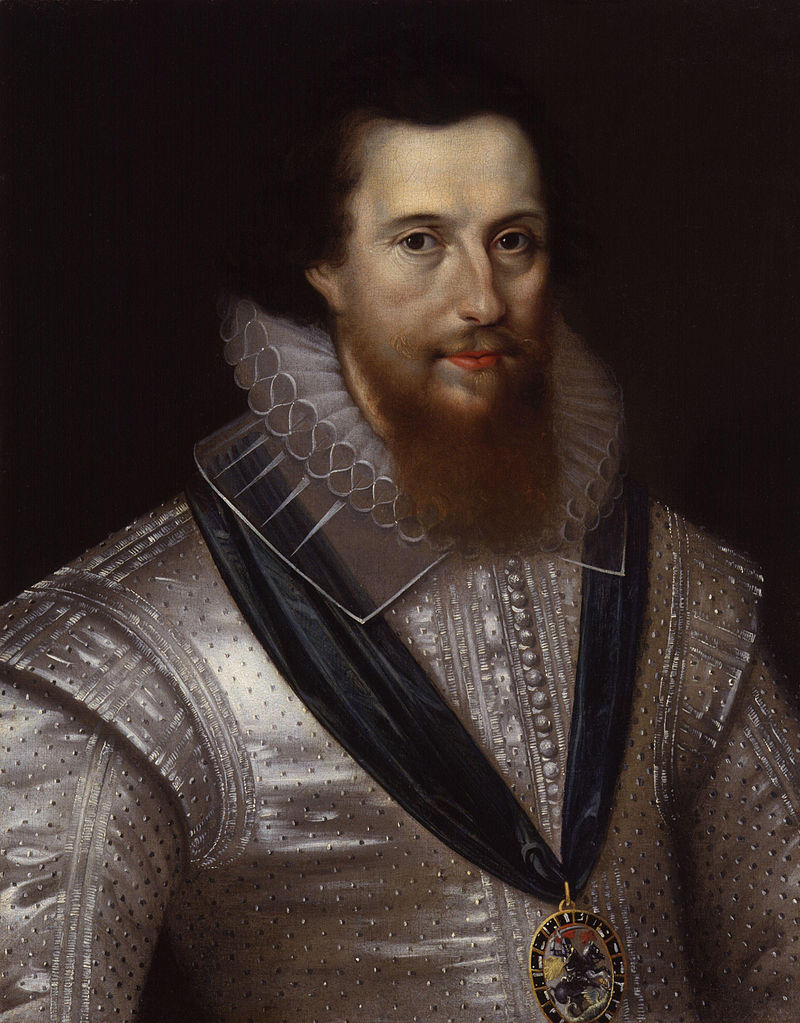
Robert Devereux, 2nd Earl of Essex

If the advice was not heeded – and Francis was well aware that there was little likelihood of persuading the Earl of any course of action that he did not sincerely believe had been instigated by himself – it was because confrontation then, now, and always, is not only between the commander in the field and the enemy he seeks to subdue, but also between the men of action on the ground and the politicians back at home.

Golden Lads by Daphne du Maurier (1975)

~

‘History is a good story, in my humble opinion,’ he said at last. ‘And at best it’s a matter of interpretation of selected facts, which may not even be genuine facts. Few historians have the chance to interview their subjects first-hand. Don’t knock it, Ruth. Listen. Write. Work out what it is you’ve written later.’

The Ghost Tree by Barbara Erskine (2018)

~

What was it like to trust no one? Was it wise? Or was there a small file, like a watchmaker’s file, that rasped away at the heart until, one day, in the crossing of a street, the middle of a sentence, you ceased to be human at all?

Now We Shall Be Entirely Free by Andrew Miller (2018)

~

‘Do please, Bella, think hard of what you are planning. You have no idea, I am sure, of what life can be like for a woman.’
‘For one who fails,’ said Cristabel. ‘I don’t mean to fail. I mean to have the world at my feet. Because I am me, not because I’m Sarum’s unwanted daughter. Just give me my chance.’

First Night by Jane Aiken Hodge (1989)

~

The deeds of Theseus on an Attic red-figured kylix (British Museum)

Before, when I have tried to understand my enemies, it has been to ‘plan’ against them. Why try now when it is finished, why not be content to curse? But while man is man he must look and think; if not forward, back. We are born asking why, and so we end. So the gods made us.

The Bull from the Sea by Mary Renault (1962)

~

Tad once told me that there is only one true queen on a chessboard. I remember asking him which one it was, and he asked me what I thought in return. I hazarded that she was always the one that won the game, and he shook his head slowly.
“No, child,” he said. “A queen may lose the game at hand, but ever is she a queen.”

Perdita by Hilary Scharper (2013)

~

The storm-centre had moved to some distance now, but the sky was still low and dark, and in the intermittent electric flicker the mountain shapes showed a curious light olive-green, lighter than the indigo clouds beyond them. The lower meadows and slopes shone paler still, stretching ghostly and frostlike where the shower had left its evanescent hoary glimmer. Dark sky, pale mountains, phantom-grey meadows…it was like looking at the negative of the normal daylight picture, a magically inverted landscape through whose pale foreground drove the sharp ink-black furrow of the Petit Gave.

Thunder on the Right by Mary Stewart (1957)

~

Nell was not impressed by his revelation. The highborn were always up to no good, but what of it? No matter who sat on the throne at Westminster, she’d still be fretting about that leak in the roof and her daughter’s need for new shoes.

Cruel as the Grave by Sharon Penman (1998)

~

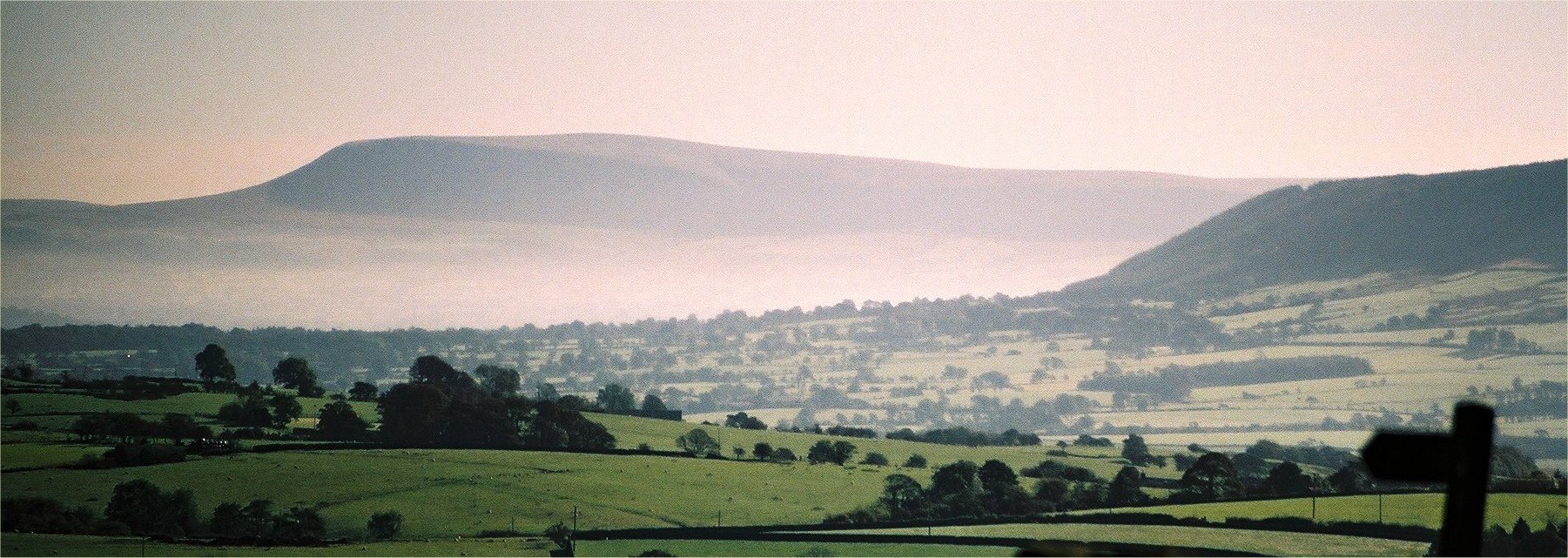
Pendle Hill, Lancashire

‘People think in pictures,’ I said. ‘Sometimes if you jog their memories with one picture, it helps to release others. People remember more than they think, but their memories are stored deep and you need to find a way to bring them to the surface.’

The Craftsman by Sharon Bolton (2018)

~

‘No? She wanted advice, just like you. I told her to go home and cook her husband’s dinner. Instead she went to Spain where she was murdered. People don’t want advice. They want to be told that what they want to do is right.’

Dark Summer in Bordeaux by Allan Massie (2012)

~

The extraordinary pleasantness of the last days of a holiday does not make a determined man want to be on holiday forever; he enjoys each second with peculiar gusto just because he is prepared to leave at an appointed time.

Harriet by Elizabeth Jenkins (1934)

~

Favourite books read in September:

The Craftsman, Bleeding Heart Square and Harriet

Where did my reading take me in September?

England, France, Ancient Greece, Spain, Italy, Scotland, Canada

Authors read for the first time in September:

Hilary Scharper and Elizabeth Jenkins

~

Have you read any of these books? Which books did you enjoy in September?

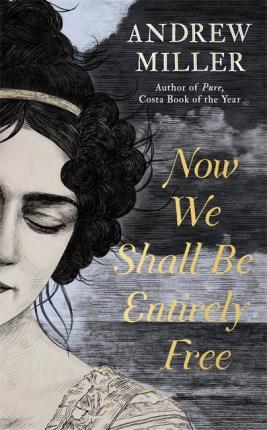
Now We Shall Be Entirely Free by Andrew Miller

It’s 1809 and a wounded man is being carried into his home in Somerset. His name is Captain John Lacroix and he has just returned from Spain, where he has been fighting in the Peninsular War. Injured, exhausted and haunted by his experiences, he seems close to death, but with the help of his housekeeper, Nell, he slowly regains his strength. Unable to contemplate returning to the war, he sets off for Scotland instead – first to Glasgow, then to the Hebrides, in search of some peace and redemption.

Meanwhile, in Spain, a British soldier called Calley is providing evidence to a military inquiry regarding atrocities carried out in the Spanish village of Los Morales during the retreat of the British army. He says he can identify the man responsible for this war crime, the man who was in command of the troops as they raped and murdered. To satisfy the Spanish that justice has been done, Calley is sent to hunt down and punish the perpetrator of the crime, accompanied by a Spanish officer, Medina, who will act as a witness.

Due to the alternating of the two narratives, it very quickly becomes obvious to the reader that the man accused by Calley is John Lacroix…but can it be true? Can the quiet, decent, sensitive man we have been getting to know on his journey to Scotland really have carried out these appalling deeds? Either there is more to the story than meets the eye or we don’t know John Lacroix as well as we think we do. There’s plenty of suspense as we wonder when we will find out exactly what happened that day in Los Morales and what sort of man John Lacroix really is.

As we wait to see whether Calley and Medina will catch up with their target, Lacroix arrives on a remote Hebridean island where he meets Emily Frend and her siblings, Jane and Cornelius. Together with their absent leader, the mysterious Thorpe, they are the last remaining members of a small community who have made the island their home. Intrigued by their lifestyle, Lacroix compliments Emily on her freedom, only for her to explain to him that she does not consider herself to be free at all: “Is it because I take off my stockings to paddle in the sea?” she asks. “That I have let you see me do it? Is that my freedom?”

Now We Shall Be Entirely Free is a beautifully written novel and although there were one or two aspects of the plot that I found unconvincing and although I was disappointed in the Hebridean setting, which I would have expected to have a much stronger sense of place, I could overlook these things because there was so much else that I liked. Andrew Miller has a lot to say about so many things: guilt and blame, the atrocities of war, independence, redemption and love. This is only the second book of his that I’ve read – the first was Pure, a dark and fascinating novel about the destruction of a cemetery in Paris. I enjoyed both but preferred this one because the characters are stronger and because it left me with more to think about at the end. I’m sure I’ll be reading more of his books; I like the sound of Ingenious Pain, so maybe I’ll try that one next.

Thanks to Hodder & Stoughton for providing a copy of this book for review via NetGalley.

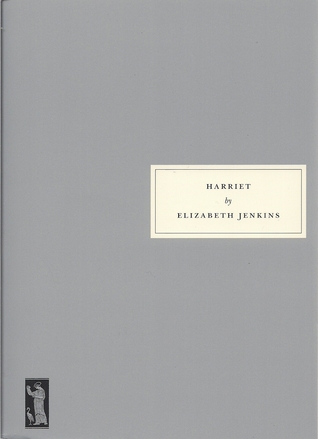
Harriet by Elizabeth Jenkins: A book for the Persephone Readathon

Jessie at Dwell in Possibility is hosting another of her Persephone Readathons this week and as I am also taking part in this year’s R.I.P. Challenge, I decided to read a book that would count towards both. Harriet, first published in 1934, is based on a real life crime which took place in 1877 and is a much darker story than you would usually find between the dove-grey covers of a Persephone book.

Harriet Woodhouse, the thirty-three-year-old title character, is referred to in the novel as ‘a natural’ – someone whom, today, we would probably describe as having learning difficulties. Her use of language – both written and spoken – is sometimes not quite right, she can appear to be insensitive and she is often slow to understand what people really mean. Mrs Ogilvy, her mother, is very loving and protective towards her daughter and although Harriet still lives at home, she encourages her to be as independent as possible and to visit family and friends now and then. It is while visiting her cousins, the Hoppners, that Harriet is introduced to Lewis Oman. Lewis is the brother of Elizabeth Hoppner’s husband, Patrick, and it is through this family connection that Lewis has heard that Harriet is in possession of a small fortune and due to inherit more on the death of an aunt.

When Lewis asks Harriet to marry him, his motives are very obvious to the reader: he is only interested in her money and feels nothing for Harriet herself. Mrs Ogilvy is horrified, but as her daughter is an adult she finds that there is nothing she can do to prevent the marriage, especially as Harriet thinks Lewis is charming and wonderful and believes everything he tells her. The wedding goes ahead and, having achieved his goal, Lewis quickly tires of his new wife, sending her to live in the country with Elizabeth and Patrick.

From this point, the story becomes very disturbing with Harriet completely isolated and cut off from the people who love her and care about her. Her treatment at the hands of Lewis and Patrick, and Elizabeth and her younger sister Alice, is quite painful to read about, particularly as their acts of cruelty are rarely described explicitly – instead, we are left to draw our own conclusions from the hints we are given. It is not quite clear whether the Omans and Hoppners had set out to treat Harriet so horribly or whether they just see her as an inconvenience, not worth paying any attention to, and so the neglect happens almost by accident. Either way, it’s cruel and inhumane and the complete lack of compassion displayed by these four people is shocking.

Something that struck me while I was reading was that we never really get into Harriet’s head and never know what she is thinking or feeling. We see her only through the eyes of other people, as a nuisance to be ignored and kept out of the way, or in the case of Mrs Ogilvy, a beloved and vulnerable daughter whom she is powerless to help. The one person who could possibly have done something to help is Clara, the young maid who works for Elizabeth and Patrick – she knows something is not right, she knows Harriet is in danger, and yet still she does nothing. I found this very frustrating and I had to keep reminding myself that Clara was only a teenager, probably afraid of losing her job, and that Elizabeth Jenkins was constrained by the historical facts of the case – if somebody had intervened when I wanted them to, it could have changed the whole outcome of the story.

It was interesting after finishing the book to look up the details of the real Harriet and what happened to her – it seems that Elizabeth Jenkins has kept the same first names of the characters, but changed the surnames, while most of the other basic facts are correct. It doesn’t feel right to say that I enjoyed this book, but I did find it a fascinating and gripping read, as well as a very sad and harrowing one. Knowing that it is based on a true story makes it even more poignant.

This is my third book read for the R.I.P. XIII Challenge (category: suspense/thriller)

Are you taking part in the Persephone Readathon? What have you been reading?