My Commonplace Book: August 2018

A selection of words and pictures to represent August’s reading:
commonplace book
noun
a book into which notable extracts from other works are copied for personal use.

~

Yet even without deliberately attempting to cut and discard pieces of a story, years after giving a full and just accounting of an event, a man may discover himself a liar. Such lies happen not by intent, but purely by virtue of the facts he was not privy to at the time he wrote, or by being ignorant of the significance of trivial events. No one is pleased to discover himself in such a strait, but any man who claims never to have experienced it is but stacking one lie on top of another.

Fool’s Errand by Robin Hobb (2001)

~
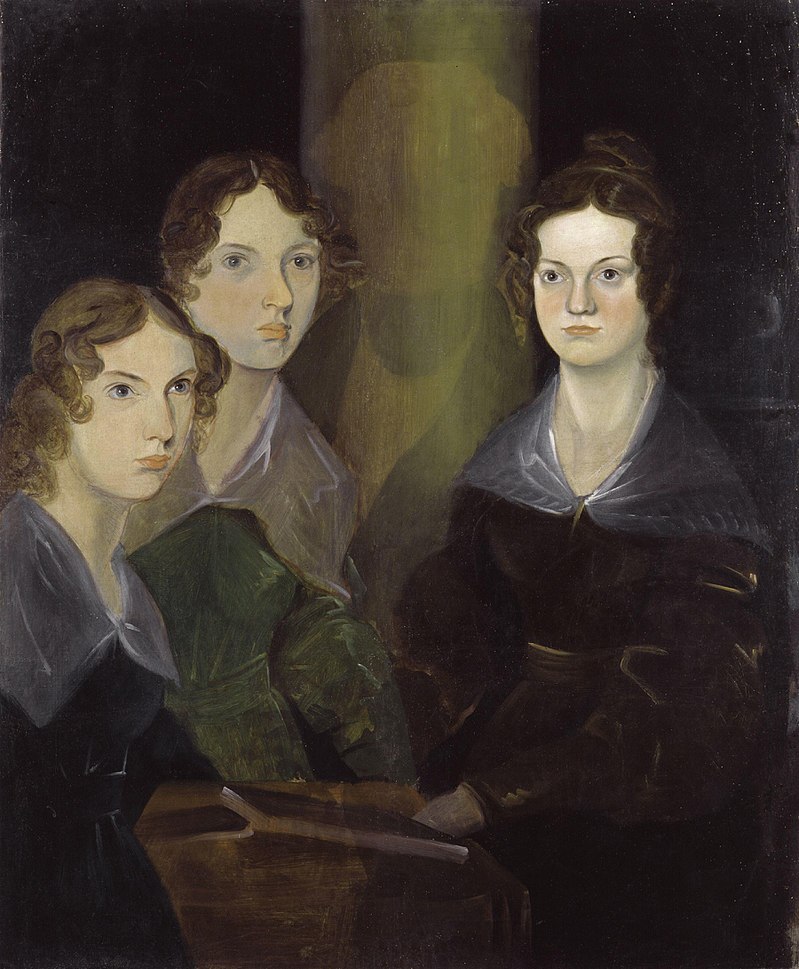
Branwell Brontë’s portrait of Anne, Emily and Charlotte.

‘That’s just what I feel. What is profoundly personal cannot be exposed without -‘ Emily stopped.

‘Without what?’

‘Betraying it.’

‘Well! But what about our work?’

‘That’s fiction. It’s the stuff of your experience, perhaps, but not the stuff of your souls.’ She spoke quite matter-of-factly and without any special emphasis; yet Anne and Charlotte were silenced.

Dark Quartet by Lynne Reid Banks (1976)

~

Two steps. Two steps were all it took. An ocean; a universe. A gulf separating innocence from almost certain damnation. And yet innocence can be a burden and above all rarely profitable. Innocence affords private satisfaction; money and power simple recompense.

The Lady Agnès Mystery by Andrea Japp (2006)

~

“The trouble is,” said Laura, “walking in Venice becomes compulsive once you start. Just over the next bridge, you say, and then the next one beckons.”

Don’t Look Now and Other Stories by Daphne du Maurier (1971)

~

Achilles’ surrender of Briseis to Agamemnon

Would you really have married the man who’d killed your brothers?

Well, first of all, I wouldn’t have been given a choice. But yes, probably. Yes. I was a slave, and a slave will do anything, anything at all, to stop being a thing and become a person again.

I just don’t know how you could do that.

Well, no, of course you don’t. You’ve never been a slave.

The Silence of the Girls by Pat Barker (2018)

~

‘Germany will declare war on France tomorrow, if she hasn’t already done so. As for us, we shall be in by Tuesday at the latest!’

‘How can you be so sure?’ Paul demanded. ‘Grenfell rang two days ago and said it depended upon half-a-dozen unknown factors, any of which might result in us standing aside.’

Franz said, ‘My dear boy, the politicians are the clowns who provide the curtain raiser, an entirely different cast act the play!’

Post of Honour by R.F. Delderfield (1966)

~

‘In my work I never calculate on persons, as apart from what I see them do. A person more or less is of no account in state affairs – it is what he promotes and what he does that I have to reckon with. I see your recent actions and your future intentions, and I hold them to be invidious. So I am not interested in emotional recollections of the kind of person you are, or seemed to be. I only work on what I see you doing.’

That Lady by Kate O’Brien (1946)

~

Coat of arms of Henry VII, founder of the House of Tudor

A man who carries the blood of Lancaster in his veins and has the Welsh dragon at his heel is a constant threat to York. The time may not be yet, Harri, but when the time comes, it is to you that the followers of the dragon will look for leadership. I look towards the crown for you – a Tudor crown.’

The Tudor Crown by Joanna Hickson (2018)

~

‘But you see,’ she said, ‘we are not either of them. However much we care for other people, we cannot become them. People can only do as much as they are. It may be more than we could do, it may be less, but very often it will be different. Sometimes that is very hard to bear, as I know you know.’

Marking Time by Elizabeth Jane Howard (1991)

~

Title page of The Lamentation of a Sinner by Catherine Parr

She looked round the gallery. ‘This is my favourite place in this palace. Where I can walk undisturbed, and rest my eyes on its treasures.’

‘There is much beauty here.’

‘The clocks remind me that however frantically courtiers plot and plan beyond these doors, time ticks by regardless.’ She looked at me directly with her hazel eyes. ‘Taking us to our judgement.’

Lamentation by CJ Sansom (2014)

~

What a happy woman I am living in a garden, with books, babies, birds, and flowers, and plenty of leisure to enjoy them! Yet my town acquaintances look upon it as imprisonment, and I don’t know what besides, and would rend the air with their shrieks if condemned to such a life. Sometimes I feel as if I were blest above all my fellows in being able to find my happiness so easily.

Elizabeth and Her German Garden by Elizabeth von Arnim (1898)

~

A serious note crept into Elizabeth’s voice. ‘There is much to be said for a lack of ambition. I would not be sorry should you think less of advancement and more of the content to be had in small things.’

‘No more would I, should we be allowed that luxury.’

She ignored the implication, sought to counter it. ‘Surely we should be able to find much to take pleasure in within our own bounds.’ There was a sound of scuffling from above their heads, followed by a shriek and a succession of giggles. ‘Family for one. Our children healthy and happy and full of life.’

By Sword and Storm by Margaret Skea (2018)

~

Favourite books read in August:

Fool’s Errand, Dark Quartet, Lamentation and Marking Time.

Where did my reading take me in August?

England, France, Italy, Crete, Ireland, Israel, Ancient Greece, Spain, Germany, Scotland

Authors read for the first time in August:

Lynne Reid Banks, Andrea Japp, Pat Barker, Kate O’Brien, Margaret Skea

~

Have you read any of these books? Which books did you enjoy in August?
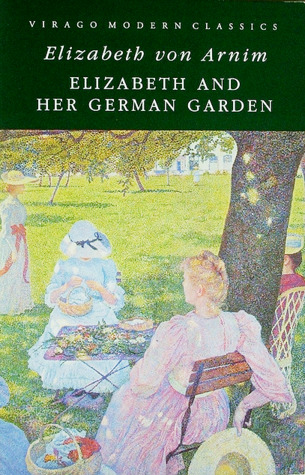
Elizabeth and Her German Garden by Elizabeth von Arnim

Today would have been Elizabeth von Arnim’s birthday and she is the next author to be celebrated in Jane from Beyond Eden Rock’s Birthday Book of Underappreciated Lady Authors. Having previously read only The Enchanted April, I had plenty of von Arnim books to choose from, but as my experience of her work is so limited, it seemed sensible to pick another of her better known ones to read next. I hoped Elizabeth and Her German Garden would be a good choice…and it was.

Published in 1898, the book has an autobiographical feel and is written in the form of a diary in which the narrator, Elizabeth, takes us through a year in her life, describing her love for the garden of her home in northern Germany and the changes she sees as the seasons go by. At the beginning of the book Elizabeth knows little about gardening, so there is a sense that she is learning by trial and error as she goes along, discovering which flowers will grow in the soil and climate and which won’t, and trying out different colours and arrangements in different beds. Of course, due to her gender and class, she doesn’t do the hard work herself – she has gardeners to dig and plant for her – but this is a source of frustration to Elizabeth, as the gardeners never seem quite able to bring her visions to life!

Elizabeth is the sort of person who is perfectly happy on her own, as long as she can be outdoors, surrounded by the beauty of nature, and she doesn’t at all regret the city life she has left behind. And in any case, she rarely has time to feel lonely as she has her three young daughters for company. We never learn their names as Elizabeth refers to them simply as the April baby, May baby and June baby (although at five, four and three they are no longer really babies), but it is obvious that she loves them very much – even if she does despair of them at times! The babies provide a lot of the humour in the book, as children often do. Her feelings for her husband are slightly less tender; she calls him ‘The Man of Wrath’, which probably says a lot about their relationship!

Despite her love of peace and quiet, Elizabeth does find herself entertaining visitors now and then, including two who come to stay for the winter: Irais, who shares Elizabeth’s dislike of convention and becomes a good friend, and Minora, a young woman from England who is writing a book on the German way of life and spends most of the winter irritating Elizabeth and Irais with her questions and observations. The women also have some interesting discussions with The Man of Wrath, in which he makes it clear that he thinks a woman’s place is in the home. I suppose The Man is a man of his time, while Elizabeth is a woman ahead of hers.

Although my lifestyle is very different from Elizabeth’s, I liked and understood her almost as soon as I began to read. I’m not much of a gardener myself but, like Elizabeth, I do enjoy sitting outside and reading in the garden on a warm summer’s day and I have always envied those women from years gone by who lived on large country estates with huge gardens to wander in. Elizabeth and Her German Garden is a lovely read; I found it light, entertaining and often funny, with a similar feel to Diary of a Provincial Lady by E.M. Delafield. I will be reading the sequel, The Solitary Summer.

This is the last book I will have time to finish and review for my 20 Books of Summer this year. I have managed 15/20 and will post a full summary of the challenge next week.

Classics Spin Review: That Lady by Kate O’Brien

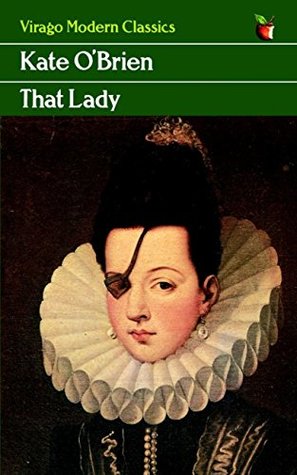
Kate O’Brien’s novel from 1946, That Lady, was the book chosen for me in the recent Classics Club Spin. I had never read anything by Kate O’Brien before and had only added this one to my Classics Club list because I remembered reading some very positive reviews by Lisa and Kay and because I liked the portrait on the front cover of the Virago Modern Classics edition. The portrait shows Ana de Mendoza, Princess of Eboli and Duchess of Pastrana, and Ana’s life is the subject of the novel.

That Lady opens in 1576, with Ana a widow of thirty-six. Following the death of her husband Ruy Gomez de Silva, one of King Philip II of Spain’s closest advisers, Ana and her children have continued to live on Ruy’s lands in Pastrana in the region of Castile. If you know nothing about Ana, as I didn’t before reading this book, you’ll be pleased to know that O’Brien gives plenty of detail on Ana’s background, explaining how she came to be married to Ruy Gomez at the age of thirteen, how she lost her eye fighting a duel with a page in her father’s household, and the origins of her close relationship with Philip II.

Early in the novel, Philip visits Ana at the Palace of Pastrana and asks her to consider coming back to Madrid. He gives several reasons why she should return, but it is clear that he misses Ana and her children and wants them living nearer to him. Ana is reluctant, but within a year she is back in Madrid and here she begins an affair with Antonio Perez, Philip’s ambitious secretary of state. Needless to say, this was not what the king had intended, and when Ana’s affair becomes public – and, worse still, leads to her becoming implicated in a murder case – she finds that Philip is not such a good friend after all.

That Lady is an unusual novel and at first I wasn’t sure whether I was going to like it. The pace is slow and although there is a lot happening, most of it happens off the page; major events including the defeat of the Spanish Armada are covered in a few brief sentences, while dramas which directly affect Ana, such as the murder mentioned above and the circumstances which lead to it, are only referred to in conversation afterwards. The lack of action makes this much more of a character driven novel, which I’m usually quite happy with, but I also struggled to understand and warm to Ana as a character during the first half of the novel.

Somewhere in the middle of the book, though, I began to find Ana’s story much more compelling. I understood why her relationship with Antonio was so important to her, despite the disapproval of Philip and the public – because it was her own choice, something she was doing because she wanted to, and not because she had been pushed into it by her father, by her husband or by the king. I admired her for sticking to her principles and I was impressed by the loyalty she inspired in her young daughter, Anichu, and her servant, Bernardina. Ana also finds herself struggling to reconcile her actions with her religious beliefs and this is another of the novel’s themes, which develops through conversations with her friend, Cardinal Quiroga of Toledo.

I found it intriguing that in her foreword to That Lady, O’Brien states that this is not a historical novel, but an ‘invention’ based on the story of Ana de Mendoza and Philip II, in which the outline of historical events is real but the words, thoughts and emotions of the characters are imaginary. I think I know what she was trying to say, but surely any historical novel contains an element of invention, otherwise it wouldn’t be a novel. Anyway, I was able to learn a huge amount from this book, not just about Ana, Philip and Antonio, but also about the political situation in Spain in the late sixteenth century. Most of this was new to me and the amount of detail made it quite a slow read, but an interesting one too.

I was left wanting to know more about the real woman, so I looked her up online and found a selection of portraits of Ana, with her distinctive silk eye patch (although it seems there could be a less dramatic explanation for the loss of her eye than the duelling story). I couldn’t find any other novels about Ana, but if you know of any, please let me know. And if you’ve read this book, I would love to hear what you thought of it – and whether you would recommend anything else by Kate O’Brien.

This is book 8/50 from my second Classics Club list.

It’s time for R.I.P. XIII…

September is almost here and that means it’s time to prepare for one of my favourite reading events: Readers Imbibing Peril (better known as R.I.P), which is hosted this year by Capricious. The idea of R.I.P. is to spend September and October reading books from the following categories:

Mystery, Suspense, Thriller, Dark Fantasy, Gothic, Horror and Supernatural.

There are different levels to choose from, including a one-book option for those readers who don’t want to commit to too much. As usual, I am signing up for Peril the First, which means:

Read four books, any length, that you feel fit (our very broad definitions) of R.I.P. literature. It could be Stephen King or Sir Arthur Conan Doyle, Shirley Jackson or Tananarive Due…or anyone in between.

The challenge is now in its thirteenth year; my first R.I.P was R.I.P V in 2010 and I haven’t missed one since! I usually end up reading more than four books that fit the R.I.P. categories and although I don’t make a list and rigidly stick to it, I do like to put together a selection of possible choices.

Here are some of the R.I.P-ish books I have on my TBR:

The Silent Companions by Laura Purcell was a birthday present from my sister in May, but I haven’t read it yet as I’ve been saving it for R.I.P. I’m sure it will be perfect.
The Craftsman by Sharon Bolton is one of the books I put on my 20 Books of Summer list and haven’t managed to read (I think 15/20 is the most I can hope for this summer). I love Sharon Bolton’s books and still have one of her others, Blood Harvest, to read as well.
A Gathering of Ghosts is Karen Maitland’s latest novel and I have a review copy which I really need to read soon.

Jezebel’s Daughter by Wilkie Collins is the only book on my Classics Club list that looks suitable for R.I.P.
Bleeding Heart Square by Andrew Taylor would also count towards my What’s In A Name? challenge – a book with a shape in the title.
And I already have Thunder on the Right lined up for September because Mary Stewart will be featuring in Jane’s Birthday Book of Underappreciated Lady Authors.

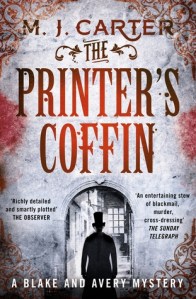
I loved The Strangler Vine by MJ Carter, so The Printer’s Coffin is high on my list for this year’s R.I.P.
So is The Sussex Downs Murder by John Bude, a British Library Crime Classic which will be my first book by Bude.
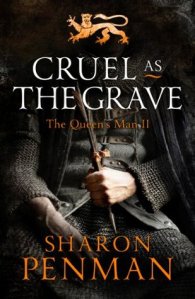
I also want to read Cruel as the Grave by Sharon Penman, the second book in her Justin de Quincy mystery series.

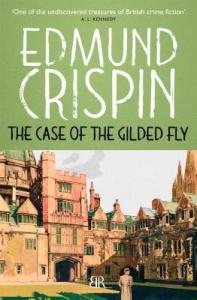
The Case of the Gilded Fly by Edmund Crispin is one of the books I’m considering for the upcoming 1944 Club, and possibly an Agatha Christie as well.
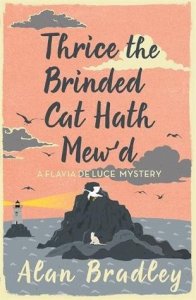
I often read one of Alan Bradley’s Flavia de Luce mysteries during R.I.P. and Thrice the Brinded Cat Hath Mew’d is the next one in the series.
And having read Allan Massie’s Death in Bordeaux last year, I would like to read Dark Summer in Bordeaux soon too.

~

Those are just some of the books I could decide to read – I do have more on my TBR, so don’t be surprised if you see me reading something I haven’t mentioned here. I like to have plenty of choice!

Will you be taking part in R.I.P. this year? Have you read any of the books I’ve listed above?

Marking Time by Elizabeth Jane Howard

This, the second in Elizabeth Jane Howard’s Cazalet Chronicles, continues the story begun in The Light Years, taking us through the early stages of the Second World War. It’s been almost exactly a year since I read the first book, but I found that I could still remember the characters and storylines and jump straight back into the story. If I’d needed a reminder, though, the book opens with a useful family tree, character list and summary of the previous novel.

Marking Time begins just as Britain declares war on Germany in September 1939 and ends just two years later, in 1941. The Cazalet family – who include ‘the Brig’ and his wife ‘the Duchy’; their daughter, Rachel; their three sons, Hugh, Edward and Rupert, with their wives and children; and an assortment of other relations, friends and servants – are gathered again at Home Place in the Sussex countryside and this is where most of them will be based during the two years the novel covers. As an upper middle class family, they are sheltered from some of the worst deprivations of the war, but eventually it does begin to affect each of their lives in all sorts of ways.

One of my criticisms of The Light Years was that the number of characters was overwhelming and the constant changes from one perspective to another made it difficult to focus. Marking Time has a slightly different format. There are still several chapters which deal with the whole family, spending a few pages with one family member, then a few pages with another, but there are also some longer sections which concentrate on one character at a time.

The characters who are given their own chapters are the three teenage girls – Louise, Polly and Clarissa (Clary) – who happen to be three of the characters I singled out as favourites in my review of The Light Years. I was delighted to have the opportunity to spend a more substantial period of time with each of the girls, getting to know them better. Louise, the eldest child of Edward and Villy, is an intriguing mixture of sophistication and innocence. In Marking Time, we see her leave home to become an actress, fall in love for the first time, and make an unwelcome discovery about another family member. Clary’s chapters are written partly in the form of diary entries and this gives her a particularly strong and distinctive voice. Clary receives some bad news quite early in the war – although we don’t yet know exactly how bad – but there are some positives to come out of this, such as an improvement in her relationship with her stepmother, Zoe. Meanwhile, Polly – Hugh and Sybil’s daughter – overhears a private conversation which throws her life into turmoil.

Despite all the problems various family members are experiencing, the novel isn’t entirely depressing; there are some funny scenes too, mainly involving the younger children, Neville and Lydia, and we see the beginnings of a touching romance between two of the Cazalet servants. Although the lifestyle of the Cazalet family is entirely different from my own – partly because of the time period in which they live, but also because of their class – I still feel that they are people I understand and care about. I enjoyed this book much more than the first and am pleased I still have another three Cazalet novels to read. The next one is Confusion and I’m looking forward to finding out how the family fare throughout the rest of the war.

This is book 14/20 of my 20 Books of Summer.

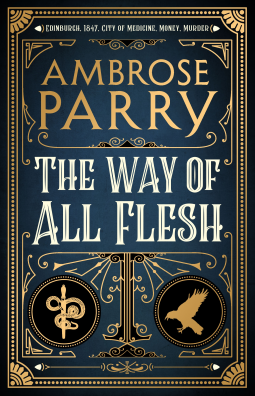
The Way of All Flesh by Ambrose Parry

The Way of All Flesh is the first in a new historical mystery series written by husband and wife team Chris Brookmyre and Marisa Haetzman under the pseudonym Ambrose Parry. Brookmyre is an established crime novelist, while Haetzman is a consultant anaesthetist with a Master’s in the History of Medicine – the perfect combination when writing a crime novel set in the medical world!

It’s 1847 and young medical student Will Raven has secured a position as apprentice to the renowned Scottish obstetrician Dr James Simpson. Simpson is one of Edinburgh’s leading doctors and Raven intends to make the most of this wonderful opportunity to gain experience in the fields of midwifery and anaesthesia. Unfortunately, he doesn’t get off to the best of starts: just before he is due to begin his apprenticeship he discovers the dead body of his friend Evie, a prostitute whom he has being trying to help financially. Stumbling away through the dark streets of Edinburgh’s Old Town, he is attacked by a gang sent after him by a moneylender and turns up battered and bruised for his first day at work – definitely not the impression he had hoped to give!

Settling into his work with Dr Simpson and his colleagues, Raven is required to assist at some difficult births and quickly comes to appreciate the role ether can play in easing the pain of childbirth. During his visits to other households, and in his conversations with other doctors, Raven begins to hear about other women from the Old Town who have been found dead, like Evie, under suspicious circumstances. Determined to find out what really happened to Evie, he decides to investigate…

But this is not just Raven’s story. We also meet Sarah Fisher, Dr Simpson’s housemaid. Sarah is an intelligent young woman who would love to have the opportunities that have been given to Will Raven, but as a career in medicine is not available to her because of her gender and class, she has to resign herself to reading the doctor’s medical books and helping out in his clinic as much as she can. Sarah and Will take an instant dislike to each other, but as they continue to work together – not just in the same household, but also to track down the murderer – they begin to find some common ground.

The Way of All Flesh is a fascinating read for anyone who is interested, as I am, in the history of medicine. Some of the doctors and scientists who appear in the book, including James Simpson, are real historical figures and the novel recreates some of the experiments, discoveries and research that led to the development of anaesthetics, as well as some of the challenges they faced – such as the opposition of the Scottish church leaders, who believed it was natural for women to feel pain in childbirth and that using drugs to relieve it was against the will of God. Remembering that one of the authors of this book is an anaesthetist herself, everything feels very authentic and convincing. I should warn you, though, that the descriptions of childbirth and other medical cases and operations are very detailed and occasionally a bit gruesome!

It was actually the crime element which was the least successful aspect of the book for me. I felt that it took second place to the medical procedures and scientific discussions and after a while I lost track of who had been killed and what the circumstances were; it just wasn’t the sort of mystery I prefer, where I find myself looking for clues and trying to guess who the culprit could be. The setting makes up for it, though – the descriptions of Victorian Edinburgh are wonderfully atmospheric.

Although I thought the secondary characters could have been given more depth, I did enjoy getting to know both Will Raven and Sarah Fisher. This was a promising start to a new series and I will be looking out for the second book.

This is book 13/20 of my 20 Books of Summer.

Thanks to Canongate Books for providing a copy of this book for review via NetGalley.

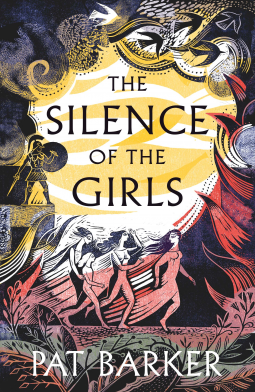
The Silence of the Girls by Pat Barker

There have been a number of novels published recently which look at Greek myths and legends from a feminine perspective. In the last few months I have enjoyed reading Circe by Madeline Miller, which tells the story of the witch Circe from the Odyssey, and For the Immortal by Emily Hauser, the story of Hippolyta the Amazon queen. Pat Barker’s new novel, The Silence of the Girls is another, this time bringing to life the character of Briseis and the events of Homer’s Iliad.

When the city of Lyrnessus falls to the Greeks during the Trojan War, Briseis loses her husband, King Mynes, and her father and brothers. The surviving women are shared out amongst the Greek conquerors as prizes of war and Briseis finds that she is given to the great warrior Achilles as a slave. The events which follow, such as the quarrel which breaks out between Achilles and Agamemnon, King of Mycenae, over the possession of Briseis, and the fate of Patroclus when he impersonates Achilles on the battlefield, will already be known to anyone familiar with the Iliad. If all of this is new to you, though, don’t worry – no knowledge of Homer’s epic is necessary and Pat Barker makes it very easy to follow what is happening.

Most of the novel is narrated by Briseis herself and I found her a very engaging narrator. The nature of her story and the ordeals she faces make her an easy character to sympathise with; I was given a good understanding of how she felt about losing her freedom, becoming a slave and being at the mercy of the men responsible for murdering her family and destroying her city. This is quite a dark novel and Barker doesn’t hold back when describing the brutality of the men in the Greek army, both on and off the battlefield.

I was surprised to find that there are also some chapters written from the perspective of Achilles, who is very much the villain of the book. Although seeing Achilles’ side of the story certainly didn’t make me warm to him at all, it was good to get a different point of view, especially as it allowed us to see scenes and hear conversations that took place when Briseis was not present. However, because of the title of the book, I think it would have been nice if more female characters had been given a voice so that the silence of more than just one girl could be broken. We do meet some of the other women in the Greek camp, but only through Briseis’ eyes and Briseis is the only one we get to know in any depth.

I did really enjoy this book, though. It’s well written, very readable, and a fascinating portrayal of Ancient Greek society. If you’re interested in reading more about Briseis, you could try Hand of Fire by Judith Starkston and For the Most Beautiful by Emily Hauser. She also appears in Madeline Miller’s The Song of Achilles, which will give you a very different view of Achilles as well!

This is book 12/20 of my 20 Books of Summer.

Thanks to Penguin for providing a copy of this book for review via NetGalley.