Top Ten Tuesday: Very Long Books!

This week’s topic for Top Ten Tuesday (hosted by That Artsy Reader Girl) is “Books with a High Page Count

The books I’ve listed here all have more than 800 pages. There are others that I read before I started blogging, but I’ve only included books that I’ve actually reviewed on my blog. Not surprisingly, most of them are classics.
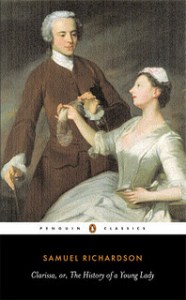
1. Clarissa by Samuel Richardson (1536 pages) – I read this epistolary 18th century novel as part of a year-long group read and probably wouldn’t have made it to the end otherwise. I liked it overall but it was so repetitive!

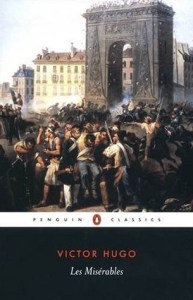
2. Les Miserables by Victor Hugo (1456 pages) – I loved the story but could have done without so many digressions. It’s one of the books on this list that I really think could have been a lot shorter!

3. War and Peace by Leo Tolstoy (1440 pages) – This was another group read, although I abandoned the schedule after a while to finish it at my own pace. I enjoyed it, but liked the peace sections much better than the war!

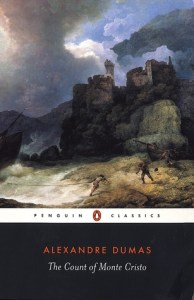
4. The Count of Monte Cristo by Alexandre Dumas (1312 pages) – This is one of my favourite books of all time, so I don’t mind the length at all and would have been happy for it to be even longer!

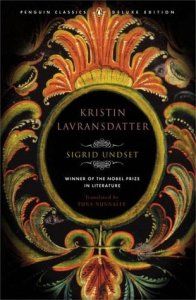
5. Kristin Lavransdatter by Sigrid Undset (1168 pages) – This bleak but fascinating Norwegian classic is technically three separate books, but often packaged together in one volume. My edition was translated by Tiina Nunnally.

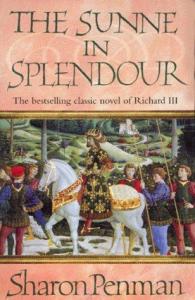
6. The Sunne in Splendour by Sharon Penman (1080 pages) – This long, detailed and gripping account of the life of Richard III is one of my favourite historical novels.

7. Don Quixote by Miguel de Cervantes (1056 pages) – I read this slowly, over the course of a year, which suited its episodic structure. I found it much more entertaining than I’d expected.

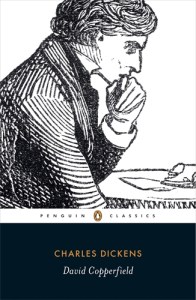
8. David Copperfield by Charles Dickens (1024 pages) – I’ve read a lot of very long Dickens novels, but decided to limit my list to one book per author. This is one I remember enjoying.

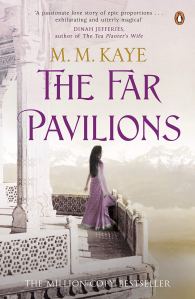
9. The Far Pavilions by M.M. Kaye (964 pages) – Another of my favourite historical novels, set in 19th century India and following the story of a British orphan raised as a Hindu.

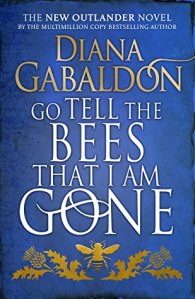
10. Go Tell the Bees that I am Gone by Diana Gabaldon (930 pages) – I loved the first three or four books in the Outlander series, but I feel that the more recent ones have been getting weaker as they get longer and longer! Still looking forward to book ten, though.

Honourable mentions: The Last Chronicle of Barset by Anthony Trollope (928 pages), Quicksilver by Neal Stephenson (922 pages), The Mirror and the Light by Hilary Mantel (912 pages) Paris by Edward Rutherfurd (848 pages), The Luminaries by Eleanor Catton (832 pages).

~

Have you read any of these? What are the longest books you’ve read? Laura is hosting Doorstoppers in December later this year, if any of these books appeal – but better get started now!
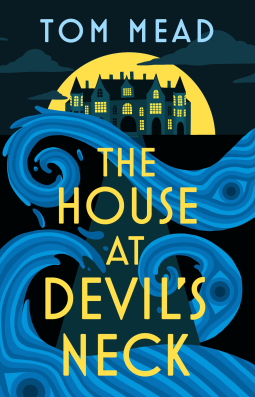

The House at Devil’s Neck by Tom Mead

This is the fourth book in Tom Mead’s Joseph Spector mystery series, but if you haven’t read any of them, don’t worry – they all stand alone and if you wanted to start here, that wouldn’t be a problem. The books are set in the 1930s and are written in the style of Golden Age ‘locked room’ or ‘impossible crime’ novels, with the influence of John Dickson Carr being particularly strong. The series features two detectives: a professional one – Inspector Flint of Scotland Yard – and an amateur one – Joseph Spector, a retired magician.

The House at Devil’s Neck begins in August 1939 with a group of people boarding a coach, ready for a trip to Devil’s Neck, a supposedly haunted house. The house, which can be reached by a causeway at low tide, has a long and dramatic history, but was most recently used as a convalescent home for wounded soldiers during the Great War. The current owner has now opened up the house to tourists and the first party is about to arrive. The guests include Madame la Motte, a medium, and her companion Imogen; a ‘ghost hunter’, Francis Tulp; and a magician – Joseph Spector. No sooner have they reached Devil’s Neck and settled into their rooms, however, than one of the party is found dead.

Back in London meanwhile, Inspector Flint is investigating what appears to be a suicide. The victim is Rodney Edgecomb, a man who, many years earlier, was involved in a high-profile inheritance dispute following the sinking of the Titanic. The circumstances of his death lead Flint to believe this is murder rather than suicide. When he eventually discovers links between Edgecomb and the house at Devil’s Neck, Flint and Spector are able to team up once again to solve the mystery.

I won’t go into the plot in any more detail because it’s such a complex one with so many twists I’m impressed that Tom Mead managed to keep track of it all himself! The murder methods are also very complicated, but the solutions do make sense once Spector explains them. As with his other books, Mead inserts a brief chapter towards the end to warn us that the solution is coming in case we want a chance to try to solve the mystery for ourselves. I think the average reader would find that very difficult – I certainly had no chance at all of solving it! – but the clues are all there and there are references at the end linking back to where you can find them in the text.

What interested me more than the mystery itself was the setting. The descriptions of the house at Devil’s Neck – ‘a hulking shape, a creature waiting at the valley’s nadir’ – are very atmospheric, as the guests arrive in pouring rain and the house quickly becomes cut off from the mainland by the rising water. The house’s history is also fascinating and allows Mead to explore the fate of wounded soldiers and how those left with permanent disabilities struggled to integrate back into society. Spiritualism, the tricks used by mediums and methods of ghost hunting are also subjects touched on in the book.

I loved most of this novel, until I started to feel lost near the end as it became more and more complex! I think the first and third books – Death and the Conjuror and Cabaret Macabre – are still my favourites.

Thanks to Head of Zeus for providing a copy of this book for review via NetGalley.

Book 17/20 for 20 Books of Summer 2025.

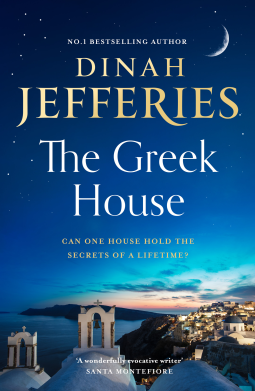
The Greek House by Dinah Jefferies

I always enjoy picking up a new Dinah Jefferies book and finding out which part of the world she’s going to take me to next! India, Sri Lanka, Italy, Morocco and Malaysia are just some of the places I’ve visited through the pages of her novels and now I can add Corfu to the list. More specifically, Corfu in 1923, when the island is occupied by Mussolini’s Italy following a border dispute between Greece and Albania.

Sixteen-year-old Thirza and her nine-year-old brother, Billy, are caught up in the panic on the streets of Corfu Old Town during the Italian naval attack. Dulcie, their mother, has left them with her cousin, Columbine, while she goes to check on a camp of refugee children with whom she volunteers, and when she returns, she finds that Billy has disappeared. Despite weeks of searching, the little boy can’t be found and is eventually presumed dead. Struggling to cope with the trauma, Dulcie blames both Thirza and Columbine for what has happened and goes home to England, leaving behind her husband Piers, director of the British police training school in Corfu.

In 1930, Thirza returns to the island after a long absence, planning to renovate the old family home, Merchant’s House, in the hope that one day her mother will also feel ready to join her there. A lot has changed in the intervening years – the Italians have left and there’s a new woman in her father’s life – but Thirza still feels the shadow of her brother’s disappearance and decides to renew her efforts to find out the truth.

The Greek House is probably not my favourite Dinah Jefferies book, mainly because I found it too easy to predict some of the plot twists and I also thought the number of explicit sex scenes was a bit unnecessary. I loved the Corfu setting, though; everything comes to life in wonderfully vivid detail, whether the intense purple of bougainvillea or the changing colours of the sea in the sunlight. I also knew nothing about the Italian occupation of 1923, so that was interesting, although it only forms a small part of the story.

The disappearance of Billy happens very early in the novel, but it’s the trigger for everything else that happens and I liked the way Jefferies explores the impact of such a tragic incident on the various family members, depending on their different personalities and circumstances. Although I did naturally feel sorry for Dulcie, I also found it slightly annoying that she never really seemed to accept any responsibility for leaving her child in the middle of an invasion in the care of a teenager and a woman who was drunk at the time. Most of my sympathies were with Thirza, who has to live with the guilt as well as the sense of loss, and who feels that her mother will never truly forgive her. The feelings of Dulcie’s husband, Piers, seem to be largely ignored by everybody due to his hard, aloof exterior, but later in the book he mellows thanks to his relationship with his new girlfriend, Penelope – a character I ended up loving.

In her author’s note at the end, Jefferies hints that we’re going to meet some of the same characters again in her next book. That’s something to look forward to!

Thanks to HarperCollins for providing a copy of this book for review via NetGalley.

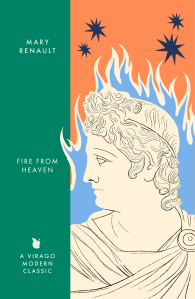
Fire from Heaven by Mary Renault

This is the first in Mary Renault’s trilogy of novels about the life of Alexander the Great. It’s been waiting patiently on my shelf for years, since I finished her two books on Theseus, The King Must Die and The Bull from the Sea, and I picked it up last month as it would count towards both the 20 Books of Summer challenge and my Classics Club list.

First published in 1969, Fire from Heaven tells, in fictional form, the story of Alexander’s life from early childhood up to the moment he comes to power following the death of his father, Philip II of Macedon. His complex relationship with Philip – and also with his mother, Olympias – forms an important part of the novel as both parents are influential in shaping the character of the young Alexander. Philip is portrayed as a brutal, harsh, arrogant man, who can be very unkind to Alexander, but there are also moments when they bond and discover things they have in common. Their relationship is further strained by Olympias’ insinuations that Philip is not Alexander’s biological father, as well as Philip’s various infidelities and insistence on taking additional wives.

Alexander is devoted to Olympias from an early age and is disturbed by his parents’ tempestuous marriage. Like Alexander, I initially found her sympathetic, but as the novel progresses she is shown to have both positive and negative qualities, being passionate, vengeful and manipulative, as well as involving herself in religious rituals, particularly the worship of Dionysus. Alexander finds solace from his difficult relationships with his parents in his very close friendship with Hephaistion, another important character in the novel. Renault suggests that Alexander and Hephaistion are lovers, drawing comparisons with Achilles and Patroclus, although it seems that historians are divided on this.

Away from his personal relationships, a lot of time is also spent on exploring the education and experiences that made Alexander the great military leader he would later become: the tuition he receives from Aristotle; the first time he kills a man; his taming of the horse Bucephalus; and his participation in some of his father’s military campaigns. Because this book only covers the first half of Alexander’s life, Renault is able to go into a lot of depth and detail. I’m looking forward to seeing how his character continues to develop in the second book, The Persian Boy, which covers the remainder of his life.

This is not a particularly easy book to read; it needs a lot of concentration and I read it slowly over the course of a few weeks so I didn’t miss anything. It’s obviously very well written and thoroughly researched, which I knew it would be, having read other Renault books, and like many older historical novels it’s also very immersive, with no inappropriately modern language or attitudes, which can sometimes be a problem with newer books. Purely from an entertainment perspective, I didn’t find this as enjoyable to read as the Theseus novels, but I did get a lot out of it and am pleased to have added to my knowledge of a man and a period of history I previously hadn’t read much about.

Book 16/20 for 20 Books of Summer 2025.

This is also book 48/50 from my second Classics Club list.

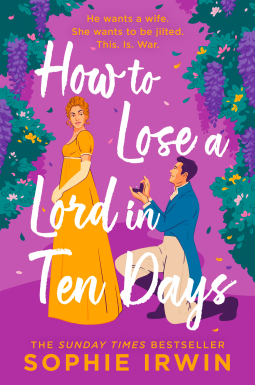
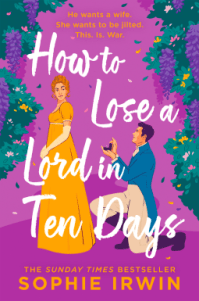
How to Lose a Lord in Ten Days by Sophie Irwin

This is Sophie Irwin’s third novel and since I loved her first two – A Lady’s Guide to Fortune-Hunting and A Lady’s Guide to Scandal – I was looking forward to reading this one, but although I did enjoy it, I think it’s my least favourite of the three. If you’re new to her work, all three of Irwin’s books are set in Regency England and are all standalones with different sets of characters. Apparently this one is loosely based on the romantic comedy How to Lose a Guy in Ten Days, which I haven’t seen, although I don’t think that would have made any difference to my impressions of the book.

Our heroine this time is Lydia Hanworth, a wool merchant’s granddaughter, who, as the novel opens, has found herself engaged to a man she doesn’t love. Lydia’s aunt and uncle, with whom she has lived since the deaths of her parents, have made it clear that if she refuses Lord Ashford, she’ll be sent to live with her awful Aunt Mildred – but Lydia has no intention of marrying him, or any other man not of her choosing. The engagement is due to be announced by Ashford’s father at a party in ten days’ time. That means Lydia has ten days to make Ashford regret he ever met her and voluntarily withdraw his proposal!

Like Sophie Irwin’s other books, this is a lively, entertaining read written with a lot of humour and comedy. Most of the story plays out at a house party hosted by Ashford’s cousin Phoebe, which means there are a limited number of characters to get to know. Despite this, not all of them came fully to life for me and a subplot that develops later in the book involving Phoebe, her husband and a missing necklace felt unnecessary. It does provide some purpose for Lydia’s brother, Pip, though – he has just begun working for the Bow Street Runners and has arrived at the house party with his notebook and quizzing glass, hoping for a real mystery to solve.

Some of Lydia’s attempts to drive Ashford away are quite amusing and could be described as harmless fun (her hideous, unfashionable gowns; her loud, grating laugh; her tone-deaf attempts at singing) but others seem a bit cruel. Despite Lydia’s dislike of him, which is largely based on misunderstandings, Ashford is a decent person and doesn’t really deserve to be humiliated by her! I also couldn’t quite believe that the other guests would have overlooked her behaviour and background so easily and accepted her as one of the party. She broke so many of the rules of upper-class Regency society her reputation should have been in ruins, but it seemed that while people were momentarily shocked by her actions, it was all forgotten the next day.

Still, this is another enjoyable read from Sophie Irwin and I’m sure if I hadn’t held it to such high standards based on her first two books, I would probably be less critical of it. If you’re looking for a light, fun summer read this would be ideal.

Thanks to HarperCollins for providing a copy of this book for review via NetGalley.

Book 15/20 for 20 Books of Summer 2025.

20 Books of Summer 2025: July Recap

The second month of this year’s 20 Books of Summer challenge is over and one of our hosts – Emma of Words and Peace – has compiled another questionnaire to help us recap our July reading. My answers aren’t as imaginative as the questions, but I’ve done my best!

I read eight books for the challenge this month, which means as I read nine in June I only have three more left to read in August (I’m halfway through one of them now). I’m behind with the reviews as usual, but the outstanding ones should be coming soon.

1. Which book surprised you the most this month?
Describe what made it stand out — was it a plot twist, unique character, or something unexpected?

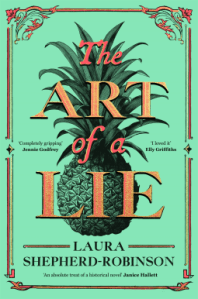
The Art of a Lie by Laura Shepherd-Robinson had plenty of plot twists, but what really surprised me was the way it ended! It wasn’t what I expected at all – and not what I would personally have liked, although other readers may disagree.

2. If your July reading experience was a weather forecast, what would it be and why?
Did your reads feel like sunny days, thunderstorms, gentle breezes, or heatwaves?

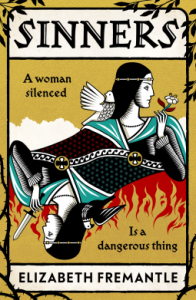
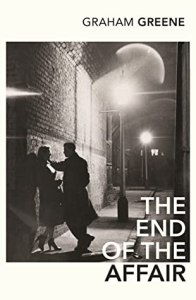
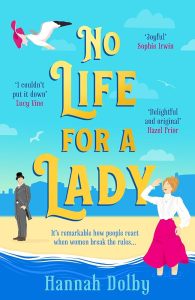
A real mixture of weather, just like a typical British summer! There were some hot, stormy days (Elizabeth Fremantle’s Sinners), some bleak, rainy ones (The End of the Affair by Graham Greene) and also a few brighter, breezier days (Sophie Irwin’s How to Lose a Lord in Ten Days and Hannah Dolby’s No Life For a Lady).

3. Name a setting from your July books where you’d love (or hate) to take a summer vacation.
What drew you to (or repelled you from) the place?

The Syria of the 1930s, as described by Agatha Christie in Come, Tell Me How You Live, sounds like a fascinating place to visit in many ways – and a glimpse into a world and a way of life now gone forever. However, her first night in the town of Amuda, in a house infested by rats and cockroaches sounded horrific!

4. If you could turn one book into a summer festival, what would the main event be?
Describe the vibe, activities, or the bookish highlight of your imagined festival.

I would turn The Art of a Lie into an 18th century food festival. The highlight would be a sample of Hannah Cole’s delicious homemade ice cream, a delicacy most of the guests will never have seen or tasted before! As additional entertainment, the author Henry Fielding will give readings from his recently published novel The History of Tom Jones, a Foundling.

5. Choose your own adventure — recap July in the style of your choice:
You might write a diary entry, poem, comic panel, or even a simple list. Be as creative as you like!

I’m not feeling very creative at the moment, I’m afraid, so here are some very simple one-word reviews for the books I read this month:

Sinners by Elizabeth Fremantle – Tragic
The Art of a Lie by Laura Shepherd-Robinson – Twisty
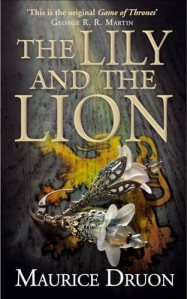
The Lily and the Lion by Maurice Druon – Informative
Come, Tell Me How You Live by Agatha Christie – Funny
How to Lose a Lord in Ten Days by Sophie Irwin – Amusing
The End of the Affair by Graham Greene – Sad
Fire from Heaven by Mary Renault – Powerful
No Life for a Lady by Hannah Dolby – Entertaining

~

Are you taking part in 20 Books of Summer? How did your July reading go?

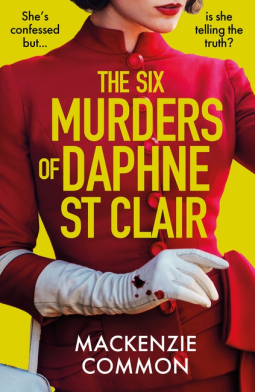
The Six Murders of Daphne St Clair by MacKenzie Common

Daphne St Clair is a ninety-year-old grandmother in poor health who lives at Coconut Grove Senior Home in Florida. Probably not anyone’s idea of a typical serial killer, but when another elderly resident is found dead in the home, Daphne calls the police and confesses to not only this murder but several more, spanning four states, two countries and seven decades. The police, Daphne’s family and the public are both shocked and intrigued – what could have made Daphne want to kill so many people? And why has she chosen to confess now, at this late stage of her life?

When the news of Daphne’s confession begins to spread, she is contacted by journalists and reporters wanting to be first to tell her story, but she turns them all down – except one. Ruth Robinson hopes to start a podcast about Daphne’s life and even has a title ready for it – The Murders of Daphne St Clair. Something draws Daphne to the younger woman and she agrees to be interviewed for the podcast, but as her story unfolds she begins to discover that there’s more to Ruth than meets the eye. Who is Ruth Robinson and what’s the real reason for the podcast?

I had never heard of MacKenzie Common (it seems she has previously written a YA mystery novel, although this is her first book for adults), but I was attracted by the elegant, eye-catching cover and the premise of a ninety-year-old serial killer who had spent her whole life literally getting away with murder! I did enjoy the book, with a few reservations which I’ll mention later in this review, but overall it was quite an entertaining read.

Daphne’s tale begins in Canada in the 1930s, where she grew up on a farm near a small town in Saskatchewan. After a difficult childhood, Daphne runs away from home at the age of sixteen and makes her way to Winnipeg, where she meets the man who will become her first victim. He’s an unpleasant, violent man and his death is more of an accident than a murder, so at this stage of the book, Daphne seems a sympathetic character. This quickly changes as Daphne’s actions become more senseless and inexcusable and she shows no repentance for what she has done. I disliked her more and more as the novel progressed, but at the same time, she’s a clever, witty narrator and her story is engaging.

The structure of the book was a problem for me. Daphne’s narrative is broken into short sections, some of which are written in her own first person perspective and some in the form of dialogue for the podcast. These are then interspersed with chapters from Ruth’s perspective as she carries out some investigations of her own into Daphne’s background and one particular murder that is of special interest to her. I felt that the switches from one character to the other happened too quickly and too often, which stopped the story from flowing as well as it could have done. On top of this, there are also frequent interruptions from true crime fans discussing the show on Reddit and speculating on who Daphne is going to kill next, and a fashion blogger on TikTok who imagines outfits Daphne may have worn at key moments in her life. I could have done without these as well, but they do illustrate the moral issues of treating criminals like celebrities.

The ending of the novel leaves an important question unanswered; we can decide for ourselves what happened (or what we would have liked to have happened) but I would have preferred to know for certain! This wasn’t a perfect book, then, but not many are and there were definitely more things I liked than disliked.

Thanks to Headline/Mountain Leopard Press for providing a copy of this book for review via NetGalley.