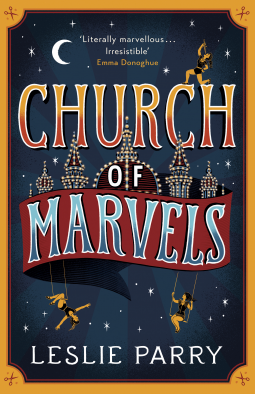
Church of Marvels by Leslie Parry

Church of Marvels, published in 2015, is Leslie Parry’s first and, so far, her only novel but I enjoyed it so much I hope she will be writing more. It’s a dark, complex and unusual story set in New York City in 1895 and, despite comparisons with The Night Circus, I think it’s a very different sort of book.

There are three main characters to get to know. First there’s Sylvan Threadgill, a ‘night-soil collector’ who makes his living from cleaning privies, as well as fighting in the occasional amateur boxing match. One night, Sylvan finds a newborn baby girl who has been abandoned and left to lie in the dirt of the street. He rescues the baby and, as an orphan himself, resolves to find out what has happened to her parents.

Next, there’s Odile Church, who performs in a Coney Island sideshow as the girl on the wheel of death – spinning in circles as a blindfolded man throws knives in her direction. Odile is trying to come to terms with the tragic death of her mother in a fire and the disappearance of her twin sister Belle, a sword-swallower and contortionist, who has run away to Manhattan with no explanation. Worried about her sister’s state of mind, Odile decides it’s time to go and look for her.

Finally, we meet Alphie, an undertaker’s wife, who has found herself imprisoned in Blackwell’s Island Lunatic Asylum. She can’t remember how she came to be there, but she’s sure it’s part of a plot dreamed up by her mother-in-law who has never liked her and wants her out of her son’s life.

At first these felt like three completely separate storylines and I couldn’t see how they could be connected in any way. Of course they do eventually come together and then I could appreciate how cleverly structured the whole novel is, with things being revealed only when we really need to know them and the biggest plot twists kept until near the end of the book. For this reason, I can’t discuss some of the most intriguing aspects of the novel, but I will say that there is a lot going on and that there is much more to each of the characters above than meets the eye!

The circus element, which is probably one of the things that draws a lot of readers to this novel, is actually a fairly small part of the story and only a few scenes are set at Coney Island. Most of the action takes place in New York and, more specifically, in the dark side of New York, a world of asylums, opium dens and underground tunnels. The people who populate these dark and unpleasant places are those who are considered to be social outcasts; misfits; men, women and children who are ‘different’ in some way. Odile, Belle, Sylvan and Alphie all fit into this category and I had a lot of sympathy for each of them – life has not been easy for them and all they want is to have a chance of happiness.

Although it is certainly not the most cheerful or uplifting of novels, I found Church of Marvels a fascinating read and, as I’ve said, I would love to read more by Leslie Parry.
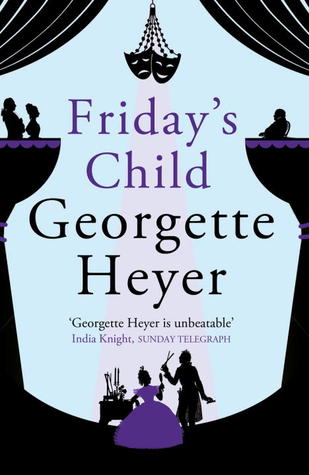
Friday’s Child by Georgette Heyer

This Heyer novel was published in 1944 and as it’s a particularly lively and humorous one, I expect it provided her wartime readers with some welcome escapism. It’s still an entertaining read in the twenty-first century too and although it hasn’t become a favourite, I did enjoy it.

“Friday’s child is loving and giving” says the famous rhyme and that is how the heroine of the novel, seventeen-year-old Hero Wantage, is described by her friends. As an orphan treated as a poor relation in her cousin’s household, Hero’s marriage prospects are not good and she is facing a future as a governess when she receives a surprise proposal from her childhood friend, Lord Sheringham. Hero is under no illusions that Sheringham – or Sherry, as he is known – is actually in love with her; she knows that he needs to marry in order to receive his inheritance and that he has already been rejected by the beautiful Isabella Milborne. It will be a marriage of convenience only, but even this is so much more than Hero could ever have hoped for that she has no hesitation in accepting.

Hero may be young and naïve, but Sherry is only a few years older and no more mature. He has no intention of changing his lifestyle just because he now has a wife, so he continues his reckless spending, gambling and womanising without considering the bad example he is setting for Hero. I don’t think it’s spoiling too much to say that Sherry does gradually come to love and appreciate his wife, but not without a lot of misunderstandings and ‘getting into scrapes’ along the way! And when he does eventually admit to himself how he really feels about Hero, will he have left it so late that he risks losing her to another man?

Although the relationship between Hero and Sherry is at the heart of the novel, with both characters slowly developing and maturing as time goes by, there is also a secondary romance which involves Isabella Milborne (known as the Incomparable) and George, Lord Wrotham, a passionate, hot-headed young man who is always ready to fight a duel. George, along with Gil Ringwood and Ferdy Fakenham, forms Sherry’s little circle of friends – and they become Hero’s friends too, providing most of the humour in the book as they give her some dubious guidance in the social etiquette of Regency London and try to help her out of the disastrous situations she finds herself in.

Friday’s Child has just about everything you would expect from a Heyer novel: duels, card games, gambling, balls and parties, elopements and attempted elopements. It reminded me of two of her other books, The Convenient Marriage and April Lady, which also have storylines revolving around a newly married couple learning to love each other. Although I enjoyed this book much more than April Lady, The Convenient Marriage is my favourite of the three, mainly because I preferred the hero in that one, the Earl of Rule. I do tend to prefer her older, wiser heroes rather than the young, irresponsible ones like Sherry. I also thought this book felt slightly longer than it really needed to be and the constant misunderstandings became a bit repetitive towards the end.

There are other Heyer novels that I’ve liked better than this one, then, but her books are always a lot of fun to read and this is no exception. There are plenty of funny moments, usually involving Sherry’s three friends (I particularly loved the hilarious Ferdy). I have The Corinthian, An Infamous Army and Faro’s Daughter to choose from for my next Heyer. If you have read them, which one would you recommend I read first?

Historical Musings #38: Reading Edward Rutherfurd

Welcome to my monthly post on all things historical fiction. For the last few months, I have been looking at the work of some of my favourite historical fiction authors; having previously featured Elizabeth Chadwick and Anya Seton, this month it’s the turn of a very different author: Edward Rutherfurd.

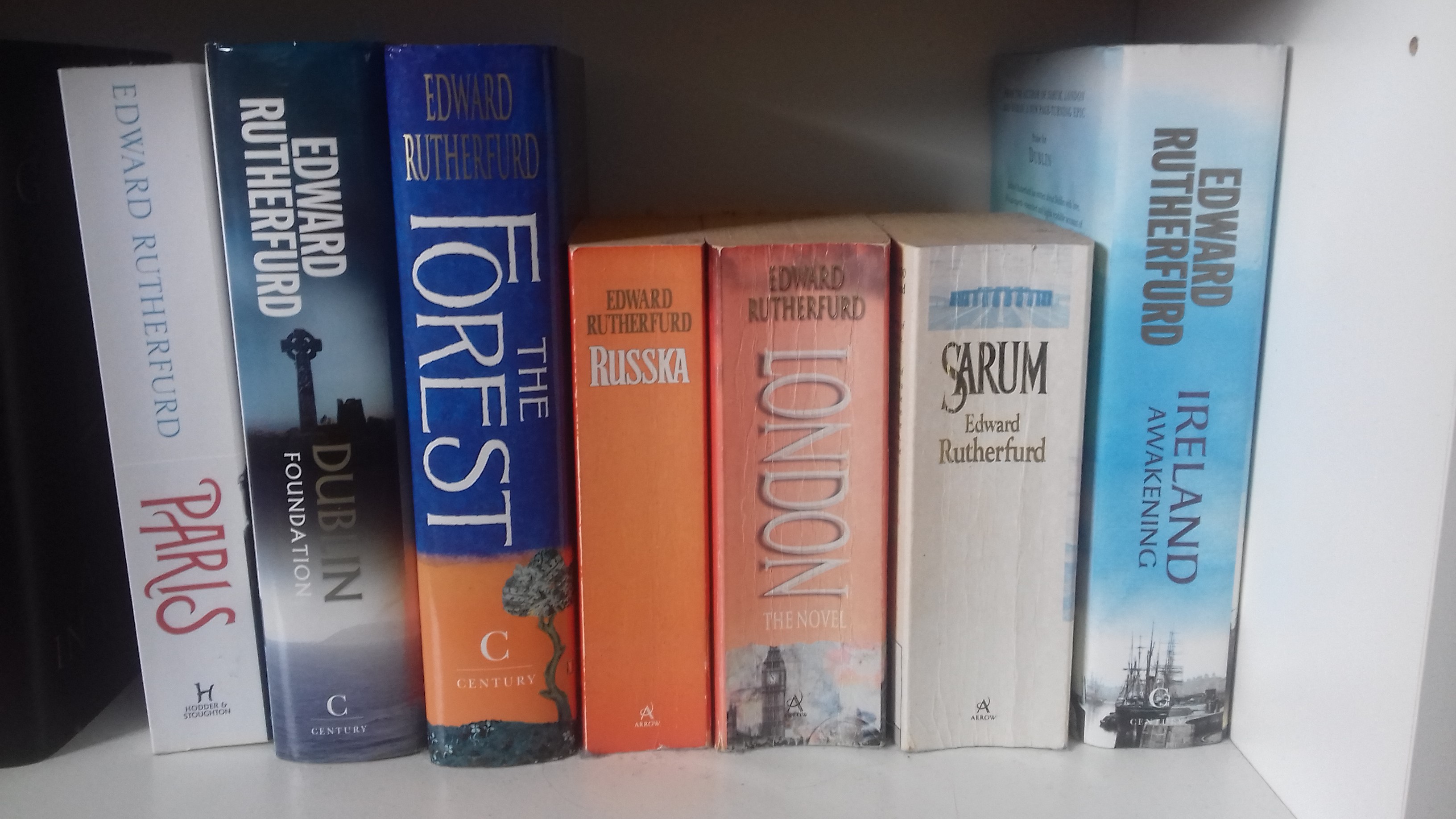
Edward Rutherfurd is the pseudonym of Francis Edward Wintle, born in Salisbury, England in 1948. His first novel, Sarum, was published in 1987, and since then he has written seven others, with a new one expected in 2019. Rutherfurd’s novels all follow a very similar format; they each tell the story of several families who live in one particular country, city or region over a period of many years. Sarum, for example, is set in and around the city of Salisbury; it begins in prehistoric times, then moves forward a few generations with each chapter, bringing us right up to the 1980s, and in this way, we watch the entire history of the city (and of England) unfold. His most recent book, Paris, is slightly different from the others as instead of moving forward chronologically in time, the narrative jumps backwards and forwards from one century to another, and although I didn’t find this as effective it did make a change!

As you can imagine, covering so much history means Rutherfurd’s novels are very long – most of them have around 1,000 pages, which I’m sure will put a lot of people off reading them. However, the way in which they are structured makes each novel feel almost like a collection of interrelated short stories, so once you start to read they are not quite as daunting as they seem! I have read all of his novels and own all of them apart from New York, which I borrowed from the library and didn’t like enough to want to buy my own copy.

Sarum (1987)
Russka (1991)
London (1997)
The Forest (2000)
Dublin: Foundation (2004)
Ireland: Awakening (2006)
New York (2009)
Paris (2013)

Of these, my favourites are Sarum, Russka and the two books set in Ireland. His new book, which I think should be coming next year, is apparently going to be about the history of China and I’m sure it will be another fascinating read.

You can find out more about Edward Rutherfurd and his work at his official website.

I will be looking at another historical fiction author in next month’s post, but for now:
Have you read any of Edward Rutherfurd’s novels? Which are your favourites?

My blog’s name in TBR books

I’ve seen this meme appearing on a lot of other book blogs recently and I knew I wouldn’t be able to resist joining in with it myself! It originated at Fictionophile’s blog, who posted the following rules:

1. Spell out your blog’s name.

2. Find a book from your TBR that begins with each letter.

3. Have fun!

Luckily, my blog doesn’t have a very long name and as I use Goodreads to keep track of my TBR, I found it easy enough to choose a book for each letter.

Shadows on the Rock by Willa Cather
High Rising by Angela Thirkell
Elijah’s Mermaid by Essie Fox

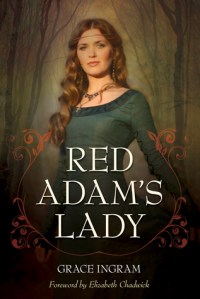
Red Adam’s Lady by Grace Ingram
Elizabeth and Her German Garden by Elizabeth von Arnim
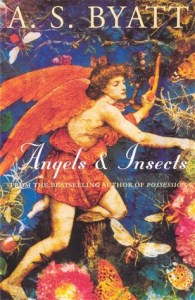
Angels and Insects by AS Byatt
Dark Angel by Sally Beauman
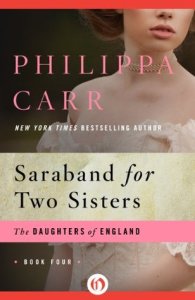
Saraband for Two Sisters by Philippa Carr

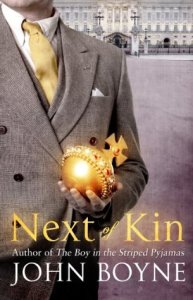
Next of Kin by John Boyne
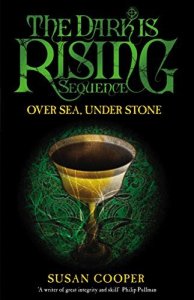
Over Sea, Under Stone by Susan Cooper
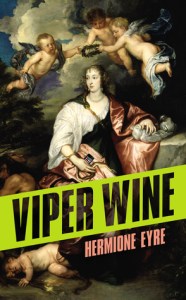
Viper Wine by Hermione Eyre
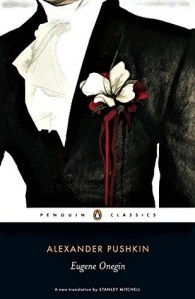
Eugene Onegin by Alexander Pushkin
Lady in Waiting by Rosemary Sutcliff
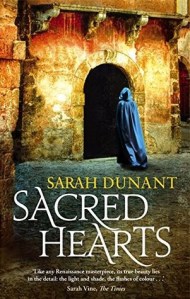
Sacred Hearts by Sarah Dunant

~

Have you read any of these books?

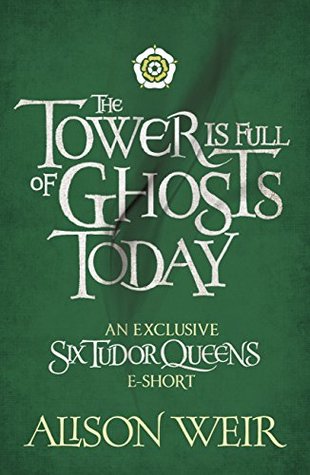
The Tower is Full of Ghosts Today by Alison Weir

This is one of several e-shorts – short stories published exclusively in ebook format – which form part of Alison Weir’s new series on the wives of Henry VIII, Six Tudor Queens. I hadn’t had much interest in reading them until I noticed that this one, The Tower is Full of Ghosts Today, was (and still is, at the moment) free to download from Amazon. It seemed a good opportunity to see what they were like.

Having read the first two full-length novels in the series (on Katherine of Aragon and Anne Boleyn) and with the third one, Jane Seymour: The Haunted Queen, on my NetGalley shelf ready to start soon, this was the perfect time to read The Tower is Full of Ghosts Today because, chronologically, it provides a sort of bridge between the Anne Boleyn book and the Jane Seymour book.

The story is set in the modern day and is written from the perspective of historian Jo Maddox, who is taking a group of tourists around the Tower of London. Jo has arranged for a special guide to lead part of the tour and provide some history on Anne Boleyn, Henry VIII’s second wife, who was of course imprisoned and beheaded at the Tower. When the guide arrives, Jo is impressed by her resemblance to Anne herself – right down to the authentic Tudor costume and French accent. But then another dark-haired young woman catches her eye and Jo begins to feel as though she is seeing Anne Boleyn everywhere she looks.

This really is a very short story! I had expected it to be longer as the book was seventy pages long, but most of those seventy pages are actually devoted to the opening chapters of the first three Six Tudor Queens novels. I didn’t need to read these as I’ve already read the first two and am about to start the third, so the story itself is disappointingly short and can literally be read in just a few minutes. Maybe the other e-shorts in the series have more substance, which could explain why this one is being offered for free.

Having said that, the story is quite entertaining, providing some information on the history of the Tower and separating the facts about Anne Boleyn from the myths. There’s even some humour:

‘Didn’t Thomas Cromwell play a large part in bringing down Anne Boleyn?’ a guest asked.

‘Cromwell!’ The guide’s eyes flashed. ‘Oh yes! He hated me, for he feared I would ruin him. So he pre-empted me. He was a man without scruples.’

‘Not if you read Hilary Mantel!’ muttered one of the group.

The other e-shorts in the series so far are Arthur: Prince of the Roses, The Blackened Heart, The Chateau of Briis, The Grandmother’s Tale and The Unhappiest Lady in Christendom, all of which fit before or after one of the three main novels. It seems that they are currently not available outside the UK, although according to Alison Weir’s website her US publisher is including some of the stories in the paperback editions of the novels. I think that’s a better idea anyway as if all of the stories are as short as this one I don’t think it’s really worth spending money on buying them all separately. I’m not planning to read any more of them, but I’m looking forward to starting Jane Seymour: The Haunted Queen.

Mothering Sunday by Graham Swift

I read this as part of my Walter Scott Prize Project (it was shortlisted in 2017) and yet again I am grateful to the Prize for pointing me in the direction of a book I would probably never have thought of picking up otherwise.

Mothering Sunday, in its original form, was a day when servants were given the day off work so that they could go home and visit their ‘mother church’ with their families. Jane Fairchild, the twenty-two-year-old heroine of Graham Swift’s novel, is an orphan, so when she is given a day’s holiday from her duties as a maid, she has no home to go to and no family to visit. Instead, she borrows a bicycle and rides across the English countryside to the big house nearby where her lover, Paul Sheringham, is waiting for her.

The book takes us through the course of that one single day in March 1924 – a day so warm and sunny it feels more like June, a day which begins with so much hope and happiness. But Jane shouldn’t really be here with Paul; he is engaged – to a much more ‘suitable’ girl than Jane – and the marriage is due to take place in just two weeks’ time. Their lovely, idyllic afternoon is cut short when Paul reluctantly gets dressed and goes to meet his future wife. Jane is left alone and what happens next is something that will stay with her for the rest of her life.

Mothering Sunday is a short novel, really more of a novella, but Graham Swift manages to pack a lot into those few pages. He has a lot to say – but always subtly and always ‘showing rather than telling’ – about relationships, about class differences and about a country still recovering from the effects of war. I particularly liked the way he handles the passing of time, describing the events of that March day in 1924 then moving smoothly and briefly forward to a later stage in Jane’s life to show how those events shape her future self.

My favourite aspect of the book, though, is Jane’s love of literature. Perhaps unusually for a servant in the 1920s, her reading has been encouraged by her employer, Mr Niven, who allows her to choose from his own shelves. The books she is most drawn to are the ones by Robert Louis Stevenson, Rudyard Kipling, H Rider Haggard, and her newest discovery, Joseph Conrad.

And later, much later in her life, she would say in interviews, in answer to a perennial (and tedious) question, ‘Oh boys’ books, adventure books, they were the thing. Who would want to read sloppy girls’ stuff?’

Her eyes might glint, her wrinkled face purse up a bit more. But then she might say, if she wanted to be less skittish, that reading those books then — ‘the war, you understand, the first one that is, was barely over’ — was like reading across a divide. So close, yet a great divide. Pirates and knights-in-armour, buried treasure and sailing ships. But they were the books she had read.

Although, as I’ve said, this is a short book, by the end of it I felt that I knew Jane Fairchild well. The limited number of characters – Jane, Paul and Mr Niven are the only ones with significant roles – gives the book a feeling of intimacy and the sense that we are there with Jane on that long-ago Mothering Sunday.

Graham Swift is not an author I had ever considered reading or thought that I would like, but based on this book, I could be interested in reading some of his others. Does anyone have any recommendations?

Six Degrees of Separation: From The Poisonwood Bible to Why Didn’t They Ask Evans?

Sorry for the unannounced absence over the last week – I’ve been to Malta on holiday and didn’t get round to scheduling any posts before I left. Anyway, I’m back now and it’s time for another Six Degrees of Separation, hosted by Kate of Books are my Favourite and Best. The idea is that Kate chooses a book to use as a starting point and then we have to link it to six other books of our choice to form a chain. A book doesn’t have to be connected to all of the others on the list – only to the one next to it in the chain.

The first book this month is The Poisonwood Bible by Barbara Kingsolver. I have never read this book, but it is described as “the story of an American missionary family in the Congo during a poignant chapter in African history”.

Thinking of other books about missionary families, I’m going to link to a novel I remember really enjoying a few years ago: In a Far Country by Linda Holeman. It is set in India in the 19th century and the heroine, Pree Fincastle, is the daughter of two British missionaries living on a Church of England medical mission in Punjab.

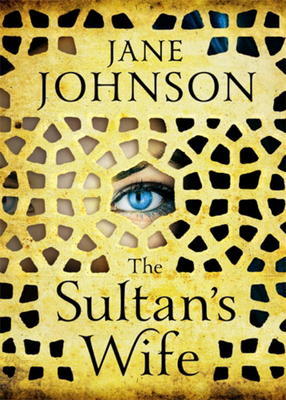
I’ve read most of Linda Holeman’s adult novels and enjoyed them all – the settings are always interesting and beautifully described. My favourite of her books is The Saffron Gate, which is set in Morocco in the 1930s. Morocco is not a country that has featured very often in my reading, but it does provide the setting for another book I loved: The Sultan’s Wife by Jane Johnson.

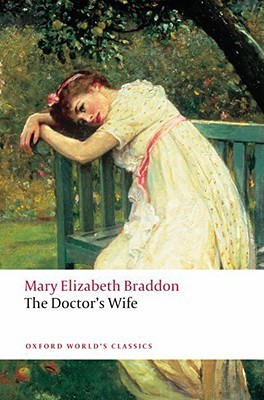
There are so many books around these days with the word “wife” in the title. Some that I have reviewed on my blog include The Aviator’s Wife, The Tea Planter’s Wife, The Tiger’s Wife and, most recently, The Pharmacist’s Wife. A much earlier example is Mary Elizabeth Braddon’s The Doctor’s Wife, a Victorian novel from 1864 with a similar plot and themes to Madame Bovary by Gustave Flaubert.

The image on the front cover of the Oxford World’s Classics version of The Doctor’s Wife is apparently called Faraway Thoughts by an unknown artist. Coincidentally, the same image has been used on the cover of one of my current reads, Friday’s Child by Georgette Heyer (although I am reading a different edition).

Friday’s Child, one of Heyer’s Regency romances, follows the early days of a marriage between two young people, Sherry and Hero. This brings to mind another funny and charming novel about a newly-married couple, Little Man, What Now? by Hans Fallada. I loved that book and really wish it was better known!

It’s unusual to find a book with a question mark in the title, but I can think of a few that I’ve read, including Why Didn’t They Ask Evans? by Agatha Christie. I really enjoyed that one – it’s a bit melodramatic and silly, but a lot of fun to read.

And that’s my chain for this month! Have you read any of these books?

Next month, the starting point will be The Tipping Point by Malcolm Gladwell, a book I’ve never read and know nothing about!