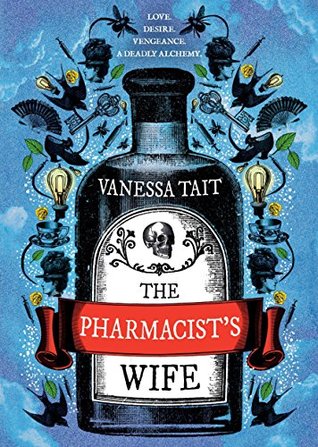
The Pharmacist’s Wife by Vanessa Tait

Vanessa Tait is a new author for me, although it seems she has written one previous novel, The Looking Glass House – a book inspired by Alice in Wonderland, which sounds particularly intriguing as Tait is the great-granddaughter of ‘the real Alice’, Alice Liddell. I was drawn to her latest novel, The Pharmacist’s Wife, by the eye-catching cover and then by the promise of “A dark and thrilling tale of Victorian addiction, vengeance and self-discovery, perfect for fans of Sarah Waters, Jessie Burton’s The Miniaturist and Sarah Perry’s The Essex Serpent.”

The Pharmacist’s Wife is set in Victorian Edinburgh, a setting which interested me immediately. There are so many novels set in Victorian London, it always makes a nice change to find one set somewhere else! Although I felt that the sense of place could have been strengthened by the use of more Scottish dialect, I did like the contrasting descriptions of the Old Town and the New Town.

North Bridge, the road linking Old to New, is the location Rebecca Palmer’s husband Alexander has chosen for his new pharmacy, the Grand Opening of which is celebrated with a brass band and a performing monkey. These are exciting times for Rebecca who, as a spinster of twenty-eight, had given up hope of ever marrying anyone, let alone such a clever and distinguished man as Alexander. Almost as soon as they move into their new home, however, Rebecca is forced to question whether her husband really is the man he appears to be. She suspects him of having an affair with Evangeline, a woman from the Old Town, and when she finds a ladies’ red shoe on his desk she’s sure her suspicions have been confirmed.

Alexander doesn’t like a wife who asks questions or has too many ideas of her own and, with this in mind, he has been developing a new medicine in his laboratory above the pharmacy – a medicine which he hopes can be used to control women and which he persuades Rebecca to try by telling her it will make her happy and content. Soon Rebecca is dependent on her medicine, taking it more and more often and relying on her husband to provide it for her. It is, of course, heroin – and it seems that Rebecca is not the only woman on whom Alexander has been testing his new invention…

This is certainly a dark novel but I didn’t find it a particularly thrilling one and it wasn’t until near the end that I started to feel gripped by the story. I suppose I was expecting more from the plot; there are lots of good ideas and plenty of interesting topics are touched on, but it’s only when (without wanting to spoil too much) things begin to go less smoothly for Alexander that it becomes really compelling, in my opinion. What this book does do, very well, is explore the inequalities between men and women in 19th century society. Although Alexander is not a real person and his discovery of heroin is fictitious, he uses the drug to keep his wife quiet and submissive and to take away whatever small amount of independence and freedom she may have had. Rebecca’s situation is oppressive and frightening and as her addiction to the drug deepens it becomes difficult to see how she is going to break out of the cycle in which she has found herself.

I liked Rebecca as a character and was pleased to see that she does develop as a person as the novel progresses, but I thought the villains, Alexander and his friend Mr Badcock, were too obviously ‘villainous’ and could have been given more depth. As well as the drugs, it seems that there’s no type of cruelty or depravity of which they’re not capable! Thankfully, there are two decent male characters to balance things out slightly – Lionel, the apprentice who helps Alexander in the pharmacy, and Gabriel, Rebecca’s first love.

The Pharmacist’s Wife is an interesting novel and, as I’ve said, a very dark one. I couldn’t love it, but I would be happy to read more books by Vanessa Tait. Has anyone read The Looking Glass House? What did you think of it?

Thanks to Atlantic Books for providing a review copy via NetGalley.
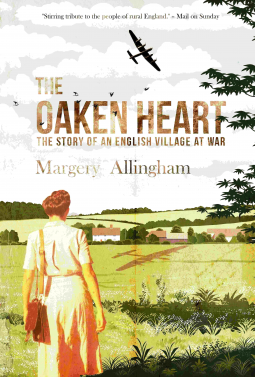
The Oaken Heart by Margery Allingham

Having read several of Margery Allingham’s detective novels, I was intrigued to come across The Oaken Heart, an account of life in her small English village during the Second World War. Originally published in 1941, it was apparently based on letters written to some American friends and expanded into a book at the suggestion of her publisher. It’s interesting to think that she was writing this while the war was still taking place and when nobody knew how much longer it would last or what the outcome would be.

Allingham’s village was Tolleshunt D’Arcy in Essex, but she refers to it in the book as ‘Auburn’ after a line from the poem The Deserted Village by Oliver Goldsmith. She is obviously very proud of Auburn and the way the people who live there work together to cope with whatever the war throws at them; it’s true that all towns and villages have their own unique characteristics, but I think it’s also true that the wartime experiences of the residents of Auburn will have been similar to the experiences of people in other parts of Britain.

Like many other villages, Auburn, in 1938 when the book opens, is still suffering from the effects of the previous war which ended just twenty years earlier. There’s a sense that Allingham and her friends are putting all their faith in Neville Chamberlain, not really believing or wanting to believe that war could possibly happen again. Of course, it does happen again – after a year of preparations, gas mask distributions and discussions of who should take in how many evacuees. The subject of evacuees is an important one to the people of Auburn; at first they are excited at the thought of groups of little schoolchildren from London arriving in the village (since the First World War there has been a shortage of young people in Auburn), but the reality is very different – hundreds of young mothers and babies! Allingham’s descriptions of the newcomers, the culture differences and how the villagers dealt with all of this are quite funny to read about.

I have never read anything about Margery Allingham as a person before, so I don’t know what she was supposed to be like or what impression the people who knew her had of her, but based on her own words in The Oaken Heart, she seems very likeable and down-to-earth. She makes a few references to her writing career now and then (she was working on Traitor’s Purse at the time), but there is never any sense of self-importance or superiority over anyone else in the village. Her writing style is warm, conversational and, as you would expect, very readable.

This is a wonderful book, which I would recommend to anyone who enjoys reading about life during the war. The fact that it is a first-hand account written in 1941 rather than a memoir written years later gives it another layer of interest. As we reach the final page, there is still no end to the war in sight and nobody has any idea if or when it’s all going to stop. I was sorry that the book ended when it did, as I would have liked to have continued reading about the people of Auburn and to find out how they fared later in the war.

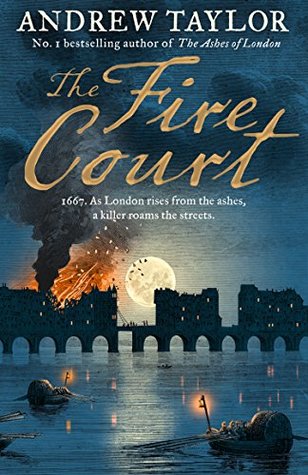
The Fire Court by Andrew Taylor

This is the second in Andrew Taylor’s new historical mystery series set during and after the Great Fire of London. The first book, The Ashes of London, set in 1666, deals with the Fire itself and the devastation it causes, as well as introducing us to our protagonists – James Marwood, son of a Fifth Monarchist, and Cat Lovett, daughter of a regicide involved in the execution of King Charles I. It’s not completely necessary to have read The Ashes of London before beginning The Fire Court as they both work as standalone mysteries, but I would still recommend it.

In The Fire Court, we watch as London begins to rebuild in the aftermath of the Great Fire. With so much of the city destroyed, so many homes and businesses burned to the ground, there’s a lot of rebuilding to be done! Naturally, this gives rise to disputes between landlords and tenants, and disagreements as to how land should be redeveloped and who is responsible for paying for it. A special court is established to deal with all of this: the Fire Court.

At the beginning of the novel, James Marwood’s elderly father dies after falling beneath the wheels of a wagon in a London street, but not before he has time to tell James about a horrific discovery he made in one of the chambers of the Fire Court – the body of a murdered woman, with blood on her yellow gown. At first, Marwood dismisses these claims as the ramblings of an old, ill man, but when he begins to investigate he comes across some clues which suggest that maybe his father was telling the truth after all.

Marwood wants to find out more, but it seems that his employers – Joseph Williamson, the Under-Secretary of State, and William Chiffinch, Keeper of the King’s Private Closet – would prefer him to leave things alone. He can’t walk away now, though; he’s already much too deeply involved. Others have become caught up in the mystery too, among them Cat Lovett who, following the events of the previous novel, is now living in the household of her cousin Simon Hakesby, the architect – and another young woman, Lady Jemima Limbury, whose marriage, it appears, is based on lies and deceit. All of these people have a part to play in the mystery that unfolds and none of them know who to trust.

I enjoyed The Ashes of London, but I thought The Fire Court was even better. The plot was a complex, interesting one and with the focus on lawyers and court cases, it reminded me at times of CJ Sansom’s Shardlake novels, which I love. Being the second book in the series, I felt that both main characters – Marwood and Cat – are starting to feel more fully developed now. I sympathised with Marwood’s conflicting feelings for his father and the dilemma he faces when he is forced to choose between his two masters, Williamson and Chiffinch. As for Cat, she continues to be in a dangerous position should her true identity be discovered, so she has taken the name Jane Hakesby and is pretending to be her cousin’s servant. In her situation, you would think it would be a good idea to keep a low profile, but with her courageous and fiery personality, she does nothing of the sort! I really like the way the relationship between Marwood and Cat is progressing; it has taken a while, but they are beginning to trust each other and work together.

There are some interesting secondary characters in this book too, ranging from Marwood’s servant, Sam, who lost a leg in the wars against the Dutch, to the sinister Lucius Gromwell, in whose room the murdered woman was found. I particularly enjoyed reading about Jemima Limbury: her background and lifestyle are very different from Cat’s but the situation in which she finds herself is no easier to endure.

I’m looking forward to reading more books about James Marwood and Cat Lovett – and am assuming that there are going to be more, as they are being marketed as ‘a series’ which would suggest that there won’t just be two! Meanwhile, I still need to read my copy of Bleeding Heart Square, the only historical mystery by Taylor that I still haven’t read!

Historical Musings #37: Reading Anya Seton

Welcome to my monthly post on all things historical fiction. Last month, I looked at the work of Elizabeth Chadwick; this month it’s the turn of another historical fiction author: Anya Seton.

Anya Seton was the pseudonym of Ann Seton Chase, an American author born in Manhattan in 1904. She died in 1990 aged eighty-six, having written twelve novels, some of which were bestsellers and some which were adapted for film.

I have read six Anya Seton novels, although she was an author I discovered years before I started my blog, so I don’t have reviews to link to for most of these books.

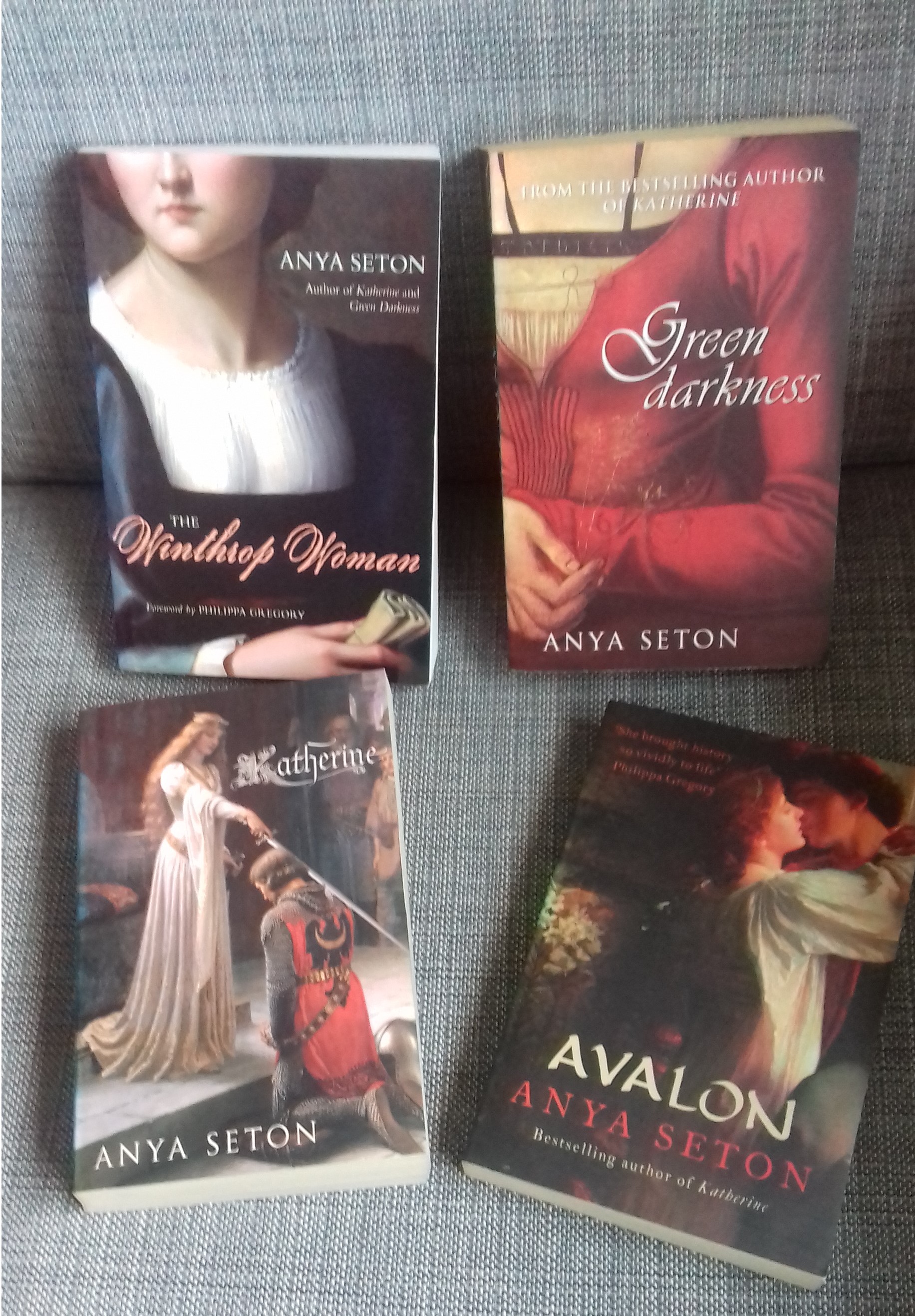
Katherine (1954)

This is probably Seton’s most famous novel. It was my first introduction to her work and, in fact, I think it was the first book I read that dealt with real historical figures rather than fictional characters in a historical setting. The Katherine of the title is Katherine Swynford, mistress of Edward III’s son John of Gaunt. The descendants of Katherine and John were the Beauforts, who included Margaret Beaufort, mother of King Henry VII. I thought it was a wonderfully moving story and a vivid portrayal of 14th century England – the world of Edward III and Richard II, the Black Death and the Peasants’ Revolt, Geoffrey Chaucer and Julian of Norwich.

Green Darkness (1972)

Green Darkness was the second Anya Seton novel I read and, although I enjoyed some aspects of it, I thought it was slightly disappointing after Katherine. It’s a reincarnation story about a present day (1960s) woman who revisits her former life in Tudor England, during which she lived with the wealthy Browne family and fell in love with the family chaplain. The 16th century romance didn’t really work for me but I did like the setting, particularly the descriptions of the manor house, Ightham Mote.

The Winthrop Woman (1958)

This was another one I loved. It tells the story of Elizabeth Fones, a young Puritan woman who, in the 17th century, marries into the family of John Winthrop, the first governor of the Massachusetts Bay Colony. I can’t remember very much else about this book now, but I did find it interesting because I had never read anything about this period of American history before.

Avalon (1965)

Avalon is my least favourite of the Anya Seton books I’ve read, although that could be because, at the time when I read it, the setting didn’t particularly interest me as I preferred reading about later periods. The story takes place in the 10th century and follows the adventures of Rumon, a nobleman from Provence who is shipwrecked off the coast of Cornwall, and Merewyn, a Cornish girl who believes she is a descendant of King Arthur. Maybe I’ll try reading this book again one day to see if my opinion of it has changed.

Devil Water (1962)

Having read the four books above, it wasn’t until years later that I picked up my fifth, Devil Water, in the library. This one centres around the Jacobite Rebellions of 1715 and 1745, focusing on two English Jacobites, James Radcliffe, the 3rd Earl of Derwentwater, and his younger brother, Charles. Later in the book, Charles’ daughter travels to America, to the plantations of colonial Virginia. Although this wasn’t a favourite, it was of particular interest to me because the first half of the novel is set in the North East of England, which is where I’m from.

Dragonwyck (1944)

This was the last Anya Seton book I read, in 2013. This one is a gothic novel about a young woman from Connecticut who becomes a governess in the home of Nicholas Van Ryn in Hudson, New York. Again, not an absolute favourite, but I did love the historical setting – the Anti-Rent War, the Astor Place Riot of 1849, steamboat races on the Hudson River and even an appearance from Edgar Allan Poe!

I still haven’t read the rest of Seton’s novels, partly because I have already read the ones which appealed to me the most. The other titles are:

My Theodosia (1941)
The Turquoise (1946)
The Hearth and Eagle (1948)
Foxfire (1950)
The Mistletoe and Sword (1955)
Smouldering Fires (1975)

I do have a copy of The Turquoise, which I will read eventually, but if you have read any of the others please let me know what you thought of them!

I will be looking at another author of historical fiction in next month’s post, but for now:
Have you read any of Anya Seton’s novels? Which are your favourites?

Six Degrees of Separation: From Memoirs of a Geisha to A Tale of Two Cities

It’s the first Saturday of the month, which means it’s time for another Six Degrees of Separation hosted by Kate of Books are my Favourite and Best. The idea is that Kate chooses a book to use as a starting point and then we have to link it to six other books of our choice to form a chain. A book doesn’t have to be connected to all of the others on the list – only to the one next to it in the chain.

The first book this month is Memoirs of a Geisha by Arthur Golden. I have never read it, but I know it is set in Japan.

Thinking about other books I’ve read that are also set in Japan, the first one to come to mind is Shogun by James Clavell, but I prefer to only link to books that I have actually reviewed on my blog. My next choice, then, is The Shogun’s Queen by Lesley Downer. I really enjoyed this novel about Atsu, wife of the Shogun Tokugawa Iesada.

The Shogun’s Queen was part of a quartet of novels, although I still haven’t read the other three in the series. Another quartet of novels I have started (but not finished) is Johan Theorin’s Öland Quartet, which begins with Echoes from the Dead.

These four crime novels are all set on the Swedish island of Öland, which is a very atmospheric setting, and each book takes place in a different season. The other two I have read are The Darkest Room and The Quarry. I don’t often read Scandinavian crime fiction, but apart from the Theorin books, another that I enjoyed was Burned by Norwegian author Thomas Enger.

The main character in Burned, Henning Juul, is a journalist. Journalism makes me think of a book I read recently and loved – Dear Mrs Bird by AJ Pearce, about a young woman who dreams of becoming a Lady War Correspondent but finds herself typing up letters for the problem page instead.

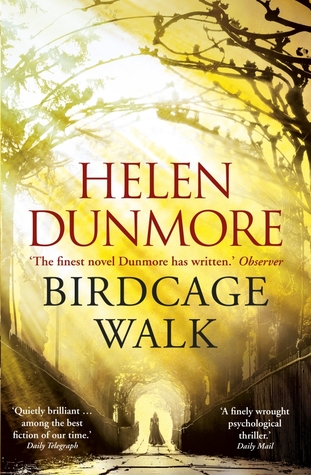
For my next link, I thought of other books I’ve read with ‘bird’ in the title and decided on Birdcage Walk by Helen Dunmore. This was Dunmore’s last novel before her death and although the story is set in England, the French Revolution is played out in the background.

I have read quite a few novels about the French Revolution so I had plenty of options for the last book in my chain. The one I’m going to choose is A Tale of Two Cities, which, so far, is my favourite Charles Dickens novel.

So, that’s my chain for this month! From Japan to France via Sweden, Norway and England. Have you read any of these books?

Next month, the starting point will be The Poisonwood Bible by Barbara Kingsolver, yet another book I haven’t read!

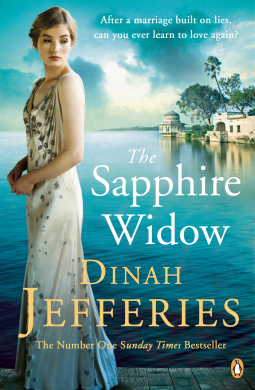
The Sapphire Widow by Dinah Jefferies

I love Dinah Jefferies’ books; they always have such interesting settings. So far they have taken me to 1950s French Indochina (The Silk Merchant’s Daughter), Malaya during the Emergency of 1955 (The Separation) and 1920s Ceylon (The Tea Planter’s Wife). Her new novel, The Sapphire Widow, takes us back to Ceylon again but the story this time is quite different.

It’s 1935 and Louisa Reeve is grieving for her stillborn daughter, one of several miscarriages and stillbirths she has suffered over the years. She should be able to rely on her husband Elliot for support, but Elliot has become withdrawn and distant, spending more and more of his time visiting a nearby cinnamon plantation in which he says he has bought shares. When he tells her about his latest business venture – converting an old Print House into a shop trading in jewels and spices – Louisa feels more optimistic. It will be something they can work on together – and if they could only have another child, surely their marriage will survive.

Sadly, Louisa will never know what the future might have held for the two of them, because Elliot is killed in a tragic accident. Before she has even begun to come to terms with losing him, she makes a series of shocking discoveries that leave her questioning whether she ever really knew her husband at all. Hoping to find answers at Cinnamon Hills, she only uncovers more lies and secrets, but when she meets Leo, the plantation owner, and a little boy called Conor, she begins to find the strength to move on.

I think The Sapphire Widow could be my favourite of the four Dinah Jefferies novels I’ve read. It was lovely to return to Sri Lanka (or Ceylon, as it was then) and a nice surprise to be reacquainted with characters from The Tea Planter’s Wife, which I hadn’t expected! Although this book doesn’t explore the history and politics of 1920s/30s Ceylon in the way that the earlier book did, it doesn’t really need to because this is a different type of story. Unlike Gwen in The Tea Planter’s Wife, Louisa doesn’t have the same level of interaction with people of different backgrounds and beliefs; her story revolves around Elliot’s lies, her constant battles with her mother-in-law Irene, and the relationships that are beginning to form with Leo and with Conor.

This doesn’t mean that the setting is any less wonderful, of course! Dinah Jefferies writes so beautifully about Ceylon, bringing each location to life as the action moves between the coastal city of Galle, the capital Colombo and the cinnamon plantation where Leo lives. The characters are great too. I loved Louisa and really admired her patience with the interfering Irene, for whom Elliot can do no wrong and Louisa can do no right. I was glad that Louisa had a good friend in her sister-in-law Margo, who helps her through this difficult time despite the problems she is experiencing in her own personal life.

I really enjoyed The Sapphire Widow and will look forward to whatever Dinah Jefferies writes next. Meanwhile, I need to go back and read Before the Rains, her novel set in India in the 1930s. I’m not sure how I still haven’t read that one!

Thanks to Penguin for providing a copy of this book for review via NetGalley.

Mini-reviews: Three books, three queens

I have read three older historical fiction novels recently which I’ve decided to write about all in one post to avoid boring those of you who don’t share my interest in ‘kings and queens’ novels – and also because I’ve fallen hopelessly behind with my reviews again and need to start catching up!

The first book I’m going to mention is With All My Heart by Margaret Campbell Barnes (1951), which tells the story of Catherine of Braganza, the Portuguese princess who comes to England as the wife of King Charles II. Although I’ve read a lot of other novels set during the reign of Charles II, this is the first one that specifically focuses on Catherine. Catherine is portrayed very sympathetically throughout this novel, beginning with her early days in England, trying to adjust to a climate and culture so different from Portugal’s, and later, when she discovers that she will have to share her husband with his many mistresses.

There is some overlap between this book and the last one I read by Barnes – Lady on the Coin – which is about Frances Stuart, one of the other women at the court of Charles II, but the two novels have a different feel, probably due to the very different personalities and positions of their heroines. One notable difference between the two books is that while major events such as the plague and the Fire of London are only touched on lightly in Lady on the Coin, they are given much more attention in this book and that made this one a more interesting read.

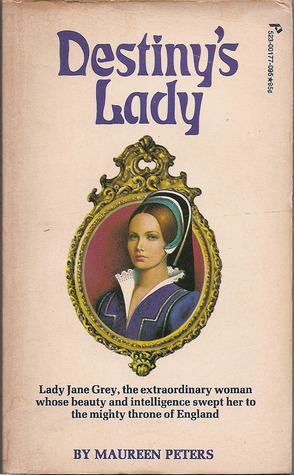
The second queen to feature in my recent reading was only queen for nine days: she is, of course, Lady Jane Grey and her story is told in Destiny’s Lady by Maureen Peters. The book takes us through Jane’s life from her childhood in the household of Catherine Parr and Thomas Seymour to her acceptance of the crown, her imprisonment and finally her beheading in 1554. Jane’s mother, Frances Brandon, is very much the villain of the novel, but remembering that it was published in 1972, I think that was the accepted view of Frances at the time – it only seems to be more recently that historians have started reassessing what we know of her again.

I have read a few other books by Peters and I complained that they were too short to do the subject justice. This is another short one, but as Jane Grey’s life was sadly also very short, I felt that the length of the book was adequate for everything that needed to be said. The pacing is better and there is not the same sense of struggling to squeeze a person’s entire lifetime into two hundred pages. Having said that, I would only really recommend Destiny’s Lady if you just want a brief overview of Jane’s life or are looking for a light and undemanding read set in this period. If you would prefer a more in-depth novel about Jane, you will need to look elsewhere.

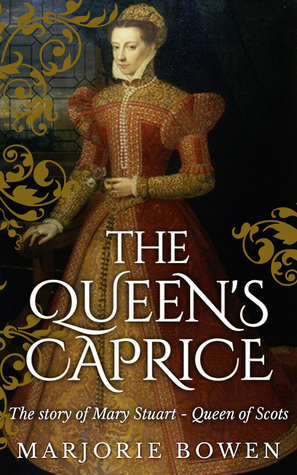
Finally, I read The Queen’s Caprice by Marjorie Bowen, a book about a queen of Scotland this time. The story of Mary, Queen of Scots, is a fascinating, eventful one and always a good subject for historical fiction. Bowen’s novel is a straightforward fictional biography of Mary, covering the period from her return to Scotland in 1561 following the death of her husband, the King of France, and her imprisonment at Lochleven. In between, there’s always something happening: a murder, a plot, a rebellion or a disastrous marriage or two!

This is an interesting look at Mary’s life, although as it was published in 1933 I think the style will be too dated for some readers and it’s probably not the best book to read as a first introduction as Bowen does seem to assume we have some background knowledge of the period. It isn’t a very flattering portrayal of Mary either – as the title suggests, a lot is made of her capriciousness and her tendency to think with her heart rather than her head, making poor decisions regardless of the consequences. I was never sure whether our sympathies were supposed to be with Mary or with her ambitious half-brother, James Stewart, the Earl of Moray. I’ve read a few other books by Marjorie Bowen and while I thought this one was worth reading, it isn’t one of my favourites.

Have you read any books about Catherine of Braganza, Lady Jane Grey or Mary, Queen of Scots? Which would you recommend?