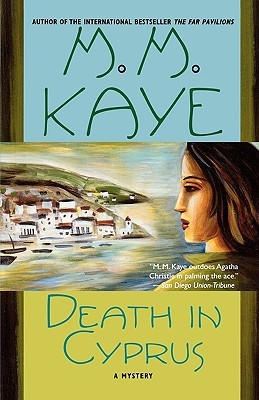
Death in Cyprus by M.M. Kaye

I read this novel from 1956, the third in M.M. Kaye’s Death In… series, in the final days of February and it provided some welcome respite from the freezing temperatures and heavy snow we were experiencing in my part of the country. Lovely, evocative passages like this one took me away from the cold for a while and into the warmth and beauty of Cyprus:

Olive groves, the tree trunks so gnarled and twisted with age that some of them must surely have seen the Crusaders come and go, stood dark against the glittering expanse of blue, and below them the little town of Kyrenia lay basking in the noonday sun like a handful of pearls and white pebbles washed up by the sea.

The setting is not as idyllic as it seems, however: there appears to be a murderer on the loose – someone has already killed once and could kill again. The first death occurs on board the S.S. Orantares on which twenty-one-year-old Amanda Derington is a passenger. Amanda has accompanied her uncle on a business trip to North Africa and has suggested that she could visit Cyprus while he continues his tour of the various offices of the Derington empire. Horrified at the thought of his niece travelling alone, Uncle Oswin arranges for her to be chaperoned on the journey and to stay at the home of one of his managers on her arrival.

Setting sail from Egypt to Cyprus, Amanda gets to know Alistair Blaine and his wife Julia, an unhappy, bitter woman who accuses every other female on the ship of trying to steal her husband. When Julia collapses and dies in Amanda’s cabin after drinking a glass of her favourite lemon water, only Amanda knows that it was not suicide. Taking the advice of her fellow passenger Steve Howard, Amanda keeps her thoughts to herself, and when she finds a bottle of poison hidden behind her pillow she conceals the evidence from the police. After all, she herself would be the prime suspect and could find it difficult to prove her innocence. Unfortunately, this decision puts her in danger of a different kind when they reach Cyprus, where her knowledge of the crime could make her the killer’s next target…

Death in Cyprus is a great murder mystery with plenty of possible suspects. Apart from Amanda herself, I could imagine every one of them being the murderer and my suspicion fell on one, then another, then another, then switched back to the first. Could it be Persis Halliday, the American romantic novelist who has come to Cyprus to look for inspiration? What about Glenn Barton, the Derington employee who was supposed to be Amanda’s host in Nicosia but had to cancel because his wife had left him? Claire Norman, who seems to know far too much about everyone else’s business? Or Lumley Potter, the spiritual, bohemian artist who is Glenn’s wife’s new lover? The eventual solution to the mystery is quite logical and I feel as though I should have worked it out, but I had allowed myself to get too distracted by red herrings!

As this is a book from the 1950s, some of the attitudes are a bit dated, particularly regarding a romance which develops between Amanda and one of the group she travels to Cyprus with (I won’t tell you who he is, even though it’s very obvious from early in the book). There’s a definite sense that he views Amanda as a helpless woman who needs the protection of a man – although, to be fair, she gives that impression herself with her habit of repeatedly putting herself into dangerous situations from which she needs to be rescued, wandering off on her own in lonely places and venturing into strangers’ houses late at night! Of course, Amanda’s reckless actions do have a purpose because they are the reason for most of the suspense in the story.

I love the Death In… novels. I’ve read three so far and enjoyed them all, especially this one and Death in Kashmir. The books all stand alone – they have different settings and different characters – but I have been reading them in publication order anyway, which means Death in Kenya will be next for me.
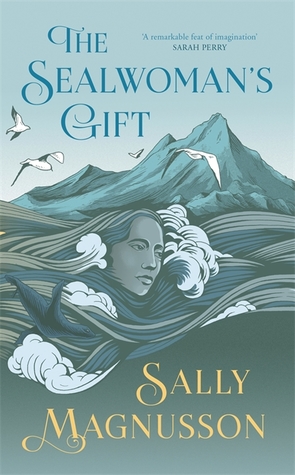
The Sealwoman’s Gift by Sally Magnusson

This is a beautifully written novel based on a little known historical event: the 1627 raid by Barbary pirates on Iceland’s Westman Islands. Around four hundred Icelanders were taken in captivity to Algiers to be sold at the slave markets, among them the priest Ólafur Egilsson, his pregnant wife Ásta Thórsteinsdottir, and two of their children. We know from historical records that Ólafur was released and sent to Denmark to petition the Danish king (Iceland’s ruler in those days) in the hope that he would provide the ransom to free his subjects. His story was preserved in a memoir describing his capture and the voyage there and back, but the story of Ásta, who was not allowed to accompany him on the journey home, has been lost to history.

In The Sealwoman’s Gift, Sally Magnusson has given a voice to Ásta, a woman who, like so many others in centuries gone by, has been ignored and forgotten by history. As we know little or nothing about what happened to Ásta and the other women and children after their arrival on the shores of Algeria, this gives the author the freedom to create an interesting, realistic and believable story to fill in the gaps. She writes with sensitivity and understanding as she describes Ásta’s pain at being separated from her husband and children, her changing feelings for the man who buys her – Ali Pitterling Cilleby – and the agonising decision she eventually has to make.

There’s a lot for Ásta to adjust to in her new life; Algeria and Iceland couldn’t be more different, with very different climates, customs, foods, languages and religions. The religious difference is one of the most difficult for Ásta to accept – as the wife of a Lutheran minister, the possibility of her children having to convert to Islam is not easy for her to come to terms with. We also follow Ólafur on his return to Heimaey in the Westman Islands and see both the short-term and long-term effects the raids have had on the community. With such a small population to begin with, the loss of several hundred of their people has a big impact; it seems that almost everyone has lost a husband or wife, a child or a parent or a friend.

Iceland has a strong tradition of storytelling and some of these myths, legends and sagas are woven into the novel as Ásta finds some solace in remembering the stories of her homeland and narrating them to her master and his wives. This is another aspect of the book that I liked; you can learn a lot about a country from its stories and its folklore.

Sally Magnusson (who is the daughter of the television presenter Magnus Magnusson) has previously written several non-fiction books, but this seems to be her first novel. I liked her writing, apart from the fact that she chose to write in the present tense. I’m really not a fan of present tense and in this case I found it distracting and distancing, which I’m sure is not what the author intended. It’s down to personal taste, I suppose – you either have a problem with it or you don’t. I also thought that, while Ásta, Ólafur and the other Icelandic people are strong, interesting characters, the characters they meet in Algiers feel less well developed. If I’d had a stronger feeling for Cilleby, for example, as a person, I think I would have found the later stages of the story more emotional.

These are just small criticisms and, as I’ve said, are probably just due to my tastes as a reader rather than the book itself, which is getting great reviews and really is a fascinating read.

Thanks to Two Roads for providing a copy of this book for review via NetGalley.

Historical Musings #36: Reading Elizabeth Chadwick

Welcome to my monthly post on all things historical fiction. After putting thirty-five of these posts together since 2015 I’m starting to struggle for new ideas so while I rebuild my list of potential future topics, I thought I would try something slightly different for a few months: a series of posts on specific historical fiction authors. These should be relatively easy for me to write and will hopefully introduce new readers to some of my favourite authors. I’ve decided to start with Elizabeth Chadwick as I’ve just finished reading one of her books and am about to begin another.

Elizabeth Chadwick has written over twenty books set in the medieval period; her first, The Wild Hunt, was published in 1990 and her latest, Templar Silks, is out this month. Her earlier novels tend to feature fictional characters and storylines, while her more recent ones focus on the lives of real historical figures, particularly members of the Marshal and Bigod families. Let’s start by looking at the books I have already read (there are eight of them):

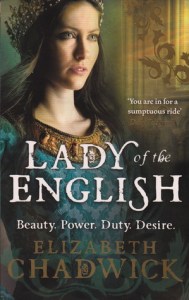
Lady of the English

Set during the period of civil war known as the Anarchy, this is the story of the Empress Matilda, daughter and heir of Henry I, who faces a battle with her cousin Stephen for the throne of England. Matilda’s son, Henry, will become the first Plantagenet king of England. We also follow the story of Matilda’s stepmother, Adeliza, another fascinating medieval woman.

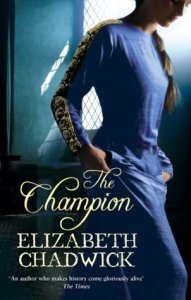
The Champion

This one is set in France, Wales and England towards the end of the 12th century and follows the story of fictional heroine Monday de Cerizay and knight Alexander de Montroi. I learned a huge amount about jousts, tournaments and other knightly pursuits!

The Eleanor of Aquitaine trilogy:

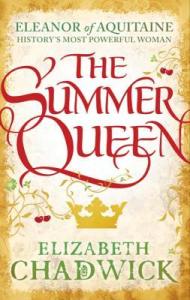
The Summer Queen
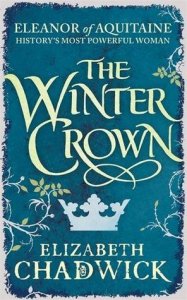
The Winter Crown
The Autumn Throne

This trilogy of novels about Eleanor of Aquitaine takes us through Eleanor’s entire life including her troubled marriage to King Louis VII of France, her relationship with her second husband, Henry II of England, her time in captivity following the breakdown of their marriage and the reigns of her sons Richard I and King John.

William Marshal books

The Greatest Knight
The Scarlet Lion – review coming soon

These two novels are based on the life of William Marshal – Earl of Pembroke, knight, statesman and adviser to five kings. I love Chadwick’s depiction of William and if the real man was anything like the fictional one, then he really deserved the title of ‘the greatest knight’.

Her newest novel, Templar Silks, is also part of the Marshal series, although I’m sure you would be able to read it as a standalone. I haven’t read it yet, but it follows William on his pilgrimage to Jerusalem in 1183.

To Defy a King

This one tells the story of Mahelt Marshal, the daughter of William Marshal. As England descends into turmoil during the reign of King John, Mahelt finds herself in a situation where she must choose between her own family, the Marshals, and the family of her husband, Hugh Bigod.

~

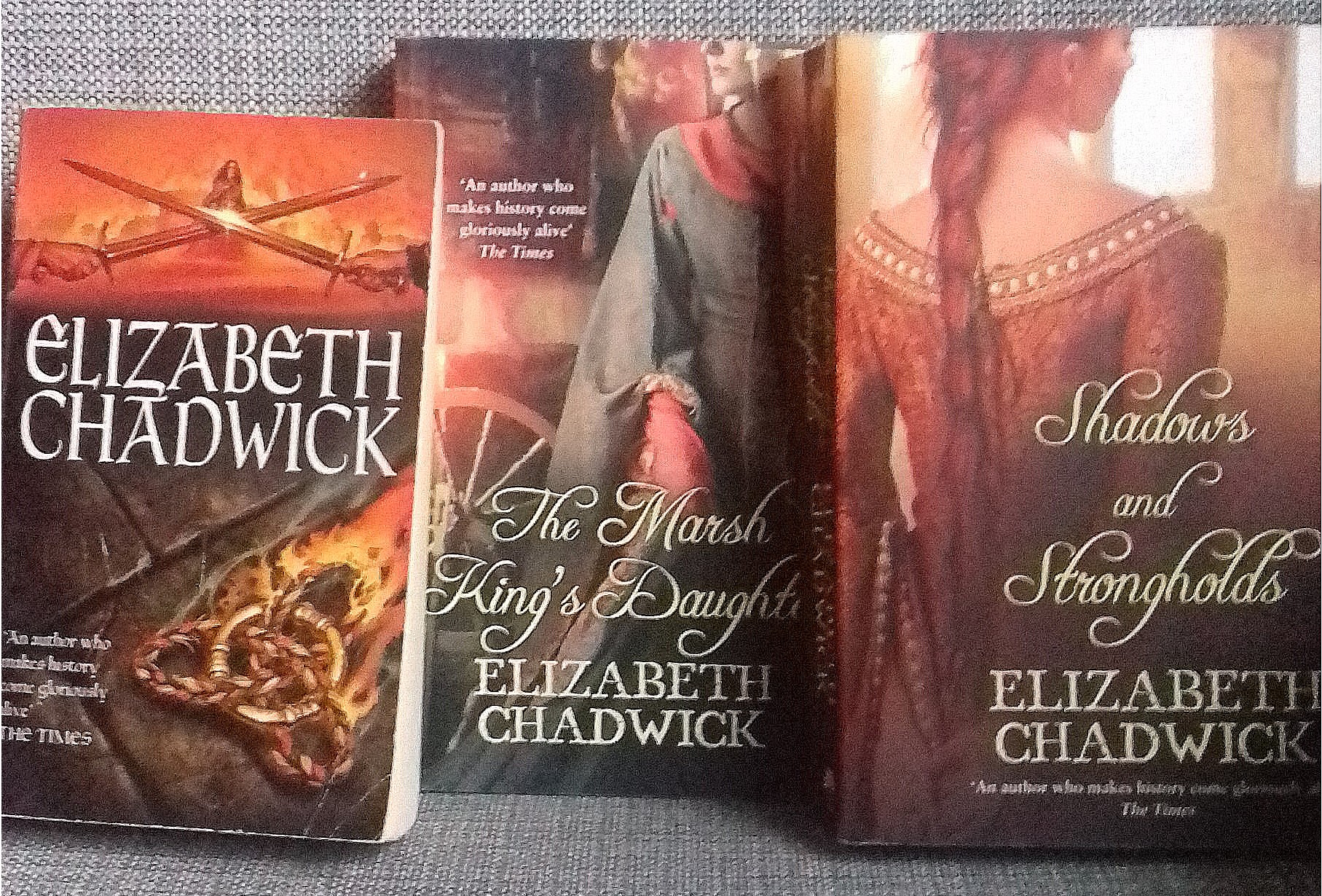
The books I’ve listed above are the only ones I’ve read so far, but I also have three more Chadwick novels on my shelf which I’ve bought as I’ve come across second-hand copies:

The Love Knot
The Marsh King’s Daughter
Shadows and Strongholds

And here are the titles of her other books:

The Wild Hunt
The Running Vixen
The Leopard Unleashed
Children of Destiny
Shields of Pride
First Knight
The Conquest
Lords of the White Castle
The Winter Mantle
The Falcons of Montabard
A Place Beyond Courage
The Time of Singing

I don’t know much about any of these, apart from Lords of the White Castle which I started to read years ago and abandoned – although I can’t remember why, so I must try it again! I would like to read all of the others, except maybe First Knight which seems to be a novelisation of the 1995 film.

You can find out more about Elizabeth Chadwick by visiting her official website.

Look out for my reviews of The Scarlet Lion and Templar Silks in the next few weeks – and, of course, next month’s Historical Musings post when I will be choosing another author to write about.

Have you read any of Elizabeth Chadwick’s books? Which are your favourites?

Classics Club Spin #17: The result

The result of the latest Classics Club Spin has been revealed today – and I’m pleased with the book I’ll be reading. It wasn’t one I was particularly hoping for, but it’s by an author I love and I think I’m going to enjoy it.

The idea of the Spin was to list twenty books from my Classics Club list, number them 1 to 20, and the number announced today (Friday) represents the book I have to read before 30th April 2018. The number that has been selected is…

3

And this means the book I need to read is…

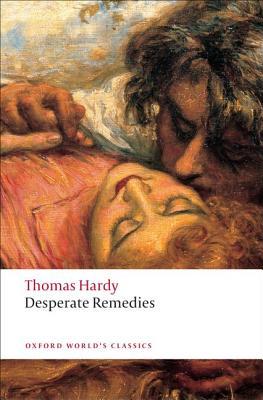
Desperate Remedies by Thomas Hardy

From Goodreads: “Cytherea has taken a position as lady’s maid to the eccentric arch-intriguer Miss Aldclyffe. On discovering that the man she loves, Edward Springrove, is already engaged to his cousin, Cytherea comes under the influence of Miss Aldclyffe’s fascinating, manipulative steward Manston.

Blackmail, murder and romance are among the ingredients of Hardy’s first published novel, and in it he draws blithely on the ‘sensation novel’ perfected by Wilkie Collins. Several perceptive critics praised the author as a novelist with a future when Desperate Remedies appeared anonymously in 1871. In its depiction of country life and insight into psychology and sexuality it already bears the unmistakable imprint of Hardy’s genius.”

~

Have you read Desperate Remedies? Did you take part in the Classics Spin? What will you be reading?

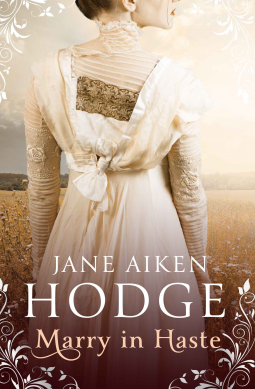
Marry in Haste by Jane Aiken Hodge

This is the third Jane Aiken Hodge novel I’ve read and my favourite so far. Based on an earlier story, Camilla, which was serialised in Ladies’ Home Journal in 1961, Marry in Haste was originally published in 1969 and has just been reissued by Ipso Books. It is set in England and Portugal during the Napoleonic Wars and has just the combination of romance, suspense and history that I am coming to expect from her novels.

The saying “marry in haste and repent at leisure” perfectly describes Camille de Forêt’s situation. Having fled to England with her father, a French Comte, and changed her name to Camilla Forest to distance herself from her French origins, she has spent several years in the home of the Duchess of Devonshire. Following the death of the Duchess, Camilla found a position as governess in another household but when we meet her at the beginning of the novel she has been dismissed from her job and sent away with no money and nowhere to go.

A chance encounter with the Earl of Leominster when his carriage passes her on the road seems to provide the perfect solution to Camilla’s problems. She needs a husband, a home and some money; Leominster (or Lavenham, as he is known to his friends) needs a wife in order to claim his inheritance. In the sort of plot development which will be familiar to readers of Georgette Heyer’s Regency romances, Lavenham proposes to Camilla and she accepts – on the condition that it will be a marriage in name only. Of course, it doesn’t take long for Camilla to discover that she is falling in love with her husband after all…but will Lavenham, who has a distrust of women based on a bad experience in his past, ever return her feelings?

Marry in Haste is an enjoyable and entertaining novel; it’s not particularly original (as I said, it feels quite similar to some of Georgette Heyer’s books, among others) and most of the plot twists are very predictable, but that doesn’t make it any less fun to read. The romance between Lavenham and Camilla is thwarted by misunderstandings, lies and communication problems, which makes it feel very contrived at times, but it’s satisfying overall – and anyway, things which would be likely to annoy me in a more ‘serious’ novel feel much more acceptable in this sort of book. There’s also a secondary romance later in the book, involving Lavenham’s younger sister, the lively and irresponsible Chloe, and I enjoyed this storyline too.

Most of the action takes place in Portugal, where Lavenham is sent early in the novel to carry out secret diplomatic work. Camilla and Chloe accompany him there and promptly find themselves caught up in the conflict involving France, Britain, Spain and Portugal which has been escalating in Europe. There are some lovely descriptions of Portugal and enough historical detail to give the reader a basic understanding of the Peninsular War, but the focus is always on the characters and the relationships between them. I was disappointed that Lavenham kept abandoning his wife and sister for long periods while he was away on undercover work, but I can see that it was necessary for the plot and enabled them to have some adventures of their own while trying to escape the French and make their way back to the safety of England.

I’m looking forward to reading more Jane Aiken Hodge as so far I’ve only read this one, Strangers in Company and Watch the Wall, My Darling (three very different books). I already have a second-hand copy of Red Sky at Night on my shelf as well as another new reissue, First Night, from NetGalley – and I think it’s time I tried her sister, Joan Aiken’s, books too!

Thanks to Ipso Books for providing a copy of this book for review via NetGalley.

Top Ten Tuesday: Wise, Witty, Wonderful Words

This week’s Top Ten Tuesday hosted by That Artsy Reader Girl asks us to list our ten favourite quotations from books, but I have taken a slightly different approach to the topic. There are so many passages I love from so many books that I would never be able to narrow them down to ten favourites – or even remember them all (which is why, for the last few years, I have been putting together my monthly Commonplace Book posts so that I will have some sort of record to look back on in the future).

Back to today’s post, though, and I have turned to Goodreads for help. Those of you who use Goodreads may know that there is a ‘Quotes’ function where you can find, ‘like’ and save notable quotations – and I have quite a few stored there, from which I have picked out ten that I found beautiful, funny, interesting or memorable in some way. Not necessarily all-time favourites, then, but I hope you’ll enjoy reading them anyway.

~

1. One that all book lovers will understand:

“What she was finding also was how one book led to another, doors kept opening wherever she turned and the days weren’t long enough for the reading she wanted to do.”

Alan Bennett – The Uncommon Reader

~

2. One from a favourite children’s book:

“Animals don’t behave like men,’ he said. ‘If they have to fight, they fight; and if they have to kill they kill. But they don’t sit down and set their wits to work to devise ways of spoiling other creatures’ lives and hurting them. They have dignity and animality.”

Richard Adams – Watership Down

~

3. One I find beautiful and inspiring:

“A hard truth: that courage can be without meaning or impact, need not be rewarded, or even known. The world has not been made in that way. Perhaps, however, within the self there might come a resonance, the awareness of having done something difficult, of having done…something.”

Guy Gavriel Kay – The Last Light of the Sun

~

4. One of my favourite opening lines:

“He was born with a gift of laughter and a sense that the world was mad.”

Rafael Sabatini – Scaramouche

~

5. One that I can identify with at the moment:

“Are there any leading men in your life?”

“Several, but they’re all fictional.”

Catherine Lowell – The Madwoman Upstairs

~

6. One with which anyone who has read Dorothy Dunnett’s Lymond Chronicles will sympathise:

“I wish to God,” said Gideon with mild exasperation, “that you’d talk – just once – in prose like other people.”

Dorothy Dunnett – The Game of Kings

~

7. One from a favourite classic:

“Some of us rush through life and some of us saunter through life. Mrs. Vesey sat through life.”

Wilkie Collins – The Woman in White

~

8. One of Dickens’ best:

“That was a memorable day to me, for it made great changes in me. But it is the same with any life. Imagine one selected day struck out of it, and think how different its course would have been. Pause you who read this, and think for a moment of the long chain of iron or gold, of thorns or flowers, that would never have bound you, but for the formation of the first link on one memorable day.”

Charles Dickens – Great Expectations

~

9. One which gives us some good advice:

“The past can teach us, nurture us, but it cannot sustain us. The essence of life is change, and we must move ever forward or the soul will wither and die.”

Susanna Kearsley – Mariana

~

10. One I find comforting when I’m having a bad day:

“Come what come may, time and the hour run through the roughest day.”

William Shakespeare – Macbeth

~

Do you have any favourite quotations? How do you remember them? Do you keep a notebook or do you record them online somewhere?

Classics Club Spin #17: My list

The Classics Club

I love taking part in the spins hosted by The Classics Club – this is the seventeenth and although I’ve missed one or two I think I’ve managed to participate in most of them. As I just recently started my second Classics Club list, I have plenty of books to choose from for this spin and I’ll be happy to read any of them.

Here are the rules for Spin #17:

* List any twenty books you have left to read from your Classics Club list.
* Number them from 1 to 20.
* On Friday 9th March the Classics Club will announce a number.
* This is the book you need to read by 30th April 2018

And here is my list:

Five Victorian Classics

1. Nicholas Nickleby by Charles Dickens
2. Jezebel’s Daughter by Wilkie Collins
3. Desperate Remedies by Thomas Hardy
4. The Cloister and the Hearth by Charles Reade
5. The Black Arrow by Robert Louis Stevenson

Five Classics in Translation

6. The Black Sheep by Honoré de Balzac
7. The White Guard by Mikhail Bulgakov
8. La Reine Margot by Alexandre Dumas
9. In a Dark Wood Wandering by Hella S Haasse
10. Germinal by Emile Zola

Five 20th Century Classics by Women

11. Don’t Look Now and Other Stories by Daphne du Maurier
12. That Lady by Kate O’Brien
13. Jane and Prudence by Barbara Pym
14. High Rising by Angela Thirkell
15. The Corn King and the Spring Queen by Naomi Mitchison

Five 20th Century Classics by Men

16. How Green Was My Valley by Richard Llewellyn
17. The Chrysalids by John Wyndham
18. The Grapes of Wrath by John Steinbeck
19. Claudius the God by Robert Graves
20. A Passage to India by EM Forster

~

Have you read any of these books? Which numbers do you think I should be hoping for on Friday?