My Commonplace Book: September 2017

A selection of words and pictures to represent September’s reading

My Commonplace Book

commonplace book
Definition:
noun
a notebook in which quotations, poems, remarks, etc, that catch the owner’s attention are entered

Collins English Dictionary

~

Now, her existence seemed always to be intruding upon any activity; she seemed to herself a larger, more disparate person, who was never wholeheartedly engaged – whatever she did, some bit of her sat on the sideline, jeering, making insiduous alternative suggestions: “You’re far too old for that book – anyway, you’ve read it before.” Age came into it a great deal; she seemed to be too young or too old for most things.

The Light Years by Elizabeth Jane Howard (1990)

~

Between the trees I see the flickering white bob of a tail – a gazelle – and I breathe more easily: there are no lion lying here panting in the shade. Stillness settles over everything; the fears which have haunted me since leaving England – that my father might not want to see me, that home will be altered – slip away. I belong here; and this place is too wild, too remote for change.

Leopard at the Door by Jennifer McVeigh (2017)

~

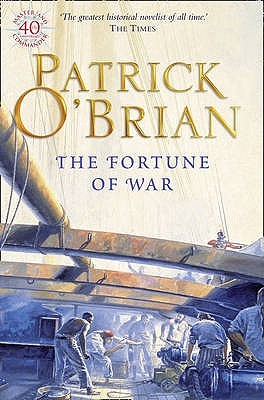
“What stuff, Jack. In its very nature an invitation implies an option, the possibility of refusal. You can no more compel a man to be your guest in the sense, the only valid sense, of a willing commensal, a glad partaker of your fare, than you can oblige a woman to love you.”

The Fortune of War by Patrick O’Brian (1979)

~

All over the world today are we not facing a rising tide of ideological intolerance, and are not violence and terrorism more and more in men’s thoughts? And this dressing-up of the lawless and primitive as a ruthless-because-right philosophy or world-picture or ideology that must and will prevail – is this not something to haunt and hold naturally unstable men, whatever their particular belief may be?

Hamlet, Revenge! by Michael Innes (1937)

~

“What I adore is the sunflowers,” he’d replied. “We rode through them, frosted by dust. The sun beat down, and their faces seemed to smile at me, the only smiling faces in a land devoted to gunpowder and murder.”

Red Sky at Noon by Simon Sebag Montefiore (2017)

~

There are choices in life which you are aware, even as you make them, cannot be undone; choices after which, once made, things will never be the same.

There is that moment when you can still walk away, but if you do, you will never know what might have been.

As Chimney Sweepers Come to Dust by Alan Bradley (2015)

~

Who was responsible? The question brought him up, hard, against his policeman’s creed. There was always someone responsible for a crime, whatever mitigating circumstances might be found; there was always one finger on the trigger, even though the gun might have been supplied, and the gunman primed, by another. If you dug long enough, you came up with an answer, what they liked to call a solution. You could then tie a red ribbon round the dossier and hand it over to the examining magistrate. Your job was done, case solved, what happened next no concern of yours. But responsibility for a national disaster? Could that ever be determined?

Death in Bordeaux by Allan Massie (2010)

~

“No, brother. We’d be nothing if we did not carry the past with us. We’d be ignorant of good and evil, of changing circumstances and unchanging virtues.”

The Outcasts of Time by Ian Mortimer (2017)

~
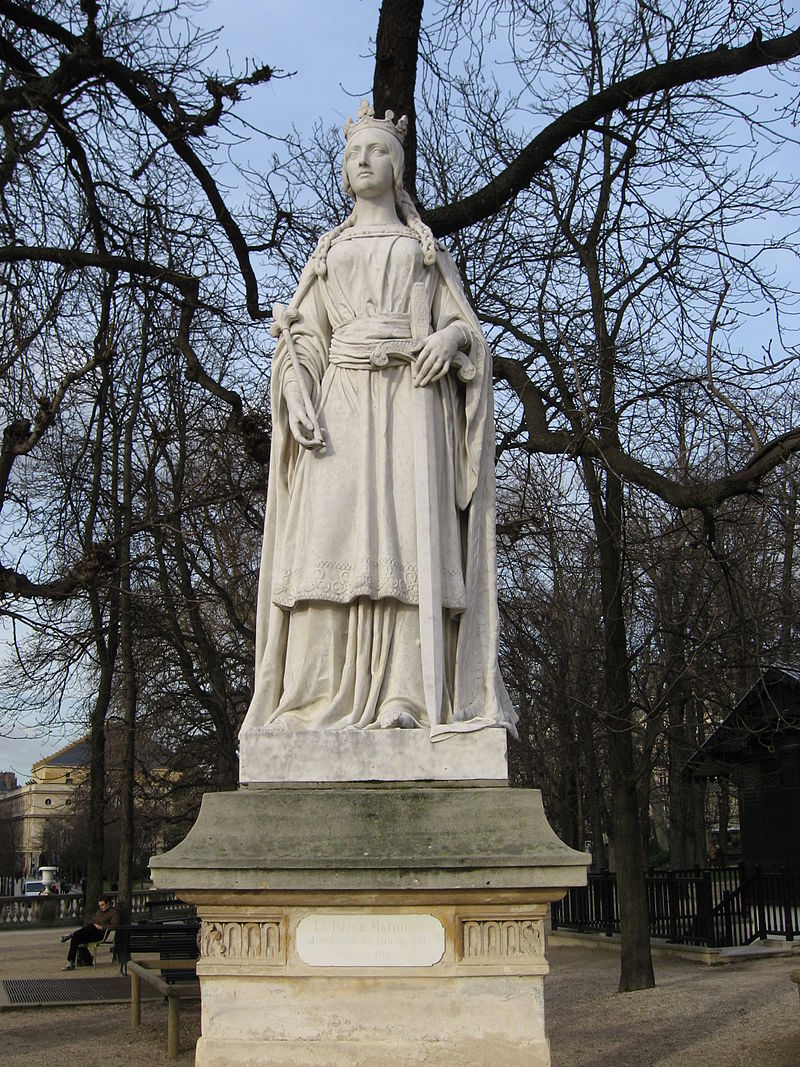
This is perhaps borne out by a posthumous tribute paid to Matilda [of Flanders] in a eulogy by the poet Godfrey of Cambrai, Prior of Winchester: “The King dominated his enemies with arms, and you, Matilda, you dominated them with peace. And your peace turned out to be far more efficient than war.”

Queens of the Conquest by Alison Weir (2017)

~

And as the weeks went by and the heat mounted, he was becoming more and more familiar with Cairo itself, the city whose life formed a shifting and glinting, shadowed and furtive tapestry into which his days were woven; coming to know it from the citadel to the narrow twisting alleyways of the old city further west, where it was not wise to go alone; through the crooked canyons of the bazaars, smelling of amber and incense, spices and camel dung and things nameless and infinitely worse, and the throat-catching metallic smitch of the coppersmiths; where awnings rigged between rooftops four and five storeys overhead kept out the sun and air.

Blood and Sand by Rosemary Sutcliff (1987)

~

The great door under the ornate porch opened to his touch, and he stepped into a darkened hall, from which a flight of steps rose into the gloom above.

As soon as he entered he was aware of an atmosphere of horror. It descended upon him unexpectedly, and he reproached himself for what he felt was an unnecessary alarm.

Nevertheless he pulled out his torch and hurried up the staircase, the feeling of apprehension growing upon him at every step.

The Man of Dangerous Secrets by Maxwell March (1933)

~

Favourite books read in September: The Fortune of War, Blood and Sand and The Man of Dangerous Secrets

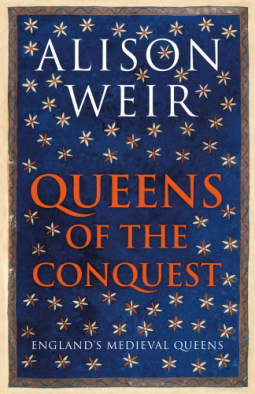
Margery Allingham writing as Maxwell March: The Man of Dangerous Secrets

Margery Allingham is probably one of the best known of the Golden Age crime authors but I’d had no idea that she had also written several thrillers under the name of Maxwell March until I came across this one, recently reissued along with two others by Ipso Books. I didn’t know what to expect from it, but I’m pleased to say that I thoroughly enjoyed it – and I’m sure Margery Allingham must have enjoyed writing it too!

Originally published in 1933 as Other Man’s Danger, the novel opens by introducing us to Robin Grey, the ‘man of dangerous secrets’, a detective who holds an unofficial position with the government. On a secret mission for the Foreign Office at Waterloo Station late one night, he witnesses a young man being pushed onto the tracks and manages to save him. The next day, he is visited by Jennifer Fern, the victim’s girlfriend, who begs him to look into the murder attempt as her previous two fiancés had died under suspicious circumstances and she’s sure it can’t possibly be a coincidence. Jennifer suggests that she and Robin pretend to be engaged and then wait for the unseen enemy to make the next move, but will Robin agree to this – and if so, what will happen?

The story then becomes more and more exciting and convoluted, so I’m not going to say anything else about the plot…except that it includes all of the following: murder, blackmail, kidnappings and car chases; hidden documents, clever disguises and secret conspiracies; a beautiful heiress, a sinister doctor and an escaped prisoner. I suppose you couldn’t describe it as great literature, but it’s certainly great fun to read, with a similar feel to Agatha Christie’s thriller They Came to Baghdad. It’s a real page-turner and I wished I hadn’t started reading it during a busy working week, as I think it would have been better read in one or two large chunks.

There’s not much in the way of character development, but I think that’s often the case with this sort of book. Robin is potentially an interesting character, but I couldn’t help thinking he was a bit careless for a man in a position of such responsibility. He’s too trusting, too quick to confide in people, gets himself into some dangerous situations which I felt could have been avoided and allows his judgement to be clouded by his feelings for a certain young woman…as his colleague Inspector Whybrow says, “I’ve never known a detective yet who could do his work when he was in love”.

As for the mystery itself, we are given enough hints to guess at least part of the solution, although the identity of the criminal mastermind is not as easy to work out. The final revelations are not very plausible and I couldn’t believe that the criminal could really have done what he/she is described as doing (sorry for being vague) but considering the tone of the rest of the novel I hadn’t really expected a realistic ending anyway!

This was a quick, entertaining and highly enjoyable read. The Albert Campion mysteries must have been the books Allingham really wanted to write, but I’m still sorry that she only wrote three as Maxwell March. I will definitely be reading the other two, Rogues’ Holiday and The Devil and Her Son.

Thanks to Ipso Books for providing a copy of this book for review via NetGalley.

This is book #4 for the R.I.P XII challenge.

Queens of the Conquest by Alison Weir

In Alison Weir’s new non-fiction book, Queens of the Conquest, she explores the lives of the five queens of England who followed the Norman Conquest of 1066. These five, in the order they appear in the book, are Matilda of Flanders (wife of William the Conqueror), Matilda of Scotland and Adeliza of Louvain (the two wives of Henry I), Matilda of Boulogne (wife of King Stephen), and the Empress Maud, Henry I’s daughter, who was never actually crowned but called herself Lady of the English. Lots of Matildas, then – Maud is also referred to in many sources as Matilda – but with each queen discussed chronologically (apart from where their stories overlap), things aren’t as confusing as you might imagine!

Apart from Maud, whom I have read about several times in fiction, I knew very little about the other queens whose stories are covered in this book. Considering the general lack of information available to us today – we don’t even have a clear idea of what these women looked like due to the absence of contemporary portraits – I think Weir still does a good job of providing as full and comprehensive an account of each queen’s life as she possibly could. There is inevitably a lot of padding – facts about medieval life, descriptions of castles and long passages quoted from letters – but if you don’t know a lot about the period, most of this should still be of interest.

I can’t really comment on the historical accuracy of this book as my own knowledge is very limited, but Weir does provide references to back up most of what she says. In fact, the additional material which includes the references, sources, maps etc takes up about a quarter of the book! There are still times, though, when she is forced to speculate and make assumptions about how one of the queens may have felt or behaved, and resorts to using words like ‘probably’ or ‘possibly’. Usually I prefer more certainty when I’m reading non-fiction, but in this case, I do understand that with the primary sources being so sparse, some guesswork was necessary to round out the characters of the queens and to make this into an entertaining read rather than a dry textbook.

15th century depiction of the Empress Matilda/Maud

The most enjoyable part of the book for me was the section describing the period of civil war known as the Anarchy during which Maud (who was named as her father Henry I’s heir) and Matilda of Boulogne (whose husband, Stephen, was Henry I’s nephew and another claimant to the throne) found themselves on opposite sides. As I’ve read several novels which have this period as a setting, it was good to read a factual account this time instead of a fictional one, while still recognising some of the most interesting episodes, such as Maud’s escape in the snow from the besieged Oxford Castle.

Maud certainly didn’t seem to have made herself very popular, having a reputation for being proud, haughty and arrogant, but I have always assumed that this was probably due to the prejudice of the male chroniclers of the time against a female ruler who didn’t behave the way they expected a woman to behave. Weir points out that Matilda of Boulogne often acted in a similar way but her actions were seen as acceptable because she was taking them on behalf of her husband, King Stephen, rather than for herself, but she also suggests that Maud’s overbearing attitude and poor decision-making may have been due to mood swings caused by early menopause or a long-term illness she suffered following childbirth. This was the one place where I thought there may have been some bias creeping in, as Weir clearly seems to like Matilda of Boulogne much more than the Empress – and I couldn’t help wondering what caused the aggression and lack of judgement of some of the kings mentioned in the book!

18th-century impression of Matilda of Flanders

I was also interested to read the various theories and legends behind Matilda of Flanders’ marriage to William the Conqueror and the controversies surrounding Matilda of Scotland’s marriage to Henry I (she had previously spent some time in a convent so it was debatable whether or not she was free to marry). I felt that I learned very little about Adeliza, though; while she is described as being particularly beautiful and helping to promote the arts, it seemed that she had less power and political significance than the other queens.

Although I sometimes felt that too much time was devoted to the general history of the period when I would have preferred more analysis of the specific lives and characters of the five queens, I did find Queens of the Conquest a fascinating read. Apparently this is just the first of four volumes which will take us through the rest of the medieval queens to the end of the Wars of the Roses. I will be looking out for the next one.

Thanks to the publisher for providing a copy of this book for review via NetGalley.

Death in Bordeaux by Allan Massie

As some of you may know, I am currently working my way through all of the titles shortlisted for the Walter Scott Prize for Historical Fiction since the prize began in 2010. Allan Massie’s End Games in Bordeaux appeared on the 2016 list, but on discovering that it was the final book in a series of four, I was faced with a dilemma: should I just read the book that I needed to read for the prize or should I do as I usually prefer to do and start from the beginning of the series? In the end I decided to at least try the first book, Death in Bordeaux, in the hope that I would enjoy it enough to want to read the other three anyway.

The novel opens in Bordeaux in March 1940, with Superintendent Jean Lannes investigating the death of an old friend, Gaston Chambolley, whose mutilated body has been found in a street near the railway station. Gaston was homosexual and Lannes’s superiors are happy to assume that this was some sort of sex crime, but Lannes himself is sure there must be another explanation. The dead man’s sister-in-law has gone missing after becoming caught up in the political intrigue surrounding the Spanish Civil War, but as soon as Lannes suggests that her disappearance could be linked in some way with Gaston’s murder, he is ordered to drop his investigations immediately. Lannes, however, knows that he won’t be able to rest until he finds out who killed his friend and why.

In a seemingly unrelated case, he is also called in to help the elderly Comte de Grimaud identify the sender of some threatening letters he has received. As he gets to know the various members of the Comte’s dysfunctional family, Lannes begins to uncover some links with the other case he is working on – and that is all I will say about the plot, as it quickly becomes quite complex and I couldn’t go any further without spoiling the story.

All of this unfolds during the early stages of World War II – a period in which, at first, very little seems to be happening despite France having declared war on Germany. Soon, though, France becomes occupied, refugees from Paris begin to arrive in Bordeaux, and Lannes and his wife become increasingly afraid for their eldest son, Dominique, who is at the Front. While the author does provide a lot of historical detail, describing the major events and political decisions, and setting the story in its context, the focus is always on how the war is affecting the lives of our main characters: Lannes’ wife, Marguerite, writes letters to Dominique which she knows she’ll never send; their younger children, Alain and Clothilde, try to decide how they feel about the occupation of their country; and Alain’s new Jewish friend, Léon, wonders for how much longer he will be safe in France.

By the end of the novel, the war is still in progress and the personal stories of the characters mentioned above (and many others) have not been resolved. I believe that in the next book in the series, Dark Summer in Bordeaux, we rejoin some of the characters introduced in this one, so for that reason I’m glad I decided to start at the beginning. I can’t say that I loved this book – I found it slow and a bit too drawn out in places and it didn’t really work for me as a murder mystery. As a portrayal of life in Occupied France, though, it is an interesting, quietly atmospheric read. I liked it enough to want to continue with the second novel – and hopefully then the third and the fourth.

This is Book #3 for the R.I.P. XII challenge.

Red Sky at Noon by Simon Sebag Montefiore

This is the third in Simon Sebag Montefiore’s Moscow trilogy. I have read the second one, One Night in Winter, but not the first, Sashenka; the books are only loosely connected and it’s not essential to read all three in order. Montefiore is better known as a historian and writer of non-fiction, but these three books are fictional – although based on real events from Russian history.

Red Sky at Noon tells the story of Benya Golden, a Jewish writer and former teacher who, in 1940, is given the death sentence for “terrorism, conspiracy to murder Comrades Stalin, Molotov, Kaganovich and Satinov, and membership of a counter-revolutionary Trotskyite group”. At the last minute Benya is given a reprieve and instead of being executed he is exiled to the Gulag of Kolyma and sentenced to ten years’ hard labour in the gold mines. Life in the camp is harsh and miserable, so when a chance comes two years later to join a penal battalion (a shtrafbat) formed to fight the Germans, Benya is quick to volunteer. The reward will be the opportunity to win redemption by the shedding of blood – either his own or the enemy’s.

The rest of the novel follows the adventures of Benya, his beloved horse Silver Socks and the assorted group of murderers, Cossack gangsters and fellow political prisoners who fight alongside him in the Soviet cavalry. Together they undertake dangerous missions behind enemy lines, facing death, capture or betrayal – or all three – and for Benya, there is also a romance when he meets a widowed Italian nurse, Fabiana. Of course, with Russia and Italy on opposite sides of the war, it’s clear from the beginning that their love affair is unlikely to run smoothly.

With so much happening and with such an action-packed plot and interesting historical setting, this could have been a wonderful novel, filled with drama, romance and excitement. However, I think Montefiore is probably a better historian than he is a novelist; although I have no doubts that he knows his Russian history, he never quite managed to bring the characters and events in this novel to life. The dialogue didn’t feel entirely convincing and there were only a few moments in the whole book when I felt any real emotional connection to Benya or the other characters, despite the horrors of war that were being described. I remember having similar thoughts about One Night in Winter, which was a more enjoyable novel in my opinion, but another one which made little emotional impact.

I haven’t mentioned yet that there is another thread to the novel, involving Svetlana Stalina. As Stalin’s daughter, sixteen-year-old Svetlana is a lonely and isolated figure, who has experienced little in the way of love and friendship as people are afraid to get too close because of who her father is. Svetlana’s story doesn’t really have anything to do with Benya’s, but it offers insights into life in the Stalin household and does add another layer to the novel.

I’m not sure if I would want to read more of Montefiore’s fiction – although Sashenka does still sound tempting – but I’m curious to know what his non-fiction is like. Has anyone read any of it?

As Chimney Sweepers Come to Dust by Alan Bradley

In this, the seventh book in Alan Bradley’s Flavia de Luce series, our twelve-year-old detective is sent away to boarding school in 1950s Canada, having been banished from her family home at the end of the previous novel. If you have never read a Flavia mystery before, this is probably not the best place to start; I would recommend reading at least a few of the earlier ones first, particularly the sixth, The Dead in Their Vaulted Arches, so that you will understand the reasons for her banishment and the choice of this particular Canadian school.

Anyway, back to As Chimney Sweepers Come to Dust. Almost as soon as Flavia arrives at Miss Bodycote’s Female Academy in Toronto, she stumbles upon yet another dead body – or rather, this one stumbles upon Flavia when it falls down the chimney in her room, having been dislodged by another girl who has climbed up to hide from a teacher. Why is there a dead body up the chimney? Who is it? Could it be one of the three missing girls who have all disappeared from the Academy over the last year or two? Flavia doesn’t know, but she’s determined to find out!

This is the first book in the series not to be set at Buckshaw, the de Luce ancestral home in the English village of Bishop’s Lacey. I have always found the setting to be part of the charm of these books, so although it was nice to have a change, I did find myself missing Father, Feely, Daffy, Dogger and everyone else from Buckshaw. There are plenty of new characters in this book to take their places – including an enigmatic and intimidating headmistress and a chemistry teacher who has been on trial for murder – but none of them felt as well drawn as the characters in the previous novels.

Still, I always enjoy a school setting because it brings back memories of the school stories I loved as a child, such as Enid Blyton’s Malory Towers and St Clare’s books. Maybe Alan Bradley liked that sort of story too and wanted an opportunity to write one of his own; otherwise I’m not sure I really see the point in moving Flavia out of her usual setting. I had expected the storyline involving the Nide, which was introduced in the last book, to be advanced in this one, but actually we learn very little more about it – and what we do learn just made me more confused!

I was pleased to find that this book had a much stronger mystery element than the previous one and although some parts of the mystery didn’t feel fully resolved at the end, it was nice to see Flavia back to making her lists of suspects and searching for clues. Finally, don’t Alan Bradley’s books have great titles? This one is taken from Shakespeare’s Cymbeline: “Golden lads and girls all must, As chimney-sweepers, come to dust”. The title of the next one, Thrice the Brinded Cat Hath Mew’d, is also Shakespeare-inspired. I’m looking forward to reading it – despite not liking the last two books as much as the earlier ones, I do still enjoy spending time with Flavia!

This is Book #2 for my R.I.P. XII challenge.

The Fortune of War by Patrick O’Brian

This is book number six in Patrick O’Brian’s Aubrey/Maturin series. I enjoyed the previous one so much I thought it would be a difficult act to follow, but I actually found this one just as good – and maybe even better. If you haven’t yet had the pleasure of meeting Captain Jack Aubrey and Dr Stephen Maturin, I would recommend beginning with the first of the series, Master and Commander, and saving this review until you’ve caught up; otherwise, although I have tried to avoid too many spoilers in this post, you may come across something you would prefer not to know just yet.

The Fortune of War picks up the story shortly after Desolation Island ended. With his ship HMS Leopard declared unfit, Jack receives orders to return to England to take command of a forty-gun frigate, the Acasta. He and Stephen Maturin, accompanied by several other members of the crew, begin the long journey home as passengers on the courier ship La Flèche. Early in the voyage, however, they learn that war has broken out between Britain and America – the War of 1812 – and following a series of disasters, they are taken prisoner and find themselves brought to Boston, which is now enemy territory. At first, despite being wounded in the arm, Jack is not too worried; he’s sure there will be an exchange of prisoners soon and then they can be on their way again. The Americans, though, are convinced that there had been a spy on board the Leopard and are not about to let their suspects escape so easily!

I really enjoyed this book, after an initial panic where I found I couldn’t remember what happened at the end of Desolation Island. I think I need to stop leaving such long gaps between books! Luckily, though, Jack gives a recap to the Admiral in the first chapter and this serves as a reminder for the reader too. Once I settled back into the flow of the story, I loved it, particularly the parts of the novel set in Boston where Stephen’s spying activities come to the forefront. This leads to exciting scenes which are different from anything we’ve read in the series so far.

Stephen also has his long-awaited reunion with Diana Villiers, the woman he loves and who broke his heart at the end of HMS Surprise – but Diana has changed and it seems that his own feelings for her have changed too. Despite his disillusionment I found Diana much easier to like in this book than I did in the earlier ones, although with so much still unresolved by the end, I was left wondering whether they will find any happiness in the next book or whether their relationship will continue down its tempestuous path.

I have stopped worrying about the nautical terminology in these novels. I appreciate the authenticity O’Brian brings to the naval scenes, the level of his research and of course, his writing ability, but I know I’m never going to be able to follow everything that is happening; as long as I can understand the outcome of each battle or manoeuvre I’m happy! I think this must be the first book in the series where Jack has not actually had a ship of his own to command, but he and Stephen still manage to get caught up in two naval actions, both of which are closely based on real events from the War of 1812.

The next book in the series is The Surgeon’s Mate and based on the quality of the last two books I’m really looking forward to it.