Top Ten Tuesday: Ten books I’ve added to my TBR list lately

Top Ten Tuesday

This week’s Top Ten Tuesday topic (hosted by The Broke and the Bookish) is Ten Books I’ve Added To My To-Be-Read List Lately. This seemed like a good one to participate in, as it gives me a chance to highlight some of the books I’ve acquired recently but don’t know when I’ll get round to reading.

All blurbs are taken from Goodreads.

~

1. Sandokan: The Tigers of Mompracem by Emilio Salgari

I hadn’t heard of this book but was tempted when I was offered a review copy as it’s a classic Italian adventure novel, first published in 1900.

sandokan “Malaysia, 1849. The Tigers of Mompracem are a band of rebel pirates fighting for the defense of tiny native kingdoms against the colonial powers of the Dutch and British empires. They are led by Sandokan, the indomitable “Tiger of Malaysia”, and his loyal friend Yanez De Gomera, a Portuguese wanderer and adventurer. Orphaned when the British murdered his family and stole his throne, Sandokan has been mercilessly leading his men in vengeance. But when the pirate learns of the extraordinary “Pearl of Labuan” his fortunes begin to change…”

~

2. The Phantom Tree by Nicola Cornick

I’ve never read anything by this author but I spotted this book on NetGalley and thought it sounded interesting.
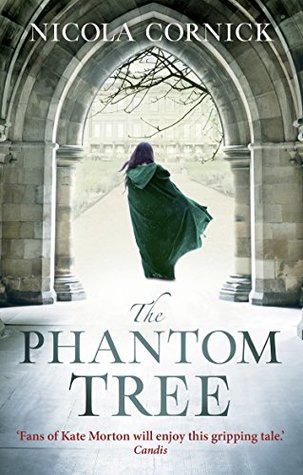
the-phantom-tree “Browsing antiques shops in Wiltshire, Alison Bannister stumbles across a delicate old portrait – supposedly of Anne Boleyn. Except Alison knows better… The woman is Mary Seymour, the daughter of Katherine Parr who was taken to Wolf Hall in 1557 as an unwanted orphan and presumed dead after going missing as a child.

The painting is more than just a beautiful object for Alison – it holds the key to a past life, the unlocking of the mystery surrounding Mary’s disappearance, and the enigma of Alison’s son. But Alison’s quest soon takes a dark and foreboding turn, as a meeting place called the Phantom Tree harbours secrets in its shadows…”

~

3. The Witchfinder’s Sister by Beth Underdown

Another one from NetGalley. A few weeks ago I was looking for recommendations of historical novels about witches, so this is quite appropriate!

the-witchfinders-sister “1645. When Alice Hopkins’ husband dies in a tragic accident, she has no choice but to return to the small Essex town of Manningtree, where her brother Matthew still lives.

But home is no longer a place of safety. Matthew has changed, and there are rumours spreading through the town: whispers of witches, and of a great book, in which her brother is gathering women’s names. To what lengths will her brother’s obsession drive him? And what choice will Alice make, when she finds herself at the very heart of his plan?”

~

4. The Lives of Tudor Women by Elizabeth Norton

I don’t read a lot of non-fiction books but I think I might find this one interesting.
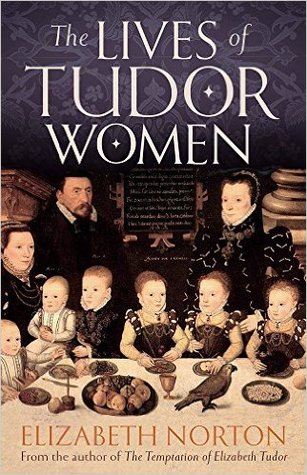
the-lives-of-tudor-women “The turbulent Tudor age never fails to capture the imagination. But what was it actually like to be a woman during this period? This was a time when death in infancy or during childbirth was rife; when marriage was usually a legal contract, not a matter for love, and the education of women was minimal at best. Yet the Tudor century was also dominated by powerful and characterful women in a way that no era had been before.

Elizabeth Norton explores the seven ages of the Tudor woman, from childhood to old age, through the diverging examples of women such as Elizabeth Tudor, Henry VIII’s sister who died in infancy; Cecily Burbage, Elizabeth’s wet nurse; Mary Howard, widowed but influential at court; Elizabeth Boleyn, mother of a controversial queen; and Elizabeth Barton, a peasant girl who would be lauded as a prophetess.”

~

5. The Printer’s Coffin by M.J. Carter

I’ve just finished reading the first book in this series and enjoyed it so much I couldn’t wait to order the second one! This was originally published as The Infidel Stain.

the-printers-coffin “It’s 1841, and three years after we left them at the close of The Strangler Vine, Blake and Avery are reunited in very different circumstances in London.

There has been a series of dreadful murders in the slums of the printing district, which the police mysteriously refuse to investigate, and Blake and Avery must find the culprit before he kills again.”

~

6. Redgauntlet by Sir Walter Scott

It’s been a while since I’ve read anything by Scott and I liked the sound of this one.

redgauntlet “Arguably Scott’s finest novel, and the last of his major Scottish novels, Redgauntlet centers around a third, fictitious, Jacobite rebellion set in the summer of 1765. The novel’s hero, young Darsie Latimer, is kidnapped by Edward Hugh Redgauntlet, a fanatical supporter of the Stewart cause, and finds himself caught up in the plot to install the exiled Bonnie Prince Charlie on the British throne.

First published in 1824, this is perhaps Scott’s most complex statement about the relation between history and fiction.”

~

7. Oswiu: King of Kings by Edoardo Albert

I enjoyed the first two books in this trilogy, so I’m looking forward to reading the third.
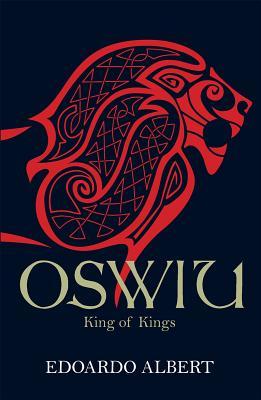
oswiu “In the third entry chronicling the rise of Christian kings in Britain, Oswald dies and the great pagan king Penda becomes overlord in his place. To stand against the increasingly powerful Penda, Oswiu, king of Bernicia, tries to unite the smaller neighboring kingdoms by marrying a daughter of Deira. But the struggle for power leads Oswiu to order the assassination of the king of Deira. He wins the throne but loses the approval of the people. In atonement, he establishes a monastery at the site of the slaying. What will happen when Oswiu and High King Penda at last meet in battle? Though the kingdom may become politically one, both the Celtic and Roman strands of Christian faith vie for supremacy, mirroring the king’s own struggle for power.”

~

8. A Gentleman in Moscow by Amor Towles

I’m curious about this book as I’ve been hearing a lot about it recently.
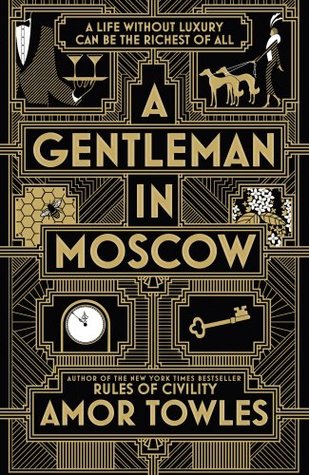
a-gentleman-in-moscow “On 21 June 1922 Count Alexander Rostov – recipient of the Order of Saint Andrew, member of the Jockey Club, Master of the Hunt – is escorted out of the Kremlin, across Red Square and through the elegant revolving doors of the Hotel Metropol. But instead of being taken to his usual suite, he is led to an attic room with a window the size of a chessboard. Deemed an unrepentant aristocrat by a Bolshevik tribunal, the Count has been sentenced to house arrest indefinitely.

While Russia undergoes decades of tumultuous upheaval, the Count, stripped of the trappings that defined his life, is forced to question what makes us who we are. And with the assistance of a glamorous actress, a cantankerous chef and a very serious child, Rostov unexpectedly discovers a new understanding of both pleasure and purpose.”

~

9. The Bear and the Nightingale by Katherine Arden

This appeals to me as I love books based on fairy tales. The cover is beautiful too.

the-bear-and-the-nightingale “A young woman’s family is threatened by forces both real and fantastical in this debut novel inspired by Russian fairy tales.

In a village at the edge of the wilderness of northern Russia, where the winds blow cold and the snow falls many months of the year, a stranger with piercing blue eyes presents a new father with a gift – a precious jewel on a delicate chain, intended for his young daughter. Uncertain of its meaning, Pytor hides the gift away and Vasya grows up a wild, wilful girl, to the chagrin of her family. But when mysterious forces threaten the happiness of their village, Vasya discovers that, armed only with the necklace, she may be the only one who can keep the darkness at bay.”

~

10. The Norman Pretender by Valerie Anand

I loved Valerie Anand’s Gildenford and it’s time I continued with the next book in the series.

the-norman-pretenderThe Norman Pretender continues the story of the great Godwin family, Earls of Wessex, and the most powerful faction in England. The book opens in 1052 and takes us in a series of brilliantly constructed episodes up to its climax at the Battle of Hastings and its tragic aftermath. Much of the action takes place in Normandy, where Harold Godwinson is rescued by Duke William from captivity, only to be tricked later into swearing an oath securing William’s succession to the English throne.”

~

Have you read any of these or are there any you would be interested in reading? What have you added to your own TBR lately?

Witch Week Readalong: Something Wicked This Way Comes

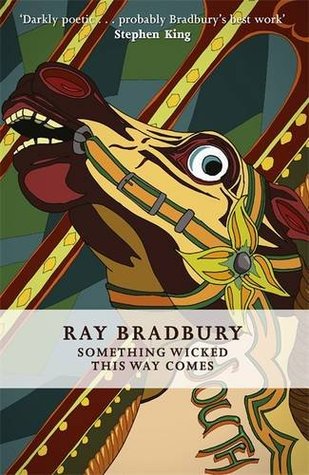
witch-week-2016 I read this Ray Bradbury novel for a readalong as part of Witch Week, hosted by Lory at The Emerald City Book Review, but I’m sure I would have read it eventually anyway. It’s a book I’ve been interested in reading for a while – mainly, I have to confess, because I liked the title. It comes from a line spoken by one of the witches in Shakespeare’s Macbeth: “By the pricking of my thumbs, Something wicked this way comes”. I didn’t really have any idea what the novel itself was about, so the Witch Week readalong seemed a good opportunity to find out!

Published in 1962, Something Wicked This Way Comes tells the story of two teenage boys, Will Halloway and Jim Nightshade, who live in Green Town, Illinois. Not only are Will and Jim neighbours and best friends, they share another special bond: they were born just a few minutes apart, Will one minute before Halloween and Jim one minute after. They are inseparable, but they also have very different personalities – Will is the more sensible and cautious of the two, whereas Jim is more reckless and daring. The boys are thirteen years old as the novel opens one day in October when they have an encounter with a mysterious lightning rod salesman who warns that a storm is approaching.

something-wicked-this-way-comes That same night, a carnival – Cooger & Dark’s Pandemonium Shadow Show – is heading towards Green Town. Will and Jim watch it arrive at three o’clock in the morning, excited that a carnival has come so late in the year. Their excitement quickly starts to fade, however, as strange things begin to happen in connection with the carnival and its sinister owners. When they spot Mr Cooger riding on a carousel while the music plays backwards, they realise they are witnessing something which shouldn’t have been possible, something which tells them that this is no ordinary carnival – and that their lives could be in danger.

I didn’t know what to expect from this novel, as it’s the first I’ve read by Ray Bradbury, but I’m pleased to say that I enjoyed it. The writing style is unusual and took a while to get used to, but I found the use of language very intriguing. The streets are ‘footstepped’, for example, the rain ‘chuckles’ and ‘nuzzles’ at the windows, the people of the town ‘breathe back and forth’ to the carnival and laughter ‘walks on panther feet’. I’m not sure if I particularly liked the writing – the choice of words and the structure of the sentences are often so unconventional that I found it quite distracting – but it’s certainly one of the things I’ll remember most about this book.

I’ll also remember the philosophical musings of Charles Halloway, Will’s father:

So in sum, what are we? We are the creatures that know and know too much. That leaves us with such a burden again we have a choice, to laugh or cry. No other animal does either. We do, depending on the season and the need.

And the many wonderful descriptions of the library, where he works:

When rivers flooded, when fire fell from the sky, what a fine place the library was, the many rooms, the books. With luck, no one found you. How could they! – when you were off to Tanganyika in ’98, Cairo in 1812, Florence in 1492!?

Some of the readalong participants have discussed the fact that the two main characters (in the first half of the book, at least) are teenage boys and how the age we are when we first read the book could affect our ability to relate to the boys and their lives. Although I did still enjoy it anyway, I do wonder whether I might have had a different impression of it if I’d read it when I was younger. Later in the book, Charles Halloway begins to play a bigger part in the story, providing an adult perspective and bringing his experience, knowledge and wisdom to the fight against the evil forces of the carnival.

Good versus evil is obviously one of the major themes of the novel. A feeling of malice and danger hangs over the carnival from the moment it arrives and the people connected with it are both strange and sinister – particularly the blind Dust Witch who hovers over the boys’ houses in a hot air balloon in one of the creepiest scenes in the book. There are other themes too, though, such as life and death, age and the passing of time, the ties of friendship and the power of happiness and of love. Something Wicked This Way Comes is a fascinating read and one which left me with a lot to think about.

Children of Earth and Sky by Guy Gavriel Kay

children-of-earth-and-sky I love Guy Gavriel Kay’s books, so I really don’t know why it is that I’ve read so few of them! I’ve had Under Heaven waiting on my Kindle since finishing The Last Light of the Sun more than a year ago, but for some reason there always seems to be something else that needs to be read first. When I noticed his latest novel, Children of Earth and Sky, in the library I decided to forget Under Heaven for now and read this one first, while I was in the mood for it.

Guy Gavriel Kay’s books are a wonderful and unique blend of fantasy and historical fiction. Children of Earth and Sky is set in the same world as several of his other novels, including The Lions of Al-Rassan – a world with two moons, one blue and one white, in which the three main religious groups are the sun-worshipping Jaddites, the Asharites who pray to the stars and the Kindath who worship the moons (corresponding to Christians, Muslims and Jews respectively). The action in this book takes place mainly in thinly disguised versions of Venice, Dubrovnik and Constantinople – which Kay renames Seressa, Dubrava and Asharias – in what is clearly supposed to be the Renaissance period.

The plot is quite a complex one, with multiple storylines which meet and intersect from time to time, so rather than attempting to describe it in any detail, I’m just going to mention a few of the characters we meet.

First, there’s Pero Villani, a young artist from Seressa, who has been sent on a mission to the Osmanli (Ottoman) court at Asharias with a commission to paint a portrait of the Grand Khalif, Gurçu the Destroyer. However, Seressa’s Council of Twelve have another task in mind for Pero to carry out at Asharias, one which could put his life in danger. The Council are also keen to place a spy in the rival republic of Dubrava and enlist the services of Leonora Valeri, a woman with a troubled past who welcomes the chance to escape from Seressa.

The ship on which Pero and Leonora embark on the first stage of their journey is owned by the family of Marin Djivo. As the younger son of a Dubrava merchant, Marin has a lot of experience of the world of trade and shipping, but this particular voyage is about to change his life. Sailing from Seressa to Dubrava, his ship is boarded by pirates from the walled town of Senjan, and among them is the archer Danica Gradek, a young woman who is desperate to prove herself as a warrior and avenge her family against the Osmanli. Finally, there’s Damaz, who was captured as a child and trained to fight in the Osmanli army.

The lives of these five characters become closely entwined as their paths cross, then part, then cross again, and the actions of one may have consequences – sometimes unintentional – which affect the lives of one or all of the others. Now that I’ve read several of Kay’s novels, I can see that this seems to be a recurring theme in his work.

I have been to both Venice and Dubrovnik – and would highly recommend visiting them if you haven’t already – and even though Kay’s versions have different names, the descriptions of both locations are still clearly recognisable. If you have a good knowledge of the history of Renaissance Europe, you should be able to draw historical parallels, as well as geographical, between this fantasy world and the real one – but remember that it is a fantasy world (even though the magical elements are small and understated), which gives Kay the freedom to take the story in any way he wishes without sticking rigidly to historical fact.

I found a lot to love about this book; my only disappointments were the ending and the lack of emotional engagement I felt with the characters. When I think of the thought-provoking epilogue that ended Tigana, or the dramatic conclusion of The Lions of Al-Rassan, that’s what was missing from Children of Earth and Sky. The novel’s various storylines were wrapped up too neatly and too completely at the end of the book and didn’t make much of an emotional impact on me, which was a shame after spending so long getting to know this set of characters.

This is not one of my favourite Kay novels so far, but I did enjoy it and am looking forward to reading the rest of his work, probably beginning with Under Heaven!

My Commonplace Book: October 2016

A summary of last month’s reading, in words and pictures.

commonplace book
Definition:
noun
a notebook in which quotations, poems, remarks, etc, that catch the owner’s attention are entered

Collins English Dictionary

~

“Most people only want a quiet life,” I said. “Even those of us who were once radicals.” I smiled wryly at Roger. He nodded in acknowledgement.

“Fanatics on both sides,” old Ryprose said gloomily. “And all we poor ordinary folk in the middle. Sometimes I fear they will bring death to us all.”

Revelation by CJ Sansom (2008)

~

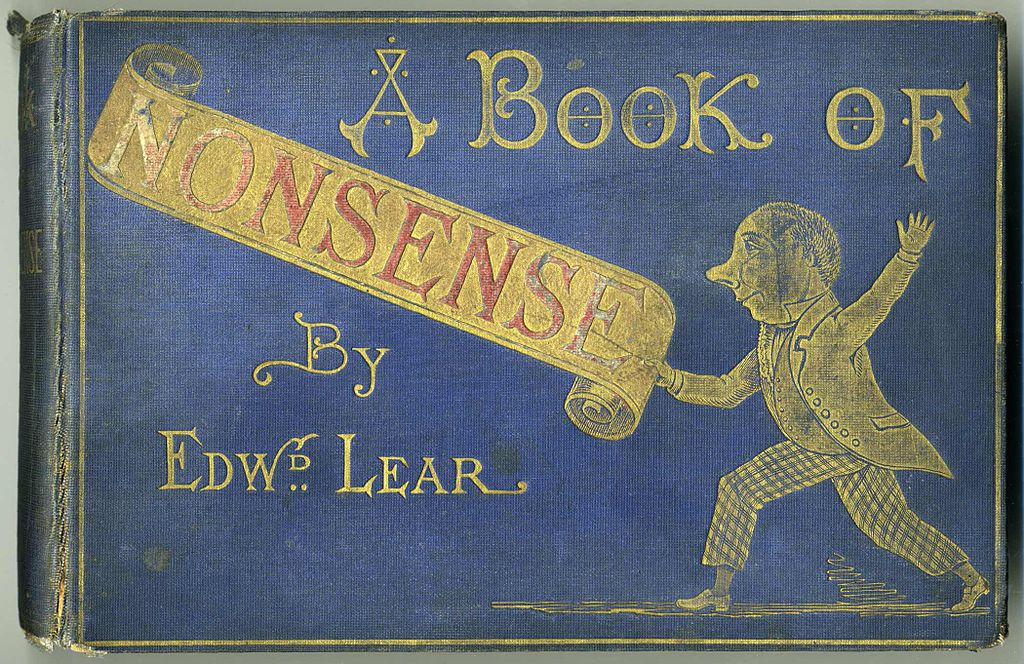
edward-lear-book-of-nonsense

“Books,” the driver resumed. “I’m a great reader. I am. Not poetry. Love stories and murder books. I joined one o’ them” – he heaved a long sigh; with vast effort his mind laboured and brought forth – “circulatin’ libraries”. He brooded darkly. “But I’m sick of it now. I’ve read all that’s any good in it.”

The Moving Toyshop by Edmund Crispin (1946)

~

“We shall wait upon tomorrow,” he said.

“But – what if tomorrow is worse than today?”

“Then we shall wait upon the day after tomorrow.”

“And so forth?” I asked.

“And so forth,” Dogger said.

The Dead in Their Vaulted Arches by Alan Bradley (2014)

~

In his masterwork, The Landscape of Criminal Investigation, Atticus Pünd had written: ‘One can think of the truth as eine vertiefung – a sort of deep valley which may not be visible from a distance but which will come upon you quite suddenly. There are many ways to arrive there. A line of questioning that turns out to be irrelevant still has the power to bring you nearer to your goal. There are no wasted journeys in the detection of a crime.’

Magpie Murders by Anthony Horowitz (2016)

~

“But seriously Poirot, what a hobby! Compare that to -” his voice sank to an appreciative purr – “an easy chair in front of a wood fire in a long low room lined with books – must be a long room – not a square one. Books all round one. A glass of port – and a book open in your hand. Time rolls back as you read.”

The Labours of Hercules by Agatha Christie (1947)

~

robert-cecil

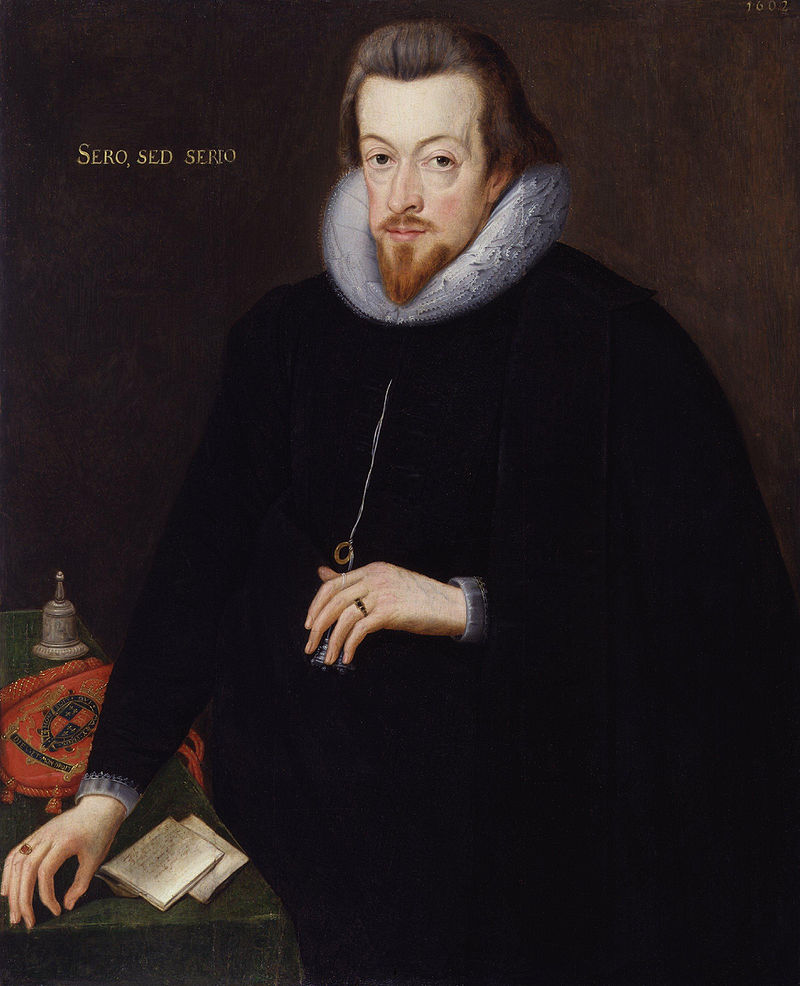
“Watch and wait,” says Burghley. “You have a valuable nugget of information, but that is all it is at this stage. Watch the lady; watch and wait.” Cecil is reminded of being fleeced by a card trickster once, who had said the very same thing – watch the lady. He lost all the gold buttons from his doublet. That was a lesson learned.

Watch the Lady by Elizabeth Fremantle (2015)

~

Sometimes I would like to cry. I close my eyes. Why weren’t we designed so that we can close our ears as well? (Perhaps because we would never open them.) Is there some way that I could accelerate my evolution and develop earlids?

Behind the Scenes at the Museum by Kate Atkinson (1995)

~

Why the Egyptian, Arabic, Abyssinian, Choctaw? Well, what tongue does the wind talk? What nationality is a storm? What country do rains come from? What color is lightning? Where does thunder go when it dies?

Something Wicked This Way Comes by Ray Bradbury (1962)

~

lantern-clock

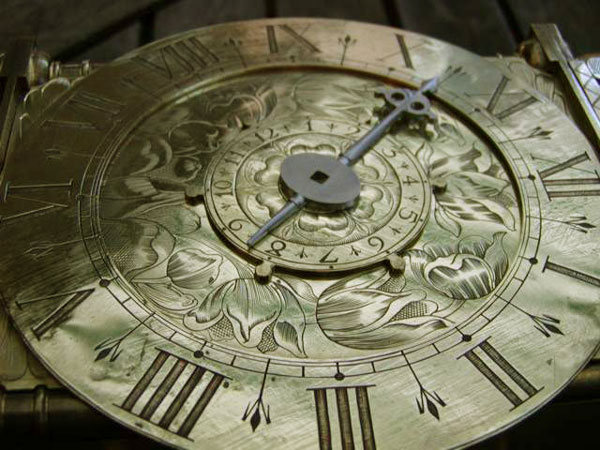
And as the seconds and minutes moved on, I pondered Man’s efforts at the representation or ‘capture’ of Time, and I thought how, for Clockmakers like Hollers, the very Commodity with which they were trying to work was a heartless and capricious Enemy, who stole from them all the while and never rested.

Merivel: A Man of His Time by Rose Tremain (2013)

~

A Gothic gate, richly ornamented with fret-work, which opened into the main body of the edifice, but which was now obstructed with brush-wood, remained entire. Above the vast and magnificent portal of this gate arose a window of the same order, whose pointed arches still exhibited fragments of stained glass, once the pride of monkish devotion. La Motte, thinking it possible it might yet shelter some human being, advanced to the gate and lifted a mossy knocker. The hollow sounds rung through the emptiness of the place. After waiting a few minutes, he forced back the gate, which was heavy with iron work, and creaked harshly on its hinges…

The Romance of the Forest by Ann Radcliffe (1791)

~

I could not possibly go home, I reflected, and add as a serious contribution to the study of women and fiction that women have less hair on their bodies than men, or that the age of puberty among the South Sea Islanders is nine — or is it ninety? — even the handwriting had become in its distraction indecipherable. It was disgraceful to have nothing more weighty or respectable to show after a whole morning’s work.

A Room of One’s Own by Virginia Woolf (1929)

~

sappho

Not everyone can write as legibly as I; Father made me spend hours at my tablets, saying that my poems must be written down by me as I myself have composed them, so they will not be distorted in later years by other singers. “For you have great gifts from the Muses,” he said. “I would not have them lost to the world that comes after.”

Burning Sappho by Martha Rofheart (1974)

~

“I ain’t in the habit of picking other folks’ roses without leave,” said she.

As Rebecca spoke she started violently and lost sight of her resentment, for something singular happened. Suddenly the rosebush was agitated violently as if by a gust of wind, yet it was a remarkably still day. Not a leaf of the hydrangea standing on the terrace close to the rose trembled.

“What on earth -” began Rebecca; then she stopped with a gasp at the sight of the other woman’s face. Although a face, it gave somehow the impression of a desperately clutched hand of secrecy.

Small and Spooky edited by M.R. Nelson (2016)

~

Time was not something then we thought of as an item that possessed an ending, but something that would go on forever, all rested and stopped in that moment. Hard to say what I mean by that. You look back at all the endless years when you never had that thought. I am doing that now as I write these words in Tennessee. I am thinking of the days without end of my life.

Days Without End by Sebastian Barry (2016)

~

“You don’t think there’ll really be a war, do you?” she asked anxiously, as her work was for the maimed wrecks of men left by the 1914-18 war – and I could understand her horror of another. But when I looked at the Green Cat I was not sure and I did not reply.

A Chelsea Concerto by Frances Faviell (1959)

~

Favourite books read in October: Revelation, The Moving Toyshop and Magpie Murders

The 100 Book Tag

I don’t often take part in Tags but here I am joining in with my second one in two weeks! FictionFan posted these questions in celebration of her 100th TBR Thursday post and I couldn’t resist having a go at answering them myself.

What is the 100th book on your TBR list? (In the unlikely event that you don’t have 100 books on your TBR, what book’s been on there longest?)

I don’t keep a nice, detailed TBR spreadsheet like FictionFan, so I’ve simply taken the 100th book on my To-Read shelf at Goodreads. And book number 100 is…

the-brothers-karamazov

The Brothers Karamazov by Fyodor Dostoevsky

Apparently I added this to the shelf in August 2012, so I really should tackle it soon! I want to have another attempt at reading Crime and Punishment first, though.

Open your current book to page 100 (or randomly, if you don’t have page numbers on your e-reader) and quote a few sentences that you like.

She wiped her eyes, her thoughts in turmoil. She knew now how she would answer Kaneshige’s note. When the poet Narihira was sent into exile he had passed Mount Fuji on his travels. Like Narihira she too would journey to the east and she too would see Mount Fuji. And if Kaneshige was on his way to fight the barbarians, he would pass by too.
This was what she would write: “If only we could meet…where the roads cross, in the shadow of Mount Fuji.”

From The Shogun’s Queen by Lesley Downer

When you are 100, what author(s) do you know you will still be re-reading regularly? (This should be an easy one for those of you who are already over 100…)

Well, I’m not already over 100, so I’ll just have to assume that my reading tastes won’t have changed too drastically by then and that I’ll still enjoy reading the same books I like reading now. I would expect my regular re-reads to be classic authors like the Brontës, Jane Austen, Alexandre Dumas and Daphne du Maurier – I’ve re-read several of their books already and can’t imagine not wanting to read them again! I’m sure I’ll also be re-reading Dorothy Dunnett’s books for the rest of my life (you knew I would manage to get the Lymond Chronicles into this post somehow, didn’t you?)

Link to your 100th post (if you’re a new blogger then link to your tenth post, or any one you like). Do you still agree with what you said back then?

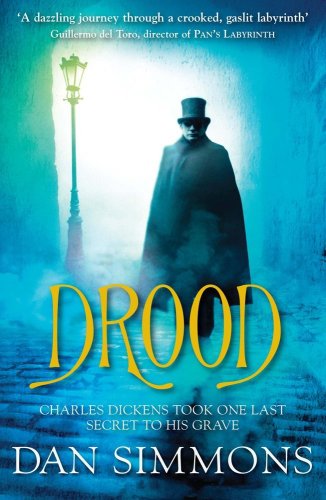
Review: Drood by Dan Simmons

My 100th post was a review of Drood by Dan Simmons, which I posted in March 2010. At the time I said:

A gothic mystery/horror story set in Victorian London, featuring Charles Dickens and narrated by Wilkie Collins sounded like exactly the kind of book I would enjoy. Unfortunately it didn’t quite live up to its fascinating premise and I was left with mixed feelings about it.

I went on to describe some things that I loved about the book and also some that I disliked. I probably won’t ever read this book again, but if I did I think my second review would be very similar to the first one.

Name a book you love that has less than 100 pages. Why do you love it?

This is a difficult one for me to answer because I’ve always been drawn to long books and can’t think of many I’ve read with fewer than 100 pages. I was going to pick Mr Harrison’s Confessions by Elizabeth Gaskell until I discovered it actually has just over 100 pages (although I suppose it would depend on the publisher and the edition anyway). However, I’ve had a quick search through my blog archives and have reminded myself of one very short book that I did enjoy:

The Victorian Chaise-longue by Marghanita Laski (99 pages, Persephone)

This is an unsettling little book about a young woman who falls asleep on an old chaise-longue and wakes up to find herself in the year 1864.

If someone gave you £100, what would be the five books you would rush to buy?

I don’t keep a nice, detailed Wishlist like FictionFan either (I’m starting to see that my organisation skills must be sadly lacking) but here are a few books I’ve been looking at recently and wishing I had a copy to read now.

heartstone Heartstone by C.J. Sansom – I’ve just read the fourth book in the Shardlake series, Revelation, and am desperate to start the next one!

The Bull From the Sea by Mary Renault – This is the sequel to The King Must Die and I can’t believe I still haven’t read it. Reading another book set in Ancient Greece a few weeks ago reminded me about it.

A Distant Mirror: The Calamitous 14th Century by Barbara W. Tuchman – I don’t often buy non-fiction for myself, but I’ve been interested in reading this for ages.

black-lamb-and-grey-falcon Black Lamb and Grey Falcon by Rebecca West – Another non-fiction book. This was recommended to me a while ago and it sounds fascinating.

A Pin to See the Peepshow by F. Tennyson Jesse – There are lots of Virago Modern Classics I want to read; I heard about this one when I read The Paying Guests by Sarah Waters (it was one of her inspirations) and it’s really time I found a copy.

What book do you expect to be reading 100 days from now?

I don’t plan my reading that far ahead so I’m not sure – but 100 days from now will be the beginning of February when, hopefully, I should be approaching the final title on my Classics Club list. I think it would be nice to finish with a re-read of one of my favourite classics, The Count of Monte Cristo by Alexandre Dumas, so it’s possible that I’ll be reading that one in February.

Looking at The Guardian’s list of “The 100 greatest novels of all time”, how many have you read? Of the ones you haven’t, which ones would you most like to read? And which will you never read?

I’ve only read 29 of them, which isn’t very impressive, is it? I don’t like to say that there are any books I’ll never read, as I don’t know how my tastes might change in the future, but I think I’ve heard enough about Moby Dick to put me off for life. As for the books I would like to read, there are a lot on that list that interest me, but none that I’m desperate to read. If I had to pick one that I’m particularly looking forward to, it would probably be Daniel Deronda by George Eliot.

Free Question – Create a 100 themed question of your own choice and answer it.

What book were you reading 100 days ago?

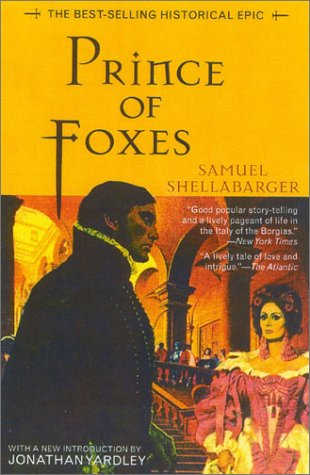
Prince of Foxes

This is easier to answer than the question about 100 days from now! The date 100 days ago was 22nd July and according to Goodreads I was in the middle of Prince of Foxes by Samuel Shellabarger.

~

Now it’s your turn. If you’d like to answer these questions too, consider yourself tagged!

Small and Spooky, edited by M.R. Nelson

small-and-spooky As it’s Halloween on Monday, I thought today would be a good time to tell you about the wonderful collection of classic ghost stories I’ve just had the pleasure of reading. It’s called Small and Spooky and the six stories it contains were selected by M.R. Nelson, editor of two other short story collections (she refers to them as ‘taster flights’), one of which – Love and Other Happy Endings – I read and enjoyed earlier in the year.

Three of the stories in this collection are by authors I already know and love, while the other three are by authors who were new to me. All six share a common theme – they all feature a child or the ghost of a child – but otherwise they’re all quite different. It’s difficult to know how much you can say about short stories without spoiling them, so I’m just going to give a brief overview of each one.

The first is The Marble Child (1918) by E. Nesbit, a favourite childhood author of mine. I remember loving her children’s novels The Railway Children and The Phoenix and the Carpet, but had no idea until recently that she had also written ghost stories. This story about a little boy who is fascinated by the marble child he sees in the church gets the collection off to a good start. Part of the story is written from the boy’s perspective and part from an adult’s which, as the editor points out in her notes, makes this story a sort of bridge between children’s and adult fiction.

The next story is a great one: The Wind in the Rose-Bush (1903) by Mary E. Wilkins Freeman, an American author I had never heard of until now. The story follows Rebecca Flint as she travels to a small, remote town hoping to see her young niece, who has been living with her stepmother since her parents died. From the moment Rebecca arrives and sees a rosebush moving when there’s no wind, she knows something is wrong. I found it easy to guess what was going on in this story, but Rebecca didn’t know and I could really feel her growing sense of unease and confusion as the truth began to unfold.

Next is Their Dear Little Ghost (1890) by Elia Wilkinson Peattie (also another new author for me), which as you might guess from the title is not a scary ghost story at all. It’s actually quite a sweet and moving little story about a child who dies just before Christmas and her godmother’s love for her even in death. I found this one of the weakest stories in the book, but I still liked it and thought it made a nice contrast to the previous one, which was quite creepy!

The following story, Morella (1835), is by Edgar Allan Poe. Poe is another author I love and I was already familiar with Morella (I think I read nearly all of his short stories and poems years ago when I was given his complete works as a Christmas present). This tale of reincarnation is not one of his scariest and I don’t think it’s one of his best either, but I can see why it was chosen for this collection as it does fit the theme.

The fifth story is another strong one: The Old Nurse’s Story (1852) by Elizabeth Gaskell. I was convinced I had read this one before – it appears in Gaskell’s Gothic Tales which I borrowed from the library a few years ago – but when I started to read, I didn’t remember it at all. In this atmospheric story set in winter, a ghostly child haunts the Northumberland countryside. I love Gaskell’s writing and this is an excellent example of a Victorian ghost story.

Finally, we have The Doll’s Ghost (1911) by F. Marion Crawford, another author I’ve never read before. This is an unusual story about a child’s doll which is broken and given to a dolls’ hospital to repair. Although I found this story a bit eerie, the ghost was a nice ghost, which meant the collection finished on an uplifting note! I would be happy to read more by this author.

These are six very enjoyable stories and perfect for those readers who, like me, prefer their ghost stories to be spooky but not terrifying! It was good to revisit Nesbit, Gaskell and Poe – and also to be introduced to three new authors, all of whom I’m now interested in exploring further.

Thanks to M.R. Nelson for providing a copy of Small and Spooky for review.

A Room of One’s Own by Virginia Woolf

a-room-of-ones-own For Phase 5 of Heavenali’s #Woolfalong, we are asked to read some of Virginia Woolf’s non-fiction – essays or diaries. As I hadn’t read any of her essays or diaries at all until now, the choice was easy for me: A Room of One’s Own, her 1929 classic and possibly the book for which she’s best known. I don’t read a lot of non-fiction books so I wondered what I would think of this one. Well, I thought it was fascinating! The edition I read had just over 100 pages but so much is packed into those pages that I feel quite overwhelmed trying to write about it all.

A Room of One’s Own is Woolf’s famous extended essay based on a series of lectures she gave at two women’s colleges at Cambridge University in October 1928. In the essay, Woolf uses a fictional narrator – whom she refers to at various points as Mary Beaton, Mary Seton or Mary Carmichael, names taken symbolically from a 16th century Scottish ballad – to explore the subject of women and fiction. As a starting point, she states that “a woman must have money and a room of her own if she is to write fiction” and then goes on to explain why she believes this statement to be true.

For many women living in the modern day and experiencing a level of equality women in the past could only dream of, it may be hard to imagine a lack of money or a room of our own preventing us from writing if that is what we wish to do, but in Woolf’s day – and especially in the decades and centuries before that – these things could be very real obstacles. I’m not sure I completely agree that women must have a certain amount of money and their own room to be able to write, but Woolf’s arguments are very thought-provoking and make a lot of sense.

Near the beginning of the book, we see the narrator attempting to enter a library and being turned away because it is for men only – ladies aren’t admitted unless they are accompanied by a man or have a letter of introduction. This is just one illustration of how women in the past were denied the same rights and freedoms which were available to men. Obviously this made it more difficult for them to bring the same depth of knowledge and experience to their writing that a man would have – and also much more difficult to become financially independent. Living in poverty, Woolf explains, meant that women were more likely to be deprived of a private space in which to sit and write and the spare time in which to do it.

Here I am asking why women did not write poetry in the Elizabethan age, and I am not sure how they were educated; whether they were taught to write; whether they had sitting rooms to themselves; how many women had children before they were twenty-one; what, in short, they did from eight in the morning till eight at night. They had no money evidently; according to Professor Trevelyan they were married whether they liked it or not before they were out of the nursery, at fifteen or sixteen very likely. It would have been extremely odd, even upon this showing, had one of them suddenly written the plays of Shakespeare…

The narrator then goes on to imagine that Shakespeare had a sister, Judith, who was just as talented as her brother but had no opportunity to use her ability. She wasn’t sent to school, was given no encouragement to read and write, and ran away from home when her father tried to force her into an early marriage. Judith’s story is tragic, and Woolf uses it to show that talent alone isn’t enough; without equality and opportunity, it would have been impossible for Shakespeare’s sister to achieve Shakespeare’s success.

Another aspect of the book I particularly enjoyed was Woolf’s discussion of the work of four female authors I love – Charlotte Brontë, Emily Brontë, George Eliot and Jane Austen – exploring and comparing the ways in which their lifestyles and the opportunities open to them may have affected their writing. She talks about Jane Austen’s lack of a separate study to work in and how she tried to hide her manuscripts when a visitor walked into the room, and about Charlotte Brontë’s anger at being interrupted during the writing of Jane Eyre and how this influenced her writing:

She left her story, to which her entire devotion was due, to attend to some personal grievance. She remembered that she had been starved of her proper due of experience — she had been made to stagnate in a parsonage mending stockings when she wanted to wander free over the world. Her imagination swerved from indignation and we feel it swerve.

As I’ve mentioned, this is a short book, but despite that I decided to read it slowly – the six chapters over six evenings – because I wanted to have time to think about what I’d read and to digest all the ideas and issues Woolf raises in each chapter. I would definitely recommend this approach to reading the book – and I would also recommend keeping a pen and paper beside you as you may find yourself desperate to make a note of your favourite passages as you read!

So far this year I’ve read three books by Virginia Woolf; To the Lighthouse just wasn’t for me, but I loved this one and Flush. I haven’t decided yet whether I’ll be taking part in the final phase of the #Woolfalong – I’ll try to, if I have time – but if not, I’m sure I’ll be exploring more of Woolf’s work eventually anyway. I’ve already read Orlando, which I enjoyed, but any other recommendations would be welcome.