The Winter Crown by Elizabeth Chadwick

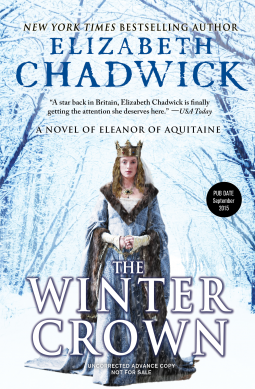
The Winter Crown This will be my last post this week, so I’m going to take this opportunity to wish everyone a Merry Christmas! I’ll be back before New Year to tell you about a Christmas-themed read and to share my list of favourite books of 2015, but first here are my thoughts on another recent read – no connection with Christmas, but at least it does have ‘winter’ in the title.

The Winter Crown is the second of Elizabeth Chadwick’s trilogy of novels following the story of Eleanor of Aquitaine. Chadwick uses the alternate spelling Alienor, as she says this is how the name would have been spelled at the time, so I have done the same throughout the rest of this post. The first book in the trilogy, The Summer Queen, covered Alienor’s early years and her marriage to King Louis VII of France. Now, in The Winter Crown, we move on to the next stage in Alienor’s life.

The novel opens in December 1154 when, having had her first marriage annulled, Alienor is crowned Queen of England alongside her second husband, Henry II. As Duchess of Aquitaine in her own right, Alienor has brought Henry wealth, lands and influence – but he has made it clear that he has no plans to allow her to govern her own lands. What Henry wants is a wife who will concentrate on providing and raising children, who will turn a blind eye to his many mistresses and who will keep her opinions to herself. Alienor, though, has other ideas and a marriage that began with so much promise and a certain amount of chemistry, if not love, descends into a series of disappointments and disagreements.

The deterioration of Alienor’s relationship with the king forms a large part of the novel, but so do her relationships with her sons – Henry the ‘Young King’, Geoffrey, Duke of Britanny, and John, the youngest – and her daughters, Matilda, Alie (Alienor) and Joanna. The other son who I haven’t mentioned, of course, is Richard (the future Richard the Lionheart). Alienor makes no secret of the fact that Richard, the heir to her own lands of Aquitaine, is her favourite child, and he is the one whose character is developed most fully in this novel.

For the first half of the novel, Alienor seems to be involved in a constant cycle of pregnancies and births, but that doesn’t mean the story was boring at all. As well as the tensions that are building in Alienor and Henry’s marriage (which get worse when she learns of his new mistress, Rosamund de Clifford), a lot of time is also devoted to Henry’s feud with his chancellor, Thomas Becket. When Henry – against Alienor’s advice – makes Becket Archbishop of Canterbury, he finds that Becket now possesses power which could be used against him instead of for him. The second half of the novel is equally full of conflict, as Henry discovers that his sons are prepared to rise against him in rebellion – and Alienor is forced to take sides.

I have read a few different fictional portrayals of Alienor/Eleanor and I really like the way Elizabeth Chadwick has chosen to portray the character. The Alienor of The Winter Crown is a strong, intelligent woman, keen to play a role in the governance of Aquitaine and England, but restricted due to her gender and the reluctance of her husband to involve her in his decision-making. I was interested to read Chadwick’s author’s note at the end in which she explains why she disagrees with the popular description of Alienor as a powerful medieval woman.

There are plenty of other characters worth mentioning too. Chadwick’s novels often feature a strong female friendship and in this book we meet Isabel de Warenne, wife of William of Blois (son of the late King Stephen of England), who becomes a trusted friend of Alienor’s after being taken into her household. Isabel, and Henry II’s half-brother Hamelin, were two of my favourite characters in the novel: two people who are close to the King and Queen but who don’t always agree with their actions. And readers of Chadwick’s The Greatest Knight will be pleased to know that William Marshal also appears in this novel, as a young man who is brought into Alienor’s service to train her sons in fighting and swordplay. I’m sure we’ll be seeing more of William in the next book.

I am thoroughly enjoying this trilogy so far and am looking forward to reading the final Alienor novel, The Autumn Throne, which should be available next year.

Thanks to Sourcebooks for providing a review copy via NetGalley.
A God in Ruins by Kate Atkinson

A God in Ruins It’s been nearly three years since I read my first Kate Atkinson novel, Life After Life, in which Ursula Todd lives her life over and over again, each new life giving her a chance to alter decisions and mistakes made in the one before. Since then I’ve been catching up with Atkinson’s Jackson Brodie mystery series (I only have one of those left to read) but last week I decided it was time to pick up her latest novel, A God in Ruins, and reacquaint myself with the Todd family.

A God in Ruins is not exactly a sequel to Life After Life – it can be better described as a ‘companion novel’ – and both do stand alone. There are some similarities between the two novels, but there’s also a big difference. While Life After Life follows several different versions of the same person’s life, A God in Ruins concentrates on someone who lives just one life: his name is Teddy Todd and he is Ursula’s younger brother.

Teddy’s story is told in non-chronological order, so that a chapter about his childhood is followed by one set towards the end of his life and then another describing his time as a World War II bomber pilot (there are several wartime chapters interspersed throughout the novel). We also get to know Teddy’s wife, Nancy (who was literally the ‘girl next door’), their daughter, Viola, and grandchildren, Sunny and Bertie. The stories of each of these people unfold gradually, chapter by chapter, and the non-linear timeline means that we are sometimes given hints of something that has happened in the past or will happen in the future but have to wait until later in the book for a revelation. Flashbacks and ‘flashforwards’ often happen in the middle of a paragraph or even a sentence, which I found intriguing rather than confusing.

I enjoyed A God in Ruins but didn’t love it as much as I loved Life After Life, maybe because it felt less innovative without the device of one person living many different lives. Still, many of the same themes are here: life and death, fate and the ways in which our actions in the present can have big consequences in the future, and, of course, the effects of war. I mentioned that there are several chapters on Teddy’s experiences piloting a Halifax bomber during the war. I didn’t initially find these sections very engaging (in the words of Nancy, Teddy’s wife, “Let’s talk about something more interesting than the mechanics of bombing”), but eventually I was drawn in and started to enjoy those chapters as much as the others.

My favourite thing about Kate Atkinson’s writing is the way she creates characters who feel so real and believable – even if some of them are not easy to like, they are still interesting and fully developed. Viola, for example, is a cold and bitter person, unable to offer her children any love and affection, and as her father grows older, resenting every minute of the time she has to spend caring for him. At first it seems that there is no reason for Viola’s selfish behaviour, but later in the novel we learn of something that happened in her childhood that could provide an explanation.

I also liked all the little literary references Atkinson slipped into the story. I was particularly pleased to see that Teddy was an Anthony Trollope reader! As for the ending of the book, I think it’s probably best if I say nothing at all – other than that it’s one of those endings people will either love or hate. Personally, I thought it was perfect; it changed the way I felt about the entire book and left me with a lot to think about, which is what all good novels should do.

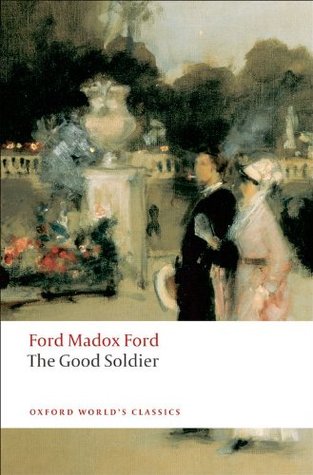
The Good Soldier by Ford Madox Ford

The Good Soldier I seem to have been under a bit of a misconception with this book; based on the title and the fact that it was published in 1915 I thought it would be a book about war. It isn’t, of course. I expect everyone else already knows that and I’ve just made myself sound stupid, but it’s really not a book I’ve ever considered reading or paid any attention to until recently. That’s my excuse! What is The Good Soldier actually about, then? Well, it’s a tale of marriage and adultery, of love and betrayal, and it reminded me of something F. Scott Fitzgerald might write (although Fitzgerald’s books would come several years later).

The Good Soldier is a deceptively simple story of two seemingly respectable couples who meet and get to know each other at a spa town in Germany in 1904. John Dowell, our narrator, is an American who has come to Bad Nauheim with his wife, Florence, whom he tells us has a weak heart. The other couple – Edward Ashburnham, another heart patient, and his wife Leonora – are British. Seen through John Dowell’s eyes, the story of these four people and the relationships between them slowly unfolds and we gradually discover that there is more to each of them than meets the eye.

I don’t think I really need to say much more about the plot – and to do so would run the risk of spoiling the book for future readers. This is a story built around lies, deceptions and secrets, things which are only revealed when John Dowell decides to reveal them. It’s an interesting structure, consisting of a series of memories and flashbacks told in non-chronological order, moving backwards and forwards in time. Interesting, but not very easy to follow, at least on a first read! This is the sort of book you would really need to read more than once to be able to fully appreciate it, but I don’t think I’ll be reading it again – at least not in the near future – because, although I did like the book, I didn’t like it enough for a re-read.

It’s a clever and intriguing novel, though, with a narrator who is certainly not a reliable one. We can never be sure how much of what Dowell says is true, as he often makes a statement or describes a sequence of events only to contradict himself later in the book. I was constantly having to change my mind about the characters and reassess what I thought I knew about them. The question is whether Dowell is deliberately trying to mislead us or whether he himself is deluded or confused. Even the opening line is curious: “This is the saddest story I have ever heard”. Why does he say it’s a story he’s ‘heard’ when he is one of the main participants in the story? This is a book that left me with many more questions than answers!

Have you read anything by Ford Madox Ford? I think I would like to try Parade’s End at some point.

Another Ten from the TBR

As some of you might remember, about six months ago I posted a list of ten books chosen at random from my Goodreads “to read” shelf and since then I have been slowly working through those ten books. I have now read and reviewed eight of them; the other two I decided I no longer wanted to read and could remove from the shelf. Of course, I’ve also been reading other books from my TBR as well as adding more books to it, so this little project of mine hasn’t really made any difference to the numbers – but I still think it was worthwhile as it motivated me to finally pick up some of the books I’ve been marking as “to read” on Goodreads over the years and then forgetting about.

The eight books from the list of ten which I have now read are as follows:

Alias Grace by Margaret Atwood
The Thief of Time by John Boyne
Royal Mistress by Anne Easter Smith
The Odd Women by George Gissing
April Lady by Georgette Heyer
Cousin Bette by Honoré de Balzac
The Master of Ballantrae by Robert Louis Stevenson
The Sea-Hawk by Rafael Sabatini

I enjoyed most of these, particularly Alias Grace, The Sea-Hawk and The Master of Ballantrae, but I was disappointed by The Thief of Time. I’m also pleased to have read something by George Gissing and Honoré de Balzac at last!

The two books I decided not to read were:

The Bones of Avalon by Phil Rickman
Wieland by Charles Brockden Brown

I did start The Bones of Avalon, but couldn’t get into it and eventually abandoned it, happy that I’d at least given it a chance. Wieland, though, just doesn’t sound appealing to me and I can’t remember why I had wanted to read it in the first place.

That’s ten books removed from the TBR, then, which means it’s time to choose ten more! Again, I’ve used a random number generator to pick ten numbers and I’m listing the corresponding books below:

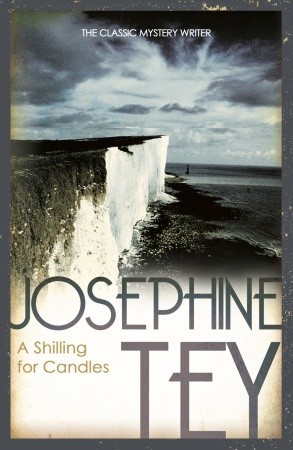
A Shilling for Candles

12 – A Shilling for Candles by Josephine Tey

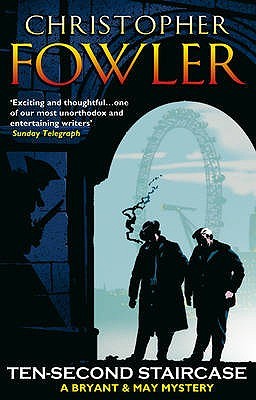
Ten Second Staircase

46 – Ten Second Staircase by Christopher Fowler

The Shadowy Horses

128 – The Shadowy Horses by Susanna Kearsley

Phineas Redux

337 – Phineas Redux by Anthony Trollope

The Reckoning

322 – The Reckoning by Sharon Penman

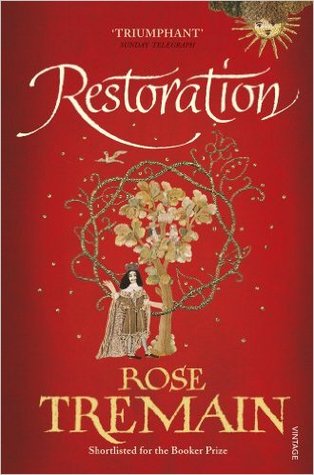
Restoration

111 – Restoration by Rose Tremain

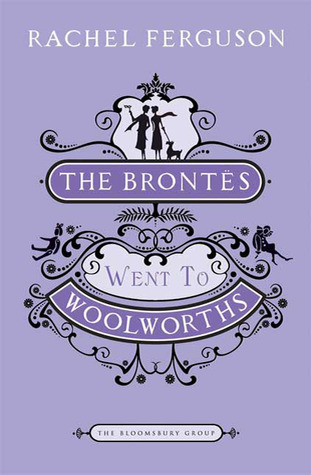
The Brontes went to Woolworths

463 – The Brontes went to Woolworths by Rachel Ferguson

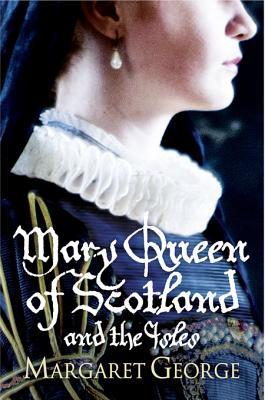
Mary Queen of Scotland and the Isles

245 – Mary Queen of Scotland and the Isles by Margaret George

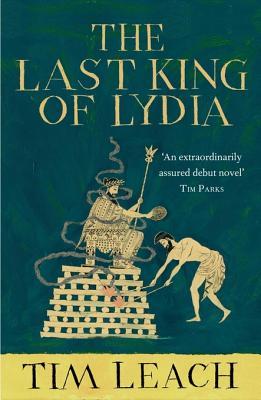
The Last King of Lydia

408 – The Last King of Lydia by Tim Leach

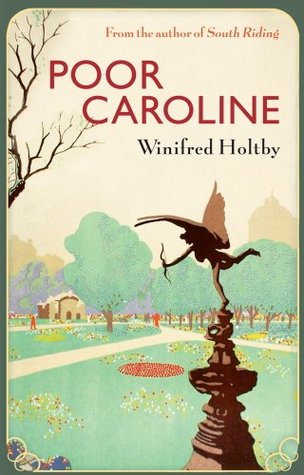
Poor Caroline

36 – Poor Caroline by Winifred Holtby

What do you think of this selection? Are there any you think I definitely need to read? Any you wouldn’t recommend?

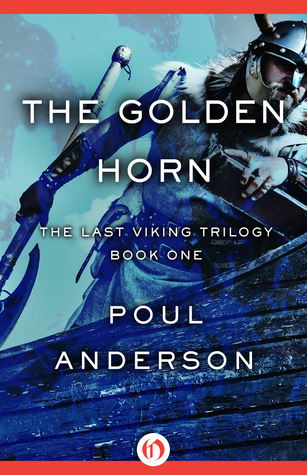
The Golden Horn by Poul Anderson

The Golden Horn Poul Anderson (1926-2001) was an American author of fantasy and science fiction, but he also wrote a trilogy of historical novels, known as The Last Viking, which tells the story of Harald Hardrada, who was King of Norway from 1046 to 1066. I have read about Harald before, but only as a minor character or in relation to the Norman Conquest of 1066 and the role he played in trying to claim the throne of England, so I was looking forward to reading The Golden Horn and learning more about his life.

Harald Sigurdharson (the name Hardrada or Hardrede, meaning “hard ruler”, will follow later) is the younger half-brother of Olaf II of Norway. Harald is only fifteen years old when he fights alongside Olaf at the Battle of Stiklastadh (Stiklestad) in an attempt to restore his brother to the Norwegian throne, which has been lost to King Canute of Denmark. Olaf is killed during the battle, his forces are defeated and Harald manages to escape. The Golden Horn, the first book in the trilogy, follows Harald throughout his time in exile as he waits for his chance to come home to Norway and reclaim the throne.

After recovering from being badly wounded at Stiklastadh, Harald flees to Russia with the help of Rognvald Brusason of Orkney. In Kiev, he meets the Grand Prince Yaroslav who makes him a captain in his army. Later, Harald continues south to Constantinople, capital of the Byzantine Empire, where he becomes commander of the Varangian Guard. The next few years are spent on various military campaigns in and around Constantinople and the Mediterranean. During this time Harald amasses great wealth, makes a name for himself as a warrior, and enters into marriage with Princess Ellisif (Elisaveta) of Kiev.

The Golden Horn was not quite what I was expecting: not being very familiar with Harald’s story, I hadn’t realised so much of the novel would be set in Constantinople rather than Scandinavia (although the title should have been a clue; the golden horn was the name of the horn-shaped harbour of Constantinople). I didn’t mind, though, as I loved this setting and enjoyed following the intrigue surrounding the Byzantine Empress Zoe Porphyrogenita, her husband Michael IV, and her sister Theodora. Harald is back in Norway by the end of the novel, so I imagine the next two books in the trilogy will be the ‘Viking’ stories I had expected.

What I liked less were the battle scenes and the focus on Harald’s military career with the Varangian Guard, which seemed to come at the expense of character development and the emotional connections which are so important to me in fiction. I never felt that I got to dig beneath the surface and really get to know Harald – or any of the other characters in the book – and that was disappointing. Still, it was good to have the chance to learn a little bit about Harald’s life, even if I sometimes felt overwhelmed by the sheer quantity of historical facts, which I felt could have been woven more smoothly into the fabric of the story.

The Golden Horn is followed by The Road of the Sea Horse and The Sign of the Raven. All three novels were originally published in 1980. I don’t think I’ll be reading the other two as this book just wasn’t really for me, but I would have no hesitation in recommending the trilogy to readers who are interested in this period and who look for different things in historical fiction than I do.

Thanks to Open Road Integrated Media for providing a review copy via NetGalley.
Historical Musings #9: Reading broadly or reading narrowly?

Historical Musings In my fourth Historical Musings post back in July, I asked about favourite time periods in historical fiction. This month’s post is on a similar theme: when you read historical fiction, do you stick to one or two periods or are you happy to try anything and everything?

I am genuinely interested in most historical periods (I’ve always been less drawn to Ancient history, although that may be starting to change) and I feel that I read about a wide range of them. Looking back at the historical fiction I’ve read so far this year, I have read novels set during both World Wars, the English Civil War, the French Revolution, the Napoleonic Wars and the fall of Constantinople. I have read books set in Renaissance Italy, medieval England, 16th century Scotland and 19th century China – and too many others to list here.

Sunne in Splendour I certainly don’t claim to be an expert on any of the historical periods or subjects that I like to read about, but there are some that I find myself reading more often than others – particularly the Tudors and the Wars of the Roses. To take the latter as an example, according to the list I have compiled here, I have read and reviewed 22 books on the Wars of the Roses since I started blogging in 2009 (19 fiction and 3 non-fiction). However, when I read other people’s reviews of the same books, I am often amazed and impressed by other readers’ depth of knowledge and their ability to spot minor historical errors that I hadn’t even noticed. This leads me to wonder whether some people (assuming they are not actually historians or students of the period) are simply better at retaining and remembering information than I am, or whether they have been focusing their reading on that one particular period to a greater extent than I have.

Sea of Poppies I can see the advantages of reading with a ‘narrow’ focus – gaining different perspectives on the same subjects, seeing how different authors portray the same characters, and adding to and expanding on existing knowledge. But while I do enjoy – and will continue to search out – books on the Wars of the Roses and my other favourite periods, I would get bored if I read about them all the time. I also love to discover new times and places about which I previously knew little or nothing. Some of my favourite new discoveries in 2015 have been the First Opium War (Amitav Ghosh’s Ibis Trilogy), the reigns of the 7th century kings of Northumbria (Edoardo Albert’s Northumbrian Thrones Trilogy), 18th century Portugal (The Devil on her Tongue by Linda Holeman) and the life of Cicero (Imperium and Lustrum by Robert Harris).

If some readers like to read ‘narrowly’, as I have described it here, I’m sure there are others who prefer to read very ‘broadly’ as far as historical fiction is concerned – and once they have read one or two novels with a particular setting, are happy with the knowledge they’ve gained and are ready to move on to something else. For me, though, neither reading narrowly nor broadly is enough: I like to do a mixture of both, which is probably why I always feel that there aren’t enough hours in the day!

What about you? Do you like to read as much as possible on one historical period or topic – or do you prefer to read about as many different ones as you can?

The Sea-Hawk by Rafael Sabatini

The Sea Hawk I love Rafael Sabatini! I can always count on him when I’m in the mood for a good old-fashioned adventure story (which is often) and The Sea-Hawk has it all: treachery, betrayal, revenge, duels, kidnapping and piracy on the high seas. It’s a similar story in some ways to his later pirate novel, Captain Blood, but I think I enjoyed this one slightly more.

Published in 1915, The Sea-Hawk is set in the sixteenth century during the reign of Elizabeth I. Our hero is Sir Oliver Tressilian, a gentleman and former sailor from Cornwall who has worked hard to restore his family’s reputation which had been tarnished by the behaviour of his late father. Sir Oliver is betrothed to the beautiful Rosamund Godolphin who returns his love despite the fact that her brother Peter hates the Tressilians due to a family feud. When Peter is killed in a duel the blame falls on Oliver – and while the reader knows that Oliver is innocent, Rosamund does not. Things quickly go from bad to worse for Oliver and he finds himself sold into slavery and sent to the Barbary Coast at the oars of a Spanish galley.

At home in England Rosamund continues to believe Oliver to be the murderer of her brother, while the real culprit stays quiet and benefits from Oliver’s absence by claiming his estates, as well as the woman he loves. Several months later, in Algiers, we meet a Muslim corsair known as Sakr-el-Bahr, or ‘hawk of the sea’. Sakr-el-Bahr’s pirating skills have won the admiration of Asad-ed-Din, the Basha of Algiers, who claims to love him as a son – but this has made him a target of the Basha’s Sicilian wife, the scheming Fenzileh, and her jealous son Marzak. I don’t think it’s too much of a spoiler to tell you that Sakr-el-Bahr is, of course, Sir Oliver, who is preparing to return to Cornwall to take his revenge…

Having read three of Sabatini’s other novels, I’ve come to know what to expect from him – and The Sea-Hawk definitely lived up to my expectations. I’m finding that his books all follow a similar pattern (at least, the ones I’ve read do) in which the hero suffers a betrayal or injustice of some kind, undergoes a transformation and plots his revenge/attempts to clear his name, while being completely misunderstood and misjudged by his love interest. Sir Oliver is a great character; he’s not always easy to like, but considering everything he is forced to endure, it would be difficult not to want things to work out for him in the end. Rosamund is a frustrating heroine, though, being so quick to think the worst of Oliver – but to be fair, she doesn’t share the reader’s knowledge that he is innocent.

The setting is great too. I particularly loved the chapters set in Algiers, in which Sabatini immerses us in the culture, religion and history of the Barbary coast, with some vivid descriptions of the labyrinths of narrow streets, souks and slave markets, and the courtyards, archways and orchards of the Basha’s palace. The focus on the Barbary corsairs rather than the pirates of the Caribbean gives the book a different feel and a different atmosphere from Captain Blood – and I was pleased to find that there was plenty of land-based action as well as ship-based (as I’m sure I’ve mentioned before, I’m not usually a big fan of books set at sea).

As I’ve now read the four novels which are probably Sabatini’s most popular – Scaramouche, Captain Blood, The Sea-Hawk and Bellarion – I would appreciate any recommendations as to which of his books to read next.