The Storm Sister by Lucinda Riley

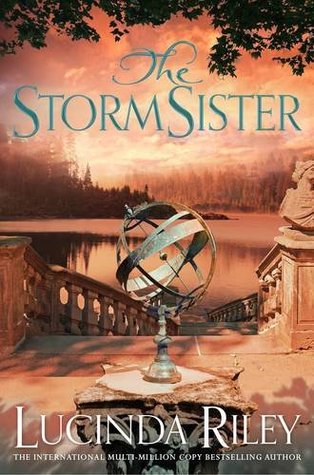
The Storm Sister The Storm Sister is the second book in Lucinda Riley’s ambitious new series, The Seven Sisters. Based on the mythology surrounding the Pleiades (or ‘seven sisters’) star cluster, each novel in the series will tell the story of one of the adopted daughters of a reclusive millionaire known only as Pa Salt. Maia, Alycone (Ally), Asterope (Star), Celaeno (CeCe), Taygete (Tiggy) and Electra D’Aplièse have all been named after one of the stars in the constellation and have grown up together at Pa Salt’s estate, Atlantis, near Lake Geneva, Switzerland. The first book, which I read last year, is Maia’s story; The Storm Sister is Ally’s.

The beginning of this novel is very similar to the first: the sisters have been informed of Pa Salt’s death and have all hurried home to Atlantis, where they find that their adoptive father has left each of them a set of clues which will enable them to discover the truth about their own origins. At first, Ally’s clues mean nothing to her: a small brown frog and a pair of coordinates directing her to a museum in Norway. She is intrigued but has no time to investigate because, as a professional sailor, she is preparing to take part in one of the biggest yacht races of her career. When tragedy strikes, however, Ally decides to travel to Norway where she attempts to unravel the secrets of her past.

Following the trail left by Pa Salt, Ally learns of a talented young singer, Anna Landvik, who sang at the premiere of Peer Gynt more than a hundred years earlier. It seems that Anna’s story – and that of Jens Halvorsen, one of the musicians in the orchestra – could be linked to Ally’s own, but Ally is not quite sure what the connection could be. With the help of Thom Halvorsen, who tells her he is the great-great-grandson of Jens, Ally is able to fill in the gaps and in the process makes some surprising discoveries that will change the course of her own life.

I enjoyed The Storm Sister but I think I preferred the first book in the series (I suppose in a seven-book series it’s understandable that I’m going to like some more than others). The Storm Sister is a very long novel and I think I would have been happier if less time had been spent at the beginning of the book on Ally’s sailing and her romance with her fellow sailor, Theo. It seemed to take such a long time for the historical storyline to begin! I did become much more engrossed in Ally’s story in later sections of the book, though; I loved the way things came together towards the end and the links between several different generations of Halvorsens grew stronger.

The Anna and Jens storyline was fascinating and made me want to pause in my reading and listen to parts of Edvard Grieg’s Peer Gynt to help me imagine Anna singing Solveig’s Song and Jens playing the opening bars of Morning Mood on his flute. There is a musical theme running throughout the entire book and I was reminded of one of Lucinda Riley’s other novels, The Italian Girl, in that respect.

As part of a larger series, I had hoped that this book might shed more light on some of the central mysteries. Who was Pa Salt? What were the true circumstances surrounding his death and burial at sea? And what happened to the seventh sister, who should have been called Merope? However, we don’t learn much more about any of these things in this book; based on the two that I’ve read, it seems that each novel will stand alone and can be read in any order – presumably until we reach the seventh book when our questions should finally be answered!

Book three will focus on Star, or Asterope, and I’m already looking forward to it. Star is not one of the strongest characters among the sisters, but I like her and I think her story will be an interesting one.

Thanks to the publisher for providing a review copy of The Storm Sister.
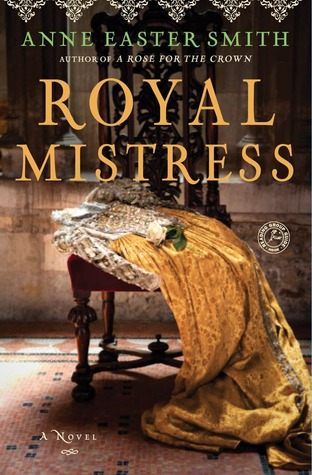
Royal Mistress by Anne Easter Smith

Royal Mistress After reading Marjorie Bowen’s Richard III novel, Dickon, a few weeks ago, my interest in the Wars of the Roses was rekindled and the next book I picked up was Royal Mistress, another novel set in the same period…but from a very different perspective. Anne Easter Smith’s heroine is Jane Shore, famous for being a mistress of Edward IV. Jane is not usually given a lot of attention, so I looked forward to seeing her character fleshed out and brought to life, and to learning more about her beyond her relationship with the king.

Born Elizabeth Lambert, Jane is the daughter of a prosperous London silk merchant (the name ‘Jane’ is thought to have been the invention of a 17th century playwright, but in this novel we are told that Elizabeth has taken the name Jane to distinguish her from an Aunt Elizabeth). Jane is married off at the age of twenty-two to William Shore, another mercer, or dealer in textiles. The marriage is not what she’d hoped it would be and Jane quickly discovers that while her husband is not above using her beauty to advertise his silks and satins, in the privacy of their own home he is cold, distant and has no interest in giving her the children she so desperately wants. To make things worse, Jane is still in love with Thomas Grey, with whom she’d had a brief romance before discovering that not only was he married, he was also the son of Elizabeth Woodville, queen of England.

As she begins to seek an annulment of her marriage, Jane catches the eye of Will Hastings, the king’s chamberlain, and through him she gets to know Edward IV. Royal Mistress follows Jane throughout the years of her relationship with the king, as she becomes an important part of Edward’s life and finds some of the warmth and affection that was missing in her marriage. After Edward’s death, however, Jane finds herself at the mercy of Richard III, who disapproves of her behaviour and wants to have her dismissed from court. Jane turns to Will Hastings for protection…but he is also out of favour with the new king and Jane’s safety cannot be guaranteed.

Royal Mistress is the first book I’ve read by Anne Easter Smith and I’ll be completely honest and say that, based purely on the title and front cover, I didn’t expect much from it. And after reading the first few chapters, I thought I was right. The story is slow to start, concentrating on a purely fictional romance between Jane and Tom Grey (it’s true that Jane was a mistress of Grey’s after Edward’s death, but there is no evidence of an earlier relationship between them) and while I did like Jane – she is portrayed as generous, warm-hearted and down-to-earth – her character didn’t seem to have a lot of depth or a lot of purpose other than being the mistress of various men.

As I got further into the novel, though, more characters are introduced, parts of the story are told from perspectives other than Jane’s, and I was swept away by the retelling of a period of history that I love. Reading the author’s note at the end of the book, I could see how much care had gone into her interpretations of the characters and their actions and motivations (even if I didn’t always agree with these interpretations). It’s interesting that Smith says she is a staunch supporter of Richard III and yet with this novel being written mainly from Jane’s point of view, it was necessary for her to portray Richard in a less than positive light. Where the disappearance of the princes in the tower is concerned, though, I was happy with the theory she puts forward as it’s one I find quite convincing.

I see Anne Easter Smith has written four more novels set during the same period, but while I did end up enjoying this one, I’m not sure yet whether I will want to read any of her others. I would like to read more about Jane Shore, though; I have a copy of Vanora Bennett’s Queen of Silks on my shelf which I hope to read soon, but if you can recommend any other books please let me know. I was interested to see that Jean Plaidy’s 1950 novel on Jane is called The Goldsmith’s Wife, as it was thought until recently that William Shore was a goldsmith rather than a mercer. Proof that history is still evolving!

Classics Spin: the number has been chosen!

Last week I decided to take part in the Classics Spin. The idea of the Spin was to list twenty books from my Classics Club list, number them 1 to 20, and the number announced today (Monday) represents the book I have to read before 1st February 2016.

The number that has been selected by the Classics Club this time is 19, which means the book I’ll be reading is:

Jane Eyre

Jane Eyre by Charlotte Brontë

This will be a re-read for me and I’m looking forward to it as it’s been such a long time since I last read it. I also have a re-read of Wuthering Heights on my Classics Club list and I’m thinking that maybe I should read it as soon as I finish Jane Eyre so that I can compare my thoughts on both. That would make an interesting post for the Women’s Classic Literature Event.

Did you take part in the Classics Spin? What will you be reading?

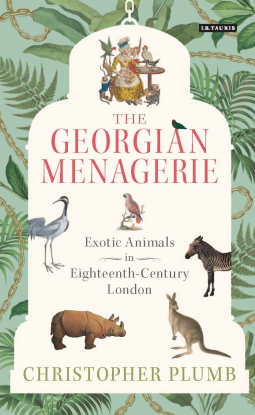
The Georgian Menagerie by Christopher Plumb

Elephants, kangaroos, parrots, zebras, bears, tigers, camels – we all know what they look like and how they behave; even if we haven’t actually encountered them for ourselves in a zoo or on safari, we’ve certainly seen them on television and read about them in books. But there was a time when, for British people at least, these animals and birds were new and unusual. The Georgian Menagerie: Exotic Animals in Eighteenth-Century London is a fascinating account of how these creatures were brought to Britain and what happened to them when they arrived.

The Georgian Menagerie Christopher Plumb draws on a wide range of sources including diaries, court cases, wills and other legal documents, advertisements, newspapers, letters and even poems and jokes to explore the stories of exotic animals and birds in Georgian society. As the British Empire grew during the 1700s, overseas trade and shipping increased and it became easier to travel to faraway destinations; this meant that menagerists and private collectors were able to obtain animals from distant continents and – as long as they were able to survive a long sea journey – bring them home to exhibit to the public.

The book features anecdotes from all over Britain, but specifically London, where most of the early menageries were located – including Pidcock’s Menagerie in the Exeter Exchange and Kendrick’s Menagerie at Piccadilly. While a lot of attention is given to the menageries with their large collections of creatures, eventually some of the animals and birds (canaries, for example) became more common and ordinary people could sometimes afford to buy one to keep in their own home.

Unfortunately, though, some of the animals being imported were required for a different purpose. In a section entitled Ingredients, we learn about the popularity of turtle soup, the use of bear grease by wigmakers and the demand for perfumes made with oil from the glands of civet cats. And even dead animals were of interest to the Georgians: they could be studied by anatomists, artists and naturalists, and were often then stuffed and put on display in museums.

As you can probably imagine, many of the anecdotes in the book are very sad to read. The people who were removing these animals from their natural habitats had no idea how to look after them correctly and, in most cases, didn’t seem to care. The animals and birds usually didn’t live very long in captivity and had short, miserable lives, being fed inappropriate food and provided with inadequate housing. There are stories of a young polar bear kept for a month in a wooden barrel with fresh water poured in daily and a parrot left unable to walk after being tethered to a perch on a short chain, to give just two examples.

Sometimes the animals would take their revenge. In a chapter called Bitten, Crushed and Maimed you can read about owners, keepers and spectators being injured or attacked by animals – not always because the animal was being tormented or badly treated, but also due to human ignorance. If people didn’t know how to care for the animals, they didn’t know how to behave around them either and seemed to have no understanding of the dangers of taunting rattlesnakes, trying to climb on elephants’ backs or poking fingers between the bars of cages!

The Georgian Menagerie is not always a pleasant read, then, but I suppose not everything in our history is very pleasant. And of course, there are lots of amusing and lighthearted anecdotes in the book too, particularly in the final section, Humour, which discusses the novelty of electric eels, the jokes surrounding Queen Charlotte’s zebras, and the relationships between parrots and their owners. Christopher Plumb’s style throughout the book is engaging and easy to read and there are plenty of beautiful illustrations by artists of the period. References and sources are provided both within the text and at the back of the book.

Despite the sometimes distressing descriptions of animal cruelty, I found The Georgian Menagerie completely fascinating. I love reading about the eighteenth century and this book gave me an opportunity to explore an aspect of Georgian life about which I previously knew very little. Definitely recommended!

Thanks to the publisher for providing a review copy via NetGalley.

The Classics Spin #11: My list

The Classics Club

I was just thinking yesterday that it’s been a while since the last Classics Spin, so I’m pleased to see that another one has been announced today! It’s hard to believe that this is the eleventh Spin – I think I’ve taken part in all but one of them and have been very lucky with most of my results.

Here is a reminder of the Spin rules:

* List any twenty books you have left to read from your Classics Club list.
* Number them from 1 to 20.
* On Monday the Classics Club will announce a number.
* This is the book you need to read by 1 February 2016

And here is my list:

1. Shirley by Charlotte Brontë
2. The Time Machine by H.G. Wells
3. Wives and Daughters by Elizabeth Gaskell
4. Crime and Punishment by Fyodor Dostoevsky
5. Mary Anne by Daphne du Maurier
6. East of Eden by John Steinbeck
7. The Heir of Redclyffe by Charlotte M. Yonge
8. The Leopard by Giuseppe Tomasi di Lampedusa
9. Wuthering Heights by Emily Brontë (re-read)
10. Vanity Fair by William Makepeace Thackeray
11. Kristin Lavransdatter by Sigrid Undset
12. Louise de la Valliere by Alexandre Dumas
13. The House of Mirth by Edith Wharton
14. Around the World in Eighty Days by Jules Verne
15. The Mill on the Floss by George Eliot
16. I, Claudius by Robert Graves
17. Excellent Women by Barbara Pym
18. The Day of the Triffids by John Wyndham
19. Jane Eyre by Charlotte Brontë (re-read)
20. The Woodlanders by Thomas Hardy

I have been making good progress with my Classics Club list recently and I’ve found it much easier to choose twenty titles for the Spin now that I have fewer books left to read.

The odd numbers on my Spin list are books by women and will count towards the Women’s Classic Literature Event which I’m participating in. I would be happy to get any of those numbers, particularly one of the Brontë re-reads as I just never seem to be able to find time to re-read my favourite books anymore. The even numbers on my list are by male authors and again, I think I’d be happy with any of them. I’ve included some very long books, but I’m not too worried as I’ll have until February to read them.

Will you be taking part in the Spin? Are there any numbers you think I should be hoping for?

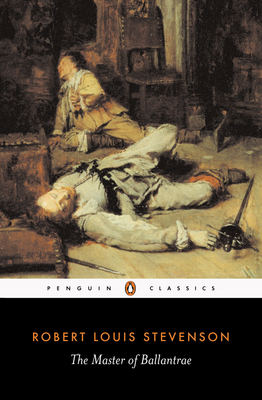
The Master of Ballantrae by Robert Louis Stevenson

The Master of Ballantrae My experiences with the work of Robert Louis Stevenson so far have been mixed. I liked Dr Jekyll and Mr Hyde, although knowing the basic plot beforehand spoiled it slightly; I gave up on Kidnapped halfway through (but would like to give it another chance); and while I did read Treasure Island as a child, it was an abridged version for children, and I have no idea what I would think of the book as an adult. I wasn’t sure what to expect from The Master of Ballantrae, then, but I’m pleased to say that I enjoyed it.

Published in 1889, The Master of Ballantrae: A Winter’s Tale is set much earlier, opening in Scotland in 1745, just before the Jacobite Rising. When news of Bonnie Prince Charlie’s arrival in Scotland reaches the Duries of Durrisdeer and Ballantrae, the family must decide what to do. There is no question of Lord Durrisdeer himself joining the rebellion, but his two sons – James Durie (the Master of Ballantrae), his eldest son and heir, and Henry, his younger brother – are both keen to go. A coin is tossed and it is decided, to Henry’s disappointment, that the Master will join the Jacobites while Henry stays at home and remains loyal to King George. This way, the family titles and estates will be safe no matter which side wins.

As history tells us, the rising will fail – and it is not long before the Duries receive reports that James has been killed. Henry becomes heir in his brother’s place and, at his father’s urging, marries the Master’s grieving fiancée, Alison. These are difficult times for Henry: his neighbours see him as a traitor for not taking part in the rising, and he knows that his father and wife will never stop mourning for James, always the favourite son. But things are about to get a lot worse for Henry – it seems that the Master of Ballantrae is not dead after all and is about to come home to Durrisdeer to take his revenge.

The Master of Ballantrae has all the elements of a typical adventure story – duels, pirates, sea voyages, buried treasure – but it is also a fascinating psychological novel about the relationship between two very different brothers. James, the Master, is the charming, charismatic brother whom everyone seems to love, yet he is also devious, scheming and manipulative. Henry is his opposite – quiet, responsible and dutiful, but less glamorous and less popular. At first it seems that this is another Jekyll and Hyde story, with one character representing good and the other evil, but it soon becomes obvious that it is not as simple as this and Henry’s personality begins to change as his obsession with his brother starts to rule his life.

We get to know these two men from the perspective of Ephraim Mackellar, a family servant at Durrisdeer, but I couldn’t help thinking that Mackellar is not a very reliable narrator. It is clear from the start that he is loyal to Henry and his narration is definitely biased towards the younger brother, but whenever he spends time alone with the Master his opinion seems to change slightly and he is able to acknowledge that the elder brother also has some good points as well as bad.

Not all aspects of The Master of Ballantrae worked as well for me as others: the purely ‘adventure’ scenes, such as the encounters with pirate ships at sea and the treasure hunts in the American wilderness, became a bit tedious, especially whenever the narration switched away from Mackellar while another narrator took his place. But I loved the central storyline and the rivalry between the two brothers; I particularly loved the Master, who may have been the devilish brother, but was so much more interesting to read about than poor Henry! I will read more by Robert Louis Stevenson, though I’m not sure whether to move straight on to one of his other books, maybe The Black Arrow, or to try re-reading Treasure Island and Kidnapped first.

Looking back, looking forward: November 2015

November

November was an interesting month reading wise. I feel I’ve read a good mixture of new books and old, some by authors who are new to me and others by authors I already know and love. Most of my reads were classics and historical fiction, but I also read one collection of short stories and one fascinating non-fiction book.

Let’s look back at November before looking forward to December.

Favourite books this month:

Lustrum

Lustrum by Robert Harris (2009) – This is the second part of a fictional biography of the Roman statesman Marcus Tullius Cicero. I loved the first book, Imperium, and thought this one was even better.

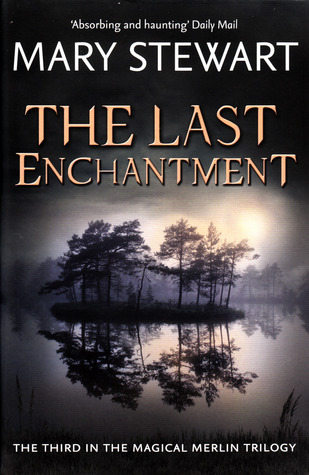
The Last Enchantment

The Last Enchantment by Mary Stewart (1979) – I enjoyed all three books in Mary Stewart’s Merlin trilogy, of which this is the last.

Also read and reviewed this month:

The Silvered Heart by Katherine Clements (2015)
Master of Shadows by Neil Oliver (2015)
Death in Venice & Other Stories by Thomas Mann (1897-1912)
Dickon by Marjorie Bowen (1929)

Read but not yet reviewed:

The Master of Ballantrae by Robert Louis Stevenson (1889)
The Good Soldier by Ford Madox Ford (1915)
Royal Mistress by Anne Easter Smith (2013)
The Georgian Menagerie by Christopher Plumb (2015)

Looking forward to December

As we move into December, I am in the middle of two books – The Storm Sister, which is the second book in Lucinda Riley’s Seven Sisters series, and The Sea-Hawk by Rafael Sabatini – and am enjoying both. The Sea-Hawk is the last book I need to read for my Ten from the TBR project, so you can expect an update on that (and another selection of ten books) later in the month.

I don’t have any other plans for December’s reading, so I’ll just see what I’m in the mood for. At the end of the month, of course, I’ll be posting my list of favourite books of the year. I feel that I’ve read a lot of good books in 2015, but not many that really stand out from the rest, so this year’s list could be either very easy to compile or very difficult! I’m hoping that some of my December choices will be the outstanding reads I’ve been waiting for.

How was November for you? Do you have any reading plans for December?